
Pneumatic Actuated Ball Valves: Process Automation
2026-07-16
content
- Why pneumatics outperform electrics in high-speed processes
- Design and principle of operation: from theory to real reliability
- Selection criteria: technical parameters and torque calculation
- Comparison of drive types and application scenarios
- Typical installation errors and methods for eliminating them
- Maintenance and service life extension
- An integrated approach to reliability: the role of materials and engineering
- Business Case for Automation
- Frequently Asked Questions
- Conclusion and next steps
Why pneumatics outperform electrics in high-speed processes
Air Actuated Ball Valves: Process automation isn't just about replacing a manual valve with a motor, it's about fundamentally changing the responsiveness of your piping system. In our practice, we have seen how the transition from an electric drive to a pneumatic one reduced the emergency shutdown time from 45 seconds to 0.8 seconds. For the chemical and oil and gas industries, this difference often becomes a matter of life and death for equipment and sometimes personnel. Electric actuators are good where precise modulation of flow is required, but when instantaneous open/close action is required, compressed air is unbeatable in terms of price and performance.
Many engineers make the mistake of selecting an actuator based on pipe diameter alone, ignoring the torque required to break a stuck ball out of service. We encountered a situation where, at a site in Siberia, a batch of 200 DN150 valves failed after three months precisely because the torque reserve was calculated without taking into account the winter temperatures at which the lubricant thickens. The result was line downtime for two weeks and drive replacement costs that were four times the original savings. This article will help you avoid such pitfalls by providing specific information on selection, installation and operation.
Design and principle of operation: from theory to real reliability
The basis of any reliable unit is an understanding of the physics of the process. A pneumatic ball valve consists of three critical elements: a body with a locking element (ball), an actuator (pneumatic actuator) and a control unit (solenoid valves). Unlike electric analogues, where a motor spins a gearbox, here the energy of compressed air is converted into linear or rotational motion almost instantly. This provides response times ranging from 0.5 to 3 seconds depending on cylinder volume and network pressure.
There are two main types of actuators that dictate the logic of your security system. Rotary drives (rack and pinion) are most common for standard applications. They are compact and provide high torque with small dimensions. However, if your system requires guaranteed closure when air pressure is lost, you need spring-return mechanisms. In our practice, we recommend the use of spring return for all emergency shut-off (ESD) valves. Once at a petrochemical plant, a compressor station failure left the system without air; Double-acting valves remained in their last position, allowing the leak to continue, while spring-loaded versions automatically shut off the flow.
The housing material also plays a role that is often underestimated in automation. The standard brass body is suitable for water and neutral media up to +180°C, but for aggressive chemicals or high pressures, stainless steel (CF8M/316) or coated carbon steel is required. It is important to remember that installing a heavy air actuator on a lightweight brass valve creates a stress point on the threaded connection. If the pipeline vibrates, this can lead to the drive coming off. We always check weight compatibility: if the drive weight exceeds 30% of the crane weight, an additional support frame is required.
The tightness of the seals is another parameter that determines the service life. Food processing plants require PTFE (Teflon) seals that can withstand frequent cleaning and sterilization cycles. For high temperatures (up to +250°C), composite materials with graphite are used. An error in choosing a seal leads not only to leaks, but also to jamming of the ball due to coking of the medium. In one case, the customer used standard Teflon to pump bitumen; After six months, the taps stopped turning because the bitumen penetrated into the gaps and hardened as it cooled. The solution required a complete replacement of the batch with valves with a metal seal.
When designing the unit, air flow must be taken into account. One opening and closing cycle of a large DN200 tap can consume up to 15 liters of compressed air at a pressure of 6 bar. If you have a hundred of these cranes operating in cyclic mode, the load on the compressor station will be enormous. We recommend installing local receivers near groups of valves to ensure rapid release of air volume without a drop in pressure in the plant's common pipeline. This simple solution increases the stability of the entire pneumatic network.
Selection criteria: technical parameters and torque calculation
The selection of equipment begins not with the supplier’s catalog, but with load calculations. The main parameter is torque (Nm). Many people mistakenly believe that torque is only needed to turn the ball. In fact, peak torque is required in the first degrees of rotation to release the ball from its seat, especially if the valve has been closed for a long time or operates with viscous media. The safety factor should be at least 30% for standard conditions and up to 50% for aggressive environments or low temperatures.
Let's consider a specific example of calculation for a DN100 tap with an operating pressure of 16 bar. The standard torque for such a crane is about 120 Nm. If we take a pneumatic drive with a rated torque of 120 Nm, it will work at the limit. At the slightest contamination of the environment or the pressure in the network drops to 5 bar instead of 6, the tap simply will not close. The right choice is a drive with a torque of 160-180 Nm. This will ensure reliable operation even under less than ideal conditions. Ignoring this rule is the most common cause of complaints in the first year of operation.
Network air pressure is a variable value that cannot be ignored. Actuator ratings are usually specified for 6 bar. If your plant pressure ranges from 4 to 7 bar, you must choose a drive that guarantees the required torque at a minimum pressure (4 bar). Otherwise the system will become unreliable. We have seen projects where engineers designed equipment for the ideal 6 bar, but the actual network gave 4.5 bar in winter. The result was partial functionality of the automation.
The operating temperature range also dictates the choice of materials and lubricants. Standard NBR seals operate down to -20°C. For the northern regions of Russia, where temperatures drop to -40°C and below, seals made of fluorine rubber (FKM/Viton) or special frost-resistant compositions are required. In addition, the pneumatic actuator itself must be filled with low-temperature lubricant. Regular lithium grease freezes, blocking the pistons. In our practice, there was a case of freezing of drives on a gas pipeline in the Yamalo-Nenets District due to the use of summer lubricant, which required heating the entire line with heat guns before starting.
Certification of equipment is a mandatory stage for legal operation in the Russian Federation and the EAEU countries. Each crane and drive must have a passport and a certificate of compliance with the technical regulations of the Customs Union (TR CU 010/2011 “On the safety of machinery and equipment”). For hazardous areas, an Ex certificate is required (eg Ex d IIB T4 Gb). The absence of the EAC marking on the product body is a direct violation of the law and grounds for stopping production by the inspection authorities. When importing from China, make sure that the manufacturing plant provides original certificates and not copies of dubious quality.
Comparison of drive types and application scenarios
The choice between different types of automation depends on the specific task. Below is a detailed comparison based on our experience in implementing systems at various industrial sites.
| Parameter | Pneumatic (Spring Return) | Pneumatic (Double Acting) | Electric drive |
|---|---|---|---|
| Response speed | High (0.5–2 sec). Ideal for emergency cut-off. | High (0.5–3 sec). Adjustable by throttles. | Low (10–60 sec). It takes time to accelerate the engine. |
| Failure Safety | Automatic return to safe position (NO/NC) in case of loss of air. | Remains in the last position. A reserve cylinder is required for safety. | Remains in the last position. Requires a supercapacitor or battery. |
| Equipment cost | Average. Higher than double action due to cost of springs. | Low. The most economical version of pneumatics. | High. The cost increases exponentially with increasing torque. |
| Infrastructure requirements | Requires a compressed air network and piping. | Requires a compressed air network. | Requires electrical wiring and control cabinet. |
| Application | Emergency valves (ESD), fire safety, gas lines. | Process lines where there is no requirement for emergency discharge, ventilation. | Water supply, remote sites without air, precise flow modulation. |
| Disadvantages | Springs get tired over time (resource ~100 thousand cycles). | Unsafe in case of an accident without additional systems. | Slow response, risk of sparking in hazardous areas. |
For fire extinguishing systems and gas lines, we strongly recommend using the diagramSpring Return. In the event of a fire or depressurization of the pipeline, the air supply may stop and the valve must close under the action of a spring. The use of the Double Acting scheme here is unacceptable without installing complex and expensive nitrogen cylinders, which themselves require maintenance.
In food processing lines where cycle speed and switching frequency are important (e.g. CIP cleaning), the optimal choice isDouble Acting. There is no requirement for emergency closure in the event of loss of air, and the reliability of the mechanism is higher due to the absence of powerful springs, which are the main wear element. The cycle rate can reach 1000 per hour, which would be fatal for a spring return.
If your facility is located in a remote area, where there is no central compressed air network, and laying pneumatic lines is not economically feasible, the only option remainselectric drive. However, be aware of speed. If the process requires rapid shutdown during water hammer, the electric drive may not have time to operate. In such cases, hybrid solutions are sometimes used or local compressor stations of low power are installed.
Typical installation errors and methods for eliminating them
Even the best quality equipment will fail if the installation is carried out incorrectly. Statistics from our service visits show that 60% of problems in the first year of operation are not related to a factory defect, but to installer errors.
Mistake #1: Lack of air filtration.Compressed air contains moisture, oil and solid rust particles from the pipes. If dirt gets inside the pneumatic cylinder, it destroys the piston seals and clogs the solenoid valves. We insist on installing air conditioning units (FRL: filter-reducer-lubricator) directly in front of each drive or group of drives. The filter cell size should be no more than 40 microns. Ignoring this rule leads to the fact that the faucet begins to “sneeze” and leak air within six months.
Mistake #2: Incorrect drive orientation.Pneumatic actuators have restrictions on mounting position. Installing the actuator with the rod down in dusty rooms leads to the accumulation of dirt on the rod, which, when retracted, damages the seals. In horizontal pipelines, it is preferable to place the actuator with the stem up or horizontal. If the design requires mounting with the stem down, be sure to use protective covers (bellows) for the stem.
Mistake #3: Over-tightening the fasteners.When connecting an actuator to a faucet, bolts that are too long are often used or are tightened with a force that exceeds the norm. This leads to deformation of the drive housing or clamping of the valve shaft, which sharply increases friction. The engine (pneumatic cylinder) begins to work with overload, quickly wearing out the gears. Use a torque wrench and follow the manufacturer's torque recommendations.
Mistake #4: Ignoring condensation.During the cold season, moisture in the air condenses and freezes inside the drive, blocking it. Air preparation units must be equipped with auto-drains, and in particularly cold conditions - with electric heating or the use of air dryers at the compression station. We recommended one client install simple membrane dryers, which reduced winter failure rates from 15% to zero.
The ground speed adjustment is often done incorrectly. Throttles (flow regulators) should be installed at the air outlet of the drive, not at the inlet. This ensures smooth movement throughout the entire range. Incorrect adjustment can cause a “thump” effect at the end of the stroke, destroying the internal stops of the actuator.
Maintenance and service life extension
Pneumatic systems require less maintenance than electric systems, but "less" does not mean "no". Preventative maintenance allows you to increase the service life of equipment by 2-3 times.
It is necessary to check the tightness of connections quarterly. Air leakage is a direct loss. One small hole in a 1mm diameter fitting at 6 bar pressure can cost a business thousands of dollars a year in compressor energy costs alone. Use soapy water or ultrasonic leak detectors to diagnose.
Once a year, it is recommended to carry out a complete inspection of the drive: disassembling, cleaning of old lubricant, checking the condition of the seals and applying new lubricant. For food production, this procedure should be carried out more often, in accordance with the schedule of sanitary days. Use only lubricants recommended by the manufacturer; incompatibility of the chemical composition of the lubricant and seals can lead to their swelling and destruction.
Solenoid valves are the weak link in the chain. Their coils can burn out due to power surges or moisture. Always use coils with a protection class of at least IP65, and IP67 for outdoors. When replacing the coil, make sure that it matches the mains voltage (24V DC, 220V AC, etc.). An error in voltage burns out the coil instantly.
Keep a log of firing cycles. Although modern actuators are designed to last hundreds of thousands of cycles, knowing the actual number of actuators can help you plan proactive replacement before a failure occurs. If a faucet has been operated 500,000 times, the likelihood of springs or seals failing increases many times over, even if the device appears to be working fine on the outside.
An integrated approach to reliability: the role of materials and engineering
The reliability of any pipeline system is determined not only by the correct choice of drive, but also by the quality of the shut-off element itself, as well as the accompanying heat exchange equipment, which often works in conjunction with these units. This is where the experience of companies specializing in deep processing of metals and creating high-tech solutions for extreme conditions is important.
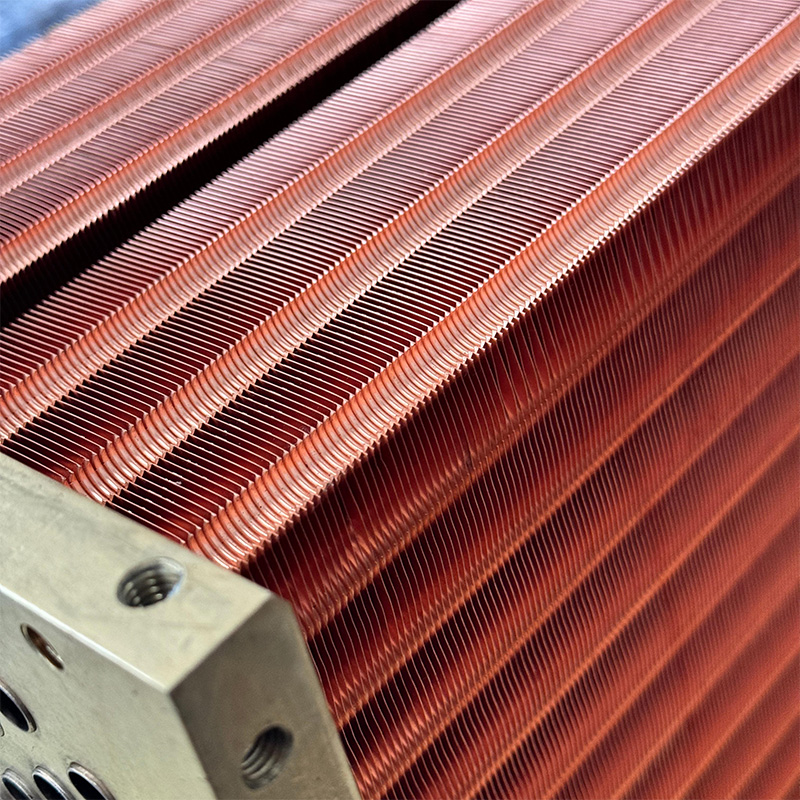
For example, Wuxi Kaisheng Electric Power and Petrochemical Equipment Co., Ltd. demonstrates how critical the selection of housing materials and internal components is. Specializing in the design and production of equipment for the oil, gas and chemical industries, the company offers solutions that perfectly complement automation systems. Their products, including titanium, nickel alloy (N06625) and marine brass C46400 heat exchangers, are certified to stringent international ASME and PED standards. The same approach to material selection is required for ball valves: the use of 316 stainless steel or duplex steel bodies, similar to those used in Wuxi Kaisheng high-pressure heat exchangers, guarantees resistance to corrosion in aggressive environments such as seawater or acid gases.
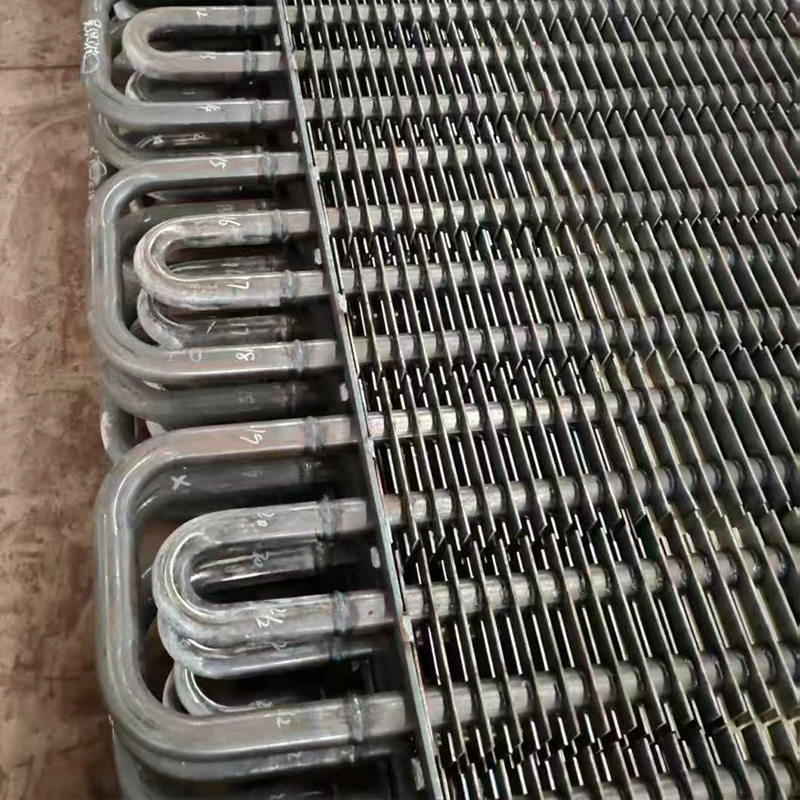
Wuxi Kaisheng's experience in the production of corrugated tube bundles and waste heat boilers highlights the importance of considering thermal expansion and vibration loads, factors that we previously discussed in the context of pneumatic actuator installation. Their custom engineered solutions for shipbuilding, desalination and energy applications show that system longevity can only be achieved through the harmonious combination of all components, from the valve body material to the heat transfer efficiency of the circuit. Customers around the world appreciate this end-to-end approach, where every product, whether it's 321 steel tubesheet or automated valve, undergoes rigorous quality control to keep plants running smoothly in the harshest environments.
Business Case for Automation
Внедрение шаровых кранов с пневмоприводом часто воспринимается как статья расходов, но в реальности это инвестиция с быстрым сроком окупаемости. Давайте посчитаем на примере участка розлива напитков.
Ручное управление 20 кранами требует присутствия двух операторов в смену для переключения линий. Автоматизация позволяет сократить персонал до одного оператора, контролирующего процесс с пульта. Экономия на фонде оплаты труда за год перекрывает стоимость оборудования. Кроме того, исключается человеческий фактор: оператор может забыть закрыть кран или сделать это медленно, что ведет к потерям продукта.
Скорость переключения линий влияет на производительность. Сокращение времени простоя линии при смене ассортимента с 15 минут (ручное переключение и промывка) до 3 минут (автоматический цикл CIP) дает дополнительный выпуск продукции. Для крупного завода это могут быть десятки тонн продукта в месяц, что напрямую конвертируется в прибыль.
Снижение потерь продукта из-за точности дозирования и отсутствия «человеческих» проливов также вносит вклад в экономику. Пневматика обеспечивает повторяемость процесса: каждый раз кран открывается на один и тот же угол и с одной и той же скоростью. Это критически важно для соблюдения рецептуры и стандартов качества.
Frequently Asked Questions
Какой срок службы у пневматического привода?
При правильной эксплуатации и своевременном обслуживании ресурс качественного пневмопривода составляет от 500 000 до 1 000 000 циклов. Временной эквивалент зависит от интенсивности работы: при круглосуточной работе в циклическом режиме э то 3-5 лет, при эпизодическом использовании — более 10 лет. Критическим фактором является чистота воздуха и наличие смазки.
Можно ли установить пневмопривод на существующий ручной кран?
Yes, in most cases this is possible. Стандартные шаровые краны имеют верхнюю часть вала, адаптированную для установки привода (по стандартам ISO 5211). Необходимо подобрать привод с соответствующим креплением и моментом. Однако, если кран очень старый или имеет нестандартную конструкцию вала, может потребоваться замена всего узла на моноблочное решение.
Что делать, если на объекте нет сжатого воздуха?
Если прокладка пневмосети невозможна, рассмотрите установку локального мини-компрессора для группы кранов или перейдите на электроприводы. Также существуют гидравлические приводы, но они сложнее в обслуживании. Для единичных кранов в удаленных точках иногда используют баллоны с инертным газом (азотом) в качестве источника энергии для аварийного закрытия, но это требует регулярной замены баллонов.
Как выбрать материал корпуса для морской воды?
Для морской воды обычная нержавеющая сталь AISI 304 не подойдет из-за риска питтинговой коррозии. Необходимо использовать сталь AISI 316 (CF8M) или, для максимальной надежности, дуплексные стали или бронзу с никелевым покрытием. Уплотнения должны быть из стойких полимеров, например, PEEK или усиленного PTFE.
Conclusion and next steps
Автоматизация процессов с помощью шаровых кранов с пневмоприводом — это шаг от кустарного управления к промышленной эффективности. Правильный подбор оборудования, учет запаса момента, качественная подготовка воздуха и грамотный монтаж позволяют создать систему, которая будет работать годами без сбоев. Не экономьте на качестве уплотнений и фильтрации — эти компоненты стоят копейки по сравнению с ущербом от простоя производственной линии.
Если вы планируете модернизацию своего производства или строительство нового объекта, важно начать с аудита текущей системы и расчета нагрузок. Наши специалисты готовы провести бесплатный анализ вашей схемы и предложить оптимальное решение, соответствующее стандартам ГОСТ и ТР ТС. Мы сотрудничаем с ведущими производителями, такими как ООО «Уси Кайшэн», чтобы обеспечить поставки оборудования с высочайшими характеристиками коррозионной стойкости и надежности, подтвержденными сертификатами ASME и PED. Мы предоставляем полный пакет документов и гарантийную поддержку.
Не позволяйте устаревшим технологиям тормозить развитие вашего бизнеса. Внедрение современной автоматики окупается уже в первый год за счет экономии ресурсов и повышения производительности.Contact us todayдля получения консультации и расчета коммерческого предложения. Мы поможем вам выбрать надежныешаровые краны с пневмоприводоми сопутствующее оборудование, которые станут основой бесперебойной работы вашего предприятия.