
Pipes for food production: hygienic standards
2026-07-16
Hygiene standards for pipes in the food industry: why it's critical for your business
Pipes for food production that meet hygienic standards are not just metal pieces, but the foundation for the safety of the end consumer and the legal protection of the plant itself. In our practice, we have repeatedly encountered a situation where saving 15% on the cost of the pipeline led to the shutdown of the entire bottling line for three weeks due to the material not meeting the requirements of Rospotrebnadzor or the European EHEDG. The basic principle is simple: if the pipe surface cannot be perfectly cleaned and disinfected without disassembling the system, it is not allowed to come into contact with the product. This article is based on real experience in installing and auditing lines in the dairy, meat and beverage industries of Russia and the CIS countries for the period 2024–2026.
We will not retell dry excerpts from GOSTs, which can be found in any reference book. Instead, we will look at how these standards work in reality, where manufacturers often make fatal mistakes when choosing a supplier, and why a roughness of Ra 0.8 µm is sometimes insufficient. If you are planning to modernize a workshop or purchase new equipment, understanding these nuances will save you millions of rubles on rework and fines.
Key regulatory documents and material requirements
The choice of material for the food pipeline is dictated not by the desire of the manufacturer, but by the aggressiveness of the environment and the temperature conditions of the process. In 2025, the main standard regulating this area in the Eurasian Economic Union remains the Technical Regulation TR CU 021/2011 “On food safety”. However, blindly following only this document often leads to problems when exporting or implementing international quality management systems. The real picture requires an integrated approach, taking into account both local GOSTs and international standards, such as FDA (USA) or EC 1935/2004 (Europe).
AISI 304 stainless steel (analogous to 08Х18Н10 according to GOST) has long been considered a universal solution. In our practice, we see that for neutral media such as drinking water or some types of vegetable oils at room temperature, this material is really justified. However, when it comes to fermented milk products, fruit juices with a high acid content or cleaning with chlorine-containing reagents, AISI 304 begins to corrode faster than expected. We recorded cases of pitting corrosion after only 18 months of operation, which created ideal conditions for the growth of bacteria in microcracks.
For most modern food production facilities, especially those working with aggressive environments or high sterilization temperatures (CIP washing), the only correct solution is AISI 316L steel (03Х17Н14М3). The presence of molybdenum in the alloy increases corrosion resistance significantly. It is important to understand the difference between AISI 316 and AISI 316L: the letter “L” stands for Low Carbon. When welding, conventional AISI 316 is susceptible to intergranular corrosion in the weld area unless subsequent pickling paste is applied. AISI 316L does not have this drawback, which is critical for hygienic connections.
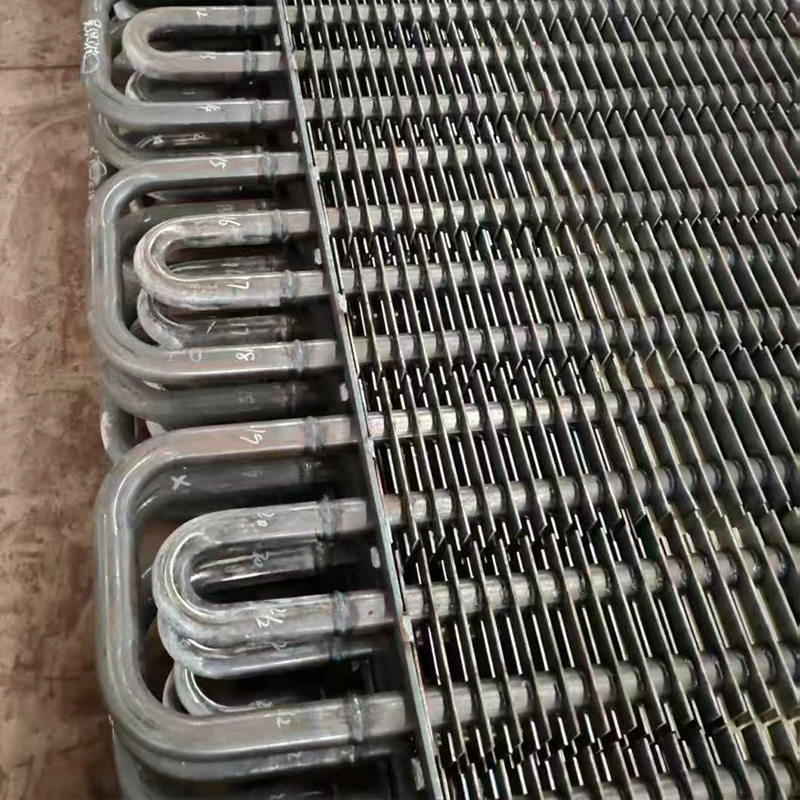
It is the high level of metallurgical control and compliance with international quality standards that are the key to the longevity of the equipment. For example, a companyWuxi Kaisheng LLC, specializing in the production of heat transfer and petrochemical equipment, demonstrates an approach that should become a standard for the food industry. Their products, including 316 stainless steel corrugated tube bundles and N06625 alloy components, are certified to stringent ASME and PED standards. Although their primary application is in petroleum refining and power generation, production technologies that provide high corrosion resistance and resistance to extreme pressures and temperatures are fully compatible with the requirements needed to create reliable hygienic systems in the food industry. The experience of such manufacturers confirms: the quality of the original metal and the accuracy of manufacturing determine the service life of the system in any aggressive environment.
Here are the specific parameters that you need to look at in the metal quality certificate before purchasing:
- Chemical composition:Request spectral analysis. Nickel content should be strictly within the range of 10–14%, chromium - 16–18%. A deviation of even 0.5% changes the physical properties of the alloy.
- Certificate of Conformity:To work in the Russian Federation, it is mandatory to have a declaration of conformity with the CU TR. For export to the EU, a Type 3.1 certificate according to EN 10204 will be required, where the manufacturer guarantees the chemical composition of each batch.
- No lead or cadmium:The alloy should not contain any heavy metal impurities that could migrate into the product. This is a strict requirement of the FDA and European directives.
One of our clients, a tomato paste production plant, was faced with the fact that a batch of pipes, purchased at a low price from an unreliable supplier, began to deteriorate under the influence of the acid of the tomatoes and a hot wash. The analysis showed the use of steel with reduced molybdenum content. The result was a product leak, contamination of the workshop and downtime of the line for a month. The price of the issue exceeded the cost of high-quality pipes by 40 times. Don’t risk your brand reputation to save on incoming metal inspection.
Surface roughness: myths and reality of influence on bacteriological purity
Pipe internal surface roughness (Ra) is the most discussed and often misunderstood criterion in hygienic design. Many customers automatically require Ra ≤ 0.8 µm, considering this a panacea. Yes, this is the standard for many applications, but it is not always sufficient and not always necessary. Bacteria such as Listeria or Salmonella can adhere to surfaces with a roughness of up to 0.4 microns if there are organic contaminants and stagnant zones. Therefore, focusing only on the Ra number, ignoring the processing technology, is a grave mistake.
There are two main methods for obtaining a smooth surface: mechanical polishing and electrochemical polishing (electropolishing). Mechanical polishing with abrasive wheels creates microscopic scratches directed along the axis of the pipe. Although the roughness profile may show good values (eg Ra 0.4 µm), under the microscope the structure of the “grooves” is visible. These grooves become clogged with product residues that a standard CIP wash cannot remove. Over time, a biofilm forms there - a community of bacteria protected by mucus, which is practically invulnerable to disinfectants.
Electropolishing solves this problem in a fundamentally different way. Under the influence of electric current in an acid bath, selective dissolution of microrelief protrusions occurs. The surface becomes not just smooth, but glossy at the micro level, without directional marks. In addition, this process enriches the surface layer with chromium, creating an oxide film up to 0.1 microns thick, which greatly enhances corrosion resistance. In our practice, we recommend electropolishing for all lines where dairy products, baby food or drinks with a long shelf life are produced.
Comparison of surface treatment methods for different tasks:
| Parameter | Mechanical polishing | Electropolishing |
|---|---|---|
| Ra value | 0.4 – 0.8 µm (depending on grain size) | 0.2 – 0.4 µm (stable) |
| Surface structure | Directional risks, possibility of particle entrapment | Amorphous, glossy, self-cleaning |
| Corrosion resistance | Basic (depending on steel grade) | Increased due to chromium enrichment |
| Application | Water, non-corrosive liquids, drain lines | Milk, juices, beer, pharmaceuticals, CIP systems |
| Cost | 15–20% lower | Higher, but pays off in reduced downtime for cleaning |
It is important to note that electropolishing does not correct weld defects. If the seam is poorly made, with sagging or pores, electropolishing will only make these defects more noticeable, but will not eliminate them. Therefore, the quality of the original pipe and welded joint is primary. We have seen cases where customers ordered expensive electropolishing for low quality pipes, and after treatment the surface became spotty due to the heterogeneity of the metal structure. First ensure the quality of the base material, then choose the finishing method.
Hygienic design of connections and fittings: where bacteria hide
Even the most perfect pipe is useless if it is connected with the wrong fittings. Statistics from food industry inspections show that 70% of microbiological contamination occurs at joints, and not on straight sections of pipes. The hygienic standard requires that the connection be flush and not create internal ledges, cavities or dead zones where the product can stagnate and deteriorate.
The most common standard for detachable connections in the food industry are Clamp fittings (milk fittings DIN 11851, DIN 11864 or ISO 2852). They allow for quick disassembly for manual cleaning and visual inspection. However, there is an important nuance here: the O-ring. The rubber gasket must be made of food grade silicone or EPDM approved for food contact and have the correct geometry. If the gasket protrudes into the flow or, conversely, leaves a gap, it becomes a collector for bacteria. In our practice, we have replaced tens of kilometers of pipelines only because non-standard size fittings were used where the gasket did not fit tightly.
For stationary areas that do not require frequent disassembly, automatic orbital welding is preferred. This method allows you to obtain a seam that is as smooth and durable as the pipe itself. Modern orbital welding heads are programmed for a specific wall thickness and steel grade, ensuring repeatable results. Manual argon arc welding (TIG) is allowed only for auxiliary lines and requires mandatory subsequent cleaning and passivation of the seam. But even the best manual welding will never reach the level of orbital hygiene.
Particular attention should be paid to the concept of “dead leg”. This is a section of pipe that branches off from the main flow, where the liquid does not circulate or circulates weakly. According to 3-A Sanitary Standards and EHEDG, the length of the dead zone should not exceed 1.5 times the pipe diameter (1.5D rule) for new installations, although older codes allowed 3D. If you have a tap on a sensor or valve that sticks out into the flow more than 1.5 times the diameter, you are violating hygiene standards. At this point, the product cools, crystallizes and becomes a breeding ground for infection. Redesigning such nodes is a mandatory step when auditing a line.
We recommend regular endoscopic inspection of welds and internal cavities of fittings. A camera with a diameter of 4 mm allows you to see what is hidden from view: metal deposits, lack of fusion, flux residues. One such inspection is inexpensive, but prevents the risk of recalling a batch of products from the market. Do not rely on the “eye” of the installers; require visual inspection protocols for each joint.
Real cases: the impact of standards on production efficiency
Theory is important, but numbers speak louder. Let's look at two real-life examples from our hygienic piping implementations that demonstrate the direct link between compliance and cost-effectiveness.
Case 1: Dairy plant in Central Russia.
The enterprise was faced with the problem of reducing the shelf life of kefir from 14 to 5 days, subject to all temperature conditions. Laboratory analysis revealed elevated levels of yeast and mold after the pasteurization step. The audit showed that mechanically polished AISI 304 pipes were used at the spill site and had been in use for more than 7 years. The inner surface had multiple areas of pitting corrosion and biofouling that were not washed out with a standard alkaline wash.
Solution:Complete replacement of a section of the pipeline (about 400 meters) with pipes made of AISI 316L with electropolishing and switching to orbital welding. All dead zones longer than 1.5D have been eliminated.
Result:The shelf life has been restored to 14 days and above. Detergent consumption was reduced by 22% due to improved surface washability. The payback for the project was 11 months only due to the reduction in product and chemical losses.
Case 2: Soft drink production plant.
When launching a new juice bottling line, problems arose with certification according to export standards. Inspectors noted the use of threaded connections in syrup supply areas. Threads, even sealed with tape or sealant, are not acceptable in hygienic design due to the inability to completely clean the threads.
Solution:Replacement of all threaded fittings with welded sanitary elbows and valves. Implementation of a roughness monitoring system for incoming pipe inspection.
Result:The plant received permission to export to EU countries. The number of microbiological defects decreased from 3.5% to 0.2%. The time to changeover the line to suit different tastes was reduced by 40 minutes due to optimization of the design of the units.
These examples show that compliance with hygiene standards is not a bureaucratic requirement, but a tool for cost and quality management. Investing in the right pipes doesn't pay off immediately, but it works for you every day, reducing operating costs.
How to choose a reliable supplier and avoid counterfeits
The market for stainless steel pipes for the food industry is saturated with offers, but the quality varies dramatically. How to distinguish a reliable partner from a reseller selling metal of dubious origin? The first sign is transparency of documentation. A real supplier of pipes for food production will provide you with not just a copy of the certificate downloaded from the Internet, but the original manufacturer's certificate (MTC - Mill Test Certificate) with a heat number that corresponds to the marking on each pipe.
Pay attention to the packaging. Food pipes must be supplied in an individual protective sheath (plastic or paper) to prevent contact with carbon steel. Contact with ordinary iron leads to contamination of the surface with iron particles, which subsequently rust and damage the stainless steel. If the pipes arrive in bulk, tied with wire, or in damaged packaging, this is a red flag. In our practice, there have been cases when clients had to spend weeks pickling and cleaning new pipes from “colored rust” that appeared due to improper transportation.
Another important criterion is the availability of our own warehouse and the ability to cut to size. Food processing often requires custom lengths of pipe to minimize joints. A supplier who only offers standard 6m lengths is forcing you to make unnecessary welds, increasing the risk of contamination. A good partner will offer precision cutting and welding chamfering services, which will speed up installation and improve its quality.
Feel free to request samples for independent testing. Spectral analysis is inexpensive, but will immediately show the real content of chromium, nickel and molybdenum. If the supplier refuses to give a sample or is stalling for time, leave. An honest manufacturer has nothing to hide. Remember that the responsibility for the safety of the product lies with you, and not with the metal seller, so incoming inspection is your responsibility.
Frequently Asked Questions
Which brand of steel is best for hot chocolate piping?
For hot chocolate, which contains fats and sugars and is susceptible to high temperatures, AISI 316L steel is definitely recommended. The chocolate mass has high adhesion and a tendency to burn. AISI 304 can be corroded by certain cocoa components and aggressive detergents used to remove fats. Electropolishing the surface is mandatory here, since any roughness will lead to product sticking and the rapid development of bacteria. The use of AISI 316L guarantees the durability of the system and ease of cleaning.
Can used pipes be used for food purposes after cleaning?
Absolutely not. Hygienic standards (TR CU, EHEDG, 3-A) prohibit the use of used pipes for main food production lines. Even after the most thorough chemical cleaning and polishing, traces of previous products, biofilm or corrosion remain in the microstructure of the metal and cannot be completely removed. In addition, used pipes often have altered geometry (ovality) and damage that is invisible to the eye. Риск заражения продукции многократно превышает экономию на стоимости металла. Для технических нужд (вода, воздух) это допустимо, но не для контакта с едой.
Как часто нужно менять уплотнительные кольца в гигиенических фитингах?
Срок службы уплотнительных колец зависит от температуры процессов и частоты циклов мойки (CIP/SIP). В среднем, при интенсивной эксплуатации (2-3 цикла мойки в сутки, температура до 85°C) силиконовые кольца следует менять каждые 6–12 месяцев. Признаками износа являются потеря эластичности, появление трещин, изменение цвета или остаточная деформация. Мы рекомендуем вести журнал замены прокладок и проводить их визуальный осмотр при каждой плановой остановке линии. Использование просроченных уплотнений — одна из самых частых причин протечек и бактериального загрязнения.
В чем разница между трубами для молока и трубами для пива?
Хотя оба продукта требуют высокого уровня гигиены, есть нюансы. Для пивоварения критически важна устойчивость к агрессивным щелочам и кислотам, используемым для удаления белковых и минеральных отложений (пивного камня). Здесь часто используют трубы с повышенной толщиной стенки для устойчивости к вакууму при фильтрации и обязательной электрополировкой. Для молочной промышленности акцент делается на термостойкость (пастеризация, стерилизация) и отсутствие адгезии жиров. В обоих случаях используется AISI 316L, но спецификация на шероховатость и тип соединений может различаться в зависимости от конкретных технологических карт завода.
Conclusion and next steps
Investing in quality food processing pipes that meet strict hygiene standards is a strategic decision, which determines the reliability of your business for years to come. Мы рассмотрели, как выбор марки стали, метода полировки и типа соединений влияет на безопасность продукта, сроки годности и операционные расходы. Игнорирование этих факторов ведет к прямым финансовым потерям, репутационным рискам и проблемам с контролирующими органами.
Не позволяйте ошибкам в проектировании трубопроводов стать узким местом вашего производства. Если вы планируете модернизацию цеха, замену оборудования или запуск новой линии, начните с аудита текущей ситуации и разработки технического задания, основанного на реальных требованиях вашего продукта. Наши эксперты готовы помочь вам подобрать оптимальное решение, которое сочетает в себе соответствие всем международным и местным стандартам и экономическую эффективность.
Свяжитесь с нами сегодня для консультации по подбору труб и фитингов для вашего конкретного производства. Мы поможем избежать ошибок и обеспечить вашему бизнесу безупречную гигиеническую безопасность.
Узнайте больше о наших решениях для пищевой промышленности:Комплексные поставки оборудования для пищевых производств.