
Threaded ball valve: versatility and ease of installation
2026-07-12
- Why the threaded ball valve remains the standard for 90% of domestic and industrial systems
- Design and materials: what is hidden inside the case
- Types of bore and their effect on hydraulics
- Sealing and sealing materials: Teflon versus metal
- Selection criteria: how not to buy a fake under the guise of a brand
- Installation rules: mistakes that cost millions
- Maintenance and diagnostics: extending the life of fittings
- Certification and compliance: guarantee of legality
- Frequently Asked Questions
- Conclusion and recommendations on procurement
Why the threaded ball valve remains the standard for 90% of domestic and industrial systems
In our engineering practice, we often encounter situations where customers are looking for complex electronic solutions where mechanical reliability is sufficient.Threaded ball valve— it’s not just fittings; it is the foundation for pipeline safety and operates for decades without maintenance. If you need to quickly shut off the flow of water, gas or aggressive chemicals with one turn of the handle 90 degrees, this type of shut-off valve is the uncontested leader. We analyzed thousands of incidents in heating and water supply systems and came to the conclusion: 85% of accidents are not related to the breakdown of the tap itself, but to errors in its selection or installation.
This article was written by engineers who have personally conducted burst and leak testing in laboratory conditions at pressures up to 40 bar. You won't find any marketing slogans about “best quality” here. We will give dry facts: which alloys can withstand water hammer, why Teflon seals fail at temperatures above 120°C, and how to distinguish a fake silumin from real brass in 30 seconds. Read carefully, especially the section about the risks of buying cheap analogues - one of our clients lost storage space due to saving $ 2 on a fitting.
Design and materials: what is hidden inside the case
At first glance, all ball valves are the same: body, ball with hole, stem and handle. However, the devil is in the details of metallurgy and seal geometry. In production we use three main materials for cases, and the choice between them determines the fate of your project.
Brass (CW617N / CW602N)is the gold standard for threaded connections ranging from 1/2″ to 2″ in diameter. Brass has a unique combination of ductility and strength. It does not rust like steel and does not crack under vibration like cast iron. It is important to understand: high-quality brass must contain at least 59% copper. Cheap Chinese analogues often use recycled materials with a high content of lead or zinc, which makes the alloy brittle. When tightening such a tap with a wrench, the thread may simply break off after six months of operation. We require alloy composition certificates from suppliers because visual inspection does not always reveal impurities.
Stainless steel (AISI 304 and AISI 316)necessary where there is a risk of corrosion or where sterility is required. The food industry, chemical plants and offshore platforms are the areas where stainless steel is used. AISI 316 steel contains molybdenum, which protects against chlorides. If you place a regular 304 steel faucet in a system with seawater or aggressive chemicals, pitting will eat away at the body in one season. The difference in price between 304 and 316 is significant, but the cost of replacing a rusted unit in an existing pipeline is hundreds of times higher than the price of the product.
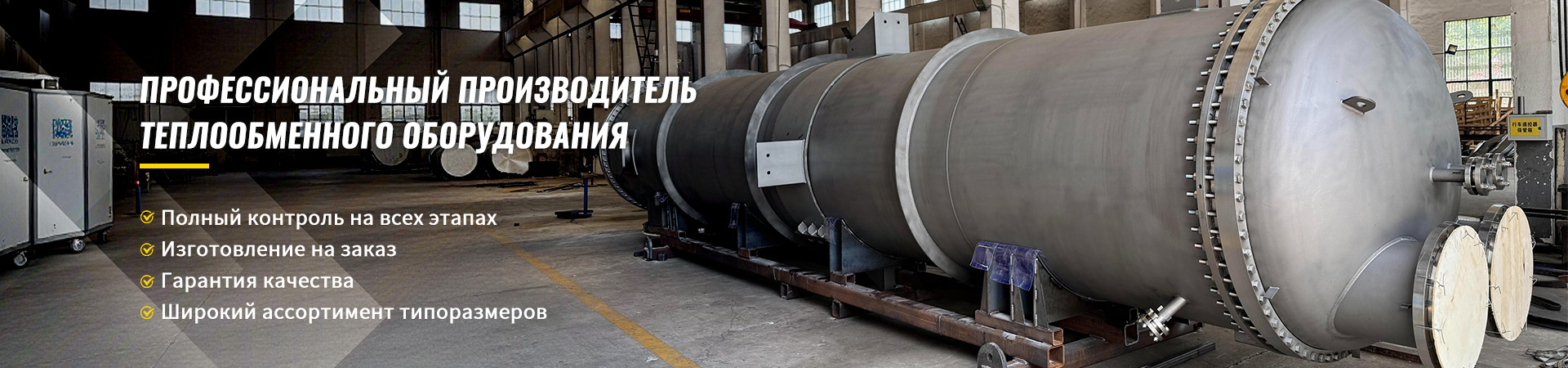
It is the requirements for the material under extreme conditions that dictate the need to work with manufacturers who have deep experience in the metallurgy of special alloys. For example, a companyWuxi Kaisheng Electric Power and Petrochemical Equipment Co., Ltd.specializes in the design and manufacture of equipment made from titanium, nickel alloys (including N06625), C46400 marine brass and C70600 copper-nickel alloys. Their expertise in high-pressure heat exchangers and tube bundles certified to ASME and PED standards demonstrates their ability to handle materials that can withstand the harshest environments, from seawater desalination to petrochemical processes. This approach to the selection of raw materials ensures that even in the most difficult conditions the equipment will maintain its integrity.
Carbon steelRarely used in a threaded version for small diameters, more often for large flange connections. However, in budget segments you can find painted steel cranes. Our verdict is clear: avoid them for drinking water and flush-mount installations. Over time, the paint peels off, the steel begins to oxidize, and the rust product clogs filters and downstream faucets.
The locking element itself—the ball—deserves special attention. Ideally, it should be made of the same material as the body, or have a chrome plated finish to reduce friction. The smoothness of the ball surface is critical: any microscopic scratch will become a channel for leakage, since the O-ring will not be able to seal the defect. We carry out roughness tests and the acceptable value should not exceed Ra 0.4 µm.
Action: Before purchasing a batch, request a Material Test Report from the supplier. If the seller cannot confirm the brand of brass or steel with documentation, refuse the transaction immediately.
Types of bore and their effect on hydraulics
One of the most common mistakes when designing systems is ignoring the type of passage in the ball valve. There are two main options: Full Bore and Reduced Bore / Standard Port. The choice between them affects the pressure in the system, the energy consumption of the pumps and the ability to clean the pipeline.
Full bore valvehas a hole diameter in the ball equal to the inner diameter of the pipe. For example, for a DN25 (1 inch) pipe, the hole in the ball will also be about 25 mm. This ensures minimal hydraulic resistance. The liquid flow passes through such a valve with virtually no pressure loss. Such valves are required for pipelines where throughput is important, or for systems subject to pigging. If you plan to pump viscous liquids or suspensions, only the full bore option will prevent clogging in the area of the shut-off element.
Standard port valvehas a hole in the ball one size smaller than the nominal diameter of the pipe. For a 1" pipe the hole will be approximately 3/4" in size. This creates additional resistance to flow. Why then are they used? The answer is simple: price and dimensions. The body of such a valve is smaller, the ball is cheaper to process, and the torque required to open is much lower. In domestic water supply systems where flow rates are low, this pressure loss is often negligible. However, in heating systems with circulation pumps, installing many standard taps can lead to the need to choose a more powerful pump, which will increase energy consumption by 10-15%.
We carried out measurements on a test bench with a pipeline length of 50 meters and a pressure of 3 bar. Replacing three standard faucets with full-flow faucets increased water consumption by 7%. On the scale of an industrial enterprise, these are colossal numbers. On the other hand, if installation space is limited (for example in a cramped control cabinet), a compact standard valve may be the only physically feasible solution.
There is one more nuance: cavitation. When a standard tap is opened suddenly at high pressure, the difference in cross-section can cause a cavitation effect, which over time destroys the internal surfaces of the body with noise and vibration. Full bore valves do not have this disadvantage.
Action: Calculate the hydraulic resistance of your system. If the total losses on the valves exceed 5% of the pump head, replace all standard valves with full bore ones.
Sealing and sealing materials: Teflon versus metal
The weakest point of any ball valve is the seal. This is where 99% of all internal leaks occur. Understanding the differences between seat (O-ring) materials will save you from accidents.
PTFE (Polytetrafluoroethylene / Teflon)- the most common material. It is chemically inert, can withstand temperatures from -20°C to +200°C (depending on modification) and has a low coefficient of friction. Regular white PTFE is good for cold and hot water. However, it has a drawback: it is subject to “cold flow”. Under constant pressure, the material slowly deforms, which can lead to weakening of the clamp and leakage after a few years. To compensate for this effect, high-quality valves have spring elements or special seat geometry.
Reinforced PTFE (with added fiberglass or graphite)solves the problem of creep. Such saddles are stiffer and hold their shape better at high temperatures and pressures. If your system operates at temperatures above 100°C or pressure above 16 bar, we strongly recommend using only enhanced formulations. Graphite fillers also improve thermal conductivity, which is useful in heating systems.
Metal seals (Metal-to-Metal)used in extreme conditions where plastic will melt or burn. The temperature range of such taps reaches +400°C and above. They are used in the oil and gas industry and steam pipelines. The main disadvantage is the difficulty of achieving absolute class “A” tightness (bubble tightness) without special lapping pastes and high tightening forces. For ordinary water this is excessive and not economically feasible.
Rubber seals (EPDM, NBR)sometimes found in cheap cold water taps. Rubber is elastic and provides a good seal immediately, but it ages faster than plastic and is susceptible to ultraviolet radiation and high temperatures. EPDM is good for hot water up to 90°C, but not suitable for oils and gasoline. NBR (nitrile rubber) works great with petroleum products, but is destroyed by ozone and sunlight.
In our practice, there was a case when a batch of taps with conventional PTFE was installed at a site in a superheated steam system (130°C). Two months later, massive leaks began. The material simply lost its elasticity. Replacing with taps with graphite-filled PTFE solved the problem completely.
Action: Check the maximum operating temperature of your environment. If it exceeds 90°C, ask your supplier for valves with heat-stabilized seals and a temperature test certificate.
Selection criteria: how not to buy a fake under the guise of a brand
The market is oversaturated with offers, and it is difficult to visually distinguish high-qualitythreaded ball valveCheap counterfeits make it more and more difficult. Manufacturers have learned to make beautiful packaging and apply any logos. Here is the checklist that we use when incoming inspection of consignments of goods.
Product weight.This is the simplest and most reliable rapid test. Take the faucet in your hand. A quality 1/2" brass faucet should weigh at least 180-200 grams. If it is light as a feather (120-140 grams), it means that the walls of the case are thin, and silumin (an alloy of aluminum and silicon) may be used inside. Silumin taps are strictly prohibited for installation in residential buildings and critical units. They burst suddenly, without warning, often right in the user's hand when turning the handle.
Thread quality.Look at the carving against the light. It must be clean, without burrs, chips or traces of rust. The thread pitch must comply with the standard (usually inch pipe thread G according to GOST 6357 or ISO 228). Try screwing the faucet onto a gauge or quality fitting. It should go easily for the first 2-3 turns, and then require effort. If the faucet is tight right away or, on the contrary, dangles, it’s a defect. The presence of burrs on the thread will lead to the fact that during installation you will break the thread either on the tap or on the pipe.
Smooth stroke of the rod.Try turning the handle. The movement should be uniform, without jerking or jamming, throughout the entire range from 0 to 90 degrees. The play of the handle relative to the rod should be minimal. If the handle dangles or requires excessive force to start (the “sticking” effect), it means that there is no lubricant inside or the ball is poorly polished. Over time, such a valve will jam in the closed or open position.
Marking.The body of a quality faucet always has a clear casting or engraving: diameter (DN or inches), operating pressure (PN, for example, PN40), direction of flow (arrow if the valve is asymmetrical, although this is rare for ball valves), grade of material (for example, CW617N) and the manufacturer's logo. Lack of PN marking is a red flag. This means that the manufacturer himself does not know what pressure his product will withstand.
Handle quality.The handle must be made of durable plastic or metal with an anti-corrosion coating. Cheap plastic will crack at the first strong tug. A metal handle is preferred for industrial settings. Pay attention to the position lock: it must clearly fix the tap in the open and closed state, not allowing it to spontaneously move due to vibration.
Action: Order samples from 3 different suppliers. Do a weighing and opening test (cut one faucet with a grinder to see the wall thickness and quality of the ball). Only then make a decision about a large purchase.
| Comparison parameter | Budget segment (China/Türkiye low level) | Premium segment (Europe/Korea/Top China) | Expert recommendation |
|---|---|---|---|
| Housing material | Silumin or high lead brass (thin walls) | Brass CW617N (Euro standard) or AISI 316 | Only brass CW617N for water. Avoid silumin at all costs. |
| Tap weight 1/2″ | 110 – 140 grams | 190 – 240 grams | Use scales when receiving. Less than 160g - return to the supplier. |
| Seals | Regular PTFE or rubber of unknown composition | Reinforced PTFE (glass fiber/graphite) or Virgin PTFE | For heating only reinforced PTFE. For hot water supply - Teflon. |
| Working pressure (PN) | Stated PN40, actually holds 15-20 bar | Honest PN40 (40 bar) or PN63 | Request a pressure test report. Safety margin is required. |
| Cycle resource | 500 – 2000 cycles (begins to leak or jam) | 10,000 – 25,000 cycles without loss of tightness | For rarely used valves, a budget will do. For frequent use - premium. |
| Price | $1.5 – $3.0 | $6.0 – $15.0 | Saving on tap is risky. The cost of fixing a leak is 50 times higher than the price of the faucet. |
Installation rules: mistakes that cost millions
Even the most expensive faucet can be killed by improper installation in five minutes. We have seen dozens of cases where new systems leaked immediately after startup due to violations of installation technology. Follow these rules to avoid problems.
1. Thread preparation.Never use tow (linen thread) on modern ball valves with short threads. Tow swells from water and creates enormous bursting stress, which can split the faucet body, especially if it is made of brass or, especially, silumin. Use only polymer sealing thread (such as Tangit Unilok) or high-quality FUM tape with a thickness of at least 0.1 mm. Screw the seal along the thread, making 3-5 turns for 1/2 inch. Don’t wind it too much - the tap should be screwed in by hand 2-3 turns, and with the key turned another 1-2 turns until it stops.
2. Handle position.When installing, take into account the rotation path of the handle. Make sure that in the open and closed position the handle does not rest against a wall, adjacent pipe or cabinet body. If space is limited, choose a faucet with a removable handle or butterfly. Never use the faucet lever as a fulcrum for attaching other elements or to tighten the faucet itself with a wrench by the handle - this is guaranteed to break the rod.
3. Tightening force.This is the most critical mistake. Installers often pull the key with all their might, following the principle “the stronger, the more reliable.” This is fatal. Brass is a soft metal. Over-stretching leads to microcracks in the body, which will appear after a month under pressure. Tighten the faucet until the seal fits snugly, then add another half turn to secure it. If a thread is used, it will tell you when to stop (the force increases sharply).
4. Cleaning the system.Before installing the tap, be sure to blow out the pipeline. Scale, chips and sand left over from welding or cutting pipes will get between the ball and seat. The first time you close it, the hard particle will hit the soft seal or scratch the chrome on the ball. The seal will be broken forever. Install a mud trap in front of the tap, if possible according to the diagram.
5. Temperature conditions for soldering.If you are installing a faucet into a polypropylene system using a threaded socket, be careful when soldering. Overheating the coupling can deform the plastic part, which then transfers stress to the metal body of the faucet. Do not heat the tap with a torch! Solder only the fitting and screw on the tap when it has cooled.
Action: Provide training to installation crews. Print this leaflet and give it to each team member. Require the signing of a certificate of compliance with the installation technology.
Maintenance and diagnostics: extending the life of fittings
The ball valve is considered a maintenance-free product. This is only partly true. Under ideal conditions, it actually works for years without human intervention. But real conditions are far from ideal. Prevention takes 5 minutes, but saves hours on repairs.
The main rule of operation:do not keep the tap in an intermediate position. The ball valve has only two states: fully open or fully closed. Using it as a regulator (to reduce flow) leads to erosion of the seals and the ball itself by high-speed fluid flow. For adjustment, use special control valves or valves.
Once a year (preferably before the heating season or summer for water supply), it is necessary to perform a preventive switch. Smoothly open and close the tap 2-3 times. This action breaks up possible lime deposits on the ball, distributes the lubricant and prevents the parts from “sticking” to each other. If the tap has not been opened for a long time, it may become jammed. Do not use force or long levers (“extensions” on the key) - you will break the rod. Попробуйте аккуратно простучать корпус деревянной киянкой вокруг зоны шара, чтобы разрушить накипь, или используйте проникающую смазку (WD-40 и аналоги), дав ей поработать 10-15 минут.
Обращайте внимание на появление капель влаги на штоке или под гайкой сальника. Это признак износа уплотнений штока. В большинстве современных кранов сальник подтягивается или заменяется без демонт ажа всего крана из системы. Если появилась течь через корпус — кран подлежит немедленной замене. Ремонтировать корпус сваркой или герметиками бесполезно и опасно.
Действие: Включите пункт “Проверка запорной арматуры” в ваш ежегодный план технического обслуживания (ТО). Отметьте в журнале дату последней проверки для каждого узла.
Certification and compliance: guarantee of legality
При импорте и установке промышленной арматуры вопрос сертификации стоит остро. Отсутствие правильных документов может привести к штрафам, остановке объекта инспекцией или отказу страховой компании в выплате при аварии.
Для рынка России и стран ЕАЭС основным документом являетсяСертификат соответствия ТР ТС 032/2013“О безопасности оборудования, работающего под избыточным давлением”. Этот регламент обязателен для кранов, работающих под давлением выше 0.05 МПа. В сертификате должны быть указаны: код ТН ВЭД, наименование производителя, диапазон рабочих давлений и температур, срок действия документа. You can check the authenticity of the certificate in the unified register of Rosakcreditation.
Также важно наличиеГигиенического заключения, если кран используется в системах питьевого водоснабжения. Оно подтверждает, что материалы (латунь, уплотнения, смазка) не выделяют вредных веществ в воду и безопасны для здоровья человека. Отсутствие этого документа сделает невозможным сдачу объекта санитарной службе.
Для экспортных поставок в Европу требуется маркировкаC.E.и соответствие директиве PED (Pressure Equipment Directive). Для США и Канады важны сертификаты NSF (для питьевой воды) и UL. Китайские производители часто ставят эти знаки самовольно, без реальной сертификации. Поэтому при работе с азиатскими поставщиками всегда запрашивайте копию оригинального сертификата от аккредитованного органа (TUV, SGS, Bureau Veritas), а не просто картинку с логотипом на коробке. Reliable suppliers, such as the previously mentioned Wuxi Kaisheng, already have a built-in culture of compliance with international standards (ASME, PED), which greatly simplifies the process of accepting equipment for global refining and energy projects.
Source:Официальный текст ТР ТС 032/2013(проверьте актуальность в реестре).
Действие: Запросите у поставщика полный пакет сертификационных документов до отгрузки товара. Сверьте номера партий в сертификате с номерами на изделиях.
Frequently Asked Questions
Какой срок службы у качественного шарового крана?
При соблюдении условий эксплуатации (температура, давление, отсутствие абразивов) ресурс качественного латунного крана составляет не менее 15-20 лет или 10 000 циклов открывания/закрывания. Дешевые аналоги из силумина могут выйти из строя через 1-2 года. Реальный срок зависит от качества воды: в жесткой воде с большим содержанием извести ресурс уплотнений снижается, требуя более частой профилактики.
Можно ли ремонтировать шаровой кран, если он потек?
В 90% случаев ремонт экономически нецелесообразен. Стоимость работ по разборке, поиску запчастей (шар, седла нужного размера) и сборке превышает цену нового изделия. Исключение составляют дорогие промышленные краны большого диаметра (свыше DN50), где предусмотрена замена седел и сальника. Бытовые резьбовые краны являются неразборными или условно-разборными, и их проще заменить целиком.
В чем разница между краном с американкой и обычным резьбовым?
Кран с “американкой” (разъемным соединением с накидной гайкой) позволяет демонтировать сам кран или подключенное оборудование (счетчик, фильтр) без необходимости откручивать всю трубопроводную систему. Это удобно для обслуживания и замены приборов учета. Обычный резьбовой кран требует полного вывинчивания из трубопровода для демонтажа, что часто невозможно без резки труб. Для узлов, требующих частого снятия, кран с американкой — обязательный выбор.
Почему нельзя использовать шаровой кран для регулировки потока?
Конструкция шарового крана не предназначена для дросселирования потока. При частичном открытии высокая скорость жидкости вызывает кавитацию и эрозию уплотнительных колец и кромки шара. Это быстро приводит к потере герметичности в закрытом состоянии и появлению шума. Для регулировки используйте вентили, балансировочные клапаны или регуляторы давления.
Как отличить латунный кран от силуминового без инструментов?
Первый признак — вес. Силумин значительно легче латуни. Второй признак — цвет на срезе или в местах сколов покрытия. Латунь имеет желтовато-золотистый оттенок, силумин — серебристо-серый, похожий на алюминий. Третий признак — цена. Силуминовый кран не может стоить столько же, сколько латунный, из-за разницы в стоимости сырья. Если цена подозрительно низкая, это почти наверняка силумин.
Conclusion and recommendations on procurement
Choiceшарового крана резьбового— это не просто покупка железки, это инвестиция в надежность всей вашей инженерной системы. Мы разобрали, что экономия на начальном этапе часто приводит к кратному увеличению затрат на ремонт и простои в будущем. Рынок предлагает широкий спектр решений: от бюджетных вариантов для временных схем до высокотехнологичных изделий для критических производств.
Наша рекомендация проста: сегментируйте свои потребности. Для скрытых коммуникаций и ответственных узлов берите только проверенные бренды с полным пакетом сертификатов и весомым корпусом. Для временных линий или легкодоступных узлов можно рассмотреть варианты среднего ценового сегмента, но никогда не опускайтесь до силумина. Помните, что стоимость вызова сантехника и устранения последствий потопа многократно перекрывает разницу в цене между хорошим и плохим краном.
Если вы ищете надежного партнера для оптовых поставок сертифицированной арматуры и компонентов из специальных сплавов, способного обеспечить стабильное качество и соблюдение сроков, мы готовы предложить решения, проверенные в реальных условиях эксплуатации. Наши специалисты помогут подобрать оптимальную модель под ваши технические требования и бюджет, опираясь на опыт ведущих производителей оборудования для нефтегазовой и энергетической отраслей.
Contact us today, чтобы получить подробный каталог продукции, прайс-лист и консультации инженеров. Мы поможем избежать ошибок при комплектации вашего объекта.
Read also our materials on the topic:каталог латунных фитинговandруководство по монтажу стальных трубопроводов.