
pipes in a shell-and-tube heat exchanger: prices 2026 and new technologies
2026-04-20
- Market of pipes for shell-and-tube heat exchangers: prices and trends in 2026
- Design and operation: why pipes are critical
- Factors that determine the price of pipes in a shell-and-tube heat exchanger
- Comparative analysis of materials: what to choose for your tasks?
- New technologies 2026: intensification and digitalization
- Supplier Selection and Procurement Guide
- Frequently asked questions (FAQ)
- Expert opinion and recommendations
The tubes in a shell-and-tube heat exchanger are a key design element that determines heat transfer efficiency and equipment life. In 2026, prices for these components range from 1,500 to 12,000 rubles per linear meter, depending on the material (stainless steel, titanium, copper) and manufacturing technology. Choosing the right pipes has a direct impact on plant energy efficiency and lower operating costs.
Market of pipes for shell-and-tube heat exchangers: prices and trends in 2026
The heat transfer equipment industry is undergoing a significant transformation in 2026, driven by both global economic shifts and the introduction of new manufacturing standards.Pipes in a shell and tube heat exchangerremain the most widespread and critically important component, the cost of which forms up to 40% of the price of the entire device. Understanding the current pricing environment is essential for purchasing engineers and technical directors to accurately budget for renovation or new construction projects.
Analysis of market data for the last quarter shows a steady increase in prices for raw materials, especially for grades of stainless steel with a high content of nickel and molybdenum (for example, AISI 316L and its analogues). This is due to the increasing complexity of supply chains and stricter requirements for the environmental friendliness of metal production. However, in parallel with the increase in the cost of raw materials, there is a decrease in prices for finished products due to the automation of welding processes and quality control at leading Russian and Asian factories.
In 2026, the average price range for small-diameter seamless pipes (up to 25 mm), most often used in heat exchangers, stabilized in the following corridor:
- Carbon steel (St20, 10):from 1500 to 2500 rub./linear. m.
- Stainless steel (AISI 304/08Х18Н10):from 3500 to 5500 rub./linear. m.
- Acid-resistant steel (AISI 316L/10Х17Н13М2Т):from 6000 to 9000 rub./linear. m.
- Titanium alloys (VT1-0, Gr.2):from 9000 to 12000+ rubles/linear m.
It is important to note that the prices shown are basic and do not include the cost of additional processing such as etching, passivation or special coatings. For large wholesale purchases (lots over 5 tons), suppliers often offer discounts of up to 15%, which makes long-term procurement planning more profitable than one-time purchases for specific repairs.
Another factor influencing the final costpipes in a shell-and-tube heat exchanger, is the geometry of the product. Corrugated pipes, which are gaining popularity due to their ability to intensify heat transfer, cost 20-30% more than their smooth counterparts. However, their use makes it possible to reduce the dimensions of the heat exchanger itself, which together can reduce capital costs for the project as a whole.
Design and operation: why pipes are critical
To correctly select components for a heat exchanger, it is necessary to deeply understand the physics of the process. A shell-and-tube heat exchanger is a vessel (casing) inside which a bundle of pipes is located. One medium flows inside the pipes, and the other in the interpipe space, washing them from the outside. It is the pipe wall that serves as a barrier separating the media and at the same time as a conductor of thermal energy.
The efficiency of this process directly depends on the characteristics of the pipes used. The material of the pipe determines the coefficient of thermal conductivity: copper and aluminum transfer heat better than steel, but are inferior to it in strength and corrosion resistance at high pressures. Pipe wall thickness is a compromise between mechanical strength (ability to withstand media pressure) and thermal resistance. The thinner the wall, the more efficient the heat transfer, but the lower the safety margin.
In modern operating conditions, when technological processes become more aggressive and energy efficiency requirements increase, the role of pipe material increases. Incorrect steel grade selection can result in rapid scale formation, stress corrosion cracking, or erosive wear. All these factors sharply reduce the productivity of the installation and increase the frequency of shutdowns for repairs.
In 2026, special attention is paid to the quality of the inner surface of pipes. Roughness affects hydraulic resistance and contamination rate. Smooth inner walls promote laminar flow only at low speeds, while turbulence of the flow, which improves heat transfer, sometimes requires a certain surface microstructure or the use of finned tubes.
The process of attaching pipes to tube sheets is also a critical step. The methods used are flaring, welding or a combination of both methods. The quality of this connection determines the tightness of the device. Leaks between the pipe and inter-pipe space are unacceptable, as they lead to mixing of media, loss of product and potentially emergency situations. Therefore, control of pipe geometry and their compliance with GOST or ASTM tolerances is a mandatory requirement for acceptance.
Factors that determine the price of pipes in a shell-and-tube heat exchanger
The cost of the final product is never accidental. It consists of many variables, the understanding of which allows the customer to conduct a constructive dialogue with the supplier and avoid overpayments. Let's look at the main pricing drivers in detail.
1. Brand of material and chemical composition
This is the most significant factor. The price of nickel, molybdenum and titanium on world exchanges is volatile. For example, switching from AISI 304 stainless steel to AISI 316L is only justified if the working medium contains chlorides or acids. Using more expensive alloys where carbon steel with anti-corrosion coating would suffice is an economic mistake. On the other hand, an attempt to save money and use low-grade steel in an aggressive environment will lead to multiple losses on equipment replacement.
2. Production method: seamless vs welded
For high pressure heat exchangers (above 16 bar) and critical applications (oil and gas, chemical), seamless hot-formed or cold-formed pipes are the de facto standard. Their production technology is more complex, the yield of usable metal is lower, which leads to a high price. Electric-welded pipes that have undergone heat treatment of the weld and testing by non-destructive methods (eddy current, ultrasonic) can be used in less critical units and cost 20-30% less. In 2026, the quality of welded pipes has increased significantly and they are increasingly accepted for use in standard industrial heat exchangers.
3. Geometric parameters and tolerances
Standard pipe sizes (for example, 19x2 mm, 25x2.5 mm) are mass produced and are cheaper. Ordering pipes of non-standard diameter or wall thickness requires readjustment of plant equipment, which entails an additional markup. In addition, the strict tolerances for ovality and thickness variations affect the price: high-precision pipes required for automatic flaring are more expensive than conventional pipes.
4. Lot size and logistics
Logistics costs in Russia remain a significant cost item. Delivery of pipes from remote regions or imported shipments affects the final price. Large heat exchanger manufacturing plants often have their own stocks of pipes of popular brands, which allows them to offer more competitive prices for finished devices than small assembly shops that purchase material in small quantities at spot prices.
5. Additional processing and control
Certification, provision of extended quality certificates (3.1 according to EN 10204), additional tests (hydraulic, intergranular corrosion, capillary control) increase the cost. However, for facilities subject to the supervision of Rostekhnadzor, these costs are mandatory and unavoidable.
Comparative analysis of materials: what to choose for your tasks?
Choosing a pipe material is a balancing act between cost, durability and efficiency. Below is a comparison table of the main materials used in 2026 for the manufacture of tube bundles.
| Material | Coeff. thermal conductivity (W/mK) | Corrosion resistance | Max. temperature (°C) | Relative cost | Recommended Application |
|---|---|---|---|---|---|
| Carbon steel (St20) | ~50 | Low (requires protection) | 450 | 1.0 (Base) | Water, steam, neutral gases, oil |
| Stainless steel steel AISI 304 | ~16 | Medium (to weak acids) | 600 | 2.5 – 3.0 | Food industry, water, light chemicals. environment |
| Stainless steel steel AISI 316L | ~15 | High (to chlorides and acids) | 600 | 3.5 – 4.5 | Chemical industry, sea water, pharmaceuticals |
| Titan (VT1-0) | ~22 | Very high (to oxidizing agents) | 400 | 6.0 – 8.0 | Aggressive acids, chlorine production, offshore |
| Copper (M1, M2) | ~380 | Medium (afraid of ammonia) | 250 | 4.0 – 5.0 | Cooling systems, air conditioning (where there is no sulfur/ammonia) |
| Double-layer bimetallic | Depends on layer | High (inner layer) | 400 | 3.0 – 4.0 | Environments with abrasive particles and corrosive activity |
The table shows that copper has the best thermal conductivity, but its use is limited by temperature and specific corrosion. Stainless steels are a versatile solution, although their thermal conductivity is three times lower than carbon steel. This disadvantage is compensated by the possibility of using pipes of smaller diameter and longer length, as well as an increased service life without corrosive deposits, which act as a heat insulator.
An interesting solution that is gaining momentum in 2026 are bimetallic pipes. They combine the strength and low cost of a carbon steel outer layer with the corrosion resistance of a stainless or titanium inner layer. This allows you to significantly reduce the costpipes in a shell-and-tube heat exchangercompared to solid pipes made of expensive alloy, while maintaining protection from aggressive environments.
New technologies 2026: intensification and digitalization
The market for heat exchange equipment does not stand still. Engineers are constantly looking for ways to reduce the size of devices and increase their efficiency. Modern pipe production technologies play a key role here.
Corrugated and profiled pipes
Traditional smooth pipes are giving way to products with special surface geometries. Corrugation (application of annular or spiral protrusions) creates flow turbulence even at relatively low coolant velocities. This destroys the boundary layer at the pipe wall, which is the main thermal resistance. Result: heat transfer coefficient increases by 30-50% compared to smooth pipes of the same diameter. In addition, the corrugated surface has a self-cleaning effect, preventing the formation of scale.
Finned tubes
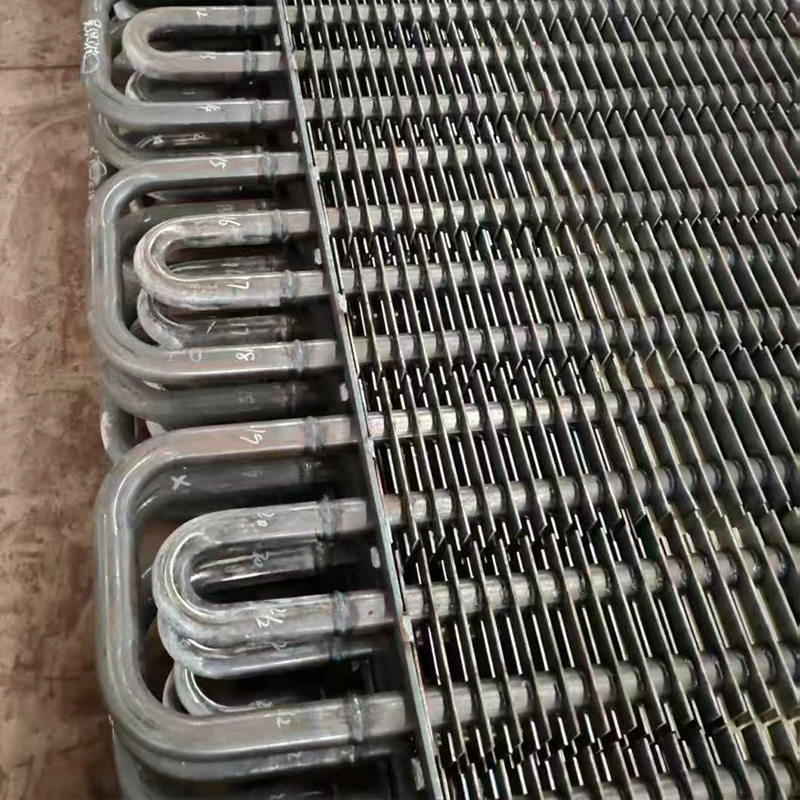
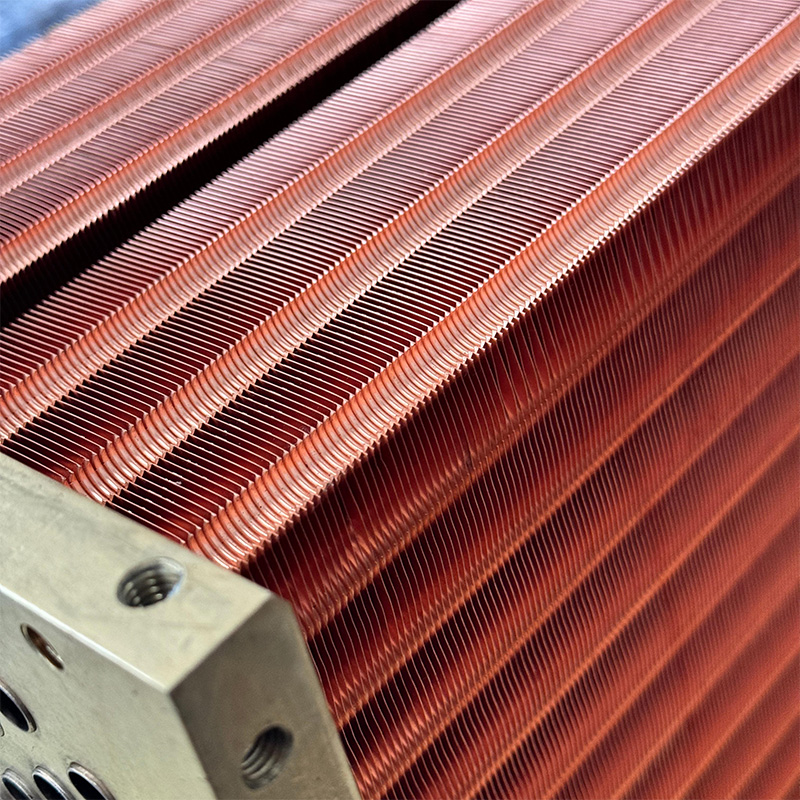
For cases where one of the media has a significantly worse heat transfer coefficient (for example, gas or viscous liquid), pipes with external fins are used. The ribs can be knurled, spiral welded or in the form of spikes. This design increases the heat exchange surface area several times without significantly increasing the dimensions of the device. In 2026, laser welding technologies make it possible to create bimetallic finned tubes with perfect thermal contact between the base and the fin, eliminating the risk of delamination.
Nano-coatings and surface modification
Advanced research in materials science has led to the development of pipes with nano-structured surfaces. Special coatings have superhydrophobic or oleophobic properties, preventing the adhesion of contaminants and biological fouling. This is especially true for water recycling systems and the food industry. Although the cost of such pipes is higher, the intervals between cleanings increase by 2-3 times, which provides a significant economic effect in the long term.
Digital twin and predictive analytics
Modern pipe manufacturers provide not just a physical product, but also a digital model of it. Data on the exact geometry, roughness and material are entered into the product passport in a machine-readable format. This allows pipe information to be integrated into a digital twin system of the entire heat exchanger. AI algorithms analyze data from sensors in real time and predict the remaining life of a tube bundle, warning of possible corrosion or vibration wear long before an accident.
Supplier Selection and Procurement Guide
Purchasing pipes for a heat exchanger is an investment in the reliability of the entire technological process. An error at this stage can cost the company millions of rubles due to downtime. Here is a step-by-step algorithm of actions to ensure quality and the best price.
Step 1: Technical specifications and audit of operating conditions
Before requesting a commercial proposal, it is necessary to clearly formulate the terms of work:
- Composition of the working environment (aggressiveness, presence of abrasives).
- Operating pressure and temperature (maximum and operating values).
- Required service life (usually 10-15 years for capital equipment).
- Regulatory framework (GOST, TU, ASTM, ASME).
The more accurate the technical specifications, the more adequate the proposals from suppliers will be. Avoid the wording “stainless steel pipe” without specifying the brand; require specifics: “pipe 10Х17Н13М2Т GOST 9941-81”.
Step 2: Search and verification of suppliers
There are three types of sellers on the market: manufacturing plants, large distributors of rolled metal products and trading houses. For large volumes, it is more profitable to work directly with the plant. For small quantities or urgent needs, it is safer to contact a large distributor with its own warehouse. Be sure to check the reputation of the counterparty: availability of valid ISO certificates, reviews on specialized portals, history of participation in tenders.
A striking example of a reliable partner in this area is the companyWuxi Kaisheng Electric Power and Petrochemical Equipment Co., Ltd.. Specializing in the development and production of high-quality heat exchange equipment, the company offers comprehensive solutions for oil refining, petrochemicals, shipbuilding and energy saving. Wuxi Kaisheng's portfolio includes titanium shell-and-tube heat exchangers, ASME-standard high-pressure vessels, as well as prefabricated corrugated tube bundles made from 316 stainless steel, C46400 marine brass, and copper-nickel alloys. The company's PED and ASME certified products offer exceptional corrosion resistance and the ability to withstand extreme temperatures and pressures, making them ideal for demanding industrial applications.
Step 3: Analysis of commercial proposals
Don't just look at the price per kilogram or meter. Compare:
- Delivery terms (INCOTERMS): who pays for shipping and insurance?
- Production time: is the supplier ready to ensure the rhythm of your project?
- Completeness of documentation: will a full quality passport be provided?
- Warranty obligations: how are claims issues resolved?
A suspiciously low price often indicates the use of recycled materials, a violation of heat treatment technology, or a discrepancy between the declared steel grade and the actual composition.
Step 4: Incoming inspection
When receiving the goods, be sure to carry out an incoming inspection. Check the markings on each pipe, check the melt numbers with the quality certificate. For critical components, it is recommended to carry out an independent examination in an accredited laboratory (spectral analysis, wall thickness measurement, visual inspection). The costs of examination are negligible compared to the risk of installing defective pipes.
Frequently asked questions (FAQ)
In this section, we answer the most popular questions that experts have when designing and purchasing heat exchange equipment.
What is the service life of the tubes in a shell and tube heat exchanger?
The service life is highly dependent on operating conditions and material. For carbon steel in neutral water it is 7-10 years. Stainless steel pipes (AISI 304/316) with proper operation last 15-20 years or more. Titanium pipes are practically eternal in most chemical environments and can be used for 25-30 years. Regular cleaning and compliance with operating conditions prolong the life of the tube bundle.
Is it possible to replace pipes of one material with another?
Theoretically yes, but this requires recalculation of the heat exchanger. Replacing steel pipes with copper pipes will increase heat transfer, but may require changes in the tube sheet design due to different linear expansion coefficients. Replacing with a material with worse thermal conductivity (for example, from copper to stainless steel) will lead to a decrease in the power of the device, unless the surface area (length or number of pipes) is increased. Any replacement must be agreed upon with the design organization.
What is more profitable: buying ready-made pipes or ordering a turnkey heat exchanger?
Покупка отдельных труб выгодна только если у вас есть собственное производство теплообменников с лицензией на сборку и сварку, а также штат квалифицированных вальцовщиков. Для большинства предприятий покупка готового теплообменника “под ключ” экономически целесообразнее. Завод-изготовитель несет гарантийную ответственность за весь аппарат, оптимизирует конструкцию и закупает трубы по оптовым ценам, которые недоступны розничному покупателю. Такие компании, как «Уси Кайшэн», предоставляют именно такие индивидуальные решения “под ключ”, включая поставку специализированных компонентов вроде трубных решеток из нержавеющей стали 321 или сплавов C70600, что гарантирует полную совместимость и надежность системы.
Как часто нужно чистить трубы теплообменника?
Периодичность чистки определяется скоростью загрязнения, которая зависит от качества теплоносителя. В системах с подготовленной водой чистку проводят раз в 1-2 года во время планового ремонта. В системах с технической водой или агрессивными средами интервал может сокращаться до 3-6 месяцев. Использование гофрированных труб и современных покрытий позволяет увеличить межремонтный интервал до 2-3 лет.
Влияет ли диаметр труб на цену теплообменника?
Да, влияет комплексно. Трубы малого диаметра (10-16 мм) позволяют компактно разместить большую площадь теплообмена, уменьшая размер кожуха и расход металла на корпус. Однако они более склонны к засорению и требуют более качественной воды. Трубы большого диаметра (32-57 мм) проще чистить механически, но сам аппарат получается громоздким и дороже в изготовле нии корпуса. Оптимальный диаметр выбирается на этапе гидравлического и теплового расчета.
Expert opinion and recommendations
Трубы в кожухотрубном теплообменнике — это не просто расходный материал, а высокотехнологичный компонент, определяющий эффективность энергетических и производственных процессов. В 2026 году рынок предлагает широкий спектр решений: от бюджетных углеродистых вариантов до высокотехнологичных титановых и биметаллических систем с нано-покрытиями.
Главный тренд ближайших лет — смещение фокуса с минимизации первоначальных затрат (CAPEX) на оптимизацию совокупной стоимости владения (TCO). Дешевые трубы, требующие частой замены и очистки, в долгосрочной перспективе обходятся предприятию дороже, чем качественные изделия из премиальных материалов. Инвестиции в современные гофрированные трубы и материалы с повышенной коррозионной стойкостью окупаются за счет снижения энергопотребления и увеличения межремонтных пробегов.
При выборе поставщика руководствуйтесь принципами прозрачности и доказанной компетенции. Требуйте полные пакеты документации, проводите независимую экспертизу и не бойтесь задавать технические вопросы. Правильно подобранные трубы станут залогом стабильной работы вашего предприятия на десятилетия вперед. Помните, что в инженерии нет мелочей, и качество каждого метра трубы вносит свой вклад в общую надежность системы.
Для получения актуальных расчетов стоимости и подбора оптимальной конфигурации трубного пучка под ваши конкретные задачи рекомендуется обратиться к ведущим производителям теплообменного оборудования, имеющим опыт реализации проектов в вашей отрасли. Профессиональный инжиниринг на этапе проектирования сэкономит значительные средства на этапе эксплуатации.