
Stainless steel pipe 25 mm: popular diameters for domestic needs
2026-07-11
Stainless steel pipe 25 mm: why is this a standard for household systems
In our practice of installation and design of utility networks, we have become convinced that a 25 mm stainless steel pipe is a critical component for the majority of private households in Russia. This size is not accidental: it ideally balances between the throughput required for the simultaneous operation of a washing machine, shower and kitchen faucet, and compactness, which allows you to hide communications in the walls or floor without losing useful space. We often see mistakes when owners choose the diameter “by eye,” which leads either to a drop in pressure on the upper floors or to excessive costs for materials. If you are planning a water supply or heating system, understanding the specifics of the 25 mm section will save you budget and nerves.
The choice of stainless steel instead of polypropylene or metal-plastic is dictated by durability. While plastic pipes degrade under the influence of ultraviolet radiation and temperature changes in 10–15 years, high-quality stainless steel lasts 50 years or more without reducing performance characteristics. However, the market is overflowing with products of dubious quality, where the stated parameters do not correspond to reality. Below we will analyze the technical nuances that distinguish a reliable product from a defective one, and give specific recommendations for choosing a supplier.
Technical characteristics and steel grades
When it comes to pipelines with a diameter of 25 mm (which corresponds to a nominal diameter of DN20), the steel grade becomes a key factor. In the household sector, two groups of materials are most common: AISI 304 (analogous to 08Х18Н10 according to GOST) and AISI 316 (08Х17Н13М2). The difference between them is critical to the service life of the system. AISI 304 steel contains 18% chromium and 8% nickel, which provides excellent corrosion resistance in fresh water and neutral environments. This is the optimal choice for internal distribution of cold and hot water in an apartment or house where the water is pre-treated.
However, if your water source is a well with a high content of chlorides or hydrogen sulfide, or you are installing the system in a coastal area with aggressive sea air, a 25 mm stainless steel pipe made of AISI 304 steel may undergo pitting corrosion after 3-5 years. Here it is necessary to switch to AISI 316, which contains molybdenum (2–3%). Molybdenum blocks the development of pitting corrosion. In our practice, there was a case when a client saved 15% on the cost of pipes by choosing the 304th brand for a country house with artesian water of high mineralization. The result was fistulas in the welds after two years of operation and the need to completely dismantle the hidden wiring. Don't repeat this mistake: analyze the chemical composition of water before purchasing.
The wall thickness for a diameter of 25 mm varies from 1.0 mm to 2.0 mm. For domestic needs under pressure up to 10–16 bar (standard for apartment buildings and private buildings), a thickness of 1.5 mm is sufficient. Thinner walls (1.0–1.2 mm) are permissible only for gravity systems or decorative fences, but not for pressure mains. The use of thin-walled pipes in high-pressure systems creates a risk of water hammer, especially when installing modern high-speed solenoid valves in washing machines and dishwashers.
Recommendation:Request from the supplier a certificate of conformity or a quality passport, which clearly indicates the steel grade and the results of spectral analysis. Avoid shopping “on the market” without documents, since it is almost impossible to visually distinguish AISI 304 from cheap ferritic steel 430 without reagents.
Popular diameters and types of connections for 25 mm pipes
Although the outer diameter of the pipe is often referred to as “25mm”, in a professional environment it is important to distinguish between the actual dimensions. The 25.4 mm (1 inch) outer diameter pipe is the international standard for stainless steel piping. However, in the Russian nomenclature there is also a pipe with an outer diameter of exactly 25 mm, which is often used in specific industrial applications or complies with old GOSTs. For domestic needs, the inch row (25.4 mm) is most often meant, since the bulk of fittings and shut-off valves are produced for it.
The type of connection determines the reliability of the entire system. For a diameter of 25 mm, three main methods are applicable:
- TIG welding (argon arc):The most reliable option that ensures the integrity of the seam. Requires welder qualifications and access to the joint from all sides. Ideal for hidden installation in walls where maintenance is not possible.
- Press fittings:Modern standard for quick installation. The connection is made with a special press jaw in a few seconds. Sealing is achieved using EPDM rings. The main advantage is the absence of open fire and high speed of work. The downside is the need for expensive tools and the inability to reuse the fitting after crimping.
- Threaded connections:The classic method requires threading or the use of push-in fittings. Allows disassembly of the system, but is the most labor-intensive and potentially less vibration-tight. In hot water supply systems, threaded seals (flax, fum tape) age faster than the metal of the pipe itself.
When choosing fittings for a 25 mm pipe, pay attention to the material of the connector itself. Cheap, low-lead brass fittings can become a source of galvanic corrosion when paired with stainless steel, especially if the water has a low pH. The best solution is fittings made of the same grade of stainless steel as the pipe. This eliminates galvanic coupling and ensures the same coefficient of thermal expansion, preventing the joints from weakening during heating and cooling cycles.
Action:Before starting installation, determine the available tools. If you don’t have press jaws and it’s expensive to hire a welder, consider the option of a combined system, where the main lines are welded and the outlets to the devices are threaded, but only using high-quality seals.
Calculation of hydraulics and throughput
Many developers believe that “the larger the pipe, the better,” and install diameters of 32 mm or even 40 mm everywhere, considering 25 mm insufficient. This misconception makes the project more expensive and installation more difficult. Let's turn to the physics of the process. For a 25 mm stainless steel pipe (internal diameter approximately 22–23 mm with a wall of 1.5 mm), the maximum calculated water flow is approximately 1.5–1.8 m³/hour at a flow rate of 1.5 m/s. This speed is the maximum permissible for silent operation of household plumbing.
For a typical family of 4 people, peak water consumption (simultaneous use of a shower, sink and washing machine) rarely exceeds 1.0–1.2 m³/hour. Consequently, a 25 mm pipe copes with this load with a margin. Increasing the diameter to 32 mm will reduce the flow speed, which in some cases is even harmful: at low speed (< 0.5 m/s) sedimentation and silting of the pipeline is possible, especially in hot water supply systems. In addition, a larger volume of water in the pipes means more waiting time for hot water at the consumer and increased heat loss in uninsulated areas.
The hydraulic resistance of a stainless pipe is significantly lower than that of plastic analogues, due to the smoothness of the inner surface (roughness Ra<0.8 µm). This allows the use of lower power pumps or higher output pressure with the same input data. However, it is important to consider the number of turns and fittings. Each 90 degree bend adds the equivalent of 1-2 meters of straight pipe to the system resistance. When designing long routes (>15 meters) from the riser to the most distant point, the use of a 25 mm pipe can lead to a pressure drop of 0.3–0.5 bar. In such cases, it is more rational to increase the diameter only in the main section to the branching point, leaving the liners 25 mm or even 20 mm.
We took measurements on a real object: a cottage with two bathrooms on the second floor. When using a 25 mm pipe at the inlet and 20 mm wiring to the devices, the pressure in the shower was 2.8 bar with an inlet of 3.5 bar. Replacing the 32mm section of the line raised the pressure in the shower to only 2.9 bar, but increased the cost of materials by 40%. The conclusion is obvious: for 95% of private houses, a 25 mm stainless steel pipe is a technically justified maximum for risers and collectors.
Tip:Use online hydraulic resistance calculators or refer to Shevelev's tables to calculate the head loss specifically for your project, taking into account the length of the route and the number of fittings, before purchasing material.
Comparison with alternative materials
Why choose stainless steel over the usual polypropylene (PPR) or cross-linked polyethylene (PEX)? The answer lies in total cost of ownership and reliability. Polypropylene is cheap to purchase and install, but has a high linear expansion coefficient. When heated to 70°C, a 5 meter long PPR pipe lengthens by several centimeters. Without compensation (U-shaped elements or hinges), this leads to deformation of the walls, destruction of the plaster and weakening of the fastenings. Stainless steel expands 5-6 times less than plastic, making it ideal for rigid fixation and hidden gaskets without expansion joints.
Cross-linked polyethylene (PEX) is good for its flexibility, but is afraid of ultraviolet radiation and requires special metal sleeves for protection in places where it passes through structures. Additionally, PEX fittings are often made of brass, which oxidizes over time. A 25 mm stainless steel pipe does not have these problems. It does not burn, does not release toxins during a fire, and remains durable at temperatures up to 400°C (short-term), while plastic begins to melt at 140–160°C.
| Parameter | Stainless steel (AISI 304/316) | Polypropylene (PPR) | Metal-plastic |
|---|---|---|---|
| Service life | 50+ years (unlimited with proper use) | 25–30 years (degradation from UV and chlorine) | 15–20 years (risk of delamination) |
| Operating temperature | up to 600°C | up to 95°C (short term) | up to 95°C |
| Oxygen permeability | 0% (ideal for closed heating systems) | High (requires a barrier layer) | Low (with an aluminum layer) |
| Installation cost | High (requires special tools/welding) | Low (soldering is accessible to beginners) | Medium (press or crimp) |
| Water hammer resistance | High (up to 25–40 bar) | Medium (risk of cracks at >10 bar) | Average |
The only significant drawback of a stainless pipe is the price of the material and labor. Components for a diameter of 25 mm are 3–5 times more expensive than polypropylene. However, if you divide this cost by the service life (50 years versus 25), the difference is leveled out. Add to this the absence of the risk of leaks inside the floor screed, which can cost millions of rubles in repairs for neighbors below, and the choice becomes obvious for a responsible owner.
Conclusion:For open systems, where aesthetics and durability are important, or for hidden connections in concrete, where replacement is impossible, the 25 mm stainless steel pipe has no competitors. For temporary buildings or budget renovations for rental, you can consider plastic.
Quality problems and how to avoid them
The building materials market in the CIS is saturated with counterfeit goods. Under the guise of a 25 mm stainless steel pipe, unscrupulous sellers often offer pipes made of black steel with a galvanic coating “like stainless steel” or products made of AISI 201 steel (an economical alloy with a high manganese and low nickel content). AISI 201 looks identical to 304 steel, but begins to rust after six months in a humid bathroom environment. We encountered a situation where decorative handrails and heated towel rails made of such “stainless steel” became covered with red streaks already in the first winter season.
How to check the quality? The simplest method is to use a magnet. Austenitic steels (304, 316) are practically non-magnetic (weak attraction is possible only in places of cold deformation, for example, at the ends of a pipe). If the magnet sticks strongly, you have ferritic steel or ordinary “chernushka” in front of you. A more accurate method is a drop of electrolyte (you can use a solution of copper sulfate). There will be no reaction on real stainless steel; a red coating of copper will appear on the fake. However, the most reliable way is to require a laboratory certificate indicating the percentage of Ni (nickel) and Cr (chromium).
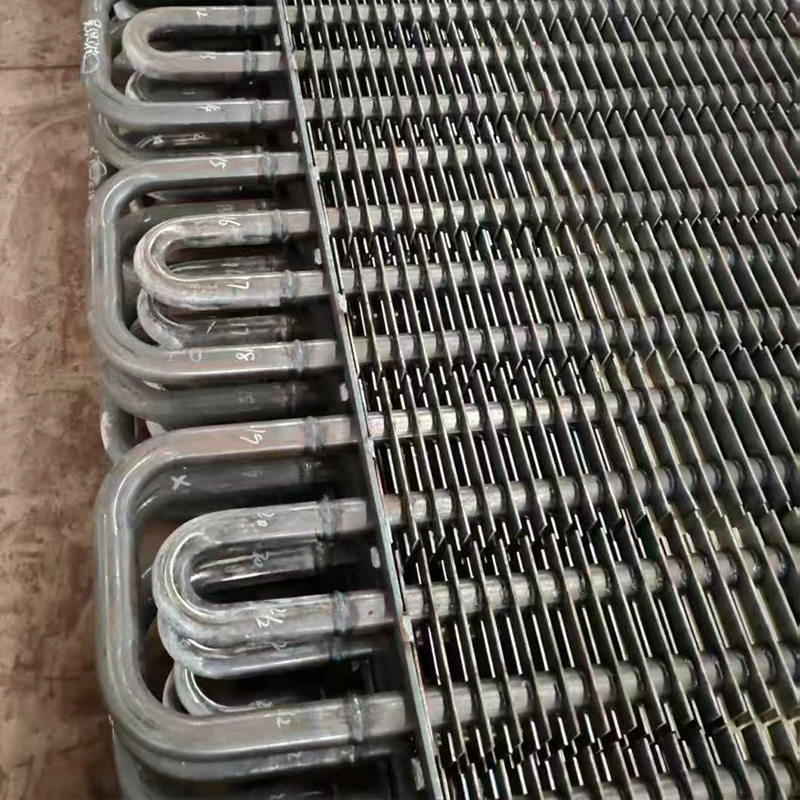
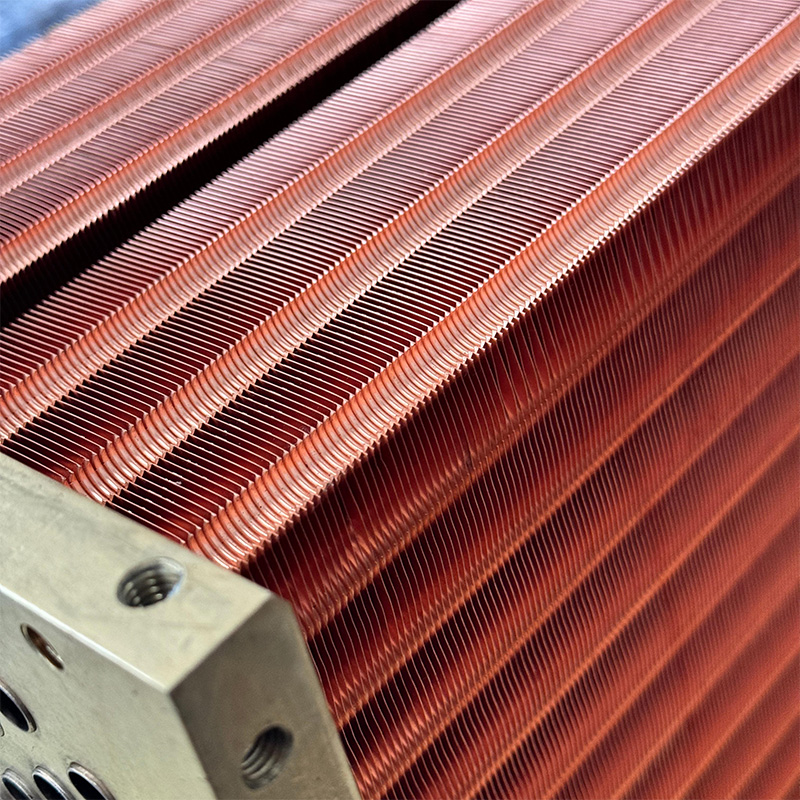
It is worth noting here that the high quality standards required for critical projects are the norm for leading metal manufacturers. For example, a companyWuxi Kaisheng Electric Power and Petrochemical Equipment Co., Ltd.specializes in the design and production of complex heat transfer equipment using the same steel grades (including AISI 316, titanium and nickel alloys) as premium piping systems. Their products, such as 316 stainless steel corrugated tube bundles or tube sheets, are certified to stringent international ASME and PED standards. The experience of such enterprises in oil refining, the chemical industry and seawater desalination proves that with the correct selection of materials (like AISI 316 for aggressive environments) and quality control, metal systems last for decades without loss of properties. By focusing on such industry standards when choosing a household pipe, you are guaranteed to avoid problems with corrosion and geometry.
Another problem is the geometry of the pipe. Cheap products may have an oval cross-section or uneven wall thickness. When using press fittings, this is critical: if the pipe is not round, the rubber ring will not provide a tight seal, and the connection will leak under pressure. When purchasing a batch of 25 mm pipes, be sure to check several samples with calipers in different sections. The permissible deviation according to GOST usually does not exceed ±0.2 mm for diameter and ±10% for wall thickness.
Caution:Do not buy a pipe without markings. On a high-quality product, the steel grade, diameter, wall thickness and manufacturer’s name are applied with laser or paint. Lack of marking is the first sign of defect or counterfeit.
Installation features and care
Installation of a 25 mm stainless pipe system requires adherence to technology. When welding, it is necessary to use argon purging of the internal cavity of the weld. If this is not done, the back side of the seam will oxidize (“soot”), which will create a source of corrosion and worsen the hygienic properties of the pipe (bacteria will accumulate there). In domestic conditions, it is difficult to ensure purging, so for self-installation we strongly recommend using press systems. They eliminate the human factor and guarantee the quality of the connection, provided that the original tool is used.
When cutting pipe, use only pipe cutters designed for stainless steel. A grinder with an abrasive disc overheats the edge, changes the structure of the metal and leaves scale that is difficult to remove. After cutting, be sure to chamfer and remove metal shavings from inside the pipe so that they do not get caught in the O-rings of the fittings.
Maintenance of the finished system is minimal. Stainless steel has the property of self-passivation: upon contact with air oxygen, a protective oxide film is formed on the surface. However, in areas of welding or mechanical damage, this film must be restored. There are special etching pastes for this. In everyday life, it is enough to regularly wipe open areas with a soft cloth and a neutral detergent. Avoid using chlorine-containing cleaners and abrasive sponges, which can damage the gloss and cause pitting.
In heating systems with stainless pipes, it is important to monitor the quality of the coolant. Although steel is resistant to corrosion, the presence of suspended solid particles (scale from old radiators, sand) at high flow rates acts as an abrasive, thinning the pipe wall from the inside. Installation of mud traps at the entrance to the system is mandatory.
Checklist before launch:1. Visual inspection of all joints. 2. Pressure testing of the system with a pressure exceeding the working pressure by 1.5 times (for 25 mm pipes they are usually tested at 15–20 bar) for 1 hour. 3. Checking the absence of condensation at the joints (a sign of micro-leakage).
Economic justification for choice
Investment in a 25 mm stainless steel pipe pays off due to the absence of repairs. The average cost of replacing a leaking plastic pipe in a wall, taking into account the dismantling of tiles, plaster and restoration of the finish, ranges from 50,000 to 150,000 rubles for one damaged area. The cost of the pipe itself and fittings for the entire house rarely exceeds this amount. Thus, by choosing stainless steel, you actually insure your property against large financial losses.
In addition, the liquidity of real estate with stainless steel engineering systems is higher. При продаже дома компетентные покупатели (знающие толк) обязательно оценят качество скрытых коммуникаций. Наличие сертификатов на трубы и схему разводки станет весомым аргументом в пользу цены объекта.
В долгосрочной перспективе (горизонт 20 лет) суммарные затраты на систему из нержавейки оказываются на 20–30% ниже, чем на систему из качественного PEX или многослойного полипропилена, если учитывать инфляцию цен на ремонтные работы и материалы.
Frequently Asked Questions
Можно ли соединять трубу 25 мм с пластиковыми участками?
Да, это допустимо через комбинированные фитинги (нержавейка-резьба-пластик). Однако такое соединение считается слабым звеном из-за разного коэффициента теплового расширения материалов. При частых циклах нагрева и остывания резьбовое соединение может ослабнуть. Мы рекомендуем минимизировать количество таких переходов и использовать их только в точках подключения сантехнических приборов, где возможна визуальная проверка. Для скрытых магистралей лучше избегать стыковки разнородных материалов.
Какой максимальный рабочий давление выдерживает труба 25 мм?
Для трубы из стали AISI 304 со стенкой 1,5 мм рабочее давление составляет до 16–20 бар при температуре до 100°C. Кратковременно (при гидроударе) она выдерживает до 40 бар без разрушения. Это с запасом перекрывает требования бытовых сетей, где давление обычно не превышает 6–10 бар. Для систем с давлением выше 16 бар следует использовать трубы с толщиной стенки 2,0 мм и выше.
Подвержена ли нержавеющая труба обрастанию накипью?
Гладкая по верхность нержавеющей стали (Ra< 0,8 мкм) препятствует адгезии солей жесткости гораздо эффективнее, чем шероховатый пластик или оцинкованная сталь. Накипь образуется медленнее и легче удаляется при необходимости. Тем не менее, в регионах с очень жесткой водой (>7 мг-экв/л) образование отложений возможно со временем. Установка магнитных или полифосфатных фильтров на вводе воды решит эту проблему полностью.
Нужно ли заземлять металлические трубы?
Согласно современным нормам ПУЭ, металлические трубы водоснабжения подлежат включению в систему уравнивания потенциалов (ДСУП). Это необходимо для защиты от поражения электрическим током в случае пробоя изоляции бытовой техники (стиральной машины, бойлера) на корпус. Игнорирование этого требования опасно для жизни. Используйте специальные хомуты с контактными площадками для подключения медного провода к трубе 25 мм в распределительном щите или ванной комнате.
Где купить качественную трубу и не переплатить?
Избегайте строительных рынков и мелких интернет-магазинов без репутации. Крупные специализированные поставщики металлопроката работают напрямую с заводами (как российскими, так и китайскими сертифицированными) и предоставляют полный пакет документов. Цена у них может быть выше на 5–10%, но вы получаете гарантию соответствия марки стали. Помните: экономия на материале фундамента или труб — это самая дорогая экономия в строительстве.
Conclusion and next steps
Труба нержавеющая 25 мм — это разумный компромисс между производительностью, стоимостью и надежностью для современных бытовых систем. Она решает проблемы коррозии, температурных деформаций и ограниченного срока службы, свойственные полимерным аналогам. Правильный выбор марки стали (304 или 316), качественный монтаж с соблюдением технологии и регулярный контроль состояния системы обеспечат бесперебойную подачу воды вашим внукам.
Не откладывайте решение вопросов инженерного обеспечения на потом. Ошибки, заложенные в стены на этапе черновой отделки, исправить крайне дорого. Если вы сомневаетесь в расчетах или подборе комплектующих, обратитесь к нашим специалистам. Мы поможем составить смету, подобрать оптимальную конфигурацию фитингов и предоставим образцы продукции для проверки качества.
Каталог нержавеющих труб и фитингов | Услуги профессионального монтажа
Свяжитесь с нами сегодня для получения индивидуального коммерческого предложения и консультации инженера. Ваша система водоснабжения заслуживает лучшего решения.