
Finned Tube Heat Exchangers: Leading Manufacturer
2026-07-02
- Finned tube heat exchangers: a leading manufacturer for industry
- Critical selection parameters: why GOST and material are more important than price
- Manufacturing Technology Comparison: Rolling vs. Extrusion vs. Welding
- Engineering calculation and selection: avoiding typical design errors
- Production capacity and quality control: guarantee of reliability
- Application in various industries: from oil and gas to agriculture
- Service and post-warranty support
- Frequently Asked Questions
- Conclusion and next step
Finned tube heat exchangers: a leading manufacturer for industry
Choosing a reliable supplier of heat exchange equipment is not just a search for a low price, but a matter of safety throughout the entire production cycle. In our practice, we have seen how saving 15% on purchases led to a line shutdown after six months due to depressurization of the tube sheet.Теплообменные аппараты с оребренными трубами: ведущий производительmust guarantee not only compliance with the drawings, but also stability of characteristics under cyclic loads. We produce equipment that undergoes hydraulic testing with pressure exceeding operating pressure by 30%, even before shipment to the client.
The market is oversaturated with offers where beautiful renderings hide thin-walled low-quality metal. Our goal is to provide transparent data: real finning ratio, exact steel grade and verified EAC and ISO certificates. If you are looking for a partner for long-term projects in the oil and gas or chemical industries, you need numbers, not marketing slogans. Below we will examine the technical nuances that distinguish factory equipment from artisanal assembly, and explain why delivery times of 45 days can be more profitable than “in stock”.
Critical selection parameters: why GOST and material are more important than price
The first thing an engineer looks at when evaluating a proposal is not the total amount, but the bill of materials. The finned tube is the heart of the machine, and it is here that hidden compromises are most often made. Many suppliers use AD1 grade aluminum instead of the required AD31 or reduce the wall thickness of the base pipe from 2.5 mm to 2.0 mm. On paper the difference is unnoticeable, but in operation at a pressure of 1.6 MPa and temperatures above 200°C this leads to plastic deformation and fistulas.
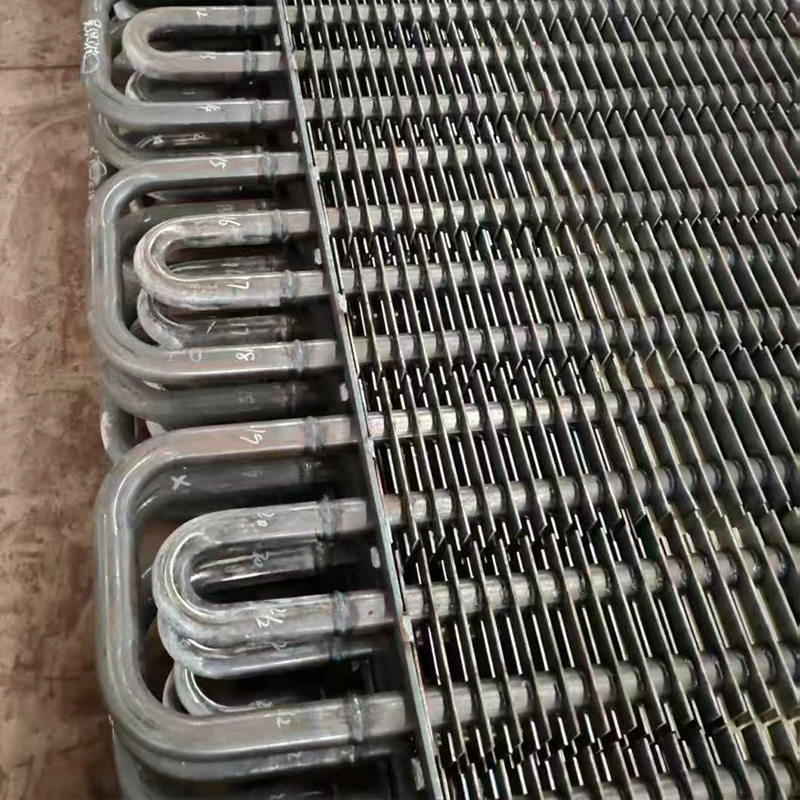
We use only certified rentals. For bimetallic pipes (steel-aluminium), the rolling method is used, ensuring a contact density of at least 95% along the entire length. This is critical for heat transfer: the air gap between the materials acts as an insulator, reducing the efficiency of the device by 20-25%. In one of our cases, the client was faced with a 40% drop in the efficiency of the workshop heating system in winter. The reason turned out to be the use of adhesive joints instead of mechanical knurling from the previous supplier. The glue dried out during the first heating-cooling cycle.
When ordering equipment, be sure to request a quality certificate for each batch of pipes. Please pay attention to the following parameters:
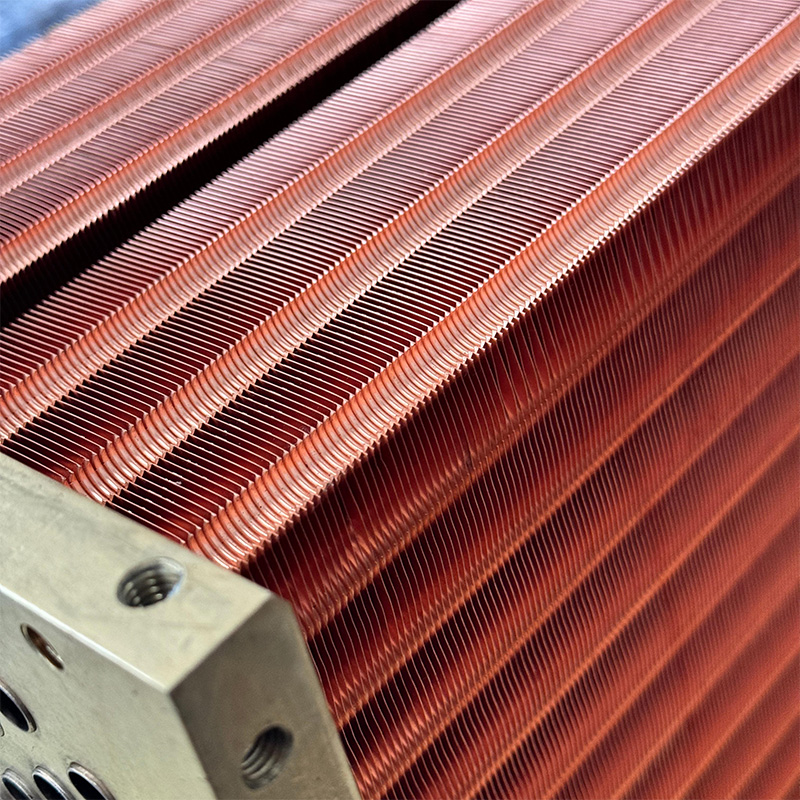
- Height and pitch of fins:The optimal ratio depends on the environment. For viscous liquids, the pitch should be smaller to prevent clogging of the intercostal space.
- Fin type:Spiral knurling is suitable for clean environments, while wide plate fins are necessary for working with dusty air or gases.
- Anti-corrosion coating:For aggressive environments (sulfur compounds, sea water), hot-dip galvanization or a polymer coating with a thickness of at least 80 microns is required.
Do not believe the words “analogue of GOST”. Require a specific reference to the standard, for example, GOST R 53683-2009 or specifications registered in Rosstandart. The absence of a clear regulatory framework in the documentation is the first sign that the manufacturer is working “in the gray” and is not responsible for the results.
Check tube bundle geometry. A misalignment of more than 2 mm per meter of length will lead to uneven flow around and the formation of stagnant zones, where local corrosion will inevitably begin. Our CNC machines ensure positioning accuracy of pipes in the grid up to 0.5 mm, which is confirmed by the incoming inspection protocol.
Manufacturing Technology Comparison: Rolling vs. Extrusion vs. Welding
Understanding the technology of manufacturing finned tubes allows you to avoid fatal mistakes when selecting equipment for specific tasks. Three methods dominate the market, and each of them has its own strict application limits. Choosing the wrong technology is a guarantee of premature failure of the unit.
Below is a comparative table of the main methods, based on data from our laboratory tests and field experience in the North and hot climates.
| Comparison parameter | Spiral rolled pipe (L-type, KL-type) | Extruded Tube (Mushroom Fin) | Welded finned tube (High-Frequency Welded) |
|---|---|---|---|
| Thermal contact | High (mechanical tension). Operating temperature up to 280°C. | Ideal (monolithic structure). Operating temperature up to 350°C. | Maximum (metallurgical bond). Operating temperature up to 450°C and above. |
| Vibration resistance | Average. If the flow pulsates strongly, the tension may loosen over time. | High. The rib is part of the main pipe, loosening is not possible. | Very tall. Suitable for high speed gas and steam flows. |
| Base pipe protection | Partial. The ends and joints of the tape may be subject to corrosion. | Full. The base tube is completely enclosed by a fin material (usually aluminum). | Depends on the rib material. Additional protection of welds is often required. |
| Production cost | Low. The most budget option for mass use. | Medium/High. Requires expensive equipment and supplies. | High. Energy-intensive process, high cost of raw materials. |
| Recommended Application | Ventilation systems, air heaters, moderate temperatures. | Refrigeration equipment, cryogenics, food industry (hygiene). | Oil refining, energy, high-temperature gas coolers. |
In our practice, there was a case when, for a gas drying installation, we ordered devices with rolling pipes, saving the budget. After a year of operation at a process temperature of 320°C, the contact weakened and the heat transfer fell below design values. The plant had to stop the line to replace the beams. If extruded or welded pipes had been chosen immediately, this incident would have been eliminated. Extrusion creates a monolithic part, where the rib and pipe are one piece, which eliminates thermal contact resistance.
However, welded pipes should not be considered a universal solution. Their main disadvantage is sensitivity to the quality of the weld. Microcracks in the fusion zone, invisible to the eye, turn into through defects under the influence of thermal cycling. We use automated eddy current testing of every meter of welded pipe to eliminate this risk. For most HVAC and general mechanical engineering applications, quality L-Knurling remains the gold standard for cost/performance.
When choosing a technology, always take into account the coefficient of thermal expansion of materials. If the difference between the expansion of the pipe and the fin is large (for example, steel and aluminum with sudden temperature changes), the knurling may lose density. In such cases, we recommend switching to bimetallic pipes with an intermediate layer or all-steel welded options.
Engineering calculation and selection: avoiding typical design errors
The selection of a heat exchanger is a balance between aerodynamic resistance and thermal power. A common mistake made by customers is the requirement for the device to be as compact as possible. Reducing dimensions by increasing the number of rows of pipes leads to an increase in pressure drop. As a result, existing fans cannot cope with the load, air flow drops, and the device ceases to perform its function.
We carry out calculations using specialized software, taking into account the real characteristics of your equipment, and not average tabular data. It is important to understand: the theoretical heat transfer coefficient under ideal laboratory conditions and real work in a workshop with dusty air are two different things. We reserve a margin of 10% to 15% for the heat exchange surface, depending on the aggressiveness of the environment.
Key stages of our selection process:
- Input data analysis:We do not accept an application without exact values of flow rates, inlet/outlet temperatures and permissible pressure losses. If you do not know the exact composition of a gas or liquid, we insist on chemical analysis. One of our clients ignored the presence of hydrogen sulfide in associated gas, which led to sulfide cracking of pipes within 3 months.
- Selecting a flow pattern:A counterflow scheme is always more effective than a forward flow, but it is structurally more difficult to implement for some types of devices. We simulate both options to find the optimal solution for the cost of metal consumption.
- Calculation of fin pitch:Too many fins (less than 2 mm) quickly become clogged with dust and fluff, turning into a continuous screen that prevents heat transfer. For outdoor installations, we recommend a pitch of at least 2.5–3 mm, even at the cost of a slight increase in size.
- Verification of materials:Selection of a pair of materials (pipe/fin) taking into account electrochemical compatibility. Contact of aluminum and copper in a humid environment causes intense galvanic corrosion. We use special insulating gaskets or choose neutral pairs of materials.
- Final approval:We provide the client with a report with operating schedules of the device in different modes (winter/summer, minimum/maximum load). This allows operators to understand the limits of safe operation.
Pay attention to cleaning. A device that cannot be cleaned without dismantling is doomed to degradation. We design enclosures with removable panels and provide access for mechanical or chemical cleaning. In a project for a poultry farm, we increased the inter-tube space to ensure the possibility of blowing with compressed air without disassembling the unit.
Don't forget about winter operation. Condensation freezing on the fins can rupture the aluminum lamellas. For northern versions, we offer hydrophobic coatings that facilitate rapid drainage of moisture, and we provide warm air recirculation systems to prevent freezing.
Production capacity and quality control: guarantee of reliability
The status of “leading manufacturer” is confirmed not by words on the website, but by the presence of its own equipment fleet and quality management system. Our factory is equipped with automatic rolling lines, laser welding machines and sandblasting chambers. The full production cycle allows us to control every stage: from incoming metal inspection to final packaging.
Wuxi Kaisheng Electric Power and Petrochemical Equipment Co., Ltd. specializes in the design and production of sophisticated heat exchange equipment that meets the most stringent international standards. Our portfolio includes not only classic finned tube units, but also titanium shell-and-tube heat exchangers, ASME high-pressure solutions, recovery boilers and air coolers. We work with a wide range of materials, from carbon and stainless steel (including 316 and 321 grades) to exotic alloys such as C46400 marine brass, C70600 copper-nickel alloys and N06625 nickel alloy. This material base allows us to create products with exceptional corrosion resistance for seawater desalination, shipbuilding and aggressive chemical environments.
Our quality system is certified to ISO 9001:2015, PED and ASME standards. This is not just a piece of paper for tenders, but a working tool. Each operation is recorded in a digital passport of the product. If after 5 years of operation a question arises regarding a specific batch of pipes, we will be able to pull up the archive and see who the operator was at the machine, what the temperature was in the workshop and what parameters were given by the non-destructive testing device.
We pay special attention to the testing base. Before shipment, each heat exchanger goes through:
- Hydraulic tests:The pressure is maintained for at least 30 minutes. We use water with added corrosion inhibitors to avoid damaging the inner surface of the pipes during the test.
- Pneumatic tests:To identify microdefects that are not visible during hydrotesting. The device is immersed in a bath or coated with a soap solution under excess pressure.
- Visual control:Checking the geometry, quality of painting, absence of dents on the ribs. Damaged fins reduce efficiency, so we reject pipes with deformation of more than 5% of the area.
Unlike trading companies, we can make changes to the design to suit your needs. Need a custom connection? Change the location of the pipes to fit into the existing trim? Increase the thickness of the tube sheet? For us, this is a matter of setting up the machine program, and not months of negotiations with a Chinese partner factory.
Logistics is also our responsibility. Heat exchangers are complex-shaped loads that are sensitive to shock. We develop individual containers: wooden frames with soft supports that protect the ribs from crushing. Statistics show that up to 10% of damage during transportation occurs due to improper securing of the cargo. Our packaging guarantees the safety of the goods even during multimodal transportation.
Production times depend on the complexity of the order. We ship standard air coolers within 14-20 business days. Customized high power projects require 30-45 days. We never promise “tomorrow” if we understand that the technology requires time for the welds to cool down or the coating to polymerize. Honesty about deadlines is better than breaking commitments due to haste.
Application in various industries: from oil and gas to agriculture
There are no universal solutions. What works ideally in the drying chamber of a bakery is absolutely not suitable for compressing natural gas. Let's look at two specific cases from our practice that demonstrate the adaptability of technology.
Case 1: Oil refinery (refinery).
Task: Cooling hydrocarbon gases in front of the compressor. Inlet temperature +85°C, target +40°C. The medium contains traces of sulfur compounds.
Problem with the previous solution: Devices with aluminum fins failed within 8 months due to corrosion. Downtime losses amounted to millions of rubles.
Our solution: We offered devices with AISI 321 stainless steel pipes and hot-dip galvanized carbon steel fins. Welded technology for fastening the ribs was used to eliminate gaps. Additionally, an air pre-filtration unit is installed.
Result: The equipment has been operating for 4 years without replacing the tube bundle. The heat transfer efficiency stabilized at 98% of the design level. The client saved on repairs an amount 3 times higher than the cost of new equipment.
Case 2: Greenhouse complex in Siberia.
Task: Maintaining a temperature of +22°C in winter with outside temperatures down to -45°C. High humidity inside the greenhouse (up to 90%).
Problem: Traditional cast iron radiators did not provide uniform heating; condensation zones appeared, causing plant diseases.
Our solution: Installation of modular air heaters with bimetallic pipes (steel-aluminum) and high-density fins. A special epoxy coating protected the aluminum from the alkaline environment of fertilizers. The system is equipped with frequency converters for smooth flow control.
Result: The uniformity of the temperature field has improved by 35%. Energy consumption decreased by 18% due to precise control. Tomato yields increased by 12% due to the elimination of stressful temperature changes.
These examples show that a deep understanding of process technology is more important than just selling hardware. We analyze the chemistry of the environment, mechanical stress and climatic factors to provide a solution that will work for years, not months.
For the food industry, we use materials approved for contact with food and ensure hygienic design of units (no stagnation zones, easy to clean). For the energy sector, resistance to high pressures and temperatures is a priority. The flexibility of our production, including the ability to work with titanium and special alloys, allows us to meet the needs of a wide variety of economic sectors, from petrochemicals to energy conservation.
Service and post-warranty support
Отгрузка оборудования — это не конец сделки, а начало долгосрочного партнерства. Даже самый совершенный теплообменник требует внимания. Мы разработали регламенты технического обслуживания, которые продлевают жизнь оборудования в 1,5-2 раза.
Наши инженеры проводят выездные аудиты действующих систем. Мы проверяем:
- Состояние оребрения (наличие загрязнений, коррозии, механических повреждений).
- Герметичность соединений и отсутствие вибраций.
- Соответствие фактических параметров работы проектным значениям.
Частая проблема — потеря герметичности фланцевых соединений из-за термоциклирования. Мы рекомендуем проводить протяжку болтовых соединений после первых 100 часов работы и далее по графику. Также мы поставляем ремкомплекты: уплотнительные прокладки, крепеж, отдельные секции труб для оперативного ремонта без замены всего аппарата.
Если ваш аппарат вышел из строя по вине производителя (что случается крайне редко благодаря нашему ОТК), мы берем на себя все расходы по логистике и замене. Но чаще всего поломки связаны с нарушением условий эксплуатации: работой без фильтров, превышением давления, использованием некондиционного теплоносителя. В таких случаях мы не отказываем в помощи, а проводим диагностику и предлагаем оптимальный путь восстановления.
Мы ведем базу знаний по типичным неисправностям. Это позволяет нашим сервисным бригадам приезжать на объект уже с необходимым набором запчастей и инструментом, сокращая время простоя заказчика. Для крупных клиентов возможна установка систем удаленного мониторинга, которые передают данные о температуре и давлении в режиме реального времени, предупреждая о критических отклонениях до аварии.
Frequently Asked Questions
Какой срок службы теплообменных аппаратов с оребренными трубами?
При соблюдении услови й эксплуатации и регулярном техническом обслуживании срок службы составляет от 15 до 25 лет. Ключевым фактором является материал труб и среда. Алюминиевые ребра в агрессивной атмосфере могут потребовать замены через 7-10 лет, тогда как стальные оребренные трубы служат весь срок жизни аппарата. Мы даем гарантию 24 месяца на отсутствие производственных дефектов, но реально оборудование служит гораздо дольше.
Можно ли ремонтировать поврежденное оребрение?
Локальные повреждения ребер (замятия до 10% площади) допустимы и не требуют немедленного ремонта, хотя эффективность слегка снижается. Если повреждено более 15-20% поверхности или нарушена целостность базовой трубы, необходима замена секции или всего пучка. Попытки выправить ребра вручную часто приводят к их отрыву от трубы, что усугубляет ситуацию. Лучше заменить модуль целиком.
Как рассчитать необходимую мощность теплообменника?
Точный расчет требует знания расхода теплоносителя, температур на входе и выходе, а также свойств рабочей среды. Использовать упрощенные формулы из интернета опасно — погрешность может достигать 30%. Рекомендуем заполнить наш опросный лист и передать его инженерам. Мы выполним тепловой расчет бесплатно в рамках подготовки коммерческого предложения, учтя запас мощности и реальные условия монтажа.
Работаете ли вы по индивидуальным чертежам заказчика?
Да, это одно из наших ключевых преимуществ. Мы можем изготовить аппарат по вашим чертежам или модернизировать существующее оборудование, изменив габариты, типы присоединений или материал труб. Собственное конструкторское бюро позволяет быстро адаптировать типовые решения под специфические требования проекта, сохраняя при этом сертификацию продукции.
Какие сертификаты вы предоставляете?
Все оборудование сертифицировано в соответствии с требованиями Технических регламентов Таможенного союза (ТР ТС), а также международными стандартами PED и ASME. Мы предоставляем сертификат соответствия ЕАС, паспорт качества, руководство по эксплуатации и монтажу. По запросу возможны предоставление сертификатов ISO 9001, заключений экспертиз промышленной безопасности и тест-отчетов независимых лабораторий.
Conclusion and next step
Рынок теплообменного оборудования сложен и полон нюансов, которые не видны невооруженным глазом. Выбор поставщика — это выбор партнера, который разделит с вами ответственность за бесперебойность производства.Теплообменные аппараты с оребренными трубами: ведущий производитель— это не просто заголовок, это обязательство соблюдать технологии, использовать качественные материалы и честно отвечать за результат.
Мы не продаем “коробки”. Мы продаем уверенность в том, что ваша система будет работать завтра, через год и через десять лет. Наши двери открыты для аудита: приезжайте на завод, смотрите на производство, общайтесь с инженерами. Лучшая реклама — это прозрачность процессов.
Если у вас есть проект, требующий расчета, или действующая система, нуждающаяся в модернизации, свяжитесь с нами сегодня. Мы готовы обсудить технические детали, предложить оптимальное решение и рассчитать стоимость с учетом всех логистических нюансов. Не рискуйте производством ради сомнительной экономии — выбирайте проверенные решения.
Contact us todayдля получения консультации и расчета проекта. Посетите разделproduct catalog, чтобы ознакомиться с полным спектром наших теплообменных аппаратов.