
Shell and tube heating heat exchanger: choice of power and type
2026-07-02
- How to accurately calculate the power of a shell-and-tube heat exchanger for a heating system
- Type classification: which shell-and-tube heating heat exchanger to choose
- Effect of water quality and materials on durability
- Practical aspects of installation and maintenance
- Economic justification for choice
- Frequently Asked Questions
- Expert opinion and recommendations
How to accurately calculate the power of a shell-and-tube heat exchanger for a heating system
Accurate calculation of the thermal load is the foundation for reliable operation of the entire system. An error in determining the power of a shell-and-tube heating heat exchanger at the design stage leads either to underheating of the premises during peak frosts, or to excessive energy consumption and accelerated wear of equipment. In our engineering practice, we have repeatedly encountered situations where customers chose a unit “with a reserve”, believing that more means better. The result was a drop in coolant velocity below a critical threshold, which caused intense scale formation and local overheating of the tubes. Choosing the type and power does not require intuition, but strict adherence to thermodynamic laws and taking into account the real parameters of your network.
The selection process begins with an analysis of temperature graphs. You need to know not only the required heat load in kilowatts, but also the inlet and outlet temperatures for both the heating medium (steam or hot water) and the heated medium (water in the heating circuit). The key parameter here is the logarithmic mean temperature difference (LMTD). Many beginners use a simple arithmetic average difference, which is a serious mistake. Arithmetic averaging overestimates the actual driving force of heat transfer, especially at large temperature differences, which leads to an underestimation of the calculated surface area. As a result, the installed device will not physically be able to transmit the declared amount of heat.
We recommend using a power reserve factor in the range of 10-15%, but no more. An excess supply of more than 20% makes the operation of the device unstable. When the thermal load decreases, the control valves begin to operate in the low-stroke zone, losing their accuracy and quickly wearing out. In addition, the low flow rate inside the pipes creates ideal conditions for the deposition of hardness salts and sludge. In one of our projects in Siberia, the client insisted on installing a device with a double power reserve “for the future.” After two years of operation, we had to carry out a complete chemical flush and replace the pipe bundle, since deposits reduced the effective cross-section of the pipes by 40%. The correct choice of the type and power of a shell-and-tube heating heat exchanger is based on a precise balance, and not on maximalism.
Calculation formula and critical variables
To determine the required heat transfer area, the basic heat transfer equation is used: Q = k × F × ΔT, where Q is the thermal load, k is the heat transfer coefficient, F is the surface area, and ΔT is the average temperature difference. However, the devil is in the details of determining the k factor. This indicator is not a constant; it changes dynamically depending on the speed of movement of the media, their viscosity and the degree of contamination of the surfaces. When choosing a shell-and-tube heating heat exchanger, it is important to understand that manufacturers often specify the k-factor for ideal conditions (clean pipes, rated speed). In actual operation, this figure may drop by 20-30% already in the first year of operation.
Particular attention should be paid to hydraulic resistance. Increasing the heat exchange area by lengthening the pipes or increasing their number inevitably leads to an increase in pressure losses. If your circulation pump is not designed for such resistance, the coolant flow will drop and the efficiency of the entire system will collapse. We always carry out a joint calculation of thermal and hydraulic conditions. Sometimes it is more profitable to install two devices of lower power connected in parallel than one giant monoblock. This allows flexible adjustment of the load and provides redundancy in case of repair of one of the units.
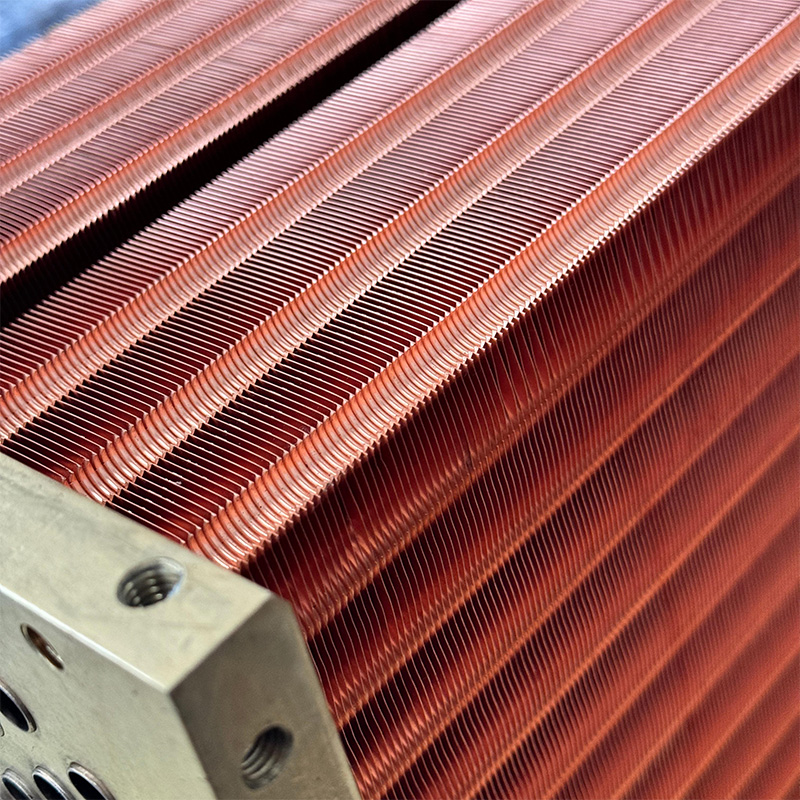
The material of the pipes also directly affects the choice of power. Copper tubes have high thermal conductivity, making it possible to reduce the size of the device with the same power. Steel pipes (carbon steel) require more surface area to transfer the same amount of heat, but are significantly less expensive and more resistant to abrasion in service water systems. Stainless steel falls in between, offering a balance between corrosion resistance and heat transfer. When working with aggressive media or water with a high chloride content, choosing stainless steel is mandatory, even if this requires increasing the size of the installation. It is this approach to the selection of materials that underlies the activities of Wuxi Kaisheng Electric Power and Petrochemical Equipment LLC. Specializing in the design and manufacture of high-performance heat transfer equipment, the company offers solutions in titanium, various grades of stainless steel (including AISI 316 and 321), C46400 marine brass, C70600 copper-nickel alloys and N06625 nickel alloys. Certified to stringent international ASME and PED standards, products demonstrate exceptional corrosion resistance and high pressure capability, critical to the longevity of heating systems in harsh environments.
Type classification: which shell-and-tube heating heat exchanger to choose
The industrial equipment market offers many modifications, and the correct choice of the type of shell-and-tube heating heat exchanger depends on the specific operating conditions. There is no universal solution that would suit all problems. Design features determine not only the price, but also maintainability, service life and ability to withstand water hammer. In our practice, we distinguish three main groups of structures, each of which has its own strict areas of application.
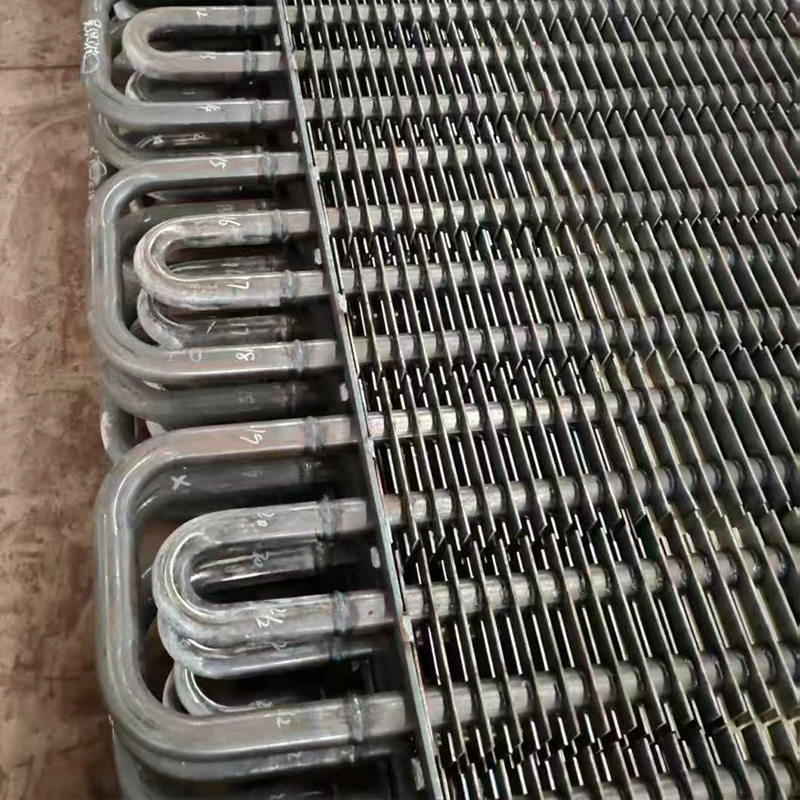
The first type is devices with fixed grids (U-shaped pipes or rigid mounting). This is the simplest and cheapest design. The pipes are rigidly fixed in both tube sheets, which, in turn, are welded to the body. The main advantage is tightness and the ability to withstand high pressure. However, there is a significant drawback: the impossibility of mechanically cleaning the inner surface of the pipes from scale. Such devices are only suitable for systems with perfectly prepared water or where the heating medium is pure steam. Trying to use them in open heating systems with hard water will result in rapid fouling and loss of efficiency.
The second type is floating head heat exchangers. This is the most common solution for industrial heating systems. One of the tube sheets moves freely inside the housing, compensating for the thermal expansion of the tubes when heated. This eliminates the occurrence of dangerous thermal stresses in the metal. The most important advantage of this design is the ability to completely remove the tube bundle for mechanical cleaning and replacement of pipes without dismantling the entire apparatus. For central heating systems where water quality fluctuates frequently, this is critical. We recommend this type for facilities with a heat load over 500 kW, where regular maintenance is part of the regulations.
The third type is devices with a compensator on the body (lens compensator). Here the pipes are rigidly fixed, but the body itself has an elastic element that deforms as the pipes expand. This is a compromise between the cost of a fixed grille and the functionality of a floating head. They are cheaper than devices with a floating head, but are more difficult to manufacture and have restrictions on pressure in the interpipe space. The choice of this type is justified when the temperature difference between the media is large, but the project budget is limited and the pressure requirements are not extreme.
Comparative analysis of design solutions
To make your decision easier, we have prepared a comparison table of the main types of devices. Please note that the choice should be based not only on the initial cost, but also on the total cost of ownership (TCO), which includes maintenance and downtime costs.
| Comparison parameter | Fixed gratings (U-tubes) | Floating head | Lens compensator |
|---|---|---|---|
| Production cost | Low (the most budget option) | High (complex machining) | Average |
| Thermal expansion compensation | By bending U-shaped pipes | Due to the free movement of the grating | Due to deformation of the housing lenses |
| Possibility of cleaning pipes from the inside | Difficult (chemical washing only) | Excellent (full access to the beam) | Good (access through lid) |
| Maximum working pressure | High (up to 25 MPa and above) | Limited by floating head seals (typically up to 4-6 MPa) | Limited by compensator strength |
| Recommended Environment | Pure steam, pure water, oils | Dirty water, technical fluids, central heating systems | Moderately polluted environments |
| Maintainability | Low (replacement of the entire beam) | High (replacement of individual pipes is possible) | Average |
Analysis of the table shows a clear pattern: for critical heating systems of large residential complexes or industrial workshops, where the water does not undergo deep treatment, the type with a floating head is the uncontested leader. Despite the higher initial price, the possibility of quick mechanical cleaning saves tens of thousands of rubles on chemical reagents and system downtime during the heating season. We have seen cases where savings on the type of design led to the fact that after three years the device turned into a useless piece of metal, clogged with deposits that could not be removed without destroying the case.
Effect of water quality and materials on durability
The choice of the type and power of a shell-and-tube heating heat exchanger is inextricably linked with the quality of the coolant. Water is not just H2O; it is a complex solution of salts, gases and suspensions. Water hardness, oxygen content and pH level are determining factors when choosing pipe and casing material. Ignoring water chemistry is the most common cause of premature equipment failure.
Carbonate hardness leads to the formation of scale (calcium carbonate) on the pipe walls. Scale has extremely low thermal conductivity - 50-100 times lower than that of steel. A layer of scale just 1 mm thick can reduce heat transfer efficiency by 10-15% and increase fuel consumption proportionally. If your system operates on water with a hardness higher than 7 mEq/l, you must provide either a water treatment installation (softening) or choose a device with an increased surface area and the ability to frequently clean it. In our practice, there was a case in a textile factory, where the use of artesian water without preparation led to complete blockage of the pipes within 8 months. The owner lost the entire heating season and suffered losses many times greater than the cost of the reverse osmosis system.
Oxygen corrosion is the second main enemy. Oxygen dissolved in water actively corrodes carbon steel, especially at elevated temperatures. For closed heating systems, oxygen removal or the use of corrosion inhibitors is critical. If control of water chemistry is not possible, the only correct solution is to use stainless steel pipes (grade AISI 304 or AISI 316). Yes, this increases the cost of the device by 30-40%, but the service life increases from 5-7 years to 20-25 years. Saving on pipe material in an aggressive environment is a direct road to an emergency situation and leaks in the dead of winter. Here it is worth noting the experience of specialists from Wuxi Kaisheng LLC, who successfully implement tube bundles made of corrugated stainless steel 316 and titanium heat exchangers for particularly aggressive environments, ensuring stable operation of equipment in oil refining, the chemical industry, and even in seawater desalination.
It is also worth considering the risk of galvanic corrosion. You cannot combine copper heat exchanger pipes and steel radiators or pipelines without dielectric inserts in one system. The resulting galvanic couple will lead to accelerated destruction of the less noble metal (steel). When designing, we always check the compatibility of all circuit materials. If you are using aluminum radiators, having a heat exchanger with copper pipes requires special attention to the system's potential and water quality.
Standards and certification: guarantee of safety
When purchasing heating equipment, especially in the industrial sector, the availability of certificates of conformity is not a formality, but a legal requirement and insurance against accidents. In Russia and the EAEU countries, the main document is the TR CU certificate 032/2013 “On the safety of equipment operating under excess pressure.” The absence of this document makes the operation of the device illegal and jeopardizes obtaining permission from Rostekhnadzor.
A quality manufacturer also provides a quality certificate for materials, confirming the chemical composition of the steel and the mechanical properties of the welds. We insist that all welded joints undergo non-destructive testing (ultrasound or x-ray). There was a precedent in our history when a cheap machine without proper welding control cracked along the seam at the first water hammer during system startup. The consequences could be catastrophic, given the coolant temperature of about 115°C. Therefore, when choosing a supplier, always request copies of metal certificates and welding inspection reports.
International standards, such as ASME (USA) or PED (Europe), are also a marker of high quality, but for work in the Russian Federation, compliance with GOST and Technical Regulations of the Customs Union remains a priority. If you plan to export equipment or work at the facilities of international companies, having dual certification will be a significant advantage. However, remember: a stamp on paper is no substitute for actual build quality. The reputation of the manufacturer and reviews of real operating organizations often speak more than any certificates.
Practical aspects of installation and maintenance
Even a device that is ideally selected in terms of power and type may not work correctly if there are errors in installation. Installation of a shell-and-tube heating heat exchanger requires compliance with a number of strict rules regarding orientation in space, connection of pipelines and organization of drainage.
The orientation of the device is critical. Horizontal installation is standard on most models. In this case, it is important to provide a slight slope (1-2 degrees) towards the drainage fittings to completely drain the water during storage for the summer or repairs. Vertical installation is allowed only for specific models and requires mandatory agreement with the manufacturer, as it changes the hydraulic picture and the conditions for lubrication of bearings (if there are pumps) or air removal.
The pipelines must be connected without distortions. The tension of pipes during welding or flanging creates mechanical stresses in the body of the device, which are added to thermal stresses during operation. This can lead to deformation of the gratings and depressurization of connections. We recommend using expansion joints on supply pipelines, especially if the route is long and subject to thermal expansion. Flange connections should be tightened with a torque wrench in a crisscross pattern to ensure even sealing of the gaskets.
Air removal is another critical point. Air plugs in the annulus or pipe space act as an insulator, blocking heat transfer over a large area. Automatic air vents must be installed at the highest points of both circuits. In our practice, we have encountered complaints about “low power” of the new heat exchanger, the cause of which turned out to be simply a closed air valve. After bleeding the air, the outlet temperature instantly increased by 15 degrees. Regularly checking the operation of air vents should become a habit for maintenance personnel.
Maintenance schedule
The durability of equipment depends 80% on the quality of maintenance. We have developed basic regulations that allow you to extend the life of the heat exchanger to 20 years or more:
- Weekly control:Checking the readings of pressure gauges and thermometers at the inlet and outlet. A sharp increase in pressure drop at a constant flow rate indicates contamination. A drop in heating temperature indicates a decrease in heat transfer efficiency.
- Monthly inspection:Visual inspection of flange connections for leaks. Checking the condition of the housing insulation. Damaged insulation leads to heat loss and moisture condensation on the housing, causing external corrosion.
- Seasonal flushing:Перед началом отопительного сезона обязательна промывка системы. Для аппаратов с плавающей головкой рекомендуется механическая очистка трубного пучка щетками или гидродинамическим способом. Химическая промывка должна проводиться только специалистами с использованием ингибиторов, чтобы не повредить металл.
- Hydraulic tests:Раз в 3-5 лет (или после серьезного ремонта) необходимо проводить опрессовку корпуса и труб повышенным давлением для выявления скрытых дефектов и микротрещин.
Игнорирование этих пунктов превращает дорогой инженерный актив в источник постоянных проблем. Один из наших клиентов, крупный агрохолдинг, внедрил систему автоматического мониторинга перепада давления, которая сигнализирует о необходимости чистки заранее. Это позволило им перейти от аварийных ремонтов к плановому обслуживанию и сэкономить более 2 млн рублей за два года на предотвращении простоев теплиц.
Economic justification for choice
Финансовый аспект выбора типа и мощности кожухотрубного теплообменника отопления часто становится решающим фактором для заказчиков. Однако подход «купить самое дешевое» в сегменте промышленного оборудования является ложной экономией. Структура затрат на протяжении жизненного цикла аппарата (стоимость жизненного цикла) выглядит иначе, чем кажется на первый взгляд.
Начальная стоимость составляет лишь 20-30% от общих расходов за 15 лет эксплуатации. Основную долю занимают затраты на энергоносители (газ, уголь, электричество для насосов) и обслуживание. Более эффективный теплообменник с оптимально подобранной поверхностью и турбулизаторами потока может иметь цену на 15% выше аналога, но обеспечивать экономию топлива на уровне 5-7% ежегодно. За пять лет эта экономия полностью перекрывает разницу в цене покупки, а далее начинает генерировать чистую прибыль.
Также стоит учитывать стоимость владения запасными частями. Аппараты нестандартных размеров или редких типов могут потребовать индивидуального изготовления трубного пучка в с лучае аварии, что займет недели и потребует значительных средств. Стандартизированные модели, выпускаемые серийно, позволяют держать на складе готовые ремкомплекты или получать их в кратчайшие сроки. Мы советуем выбирать типы аппаратов, которые широко распространены в вашем регионе, чтобы обеспечить легкую сервисную поддержку. Компании вроде ООО «Уси Кайшэн» предлагают не только стандартные решения, но и высококачественные индивидуальные проекты, включая производство специфических трубных решеток из латуни C46400 или никелевых сплавов, что гарантирует наличие совместимых комплектующих и долгий срок службы оборудования даже в самых требовательных отраслях, таких как судостроение и энергетика.
An important factor is the liquidity of the equipment. Качественный брендовый теплообменник, даже бывший в употреблении, сохраняет остаточную стоимость и может быть продан или использован на другом объекте при модернизации текущего. Дешевые «ноунейм» аппараты часто не имеют никакой вторичной ценности и подлежат утилизации при первой же серьезной поломке.
Frequently Asked Questions
Какой запас мощности необходим для кожухотрубного теплообменника?
Оптимальный запас мощности составляет 10-15% от расчетной тепловой нагрузки. Этот буфер необходим для компенсации неизбежного загрязнения поверхностей теплообмена в процессе эксплуатации и небольших погрешностей в исходных данных. Запас более 20% считается избыточным и вредным: он приводит к работе аппарата в нерасчетном режиме, снижению скорости теплоносителя и ускоренному образованию отложений. В нашей практике мы никогда не рекомендуем превышать 15%, если только нет специфических требований технологического процесса.
Можно ли использовать один теплообменник для отопления и ГВС?
Теоретически можно, но практически это плохое решение. Системы отопления и горячего водоснабжения (ГВС) имеют принципиально разные графики нагрузки и требования к качеству воды. Отопление работает по стабильному графику, а ГВС имеет резкие пики потребления. Кроме того, требования к гигиене воды для ГВС намного строже. Использование одного аппарата приводит либо к недогреву воды в часы пик, либо к перегреву системы отопления летом. Мы настоятельно рекомендуем устанавливать отдельные независимые контуры или использовать многофункциональные станции с раздельными секциями.
Как часто нужно менять уплотнительные прокладки?
Срок службы уплотнительных прокладок зависит от материала (паронит, резина, тефлон) и температуры среды. В среднем, при температуре до 110°C качественные прокладки служат 3-5 лет. Однако мы рекомендуем проводить их визуальный осмотр и подтяжку фланцев при каждом сезонном обслуживании. Если вы заметили даже минимальное подтекание или следы выдавливания материала, прокладку нужно заменить немедленно. Профилактическая замена раз в 4 года позволяет избежать аварийных остановок системы в отопительный сезон.
Что делать, если теплообменник начал шуметь?
Шум в работе аппарата обычно свидетельствует о кавитации или наличии воздуха в системе. Cavitation occurs when the flow rate is too high or sudden changes in pressure, which leads to the collapse of steam bubbles and destruction of the pipe metal. Первым шагом следует немедленно проверить работу воздухоотводчиков и стравить воздух. Если шум сохраняется, необходимо проверить соответствие фактического расхода проектным значениям. Возможно, потребуется установка дросселирующей шайбы или регулировка насоса. Игнорирование шума может привести к эрозионному разрушению труб за несколько месяцев.
Expert opinion and recommendations
Выбор кожухотрубного теплообменника отопления — это сложная инженерная задача, требующая баланса между термодинамикой, гидравликой, химией воды и экономикой. Нет мелочей: от материала труб до угла наклона аппарата зависит надежность теплоснабжения вашего объекта на десятилетия вперед. Мы убедились на сотнях реализованных проектов, что попытка сэкономить на этапе подбора типа или игнорирование качества воды всегда приводит к многократным потерям в будущем.
Наша главная рекомендация: не полагайтесь на универсальные каталожные данные слепо. Каждый объект уникален. Проведите полный аудит вашей системы, получите актуальный химический анализ воды и доверьте расчет профессионалам, которые несут ответственность за результат. Правильно выбранный и смонтированный аппарат станет сердцем вашей системы, обеспечивая комфорт и энергоэффективность без лишних затрат.
Если вы стоите перед задачей подбора оборудования и хотите избежать ошибок, свяжитесь с нашими инженерами. Мы проведем бесплатный предварительный расчет, поможем выбрать оптимальный тип конструкции и предложим решения, проверенные в реальных условиях эксплуатации.Contact us todayдля получения детальной консультации и коммерческого предложения.
Для углубленного изучения темы рекомендуем ознакомиться с нашим материалом осравнении пластинчатых и кожухотрубных теплообменников, где мы подробно разбираем преимущества каждого типа для различных задач.