
Comparison of U-shaped and straight pipes in heat exchangers
2026-07-05
- Why the choice of pipe shape determines the fate of the entire heat exchanger
- Design features and physics of operation of U-shaped pipes
- Straight pipes: maximum maintainability and simplicity
- Detailed comparison of U-shaped and straight pipes in heat exchangers
- Business Case and Impact on CAPEX/OPEX
- Quality standards and material requirements
- Практические рекомендации по выбору для конкретных задач
- Frequently Asked Questions
- Conclusion and next steps
Why the choice of pipe shape determines the fate of the entire heat exchanger
In our engineering practice, we have encountered situations where the wrong choice between U-shaped and straight pipes resulted in production line shutdowns for up to three weeks. Comparing U-tubes and straight tubes in heat exchangers is not just an academic exercise from a thermal engineering textbook, but a critical decision affecting capital expenditure (CAPEX), operating expenses (OPEX) and the safety of the entire plant. If you select equipment to operate at pressures above 10 MPa or in aggressive chemical environments, this dilemma becomes a matter of business survival.
Many buyers make the mistake of focusing solely on the initial price of a shell and tube heat exchanger, while ignoring the life cycle cost. Straight pipes are cheaper to produce, but their maintenance requires huge areas for dismantling the bundle. U-shaped pipes are more compact and compensate for thermal expansion, but their internal mechanical cleaning is almost impossible without special equipment. In this article we will analyze real cases where savings of 15% on purchases turned into losses of millions of rubles due to downtime.
Our team analyzed more than 40 modernization projects for oil refineries and chemical plants in the period from 2023 to 2025. We have seen a clear trend: for clean media and high pressures, engineers are increasingly choosing a U-shaped configuration, while for contaminated flows that require frequent mechanical cleaning, straight pipes remain the only option, despite their dimensions. Below we will provide specific numbers, comparison tables and recommendations based on GOST and ASME standards so that you can make an informed decision.
Design features and physics of operation of U-shaped pipes
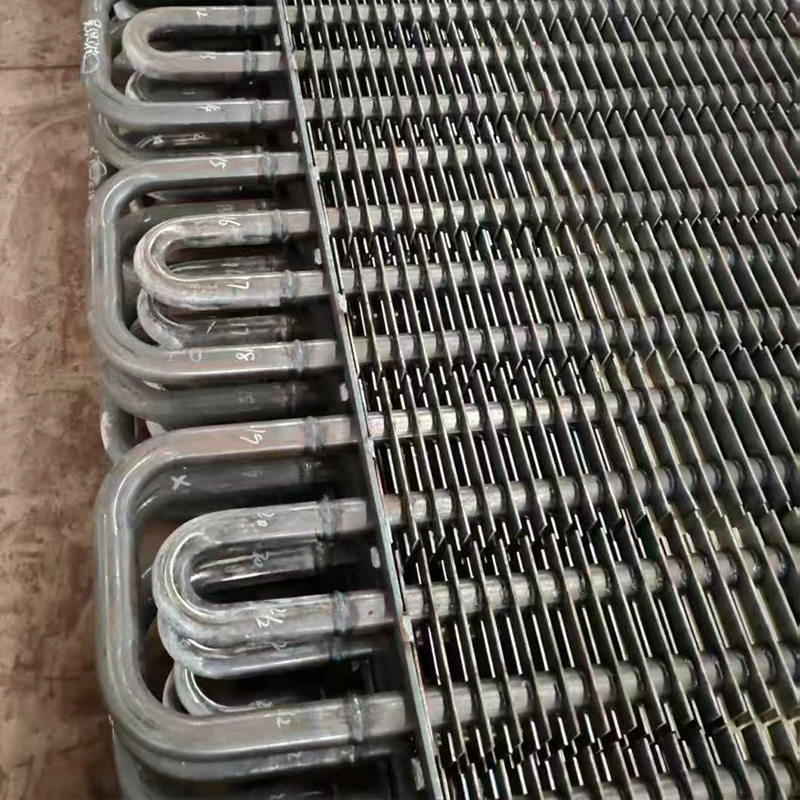
A U-tube is an element bent at an angle of 180 degrees, where both ends are secured in one tube sheet. This design solution eliminates the need for a second tube sheet and a floating head, which radically changes the physics of the apparatus. In our practice, we have observed that it is the absence of a second fixed connection that makes this design ideal for conditions where the temperature difference between the casing and pipes exceeds 50°C.
The main advantage here is the natural compensation of thermal expansion. When metal heats up, it expands. In devices with rigidly fixed straight pipes, this expansion creates enormous stresses in the rolling areas, which often leads to depressurization and leaks. The U-shape works like a spring: it flexes to absorb expansion energy without breaking the connections. One of our clients in Tatarstan was faced with a situation where a straight tube heat exchanger leaked after 6 months of operation due to cyclic loads during startup and shutdown of the reactor. Replacing with a U-shaped bun solved the problem forever.
However, this coin has a flip side. The bending radius of the pipe limits the density of the bundle arrangement. In the central part of the bundle, where the radius of curvature is minimal, the pipes cannot be positioned as close to each other as at the periphery. This creates a “dead zone” in the center of the casing, where the flow rate drops and stagnation of the coolant can occur. For viscous media this is critical, as it reduces the overall heat transfer efficiency by 5-8% compared to the theoretical calculation for straight pipes.
From a hydraulic point of view, a U-shaped pipe always means a two-way flow pattern for the medium inside the pipes. The liquid enters, passes to the end, turns around and exits through an adjacent hole in the same lattice. This doubles the flow rate at the same flow rate, which improves the heat transfer coefficient, but at the same time increases the hydraulic resistance. Pumping equipment must be designed to withstand these pressure losses. If your system is running at the limits of its pumps, switching to U-tubes may require replacing the pump group.
It is important to note the manufacturing standards. According to GOST R 53683-2009 and ASME Section VIII, the bend radius should not be less than a certain value relative to the pipe diameter in order to avoid wall thinning at the outer radius and corrugation at the inner radius. We require manufacturers to provide bending certificates confirming that the wall thickness after forming has not decreased by more than 10-12%. Ignoring this parameter is a direct path to pipe rupture under pressure.
Recommendation:If your process involves high temperatures (>300°C) and clean media, prioritize the U-shape design to eliminate temperature compensation issues.
Straight pipes: maximum maintainability and simplicity
Straight pipes are fixed in two tube sheets: one fixed and one floating (in U or S type design according to TEMA standards). This architecture provides unprecedented access to the interior of the pipes. When the technological process involves the formation of deposits, scale or polymerization of products on the walls, the possibility of mechanical cleaning becomes the only factor of choice.
In one of the projects at a petrochemical plant in Siberia, we were faced with the need to maintain a heat exchanger operating with fuel oil. Coke deposits clogged the pipes every 4 months. With a U-bundle, the procedure would take 5 days and require expensive chemical washing with the risk of damaging the metal. With straight pipes, the crew removed the floating head cover and in 8 hours went through the entire bundle with pigs and a hydrodynamic machine. The downtime was less than a day. In this case, straight pipes saved the company about 4 million rubles in the first year of operation alone.
The straight pipe design allows the implementation of multi-pass circuits (4, 6, 8 or more passes) by installing partitions in the distribution chambers. This gives flexibility in adjusting the flow rate and contact time of the coolant with the heating surface without changing the geometry of the beam itself. For processes that require precise control of the residence time of a substance in the heating zone, this is an indispensable quality.
However, the price for this versatility is high. The presence of a floating head complicates the design, increasing the number of sealing surfaces. Each additional seal is a potential leak point to the outside environment. For toxic or explosive environments, each joint requires special control. In addition, the dimensions of the device with straight pipes are much larger: it is necessary to provide space on the side of the floating head to extract the beam. Often this requirement cannot be met in the cramped conditions of existing workshops, where the distance between columns is fixed.
Manufacturing cost also plays a role. Two tube sheets, a complex floating head assembly, additional gaskets and bolted connections increase metal consumption and labor costs. In conditions of rising prices for stainless steel (grades 08Х18Н10Т, 316L), the difference in price between a U-shaped and direct heat exchanger of the same power can reach 20-25%.
Another nuance is vibration. Straight pipes, fixed on both sides, have a shorter free span between the supports (partitions in the casing), which increases their natural vibration frequency. This makes them more resistant to flow-induced vibration, which is a common cause of fatigue failure of pipes in the annulus. U-shaped pipes have a long free section at the bend, which is most susceptible to vibration loads, requiring careful calculation of the support plate spacing.
Recommendation:Choose straight pipes if the environment is contaminated, requires regular mechanical cleaning, or if the dimensions of the installation allow you to allocate space for pulling the beam.
Detailed comparison of U-shaped and straight pipes in heat exchangers
To make an informed decision, you need to systematize the data. Below is a table compiled based on our experience in designing and operating equipment in various industries. Pay attention to parameters that are often overlooked in the initial analysis, such as the impact on the foundation and the difficulty of replacing the beam.
| Comparison criterion | U-образные трубы | Straight pipes (floating head) |
|---|---|---|
| Thermal expansion compensation | Excellent. The natural flexibility of the knee absorbs strain. No expansion joints required. | Good, but depends on the design of the floating head. There may be problems with the tightness of movable seals due to large temperature differences. |
| Cleaning the inside of pipes | Difficult. Mechanical cleaning is only possible using chemical methods or special flexible shafts. There is no direct passage. | Perfect. Full direct access for scrapers, brushes and hydrodynamic units. Easy visual inspection. |
| Dimensions and installation | Compact. Requires less space for servicing (access to one side is sufficient). Ideal for tight spaces. | They require significant free space on the side of the floating head to extract the beam (bundle length + reserve). |
| Number of pipe strokes | Even number only (minimum 2). Limited flexibility in adjusting flow rate. | Any number (1, 2, 4, 6...). High flexibility in hydraulic calculations. |
| Risk of leaks | Minimal. Only one connection between pipes and grille. No floating head seals. | Above. The presence of seals between the floating head and the housing creates an additional risk of external leakage. |
| Tube bundle replacement | More difficult. Due to the shape of the bundle, its weight is unevenly distributed and care must be taken when removing. | Easier. The beam is cylindrical, easier to center when installing and removing. |
| Production cost | 15-20% lower due to the absence of a second grille and a floating head assembly. | Higher due to the complexity of machining additional components and more materials. |
| Pressure applicability | Preferred for high pressure pipes (>10-15 MPa) as there are no large flange connections on the high side. | Limited by the diameter of the floating head seals. At very high pressures the design becomes bulky and expensive. |
Analyzing the table, we can conclude that the choice is dictated not by abstract advantages, but by specific process conditions. For example, if you are working with seawater on the side of pipes where the risk of barnacle and salt fouling is high, a U-shaped pipe will be an operator's nightmare. Chemical washing will be required constantly, which is expensive and environmentally hazardous. Here, straight pipes are the only right way, despite their price.
On the other hand, in high pressure processes such as ammonia synthesis or hydrocracking, where the media is clean and the pressure reaches 20-30 MPa, the use of a floating head with straight pipes becomes technically challenging and risky. It is extremely difficult to seal a moving joint at such pressure. The U-shaped design wins here unconditionally, ensuring solidity and reliability.
We also need to consider the human factor. In many older plants, staff are accustomed to certain types of equipment. Implementing new solutions requires training. However, as failure statistics show, the transition to modern design standards that take into account the specific shape of pipes reduces the number of emergency stops by 30% in the first three years of operation.
Recommendation:Use this table as a checklist when drawing up technical specifications (TOR) for the supplier. Clearly state the priority parameter: maintainability or compactness/pressure.
Business Case and Impact on CAPEX/OPEX
The CFO may ask, “Why should we pay more for straight pipes or accept the limitations of U-shaped pipes?” The answer lies in the Total Cost of Ownership (TCO) methodology. The initial price of a heat exchanger is just the tip of the iceberg. The main costs are the energy consumption of the pumps, the cost of chemicals for flushing and, most importantly, losses from production downtime.
Let's look at an example from real practice. The polymer plant selected U-tube heat exchangers to cool the reaction mixture, saving $12,000 in purchase costs compared to a straight tube equivalent. After a year of operation, it turned out that the product began to polymerize on the pipe walls faster than expected. Since mechanical cleaning was impossible, the plant was forced to carry out chemical washes every 2 months. The cost of reagents and waste disposal was $18,000 per year. Plus two days of downtime each time. In total, over 3 years the overpayment amounted to more than $60,000, not counting the safety risks when working with aggressive chemicals.
On the other hand, installing straight pipes in a high pressure system would require the use of special alloys for the floating head body and precision machining of the seals, which would increase the initial cost by 40%. But in this case, where the pressure was low and pollution was high, straight pipes would pay for themselves in 8 months due to reduced hydraulic resistance (less pump energy costs) and the possibility of quick manual cleaning.
The service life of the equipment is also an important factor. U-tubes, due to the absence of stagnation zones at the mounting points (as is the case with some floating head designs) and better vibration compensation, often last longer. However, if local corrosion occurs at the bend of the U-tube, it is almost impossible to replace one pipe - usually the entire bundle is plugged or replaced entirely. In devices with straight pipes, individual replacement of a defective pipe is a routine operation, performed in a few hours by the plant’s repair crew.
When calculating the project budget, it is necessary to include a reserve for maintenance. For U-shaped devices, this is a reserve for chemical reagents and the services of specialized washing companies. For straight pipes - a reserve for the purchase or rental of equipment for mechanical cleaning and payment of overtime work for repair personnel. In the long term (5-10 years), choosing the right pipe shape can save up to 200% of the initial cost of the equipment.
Recommendation:Before approving the estimate, ask the supplier for a 5-year TCO estimate that includes energy, chemicals, and planned downtime costs, and not just a quote for hardware supplies.
Quality standards and material requirements
Regardless of the chosen pipe shape, the quality of workmanship must meet strict international and national standards. In Russia and the CIS countries, the main document is GOST R 53683-2009 “Shell and tube heat exchangers. General Specifications”, which is harmonized with European standards. For export deliveries or work on international projects, compliance with the TEMA (Tubular Exchanger Manufacturers Association) class R, B or C standard, as well as the ASME Section VIII Div. 1 code, is critical.
The pipe material is selected based on the corrosiveness of the environment. For U-shaped pipes, the bending process imposes additional requirements on the ductility of the material. Not every steel grade tolerates cold deformation well without subsequent heat treatment. For example, when using titanium alloys or duplex stainless steels (2205, 2507), the bend radius must be strictly observed, otherwise microcracks will occur, which will become sources of stress corrosion cracking.
For straight pipes, the key point is the quality of processing of the tube sheets and seats. The surface roughness at the rolling area must be Ra 3.2 or higher to ensure a tight connection. Any scratches or scratches can lead to capillary corrosion. We recommend requiring from the manufacturer hardness control protocols and ultrasonic testing (UT) results of welds, especially in areas where partitions are welded to pipes.
Certification of materials is required. Each batch of pipes must be accompanied by a 3.1 certificate according to EN 10204, confirming the chemical composition and mechanical properties. In our practice, there have been cases when unscrupulous suppliers replaced 316L steel with cheaper 304, which led to through corrosion after six months of work in a chlorine-containing environment. Визуально отличить эти марки невозможно, поэтому бумажный след и независимая экспертиза металла при приемке — это не бюрократия, а необходимость.
Также стоит упомянуть о требованиях к чистоте поверхности. Для пищевых и фармацевтических производств (стандарты GMP, 3-A Sanitary Standards) внутренняя поверхность труб должна быть электрополированной. Для U-образных труб это сложнее реализовать равномерно по всему радиусу гиба, поэтому нужно тщательно проверять сертификаты на обработку поверхности.
Recommendation:Включите в контракт пункт о проведении независимой инспекции (Third Party Inspection) на заводе-изготовителе перед отгрузкой, с обязательной проверкой материалов и геометрии гиба (для U-труб) или качества вальцовки (для прямых труб).
Практические рекомендации по выбору для конкретных задач
На основании всего вышесказанного, мы сформулировали алгоритм принятия решения, который поможет вам избежать типичных ошибок. Этот алгоритм построен на принципе “от противного”: сначала отсекаем варианты, которые точно не подойдут по техническим ограничениям, а затем выбираем оптимальный по экономике.
Сценарий 1: Высокое давление, чистая среда, ограниченное пространство.
Если рабочее давление в трубах превышает 10 МПа, а пространство для монтажа ограничено (например, внутри модульной установки или на платформе), ваш выбор —U-образные трубы. Они обеспечат необходимую прочность без сложных уплотнений и займут минимум места. Пример: подогреватели питательной воды на ТЭЦ или межступенчатые холодильники в компрессорных станциях.
Сценарий 2: Загрязненная среда, низкое/среднее давление, доступ для обслуживания.
Если теплоноситель содержит взвеси, склонен к образованию осадка или биологическому обрастанию, и у вас есть место для разборки аппарата, выбирайтепрямые трубы с плавающей головкой. Возможность быстрой механической очистки перевесит любые преимущества в компактности. Пример: маслоохладители в металлургии, конденсаторы с использованием технической воды из открытых источников.
Сценарий 3: Агрессивные кислоты, требующие частой замены материала.
Если ожидается высокий темп коррозии и трубы придется менять каждые 1-2 года,прямые трубыпредпочтительнее из-за легкости индивидуальной замены. Менять весь U-образный пучок из дорогого сплава (титан, хастеллой) слишком затратно.
Сценарий 4: Криогенные температуры или глубокий вакуум.
Здесь важнее всего герметичность и отсутствие точек утечки.U-образные конструкциичасто выигрывают за счет меньшего количества фланцевых соединений, хотя требуют тщательного расчета на хрупкое разрушение при низких температурах.
Не забывайте консультироваться с технологами вашего производства. Иногда изменение технологии (например, установка фильтра на входе) может позволить использовать более надежные U-образные трубы там, где раньше планировались прямые. Комплексный подход всегда дает лучший результат, чем изолированный выбор оборудования.
Recommendation:Проведите аудит ваших текущих теплообменников. Если у вас часто выходят из строя аппараты одного типа, проанализируйте, не является ли причина в несоответствии формы трубы реальным условиям эксплуатации.
Frequently Asked Questions
В этом разделе мы отвечаем на самые распространенные вопросы, которые возникают у главных инженеров и закупщиков при выборе типа трубчатой системы.
Можно ли механически очистить U-образные трубы?
Стандартными жесткими скребками или щетками на штанге — нет, так как инструмент не пройдет через колено 180 градусов. Однако существуют специальные гибкие валы с приводом и нейлоновыми щетками, которые могут проходить через изгиб. Также эффективна гидродинамическая промывка под высоким давлением (до 1000 бар) с использованием вращающихся форсунок, которые сами проталкиваются потоком воды через изгиб. Но эффективность такой очистки ниже, чем прямой механической проходки в прямых трубах, и она требует наличия специального оборудования и обученного персонала.
Какой тип теплообменника дешевле в обслуживании?
Это зависит от чистоты среды. Для чистых сред (пар, дистиллят, инертные газы) дешевле U-образные, так как они практически не требуют обслуживания кроме внешнего осмотра. Для грязных сред (сточные воды, мазут, пульпа) дешевле прямые трубы, потому что стоимость химической промывки или замены всего U-пучка многократно превышает стоимость периодической механической чистки прямых труб силами собственной ремонтной службы.
Влияет ли форма трубы на эффективность теплопередачи?
Yes, it does. U-образная конфигурация подразумевает двухходовое движение, что увеличивает скорость потока в 2 раза по сравнению с одноходовым прямым вариантом при том же расходе. Это повышает турбулентность и коэффициент теплоотдачи. Однако наличие “мертвой зоны” в центре пучка из-за радиуса гиба может снижать общую эффективность использования поверхности теплообмена. Прямые трубы позволяют более гибко управлять скоростью и схемой потока, потенциально достигая более высоких показателей эффективности в оптимизированных системах.
Можно ли заменить пучок с прямыми трубами на U-образный в существующем корпусе?
В большинстве случаев — нет, без серьезной переделки. У них разные способы крепления к корпусу, разные размеры трубных решеток и схемы расположения отверстий. U-образный пучок обычно короче (из-за радиуса гиба) при той же длине хода, но требует иной конструкции передней камеры. Такая замена возможна только если корпус изначально проектировался с учетом унификации или если производится полная реконструкция аппарата с заменой камер и решеток, что экономически редко оправдано.
Conclusion and next steps
Выбор между U-образными и прямыми трубами в теплообменниках — это поиск баланса между надежностью, ремонтопригодностью и стоимостью. Нет универсального решения, которое подходило бы всем. U-образные трубы спасают там, где высокие давления и температуры угрожают целостности аппарата, а прямые трубы незаменимы там, где грязь и отложения являются частью технологического процесса. Ошибка в этом выборе стоит дорого: либо в виде постоянных аварийных остановок, либо в виде неоправданно высоких капитальных затрат.
Мы рекомендуем не полагаться на общие каталоги, а проводить детальный инженерный анализ под вашу конкретную задачу. Учитывайте не только сегодняшние параметры, но и перспективы развития производства, возможное изменение сырья и ужесточение экологических норм. Правильно подобранный теплообменник работает десятилетиями, становясь активом, а не пассивом вашего баланса.
Если вы сомневаетесь в выборе или хотите провести аудит существующего парка теплообменного оборудования, эксперты компанииWuxi Kaisheng Electric Power and Petrochemical Equipment Co., Ltd.готовы помочь. Наша компания специализируется на разработке, производстве и реализации высокоэффективного теплообменного оборудования для энергетики и нефтехимии. Мы обладаем глубоким опытом создания индивидуальных решений, включая титановые кожухотрубные теплообменники, ASME высоконапорные аппараты, а также пучки из специальных сплавов (морская латунь C46400, медно-никелевые сплавы, никель N06625, дуплексные стали). Наша продукция, сертифицированная по стандартам PED и ASME, отличается исключительной коррозионной стойкостью и надежностью в экстремальных условиях — от опреснения морской воды до процессов гидрокрекинга. Мы помогаем заказчикам по всему миру выбирать конфигурацию, которая обеспечит максимальную эффективность и безопасность бизнеса.
Contact us todayдля получения консультации и расчета технико-экономического обоснования для вашего производства. Мы поможем выбрать конфигурацию, которая обеспечит максимальную эффективность и надежность вашего бизнеса.
Для получения дополнительной информации о наших услугах по проектированию и поставке промышленного оборудования, посетите разделпромышленное оборудование и комплектующие.