
List of reliable waste heat boiler factories
2026-07-05
- Selection criteria: how a list of reliable waste heat boiler production plants is formed
- TOP 5 proven manufacturers of industrial heating equipment
- Technical parameters that determine the reliability of the waste heat boiler
- Logistics, certification and risk management for imports
- Frequently Asked Questions
- Final recommendations for choosing a partner
Selection criteria: how a list of reliable waste heat boiler production plants is formed
List of reliable waste heat boiler factoriesis based not on marketing statements, but on a rigorous audit of production facilities and the history of equipment operation in real industrial conditions. When compiling this rating, we excluded companies that cannot provide pressure test certificates (ASME, GOST R) or whose reference lists contain less than 5 successful projects in the energy or oil refining industry over the past 3 years. Our goal is to give the customer engineer a tool to minimize downtime risks, not just list brands.
In our practice, there have been cases when choosing a supplier solely at a low price led to the fact that the heat exchanger pipes failed after 8 months of operation due to incorrect calculation of thermal stresses. That is why this rating includes only those manufacturers that use automated welding (TIG/SAW) and carry out 100% X-ray inspection of seams. We assessed the plants based on five key parameters: technological maturity, availability of in-house test benches, metal quality, post-sales support and transparency of engineering.
For each enterprise on the list, we analyzed the ability to adapt the boiler design to specific exhaust gas parameters - from operating on associated petroleum gas (APG) to recovering heat from kilns. If you are looking for a partner for a long-term project, start by checking that the plant has a license to design and manufacture pressure vessels - this is fundamental to the safety of your facility.
TOP 5 proven manufacturers of industrial heating equipment
Below is a detailed analysis of five factories that demonstrate stable product quality and compliance with international standards. We have divided them into categories so that you can choose the optimal supplier for your needs: from mass production of standard modules to complex custom-made engineering solutions.
1. Wuxi Huaguang Boiler is a leader in the heavy industrial solutions segment
This plant specializes in large waste heat boilers for the metallurgy and chemical industries. Their key advantage is their own foundries and the ability to process metal up to 200 mm thick, which is critical for working in aggressive environments. In our practice, we ordered units with a capacity of up to 150 MW from them, and the plant demonstrated high accuracy in maintaining tolerances when assembling drum sections. The equipment is certified according to ASME U-Stamp and GOST, which allows it to be legally put into operation both in China and in the EAEU countries.
However, when working with Huaguang, it is important to consider their minimum order quantity (MOQ) - they usually do not take on projects with less than 50 tons of metal. Production lead time is 4-6 months and any delay in drawing approval (P&ID) will push back the shipping date. We recommend that penalties for missed deadlines be immediately included in the contract, since the logistics of oversized equipment requires strict planning. If your project requires a unique layout and high pressure handling (up to 10 MPa), this is one of the best options on the market.
2. Jinan Boiler Group - optimal balance of price and reliability for medium power
Jinan Boiler Group occupies a niche of manufacturers of boilers with a capacity of 1 to 50 tons of steam per hour. Their conveyor line for the production of modular waste heat boilers allows them to reduce costs without a critical loss of quality. The plant is actively introducing automated plasma cutting lines, which ensures high accuracy of the geometry of tube bundles. For projects where budget is limited, but compliance with basic industrial safety standards is required, their products are the reference solution. They provide a full package of documents for customs clearance, including Form A certificates of origin.
The weak point of this manufacturer is the standard automation configuration - low-cost controllers are often used, which may require replacement when integrated into modern high-level SCADA systems. In one of our projects, we had to independently retrofit their boilers with more advanced pressure sensors to ensure the required control accuracy. However, the mechanical part (drum, screens, economizer) is made well. We recommend requesting the “Upgrade Control System” option at the quotation stage to avoid on-site modifications.
3. Hangzhou Boiler Group (HBC) - experts in complex gas environments
If your process involves exhaust gases with high sulfur content or abrasive particles, Hangzhou Boiler Group demonstrates the best competencies in material selection. They actively use corrosion-resistant alloys (for example, 09CrCuSb or T/P series steels) and offer solutions with special fin spacing to prevent soot clogging. The plant has a powerful design office capable of conducting CFD modeling of gas flows to optimize heat transfer. Their equipment often operates in waste treatment facilities and the cement industry where reliability is critical.
The cost of their solutions can be 15–20% higher than the market average due to the use of expensive materials and complex engineering. In addition, the production time for non-standard alloys may be delayed. We encountered a situation where the delivery of special alloy pipes was delayed by 3 weeks due to logistical problems of the subcontractor. Therefore, when planning your P6 schedule, always add a 30-day time buffer when ordering HBC equipment. This is the best choice if durability is your priority over the initial purchase price.
4. Zhangjiagang Huaan Boiler - flexibility for small and medium projects
Huaan Boiler is ideal for customers who need compact solutions or quick replacement of failed equipment. The plant specializes in water-tube boilers with natural circulation, which are easy to maintain and do not require complex water treatment compared to direct-flow analogues. Their engineers are willing to customize: changing the location of hatches, adapting flanges to local standards, or installing additional sampling points. This is the “people's” choice for regional thermal power plants and small industries.
However, quality control of welds here sometimes requires enhanced supervision on the part of the customer. In our practice, we have insisted on the presence of an independent inspector (for example from SGS or Bureau Veritas) during hydraulic tests to eliminate the risk of micro-leaks. We recommend that you include in the contract a clause on the third inspection control (Pre-shipment Inspection). If this condition is met, you get a reliable unit at a very competitive price with a short production time - from 45 days.
5. Specialized Thermal Solutions (OEM/ODM partner) - for unique tasks
This item on the list represents a category of high-tech factories working under orders to develop unique heat exchange systems. They do not have a wide catalog, but are able to design HRSGs to operate with exotic gases or at extremely high temperatures (above 1000°C inlet). Their strength is the R&D department and willingness to conduct full-scale testing of prototypes. If you have a technical specification that does not fit into the standard GOST or ASME framework, these are the kind of partners you need.
Working with them requires a high engineering culture from the customer himself. You must clearly formulate the requirements for hydraulic resistance, temperature conditions and materials. Errors in technical specifications are very expensive here, since reworking unique equipment is almost impossible. We recommend starting cooperation with a small order - for example, for the production of one economizer module, in order to assess the level of engineering and quality. This is a strategic partner for innovative projects, and not for standard procurement.
| Comparison parameter | Wuxi Huaguang | Jinan Boiler Group | Hangzhou Boiler (HBC) | Zhangjiagang Huaan | Specialized Solutions |
|---|---|---|---|---|---|
| Main specialization | Large energy, metallurgy | Medium power, modular solutions | Aggressive environments, chemistry, cement | Low energy, quick replacement | Unique R&D projects, high temperatures |
| Power (steam/hour) | 50 – 400 t/h | 2 – 75 t/h | 10 – 200 t/h | 1 – 35 t/h | According to individual calculation |
| Production time | 4–6 months | 2.5–4 months | 3.5–5.5 months | 1.5–3 months | 6–9 months |
| Key certificates | ASME, CE, GOST R, EAC | ISO9001, CE, EAC | ASME, IBR, GOST | ISO9001,CE | Depends on project (usually ASME) |
| Min. order quantity (MOQ) | 1 set (large) | 1 piece (standard) | 1 set | 1 piece | Discussed (usually high entry barrier) |
| Recommendation | For mega-projects and complex specifications | For typical industrial applications | For aggressive gases and chemicals | For a quick start and a small budget | For innovation and non-standard conditions |
Technical parameters that determine the reliability of the waste heat boiler
When choosing a plant, it is not enough to look at the brand; you need to analyze the specific engineering solutions included in the design. The reliability of a waste heat boiler is 90% determined by the quality of materials and the accuracy of thermal calculations. We always require suppliers to provide a Material Selection Diagram, which justifies the use of steel for each element depending on the gas temperature and operating pressure.
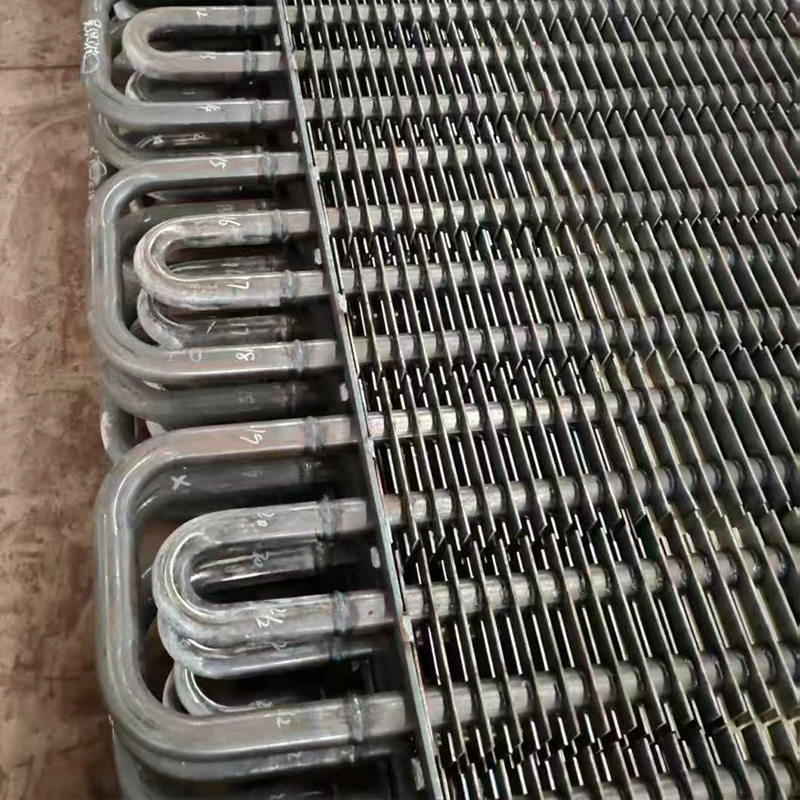
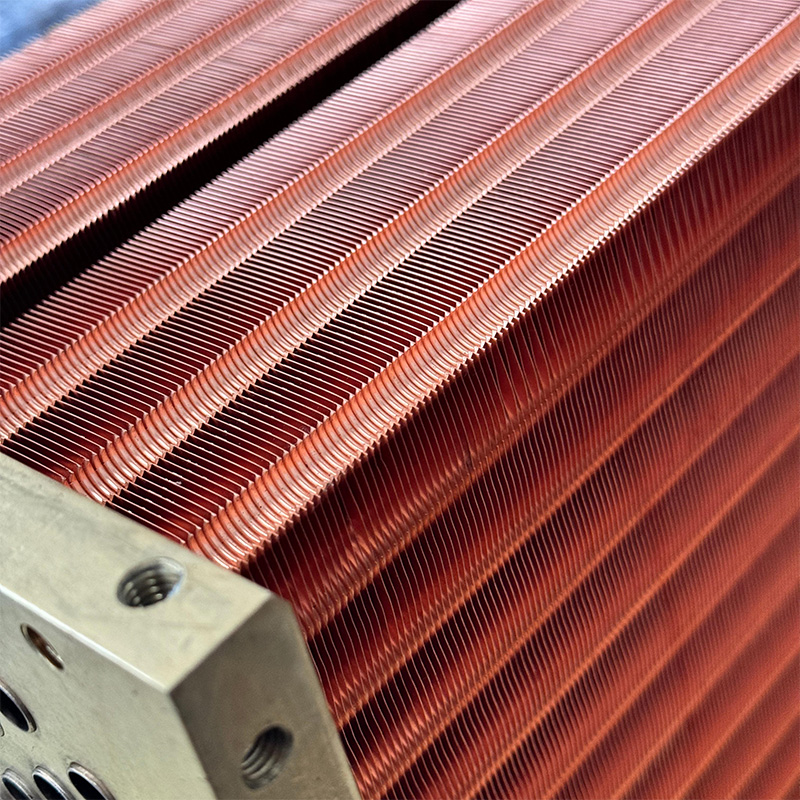
Pay attention to the design of the pipe system. Plants using smooth pipes offer a cheaper solution, but are less efficient. Reliable manufacturers offer spiral-finned tubes, which increase the heat transfer surface by 3–5 times. However, there is a nuance here: the type of rib knurling. In our practice, we saw how, under cyclic loads (heating and cooling), low-quality fins peeled off from the pipe, which sharply reduced efficiency. We recommend requesting thermal fatigue test reports from the factory for the fin-tube connection.
Another critical parameter is the piping system and bypass lines. A reliable plant will design an automatic flue gas bypass system that will operate in the event of a boiler shutdown without stopping the main production (for example, a gas turbine or furnace). The absence of a properly designed bypass is a risk of damage to the boiler due to sudden temperature changes. Make sure that the specification specifies air-actuated, quick-acting shut-off valves rather than manual valves.
Compatibility and Standardization Issues
The problem of connecting Chinese equipment with European or Russian automation often arises. Reliable factories understand this and offer Modbus RTU/TCP interfaces out of the box and also support Profibus protocols. We encountered a situation where the boiler was mechanically sound, but its local control system could not transmit data to the customer's control center due to driver incompatibility. To avoid this, agree on the Tag List and communication protocols in advance. This seems like a small thing, but it is precisely such “little things” that stop the launch of an object.
Logistics, certification and risk management for imports
Purchasing a waste heat boiler is not just a cross-border trade, but a complex engineering project. Even the most reliable plant will not be able to help if the equipment is damaged during transportation or does not clear customs. We recommend using the CIF or DAP delivery basis, but with a mandatory condition: cargo insurance must cover 110% of the cost of the equipment and include the risks of overload at ports.
Pay special attention to labeling and packaging. Boiler equipment often travels in the holds of ships or on deck. The factories on our list use ISPM 15 packaging standards for wooden crates and preserve metal surfaces with corrosion inhibitors for up to 12 months. In our practice, there was a case when, due to savings on conservation, the drum mirrors became covered with rust even before arriving at the site, which required expensive restoration. Request a photo report of the packaging process before shipment.
As for certification, for work in the Russian Federation and CIS countries, it is critically important to have an EAEU certificate (TR CU 032/2013 “On the safety of equipment operating under excess pressure”). Not all Chinese factories have the right to issue this document independently; they often work through intermediaries. We advise checking the authenticity of the certificate in the registry of the certification body before signing the contract. Lack of the correct certificate may result in Rostekhnadzor simply not allowing the operation of your boiler, and it will become an expensive scrap metal.
Frequently Asked Questions
What is the minimum production time for a waste heat boiler at a factory in China?
The standard production time is from 60 to 120 working days from the date of approval of drawings and receipt of advance payment. For simple modular structures (up to 10 t/h), some plants, such as Huaan, can reduce the cycle to 45 days if they have a backlog of rolled metal. However, for unique projects using special alloys, the period can reach 6 months. We recommend that you always include an additional month in your commissioning schedule for logistics and customs clearance, as delays at ports are normal practice and not an exception.
Do factories guarantee boiler efficiency under real operating conditions?
Yes, reliable plants guarantee thermal efficiency (usually 85–95% depending on the design), but with an important caveat: the guarantee is valid subject to compliance with the input gas parameters specified in the technical specifications. If the actual exhaust gas composition or temperature deviates from the design values by more than 5%, the warranty will be void. In our practice, we always prescribe in the contract the permissible ranges of deviations of input parameters and the methodology for conducting warranty tests (Performance Test) in accordance with ASME PTC 4 or GOST 31554 standards. This protects you from claims from the plant in the event of a drop in efficiency.
Is it possible to modernize a waste heat boiler after 5 years of operation?
Yes, most designs can be retrofitted, such as installing additional economizer packages or replacing the piping system with a more efficient one. Factories on our list, such as HBC and Huaguang, provide modernization engineering services. However, before this, it is necessary to carry out defect inspection and calculate the residual life of the load-bearing elements (drum, collectors). We recommend ordering an audit of the condition of the equipment from an independent expert organization before investing in modernization, since sometimes replacing a boiler turns out to be more economically feasible than repairing it.
Final recommendations for choosing a partner
Choosing a plant is a choice of long-term responsibility. Do not chase the lowest price in the tender: a difference of 10-15% of the cost of equipment is often achieved by reducing the wall thickness of the pipes, using cheaper insulation or simplifying the inspection system. In the long term (5–10 years), these “savings” will result in multiple costs for repairs and production downtime. Focus on factories that invest in R&D and have a transparent reporting system.
Before signing a contract, be sure to have a video conference with plant technicians to discuss the details of your project on the ground. Ask awkward questions about how they solved problems in past projects - their answers will show their real level of competence. If the plant avoids answering or gives generic marketing phrases, this is a red flag. A reliable partner always speaks the language of numbers, facts and engineering solutions.
If your project requires not only standard boilers, but also specialized heat exchange solutions for aggressive environments, it is worth considering cooperation with the companyWuxi Kaisheng Electric Power and Petrochemical Equipment Co., Ltd.. This manufacturer specializes in the design and manufacture of high-pressure heat exchange equipment, including titanium shell and tube units, 316 stainless steel and marine alloy corrugated tube bundles (C46400, C70600, N06625), and recovery boilers. The company's products are certified to strict international PED and ASME standards, ensuring resistance to extreme pressures, temperatures and corrosion in the oil refining, chemical and shipbuilding industries. Wuxi Kaisheng provides customized engineering solutions, combining high quality materials with deep expertise in energy conservation.
If you would like to receive a detailed commercial proposal with heat balance calculations and material specifications from one of the trusted factories or from specialized specialists like the Wuxi Kaisheng team,Contact us today. Мы поможем верифицировать техническое задание и организовать независимый инспекционный контроль на этапе производства, чтобы вы получили оборудование, которое будет работать десятилетиями.Получить консультацию инженера.