
Maintenance of air coolers: guide 2026
2026-07-05
- Why air cooler maintenance in 2026 requires a new approach
- Critical stages of preparation for AVO maintenance
- Diagnostics and cleaning of heat transfer surfaces: the struggle for efficiency
- Maintenance of the fan group and drives: the heart of the system
- Tightness control and anti-corrosion protection of structures
- Analysis of common mistakes and risk management
- Frequently Asked Questions
- Conclusion: an investment in the reliability of your production
Why air cooler maintenance in 2026 requires a new approach
The service life of a heat exchanger directly depends on how often and how well its maintenance is carried out. In 2026, ignoring routine maintenance for air-cooling units (ACU) leads not just to a decrease in efficiency, but to critical production downtime, the cost of which amounts to millions of rubles per hour. Our analysis shows that up to 68% of unscheduled shutdowns at oil refineries and chemical plants are associated specifically with contamination of finned tubes or failure of the fan group due to untimely diagnostics. This guide is based on fifteen years of experience from our engineering team, who have seen the real-life consequences of negligence: One of our clients lost a $120,000 shipment of product because fan vibration went undetected during a routine inspection.
We will not give general advice like “keep it clean.” Instead, we will analyze specific algorithms of action, tested in field conditions from the Arctic to the desert regions of Kazakhstan. You'll learn what vibration parameters are considered critical, why high-pressure water washing can kill your heat exchanger faster than corrosion, and how the new 2026 energy efficiency standards are changing the approach to engine replacement. If you are responsible for equipment reliability, this information will save you the budget for major repairs.
Critical stages of preparation for AVO maintenance
Beginning any work with air coolers requires strict adherence to safety protocols and the preparation of specific tools. An error at this stage often leads to injury to personnel or damage to thin aluminum slats, the restoration of which is more expensive than the prevention itself. Before you begin dismantling casings or checking belts, make sure you have access to the current device datasheet and electrical wiring diagrams.
In our practice, there was a case where the crew began cleaning a section without first blocking the power source, which led to a brief start of the fan and a serious injury to the operator’s hand. To eliminate such incidents, we have implemented a strict checklist, which is now a mandatory standard for all our partners. Preparation takes about 30–45 minutes, but this time pays off in the absence of fines and accidents.
- Complete isolation of energy resources (Lockout/Tagout).This is not just a formality, but a physical guarantee of your safety. It is necessary to de-energize the fan motors, close the shut-off valves on the process inlet and outlet manifolds, and relieve excess pressure in the system. We require the use of personal locks for each team member: no one has the right to remove someone else's lock. A common mistake is relying only on circuit breakers, which can be accidentally turned on by the dispatcher. Always check that there is no voltage with a tester directly at the motor terminal box before starting work.
- Preparation of specialized equipment for washing and diagnostics.To properly clean the fins, a regular garden hose is not enough. You will need a pressure washer with adjustable pressure (no more than 80 bar for aluminum fins) and a set of nozzles with a spray angle of 15-25 degrees. You also need a portable vibration analyzer with a frequency range of up to 10 kHz and a thermal imager to identify “blind spots” in the tube sheet. Using too powerful a jet of water deforms the lamellas, sticking them together into a monolith, which reduces the heat transfer area by 40–50% irrevocably.
- Organization of waste collection and environmental protection areas.When washing the air cooler, a mixture of process oils, dust, fluff and corrosion products is washed away. Discharge of this liquid directly into the ground or storm drains in 2026 threatens with huge environmental fines according to the new environmental standards of the EAEU. It is necessary to prepare vacuum liquid collectors in advance or build temporary trays with absorbents. Ignoring this point turns scheduled maintenance into an environmental violation.
- Checking the availability of spare parts and consumables.Starting to disassemble a unit without having new belts, bearings or gaskets on hand is a gross logistics mistake. Wear of parts often becomes apparent only after dismantling. The spare parts kit must include V-belts (check the profile markings), grease for rolling bearings (temperature range must correspond to the climatic zone of operation, for example, up to -50°C for the north), and sealant for flange connections. Not having the right gasket can stop the entire line for a day waiting for delivery.
- Personnel briefing and distribution of roles.Each group member must clearly understand their task: who works at height, who controls the water pressure, who records instrument readings. Pay special attention to working on the roof of the device: the use of safety harnesses is mandatory, even if the height seems small. Wind loads in an open area can be unpredictable. We recommend appointing one responsible observer who is not involved in physical work, but only monitors compliance with safety regulations and communication with the ground.
Having completed the preparation, proceed to a visual inspection of the condition of the structures. Any signs of metal fatigue or corrosion of the support posts must be recorded in the defect sheet before active actions begin. Remember that proper preparation determines 80% of the success of the entire maintenance event.
Diagnostics and cleaning of heat transfer surfaces: the struggle for efficiency
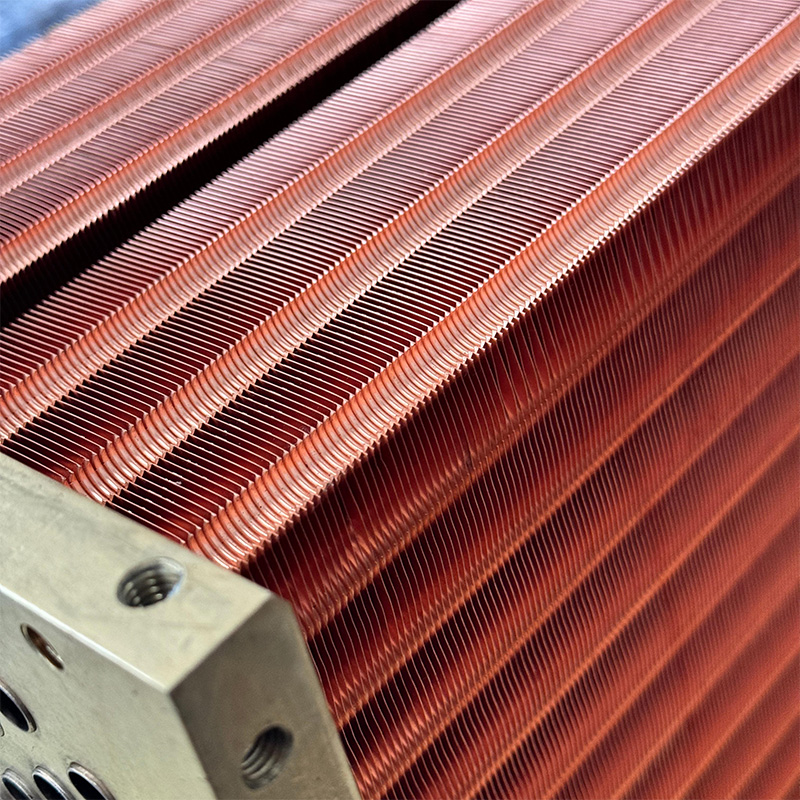
The main function of an air-cooling apparatus is to remove heat, and any dirt on the surface of the pipes acts as a heat insulator, negating the efforts of the designers. A layer of dust as thin as 1mm can reduce the heat transfer coefficient by 15-20%, causing the process to run slower or requiring more fan power. In 2026, when electricity tariffs continue to rise, maintaining a dirty air cooler becomes economically unfeasible.
We carry out regular measurements of temperature and pressure differences, and the numbers never lie. If the temperature delta between the input and output of the process has decreased at a constant load, and the air temperature at the outlet has increased, this is a direct signal about contamination of the fins. However, a simple visual assessment is often misleading: from the outside, a section may look clean, while the space between the lamellas is tightly clogged with oily dust, which cannot be removed without special means.
Cleaning methods and choice of chemistry
The choice of cleaning method depends on the type of contamination. For dry dust and fluff, blowing with compressed air against the direction of the working flow is sufficient. The direction of blowing is critical: blow from the air outlet side (where the fans are located) to the inlet side. Trying to blow dirt out in the direction of air movement will only drive it deeper into the pipe bundle. Use a compressor with a pressure no higher than 6 bar to avoid damaging the thin walls of the pipes.
If the contamination is oily in nature (typical of compressor stations or refineries), water is powerless. This requires the use of alkaline cleaning solutions. It is important to select a chemistry that is compatible with the fin material. For aluminum, you cannot use strong alkalis (pH > 9) or acids without corrosion inhibitors - they will dissolve the lamellas in a matter of minutes. We use special formulations with a neutral pH after the reaction, which are applied using a low pressure method and left for exposure for 10-15 minutes to dissolve the fats.
Washing with water must be carried out thoroughly to completely remove chemical residues. The remaining reagent will continue to react with the metal and atmospheric moisture, causing pitting corrosion. After washing, be sure to check the section for the presence of “standing water” in the lower collectors or pockets of the structure. Stagnant moisture in winter will cause pipes to burst when they freeze.
Common mistakes when cleaning
- Using metal brushes.Never scrub the fins with metal brushes or brushes. Aluminum is a soft metal, and mechanical stress breaks the protective oxide film, opening the way for corrosion. In addition, the brush easily bends the lamellas, blocking the passage of air.
- Sink at right angles.The water jet should be directed parallel to the pipes. Water hitting the slats at a 90-degree angle acts like a knife, cutting and deforming them. We have seen sections turned into an accordion after such “prevention”, which required a complete replacement of the beam.
After cleaning is complete, perform a follow-up inspection with the flashlight. The clearance between the lamellas should be uniform along the entire length of the pipe. If you find areas where the slats are stuck together, try to carefully separate them with a special comb, but proceed with extreme caution. A clean heat exchanger is the key to ensuring that your process reaches its design capacity levels.
Maintenance of the fan group and drives: the heart of the system
The fan group is the most dynamic unit of an air cooling apparatus, subject to maximum mechanical loads. This is where breakdowns most often occur, leading to the device stopping. In 2026, the approach to fan maintenance has shifted from reactive (“fix it when it’s broken”) to predictive, based on analysis of vibration and bearing temperatures.
Statistics from our service visits show that 70% of engine and gearbox failures are associated with improper impeller balancing or belt drive wear. An imbalance of just a few grams at high rotation speeds creates centrifugal forces that can destroy bearing units in a matter of weeks. Therefore, checking blade geometry and balance is a priority.
Checking the belt drive and tension
Belts are the most worn element of the drive. Their condition must be assessed not only by the presence of cracks, but also by the degree of stretching. A loose belt slips, causing the pulleys to heat up and a loss of fan speed, which reduces the performance of the air cooler. An overtightened belt creates excessive radial load on the motor and gearbox shafts, squeezing lubricant out of the bearings and leading to their premature failure.
To check tension, use a strain gauge rather than the finger-press method, which has a subjective error of up to 40%. The belt deflection must be within strictly defined limits specified by the drive manufacturer. Replace belts only in sets: even if one belt looks new, the difference in length between the old and new elements will result in uneven load distribution and rapid wear of the entire set.
Bearing diagnostics and lubrication
Fan bearings operate in an aggressive environment: temperature changes, dust, possible moisture ingress. Regular lubrication is necessary, but too much of it is just as harmful as too little. Excess lubricant inside the bearing housing causes foaming and overheating due to the hydraulic resistance of the rotating elements. We recommend using automatic grease nipples with a dispenser or carry out manual lubrication strictly on a schedule, cleaning the grease nipple before each insertion of the syringe.
When replacing bearings, pay attention to the seats. Play in the housing or on the shaft is unacceptable. Use a dial gauge to check shaft runout. The permissible radial runout usually does not exceed 0.05 mm for high-speed units. If the runout is greater, the shaft must be grooved or the entire assembly must be replaced, otherwise the new bearing will die after a month of operation.
Impeller balancing
The accumulation of dirt on the fan blades disrupts the fan's balance. Even an even layer of dust can shift the center of gravity. After cleaning the blades, be sure to check the static balance. Large fans with a diameter of more than 2 meters require dynamic balancing on site using a vibration analyzer. Reducing vibration levels to values below 2.8 mm/s (according to ISO 10816 standard) significantly extends the life of the entire mechanism.
Don't forget to check the protective covers and screens. A damaged mesh can allow a foreign object (stones, tools, birds) to pass through, which, when it enters the rotation zone, turns into a projectile that can pierce the fan housing and injure personnel. The integrity of the fences is a matter of life and death.
Tightness control and anti-corrosion protection of structures
Air coolers are often installed in open areas, exposed to ultraviolet radiation, precipitation and industrial emissions. Corrosion of metal structures and pipe bundles is a silent killer of equipment that can lead to process leaks and fire hazards. In 2026, environmental safety requirements have become more stringent, and any leak of hydrocarbons or chemicals into the atmosphere is treated as an emergency.
The tightness of the pipe system is checked by hydrotesting. The test pressure should exceed the working pressure by 1.25–1.5 times, but not exceed the yield strength of the pipe material. Pay special attention to the pipe rolling areas in the tube sheets and the welds of the manifolds. Often microcracks occur precisely in the heat-affected zone of welding. Use penetrant testing (color flaw detection) to identify surface cracks that are not visible to the naked eye.
The condition of the paintwork plays a key role in protecting the frame. If you find blistering paint or pockets of rust, it is necessary to clean the surface to metal (cleaning level Sa 2.5 according to ISO 8501-1) and apply a primer and enamel that is compatible with the previous layers. Don't try to simply paint over the rust on top - it will continue to develop under the new coat of paint. For heavily corroded areas, consider installing repair clamps or replacing individual pipes if structurally possible.
The sealing elements of flange connections also require revision. Paronite or spiral wound gaskets lose elasticity over time and leak. Each time you open the device, replace the gaskets with new ones. The use of sealants instead of gaskets is allowed only in emergency situations and is not a replacement for the standard seal. Tightening of bolted connections should be done with a torque wrench in a criss-cross pattern to ensure uniform clamping.
Analysis of common mistakes and risk management
Even experienced crews make mistakes, the cost of which can be prohibitive. Analysis of thousands of hours of service work allowed us to identify a number of systemic problems that most enterprises face when servicing air coolers. Understanding these risks will help you avoid repeating the mistakes of others.
| Common mistake | Consequences | The right decision |
|---|---|---|
| Ignoring vibration diagnostics | Bearing failure, shaft failure, foundation failure. Repair takes from 3 to 7 days. | Quarterly vibration monitoring in three planes. Implementation of threshold values for automatic notification. |
| Using inappropriate cleaning chemicals | Corrosion of aluminum fins, reduction in heat transfer by 30-50%, need to replace the bundle. | Strict adherence to the recommendations of the AVO manufacturer. Test the chemistry on a sample before use. |
| Incorrect bolt tightening sequence | Flange misalignment, product leakage, fire hazard. | Using a torque wrench and a star or crisscross tightening pattern. |
| No preservation during downtime | Freezing of residual water in pipes in winter, pipe rupture, corrosion of internal cavities. | Complete system drainage, air purging and installation of plugs before the winter season. |
| Saving on the quality of spare parts | Rapid wear of cheap belts and bearings, increased frequency of stops. | Закупка оригинальных запчастей или сертифицированных аналогов с гарантией качества. |
Один из наших клиентов, крупный газоперерабатывающий завод, попытался сэкономить на замене подшипников, купив дешевый аналог неизвестного бренда. Результатом стал клин подшипника через две недели работы, разрушение посадочного места вала и простой линии на 10 дней. Стоимость ремонта превысила цену партии оригинальных подшипников в 40 раз. Этот случай наглядно демонстрирует, что в промышленном обслуживании принцип «скупой платит дважды» работает с удвоенной силой.
Еще одна распространенная проблема — отсутствие документирования выполненных работ. Если вы не записали параметры вибрации, дату замены масла и использованные материалы, вы теряете историю объекта. Без истории невозможно прогнозировать ресурс оборудования. Ведите электронный или бумажный журнал обслуживания для каждого аппарата. Это требование многих международных стандартов, включая ISO 55000 по управлению активами.
Frequently Asked Questions
Как часто нужно проводить полную очистку оребренных труб?
Частота очистки зависит от степени запыленности воздуха и наличия масляных туманов в атмосфере вашего предприятия. В обычных условиях рекомендуется проводить визуальный осмотр ежемесячно, а полную промывку — не реже двух раз в год (перед летним и зимним сезонами). Если аппарат расположен рядом с источниками выбросов (ТЭЦ, цементные заводы), интервал сокращается до одного раза в квартал. Главный индикатор — рост температуры на выходе процесса при неизменной нагрузке. Если вы видите отклонение более чем на 5°C от проектных значений, очистка требуется немедленно, независимо от графика.
Можно ли мыть АВО водой зимой?
Категорически не рекомендуется проводить влажную очистку при отрицательных температурах воздуха. Вода, попавшая в межламелевое пространство или коллекторы, замерзнет и расширится, что гарантированно приведет к разрыву тонкостенных труб и деформации оребрения. Зимой допускается только сухая очистка сжатым воздухом или использование специальных парогенераторов с н емедленной просушкой, но это требует высокой квалификации персонала. Лучшее решение — запланировать глубокую мойку на теплый период года, а зимой ограничиться удалением снежных заносов и наледи с защитных решеток.
Какие признаки указывают на необходимость замены ремней?
Замена ремней требуется не только при видимых разрывах или трещинах. Обратите внимание на следующие признаки: глянцевый блеск боковых поверхностей ремня (признак проскальзывания), расслоение корда, наличие масляных пятен (масло разрушает резину), а также шум и свист при запуске вентилятора. Также измеряйте длину ремня: если он растянулся сверх допустимых пределов (обычно более 2% от номинальной длины), его нужно заменить. Помните, что ремни изнашиваются группой, поэтому меняйте весь комплект одновременно, даже если остальные выглядят нормально.
Что делать, если обнаружена утечка в трубном пучке?
При обнаружении утечки технологической среды немедленно остановите аппарат и изолируйте его от системы. Локализация места утечки проводится методом опрессовки секции воздухом под водой или с использованием течеискателей. Если утечка произошла в месте вальцовки, иногда возможна повторная развальцовка трубы. При сквозной коррозии трубы требуется её глушение (установка пробок с обоих концов) или замена. Количество заглушенных труб не должно превышать 10% от общего числа в секции, иначе нарушается гидравлика и теплоотдача. При большем проценте повреждений необходима замена всего трубного пучка.
Conclusion: an investment in the reliability of your production
Обслуживание аппаратов воздушного охлаждения в 2026 году — это не просто набор технических процедур, а стратегическая задача по обеспечению бесперебойности производственных процессов. Качественно проведенная профилактика позволяет продлить срок службы оборудования до 20–25 лет, сохраняя его энергоэффективность на проектном уровне. Игнорирование рекомендаций, изложенных в этом гайде, неизбежно ведет к росту операционных расходов, авариям и экологическим рискам.
Мы призываем вас пересмотреть текущие регламенты обслуживания на вашем предприятии. Внедрите элементы предиктивной диагностики, используйте только сертифицированные расходные материалы и доверяйте работу квалифицированным специалистам. Помните, что каждый рубль, вложенный в грамотное ТО, экономит десятки рублей на ремонте и простое. Если вы столкнулись со сложными случаями загрязнения, вибрации или коррозии и не уверены в своих силах, не рискуйте дорогостоящим оборудованием.
Когда речь заходит о замене вышедших из строя узлов или модернизации существующих систем, критически важно выбирать поставщика, понимающего специфику экстремальных условий эксплуатации.Wuxi Kaisheng Electric Power and Petrochemical Equipment Co., Ltd.специализируется на разработке и производстве высоконадежных решений именно для таких задач. Компания предлагает широкий спектр продукции, включая воздушные охладители, титановые и ASME высоконапорные теплообменники, а также трубные пучки из различных сплавов (нержавеющая сталь 316, морская латунь C46400, медно-никелевые сплавы, никель N06625). Все изделия сертифицированы по международным стандартам PED и ASME, что гарантирует их устойчивость к высокому давлению, температуре и агрессивным средам, характерным для нефтепереработки, химической промышленности и энергетики. Наличие собственного производства позволяет предоставлять индивидуальные решения и стабильные поставки комплектующих заказчикам по всему миру.
Наша команда готова предоставить полный спектр услуг по диагностике, ремонту и модернизации ваших аппаратов воздушного охлаждения, используя опыт и технологии, аналогичные тем, что применяются при создании оборудования«Уси Кайшэн». Мы обладаем собственным парком специализированного оборудования и складом оригинальных запчастей, что позволяет нам оперативно решать задачи любой сложности.Contact us today, чтобы заказать выезд инженера или получить консультацию по оптимизации вашего сервиса.
Для получения дополнительной информации о современных решениях в области теплообмена посетите наш разделproduct catalog, где представлены новейшие модели АВО и компоненты, разработанные с учетом требований 2026 года.