
Welded stainless steel pipes vs seamless: which is better to choose?
2026-07-08
- Short answer: welded or seamless?
- Manufacturing technology: why metal structure matters
- Feature Comparison: Decision Table
- When a seamless pipe is the only right choice
- Advantages of welded pipes: where they win
- Steel grades: AISI 304, 316 and Russian analogues
- Hidden procurement risks: what to look for in the specification
- Business Case: TCO (Total Cost of Ownership)
- Recommendations for installation and operation
- Frequently Asked Questions
- Practical application: experience of Wuxi Kaisheng LLC
- Final summary and selection strategy
Short answer: welded or seamless?
If you need a pipe for high pressure systems (over 16 MPa), extreme temperatures or transportation of aggressive media in the oil and gas industry - chooseбесшовные трубы. If your project concerns architectural structures, food industry, furniture or ventilation systems with pressure up to 10-16 MPa, thenwelded stainless steel pipeswill be the optimal solution in terms of price and quality ratio. In our practice, we observe that 70% of overpayments in industrial procurement occur precisely because of the choice of seamless rolled products where a high-quality electric-welded analogue is sufficient.
Choosing between these two types of rentals is not simply a matter of “quality versus price.” This is an engineering calculation of risks. An incorrect choice can lead to depressurization of the system under load or, conversely, to an unreasonable increase in the project estimate by 40-50%. Let's look at the technical nuances that purchasing managers often miss when relying only on price lists.
Manufacturing technology: why metal structure matters
The fundamental difference lies in the manufacturing method. Understanding this process is critical to assessing the reliability of the final product. Seamless pipes (seamless rolled products) are made from a solid steel billet (ingot), which is heated and pulled through rolls or pressed. The result is a monolithic product without any connecting seams along the entire circumference.
Welded pipes are made from sheet strip or strip. The edges of the workpiece are brought together and welded. The key point here is the quality of the weld. Modern technologies, such as TIG welding or high frequency welding (HFI), make it possible to obtain a weld whose strength reaches 95-100% of the strength of the base metal. However, the very fact of the presence of a heat-affected zone (HAZ) changes the crystal lattice of the metal in this narrow strip.
In our practice, there was a case where a client insisted on using cheap AISI 304 welded pipes for a chemical reactor with cyclic loads. After 18 months of operation, a fatigue crack occurred along the weld line. The cyclic vibrations destroyed the heat affected zone, which was not properly heat treated after welding. This cost the company line downtime and expensive repairs. A seamless pipe in such conditions would withstand the load due to its homogeneous structure, although it would initially cost 2 times more.
For static loads and moderate environments, the presence of a seam is not a critical defect if the manufacturer follows the technology. But for dynamic loads, the solidity of the seamless pipe remains unsurpassed. When selecting a supplier, always request a certificate confirming the weld inspection method (such as eddy current testing or x-ray).
Feature Comparison: Decision Table
To make an informed decision, you need to compare key parameters. Below is a detailed comparison table based on GOST standards and international ASTM/EN standards.
| Comparison parameter | Seamless pipes | Welded pipes |
|---|---|---|
| Maximum working pressure | High and ultra-high (up to 100 MPa and above). Ideal for hydraulics and oil and gas pipelines. | Limited (usually up to 16-20 MPa for high-quality pipes). Suitable for water supply, low pressure gas, pneumatics. |
| Temperature | Extreme range. Retains properties at cryogenic temperatures and overheating above 600°C. | Standard range. The seam can be a weak link during sudden temperature changes or prolonged overheating. |
| Geometric accuracy | Below. Tolerances for wall thickness and ovality are wider due to the complexity of the hot metal deformation process. | Above. Cold-deformed welded pipes have ideal geometry, which is important for precise assembly of structures. |
| Surface and aesthetics | Additional sanding is often required. The surface may have traces of broaching. | Ideally smooth surface (especially polished). The best choice for architecture, interior design, food equipment. |
| Whip length | Limited (usually 4-7 meters). It is difficult to produce very long sections without joints. | Can be practically unlimited (production in coils or long lengths). Convenient for installation of long communications. |
| Cost | High. Energy-intensive production, high percentage of manufacturing defects. | Low (30-50% cheaper than seamless). High line productivity, less metal waste. |
| Seam corrosion resistance | There is no concept of a seam. Uniform corrosion resistance around the entire perimeter. | Depends on the quality of welding and passivation. If the technology is violated, the seam corrodes faster than the base metal. |
Analyzing this table, it becomes obvious: there are no “bad” or “good” pipes, there are only inappropriate uses. Using a seamless pipe to fence a balcony is an economically illiterate solution. Using a welded pipe for a boiler room steam pipeline is a violation of industrial safety regulations.
When a seamless pipe is the only right choice
There are a number of industries and environments where compromise is not an option. Seamless rental dictates its own rules of the game where the cost of a mistake is measured in human lives or environmental disasters.
Oil and gas production and transportation.Wells several kilometers deep create enormous pressure and an aggressive environment (hydrogen sulfide, salt water). The steel grades used here are 13HFA or high-alloy stainless steels. Any microcrack in the seam will lead to the well blowing out. The API 5L standard regulates the use of predominantly seamless pipes for such applications.
Energy and boiler equipment.High pressure steam pipelines operate under conditions of metal creep. At temperatures above 450°C, the metal begins to slowly deform under load. The weld zone has a different grain structure from the main body of the pipe, which makes it more vulnerable to creep. We recommend using seamless pipes made of steel 12Х18Н10Т or 08Х18Н10 for all units operating under steam pressure.
Hydraulic systems of special equipment.In the cylinders of excavators, presses and aircraft, oil pressure can reach 35-40 MPa with constant water hammer. Vibration and pulsation quickly reveal weak points. The seamless pipe here provides the necessary margin of safety. An attempt to save money by installing a welded pipe will lead to a rupture of the high-pressure hose and a shutdown of the equipment.
If your project falls under the category of “critical structures” according to SNiP or ASME international standards, the choice should fall on the seamless option. Do not listen to sellers offering “reinforced” welded pipes for such purposes - the risk is not justified.
Advantages of welded pipes: where they win
Welded stainless steel pipes account for the lion's share of the civil engineering and light industrial market. Their dominance is due not only to price, but also to technological advantages in specific tasks.
Food and pharmaceutical industry.For milk lines, digesters and containers, the smoothness of the internal surface is critical. Modern welded pipes undergo weld processing in such a way that it becomes indistinguishable from the base metal. Moreover, the precise calibration of the welded pipe avoids stagnant zones where bacteria can grow. Seamless pipe often has internal roughness that requires expensive machining.
Architecture and design.Perilla, canopy frames, furniture elements, decorative facades. This is where appearance and flexibility come to the fore. Welded steel pipes AISI 304 and AISI 316 are supplied in mirror polished or matte finish (grinding 180-240). Their geometry is ideal, which simplifies the joining of nodes. There is no point in using an expensive seamless pipe here - no one will see the difference, and the budget will be inflated.
Ventilation and air conditioning.Duct systems do not experience high pressure. The main requirement is tightness and corrosion resistance (especially for extracting moist air or chemical vapors). Thin-walled welded pipes are ideal for this task, allowing the creation of lightweight and durable systems.
It is important to note: the quality of a welded pipe directly depends on the availability of quality control at the factory. Pipes produced according to the EN 10217-7 standard undergo mandatory seam inspection. Cheap “garage” rental without certificates can delaminate when bending. Always check for labeling and accompanying documentation.
Steel grades: AISI 304, 316 and Russian analogues
The choice of pipe type (welded or seamless) is closely related to the choice of steel grade. The wrong type + brand combination will negate all the benefits.
AISI 304 (08Х18Н10).The most popular stainless steel. Contains 18% chromium and 8% nickel. Great for food processing, interiors and general technical purposes. For most applications in temperate climates, welded 304 steel pipe will last for decades. A seamless analog is needed only if the system is under high pressure.
AISI 316 (10Х17Н13М2).Contains molybdenum (2-3%), which significantly increases resistance to chlorides. It is a must choice for coastal areas (sea air), swimming pools, chemical industry and medical implants. If you are building a facility near the sea, the savings on the transition from 304 to 316 are unacceptable, regardless of whether the pipe is welded or seamless. Corrosion will begin within 6-12 months.
AISI 321 (08Х18Н10Т).Titanium stabilized. Designed to operate at high temperatures (up to 600-800°C). Titanium prevents chromium from burning out in the weld area during welding or operation. For high-temperature furnaces and heat exchangers, seamless pipes from this brand are often used, since the risks of intergranular corrosion in the seam of a welded pipe are too great without complex subsequent heat treatment.
In Russia, pipes according to GOST are also widely used. For example, hot-deformed seamless pipes made of corrosion-resistant steel (GOST 9940-81) and cold-deformed pipes (GOST 9941-81). Imported analogues must meet or exceed these standards. When purchasing a batch, be sure to check the chemical composition in the quality certificate with the required brand.
Hidden procurement risks: what to look for in the specification
As experts with many years of supply experience, we see that most problems arise not from the type of pipe, but from not carefully reading the specification. Here is a checklist of parameters that need to be checked before signing a contract.
Wall thickness and tolerances.For seamless pipes, the wall thickness tolerance is usually +/- 12.5% or +/- 15%. This means that when ordering a pipe with a 5 mm wall, you can receive a product with a 4.3 mm wall. This is critical for strength calculations. Welded cold-formed pipes have much tighter tolerances - often within +/- 10% or even less. If your pressure calculation is “back to back”, take a welded pipe with a guaranteed minimum wall or reserve for a seamless one.
Weld seam control.For welded pipes, the inspection method is critical. A visual inspection is not enough. Require eddy current testing (ET) or ultrasonic testing (UT) protocols. A good manufacturer removes the flash (internal metal deposit) and etches the seam to restore the passive layer. The absence of these procedures is a red flag.
Certification and tests.Request hydraulic test results. Each batch of pipes must be pressed. Also important are the flattening and expansion tests (for welded pipes), which show the ductility of the weld. If the pipe cracks when the cone expands, it is not suitable for installation using fittings.
We came across a situation where a batch of pipes from China had beautiful certificates, but the actual nickel composition was 1.5% lower than declared. This led to rust after six months. The magnetic test is a simple method of initial verification: high-quality austenitic stainless steel (304, 316) should not be strongly magnetic. A strong magnet attraction indicates a violation of the technology or a replacement of the steel grade with a ferritic one (for example, 430 instead of 304), which sharply reduces corrosion resistance.
Business Case: TCO (Total Cost of Ownership)
When making a decision, you cannot look only at the price per linear meter. It is necessary to consider the total cost of ownership. Seamless pipe is more expensive to purchase, but sometimes cheaper to install and operate.
On the one hand, the high price of seamless pipe increases capital expenditure (CAPEX). On the other hand, its use can reduce the number of joints (due to the possibility of using fewer expansion joints in some schemes) and eliminate the risk of accidents. However, as statistics show, in 90% of cases for general industrial tasks, the overpayment for seamless rolling does not pay off.
Welded pipes allow you to save on logistics due to the possibility of delivery in coils (for small diameters) and more efficient use of space in the container due to thin walls. In addition, installation of welded pipes is often easier due to their light weight and precise geometry.
Let's consider an example: the construction of a water treatment system. Pressure 6 bar, temperature 25°C.
Option A: Seamless pipe 57×3.5 mm. Price: $12/meter.
Option B: Welded pipe 57×2.0 mm. Price: $5/meter.
The safety margin of both options exceeds the operating parameters many times over. Choosing Option A will increase the cost of materials by 2.4 times without any technical gain. This money is better spent on high-quality shut-off valves or automation.
However, when it comes to repairing an existing high-pressure pipeline, where replacing a section requires stopping production, reliability becomes the No. 1 priority. In this case, the difference in the cost of the pipe is offset by the cost of an hour of plant downtime. Here, choosing a seamless pipe is an insurance policy.
Recommendations for installation and operation
Even the best quality pipe will fail if installed incorrectly. Features of working with welded and seamless products differ.
Welding.When butt welding seamless pipes, edge preparation must be perfect. For welded pipes, it is important not to overheat the factory weld area if it falls into the new weld area. Use filler materials that match or exceed the base metal's alloying elements (for example, 309L dissimilar steel or all-purpose wire).
Flexible.Seamless pipes are better able to withstand bending at large angles without the formation of corrugations, especially thick-walled ones. Thin-walled welded pipes require the use of a mandrel (internal mandrel) when bending, so as not to collapse the profile and disrupt the integrity of the seam on the outer side of the radius.
Isolation.When insulating pipelines, it is important to ventilate the space between the pipe and the insulation, especially for welded structures, to avoid pitting under the insulation (CUI). Stainless steel is resistant, but in the presence of chlorides (from moisture or insulation materials) and at temperatures of 60-100°C the risk of stress corrosion cracking increases.
Always passivate welds after installation. Special gels or solutions based on nitric and hydrofluoric acids remove iron oxides and restore the protective layer of chromium oxide. Ignoring this stage is the main reason for the appearance of “rusty streaks” on new stainless steel objects.
Frequently Asked Questions
Is it possible to use welded pipes for high pressure gas pipelines?
No, for high-pressure gas pipelines (categories I and II), safety standards (SP and SNiP) require the use of predominantly seamless pipes. Welded pipes are allowed only for low-pressure distribution networks or subject to 100% non-destructive testing and special tests, which is often not economically viable. The risks of seam rupture due to pressure surges are too great.
What is the difference between AISI 304 and AISI 304L pipes?
Difference in carbon content. Brand “L” (Low carbon) contains less than 0.03% carbon, while standard 304 contains up to 0.08%. The low carbon content prevents the release of chromium carbides in the heat-affected zone during welding, which protects against intergranular corrosion. For weldments that will not be post-hardened, grade 304L or 316L is strongly recommended.
Как отличить бесшовную трубу от сварной визуально?
На современных качественных сварных трубах шов часто незаметен невооруженным глазом, особенно после полировки. Однако, если присмотреться или использовать лупу, можно увидеть едва заметную линию или изменение текстуры металла. Внутри трубы у сварных изделий (особенно дешевых) может оставаться небольшой грат. Бесшовная труба имеет абсолютно однородную структуру по всему периметру, но её внутренняя поверхность может быть менее гладкой из-за метода производства. Самый надежный способ — запросить сертификат завода-изготовителя.
Подвержены ли сварные трубы коррозии быстрее бесшовных?
Только если шов выполнен с нарушениями технологии. При правильной сварке, использовании подходящего присадочного материала и последующей пассивации (травлении), коррозионная стойкость шва практически не отличается от основного металла. Проблема возникает, когда шов не защищен пассивным слоем или в нем остались поры и шлаковые включения, которые становятся очагами питтинговой коррозии.
Practical application: experience of Wuxi Kaisheng LLC
Теоретические знания о типах труб находят свое прямое отражение в реальном инжиниринге. Ярким примером комплексного подхода к выбору материалов является деятельность компанииWuxi Kaisheng Electric Power and Petrochemical Equipment Co., Ltd.. Специализируясь на разработке и производстве теплообменного оборудования для нефтегазовой и энергетической отраслей, компания демонстрирует, как правильный выбор между сварными и бесшовными решениями влияет на эффективность конечного продукта.
В производстве высоконапорных теплообменников стандарта ASME и титановых кожухотрубных аппаратов, где давление и агрессивность сред (например, при опреснении морской воды) достигают критических значений, инженеры «Уси Кайшэн» отдают предпочтениебесшовным трубамиз легированных сталей, титана или никелевых сплавов (N06625). Это гарантирует от сутствие слабых зон в условиях экстремальных нагрузок, что подтверждается сертификатами PED и ASME.
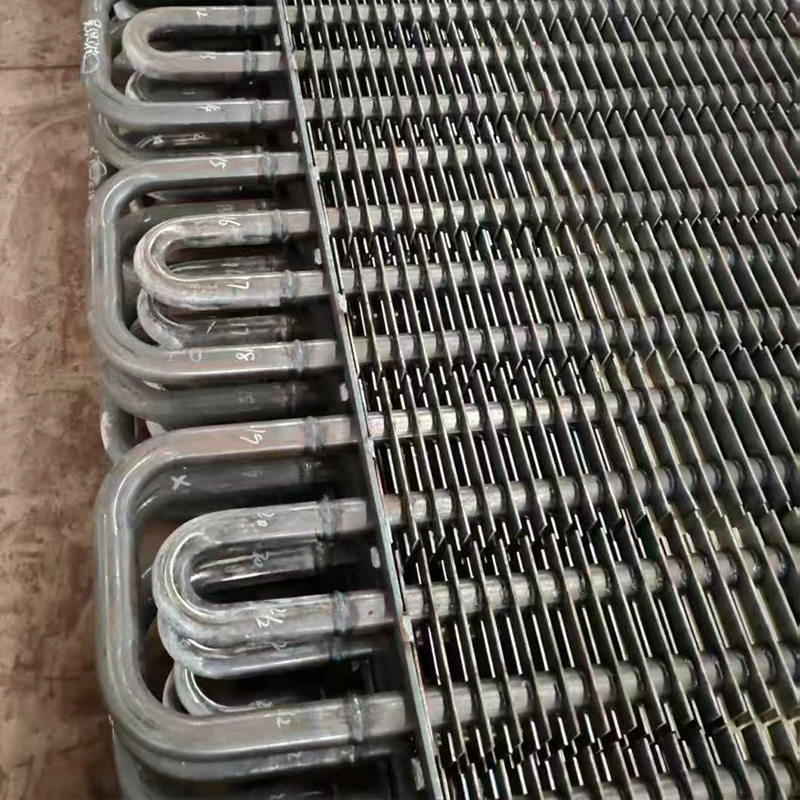
В то же время, для элементов, где критична теплоэффективность и точность геометрии, но давление остается в умеренных пределах, компания успешно применяет качественныесварные трубные пучки. Например, гофрированные трубные пучки из нержавеющей стали AISI 316 или морская латунь C46400 часто изготавливаются по сварным технологиям с последующим контролем шва. Такой подход позволяет оптимизировать стоимость оборудования для судостроения и химической промышленности, сохраняя высокую коррозионную стойкость и надежность.
Опыт «Уси Кайшэн» подтверждает главный тезис этой статьи: не существует универсального решения. Успех проекта зависит от способности инженера точно сопоставить условия эксплуатации (давление, температура, среда) с характеристиками доступного проката. Будь то трубные решетки из стали 321 или сложные воздушные охладители, ключ к долговечности лежит в грамотной спецификации материалов.
Final summary and selection strategy
Подводя итог, выбор между сварными и бесшовными трубами из нержавеющей стали должен базироваться на четком понимании условий эксплуатации, а не на стереотипах.
Chooseбесшовные трубы, если:
- Давление в системе превышает 16-20 МПа.
- Температура среды выходит за пределы -40…+400°C.
- Присутствуют сильные вибрации и циклические нагрузки.
- Объект относится к категории особо опасных производств (нефтегаз, атомная энергетика).
Chooseсварные трубы, если:
- Давление в системе до 16 МПа (большинство коммунальных и промышленных задач).
- Критична точность размеров и качество внешней поверхности (дизайн, пищевое оборудование).
- Бюджет проекта ограничен, и требуется оптимизация затрат без потери надежности.
- Необходимы большие объемы поставок в сжатые сроки.
Помните, что качественная сварная труба от проверенного производителя с полным пакетом документов (EN 10204 3.1) надежнее, чем «серая» бесшовная труба неизвестного происхождения. Рынок переполнен контрафактом, поэтому работа с официальными дилерами и проверка сертификатов — ваша главная защита.
Если вы сомневаетесь в выборе для конкретного узла вашего проекта, не рискуйте. Ошибка в спецификации может стоить дороже самой трубы. Наши инженеры готовы провести аудит вашей схемы и подобрать оптимальный тип проката, который обеспечит безопасность и экономическую эффективность.
Contact us todayдля получения технической консультации и расчета стоимости партии. Мы поможем найти баланс между надежностью и бюджетом, предоставив сертифицированный прокат, соответствующий вашим требованиям.
Для более глубокого изучения темы рекомендуем ознакомиться с нашим материалом омарках нержавеющей стали и их применении, а также узнать подробности офитингах и соединенияхдля различных типов труб.