
316L stainless steel hydraulic system: reliable under pressure
2026-07-08
- Why 316L Stainless Steel Hydraulic System Withstands Extreme Loads
- Critical selection parameters: pressure, temperature and chemical resistance
- Comparative Analysis: Why 316L Beats 304 and Carbon Steel
- Typical installation errors and their impact on the tightness of the system
- Certification and compliance with international quality standards
- Business Case: Total Cost of Ownership Calculation
- Applications: from offshore platforms to pharmaceuticals
- Опыт компании ООО «Уси Кайшэн»: комплексные решения для энергетики и нефтехимии
- Frequently Asked Questions
- Как заказать надежную гидросистему: этапы сотрудничества
Why 316L Stainless Steel Hydraulic System Withstands Extreme Loads
A 316L stainless steel hydraulic system is more than just a pipe fitting, it is a critical infrastructure element that determines the life of the entire plant in hostile environments. In our practice, we have repeatedly encountered situations where an attempt to save 15% on material costs by replacing 316L grade with cheaper 304 or coated carbon steel led to catastrophic consequences after only 6-8 months of operation. Stress corrosion and pitting corrosion destroyed welds, causing leaks of toxic fluids and shutting down production lines costing millions of dollars. This is why choosing the right alloy becomes a matter of economic security and not just technical specification.
316L stainless steel (where the “L” stands for Low Carbon) contains 2% to 3% molybdenum. This chemical element radically changes the physics of the interaction of metal with chlorides, acids and salts. While regular stainless steel is passivated by a chromium oxide film, the molybdenum in the 316L structure stabilizes this film even at high temperatures and under conditions of mechanical vibration. For engineers designing high-pressure systems, this means predictable material behavior under cyclic loads. We recommend using this particular alloy for any systems working with sea water, chloride solutions or in the chemical industry, where the risk of local destruction of the metal is unacceptable.
Critical selection parameters: pressure, temperature and chemical resistance
When ordering a hydraulic system, many buyers focus solely on the nominal pressure (PN), ignoring the temperature dependence of the strength of the material. This is a fundamental mistake. The yield strength of 316L stainless steel decreases as temperature increases, and what the system can withstand at +20°C can be fatal at +150°C. In our projects, we always carry out calculations taking into account the safety factor, which varies from 1.5 to 4.0 depending on the hazard class of the object. For example, for the food industry, standards may be softer than for the oil and gas sector, where any depressurization threatens an environmental disaster.
Chemical compatibility is the second pillar of reliability. The 316L stainless steel hydraulic system exhibits outstanding resistance to a wide range of chemicals, but it has its limits. Concentrated sulfuric acid at room temperature is acceptable, but the presence of even trace amounts of chloride in an acidic environment requires special attention to the flow rate. Turbulence can cause erosive-corrosive wear, which mechanically strips away the protective oxide layer faster than it can recover. We recommend maintaining flow rates between 1.5 and 2.5 m/s for fluids containing abrasive particles to minimize this effect.
The thickness of the pipe wall and the method of its manufacture also play a decisive role. Seamless pipes are preferable to welded pipes for pressures above 10 MPa, since they do not have a longitudinal seam - a potential point of stress concentration. However, modern TIG welding technologies (argon arc welding) make it possible to create seams whose strength reaches 95–98% of the strength of the base metal, which makes welded structures economically feasible for most industrial applications. The key point here is the quality of subsequent processing of the seam: etching and passivation are required to restore corrosion resistance in the heat-affected zone.
It is important to understand the difference between operating pressure and test pressure. Hydraulic tests are usually carried out at a pressure exceeding the working pressure by 1.5 times, but for a short time. Long-term operation at extreme values accelerates the fatigue failure of the metal. Our engineers always provide an additional margin for wall thickness (corrosion allowance), especially if the environment is at least somewhat aggressive. This increases the initial metal cost by 10-15%, but extends the system life cycle by 3-4 times, which reduces the total cost of ownership (TCO) in the long term.
Comparative Analysis: Why 316L Beats 304 and Carbon Steel
Material selection often comes down to a balance between project budget and durability requirements. To make an informed decision, it is necessary to clearly understand the differences in the physicochemical properties of the main competitors. Below is a detailed comparison table based on actual test data from our laboratories and industry standards.
| Comparison parameter | Carbon steel (St3/20) | Stainless steel 304 (AISI 304) | Stainless steel 316L (AISI 316L) |
|---|---|---|---|
| Molybdenum content | 0% | 0% | 2.0% – 3.0% |
| Chloride resistance | None (requires painting/galvanizing) | Low (risk of pitting at >200 ppm Cl) | High (up to 1000+ ppm Cl depending on T°) |
| Weldability | High, but requires rust protection | Good, risk of intergranular corrosion | Excellent (low carbon prevents carbides) |
| Operating temperature (max) | up to +400°C (with loss of strength) | up to +800°C (short-term) | up to +850°C (structure stability) |
| Material cost | Basic (100%) | 40–60% higher | 70–90% higher relative to carbon |
| Service life in sea water | Months (without protection) | 1–3 years (risk of pitting) | 15+ years (with proper installation) |
Let's take a closer look at why paying a premium for the 316L pays off. Carbon steel requires constant anti-corrosion protection: painting, epoxy coating or galvanizing. Any scratch or chip in the coating becomes a source of instant corrosion, which spreads under the paint layer, remaining invisible until a breakthrough occurs. In wet or outdoor environments, maintaining such systems becomes an endless cycle of repairs. 316L is a self-sufficient material: its protection is built into the crystal lattice.
304 steel is often referred to as “food grade stainless steel” and is really good for many applications. However, in hydraulic systems where even traces of chlorides are present (such as in process water or cleaning agents), 304 is susceptible to pitting corrosion. Pitting is a point lesion that quickly penetrates deep into the metal, forming through holes. Molybdenum in 316L blocks the development of pitting, increasing the breakdown potential. If your system comes into contact with salt water, brines, or is located in a coastal area, the 304 is a compromise that could cost you an accident.
Another critical aspect is weldability. Grade 316L is specially designed with a low carbon content (no more than 0.03%) to avoid the precipitation of chromium carbides in the weld area when heated. Carbides deplete adjacent areas of chromium, making them vulnerable to corrosion (intergranular corrosion). When using conventional 316 (without the letter L), subsequent heat treatment (hardening) is often required, which is not possible for large diameter pipelines installed on site. 316L allows you to weld complex components without additional heat treatment, maintaining the corrosion resistance of the weld at the level of the base metal.
Typical installation errors and their impact on the tightness of the system
Even the highest quality material can be ruined by improper installation. In our practice, there was a case when a large chemical plant encountered a series of micro-leaks six months after the launch of a new line. The investigation showed that the problem was not in the pipes, but in a violation of the technology for assembling flange connections. The installers used regular steel bolts instead of stainless steel studs of the same grade. Due to the difference in the coefficients of thermal expansion and galvanic couple, intense corrosion of the fasteners occurred, which led to loosening and loss of tightness.
The first common mistake is using the wrong sealing materials. Paronite or rubber may not withstand aggressive environments or high temperatures, even if the 316L pipe itself is ideal. For high temperature environments, we highly recommend graphite or PTFE filled spiral wound gaskets with a 316L liner. For cryogenic applications or ultrapure environments, delta ring or oval metal gaskets are suitable. Never use asbestos gaskets on new projects - not only are they environmentally obsolete, but they also have poorer compressibility and recovery properties.
The second mistake is contamination of the metal surface with particles of ordinary steel. When cutting, grinding or mounting near carbon steel, micro-iron particles can become embedded in the surface of the stainless steel. Subsequently, these inclusions rust, creating pockets of corrosion that visually look like rust on the stainless steel itself. To avoid this, all work on 316L should be carried out on separate benches, using tools that have never come into contact with ferrous metal. After installation, a passivation procedure is required - surface treatment with special acid compounds to remove free iron and strengthen the oxide layer.
The third problem is improper pipeline support. High pressure hydraulic systems create significant vibration loads. If the supports are located too sparingly or do not have damping elements, metal fatigue occurs at the attachment points. The phenomenon of water hammer is especially dangerous, when a sudden closure of the valve creates a pressure wave that is many times higher than the working one. We calculate the support spacing based on the pipe diameter and the density of the medium, making sure to install thermal expansion compensators on straight sections longer than 10 meters. Ignoring these rules leads to cracks in welds and separation of flanges.
Certification and compliance with international quality standards
For industrial customers, the presence of certificates is not a formality, but a guarantee that the material meets the declared properties. A 316L stainless steel hydraulic system must be accompanied by complete documentation. The primary standard governing pipe and fitting requirements in the United States and international community is ASTM A312 for pipe and ASTM A403 for fittings. These documents strictly regulate the chemical composition, mechanical properties and non-destructive testing methods.
In Europe and Russia, the key document is the certificate of conformity EN 10216-5 or GOST R 59267-2022. It is important to pay attention to the presence of the EAC (Eurasian Conformity) marking to work in the Customs Union market. The absence of this marking will make it impossible to legally operate the equipment at industrial facilities in the Russian Federation, Kazakhstan and Belarus. In addition, to operate in hazardous areas, system components must be Ex-certified, confirming intrinsic safety and sealing in potentially explosive atmospheres.
Particular attention should be paid to material certificates (Mill Certificate 3.1 according to EN 10204 standard). This document is issued by the steel manufacturer and contains the results of chemical and mechanical tests on a particular heat. It shows the actual contents of chromium, nickel, molybdenum, carbon, as well as tensile and impact test results. A 3.1 certificate is mandatory for critical applications in the oil, gas and energy industries. We require such certificates for every batch of products we supply to eliminate the risk of counterfeit metal entering the customer's system.
Hygiene standards for the food and pharmaceutical industries are also worth mentioning. If the hydraulic system is used to transport food or medicine, the internal surface of the pipes must correspond to a roughness class of Ra ≤ 0.8 µm (for food) or Ra ≤ 0.4 µm (for pharmaceuticals). This is achieved by electropolishing. Conventional mechanical polishing does not provide such smoothness and leaves micropores where bacteria can multiply. Certification according to FDA (USA) or EHEDG (Europe) standards confirms the suitability of materials for contact with food.
Business Case: Total Cost of Ownership Calculation
Many buyers make the mistake of comparing only the purchase price (CAPEX) while ignoring the operating expenses (OPEX). A hydraulic system made from 316L is more expensive than analogs made from 304 or carbon steel at the procurement stage, but its economics are revealed over a 5-10 year horizon. Let's look at a real case. The food processing plant selected 304 pipes for a CIP (Clean-in-Place) cleaning system using aggressive chlorine solutions. After 2 years, leaks began. Replacing a section of pipeline required shutting down the line, costing the company $15,000 per hour of downtime. In 5 years they had to change the pipes three times.
If they had originally installed a 316L system, the initial cost would have increased by 25%, but the service life would have been a minimum of 15 years without major repairs. A simple mathematical calculation shows that the savings from the absence of emergency stops and replacements exceed the initial overpayment by 4–5 times. Additionally, 316L stainless steel does not require regular painting or anti-corrosion treatment, reducing labor and material maintenance costs.
Another factor is liquidity and utilization. Stainless steel is a valuable secondary raw material. At the end of the system's life cycle (20-30 years), the dismantled 316L scrap metal can be returned at a high price, returning up to 30-40% of the original cost of the metal. Carbon steel, rusted and coated with layers of old paint, has virtually zero salvage value and costs for waste removal and disposal.
Insurance premiums may also depend on the reliability of engineering systems. Insurance companies often offer reduced rates for facilities that use certified materials of the highest reliability class, since the risk of accidents and environmental fines is minimized. This is a hidden but significant bonus of using the 316L in critical infrastructures.
Applications: from offshore platforms to pharmaceuticals
The versatility of 316L hydraulic systems allows them to be used in a wide variety of industries. In the oil and gas sector, especially offshore, exposure to salt fog and sea spray is a constant factor. Here 316L is used for fire protection systems, corrosion inhibitor injection lines and process piping. Its ability to withstand high pressures combined with its corrosion resistance makes it an excellent choice for subsea pipelines and production systems.
In the chemical industry, where acids, alkalis and solvents are transported, product purity and process safety are priorities. 316L is resistant to most organic acids (acetic, citric) and inorganic (phosphoric, sulfuric in certain concentrations). We have supplied systems for fertilizer plants where the aggressive environment would quickly degrade any other materials. An important aspect here is the absence of contamination of the product with iron ions, which is critical for catalysts and pure reagents.
The pharmaceutical and biotechnology industries have the most stringent requirements for purity. Hydraulic systems for cleaning (WFI - Water for Injection) and distribution of pure steam are made exclusively from 316L with an electropolished internal surface. Roughness less than 0.4 microns prevents the formation of biofilms. Welded joints are made in an argon environment with control of the color of the seam (should be straw or silver, without blue or black), which guarantees the absence of oxides inside the pipe.
The food industry also makes extensive use of 316L, especially in the production of dairy products, juices and alcohol. Harsh detergents used in CIP cycles contain chlorine and hydrogen peroxide, which quickly corrode 304. Upgrading to 316L allows longer drain intervals and ensures compliance with HACCP sanitation standards. In addition, the aesthetic appearance of stainless steel is important in open production areas where audits take place.
Опыт компании ООО «Уси Кайшэн»: комплексные решения для энергетики и нефтехимии
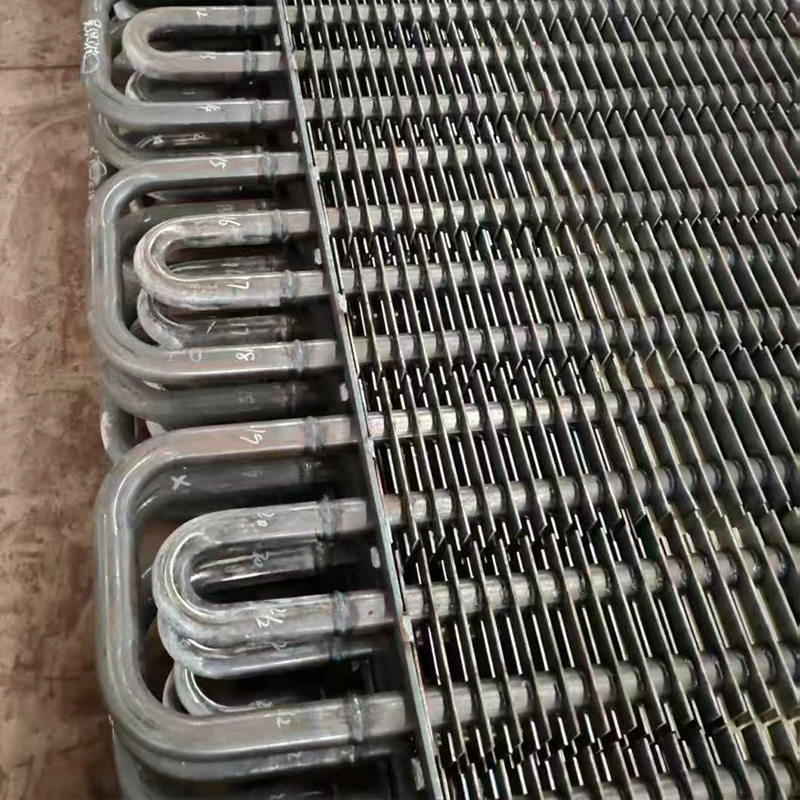
Глубокое понимание свойств материалов, описанных выше, является фундаментом работы нашей компании.Wuxi Kaisheng Electric Power and Petrochemical Equipment Co., Ltd.специализируется на разработке, производстве и реализации сложного теплообменного и технологического оборудования, где надежность гидросистем играет решающую роль. Наш опыт охватывает создание титановых кожухотрубных теплообменников, высоконапорных аппаратов по стандарту ASME, а также производство гофрированных трубных пучков из нержавеющей стали 316L, которые напрямую используют преимущества этого сплава в условиях экстремальных нагрузок.
Мы не ограничиваемся только сталью 316L. В нашем портфеле представлены решения из морской латуни C46400, медно-никелевых сплавов, никелевых сплавов N06625 и титана, что позволяет нам предлагать индивидуальные конфигурации для самых агрессивных сред — от опреснения морской воды до процессов нефтепереработки. Наша продукция, включая воздушные охладители, котлы-утилизаторы и трубные решетки из стали 321 и других сплавов, сертифицирована по строгим международным стандартам PED и ASME. Это гарантирует высокую коррозионную стойкость, теплоэффективность и способность работать под высоким давлением и при экстремальных температурах.
Компания предоставляет высококачественные индивидуальные решения для заказчиков по всему миру, обеспечивая стабильность работы предприятий в энергетике, судостроении и химической промышленности. Когда вы выбираете оборудование от «Уси Кайшэн», вы получаете не прост о набор труб и фитингов, а инженерно просчитанную систему, где каждый компонент — от материала трубной решетки до способа сварки пучка — подобран для максимальной долговечности и безопасности вашего производства.
Frequently Asked Questions
Можно ли соединять трубы 316L с трубами из 304?
Технически это возможно с помощью специальных переходных фитингов, но мы категорически не рекомендуем делать это в системах под давлением с агрессивной средой. При непосредственном контакте возникает гальваническая пара, где 304 выступает анодом и будет корродировать ускоренными темпами. Если соединение неизбежно, используйте диэлектрические прокладки и изолирующие втулки, чтобы разорвать электрический контакт между металлами. Однако лучший путь — привести всю систему к единому стандарту 316L.
Какой максимальный диаметр труб 316L вы можете поставить?
Мы работаем с диаметрами от 6 мм до 1200 мм и более. Для малых диаметров (до 100 мм) оптимальны бесшовные трубы, обеспечивающие максимальную прочность. Для больших диаметров используются сварные трубы с двойным швом и полной рентгенографией. Срок изготовления крупных партий зависит от наличия заготовок на заводе и обычно составляет 4–6 недель для стандартных размеров и до 12 недель для нестандартных толщин стенок или специальных длин.
Подвержена ли 316L коррозии в морской воде?
316L обладает высокой стойкостью, но не является абсолютно неуязвимой в стоячей морской воде при высоких температурах (>60°C). В таких экстремальных условиях может возникнуть щелевая коррозия. Для постоянного погружения в морскую воду или работы с горячей морской водой мы рекомендуем использовать супер-дуплексные стали (2205, 2507) или титан. Однако для большинства промышленных применений, включая брызги, конденсат и проточную морскую воду при умеренных температурах, 316L является стандартом де-факто и служит десятилетиями.
Нужна ли дополнительная изоляция для труб 316L?
Сама по себе нержавеющая сталь не требует изоляции от коррозии. Однако тепловая изоляция необходима, если система транспортирует горячие или холодные среды для сохранения энергии и безопасности персонала. Важно использовать изоляционные материалы, не содержащие хлоридов (хлор-фри), так как хлориды из изоляции могут мигрировать к поверхности трубы при нагреве и вызвать коррозию под изоляцией (CUI). Всегда проверяйте паспорт изоляционного материала на содержание водорастворимых хлоридов (должно быть<50 ppm).
Как заказать надежную гидросистему: этапы сотрудничества
Процесс заказа гидросистемы из нержавеющей стали 316L начинается не с выставления счета, а с глубокого технического аудита. Наши инженеры запрашивают у клиента схему P&ID (Piping and Instrumentation Diagram), спецификацию рабочей среды (температура, давление, химический состав, наличие абразивов) и условия эксплуатации. На основе этих данных мы подбираем оптимальную толщину стенки, тип соединений и класс исполнения. Такой подход исключает ошибки выбора на ранней стадии.
После согласования технического задания мы формируем коммерческое предложение с детализацией по позициям: трубы, фитинги (отводы, тройники, переходы), фланцы, запорная арматура и крепеж. В предложении указываются сроки производства, условия поставки (Incoterms 2020: FOB, CIF, DAP) и график отгрузок. Для крупных проектов возможна поэтапная поставка, синхронизированная со строительным графиком объекта, что оптимизирует складские запасы заказчика.
Производство осуществляется на сертифицированных заводах-партнерах, прошедших наш строгий аудит. Каждая партия сопровождается паспортом качества и сертификатом 3.1. Перед отгрузкой проводится визуальный контроль, измерение геометрии и, при необходимости, гидравлические испытания. Мы берем на себя таможенное оформление и логистику до склада покупателя, обеспечивая сохранность продукции в пути с помощью специальной упаковки и деревянной обрешетки.
Гидросистема из нержавеющей стали 316L — это инвестиция в стабильность вашего бизнеса. Не рискуйте производством ради сомнительной экономии на материалах. Доверьте проектирование и поставку профессионалам с опытом реализации сотен промышленных проектов. Свяжитесь с нами сегодня для получения консультации и расчета стоимости вашего проекта. Мы готовы предоставить образцы продукции и технические каталоги в течение 24 часов.
Для получения подробной спецификации и актуальных цен посетите наш разделкаталог трубной продукции из нержавеющей стали, где представлены все доступные размеры и стандарты исполнения. Наша команда экспертов готова ответить на любые технические вопросы и помочь выбрать оптимальное решение для ваших задач.