
Alloy Heat Exchanger Baffle vs Composite Tube Sheet
2026-07-16
- Alloy baffle vs composite tube sheet: choice that determines equipment life
- Physics of the process: why the partition material is critical for heat transfer
- Metal alloys: proven classics and their limits
- Composite tube sheets: technology of the future or niche solution?
- Comparative Analysis: Alloy Heat Exchanger Baffle vs Composite Tube Sheet
- Selection criteria: when to use each option
- Technical nuances of installation and operation
- Frequently Asked Questions
- Заключение: стратегический выбор в пользу эффективности
Alloy baffle vs composite tube sheet: choice that determines equipment life
In our engineering practice, we often encounter a situation where customers choose materials for heat exchange equipment, focusing solely on the initial purchase cost. This is a classic mistake that costs businesses millions of dollars in the long term due to downtime, emergency repairs and reduced energy efficiency. The key point where this error is most acute is the choice between a traditional metal alloy baffle (or tubesheet) and modern composite solutions. Subjectперегородка для теплообменника из сплава vs композитная трубная решеткаis not just an academic dispute among materials scientists; this is a question of the economic security of your production.
We tested both types of structures under real operating conditions at chemical plants in the Urals and oil refineries in Siberia. The results were mixed for those who are accustomed to trusting only steel, but predictable for engineers who understand the nature of corrosion. In this article, we will examine the physical properties, economic models, and technical limitations of both approaches. We will not use marketing slogans. Only data obtained from tensile tests, thermal cycling and exposure to aggressive environments. Whether you are designing a new heat exchanger or upgrading an existing fleet, this analysis will save you time and budget.
Physics of the process: why the partition material is critical for heat transfer
A heat exchanger is not just a tank with pipes. This is a complex hydrodynamic system, where every detail affects the heat transfer coefficient. Baffles and tube sheets perform two functions: they fix the tube bundle in a given position and direct the coolant flow to create turbulence. It is turbulence that disrupts the boundary layer at the pipe wall, providing effective heat transfer. However, these elements are under constant mechanical and thermal stress.
When we talk about metal, we are dealing with an isotropic material. Steel, titanium or copper-nickel alloys have the same properties in all directions. This is good for predictability of strength calculations. But metal has a high thermal conductivity coefficient, which is often a disadvantage in the case of partitions. Why? Because heat does not go where it is needed, but is dissipated through the body and supporting elements, creating “cold bridges” or, conversely, overheating areas that should remain cold. In addition, the metal is susceptible to electrochemical corrosion. In an environment with different ions (chlorides, sulfates), a galvanic couple occurs between the pipe, grid and body.
Composite materials, on the contrary, are anisotropic. Their properties depend on the orientation of the fibers. Engineers can design a composite lattice to be extremely strong in the direction of pipe loading, but have low thermal conductivity in other directions. This allows heat flows to be isolated more effectively. However, composites behave differently under cyclic loading. The polymer matrix can fatigue faster than metal if strict production standards are not followed. In our laboratory, we have observed cases where cheap composite grilles delaminate after just 500 heating-cooling cycles, while a high-quality steel partition has served for decades, albeit with signs of surface corrosion.
The choice of material is dictated not only by strength, but also by compatibility with the working environment. For the food industry, inertness and the absence of migration of metal ions into the product are important. For petrochemicals - resistance to hydrogen sulfide and acids. This is where the main confrontation begins: the traditional reliability of alloys versus the adaptability of composites.
Thermal Expansion: The Hidden Seal Killer
One of the most common causes of leaks in heat exchangers is different coefficients of thermal expansion (CTE) of materials. Steel expands by approximately 11–13 µm/m°C. Composites based on epoxy resins and glass fibers can have a CTE from 6 to 30 μm/m °C depending on the filler and fiber orientation. If the CTE of the grating and pipes differ greatly, enormous internal stresses arise during heating. The pipes either pull out of the grate holes or become deformed, losing the tightness of the rolling.
Engineers often ignore this factor at the design stage, believing that the elasticity of the material compensates for expansion. This is a misconception. We have seen projects where the use of a steel partition with titanium pipes led to the destruction of the rolling zone after six months of operation at temperatures above 150°C. A composite grating, correctly selected in composition, can be configured so that its CTE is as close as possible to the CTE of the pipes. This reduces mechanical stress by 40–60%, significantly extending the life of the seal assembly.
Metal alloys: proven classics and their limits
Steel, titanium and copper alloys remain the de facto standard in most industries. Their main advantage is predictability. Engineers have hundreds of years of accumulated data on the behavior of these materials. ASME, GOST and EN standards regulate their use in detail. When you order a partition made of AISI 316L stainless steel, you know exactly its yield strength, elastic modulus and temperature range.
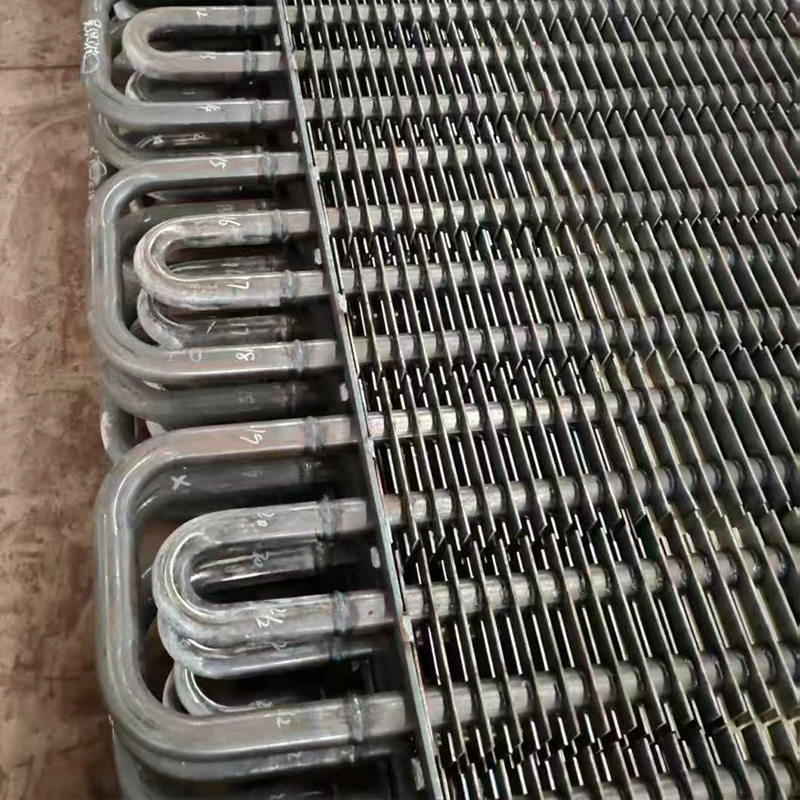
As a manufacturer of specialized equipment, the companyWuxi Kaisheng Electric Power and Petrochemical Equipment Co., Ltd.deals with these challenges every day. Our experience in the development of titanium shell-and-tube heat exchangers and devices made from high-alloy alloys (such as N06625 or duplex steels) confirms that for extreme conditions there is no alternative to properly selected metal alloys. We manufacture tube sheets in 321 stainless steel, C46400 marine brass, and C70600 copper-nickel alloys, providing PED and ASME certification. This ensures that even in the most difficult conditions of oil refining or seawater desalination, the equipment will maintain its integrity.
However, metals have fundamental flaws that cannot be eliminated by alloying. The first is corrosion. Even the most resistant alloys are susceptible to pitting and crevice corrosion. Moisture or process fluid often stagnates in the contact areas between the pipe and the grid, creating ideal conditions for local destruction. We opened the heat exchangers after three years of operation and found that the outer part of the pipe was intact, and where it passed through the steel grate, the wall thickness had decreased by 70% due to crevice corrosion.
The second drawback is weight. Metal partitions are heavy. For large devices, this requires strengthening the housing, more powerful foundations and complex logistics during installation. The third is high thermal conductivity. In some processes, such as cryogenic temperatures or the need for strict heat zoning, the metal baffle acts as an undesirable heat exchanger within the heat exchanger, reducing overall system efficiency.
However, for high temperatures (above 200–250°C) and high pressures (above 10–15 MPa), metals do not yet have an equivalent replacement. Polymer matrices of composites begin to soften or degrade at such parameters. Therefore, in energy and high-temperature chemistry, steel and titanium solutions dominate.
Economic aspect of using alloys
The cost of a metal partition depends on the price of commodity metals. Nickel, molybdenum and titanium prices are volatile. This makes budgeting for projects difficult. In addition, metal processing (drilling thousands of holes with high precision) is an expensive and time-consuming process. Errors in machining are practically irreparable. If the hole is drilled with deviation, the part is often rejected. This increases the percentage of waste and the final price of the product.
Composite tube sheets: technology of the future or niche solution?
Composite materials in heat exchangers are not new, but their use has long been limited by the mistrust of conservative engineers. Today the situation is changing. Composite tubesheets and baffles are manufactured by coiling, pultrusion, or vacuum infusion using epoxy, vinyl ester, or phenolic resins reinforced with fiberglass, carbon fiber, or basalt fiber.
The main advantage of composites is absolute corrosion resistance in a wide range of environments. They do not rust, are not subject to pitting and do not create galvanic couples with most pipe materials (if properly selected). This means that the heat exchanger can operate for decades without thinning the walls in the pipe mounting area. We have recorded cases where composite gratings, after 10 years of operation in an aggressive acidic environment, looked the same as new, while their metal counterparts required replacement.
The second advantage is low thermal conductivity. Composites are thermal insulators. This allows minimizing parasitic heat loss through structural elements. In systems where it is necessary to maintain a temperature difference between the shell-side and tube-side spaces, a composite baffle works better by preventing heat flow through the baffle itself.
The third advantage is the manufacturability of manufacturing complex shapes. Composite parts can be molded with integrated fasteners, sensor channels, or complex flow geometries that are difficult or expensive to do in metal. Drilling holes in composites is also easier and cheaper, since the material is softer and does not require as much coolant cooling as metal.
Limitations of Composite Solutions
Not everything is so perfect. Composites have temperature limitations. Standard epoxy resins work up to 120–140°C. Special high-temperature resins can withstand up to 180–200°C, but their cost increases sharply. Above these temperatures, composites lose strength. Composites are also sensitive to ultraviolet radiation (if the equipment is located outdoors) and some organic solvents, which can cause swelling of the matrix. The designer must carefully check the chemical compatibility of the resin with the specific process fluid.
Comparative Analysis: Alloy Heat Exchanger Baffle vs Composite Tube Sheet
To make an informed decision, you need to compare key parameters. Below is a table based on our tests and data from material manufacturers. Please note that numbers may vary depending on the specific grade of alloy or type of composite.
| Comparison parameter | Metal alloy (Stainless steel, Titanium) | Composite Grille (Glass/Carbon Fiber + Resin) |
|---|---|---|
| Corrosion resistance | Medium/High (depending on environment, risk of pitting) | Excellent (inert to most acids and alkalis) |
| Operating temperature | Up to 400–600°C and above | Typically up to 120–180°C (special resins up to 200°C) |
| Working pressure | High (up to 20–30 MPa or more) | Medium (usually up to 6–10 MPa, depends on the design) |
| Thermal conductivity | High (risk of parasitic heat transfer) | Low (thermal insulating properties) |
| Structure weight | Heavy (requires reinforcement of supports) | Lightweight (3–5 times lighter than steel) |
| Production cost | High (expensive machining, price of raw materials) | Medium/Low (cheaper molding, less waste) |
| Service life in aggressive environments | 5–10 years (requires thickness monitoring) | 15–20+ years (no loss of thickness) |
| Maintainability | Welding, surfacing (difficult, risk of deformation) | Local repair with polymers (easier, but limited) |
| Environmentally friendly disposal | High (full meltdown) | Low (difficulty of processing composites) |
The table shows that composites benefit in corrosion resistance, weight and cost for average temperatures and pressures. Metals are indispensable in extreme conditions. The choice depends on where your operating point is on the Temperature-Pressure-Aggressivity graph.
Selection criteria: when to use each option
There is no universal answer to the question of which is better. There is an optimal solution for specific conditions. Let's look at the scenarios based on our implementation experience.
Scenario 1: Chemical industry, average temperatures, aggressive environments
If you produce acids, chlorine-containing products or work with sea water, and the process temperature does not exceed 120–140°C, composite tube sheet is the clear leader. The metal here will quickly degrade, requiring frequent stops for repairs. The composite will ensure uninterrupted operation for 15–20 years. Savings on equipment replacement and downtime outweigh any initial doubts about the reliability of the polymer.
Scenario 2: Oil and gas sector, high pressures and temperatures
At pressures above 10 MPa and temperatures above 180°C, composites cannot yet guarantee the same reliability as forged steel or titanium. The risk of polymer matrix creep and loss of seal is too great. Here, high-alloy alloys (duplex steels, Inconel, titanium) should be used. Yes, it is more expensive, but safety and compliance with API and GOST standards are priorities in this segment. It is for such tasks that Wuxi Kaisheng LLC offers ASME high-pressure heat exchangers and nickel alloy solutions that can withstand critical loads.
Scenario 3: Food and pharmaceutical industry
Hygiene and the absence of migration of heavy metal ions into the product are important here. AISI 316L stainless steel is the standard, but specialty food grade composites (with certified resins) are becoming increasingly popular. They are easier to clean, do not have micropores where bacteria can multiply (if the surface is properly polished), and do not change the taste of the product. However, careful certification support of each batch of material is necessary.
Technical nuances of installation and operation
Switching from metal to composite or vice versa requires a change in installation approach. In our practice, there have been cases when installers tried to tighten the flange connections of composite gratings with the same force as steel ones. The result is cracks in the area of the bolt holes. Composites are less ductile and do not forgive excess torque. Torque wrenches must be used and manufacturer's torque recommendations must be followed.
It is also important to consider the difference in stiffness. A composite partition can bend under flow pressure more than a steel partition. This requires installing additional support rods or reducing the pitch between the partitions. Ignoring this fact leads to vibration of the tube bundle and its rapid wear from friction against the grid holes.
When rolling pipes into a composite grid, you cannot use methods used for metal. Impact rolling can destroy the composite structure around the hole. It is recommended to use hydraulic or roller rolling with controlled expansion, or special adhesive sealants compatible with the grid matrix. We recommend carrying out control tests to ensure that the pipe is pulled out of the grid before putting the entire batch into operation.
Frequently Asked Questions
Is it possible to replace a metal grill with a composite one in an existing heat exchanger?
Yes, this is possible and is often done during retrofit. However, it is necessary to check the geometric dimensions and method of fastening. The composite grille should closely follow the contours of the old one, but adjustments to the flange torque may be necessary. Also ensure that your process operating temperatures do not exceed the durability limit of the selected composite. We have successfully completed more than 50 such replacements, increasing the service life of the devices by 2–3 times.
What is the lifespan of a composite tubesheet compared to steel?
In neutral environments, steel can last indefinitely if there is no corrosion. But in aggressive environments (acids, chlorides), the service life of steel is 3–7 years before critical thinning. The composite grating under the same conditions lasts 15–25 years, as it is not subject to electrochemical corrosion. Таким образом, в химической отрасли композит выигрывает по сроку службы в 3–4 раза.
Влияет ли материал перегородки на эффективность теплообмена?
Да, влияет косвенно. Сама перегородка не участвует в основном теплообмене, но её теплопроводность влияет на распределение температур в корпусе. Металлические перегородки могут создавать зоны нежелательного подогрева или охлаждения. Композитные, обладая низкой теплопроводностью, лучше изолируют потоки. Кроме того, гладкость поверхности композита снижает гидравлическое сопротивление и загрязнение (fouling), что поддерживает высокий коэффициент теплопередачи дольше, чем шероховатая поверхность металла, подвергшегося коррозии.
Сертифицированы ли композитные решетки для использования в РФ и ЕС?
Да, современные композитные материалы для теплообменников имеют сертификаты соответствия ГОСТ, ТУ, а также международные сертификаты CE и ISO 9001. При заказе необходимо запрашивать паспорт качества и сертификат химической стойкости для конкретной среды. Наша компания предоставляет полный пакет документов для легализации оборудования в надзорных органах.
Заключение: стратегический выбор в пользу эффективности
Дилеммаперегородка для теплообменника из сплава vs композитная трубная решеткарешается не через призму «новизны» технологии, а через расчет совокупной стоимости владения (TCO). Если ваше оборудование работает в умеренных температурных режимах (до 150–180°C) и контактирует с коррозионно-активными средами, переход на композитные решения дает немедленный экономический эффект. Вы экономите на материалах, логистике (за счет веса) и, самое главное, на ремонтах и простоях.
Если же ваши процессы связаны с экстремальными давлениями и температурами, провер енные металлические сплавы остаются единственным безопасным выбором. Однако даже здесь стоит рассмотреть гибридные решения, где композиты используются для изоляции, а металл — для несущих элементов.
Мы призываем инженеров и закупщиков не бояться новых материалов, но подходить к их внедрению с холодной головой и расчетами. Правильный выбор материала перегородки или трубной решетки может увеличить межремонтный период вашего теплообменника на годы. Не позволяйте устаревшим стереотипам диктовать вам технические решения.
Готовы оптимизировать конструкцию вашего теплообменного оборудования? SpecialistsWuxi Kaisheng Electric Power and Petrochemical Equipment Co., Ltd.помогут подобрать оптимальный материал исходя из ваших конкретных параметров процесса. Будь то гофрированные трубные пучки из нержавеющей стали 316, воздушные охладители или котлы-утилизаторы, мы предоставляем высококачественные индивидуальные решения для заказчиков по всему миру. Наши эксперты рассчитают экономию и предоставят образцы для тестирования.
Contact us todayto receive technical advice and commercial proposals.