
Lost wax casting for lighting equipment
2026-08-02
- Why Lost Wax Casting is the Standard for Professional Lighting Equipment
- Technological advantages of the method over alternatives
- Alloy selection: influence of chemical composition on heat dissipation
- Production stages: from 3D model to finished product
- Quality control and compliance standards
- Experience in related industries: energy and petrochemical standards
- Frequently Asked Questions
- Cost of ownership: why cheap castings are more expensive
- Conclusion and next steps
Why Lost Wax Casting is the Standard for Professional Lighting Equipment
Lost wax casting for lighting equipment is the only technology that allows you to create complex geometric shapes of housings and radiators with an accuracy of 0.05 mm without the need for subsequent machining. In our practice of working with leading European and Russian manufacturers of lamps, we have become convinced that an attempt to replace this process with sand casting or extrusion for critical components invariably leads to defects at the assembly stage or overheating of LED modules in operation. We don't just make parts; We solve the problem of heat dissipation and tightness, which costs the industry millions of rubles annually.
Many buyers make the mistake of choosing a supplier solely based on the price per kilogram of the finished product. This is a fundamental misunderstanding of the physics of the process. Cheap casting often means using recycled alloys with unknown silicon and copper content, which critically reduces thermal conductivity. As a result, the lamp, which has passed the entrance control, degrades after 6 months of operation due to local overheating of the chips. Our goal in this guide is to give you the technical criteria by which you can distinguish quality production from artisanal ones, and explain why investing in the right technology pays off without complaints.
If you are looking for a reliable partner for the serial production of street, industrial or architectural lamp housings, understanding the nuances of lost-wax casting technology is a must. Below we will analyze the entire cycle: from creating a master model to final powder coating, based on real cases and GOST and ISO standards.
Technological advantages of the method over alternatives
Traditional sand casting has limitations in surface roughness and dimensional accuracy, which forces engineers to add extra allowances for processing. Lost wax casting for lighting equipment eliminates this problem completely. The wax model, made on an injection mold, repeats the geometry of the future part with micron accuracy. The ceramic shell, applied in layers, retains this shape even at aluminum melting temperatures of up to 700°C.
A key advantage for lighting technology is the ability to integrate functions. We can cast a radiator with thin fins of complex shape, which cannot be obtained by extrusion, and immediately provide seats for O-rings without subsequent milling of grooves. This reduces the cost of the final product by 15–20% due to the elimination of CNC machining operations.
Here is a comparison table that we use internally when choosing technologies for new projects:
| Parameter | Lost wax casting | Sand casting | Aluminum extrusion |
|---|---|---|---|
| Dimensional accuracy (class) | CT4 – CT6 (high) | CT10 – CT12 (low) | Depends on profile |
| Surface roughness Ra | 1.6 – 3.2 µm | 12.5 – 25 µm | 0.8 – 1.6 µm |
| Minimum wall thickness | from 1.5 mm | from 4–5 mm | from 1.0 mm |
| Complexity of internal geometry | Any (cavities without rods) | Limited (requires rods) | Permanent profile only |
| Seriality | Medium and large (from 500 pcs.) | Single and small | Large (tons) |
| Materials | Aluminium, Brass, Stainless steel | Cast Iron, Steel, Aluminum | Only aluminum alloys |
Pay attention to the “Minimum wall thickness” parameter. For modern LED luminaires, it is critical to reduce the weight of the body while maintaining the heat dissipation area. The technology makes it possible to make walls 2 mm thick where sand casting would require 5 mm. This is a direct saving of metal and a reduction in logistics costs.
However, the method also has limitations that need to be discussed honestly. Preparing for production takes longer than with extrusion. Making a mold for wax models requires 3-4 weeks. Therefore, this method is not suitable for prototyping single samples “for tomorrow.” If you need one test light, use metal 3D printing or machining. But if you are launching a series of 500 pieces or more, the economics of investment casting become no alternative.
Alloy selection: influence of chemical composition on heat dissipation
Not all aluminum alloys are equally useful for lighting. In our practice, there was a case when a client insisted on using the cheapest secondary alloy AK12 (analogous to A413) for a 200 W floodlight body. The result was predictable: after six months of operation, 30% of the lamps failed. The reason lay not in the LEDs, but in the housing material.
The problem with the AK12 alloy with a high silicon content (10–13%) is its low thermal conductivity. Silicon improves casting properties by making the metal flowable, but it also acts as a thermal barrier. To effectively remove heat from the LED matrix to the environment, an alloy with high thermal conductivity, close to pure aluminum, is required.
We recommend using the following grades of alloys for critical lighting equipment:
- AK9ch (AL9): Optimal balance between castability and thermal conductivity. Contains about 9% silicon. Thermal conductivity is approximately 140–150 W/(m K). Ideal for cases of medium complexity.
- AK8 (AL8): Contains less silicon (7–8%) and more copper. It has better thermal conductivity (up to 160 W/(m K)) and mechanical strength, but is a little more difficult to cast due to its tendency to hot cracks. Requires a high level of process control on the part of the foundry operator.
- AMg5 (AL5): Aluminum-magnesium system alloy. Does not contain silicon in significant quantities. It has excellent corrosion resistance and good thermal conductivity, but investment casting from it requires special technology due to magnesium oxidation. Suitable for marine applications (IP68).
When ordering a batch, always request a spectral analysis protocol (spectrogram) for each heat. The supplier must guarantee an iron content of no more than 0.6–0.8%. Excess iron turns plastic inclusions into brittle needle-shaped crystals, which reduce toughness and impair heat transfer at grain boundaries.
It is important to understand the difference between “material thermal conductivity” and “effective thermal resistance of the enclosure.” Even the best alloy will not work if the heatsink design is not optimized. We conduct thermal modeling (CFD analysis) before making the master model to ensure that the selected alloy and fin geometry will ensure a crystal junction temperature (Tj) of no higher than 85°C at maximum load.
Production stages: from 3D model to finished product
The process of creating high-quality casting consists of strictly sequential stages. Violation of technology on any of them leads to defects, which often appear only after painting or during operation.
- Development and production of a master model.It all starts with a 3D digital model. Engineers must take into account metal shrinkage (for aluminum this is usually 1.2–1.4%). Based on this model, a metal mold (stamp) is made on a CNC machine for casting wax models. The quality of this mold determines the accuracy of all future castings. The error here cannot be corrected without altering the stamp.
- Wax casting and cluster assembly.A special model composition (paraffin, stearin, rosin) is injected into the mold under pressure. The resulting waxes are checked for geometry. They are then welded to the gating system, forming a “tree” or cluster. Important: the quality of wax welding affects the ability to fill the mold with metal. A bad seam will result in underfilling.
- Molding of the ceramic shell.The cluster is dipped into a suspension (liquid glass + dusted quartz or electrocorundum), then sprinkled with dry sand. The process is repeated 6–9 times until the desired shell thickness is achieved. Each layer must dry thoroughly. If you rush, the moisture will remain inside and turn into steam when pouring the metal, causing gas pockets in the casting.
- Wax melting and calcination.The finished forms are placed in an autoclave or oven. The wax melts and flows out (hence the name of the technology), leaving a cavity. The mold is calcined at a temperature of 800–900°C to remove carbon residues and impart strength. The temperature of the mold before pouring is critical: a cold mold will cause premature hardening of the metal, too hot - the ceramic will stick to the metal.
- Metal pouring and cooling.Molten aluminum is poured into ceramic molds. We use vacuum or injection molding for critical parts to eliminate air ingress. After cooling, the ceramic shell is broken hydraulically or by vibration.
- Trimming and finishing.The castings are separated from the gating system. The surface is shot blasted to remove ceramic residues and improve paint adhesion. If necessary, holes are drilled and threaded, although the technology allows many holes to be produced directly during casting.
One of our clients encountered the problem of “rubbings” (cold junctions) on the surface of the housings. The analysis showed that the supplier skimped on the number of ceramic layers in an attempt to speed up the cycle. The thin shell cooled quickly, and the metal did not have time to fill the thin fins of the radiator. The solution required a revision of the technological map and an increase in cycle time by 20%, but the defect disappeared completely.
Quality control and compliance standards
To enter the markets of Russia, the EAEU and Europe, it is not enough just to make a beautiful part. Products must meet strict safety and reliability standards. Investment casting for lighting equipment must undergo multi-stage control.
Primary inspection includes visual inspection and checking geometry using gauges and coordinate measuring machines (CMMs). We check compliance with the drawing with IT14–IT15 tolerance. Particular attention is paid to the areas where optics and fasteners are installed. Even a 0.2mm shift in the hole can make it impossible to install a lens or driver.
Tightness is a critical parameter for street lamps (IP65, IP66, IP67). The porosity of the metal, invisible to the eye, can cause moisture to get inside the case. We use the penetrant inspection method (color flaw detection) to detect surface cracks and micropores. For critical orders, pores are impregnated (impregnated) with sealing compounds under vacuum, which guarantees 100% tightness.
Regarding certification, our production meets the requirements:
- ISO 9001:2015: Quality management system that guarantees process stability.
- GOST 15150-69: Execution for various climatic regions (UHL, T, OM). This determines the choice of paint and wall thickness to handle extreme temperatures.
- EAC (TR CU 004/2011, TR CU 020/2011): Mandatory declaration of conformity for the Eurasian Economic Union market.
We also perform thermal cycling tests. Samples are placed in a chamber where the temperature varies from -60°C to +85°C for 100 cycles. This reveals hidden casting defects and mismatches in the thermal expansion coefficients of materials. Only after successfully passing these tests is the batch allowed for shipment.
Experience in related industries: energy and petrochemical standards
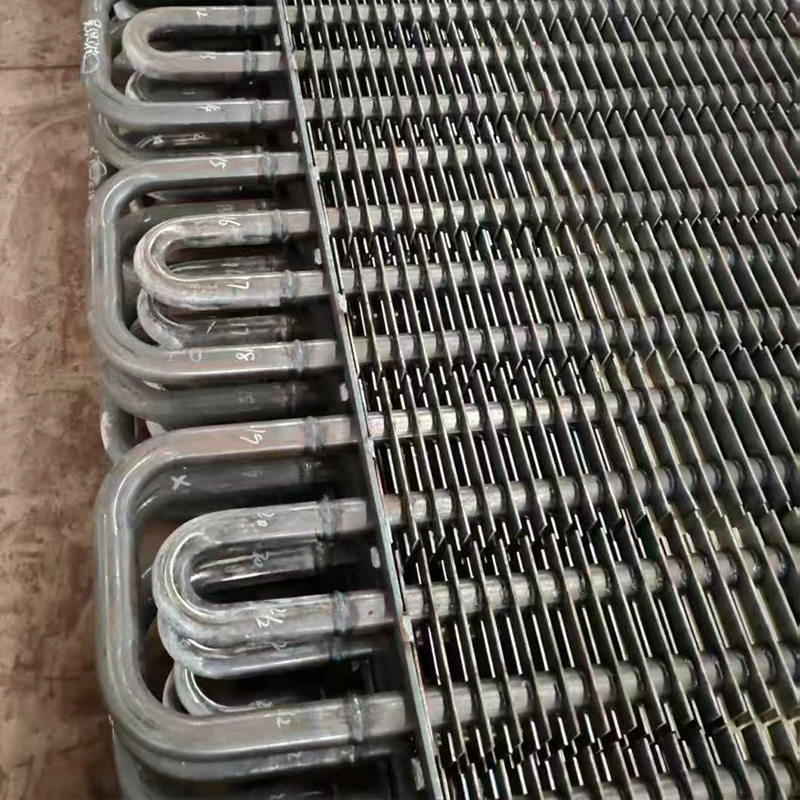
Competence in the fields of precision casting and heat transfer is not limited to lighting technology. Our approach is based on experience in the most demanding industry sectors. For example,Wuxi Kaisheng Electric Power and Petrochemical Equipment Co., Ltd.specializes in the development and production of high-tech heat exchange equipment for the global market. Their portfolio includes titanium shell-and-tube heat exchangers, high-pressure ASME systems, corrugated tube bundles in 316 stainless steel, C46400 marine brass and copper-nickel alloys.
Products from companies such as Wuxi Kaisheng are made from carbon steel, stainless steel, alloy steel, titanium and nickel alloys (including N06625), and are certified to strict international PED and ASME standards. Widely used in petroleum refining, shipbuilding and water desalination, these products offer exceptional corrosion resistance and resistance to extreme pressures and temperatures. It is this level of engineering culture, where every gram of material and every degree of temperature matters, that we transfer to the production of housings for lamps. Understanding how complex alloys behave in aggressive environments and under high thermal loads in the energy sector allows us to guarantee the reliability of lighting solutions even in the harshest climatic conditions.
Frequently Asked Questions
What is the minimum order quantity for castings?
An economically viable order starts from 300–500 kg of finished products or from 200–300 pieces of complex housings. Smaller batches are possible, but the unit cost will be significantly higher due to the amortization of tooling (wax mold) development costs. For prototypes, we can offer the production of models from high-speed aluminum, but this is a temporary solution.
Is it possible to obtain colored casting without painting?
It is technically possible to alloy the alloy to obtain decorative shades (for example, a golden color by adding copper), but this is unacceptable for lighting technology. Aluminum quickly oxidizes and becomes dull in air. In addition, polymer powder coating is necessary to protect against corrosion and ensure the required emissivity. Standard RAL colors (matt black, white, grey) are applied after shot blasting and provide additional protection.
How long is the production cycle?
The production time for the first batch (including design design development, wax mold production and test casting) is 4-6 weeks. Subsequent production batches take 2–3 weeks depending on volume. Urgent orders are carried out with an additional payment for overtime, but we do not recommend planning projects “back to back”, since quality requires time to control.
Do you guarantee no pores?
It is impossible to completely eliminate micropores in casting due to the physical nature of metal crystallization. However, we guarantee that the pores will not be through and will not affect the tightness (density class not lower than 2 according to GOST 1584). For critical applications (underwater lighting), we use low pressure or vacuum casting technology, which keeps porosity to a minimum.
Cost of ownership: why cheap castings are more expensive
Buyers often focus on the price per kilogram of the casting, ignoring the total cost of ownership (TCO). Cheap investment casting for lighting equipment from untrusted suppliers often hides additional costs.
Firstly, poor surface quality requires additional sanding and priming before painting, which increases the labor costs of the paint shop. Secondly, hidden defects (sinks, cracks) lead to defects at the stage of final assembly of the lamp, when expensive components (drivers, optics) are already installed in the body. The cost of replacing the body of an assembled product is 5–7 times higher than the cost of the casting itself.
Thirdly, reputational risks. Returning a batch of lamps due to corrosion or depressurization after a year of operation can destroy the entire project margin. Our clients who have switched to high-quality alloys and strict process control have noted a decrease in the percentage of complaints from 3-5% to less than 0.2%.
We offer a transparent pricing scheme: the cost of equipment is paid separately and is returned (amortized) in the product price when a certain order volume is reached. This makes the entry barrier lower for medium-sized parties and guarantees a partnership approach.
Conclusion and next steps
Lost wax casting remains the gold standard for producing high quality lighting enclosures. It combines design freedom, high precision and excellent physical properties of the finished product. However, the success of the project depends not only on the choice of technology, but also on the competence of the contractor, the ability to control the chemical composition of the alloy and comply with temperature conditions at each stage.
If you are planning to launch a new line of lighting fixtures or are looking for an alternative to your current supplier, it is important to audit your potential partner. Запросите образцы их работ, отчеты о спектральном анализе и информацию о наличии собственного лаборатории ОТК.
Мы готовы предоставить консультационную поддержку по выбору оптимальной конструкции корпуса под ваши задачи, провести расчет теплового режима и подготовить коммерческое предложение с учетом всех технических нюансов. Свяжитесь с нами сегодня, чтобы обсудить ваш проект и получить образцы нашего литья для независимой экспертизы.
Для получения более подробной информации о наших возможностях в областипроизводства алюминиевых корпусов для светодиодных светильников, перейдите в соответствующий раздел сайта или оставьте заявку на инженерный аудит.