
Lost wax casting services for bathroom fittings
2026-08-02
- Why lost wax casting is the standard for premium fittings
- Technological process and quality control at every stage
- Choice of materials: Brass, Stainless steel or ZAM?
- Order Economics: MOQ, Lead Time and Hidden Costs
- Certification and compliance with international standards
- Experience with specialty alloys: from plumbing to the oil and gas industry
- Frequently Asked Questions
- Как начать сотрудничество и минимизировать риски
Why lost wax casting is the standard for premium fittings
Lost wax casting services for bathroom fittings make it possible to produce products of complex geometry with a surface roughness of Ra 1.6–3.2 microns without subsequent mechanical processing. Unlike sand casting or stamping, this technology (also known as Lost Wax Casting) ensures that there are no mold parting lines on visible parts of faucets, handles and holders. For plumbing manufacturers, this means the ability to create ergonomic shapes that cannot be achieved by other methods, while maintaining high metal density and resistance to corrosion in aggressive wet environments.
In our practice, we encountered a situation where a large European brand tried to save money by ordering a batch of brass handles using the hot stamping method. The result was catastrophic: after 6 months of operation in conditions of high humidity, 15% of the products began to experience intergranular corrosion in places where the metal was deformed. Stamping disrupts the structure of the alloy, creating stress zones, while investment casting ensures a uniform crystal lattice. This incident cost the client a recall of the entire batch and reputational damage, which was three times the cost of the initial savings. That is why for critical bathroom components we insist only on lost wax casting technology.
The key advantage of the method lies in the tolerances. We ensure the accuracy of IT14–IT15 dimensions, which allows you to assemble faucets without additional adjustments and seals at the junction of decorative elements. If your project requires the production of parts weighing from 5 grams (decorative trims) to 2 kilograms (faucet bodies) with ideal repeatability, this technology is the only solution. You can now request a drawing analysis of your hardware to determine the optimal alloy and molding method.
Technological process and quality control at every stage
The process begins not with pouring metal, but with creating a master model. An error at this stage renders the entire subsequent chain useless. We use CNC machined aluminum molds with a positioning accuracy of 0.01mm to inject wax models. It is important to understand: the quality of the wax model directly determines the quality of the finished metal product. Any scratch or defect on the wax will be reproduced on the metal. Our engineers visually inspect each wax replica under magnification before assembling it into sprue trees (clusters).
The next critical stage is the formation of the ceramic shell. The wax is dipped into a suspension of quartz sand and a binder (ethyl silicate), then sprinkled with abrasive. This cycle is repeated 6–9 times until the shell thickness is 8–12 mm. Here lies the main risk for non-professional foundries: violation of the temperature and humidity conditions of drying leads to cracking of the ceramics during pouring. One of our clients lost a batch of 5,000 mixer bodies precisely because of a draft in the drying chamber, which dried the layers unevenly. We control this parameter automatically, eliminating the human factor.
After the shell has hardened, the wax is melted in autoclaves at a temperature of 160–170°C under steam pressure. The empty ceramic mold is baked at 900–1100°C to remove residual carbon and impart strength. Metal pouring takes place in induction-type vacuum furnaces. Vacuum is necessary to prevent oxidation of alloying elements (zinc, lead, tin) and remove gas inclusions. For alloys such as CW614N (brass) or CF8M (316 stainless steel), this is critically important, since the pores in the body of the part under the chromium layer will become centers of corrosion after just a year of operation.
The final stage includes mechanical cutting of the gating system, shot blasting and primary grinding. But real quality control starts here. We use spectral analysis to check the chemical composition of each heat. A deviation of lead content by more than 0.2% from the GOST or DIN standard makes the batch unsuitable for use in drinking water supply. Each part is tested for leaks under a pressure of 1.5 MPa for 30 seconds. Parts with surface defects that cannot be removed by polishing are rejected immediately. You should require the supplier to provide spectral analysis reports with each shipment.
Choice of materials: Brass, Stainless steel or ZAM?
The choice of alloy is dictated not only by budget, but also by operating conditions. The bathroom combines high humidity, temperature changes and contact with household chemicals. Let's look at the three main materials used in investment casting in terms of their actual performance rather than marketing promises.
Brass (CuZn39Pb3/CW614N): Industry gold standard.
Brass makes up about 80% of all premium-segment sanitary fittings. Its main advantage is excellent workability and natural bacteriostatic properties (copper ions inhibit the growth of bacteria). When casting using lost wax, brass exhibits minimal shrinkage (about 1.5%), which ensures high dimensional stability. However, there is a caveat: lead content. To comply with the RoHS Directive and NSF/ANSI 61 (USA) or WRAS (UK) standards, lead content must be strictly regulated (<0.25% for "lead-free" versions). We recommend using ecological brass for all parts in contact with drinking water. The cost of raw materials is higher, but this is insurance against legal risks.
Stainless steel (AISI 304 / AISI 316): The choice for extreme conditions.
If the bathroom is located in a pool, spa, or beach area, brass may not hold up. Stainless steel is required here. Casting stainless steel is more difficult due to its high melting point (1400–1450°C versus 900°C for brass) and fluidity. Requires more refractory ceramics and special equipment. The advantage is absolute corrosion resistance and the ability to polish to a mirror finish that does not fade for decades. The disadvantage is the price. The steel casting process is more energy intensive, and post-processing (polishing the hard metal) requires more time. We recommend steel for shower systems, grab bars and elements that are constantly exposed to salt water or chlorine.
TsAM (Zamak): Budget solution with restrictions.
Zinc-based alloys (Zamak 3, Zamak 5) are cheaper and easier to cast. They make it possible to obtain very thin-walled and complex parts with an ideal surface for electroplating. However, TsAM has a serious drawback - low thermal stability and a tendency to “aging” (change in size over time). Prolonged contact with hot water (>60°C) may cause zinc alloys to become deformed. In addition, they are less resistant to shock loads. We categorically do not recommend using TsAM for load-bearing elements of mixers (housings, spouts). This is only permissible for decorative trims, handwheels or towel holders that are not subject to mechanical stress.
| Parameter | Brass (CW614N) | Stainless steel steel (AISI 316) | TsAM (Zamak 5) |
|---|---|---|---|
| Melting point | ~900°C | ~1450°C | ~380°C |
| Tensile strength | 350–400 MPa | 550–600 MPa | 250–300 MPa |
| Corrosion resistance | High (requires coating) | Extreme | Medium (depending on coverage) |
| Casting cost | Average | High | Low |
| Recommended Application | Mixer housings, valves | Shower heads, handrails, marine series | Decor, handles, light brackets |
When choosing a material, always consider the type of plating. For brass and ZAM, the thickness of the nickel layer must be at least 15 microns, and chromium - 0.3 microns to ensure protection against tarnishing. For stainless steel, electropolishing or PVD coating is often sufficient. Request Coating Adhesion Test (CASS) test reports from the supplier before commencing mass production.
Order Economics: MOQ, Lead Time and Hidden Costs
Many buyers mistakenly believe that investment casting is only profitable for large quantities. This is not true. Due to the absence of expensive metal equipment (as with injection molding), the barrier to entry is much lower. However, the economics of the process has its own characteristics that must be taken into account when planning the budget.
Minimum order quantity (MOQ).
The typical MOQ for lost wax casting services for bathroom fittings is 300-500kg total metal weight or 1000 pieces of small parts. Why such a figure? The point is the labor intensity of manual assembly of wax trees and coating. Running a line for 50 kg is unprofitable, since the costs for preparing molds and melting the furnace remain almost the same as for a ton. If your project requires smaller quantities, we recommend combining several different parts into one melt or using 3D wax printing for prototyping, although this increases the unit cost.
Cost of development and samples.
Before mass production, it is necessary to make a master model and conduct a test casting. This stage takes 15–20 days. The cost depends on the complexity of the geometry: a simple handle will cost $300–500, a complex faucet body with internal threads will cost $800–1200. These costs are usually amortized when ordering the first production batch of 2,000 pieces or more. Don't try to save money on samples: approval of the standard (“golden sample”) protects you from receiving defects in the main batch. In our practice, there was a case when a client approved a sample with a slight underfill, considering this acceptable. In the series, this defect appeared on 30% of the products, which led to disputes about acceptance.
Production times.
The standard lead time for orders once samples are approved is 25-35 days. This includes wax-up (7 days), shell forming (10 days), casting and cleaning (7 days), quality control and packaging (5 days). Failure to meet deadlines most often occurs due to the fault of the customer at the stage of approval of drawings or payment. Acceleration is possible by up to 15 days due to working in two shifts and priority loading of furnaces, but this increases the cost by 15–20%. Plan logistics in advance: sea shipping from China to Europe or Russia now takes 35–45 days, so the total cycle “from idea to warehouse” is realistically estimated at 3 months.
Hidden costs.
Please pay attention to Incoterms delivery conditions. FOB (Free on Board) price does not include customs clearance and delivery to your warehouse. Also consider the cost of finishing. Cast blanks rarely go on sale immediately. It requires polishing, electroplating (chrome, gold, black nickel) or painting. Often the foundry offers these services on a turnkey basis, which is more cost-effective than transporting semi-finished products to another plant. Metal losses during processing (waste, burr) usually amount to 10–15% of the charge weight, and this coefficient should be included in the cost calculation.
Certification and compliance with international standards
Bathroom fittings are products that come into contact with drinking water and are located in a humid environment. Therefore, it is subject to strict regulation. Failure to obtain the required certifications may result in prohibited sales in the target market and legal action in the event of leaks or poisoning.
To work in the market of the Eurasian Union (Russia, Belarus, Kazakhstan), it is mandatory to obtain a Declaration of Conformity TR CU 048/2019 “On requirements for energy efficiency...” (for faucets with electronics) and TR CU 010/2011 “On the safety of machinery and equipment.” The key document is a sanitary and epidemiological conclusion confirming that the material does not release harmful substances (lead, cadmium) into the water. Our production is certified according to ISO 9001:2015, which guarantees process stability, but each batch of goods requires a separate test report from an accredited laboratory.
For export to Europe, KIWA (Netherlands), DVGW (Germany) or WRAS (UK) certificates are critical. These organizations test products for heavy metal migration and seal durability. For example, the EN 817 standard requires a faucet to withstand 500,000 opening/closing cycles without losing its seal. We conduct preliminary internal tests on these methods to ensure that we pass official certification. Without CE marking, products cannot be legally sold in the EU.
In the USA and Canada, NSF/ANSI 61 and CSA B125 standards apply. They focus on the health safety of materials. California has particularly stringent lead requirements (Proposition 65). Our lead-free brass alloys fully comply with these standards. When ordering, be sure to indicate your target market so that we can select the appropriate alloy and prepare the necessary package of documents. Ignoring this stage is a direct path to confiscation of the cargo at customs.
Experience with specialty alloys: from plumbing to the oil and gas industry
A deep understanding of metallurgy and corrosion resistance requirements is what separates a professional manufacturer from a simple performer. Our expertise extends far beyond household plumbing. CompanyWuxi Kaisheng Electric Power and Petrochemical Equipment Co., Ltd.specializes in the development and production of high-tech equipment for the most aggressive environments. We successfully apply the same principles of casting and quality control as for bathroom fittings, but on a heavy industrial scale.
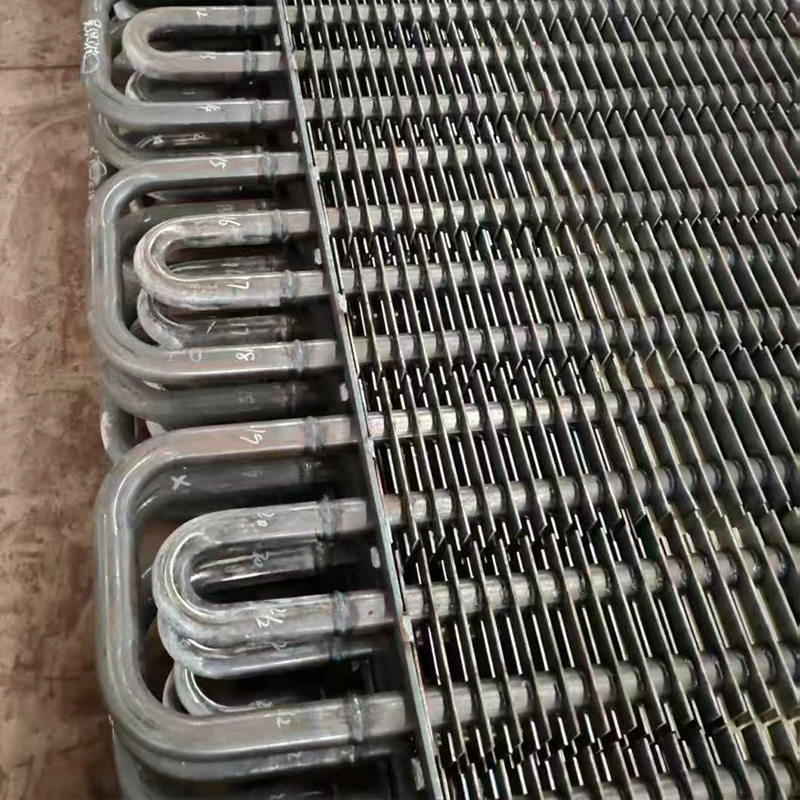
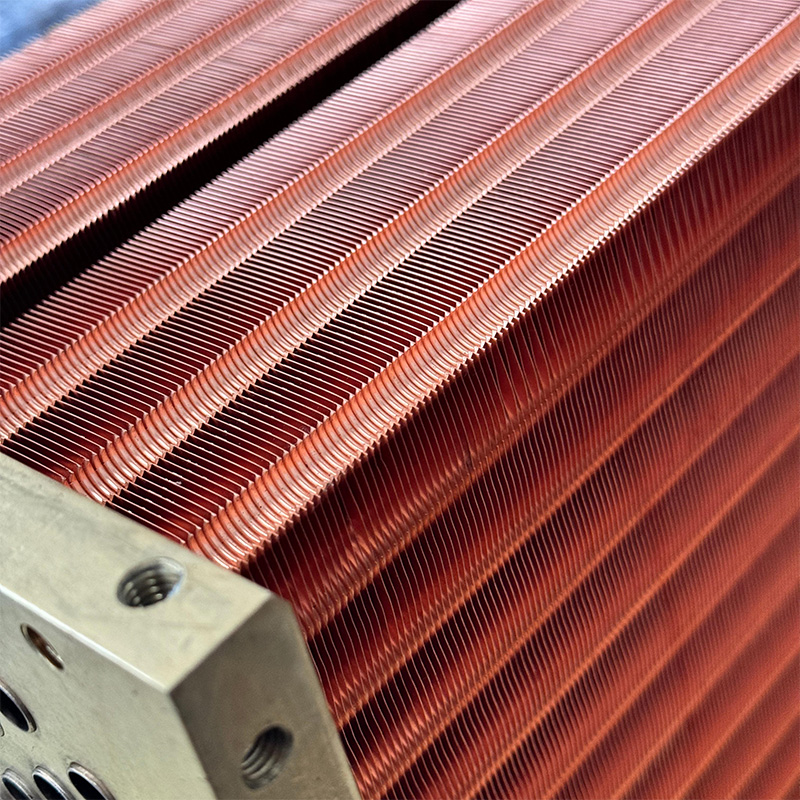
Our core profile includes the creation of heat transfer equipment operating under extreme pressure and temperature. We manufacture Titanium Shell and Tube Heat Exchangers, ASME Standard Units, and Corrugated Tube Bundles in 316 Stainless Steel, C46400 Marine Brass, Copper Nickel Alloys, and N06625 Nickel Alloys. The company's products, including tube sheets made of 321 steel and C70600 alloys, are widely used in the oil refining, chemical industries, seawater desalination and shipbuilding industries.
Why is this experience important for the plumbing fittings customer? Because if we can provide impeccable casting and welding quality for nuclear and petrochemical plant components certified to the strictest PED and ASME standards, then producing reliable bathroom faucets and handles becomes a task of the highest level of performance, but with a margin of safety. By using the same grades of steel (316, 321) and alloys (C46400) found in the energy industry, we ensure that your plumbing fixtures have the same corrosion resistance and durability as our industrial fixtures. When you partner with us, you gain access to industrial-grade technology and quality control tailored for the consumer market.
Frequently Asked Questions
What is the maximum dimensional accuracy for investment casting?
Standard accuracy is ±0.1 mm for the first 25 mm of length and ±0.05 mm for each subsequent 25 mm. For particularly critical mating surfaces (for example, threaded connections), we provide a machining allowance of 0.3–0.5 mm, which is removed on a lathe. Achieving IT7–IT8 accuracy directly by casting is not economically feasible and technologically difficult due to metal shrinkage during cooling.
Is it possible to melt down defective castings back into production?
Yes, metal (brass, steel, zinc) is 100% recyclable without loss of properties. The gating system scraps and rejects are returned to the batch after crushing and cleaning. However, the share of return metal in the new melt should not exceed 30–40% in order to avoid the accumulation of gas inclusions and oxides. We strictly control the balance of primary and secondary raw materials in each melt.
What types of surface treatment (finishing) are available for cast fittings?
We offer a full cycle: vibrating deburring, mirror polishing (gloss), satin plating (matte surface), galvanic chrome plating (shiny or matte), PVD coating (black, gold, bronze), as well as powder painting. The choice of method depends on the design and required wear resistance. PVD coatings, for example, are 3 times more scratch resistant than regular chrome.
How long do wax model molds last?
Aluminum molds used for wax injection have a service life of 50,000 to 100,000 cycles depending on the complexity of the configuration and the type of wax. With intensive use (2 shifts), the uniform lasts 1.5–2 years. Мы храним ваши пресс-формы на складе бесплатно в течение срока действия контракта, что позволяет быстро возобновить производство при повторном заказе.
Что делать, если на полученных изделиях обнаружены поры?
Единичные микропоры допустимы и устраняются при полировке или гальванике. Однако сквозные поры или крупные раковины являются браком. Мы используем рентгеновский контроль для критических деталей (корпуса смесителей под высоким давлением), чтобы выявить внутренние дефекты до отгрузки. Если вы обнаружили брак, предоставьте фото и видео дефектов — мы заменим бракованную партию за свой счет в следующей отгрузке или вернем деньги.
Как начать сотрудничество и минимизировать риски
Заказ услуг литья по выплавляемым моделям фурнитуры ванных комнат — это инвестиция в качество вашего бренда. Чтобы избежать ошибок, начните с технического аудита. Пришлите нам 3D-модели (STEP, IGES) или чертежи ваших изделий. Наши инженеры бесплатно проанализируют их на предмет технологичности литья: выявят места возможного образования утяжин, предложат оптимальное расположение литников и рассчитают вес заготовки.
Не стремитесь сразу заказать контейнер. Начните с пробной партии (sample batch). Это позволит вам проверить качество металла, точность размеров и соответствие цвета гальваники вашим ожиданиям в реальных условиях. Только после подписания акта приемки образцов мы запускаем серийное про изводство. Такой подход снижает финансовые риски до минимума.
Мы понимаем, что рынок сантехники высококонкурентен. Ваша задача — предложить покупателю продукт, который не потемнеет через полгода и не потечет через год. Наша задача — обеспечить это технически, опираясь на многолетний опыт работы со специальными сплавами в нефтегазовой и энергетической отраслях. Сотрудничая с нами, вы получаете не просто поставщика металла, а партнера, который разделяет ответственность за конечный продукт. Свяжитесь с нами сегодня для обсуждения вашего проекта и получения коммерческого предложения в течение 24 часов.
Для получения дополнительной информации о наших возможностях в областиlost wax castingили просмотракейсов по сантехнической фурнитуре, посетите соответствующие разделы нашего сайта.