
Heat exchanger components for petrochemicals: selection guide 2026
2026-07-16
- Critical components of heat exchangers for petrochemicals: why standard solutions lead to accidents in 2026
- Anatomy of failure: which components fail first and why
- Materials science for an engineer: choosing alloys for specific processes
- Standards and certification: what really matters in 2026
- Logistics and inventory management: how to avoid downtime
- How to choose a reliable supplier: checklist for the buyer
- Cost-effective: TCO instead of price per kilogram
- Frequently Asked Questions
- Заключение: надежность начинается с правильной спецификации
Critical components of heat exchangers for petrochemicals: why standard solutions lead to accidents in 2026
In our engineering consulting practice, we regularly encounter the same mistake: buyers select components for petrochemical heat exchangers based solely on price or basic geometric dimensions. This is a fatal mistake. In the aggressive environments of oil refineries (refineries) and chemical plants, the slightest deviation in the seal material or tube wall thickness leads not just to a leak, but to a stop of the entire technological process. Losses from one hour of downtime of a hydrotreating unit can exceed the cost of the entire package of spare parts by tens of times.
The year 2026 dictates new rules of the game. Tightening environmental standards in the Russian Federation and the EAEU countries, the transition to heavier and sulfur grades of oil, as well as the shortage of some imported alloys require a revision of supply approaches. This guide is not a promotional brochure. This is a technical look at how to properly specify, inspect, and purchase critical heat transfer equipment components to ensure smooth plant operations.
We will look at real cases of failures, analyze the nuances of GOST and ISO certification, and give a clear algorithm for choosing a supplier who is able to provide quality that meets the requirements of modern petrochemicals. If you are responsible for production reliability, this information will save you millions of rubles on unscheduled repairs.
Anatomy of failure: which components fail first and why
A heat exchanger is not a monolithic structure, but a complex system of interacting elements. In petrochemicals, the load is distributed unevenly. Experience shows that 85% of all emergency shutdowns are due to the failure of just three types of components: tube bundle, sealing elements and distribution chambers. Understanding the physics of these failures is the first step to choosing the right parts.
Tube bundle: corrosion and erosion
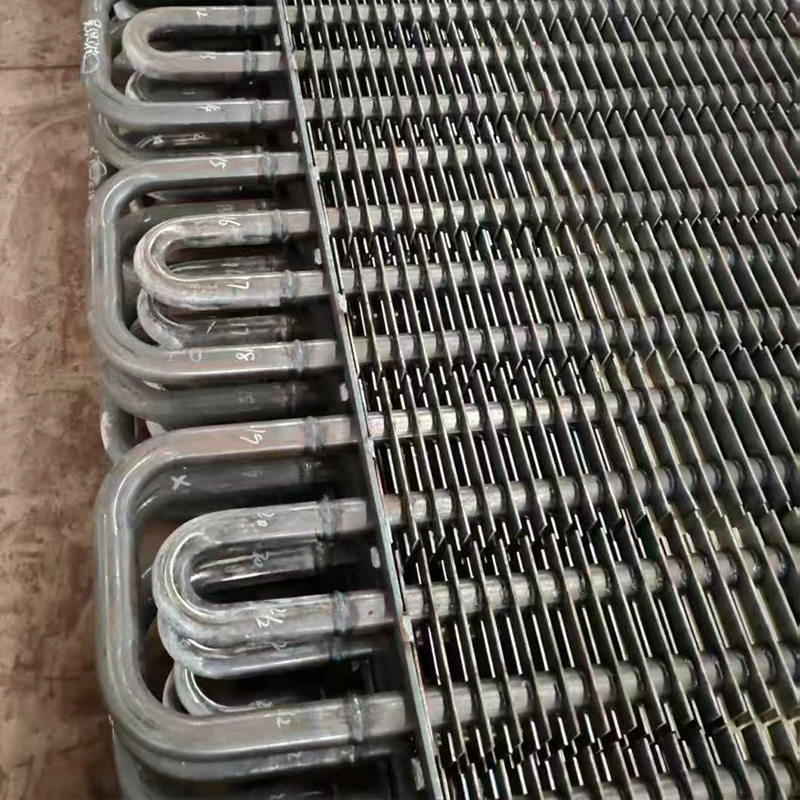
The tubes are the heart of the heat exchanger. In petrochemical processes, they are subjected to a double blow: high-temperature corrosion on the product side and abrasive wear on the cooling water or steam side. We have recorded cases where pipes made of stainless steel grade 12Х18Н10Т (analogous to AISI 321) failed after 14 months of operation instead of the stated 5 years. The reason lay not in the quality of the steel itself, but in the presence of chlorides in the cooling water, which caused pitting corrosion.
When choosing tubes in 2026, it is necessary to require not just a certificate for the material, but a report on the chemical analysis of each batch. Key parameters to look at:
- Wall thickness:For high-risk areas, it is recommended to use pipes with a wall thickness of at least 2.5–3 mm, even if the design pressure allows the use of 1.5 mm. This is a reserve for erosive wear.
- Manufacturing method:Seamless pipes (cold drawn seamless) are always preferable to welded ones for high pressures (over 4 MPa). A weld is a heat-affected zone where the structure of the metal is altered and vulnerable to corrosion.
- Surface cleanliness:The roughness of the internal surface should be no more than Ra 0.8 µm. High roughness promotes the rapid formation of scale and biofilms, which sharply reduces heat transfer and increases the local wall temperature, accelerating destruction.
Action: Request metallographic samples of the pipe section from the supplier before entering into a bulk contract.
Sealing elements: silent threat to sealing
Gaskets and seals are the cheapest components, but they are the cause of most external leaks. In petrochemical applications, temperatures often exceed 200°C and media contain hydrocarbons, acids and alkalis. Standard rubber seals (EPDM, NBR) are powerless here. They quickly lose elasticity, “tan” and begin to leak product.
We observed a situation at a refinery in Tatarstan, where the use of low-quality graphite gaskets led to a fire at the flange connection of the raw material heater. Upon opening, it turned out that the density of graphite was lower than required (1.0 g/cm³ instead of 1.3 g/cm³), which led to its squeezing out under pressure.
The correct choice of seals depends on the environment:
- PTFE (Teflon):Ideal for aggressive acids and alkalis, but has a high creep coefficient. Requires the use of spring washers or periodic tightening of flanges.
- Expanded Graphite:Standard for high temperatures (up to 500°C) and hydrocarbons. It is important to control the chloride and sulfur content of graphite to avoid corrosion of stainless steel flanges.
- Metal Jacketed Gaskets:Used in the most difficult conditions. The graphite core ensures tightness, and the metal shell (stainless steel or titanium) protects against extrusion.
Action: Specify the exact grade of seal material and required density on the specification sheet, rather than simply writing “graphite gasket.”
Distribution chambers and partitions
These elements are often ignored when ordering spare parts, as they are considered “eternal”. However, turbulent flows cause vibration of the partitions, which leads to their fatigue failure and chafing of the pipes. In 2026, the trend is the use of partitions with reinforced stiffeners and polymer linings at points of contact with pipes to reduce vibration wear.
Action: When inspecting the heat exchanger, be sure to check the gap between the pipe and the hole in the partition. If it exceeds 1 mm, replacement of the baffles or tube sheet is required.
Materials science for an engineer: choosing alloys for specific processes
The choice of material for the components of heat exchangers for the petrochemical industry is not a question of “the more expensive the better.” This is a matter of chemical compatibility. Using titanium where duplex steel is sufficient is a waste of the budget. Using regular stainless steel where Hastelloy is needed is criminal negligence.
Let's consider the main materials relevant for the Russian and CIS markets in 2026, taking into account availability and characteristics.
| Material | Applicability in petrochemicals | Limitations | Cost (relative) |
|---|---|---|---|
| Steel 20 (Carbon Steel) | Casings, flanges, non-aggressive environments, low temperatures. | Susceptible to general corrosion, unsuitable for acidic environments. | Low |
| 12Х18Н10Т (AISI 321) | Universal material for pipes and sheets. Good resistance to intergranular corrosion. | Not resistant to chlorides (pitting). Not recommended for sea water. | Average |
| 08Х18Н10 (AISI 304L) | Similar to 321, but without titanium. It welds better. | High risk of intergranular corrosion in welds without heat treatment. | Average |
| Duplex steel (08Х22Н6Т / SAF 2205) | High strength, excellent resistance to pitting and corrosion cracking. Ideal for offshore platforms and sour oils. | Complex welding requires control of the ferrite phase. Brittleness at temperatures above 300°C. | High |
| Titan VT1-0 (Grade 2) | Absolute resistance to chlorides, sea water, oxidizing environments. | It is catastrophically destroyed in reducing environments (for example, in pure hydrochloric acid without oxidizing agents). High price. | Very high |
| Hastelloy C-276 | For extremely aggressive environments: hot concentrated acids, mixtures of acids. | Very high cost, shortage on the Russian market in 2026. | Premium |
An important nuance: in 2026, many Russian manufacturers switched to using domestic analogues of imported alloys. For example, instead of imported Inconel 625, the Russian alloy KhN60MB is often offered. This is acceptable, but requires careful verification of certificates for compliance with GOST 5632. We recommend that incoming inspection be carried out by spectral analysis of each batch of pipes made of special alloys. An error in alloying elements of even 0.5% can reduce corrosion resistance by half.
This is why companies such asWuxi Kaisheng Electric Power and Petrochemical Equipment Co., Ltd., rely on strict control of materials. Specializing in the development and production of heat transfer equipment, they offer solutions where each alloy is selected taking into account the actual chemical aggressiveness of the environment. Their products, including N06625 nickel alloy tube bundles, titanium heat exchangers and C46400 marine brass products, are ASME and PED certified to ensure high corrosion resistance and safety even in the most extreme refining and desalination environments.
Action: Create a corrosion resistance matrix for each heat exchanger in your facility and check supplier materials against it.
Standards and certification: what really matters in 2026
The petrochemical spare parts market is highly regulated. Having a piece of paper “certificate of conformity” is no longer enough. Rostechnadzor inspectors and internal auditors of large vertically integrated companies (VIOCs) require a full package of documents confirming the traceability of materials.
GOST vs ISO vs ASME
In Russia, the main standard remains GOST R 52630 (vessels and apparatus) and GOST 15150 (climatic design). However, most modern equipment is designed to ASME (USA) or TEMA (USA Heat Exchanger Manufacturers Association) standards.
When ordering components, the problem of compatibility of standards arises. For example, flanges according to GOST 12815-80 do not always fit perfectly with flanges according to ASME B16.5 due to differences in tolerances for flatness and hole placement.
Key requirement for 2026:The supplier must ensure that the geometry of the spare parts matches the original equipment drawing, and not just the material. Request GA drawings for approval before production.
Material certification
For critical components (high-pressure pipes, housings), a certificate 3.1 according to EN 10204 or its Russian equivalent is required - a quality passport indicating the results of mechanical tests and chemical analysis. The usual certificate 2.2 (manufacturer's declaration) is not acceptable for equipment operating under pressure above 1.6 MPa with hazardous media.
Source:Federal Agency for Technical Regulation and Metrology (Rosstandart)regularly updates lists of standards required for use in hazardous production facilities. Keep the standards updated.
Action: Check whether the supplier has a license to manufacture equipment for hazardous production facilities (Rostechnadzor license), if he produces not just spare parts, but assembled units.
Logistics and inventory management: how to avoid downtime
Even perfectly selected parts are useless if they do not arrive at the factory on time. In 2026, supply chains remain unstable. Delivery times for imported seals from Europe or Asia can range from 4 to 12 weeks. Russian metal producers may also have queues for rolled products of non-standard sizes.
Critical Inventory Strategy
We recommend dividing components into three categories:
- Category A (Critical):Tube bundles, unique seals, chamber covers. Must be in stock or have a guaranteed production time of no more than 2 weeks. It is recommended to keep a safety stock of 1 piece of equipment.
- Category B (Important):Flanges, fasteners, standard gaskets. Delivery time up to 4 weeks. The stock is formed according to the minimum-maximum level principle.
- Category B (Routine):Bolts, nuts, standard sheet metal. Purchased as needed.
One of our client companies saved 15 million rubles by implementing a predictive ordering system for tube bundles. They started ordering repair kits not after the shutdown, but 3 months before the scheduled repair, based on thickness measurement data. This made it possible to choose a calm mode of production of parts, rather than an emergency one, which reduced the price by 20%.
Action: Conduct an audit of inventory and compare it with the timing of the next planned turnaround (Turnaround).
How to choose a reliable supplier: checklist for the buyer
The market is overflowing with offers. How to distinguish a real manufacturer or authorized distributor from an intermediary who resells goods of unknown origin? In 2026, trust is built on transparency.
Ask your potential supplier the following 5 questions. The answers to these will immediately weed out 80% of unreliable partners:
- “Will you provide the original metal certificates from the manufacturing plant?”
An honest supplier will provide scans of certificates with swimming trunk numbers. The intermediary will fuss or offer “a certificate from our factory” (which is often drawn in Photoshop). - “Do you have your own non-destructive testing (NDT) laboratory?”
The manufacturer of quality parts is required to conduct VIR (visual), ultrasonic (ultrasonic) or X-ray inspection of welds and pipes themselves. Ask to see an example of the NDT protocol. - “What are your realistic production times for custom 6 meter pipes?”
If they tell you a period of “3 days” for a batch of 500 pipes made of a special alloy, this is a lie. The actual period includes the purchase of metal, cutting, processing, and control. For such volumes, the normal period is 3-5 weeks. - “Do you work according to TEMA standards or only GOST?”
A competent supplier understands the difference and can adapt. The ignorant will suggest “let’s do it as usual.” - “Can you provide the contacts of two clients from the petrochemical sector for references?”
This is the most powerful filter. Companies working with Lukoil, Rosneft or SIBUR have already undergone a strict audit. Their recommendation is a sign of quality.
Pay attention to the companyWuxi Kaisheng Electric Power and Petrochemical Equipment Co., Ltd.. We specialize in supplying high-quality components for heat exchangers, providing a full cycle of quality control and compliance with international standards. Our experience working with leading refineries allows us to offer solutions that actually work in difficult conditions. Our portfolio includes 316 stainless steel corrugated tube bundles, various alloy tube sheets (C46400 brass, C70600 copper-nickel alloys), as well as air coolers and waste heat boilers. We provide customized solutions, combining high thermal efficiency with resistance to high pressure and temperature.
Action: Shortlist 3 suppliers and send this request to them. Compare the depth and speed of responses.
Cost-effective: TCO instead of price per kilogram
The habit of calculating the cost of spare parts in rubles per kilogram of metal kills the budget. The correct metric is TCO (Total Cost of Ownership).
The formula is simple:
TCO = Purchase price + Installation cost + Downtime cost (risk) + Energy efficiency
Example: More expensive duplex pipes can cost 40% more than carbon steel. But their service life is 3 times higher, and corrosion resistance keeps the walls smooth, which saves up to 5% of electricity on pumps (lower hydraulic resistance). Over 5 years of operation, a duplex turns out to be 25% cheaper.
In 2026, when energy prices become more expensive, the energy efficiency parameter of the heat exchanger comes to the fore. Dirty, corroded pipes perform worse. Quality components are an investment in reducing operating expenses (OPEX).
Action: Calculate the TCO for your most problematic heat exchanger using its repair frequency data.
Frequently Asked Questions
Is it possible to use Chinese seals instead of European ones?
Yes, but with caution. The quality of Chinese manufacturers varies greatly. In 2026, a number of Chinese factories received high-level API 6A and ISO 9001 certification. Key rule: Request samples and have independent compression and aging tests performed in your laboratory before mass purchase. Do not buy “noname” from Alibaba for critical components.
How often should the tube bundle be replaced?
It depends on the environment. For pure hydrocarbons - once every 5-7 years. For sour oils or environments containing chlorides - every 2-3 years. The only sure way is annual instrumental monitoring of wall thickness (thickness monitoring) during scheduled shutdowns. If the thickness has decreased by more than 20% of the nominal value, the beam needs to be changed.
What if the original equipment manufacturer (OEM) discontinues a part?
This is a common problem. The solution is reverse engineering. A hired engineering company can take measurements of the old part, conduct a spectrum analysis of the material, and create a drawing for outsourced manufacturing. It is important to maintain the geometry of the flows so as not to deteriorate the thermal characteristics of the device.
Does the way parts are stored affect their service life?
Critically influences. Rubber and PTFE seals age even in storage (usually 3-5 years). Stainless steel pipes stored outdoors without protection may develop surface rust or damage to the insulation. Храните запчасти в сухом, отапливаемом помещении, в оригинальной упаковке.
Заключение: надежность начинается с правильной спецификации
Выбор комплектующих деталей теплообменников для нефтехимии в 2026 году — это задача, требующая глубоких технических знаний и стратегического подхода. Нельзя делегировать этот процесс только отделу закупок, ориентирующемуся на цену. Инженеры, технологи и специалисты по надежности должны работать в связке.
Помните: каждый рубль, сэкономленный на качестве металла или уплотнения сегодня, превратится в тысячи рублей потерь завтра. Используйте приведенные в этом гиде чек-листы, требуйте полной прозрачности от поставщиков и внедряйте культуру предиктивного обслуживания.
Если вы столкнулись с проблемой подбора аналогов, نیاز к срочной поставке критических узлов или хотите провести аудит существующих поставщиков, мы готовы помочь. Наши эксперты имеют опыт решения самых сложных задач в области теплообменного оборудования.
Contact us todayдля получения консультации и расчета стоимости комплектующих для вашего предприятия. Мы гарантируем качество, подтвержденное документами и опытом.
Для дальнейшего изучения темы рекомендуем ознакомиться с нашими материалами:технические требования к теплообменникамandкаталог сертифицированных уплотнительных материалов.