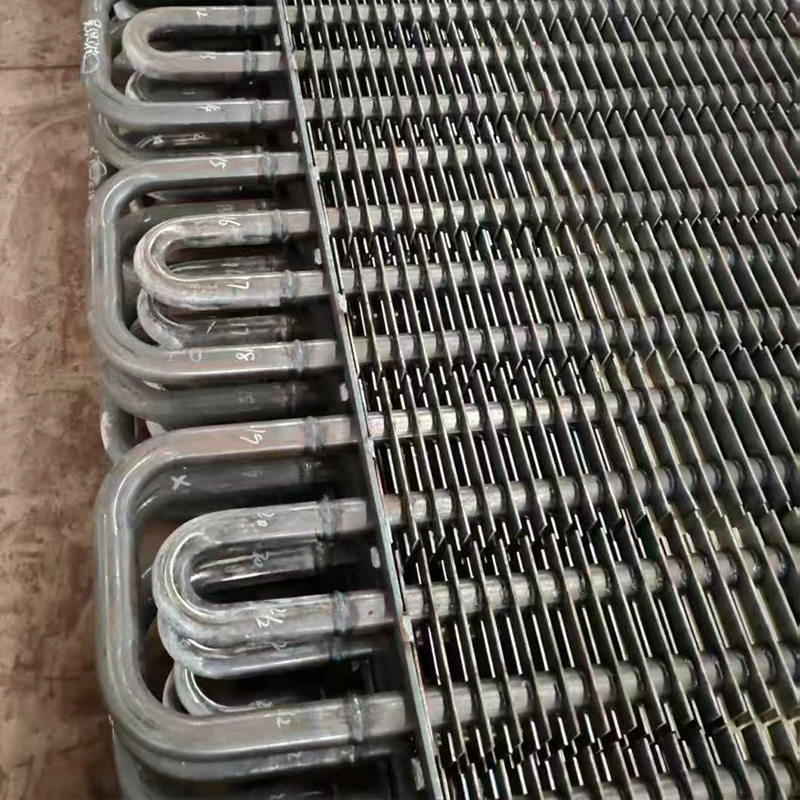

Shell and tube heat exchanger made of nickel alloy for petrochemicals - price from the factory
2026-07-16
- Shell and tube heat exchanger made of nickel alloy for petrochemicals: why the price from the plant is critical for the project budget
- Technical features of nickel alloys in aggressive petrochemical environments
- Pricing: what makes up the cost of a shell-and-tube heat exchanger
- Comparison of manufacturers: China, Europe and Russia
- Ordering and Quality Control Process: Step-by-Step Guide
- Typical mistakes during procurement and operation
- Frequently Asked Questions
- Заключение: инвестиция в надежность, а не просто покупка оборудования
Shell and tube heat exchanger made of nickel alloy for petrochemicals: why the price from the plant is critical for the project budget
In the conditions of modern oil refining and chemical synthesis, the reliability of heat exchange equipment has ceased to be just a technical requirement - it has become a matter of the economic survival of the enterprise.Shell and tube heat exchanger made of nickel alloy for petrochemicals - price from the factoryis a key factor determining the profitability of capital expenditures (CAPEX) and operating expenses (OPEX) throughout the entire life cycle of the plant. We are observing a trend where purchasing through intermediaries increases the final cost of equipment by 30–45%, while often hiding the real technical characteristics of the materials.
Nickel alloys such as Inconel 600, Inconel 625, Hastelloy C-276 and Monel 400 are the only viable options for service in environments with high concentrations of hydrogen sulfide, chlorides and organic acids at temperatures above 300°C. An error in choosing a supplier or tubing material can lead to catastrophic consequences: from pitting corrosion and toxic leaks to complete shutdown of the production line. In our practice, we recorded a case where an enterprise saved 15% on purchases by choosing a distributor instead of a direct contract with the manufacturer, but lost more than $200,000 on unscheduled repairs after only 8 months of operation due to the use of substandard raw materials.
This article was written by engineers who design and manufacture heat transfer equipment every day. We will analyze how the real price is formed, what technical parameters affect the cost, and why a direct contract with the manufacturer is not just a matter of savings, but a guarantee of compliance with GOST, ASME and ISO standards. You will receive specific data to compare offers and a checklist to verify the supplier.
Technical features of nickel alloys in aggressive petrochemical environments
The petrochemical industry is characterized by extreme operating conditions. Heat transfer fluids often contain impurities that cause immediate degradation of standard stainless steels (eg AISI 316L). Nickel alloys have a unique crystal lattice that provides high resistance to stress corrosion cracking (SCC) and pitting corrosion.
When choosing a material for a shell-and-tube heat exchanger, the specific chemistry of the process must be taken into account. For example, Hastelloy C-276 alloy exhibits excellent resistance to oxidizing and reducing environments, making it ideal for chlorination processes and hydrochloric acid production. However, Inconel 625 is better suited for high temperature applications where mechanical strength is required at temperatures up to 980°C. Monel 400, containing about 67% nickel and 30% copper, is essential in systems exposed to hydrofluoric acid or seawater in refinery cooling circuits.
We often encounter a situation where customers lock up “just nickel” without specifying the grade of the alloy. This is a fundamental mistake. The difference in price between different brands of nickel alloys can reach 200%, and the difference in service life in a particular environment can be tenfold. The manufacturer is required to conduct a chemical analysis of each batch of raw materials and provide a quality certificate (Mill Certificate) confirming the composition's compliance with the stated ASTM B160, B163 or B168 standards.
An important aspect is also the pipe manufacturing technology. For nickel alloys, the absence of internal stresses after welding and bending is critical. Heat treatment (annealing) must be carried out in a controlled atmosphere to prevent the formation of an oxide film, which can become a source of future corrosion. Full-cycle plants have their own non-destructive testing (NDT) laboratories to test each connection.
Recommendation:Before requesting a quote, prepare a complete corrosivity profile of your environment, including temperature, pressure, concentration of corrosive components and presence of abrasive particles. This will allow the factory to select the optimal alloy, rather than selling you the most expensive option “just in case.”
Pricing: what makes up the cost of a shell-and-tube heat exchanger
Understanding the pricing structure helps to avoid overpayments and manipulation by unscrupulous sellers. When you see a requestshell-and-tube heat exchanger made of nickel alloy for petrochemicals – price from the factory, it is important to understand that the underlying cost of the metal is only part of the equation. Let's break down the main cost components.
First, raw materials. Nickel prices on the London Metal Exchange (LME) are volatile. Manufacturers fix the price of metal either at the time of signing the contract, or use a floating price formula. The share of material in the final cost of a heat exchanger made of nickel alloys can reach 60–70%. Therefore, any fluctuations in exchange rates or stock quotes directly affect the final figure. A direct factory contract allows you to fix the price of the metal in advance, while intermediaries often factor the risk of price increases into their margin.
Secondly, the complexity of manufacturing. Shell-and-tube devices require high-precision machining. Drilling tube sheets for nickel alloys requires special tools and cutting conditions, since the material is prone to sticking and overheating. The quality of the reaming of the holes determines the tightness of the rolling or welding of pipes. Factories with a modern fleet of CNC machines ensure accuracy down to 0.01 mm, which reduces the risk of leaks in the future. Manual or semi-automatic processing is cheaper, but carries a high risk of defects.
Thirdly, welding work and quality control. Welding nickel alloys requires highly qualified welders and the use of high purity inert gases. Each weld must undergo visual inspection, penetrant inspection (PT) and often radiographic inspection (RT). The cost of qualifying welding procedures to ASME Section IX or GOST R 57500 standards is significant, but is necessary to qualify equipment for pressure service.
Fourthly, certification and documentation. To export to Russia and the CIS countries, equipment must have a permit from Rostechnadzor and a certificate of conformity with TR CU 032/2013 “On the safety of equipment operating under excess pressure.” Preparing a package of documents, conducting hydrostatic pressure tests and issuing product passports takes time and resources of the plant. Low-cost offers often eliminate these costs by supplying equipment that cannot be legally put into operation.
| Cost Component | Share in price (%) | Factors of influence |
|---|---|---|
| Materials (pipes, sheets, flanges) | 55–70% | Exchange price of nickel, alloy grade, wall thickness |
| Manufacturing (machining, assembly) | 15–25% | Design complexity, number of pipes, type of tube sheet |
| Welding and NDT (non-destructive testing) | 10–15% | Volume of welds, control methods (RT, UT, PT) |
| Certification and logistics | 5–10% | Customer requirements, delivery distance, packaging |
Action:Request a detailed breakdown cost estimate from the supplier. If the seller refuses to provide a breakdown of materials and labor, this is a red flag indicating hidden markups or the use of substandard materials.
Comparison of manufacturers: China, Europe and Russia
The choice of production geography is a strategic decision. There are three main players in the market: European brands, Chinese factories and Russian factories. Each option has its own advantages and disadvantages, which must be assessed in the context of the specific objectives of your enterprise.
European manufacturers (Germany, Italy, France) are traditionally associated with the highest quality and engineering. Their equipment meets the strict PED (Pressure Equipment Directive) and AD 2000 Merkblätter standards. However, in the current geopolitical and economic conditions, delivery times from Europe can reach 6–9 months, and the price exceeds the market average by 40–60%. In addition, there are restrictions on the supply of some high-tech alloys and components.
Chinese factories offer the lowest prices. Due to the scale of production and government support, they can dump 20-30% below the market. However, the quality of nickel alloys from China often varies from batch to batch. We are aware of cases where the claimed Hastelloy C-276 alloy contained increased amounts of iron and carbon, which reduced its corrosion resistance. Quality control in Chinese factories requires the presence of an independent inspector (third-party inspection) at all stages of production, which increases costs and complexity of communication.
Russian manufacturing plants occupy the golden mean. They operate in accordance with GOST and have all the necessary permits from Rostechnadzor. Logistics within the country or from friendly countries takes weeks, not months. Russian metallurgical plants (for example, Uralelectromed or the plants of the ChTPZ group) produce high-quality nickel pipes comparable to their world counterparts. The price from a Russian plant is usually 15–25% lower than the European one and is competitive with the Chinese one, taking into account risks and logistics.
The key advantage of working with a direct factory, regardless of the country, is the possibility of a technical audit. You can visit the production facility, check the availability of welding licenses, see the raw material warehouse and test bench. Intermediaries will always prevent such contact, since their business model is built on information asymmetry.
This is exactly the approach the company takesWuxi Kaisheng Electric Power and Petrochemical Equipment Co., Ltd.. Specializing in the design and manufacture of heat transfer equipment, the company offers factory direct solutions for complex industries including petroleum refining, chemicals and water desalination. Wuxi Kaisheng's portfolio includes titanium and high-pressure heat exchangers of ASME standard, as well as devices made of nickel alloys (including N06625), copper-nickel alloys and marine brass. The products are certified according to international standards PED and ASME, which guarantees high corrosion resistance and reliability even in the most aggressive environments. Direct cooperation with such a manufacturer allows customers to receive individual engineering solutions without unnecessary markups, ensuring stability of supply and transparency of quality control at all stages.
Recommendation:If your priority is speed of commissioning and warranty support in Russian, choose proven Russian manufacturers or factories with localized production, such as Wuxi Kaisheng, which have the necessary ISO 9001 certificates and licenses for the manufacture of pressure vessels.
Ordering and Quality Control Process: Step-by-Step Guide
The purchase of expensive industrial equipment requires strict regulations. To minimize risks, we recommend following the following algorithm for interaction with the manufacturer.
- Preparation of a questionnaire (Data Sheet).This is the foundation of the future agreement. The questionnaire must contain: thermal load (kW), coolant flow rates, operating and design pressures and temperatures, media properties (density, viscosity, thermal conductivity), permissible pressure losses, materials (housing, pipes, tube sheets), type of compactness (U-shaped pipes, straight pipes, floating head). Errors at this stage lead to the heat exchanger not coping with the task.
- Technical and commercial proposal (TCP) and thermo-hydraulic calculation.The plant performs calculations using specialized software (HTRI, Aspen EDR or analogues). You receive a general view drawing (GA drawing) and a table of parameters. At this stage it is important to agree on dimensions so that the equipment will fit into existing premises or site. Check the heat transfer surface margin (usually 10–15%), which compensates for surface contamination during operation.
- Supplier audit and contract approval.Request a reference list (list of completed projects) for the last 3 years. Call two or three clients from this list. The contract clearly states penalties for missing deadlines, technical requirements for materials (links to specific ASTM/GOST standards), acceptance procedures and warranty conditions. Indicate that payment of the final tranche is possible only after successful hydraulic tests.
- Production monitoring.For large orders, assign intermediate control points (hold points). Typically these are: incoming metal inspection, inspection before welding the body, inspection after welding of tube bundles, final hydraulic tests. Request photo and video reports from each stage. If possible, send your own engineer or hire an independent inspection company.
- Reception and shipment.The equipment is accepted at the manufacturer. The availability of a product passport, certificates for materials, non-destructive testing certificates and hydraulic test reports is checked. Packaging must ensure protection of flange surfaces and fittings from damage during transportation. Nickel alloys should not come into contact with carbon steel to avoid contact corrosion.
Attention:Never agree to pay 100% in advance. The standard practice is 30-50% advance, 40-60% pre-shipment upon submission of test reports, and 5-10% as security deposit (or bank guarantee). This is a lever of influence on the supplier in case of detection of defects.
Typical mistakes during procurement and operation
Even experienced engineers sometimes make costly mistakes. A review of our experience revealed several recurring problems.
Ignoring the Fouling Factor.Many customers choose a heat exchanger with a minimum surface area, focusing on clean conditions. However, in petrochemicals, deposits (coke, salts, polymers) quickly form. If the pollution coefficient is set incorrectly, the heat transfer efficiency will drop by 30–40% after just six months of operation, and the installation will have to be stopped for cleaning. Always set realistic fouling factor values based on operating experience of similar units.
Incorrect choice of temperature expansion compensation type.With large temperature differences between the casing and the pipes, significant thermal stresses arise. Using a rigid structure without expansion joints (lens, U-tube or floating head) will result in broken welds or deformation of the tubesheet. For nickel alloys that have a different linear expansion coefficient than steel, this calculation is critical.
Savings on shut-off valves and instrumentation.Often the heat exchanger is supplied without the necessary drainage and ventilation fittings, or they are located inconveniently. This makes it difficult to completely drain the environment during repairs and remove air during startup, which causes cavitation and water hammer. Require drains at the lowest points and air vents at the highest points.
No maintenance plan.Nickel heat exchangers are durable, but not forever. Lack of regular monitoring of wall thickness (ultrasonic thickness gauging) and visual inspection of pipe ends can lead to a sudden accident. Implement an RBI (Risk-Based Inspection) program for critical equipment.
Action:Review your current purchasing specifications. Add a clause on the mandatory supply of a set of spare parts (gaskets, fasteners) and require the provision of an operation and maintenance manual in Russian.
Frequently Asked Questions
What is the production time for nickel alloy shell and tube heat exchanger?
Standard production time is 8-12 weeks from approval of drawings and receipt of advance payment. This time frame includes procurement of raw materials (which can take 3-4 weeks), machining, welding, heat treatment and testing. Urgent orders can be completed in 5–6 weeks with a 20–30% surcharge for overtime work and priority queue. Сроки могут увеличиться, если требуются сложные импортные комплектующие или нестандартные виды сертификации.
Можно ли использовать б/у теплообменники из никелевых сплавов?
Мы категорически не рекомендуем покупку б/у оборудования для критических процессов нефтехимии. Никелевые сплавы подвержены скрытым видам коррозии, таким как межкристаллитная коррозия, которую невозможно выявить без лабораторных исследований металла. Риск покупки аппарата с микротрещинами или истощенным ресурсом слишком велик. Экономия в 40–50% не оправдывает риска аварии и экологических штрафов. Новые аппараты от завода дают гарантию 12–24 месяца.
Какие документы необходимы для таможенной очистки и ввода в эксплуатацию в РФ?
Для импорта и легальной эксплуатации вам потребуются: контракт с внешнеторговой сделкой, инвойс, упаковочный лист, сертификат происхождения (Form A или ST-1), сертификат соответствия ТР ТС 032/2013 (выдается аккредитованным органом в РФ или ЕАЭС), паспорт оборудования по ГОСТ 2.601, руководство по эксплуатации, сертификаты на материалы (Mill Certificates) с переводом, протоколы гидравлических испытаний. Отсутствие сертификата ТР ТС делает эксплуатацию незаконной и влечет крупные штрафы.
Влияет ли способ соединения труб с трубной доской на цену?
Yes, it is significant. Развальцовка (expansion) дешевле и быстрее, но обеспечивает меньшую герметичность и прочность по сравнению со сваркой. Сварка труб с трубной доской (welding) дороже из-за необходимости автоматической сварки и последующего контроля каждого шва, но она обязательна для высоких давлений, токсичных сред и температурных циклов. Комбинированный метод (развальцовка + обварка) является оп тимальным по соотношению цена/надежность для большинства нефтехимических применений и увеличивает стоимость на 10–15% по сравнению с чистой развальцовкой.
Заключение: инвестиция в надежность, а не просто покупка оборудования
Selecting a supplier forкожухотрубного теплообменника из никелевого сплава для нефтехимии – цена от заводакоторого является конкурентной, требует комплексного подхода. Не смотрите только на цифру в счете. Оценивайте техническую компетенцию завода, прозрачность производственных процессов, наличие сертификации и готовность нести гарантийные обязательства. Прямой контракт с производителем устраняет лишние звенья, снижает стоимость и обеспечивает прямой канал связи для решения технических вопросов.
Инвестиции в качественное теплообменное оборудование окупаются за счет снижения простоев, уменьшения затрат на ремонт и повышения энергоэффективности процесса. В долгосрочной перспективе надежный теплообменник из правильного никелевого сплава стоит дешевле, чем серия дешевых заменителей, выходящих из строя каждые два года.
Мы готовы провести предварительный термогидравлический расчет вашего процесса и предоставить детальное коммерческое предложение с фиксацией цены на материалы. Наши инженеры помогут подобрать оптимальную конфигурацию, соответствующую вашим техническим условиям и бюджету.
Получить расчет стоимости теплообменного оборудования
Свяжитесь с нами сегодня для консультации с ведущим инженером-технологом.