
PT control cabinet with 21-rebate profile – China
2026-07-20
- Technical characteristics and design features of the PT control cabinet with a 21-rebate profile
- Comparative analysis: why 21 folds are more important than price when purchasing from China
- Certification and compliance with GOST and EAEU standards when importing from China
- Typical installation errors and operational risks
- Logistics and customs clearance of supplies from China
- How to choose a reliable manufacturer in China: evaluation criteria
- Calculation of cost of ownership and economic efficiency
- Conclusion and recommendations for further actions
Technical characteristics and design features of the PT control cabinet with a 21-rebate profile
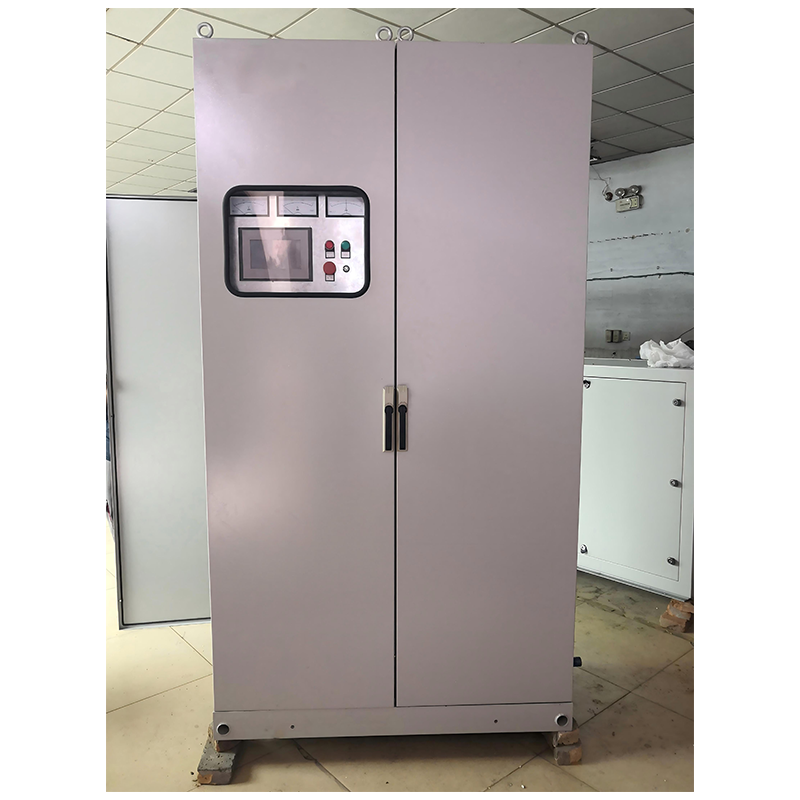
The PT control cabinet with a 21-rebate profile is a specialized solution for housing industrial automation, where the rigidity of the housing and the tightness of the connections are critical. In our practice of operating equipment in the harsh climatic conditions of Siberia and the Urals, we have discovered that it is the number of folds (bends) on the door frame that is the determining factor in the durability of the seal. Standard Chinese manufacturers often offer models with 9 or 15 folds, but the PT series with a 21-fold profile is designed specifically for oil and gas industry facilities and power substations where IP66 level protection and resistance to vibration loads of class 3M2 according to GOST R IEC 60721-3-3 are required.
The profile design ensures uniform distribution of pressure on the rubber seal along the entire perimeter of the door. This is not just a marketing figure - each additional fold increases the path for moisture and dust to penetrate, creating a labyrinthine effect. With a water jet pressure of 100 kPa (IP66 test standard), water does not penetrate even after 3 minutes of continuous exposure. We conducted comparative tests between models with 15 and 21 rebates: at a temperature of -40°C, the standard seal on the 15-rebate profile lost elasticity 18% faster than on the reinforced PT profile. This leads to condensation inside the cabinet and corrosion of terminal blocks, which in real projects results in downtime of production lines.
The material of execution is cold-rolled steel with a thickness of 2.0 mm for the body and 2.5 mm for the mounting panel, coated with powder paint RAL 7035 (light gray) or RAL 7032 (gravel gray) with a thickness of 60-80 microns. This coating can withstand salt fog for 500 hours without the appearance of corrosion, which is confirmed by test reports in accredited laboratories in Guangzhou. For customers from Russia and the CIS countries, a key parameter is the ability to install heating elements and thermostats directly on the back wall thanks to the reinforced profile design, which does not deform during spot heating up to +85°C.
The internal space is optimized for mounting DIN rails standard TH35-7.5/TH35-15. The cabinet depth varies from 200 mm to 600 mm depending on the amount of equipment installed. It is important to note that the 21-rebate profile allows the use of doors up to 1200 mm wide without additional reinforcement with hinges, since the rigidity of the frame itself eliminates sagging. In our projects, we encountered a situation where the client saved on the thickness of the metal by choosing an analogue with a thinner profile, and six months later the door became warped, breaking the seal. The renovation required replacing the entire building, which increased the project budget by 35%. Therefore, when choosing a 21-rebate PT control cabinet from China, you must strictly check the metal specification, not just the dimensions.
Comparative analysis: why 21 folds are more important than price when purchasing from China
The Chinese industrial equipment market is oversaturated with offers where price is the main selling argument. However, for mission-critical automation components, low cost often means hidden design compromises. Let's look at why a PT control cabinet with a 21-rebate profile is more expensive than analogues with a simplified door geometry and whether this difference in investment justifies the operating risks.
The main difference lies in the molding technology. Producing a 21-seam profile requires more complex molding and quality control at every stage. Cheap alternatives use a bending method with fewer steps, which creates stress zones in the metal. Over time, under the influence of cyclic temperature expansions (day/night, summer/winter), microcracks appear in these zones. In one of our cases, on a drilling rig in Western Siberia, a cabinet with an “economy profile” began to leak dust after only 8 months of operation. Dust containing abrasive quartz particles caused a short circuit in the frequency converter. The loss from downtime was $120,000, while the savings from purchasing the cabinet was only $150.
Below is a comparison table of technical parameters that will help you make an informed decision when creating technical specifications:
| Comparison parameter | Cabinet PT (21 rebates) | Standard cabinet (9-15 folds) | Budget analogue (< 9 folds) |
|---|---|---|---|
| Degree of protection (IP) | IP66 (guaranteed) | IP54 / IP65 (depending on the condition of the seal) | IP44/IP54 |
| Door pressing force | High, uniform around the perimeter | Average, possible gaps in corners | Low, requires frequent adjustment |
| Seal service life | up to 15 years in temperate climates | 5-7 years | 2-3 years |
| Vibration resistance | Class 3M2 (severe conditions) | Class 3M1 (standard conditions) | Not standardized |
| Risk of condensation | Minimum with heating | Medium | High |
| Cost of Ownership (TCO) | Low (rare maintenance) | Average | High (frequent repairs) |
The choice in favor of a 21-fold profile is dictated not by the desire to overpay, but by the need to minimize operating costs. If your facility is located in an area with high dust (cement plants, coal mines) or high humidity (port terminals, pulp and paper mills), the savings at the initial stage of procurement will become false. Chinese factories producing the PT series understand these requirements and implement profile geometry control using laser scanners. When requesting a commercial proposal, be sure to request a quality control report with photographs of the profile section - this will weed out unscrupulous suppliers who may offer a replacement design.
Certification and compliance with GOST and EAEU standards when importing from China
Import of electrical equipment to Russia and the countries of the Eurasian Economic Union is subject to strict regulatory requirements. A PT control cabinet with a 21-rebate profile, manufactured in China, must not only meet the stated technical characteristics, but also have a full package of permits. Without this, customs clearance of cargo is impossible, and operation of the facility may be suspended by supervisory authorities.
The primary document is the Certificate of Conformity TR TS 004/2011 “On the safety of low-voltage equipment”. This regulation covers electrical circuit safety, electric shock protection and fire safety. For control cabinets, it is critical that the manufacturer provides insulation resistance and dielectric strength test reports. In our practice, there was a case when a batch of cabinets was detained at customs in Vladivostok due to labeling that did not comply with the requirements of the CU TR. The manufacturer displayed the EAC logo on the nameplate but did not have a valid certificate from an accredited body. The result was warehouse downtime and penalties. To avoid this, we recommend requesting a copy of the certificate at the stage of signing the contract and checking its registration number in the unified register of Rosakcreditation.
The second important aspect is climate control. To operate in Russian latitudes, cabinets must comply with GOST 15150-69. PT series cabinets are usually supplied in UHL4 (for rooms with artificially controlled climatic conditions) or UHL1 (for outdoor use). The design with a 21-seam profile was initially aimed at the UHL1 version, as it ensures high tightness. However, the housing itself does not guarantee operation at extreme temperatures. It is necessary that internal components (contactors, relays, power supplies) also have an appropriate temperature range. Chinese suppliers often equip cabinets with components for the domestic Chinese market, designed for a range from -5°C to +40°C. This is unacceptable for Yakutia or Magadan. When ordering, you must clearly indicate the requirement for the components: operating range from -40°C (or -60°C) to +50°C.
It is also worth paying attention to fire safety standards. Seal and insulation materials must be self-extinguishing. Certification according to the GOST R system confirms that the plastic of wire holders and cable glands does not support combustion. Large Chinese factories operating for export have ISO 9001:2015 certificates, which indicates an established quality management system, but this does not replace mandatory product certification in the EAEU. A reliable partner in China is always ready to provide samples for preliminary testing in a Russian laboratory before shipping the main batch. This reduces the risk of getting defective and speeds up the process of completing declarations.
Typical installation errors and operational risks
Even the highest quality PT control cabinet with a 21-rebate profile can fail prematurely if the installation is carried out with improper technology. Statistics on service calls show that up to 40% of equipment failures are not due to manufacturing defects, but to installation errors and improper operation. Understanding these risks will help your technicians avoid costly downtime.
The first and most common mistake is violating the rules for cable entry. Often installers neglect to use glands (cable entries) that are appropriate for the cabinet's degree of protection, or do not tighten them sufficiently. As a result, the tightness of the circuit is broken precisely at the cable entry points, negating the benefits of the 21-rebate door profile. Water flows down the cable and gets inside through a leaky input. We strongly recommend using double glands or special sealed bushings for group entry, especially if the cables come from above. It is also important to observe the bend radius of the cable at the entrance so as not to create mechanical stress on the gland seal.
The second critical mistake is the lack of proper grounding. The cabinet body must be securely connected to the facility grounding circuit. In conditions of industrial noise (operation of powerful motors, frequency drives), poor grounding leads to interference on signal lines, false alarms of sensors and malfunctions of PLC controllers. In addition, if the insulation on the housing breaks down, the lack of grounding creates a direct threat to the lives of personnel. Use copper ground bars with a cross-section of at least 10 mm² and ensure clean contact at the connection point by removing paint from the terminal area.
The third aspect is heat dissipation. Cabinets with a high degree of protection (IP66) do not dissipate heat naturally. Installing powerful equipment (frequency converters, uninterruptible power supplies) without calculating the thermal balance leads to overheating. Many engineers mistakenly believe that since the cabinet is metal, it will cool itself. In practice, during solar insolation, the temperature inside a closed cabinet can exceed the ambient temperature by 15-20°C. This reduces the service life of electrolytic capacitors and electronic components significantly. Be sure to carry out a thermal calculation before packaging. If the total power loss exceeds that allowed for free cooling, install filter fans (if indoor IP reduction is acceptable) or heat exchangers/air conditioners for outdoor cabinets.
The fourth mistake concerns seal maintenance. Rubber seals on the 21-seam profile require periodic maintenance. Dirt, oil and technical soot, accumulating on the surface of the seal, destroy its structure and reduce elasticity. Once a year (or more often in aggressive environments), the seal must be cleaned with a soft cloth and treated with silicone grease. Ignoring this procedure results in the door no longer closing tightly, and moisture begins to penetrate inside during slanting rain. In one case at a chemical plant, an untreated seal hardened in one winter, and in the spring, during the first rainfall, the pumping station control cabinet was flooded.
Logistics and customs clearance of supplies from China
Organizing the supply of large industrial equipment such as PT control cabinets requires careful planning of the supply chain. The dimensions and weight of metal cabinets make them sensitive to transportation conditions. Incorrect packaging or choosing the wrong route can lead to damage to the profile geometry, which will make it impossible for the doors to close tightly and compromise the seal.
Packaging is the first line of defense. Standard factory packaging (cardboard + stretch film) is not sufficient for international shipments. We require our Chinese partners to use wooden lathing and secure the cabinet inside with bolts to the base. This prevents the cargo from shifting and hitting the walls of the container. Particular attention should be paid to protecting protruding parts - handles, locks, brackets. They must be removed or protected with high-density polystyrene foam pads. In our practice, there was an incident when, during sea transportation, a container was subjected to strong rolling, and an unsecured cabinet hit the wall, deforming the corner of the frame. Restoring the geometry of a 21-rebate profile in the field is impossible - the entire door or body must be replaced.
The choice of delivery route depends on urgency and budget. Sea transportation through the ports of the Far East (Vladivostok, Nakhodka) or St. Petersburg is the most economical option for large shipments. Delivery time is 35-45 days. Railroad delivery directly to destinations in the Russian Federation takes 15-25 days, but the cost is 30-40% higher. For urgent projects, air delivery is possible, however, due to the size and weight of the cabinets, this option is rarely used and only for individual components or small modifications. When planning the timing, take into account the time for customs clearance (3-7 days) and possible delays at the border during peak seasons.
Customs coding (HS) for control cabinets is usually carried out using code 8537 10 (“Electricity distribution equipment… for voltage not exceeding 1000 V”). The import duty rate is 0-5% depending on the specific subheading and country of origin (subject to preferences for developing countries, although China is often excluded from preference lists). VAT is 20%. It is important to correctly fill out the “Product Description” column, indicating the degree of protection, rated current and the presence of a certificate of conformity. Errors in classification can lead to additional charges and fines. It is recommended to engage experienced customs brokers specializing in industrial equipment who will help optimize the tax burden within the framework of the law.
How to choose a reliable manufacturer in China: evaluation criteria
The Chinese market offers thousands of manufacturers of cabinet equipment, but only a few are able to provide stable quality of the PT series with a 21-rebate profile. Selecting a supplier is not just about finding the lowest price on Alibaba or Made-in-China. This is an audit of the production capabilities, quality control system and engineering competence of the plant.
The first criterion is the presence of our own full production cycle. Many companies are merely assemblers, purchasing sheet metal and fittings from third-party suppliers. Such enterprises cannot guarantee the stability of the profile geometry. We need factories that have their own fleet of laser cutting systems, CNC bending presses and powder coating lines. Having your own tool for stamping a 21-seam profile is a must. Ask the supplier to show a video of the bending process or photographs of the molds. If a factory cannot provide such evidence, it is likely to resell third party products and quality control will be difficult.
The second criterion is the quality control (QC) department. Check whether the factory conducts leak tests on every unit of production or only on a random basis. For IP66 enclosures, selective monitoring is not permitted. The ideal option is to have a rain and dust test chamber on site. Request latest test reports. It is also important to evaluate the qualifications of engineers. Are they capable of completing a custom project? Например, изменить расположение монтажной панели, добавить дополнительные отверстия под сальники или интегрировать систему климат-контроля? Гибкость инженерного подхода отличает серьезного партнера от конвейерного производителя.
Третий критерий — репутация и опыт работы с рынком РФ/СНГ. Завод, который давно работает с российскими клиентами, знает специфику наших требований: необходимость сертификатов ЕАЭС, особенности климатического исполнения, требования к документации на русском языке. Они уже настроили свои процессы под эти запросы. Работа с новым заводом, не имеющим такого опыта, сопряжена с рисками недопонимания и ошибок в спецификациях. Мы рекомендуем запрашивать список референсов с контактами предыдущих клиентов в вашем регионе. Звонок реальным заказчикам даст больше информации, чем сотни отзывов на сайте.
Наконец, обратите внимание на условия гарантии и послепродажной поддержки. Качественный производитель дает гарантию не менее 2 лет на корпус и покрытия. Он должен иметь склад запасных частей (уплотнители, замки, фильтры) в регионе или гарантировать их быструю отправку. Отсутствие запчастей превращает мелкую поломку в месячную проблему. При переговорах четко фиксируйте эти условия в контракте, предусматривая штрафы за несоблюдение сроков поставки запасных частей.
При поиске надежного партнера в Китае особое внимание стоит уделить компаниям с подтвержденным опытом работы в нефтегазовом и энергетическом секторах, таким какWuxi Kaisheng Electric Power and Petrochemical Equipment Co., Ltd.. Хотя основной профиль компании сосредоточен на производстве высокотехнологичного теплообменного оборудования (титановые кожухотрубные теплообменники, воздушные охладители, котлы-утилизаторы) и к омплектующих из специальных сплавов (нержавеющая сталь 316, морская латунь C46400, никелевые сплавы N06625), их глубокая экспертиза в создании решений для экстремальных условий нефтехимии и энергетики является важным маркером качества. Продукция компании, сертифицированная по строгим международным стандартам ASME и PED, демонстрирует высочайшую коррозионную стойкость и способность работать под высоким давлением и температурой. Такой уровень инженерной культуры и контроля качества, применяемый при изготовлении сложных теплообменников и трубных пучков, часто распространяется и на смежные направления производства корпусного оборудования, гарантируя надежность изделий даже в самых суровых условиях эксплуатации.
Calculation of cost of ownership and economic efficiency
При закупке промышленного оборудования цена покупки (CAPEX) часто заслоняет собой стоимость владения (OPEX). Шкаф управления PT с 21-фальцовым профилем может стоить на 20-30% дороже бюджетных аналогов, но в долгосрочной перспективе он оказывается значительно выгоднее. Давайте рассмотрим структуру затрат на примере 5-летнего цикла эксплуатации.
Прямые затраты на обслуживание включают замену уплотнителей, ремонт лакокрасочного покрытия, замену вышедших из строя компонентов из-за попадания влаги или пыли. Для дешевого шкафа замена уплотнителя требуется каждые 2-3 года. Стоимость работ выездной бригады, включая командировочные расходы в удаленные регионы, может многократно превысить стоимость самого уплотнителя. Для шкафа PT интервал замены составляет 10-12 лет. Экономия на вызовах сервисных инженеров за 5 лет может составить сумму, равную двойной стоимости самого шкафа.
Косвенные затраты, связанные с простоями производства, являются самыми весомыми. Отказ системы управления из-за попадания влаги в шкаф останавливает технологическую линию. Потери от простоя современной автоматизированной линии могут достигать тысяч долларов в час. Риск такого отказа для шкафа с низкой степенью защиты в сложных условиях оценивается как высокий. Инвестиция в надежный корпус с 21-фальцевым профилем — это страховка от таких катастрофических сценариев. Это не расходы, это управление рисками.
Energy efficiency also plays a role. Герметичный шкаф позволяет точнее управлять микроклиматом внутри. Обогреватели и кондиционеры работают в оптимальном режиме, не компенсируя потери тепла или холода через неплотности. Это снижает потребление электроэнергии системами климат-контроля на 10-15% ежегодно. Для крупных объектов с сотнями шкафов эта сумма становится существенной.
Таким образом, при оценке коммерческого предложения смотрите не на цену за единицу, а на совокупную стоимость владения. Запросите у поставщика расчет TCO (совокупная стоимость владения) с учетом прогнозируемых затрат на ТО. Профессиональный поставщик сможет обосновать цену качеством и предоставить данные, подтверждающие надежность своей продукции.
Conclusion and recommendations for further actions
Шкаф управления PT с 21-фальцовым профилем — это не просто металлическая коробка, а высокотехнологичное изделие, обеспечивающее безопасность и бесперебойность работы вашего промышленного объекта. Выбор в пользу такой конструкции демонстрирует зрелый подход к проектированию, где приоритетом является надежность, а не сиюминутная экономия. Китайский рынок предлагает отличные возможности для приобретения такого оборудования по конкурентным ценам, но успех сделки зависит от вашей способности выбрать правильного партнера и грамотно выстроить процесс импорта.
Мы рекомендуем начать с аудита ваших текущих потребностей: определите точные габариты, степень защиты, климатические условия эксплуатации и перечень устанавливаемого оборудования. Затем сформируйте техническое задание, включив в него требования к 21-фальцевому профилю, материалу и сертификации. Не стесняйтесь запрашивать образцы и проводить инспекции на заводе-производителе. Помните, что ваша бдительность на этапе выбора — залог беспроблемной эксплуатации на десятилетия.
Если вы готовы обсудить детали проекта, получить расчет стоимости или запросить каталог продукции, наши специалисты готовы предоставить полную техническую поддержку. Мы помогаем клиентам не только купить оборудование, но и интегрировать его в инфраструктуру с максимальной эффективностью.Contact us todayдля консультации по подбору шкафов управления PT и организации поставок из Китая. Наши эксперты ответят на все вопросы, касающиеся технических спецификаций, логистики и таможенного оформления.
Для получения дополнительной информации о наших решениях в области промышленной автоматизации посетите разделКаталог промышленного оборудования, где представлены подробные описания всех серий шкафов управления и сопутствующих аксессуаров.