
Flue gas heat recovery: prices, trends and technologies in 2026
2026-04-22
- What is flue gas heat recovery and why is it relevant in 2026
- Recycling technologies: overview of solutions for different temperature conditions
- The role of modern materials and equipment manufacturers
- Prices for equipment and installation in 2026: detailed analysis
- Economic efficiency and payback calculation
- “Anti-trends” and hidden risks: what sellers don’t say
- Industry development trends until 2030
- Frequently asked questions (FAQ)
- Conclusion and recommendations for choosing a contractor
Flue gas heat recoveryis the process of recovering thermal energy from waste streams of industrial boilers and furnaces for reuse in the technological cycle or heating systems. In 2026, the introduction of such systems will reduce fuel consumption by 15–30% and reduce the payback period of equipment to 2–3 years due to rising energy tariffs.
What is flue gas heat recovery and why is it relevant in 2026
Traditionally, flue gases leaving a boiler firebox or industrial furnace have a temperature of 150 to 400 °C. Previously, this energy was simply released into the atmosphere, which meant direct financial losses for the enterprise.Professional energy auditshows that up to 20% of production costs can come from these hidden losses.
Recycling systems (recuperators, economizers, condensing heat exchangers) intercept this heat and transfer it to a coolant: water, air or thermal oil. In the conditions of 2026, when prices for natural gas and fuel oil reached historical highs, and environmental standards became stricter, the installation of such equipment moved from the category of “desirable options” to the category of “mandatory economic necessity.”
The key trend of the current period is the transition from simple tubular heat exchangers to complex hybrid systems capable of operating in aggressive environments with high sulfur and condensate content without rapid corrosion. It is the ability of materials to withstand extreme conditions that becomes the determining factor when choosing an equipment supplier.
Recycling technologies: overview of solutions for different temperature conditions
The choice of technology directly depends on the temperature of the incoming gas stream and the degree of its contamination. Incorrect selection of the type of heat exchanger is the main reason for low efficiency and frequent breakdowns.
High temperature disposal (above 300 °C)
For metallurgical furnaces, glass melting units and large power boilers the following are used:
- Metal type recuperators:Manufactured from heat-resistant steels. They are effective, but are susceptible to thermal deformation during sudden temperature changes.
- Ceramic regenerators:Capable of withstanding temperatures up to 1200 °C. They are often used in conjunction with burners to preheat the combustion air, which increases the efficiency of the furnace by 20–25%.
Medium temperature range (150–300 °C)
The most popular segment, typical for medium-power boiler houses and drying plants:
- Plate heat exchangers:Compact solution for heating water or air. They require clean gas, as narrow channels quickly become clogged with soot.
- Tubular economizers:A classic solution for heating boiler feedwater. They are reliable, maintainable, but have large dimensions.
Low temperature recovery and condensation technologies (below 150 °C)
This is the most promising segment of 2026. Cooling the gases below the dew point (condensation of water vapor) allows the latent heat of vaporization to be extracted, increasing the overall system efficiency to 105–108% (relative to the lower calorific value).
- Condensing economizers:They are made from polymers or acid-resistant alloys (for example, 316L, 904L), since the condensate formed is chemically aggressive.
- Flue gas heat pumps:An innovative solution that allows you to “pump out” residual heat even at very low exhaust temperatures, using it for heating systems in buildings.
The role of modern materials and equipment manufacturers
The effectiveness of any recycling system directly depends on the quality of the materials used and the engineering design of the design. In the harsh environments of oil refining, chemical processing, and energy-saving projects, it is critical to use equipment that is certified to international standards (ASME, PED) and has high corrosion resistance.
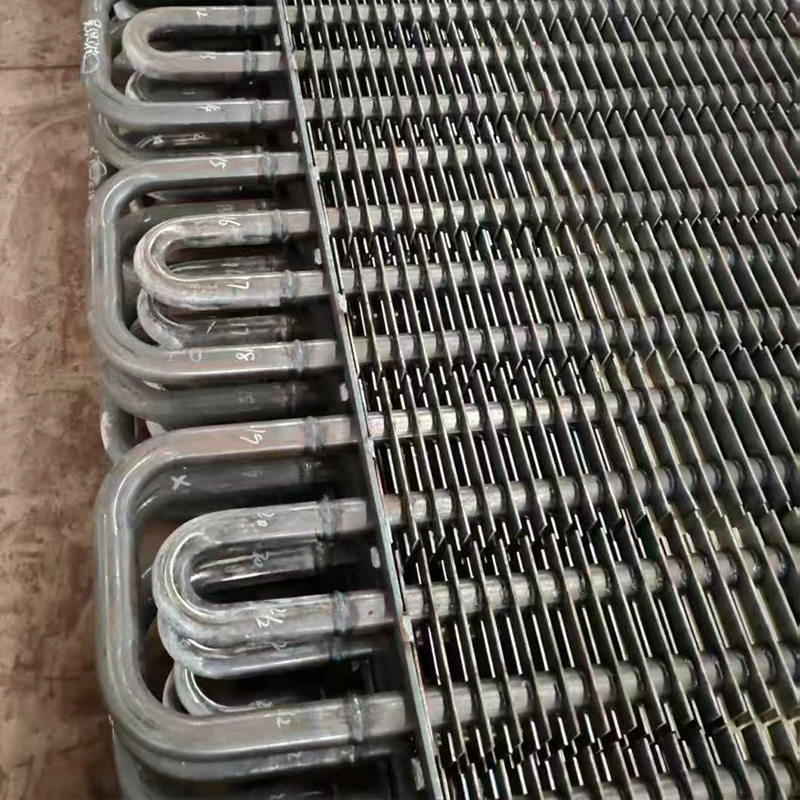
A prime example of a company setting high standards in this industry isWuxi Kaisheng Electric Power and Petrochemical Equipment Co., Ltd.. Specializing in the design and manufacture of advanced heat transfer solutions, the company offers a wide range of products including titanium shell and tube heat exchangers, ASME high pressure units and 316 stainless steel corrugated tube bundles.
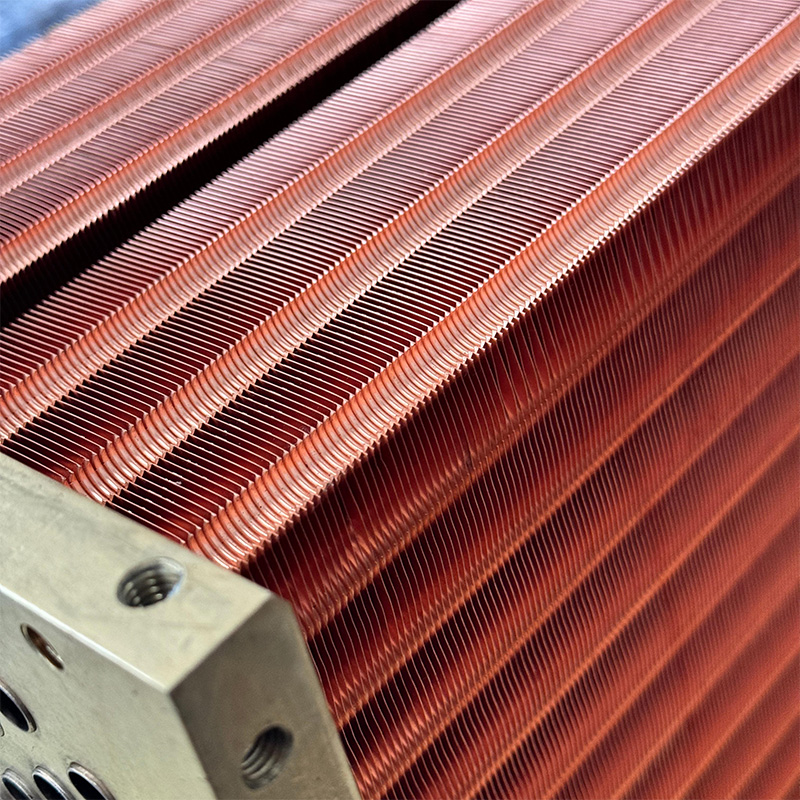
Particular attention in the Wuxi Kaisheng product line is paid to materials that are resistant to extreme conditions: marine brass C46400, copper-nickel alloys (C70600), and nickel alloys N06625 are used, which are ideal for working in environments with high sulfur and chloride content. The company's products, which also include air coolers, waste heat boilers and specialized tube sheets (321 steel and other alloys), are widely used in the shipbuilding, seawater desalination and petrochemical industries. Using carbon, alloy, titanium and copper-nickel alloys, Wuxi Kaisheng equipment provides stable thermal efficiency and durability even at high pressures and temperatures, providing customers around the world with customized solutions for specific applications.
Prices for equipment and installation in 2026: detailed analysis
The heat recovery market in 2026 is characterized by high price volatility, depending on the cost of metals (stainless steel, copper, aluminum, titanium) and supply chains. The cost of the project consists not only of the price of the heat exchanger itself, but also of engineering work, automation and commissioning.
Factors influencing the final cost
- Material:Carbon steel is cheaper, but is not applicable for condensation modes. Acid-resistant alloys (such as those offered by leading manufacturers like Wuxi Kaisheng) increase the initial cost of equipment by 2-3 times, but extend the service life from 2 to 10 years, which is ultimately more profitable.
- Degree of automation:The presence of bypass (bypass) systems in emergency modes and dew point monitoring sensors significantly increases the cost of the project, but is critical for safety.
- Individual design:Standard solutions are cheaper, but often do not take into account the specifics of a particular chimney, which leads to loss of efficiency.
Approximate price list for equipment (Market simulation 2026)
Below is a table with average market prices for ready-made modular turnkey solutions (equipment + installation + commissioning) for various capacities.
| Equipment type | Recycling power (kW) | Heat exchanger material | Equipment price (RUB) | Cost of installation and commissioning (RUB) | Total budget (RUB) |
|---|---|---|---|---|---|
| Air recuperator (tubular) | 50 – 150 | Stainless steel 08Х18Н10 | 450,000 – 800,000 | 150,000 – 250,000 | 600,000 – 1,050,000 |
| Water economizer (medium temp.) | 200 – 500 | Steel 20 + anti-corrosion | 900,000 – 1,500,000 | 300,000 – 450,000 | 1,200,000 – 1,950,000 |
| Condensation heat exchanger | 100 – 300 | Polymers / Alloy 904L / Copper-Nickel Alloys | 1,200,000 – 2,000,000 | 400,000 – 600,000 | 1,600,000 – 2,600,000 |
| Industrial regenerator (high temperature) | 1000+ | Heat-resistant ceramics/steel/Titanium alloys | from 3,500,000 | from 1,000,000 | from 4,500,000 |
(Note: The above data is a simulation based on industry standards and inflation forecasts for 2026. Actual prices may vary by region, exchange rates, material selection (for example, the use of titanium or nickel alloys significantly affects the price) and individual specifications.)
Economic efficiency and payback calculation
The main question for investors is: “When will the money come back?” In 2026, the average payback for flue gas heat recovery projects ranges from 18 to 36 months. This figure has improved significantly compared to previous five-year plans due to a doubling of gas tariffs.
Savings calculation formula
Annual savings are calculated using a simplified formula:
E = (Q × T × C) / η
- Q— amount of utilized thermal energy (Gcal/hour);
- T— annual operating time of the equipment (hours);
- C— cost of a fuel unit (RUB/Gcal);
- η— Efficiency of the main boiler (for correct recalculation of saved fuel).
Calculation example for a 2 MW boiler house
The company installs a condensing economizer, which returns 300 kW of thermal power to the system. When the boiler operates 4000 hours per year and the cost of thermal energy is 2500 rubles/Gcal:
- Savings per hour: 0.3 MW ≈ 0.26 Gcal.
- Annual savings: 0.26 × 4000 × 2500 = 2,600,000 rubles.
- With a project cost of 1.8 million rubles, the payback will be less than 9 months (excluding tax benefits).
However, this ideal scenario only works with proper operation and the use of high-quality materials that prevent premature equipment failure. In practice, many enterprises are faced with corrosion problems, which delay the payback period to 5–7 years.
“Anti-trends” and hidden risks: what sellers don’t say
In pursuit of high performance indicators, marketers often remain silent about technical risks. As an expert with experience in implementing such systems, I am obliged to highlight the “blind spots” that can turn an investment into a loss.
The myth of “the colder the exhaust, the better”
Counterintuitive fact:The desire to cool flue gases to the lowest possible temperature (for example, to 30–40 °C) without proper protection leads to rapid destruction of the chimney and the boiler itself.
When cooling below the dew point, condensate is formed, saturated with sulfuric and nitric acids. If the chimney is made of ordinary brick or rough steel, it will begin to deteriorate within one heating season. Repairing a chimney can cost more than all the energy saved over 5 years.
Recommendation:Always perform a chemical analysis of the fuel. If the sulfur content exceeds 0.5%, the use of deep condensation requires the installation of a lining made of acid-resistant materials or the use of heat exchangers made of special alloys (for example, nickel or titanium) that can withstand such an aggressive environment.
Aerodynamic drag problem
Installing any heat exchanger in the flue gas path creates additional resistance. This causes the exhaust fan to work with overload or requires the installation of a more powerful fan.
- An increase in electricity consumption by a smoke exhauster can “eat up” up to 10–15% of thermal savings.
- Incorrect calculation of resistance can lead to overturning of the draft and the entry of carbon monoxide into the boiler room.
Before purchasing equipment, be sure to request a calculation of aerodynamic resistance and check the passport characteristics of your smoke exhausters.
Industry development trends until 2030
The heat recovery market is being transformed under the influence of digitalization and new materials. Here are three key trends that will shape the industry in the coming years:
- Smart control systems (IoT):Modern recuperators are equipped with sensors that regulate the coolant flow in real time depending on the boiler load and the outside air temperature. This prevents condensation from forming in the wrong places and maximizes efficiency.
- Use of heat pumps and advanced alloys:The combination of a traditional economizer with an industrial heat pump allows the recovery of low-grade heat (30–50 °C). At the same time, there is a growing demand for equipment made of high-tech alloys (titanium, Monel, Inconel), which allows you to safely work with the most aggressive flows.
- Modularity and scalability:Instead of monolithic structures, manufacturers are switching to block-modular systems. This allows you to increase recycling capacity in stages, as production grows, without stopping the main process.
Frequently asked questions (FAQ)
Is it possible to install a heat exchanger on an old boiler?
Yes, in 90% of cases this is possible. However, an inspection of the condition of the chimney and checking the availability of free space in the boiler room is required. Sometimes it is necessary to replace the smoke exhauster with a more efficient one.
How often should the heat exchanger be cleaned?
The frequency depends on the type of fuel. When burning gas, cleaning is required every 1–2 years (preventive). When using solid fuel or fuel oil - every 3–6 months. Soot contamination reduces heat transfer efficiency by 20–30% already in the first month of operation.
Are there government subsidies for installation?
In 2026, energy saving support programs are in place in many regions. Enterprises can count on compensation for part of the costs (up to 20–30%) or preferential loans upon confirmation of the fact of a reduction in specific fuel consumption. A project and commissioning certificate are required.
Which heat exchanger material to choose for biogas combustion?
Biogas often contains hydrogen sulfide impurities, which form aggressive compounds when burned. It is recommended to use heat exchangers made of high-alloy stainless steels (type 316Ti), copper-nickel alloys or titanium, or products with a polymer coating that is resistant to acidic environments.
Conclusion and recommendations for choosing a contractor
Utilization of flue gas heat in 2026 is not just a tribute to the environment, but a powerful tool for reducing production costs. However, the success of the project does not depend on beautiful numbers in the brochure, but on competent engineering calculations, quality of materials and installation.
Golden Rule:Do not chase the maximum declared efficiency (recuperator efficiency). Seek a balance between efficiency, reliability and ease of maintenance. A system that sits idle for repairs for half the winter due to pipe corrosion will never pay for itself, regardless of its theoretical efficiency. Choosing a supplier like Wuxi Kaisheng LLC that offers certified resistant alloy solutions can be the key to long-term reliability.
When choosing a supplier, pay attention to the presence of its own service departments, certificates of conformity (ASME, PED) and a reference list with facilities operating for more than 3 years. Request an opportunity to visit an existing facility to evaluate the operation of the equipment in real conditions.
Remember: high-quality heat recovery is an investment that begins to make a profit from the first day of operation, but only if it is done correctly using proven technologies and materials.