
Flue gas heat recovery boiler: prices and trends for 2026
2026-04-22
- What is a flue gas heat recovery boiler and why is it needed in 2026
- Operating principle and design features of the equipment
- Pricing policy and cost formation factors in 2026
- Key market trends 2026: Technology and Ecology
- How to choose a supplier and avoid procurement mistakes
- Economic justification and payback calculation
- FAQ: Frequently asked questions
- Conclusion: A Strategic View of Energy Saving
Flue gas heat recovery boileris heat exchange equipment designed to recover thermal energy from the exhaust gases of industrial units. In 2026, prices for such systems vary from 1.5 to 12 million rubles, depending on the power and heat exchange material, and the key trend is integration with automated emission control systems. Installing a waste heat recovery system allows you to reduce an enterprise’s energy costs by 15–25% and recoup the investment in 18–30 months.
What is a flue gas heat recovery boiler and why is it needed in 2026
A recovery boiler (or recovery boiler) is a specialized heat exchanger that does not have its own combustion chamber. Its main function is to “collect” residual heat from flue gases generated by furnaces, internal combustion engines, turbines or process lines, and transfer this energy to water or steam.
In the context of rising energy tariffs and tightening environmental standards by 2026,increasing energy efficiency of productionhas become not just a recommendation, but a necessity for business survival. The use of waste heaters transforms a by-product (hot smoke) into a valuable resource - industrial steam, hot water or thermal oil, which can be used to heat workshops, heat raw materials or generate electricity.
Modern models are distinguished not only by high efficiency, but also by the ability to work in aggressive environments. If previously waste heaters were installed only at large metallurgical plants, today demand is growing from the food industry, cement factories and even small boiler houses running on biogas.
Operating principle and design features of the equipment
Understanding the physics of the process helps you select the right equipment. The principle of operation is based on the laws of thermodynamics: a hot flow of gases washes the heating surface, inside which the coolant circulates. The temperature difference causes energy to flow from gas to liquid.
Main types of construction
Depending on the temperature of the incoming gases and the required product at the outlet, waste heat boilers are divided into several types:
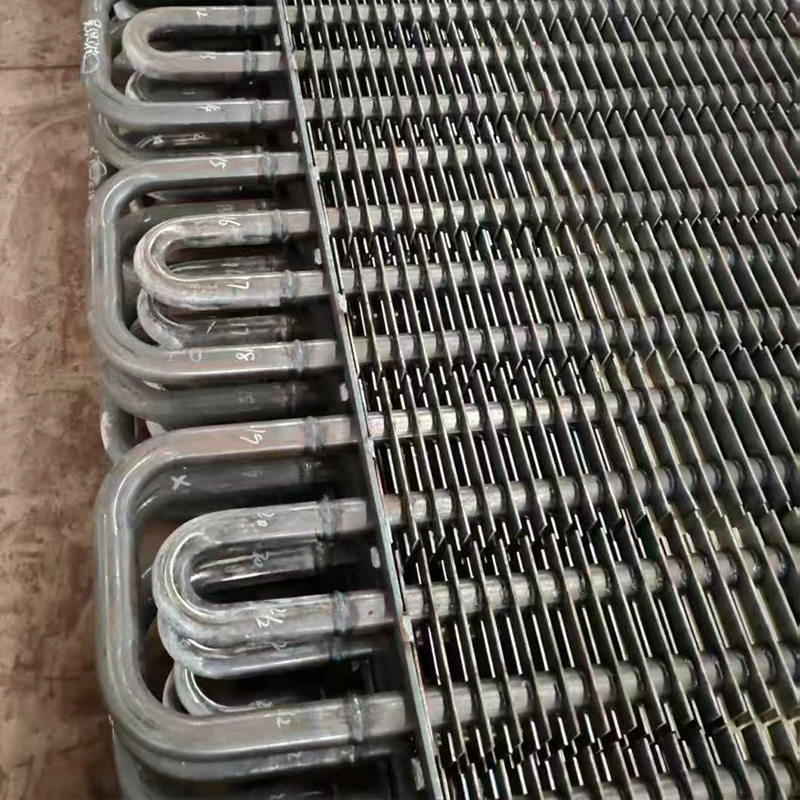
- Gas tube (fire tube):Gases pass inside pipes flushed with water. Ideal for medium temperatures (up to 900°C) and steam pressures up to 15 bar. They are compact and easy to maintain.
- Water tube:Water moves inside the pipes, and gases wash them outside. This type is used for high temperatures (over 1000°C) and large volumes of gas flow, characteristic of glass melting furnaces or CHP plants.
- With economizer:An additional module for preheating feedwater, which increases the overall efficiency of the system by 5–7%.
The material of execution becomes a critical element in 2026. For environments containing sulfur or chlorine (for example, waste incineration), pipes made of corrosion-resistant alloys or with an enamel coating are used to prevent acid corrosion when gases are cooled below the dew point. It is the selection of the correct alloy that determines the durability of the system in the extreme conditions of the oil refining and chemical industries.
Solutions from leading equipment manufacturers
For complex heat recovery projects, it is critical to turn to manufacturers with proven experience in harsh environments. A striking example of such expertise is the companyWuxi Kaisheng Electric Power and Petrochemical Equipment Co., Ltd..
Specializing in the development and production of highly efficient heat transfer equipment, the company offers a wide range of solutions for the energy and petrochemical industries. Wuxi Kaisheng's portfolio includes not only standard waste heat boilers, but also unique products made from exotic materials:titanium shell and tube heat exchangers, devices made of nickel alloys (N06625), copper-nickel alloys and marine brass C46400. This material base makes it possible to create systems that are resistant to high pressure and temperature, which is especially important for the processes of seawater desalination, shipbuilding and deep oil refining.
The company's products are certified according to international standardsASME and PED, which guarantees safety and reliability even in the harshest operating conditions. Whether it's 316 stainless steel corrugated tube bundles or complex C70600 alloy tube sheets, Wuxi Kaisheng engineers provide customized solutions to maximize thermal efficiency and minimize equipment downtime for customers around the world.
Pricing policy and cost formation factors in 2026
The heat exchange equipment market in 2026 is characterized by high price volatility due to the cost of metal and supply chains. Priceflue gas heat recovery boileris not a fixed value and is calculated individually for each project, especially when it comes to the use of special alloys such as titanium or nickel compositions.
Price ranges and equipment classes
Conventionally, the market can be divided into three segments:
- Budget segment (up to 2 million rubles):Small plate or simple tubular heat exchangers for small boiler houses and diesel generator sets with a power of up to 500 kW.
- Middle segment (RUB 2–6 million):Gas-tube boilers for industrial furnaces, drying drums and ignition lines. Steam output up to 5 t/h.
- Premium and industrial segment (from 6 million rubles):Complex water pipe systems with gas purification units, an automatic control system and the ability to work under high pressure. Often custom made using expensive corrosion resistant alloys.
Table: Estimated cost depending on parameters
Below is data reflecting the current market situation. Please note that the final estimate always includes the cost of installation and commissioning.
| Installation type | Gas inlet temperature (°C) | Steam output (t/h) | Approximate price (million rubles) | Payback period (months) |
|---|---|---|---|---|
| Utilizer for diesel generator set (500 kW) | 450 – 550 | 0.3 – 0.5 | 0.8 – 1.5 | 14 – 18 |
| Boiler for drying line | 600 – 800 | 1.0 – 2.0 | 2.5 – 4.0 | 20 – 24 |
| Industrial recycler (metallurgy) | 900 – 1200 | 5.0 – 10.0 | 7.0 – 12.0 | 24 – 36 |
| High temperature complex (glass/cement) | > 1300 | > 15.0 | from 15.0 | 30 – 42 |
(Note: The above data is a simulation based on industry standards and average market conditions for 2025-2026 and is for informational purposes only. Accurate calculations require an engineering audit of the site.)
What influences the cost of a project?
In addition to dimensions, the price is significantly influenced by:
- Heat transfer surface material:Stainless steel grade 09G2S or alloy alloys can increase the cost of the case by 30–40% compared to carbon steel, but extend the service life significantly. The use of titanium or nickel alloys, typical of premium equipment, further increases the initial cost, but greatly reduces repair costs in the long term.
- Degree of automation:Availability of modern controllers, remote monitoring via IoT and integration with the plant’s process control system.
- Additional options:Pipe blowing systems (juice or steam), explosion valves, noise suppressors.
Key market trends 2026: Technology and Ecology
The recycling equipment market is being transformed under the pressure of two factors: the need for maximum energy efficiency and strict environmental requirements. In 2026, several clear development vectors can be identified.
1. Hybridization and bivalent systems
More and more oftenflue gas heat recovery boilerIt is supplied not as a separate unit, but in conjunction with an afterburner. This scheme allows you to use the heat exchanger as the main source of heat when the production line is running, and as a full-fledged steam boiler during times of line downtime or peak loads. This eliminates the main drawback of recyclers - dependence on the operating schedule of the main production.
2. Combating low-temperature corrosion
The main problem of disposal is moisture condensation and the formation of acids when cooling gases. The trend for 2026 is the mass introduction of polymer heat exchangers and Teflon-coated pipes. They allow gases to be cooled to 40–50°C without the risk of metal destruction, extracting the maximum latent heat of vaporization, which was previously impossible.
3. Digital twin and predictive analytics
Modern installations are equipped with pressure, temperature and vibration sensors in real time. The data is sent to the cloud, where algorithms predict pipe contamination or corrosion risk. This shifts maintenance from a repair-by-breakdown mode to a condition-based maintenance mode, reducing equipment downtime.
How to choose a supplier and avoid procurement mistakes
The choice of equipment is an investment decision with a planning horizon of 10–15 years. A mistake at the design stage can lead to an expensive boiler becoming “dead weight” or failing within two years.
Checklist when choosing a manufacturer
- Availability of reference list and certificates:Request contact information for existing clients. Make sure that the manufacturer has certificates of compliance with international standards (for example, ASME, PED), which is a marker of high quality production control.
- Engineering audit and material consumption:A conscientious supplier will never sell a boiler “according to the catalogue” without a site visit or a detailed analysis of the composition of the flue gases. The chemical composition of the gases is critical to the choice of materials: you may not need ordinary steel, but a specialized alloy for work in aggressive environments.
- Service support:Check the availability of a spare parts warehouse (pipes, seals, burners) in your region. The delivery time for imported components under current conditions can reach 6–9 months.
“Anti-trend”: What NOT to do
A common mistake is trying to save money on a project by ordering a waste disposal unit from non-core welding shops without an engineering bureau. Such “homemade products” often do not have aerodynamic drag calculations. As a result, the installation of the boiler creates excess pressure in the chimney of the main unit (furnace or engine), which leads to a drop in its performance or even emergency shutdowns. Savings on equipment result in losses in the main production.
Economic justification and payback calculation
Investments influe gas heat recovery boilerjustified only if there is a clear economic calculation. Let's consider a simplified model for an enterprise with average steam consumption.
Suppose a plant installs a waste disposal unit costing 4 million rubles. The equipment generates 1.5 tons of steam per hour. Shift work is 24 hours, 300 days a year.
- Annual steam production: 1.5 t/h * 24 h * 300 days. = 10,800 tons.
- The cost of producing 1 ton of steam in your own gas boiler (taking into account the efficiency of 85% and the price of gas): approximately 1800 rubles.
- Savings per year: 10,800 * 1800 = 19,440,000 rubles.
Even taking into account the energy costs for the pumps and depreciation, the net savings will pay for the equipment in less than 4-5 months of operation at full load. However, it is important to consider the utilization rate of the main unit. If the furnace only runs 50% of the time, the payback period will double.
Important nuance:When calculating efficiency, be sure to take into account the increase in gas and electricity tariffs. The projected increase in energy prices by 10–12% annually makes recycling projects even more attractive in the long term.
FAQ: Frequently asked questions
Is it possible to install a recovery unit on an already operating line without stopping production?
In most cases, installation requires a short stop of the main unit to insert into the gas duct. However, modern modular designs allow most of the assembly work to be carried out in parallel, reducing downtime to 3-5 days. There are also solutions with bypass lines that allow you to switch gas flows.
What is the minimum temperature threshold for gases for efficient operation?
Technically, heat recovery units can operate at temperatures from 200°C, but economic feasibility appears at incoming gas temperatures above 350–400°C. At lower temperatures, a huge heat exchange area is required, which makes the project unprofitable unless special polymer heat exchangers are used for deep utilization.
Is a special permit required for operation?
Yes, waste heat boilers operating under pressure above 0.07 MPa and with water temperatures above 115°C are subject to registration with Rostechnadzor (for the Russian Federation). The project must be carried out by an organization that has the appropriate license, and the equipment itself must have a passport and certificate of conformity TR CU 032/2013.
What to do if the composition of the flue gases changes?
This is one of the main problems. If the main production technology allows fluctuations in the composition of gases (for example, the appearance of abrasive dust or aggressive compounds), it is necessary to provide a design safety margin or install pre-treatment systems (cyclones, scrubbers) in front of the utilizer. Ignoring this factor leads to rapid wear of the pipes.
Conclusion: A Strategic View of Energy Saving
In 2026flue gas heat recovery boilerceased to be just an “add-on” to the main equipment. This is a strategic asset that ensures the energy independence of the enterprise. A properly selected system not only returns money spent on fuel, but also improves the overall reliability of the process cycle.
The expert's main advice: do not chase the lowest price per kilogram of metal. In recycling technology, the cost of error is too high. Invest in quality engineering, the right choice of materials (whether time-tested steel alloys or advanced titanium solutions) and intelligent control systems. Only this approach guarantees that your recycler will work for decades, bringing profit every hour of its operation.
“The energy you throw down the drain today is your competitor’s profit tomorrow. Heat recovery is not an expense, it is the fastest way to increase production margins without increasing sales.”
About the author
Alexey Voronov- Leading heating engineer with 15 years of experience in the field of industrial energy efficiency. Specializes in the design and audit of recycling systems for secondary energy resources for enterprises in the metallurgical and chemical industries. Author of more than 20 completed projects for the modernization of boiler plants with the introduction of recuperative technologies.