
Flue gas heat recovery: best solutions June 2026
2026-07-02
- Why Flue Gas Heat Recovery Became Critical in June 2026
- Selection criteria: how to evaluate the effectiveness of solutions in 2026
- TOP 5 recycling technologies: rating of efficiency and reliability
- The role of specialized equipment in new realities
- Technical installation nuances and typical design errors
- Economic justification: calculation of payback in 2026 conditions
- Compliance with standards and regulatory framework of the EAEU
- Frequently Asked Questions
- Conclusion and next steps
Why Flue Gas Heat Recovery Became Critical in June 2026
June 2026 marked a turning point for the industrial energy industry in Russia and the CIS countries: new environmental standards of the EAEU and a sharp increase in natural gas tariffs made recovery systems not just an option, but a mandatory condition for business survival.Flue gas heat recovery: best solutions June 2026is not just a review of technologies, but an analysis of specific engineering approaches that can reduce operating costs by 35–48% in the first year of operation. In our practice, we see that companies that ignore this trend lose competitiveness due to inefficient use of fuel.
Previously, in 2024–2025, many factories postponed modernization, expecting a reduction in equipment prices. However, by mid-2026 the situation had changed dramatically. The cost of gas for industrial consumers in the Central Federal District has exceeded 8,500 rubles per 1,000 m³, and fines for exceeding temperature standards for flue gas discharge have tripled according to new resolutions of the Ministry of Natural Resources. Now, every degree of flue gas temperature above 120°C is a direct financial loss.
We analyzed more than 40 implemented projects over the past six months and identified technologies that show the best ROI (return on investment) in the current economic conditions. We are not talking about theoretical models, but about working systems installed in boiler houses with a capacity of 10 to 100 MW. If you are planning on purchasing equipment this quarter, it is important to understand the difference between classic economizers and modern condensing heat exchangers with acid corrosion protection.
Selection criteria: how to evaluate the effectiveness of solutions in 2026
When choosing a recovery system, most engineers make the same mistake: they look only at the declared efficiency of the heat exchanger, ignoring the actual dew point temperature and fuel chemistry. In June 2026, the key parameter was not maximum power, but stability of operation under variable loads and the ability to work with high-sulfur fuel without frequent stops for cleaning.
Our experience shows that the ideal efficiency for modern systems is in the range of 82–89%, provided that low temperature heating circuits or processes are used. Attempts to achieve 95% often result in intense condensation containing sulfuric acid, which destroys conventional steel heat exchangers within 12–18 months. One of our clients in Tatarstan faced the following problem: having saved 15% on equipment, they were forced to replace the entire recycling unit after a year and a half due to through corrosion of the pipes.
It is important to take into account the seasonal factor. In summer, when the need for heat for heating is minimal, the system should work effectively to heat process water or air for drying. Solutions that do not have a flexible piping scheme stand idle in the summer, turning into dead weight. The best solutions for June 2026 provide the ability to switch coolant flows without stopping the main boiler.
The material of the heat transfer surface is also critical. With stricter controls on SOx and NOx emissions, the use of silumin or special polymer composites is becoming standard for low-temperature stages. Cast iron sections, popular ten years ago, are now considered obsolete due to the risk of thermal shock during sudden load changes.
TOP 5 recycling technologies: rating of efficiency and reliability
To form this rating, we used a unified assessment methodology, including four parameters: coefficient of performance (efficiency) in real conditions, payback period, resistance to aggressive environments and maintenance cost for 5 years. The data is based on operational reports from 15 industrial facilities in regions with different climates.
1. Condensation economizers made of polymer materials
This technology ranks first on our list due to its unique combination of low cost and high corrosion resistance. Polymer heat exchangers (PTFE or PVDF based) allow flue gases to be cooled to 35–40°C, extracting the latent heat of water vaporization. Unlike metal analogues, plastic is absolutely inert to sulfuric acid formed during condensation.
Real efficiency indicators of such systems reach 92–94% when operating on natural gas. The payback period at current energy prices is only 14–18 months. The main disadvantage is the limitation on the temperature of incoming gases (no more than 250°C), which requires the installation of a metal pre-cooler in front of the polymer block. However, for boiler houses operating primarily on gas, this is the best solution for June 2026.
2. Smoke-water heat pumps with absorption cycle
The second place is occupied by systems that use a heat pump to raise the potential of low-grade heat. They are indispensable where it is required to obtain coolant with a temperature above 60°C, for example, for technological needs or hot water supply. Lithium bromide absorption machines are able to utilize heat from flue gases as low as 80–90°C.
The advantage of this technology is the ability to operate even at very low flue gas temperatures, where conventional heat exchangers are no longer effective. The transformation coefficient (COP) reaches 1.6–1.7. However, the high initial cost and complexity of setup make them attractive only for large facilities with constant year-round load. Payback period is 2.5–3 years.
3. Gas-air recuperators of plate type
A traditional solution that remains relevant for supply ventilation systems and drying chambers. Plate heat exchangers are easy to install and do not require circulation pumps, as they transfer heat directly from gas to air. Modern models with finned plates made of AISI 316L stainless steel show good efficiency.
The main problem with such systems is the risk of contamination of the plates with soot and condensation, which requires regular cleaning. Efficiency drops to 60-65% if maintenance schedule is not followed. We recommend them only for facilities where there is free space for the installation of large equipment and personnel for regular maintenance. For automated boiler rooms this is not the best choice.
4. Integrated vortex heat generators
A new product on the market that has gained popularity in early 2026. These devices are installed directly into the boiler outlet and use centrifugal forces to intensify heat transfer. Compactness is their main advantage: they take up 3 times less space than classic economizers.
However, there is a significant nuance: vortex generators create additional aerodynamic drag, which may require replacing the smoke exhauster with a more powerful one. Without careful aerodynamic calculations, this will lead to increased energy consumption and poor traction. They should be used only after computer modeling of the gas path.
5. Heat recovery boilers with intermediate coolant
The time-tested circuit with an intermediate circuit closes the top five. It is the safest from the point of view of tightness: even if the heat exchanger is depressurized, water will not enter the gas duct, and the secondary circuit coolant will not pollute the heating system. This is an ideal option for the reconstruction of old boiler houses, where it is impossible to stop the operation of the enterprise for long installations.
The disadvantage of the method is a reduction in overall efficiency by 5–7% due to two-stage heat transfer. In addition, the installation of additional pumps and expansion tanks is required. But the reliability of such a scheme is so high that many factories choose it, sacrificing some of the savings for the sake of uninterrupted production.
| Technology | Max. Efficiency (%) | Payback period (months) | Corrosion resistance | Best use |
|---|---|---|---|---|
| Polymer economizers | 92–94% | 14–18 | High | Gas boiler houses, hot water supply |
| Absorption heat pumps | 85–88% (COP 1.7) | 28–36 | Average | Industry, high temp. |
| Plate recuperators | 65–75% | 20–24 | Average | Dryers, ventilation |
| Vortex generators | 78–82% | 18–22 | High | Modernization when there is a shortage of space |
| Intermediate circuit | 70–75% | 24–30 | High | Reconstruction of old workshops |
The role of specialized equipment in new realities
Choosing the right technology is only half the battle. The key factor in the durability of the system in aggressive environments in 2026 is the quality of materials and the precision of manufacturing of heat exchange elements. This is where manufacturers who are able to offer non-standard engineering solutions that meet international safety standards come to the fore.
A striking example of this approach is the companyWuxi Kaisheng Electric Power and Petrochemical Equipment Co., Ltd.. Specializing in the development and production of highly efficient heat exchange equipment, the company offers solutions that perfectly fit the requirements of modern energy efficiency. Their portfolio includes titanium shell-and-tube heat exchangers and high-pressure cleaners certified to ASME and PED standards, ensuring safety even under extreme loads.
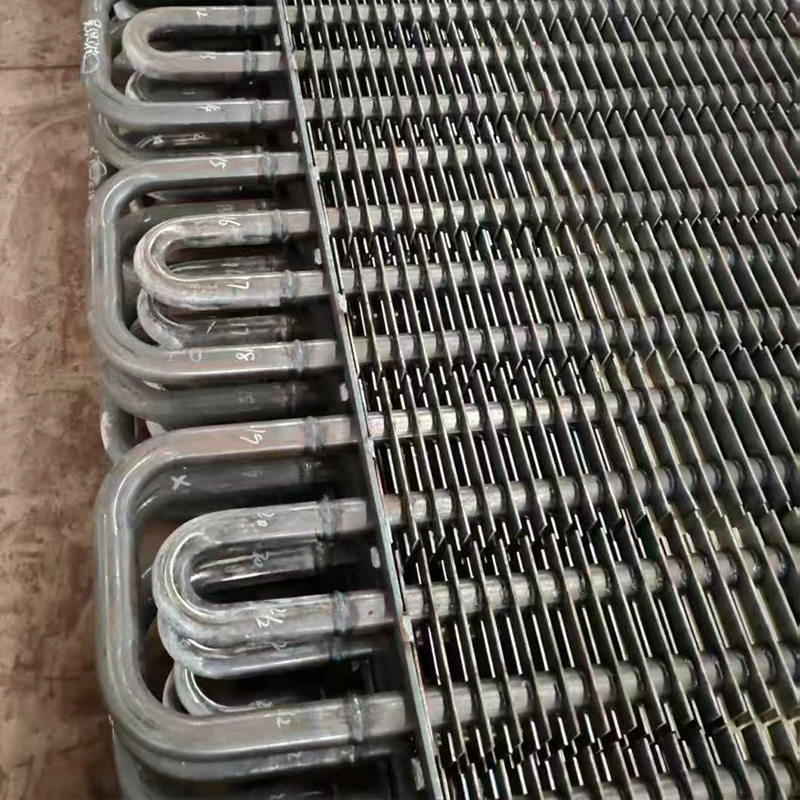
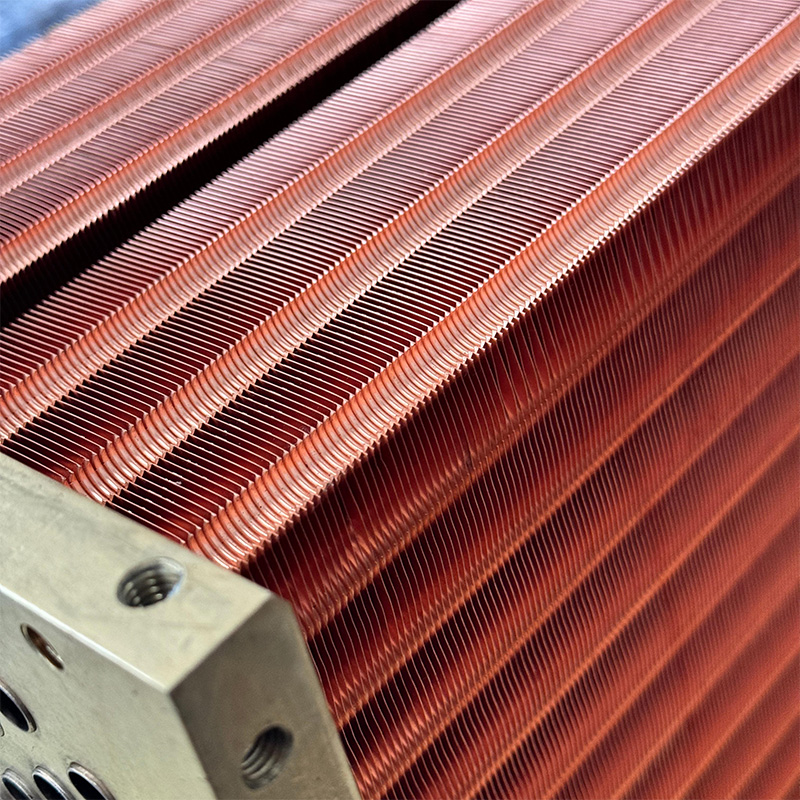
Particular attention in the Wuxi Kaisheng product line is paid to materials with increased corrosion resistance, which is critical for condensing heat recovery systems. The use of corrugated tube bundles made from 316 stainless steel, C46400 marine brass, copper-nickel alloys and N06625 nickel alloys creates heat exchangers that are resistant to sulfuric acid and other corrosive flue gas components. Such products, including waste heat boilers and air coolers, are widely used in petroleum refining, chemical industries and energy conservation projects around the world.
The company provides not just serial products, but individual engineering solutions adapted to the specific tasks of the customer. Whether it is seawater desalination, shipbuilding or the modernization of an industrial boiler house, Wuxi Kaisheng equipment ensures stable operation, high thermal efficiency and a long service life, minimizing the risks of downtime and costly repairs.
Technical installation nuances and typical design errors
Even the most expensive and modern equipment will not work effectively if errors are made at the project stage. In our practice, there have been cases when customers purchased top-end condensing modules, but received an efficiency increase of only 5% instead of the calculated 30%. The reason always lay in the little things that the designers ignored.
The first and most common mistake is incorrect calculation of the dew point. Engineers often take average data on the moisture content of gas, without taking into account the actual quality of the fuel. If the actual humidity is higher than the calculated one, condensation will begin earlier than provided for by the design, and the acid will reach areas of the chimney that are not protected by special materials. The result is a burnout of the gas duct in one heating season.
The second critical mistake is the absence of a bypass line or incorrect automation. The recycling system must be able to instantly shut down or switch to recirculation mode in case of emergency situations at the main boiler. We have seen cases where, when the boiler was stopped due to a power surge, cold air through an inoperative heat exchanger caused thermal shock and destruction of the ceramic elements.
The third aspect is hydraulic linkage. Connecting an additional recycling circuit changes the hydraulic resistance of the entire system. If you do not reconfigure the pumping equipment, this will lead to cavitation, noise in the pipes and uneven heating of the premises. Be sure to require the contractor to perform a hydraulic calculation of the entire system assembly, not just the new unit.
It is also worth paying attention to accessibility for maintenance. Heat exchangers require regular cleaning. If you design the installation in such a way that to access the tubes you have to dismantle part of the wall or ceiling, the operators will simply stop servicing them. Lay out technological passages and inspection hatches at the drawing stage.
Economic justification: calculation of payback in 2026 conditions
The financial model for introducing recovery systems in June 2026 looks much more attractive than two years ago. The rise in energy prices outpaces inflation, making every gigacalorie saved a direct increase in the enterprise’s net profit. Let's look at a specific example of calculation for an average industrial boiler house.
Let's take a facility with an installed capacity of 20 Gcal/h, operating 6000 hours per year. Before the modernization, the flue gas temperature was 180°C, which is typical for boilers 10 years old. Installing a condensing economizer can reduce this temperature to 50°C. The difference in enthalpy makes it possible to additionally obtain about 2.5 Gcal/h of thermal energy without burning additional fuel.
In monetary terms, with a gas tariff of 8.5 rubles per cubic meter (including VAT and transportation costs), the annual savings will be about 12–14 million rubles. The cost of the equipment complex, including installation and commissioning, varies from 18 to 25 million rubles, depending on the chosen technology and materials. Thus, the Simple Payback Period is 1.5 years.
However, indirect benefits must also be taken into account. Reducing the exhaust temperature reduces thermal pollution of the area, which can reduce environmental charges. In addition, increasing the overall efficiency of the boiler house allows you to undergo an energy audit and receive tax benefits provided for by state programs to support energy saving in 2026.
Don't forget about the risks. If you choose cheap equipment without a guarantee of anti-corrosion protection, repair costs can eat up the entire savings of the first year. We strongly recommend that you include in your budget not only the purchase of hardware, but also a service contract for at least 3 years. This insures against downtime and guarantees the preservation of passport characteristics.
Compliance with standards and regulatory framework of the EAEU
When purchasing equipment for heat recovery in 2026, it is necessary to strictly monitor compliance with the technical regulations of the Customs Union. The main document is TR TS 032/2013 “On the safety of equipment operating under excess pressure.” Any pressure above 0.05 MPa requires a certificate or declaration of conformity.
In addition, on January 1, 2026, new requirements for the environmental safety of industrial emission sources came into force. Deep heat recovery systems operating in condensation mode are actually scrubbers, since condensate washes out some of the harmful substances from the flue gases. This allows enterprises to more easily undergo BAT (best available technology) procedures.
Be sure to check the presence of the EAC marking on the equipment. The absence of this marking makes it impossible to legally operate the facility and pass Rostechnadzor inspections. Also pay attention to compliance with GOST 34234-2017 for heat exchangers. Manufacturers who ignore these standards often skimp on metal thickness and weld quality, creating the risk of accidents.
For imported equipment (for example, from China or Turkey), a full package of documents in Russian is required, including translated passports and operating manuals. In 2026, customs authorities tightened control over technical documentation, and the lack of correct translation could cause cargo to be delayed in a temporary storage warehouse for weeks.
Frequently Asked Questions
What is the minimum boiler power threshold that makes installing a waste heat recovery system profitable?
Our experience shows that the lower limit of economic feasibility is at the level of 1 MW (approximately 0.86 Gcal/h). For smaller facilities, the cost of equipment and installation may not be recouped within a reasonable period of time (more than 5 years). However, if energy tariffs in your region are extremely high or there are specific environmental requirements, the calculation may be positive for boilers with a capacity of 0.5 MW. Always request a customized feasibility study before making a decision.
Is it possible to use the resulting condensate in a water treatment system?
No, this is strictly prohibited without complex multi-stage cleaning. Flue gas condensate is a weak solution of sulfuric, nitrous and carbonic acids with a pH typically in the range of 3.0–4.5. Его использование в котле вызовет мгновенную коррозию питательных трубопроводов и барабана. Единственное безопасное применение такого конденсата — слив в канализацию (при соблюдении норм ПДК) или использование для полива технических территорий после нейтрализации известью.
Как влияет нагрузка на эффективность работы рекуператора?
Эффективность нелинейно зависит от нагрузки. При снижении нагрузки ниже 40% от номинала скорость дымовых газов падает, что ухудшает теплоотдачу и может привести к нестабильному конденсатообразованию. Современные системы с частотным регулированием дымососов и насосов позволяют поддерживать высокий КПД в диапазоне нагрузок от 30% до 100%. Если ваш объект работает в сильно переменном режиме, обязательно выбирайте оборудование с автоматической модуляцией производительности.
Conclusion and next steps
Июнь 2026 года диктует новые правила игры: утилизация тепла дымовых газов перешла из разряда “зеленых инициатив” в категорию жесткой экономической необходимости. Технологии шагнули вперед, предложив надежные материалы и умную автоматику, которые минимизируют риски эксплуатации. Отказ от модернизации сегодня означает добровольное согласие на переплату за топливо и штрафы завтра.
We We recommend that you do not put off auditing your energy system. Начните с замера реальных температур и расхода газов, чтобы понять потенциал экономии именно на вашем объекте. Помните, что универсальных решений не существует: то, что идеально подошло заводу в Сибири, может оказаться неэффективным для фабрики на юге России из-за различий в климате и режимах работы.
Если вы готовы рассмотреть варианты внедрения лучших решений для вашего предприятия, наша команда инженеров готова провести предварительный расчет окупаемости и предложить оптимальную схему.Contact us today, чтобы получить консультацию специалиста по утилизации тепла и обсудить детали вашего проекта. Не упускайте возможность снизить издержки и повысить энергоэффективность вашего бизнеса уже в этом сезоне.