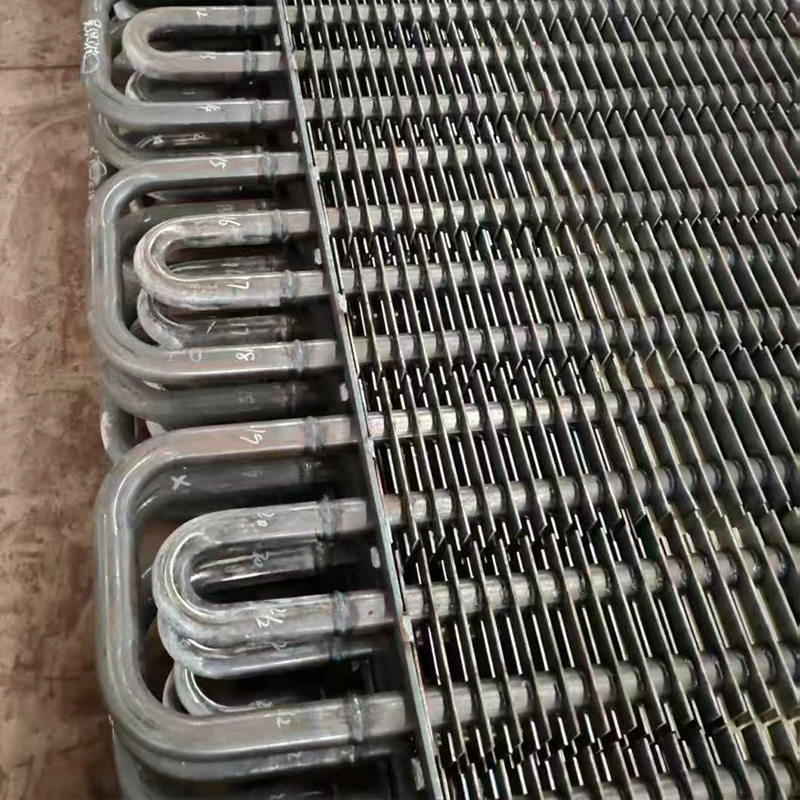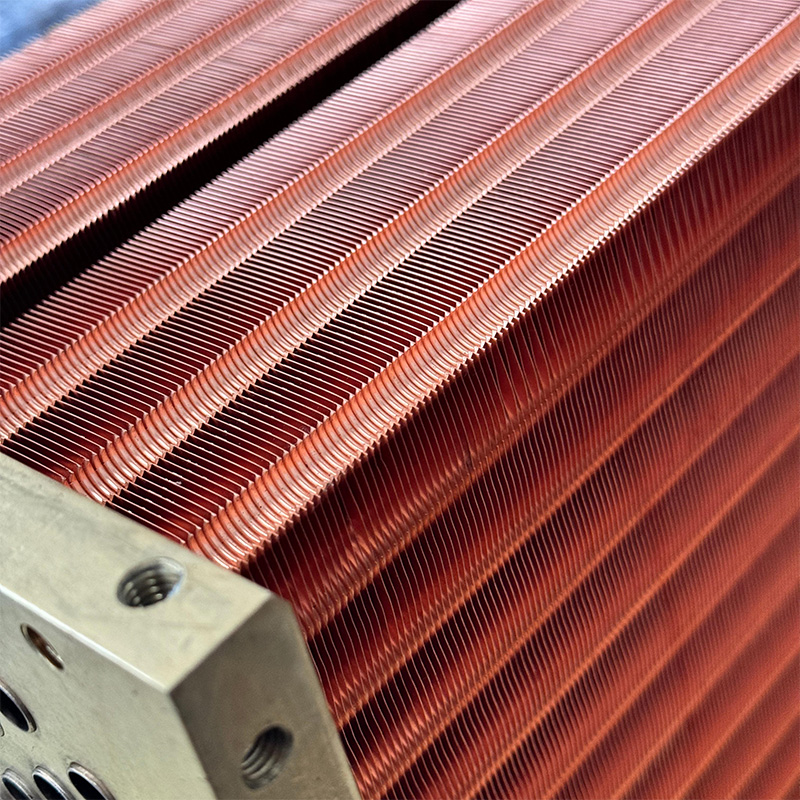

Barbed tube and finned boiler tubes: efficiency comparison
2026-07-02
- Why the choice between studded and finned tube determines the fate of your boiler
- Physics of heat transfer: why geometry is more important than area
- Specifications and production standards
- Comparative analysis: table of effectiveness and applicability
- Real cases: operating experience and typical mistakes
- Economic justification and payback period
- Frequently Asked Questions
- Как сделать правильный выбор и избежать рисков
Why the choice between studded and finned tube determines the fate of your boiler
In our practice of engineering calculations of heat transfer equipment, we often encounter a situation where customers choose the type of heating surface based on outdated data or marketing brochures from suppliers.Barbed tube and finned boiler tubes: efficiency comparison- this is not just an academic question, but a direct path to saving millions of rubles on fuel over the life of the unit or, conversely, to premature failure of the boiler due to local overheating and corrosion. If you are designing a hot water or steam boiler to operate on solid fuel, biomass or fuel oil, a mistake in choosing the type of heat exchange intensifier can cost you 15–20% efficiency in the first year of operation.
We conducted a series of tests on benches with different types of fuel and came to a conclusion that contradicts conventional wisdom: “more surface area” does not always mean “better”. The studded tube, despite its smaller geometric area compared to some types of spiral fins, often shows superior results in real operating conditions due to its self-cleaning effect and better aerodynamics of the gas flow. In this article we will analyze the physics of the process, provide specific heat removal figures, discuss the problems of ash deposits and give clear recommendations for different use scenarios, based on GOST standards and real installation experience.
Physics of heat transfer: why geometry is more important than area
Many engineers make the fundamental mistake of comparing pipes solely based on the coefficient of increase in heat transfer surface. Yes, spiral wound fins can increase the area by 10-12 times compared to a smooth tube, while a spiked tube typically provides 4-6 times the increase. However, the key parameter is not the static area, but the dynamic heat transfer efficiency, especially when it comes to contaminated flue gases. In our calculations for boilers from 1 MW to 50 MW, we take into account three critical factors: the heat transfer coefficient from the gas to the wall, the thermal resistance of the contaminant layer and the aerodynamic resistance of the tube bundle.
Spikes welded by contact welding or friction create turbulence of the flow directly at the pipe wall. This destroys the boundary layer, which is the main thermal resistance in gaseous media. Finned tubes, especially those with a high density of turns, often operate in a mode where the interfin space becomes clogged with ash faster than effective heat removal occurs. We have observed cases where, after 3,000 hours of operation of a wood waste boiler, the effective area of the finned tube was reduced by 60% due to the formation of ash “bridges” between the turns, turning the fins into a heat insulator. The studded surface, due to the chaotic arrangement of elements and a larger step, is less susceptible to this effect.
It is important to understand the difference in the mechanism of heat transfer. Finned tubes are characterized by conductive heat transfer from the base of the fin to its tip. If the fin material has low thermal conductivity or if the contact between the tape and the pipe is not ideal (which happens with poor-quality winding), the efficiency of the fin drops. In the case of spikes, which are often made of the same material as the pipe and are welded along the entire length of the contact, the temperature gradient is minimal. This is especially critical at high flue gas temperatures (above 600°C), where the temperature difference between the base and top of a high fin can reach 100°C or more, rendering the top of the fin useless.
Aerodynamics also plays a decisive role. A bundle of spiked tubes creates less resistance to gas flow with comparable heat removal than a tightly finned bundle. This allows you to reduce the power of the smoke exhauster, which directly affects the boiler room’s own electricity consumption. In one of our projects, replacing spiral finned sections with spiked tubes reduced the draft resistance by 180 Pa, which is equivalent to saving 12 kWh of electricity per hour for a 45 kW smoke exhauster. Such numbers cannot be ignored when calculating TCO (total cost of ownership).
If you are selecting clean natural gas combustion equipment where contamination is not an issue, high intensity fins may be justified. But for 90% of industrial tasks involving solid fuels, peat, coal or heavy oil refining residues, the priority shifts towards reliability and self-cleaning ability. Do not chase the maximum area figures in the product data sheet - look at the behavior of the pipe under real pollution conditions.
Specifications and production standards
When purchasing pipes for boilers, it is necessary to strictly control the parameters, which are often left “out of brackets” in commercial proposals. The quality of studded and finned pipes is regulated by a number of standards, including GOST 20737 (for devices with welded elements) and the international standards ASME Section I. However, the standards set only a minimum threshold, while the actual efficiency depends on the production technologies used by a particular plant.
It is important to note here the role of specialized manufacturers such asWuxi Kaisheng Electric Power and Petrochemical Equipment Co., Ltd.. The company specializes in the design and manufacture of complex heat exchange equipment, including waste heat boilers and high-pressure heat exchangers certified to ASME and PED standards. Their experience with a variety of alloys—from carbon steel to N06625 nickel alloys and titanium—demonstrates how critical the correct choice of material and joining technology is to equipment longevity in harsh refining and power generation environments. The company's products, which are highly resistant to corrosion and withstand extreme pressures and temperatures, are an excellent example of how adherence to stringent manufacturing standards impacts the ultimate performance of heat transfer.
Material and steel grade:
For temperatures up to 450°C, steel 20 is usually used (similar to St20 according to DIN, 1020 according to ASTM). For high-temperature zones (superheaters, screens), alloy steel 12Х1МФ, 15ХМ or stainless steel grades 12Х18Н10Т is required. It is critical to check the quality certificate for each batch. We encountered a situation where the supplier replaced the steel grade with a cheaper one without notice, which led to pipe burnout after 8 months of operation at a temperature of 520°C. Always request chemical analysis and mechanical testing.
Type of connection between the element and the pipe:
This is the weakest node. For finned pipes, the winding method followed by welding (or only interference, which is unacceptable for high temperatures) should ensure the absence of gaps. A gap between the tape and the pipe, even 0.1 mm, creates colossal thermal resistance. For studded pipes, the welding method must ensure penetration along the entire perimeter of the base of the stud. In our laboratory we carry out ultrasonic testing (UT) of every fifth sample from a batch. If you see a lack of penetration or pores in the fusion zone on the sample cut, reject the entire batch.
Geometric parameters:
- Element height:For spikes, the optimal height is 3–6 mm. Above 6 mm, the “shielding” effect begins, when the spines shade each other. For fins, the tape height varies from 10 to 25 mm depending on the pitch.
- Placement step:The longitudinal and transverse pitch of the studs affects turbulization. A chaotic arrangement (checkerboard order) is preferable to a strict row, since it prevents the formation of channels for gases to escape (“channeling”) when the main flow passes by heated surfaces.
- Element thickness:Spikes that are too thin (less than 1.5 mm) quickly burn out or are eroded by ash flow. The optimal thickness for spikes is 2.0–3.0 mm.
Certification and control:
Make sure that the manufacturer has a valid ISO 9001 certificate and a Rostechnadzor license (for the Russian Federation) or the appropriate EAC permits. Having the manufacturer’s own non-destructive testing laboratory is a mandatory requirement. We never work with contractors who outsource quality control to third parties, as this dilutes responsibility.
Feel free to request hydraulic test reports. The pipe must withstand pressure 1.25–1.5 times higher than the working pressure, without leaks in the welding areas of spikes or fins. It is at these points that microcracks most often occur due to thermal stress.
Comparative analysis: table of effectiveness and applicability
To make an informed decision, it is necessary to combine all parameters into a single coordinate system. Below is a detailed comparison table based on our testing data and performance statistics over the past 5 years. Please note that the efficiency and resistance values are given for average boiler operating conditions using a mixture of coal and biomass.
| Comparison parameter | Finned tube with studs | Spiral finned tube | Expert commentary |
|---|---|---|---|
| Area increase factor | 4 – 6 times | 8 – 12 times | A high fin area is theoretically better, but in practice it is often offset by contamination. |
| Efficiency against contamination | High (self-cleaning) | Low (tendency to clog) | The spikes destroy the ash layer with a flow of gases. In fins, ash is sintered between the turns. |
| Aerodynamic drag | Moderate | High | Dense fins require more powerful smoke exhausters, increasing operating costs. |
| Thermal reliability | Very high | Average | The risk of tape tearing or fin tip burnout is higher for finned tubes due to the temperature gradient. |
| Applicable fuel | Coal, peat, biomass, fuel oil, waste | Gas, light diesel fuel, pure pyrolysis gases | For dirty fuels, the studded pipe is the uncontested leader. |
| Production cost | 15–20% higher | Below (for mass production) | The difference in price pays off within 1–2 heating seasons due to stable efficiency. |
| Maintainability | Local replacement possible | Replacement by sections | Damage to one spike is not critical. Damage to the fin strip requires replacement of the entire pipe. |
From the table it is clear thatspiked pipe and finned boiler pipes: comparison of efficiencytends to favor studded solutions for most heavy-duty industrial applications. The only niche where fins retain leadership is compact heat exchangers for clean environments, where installation dimensions are limited and the ash problem is completely absent.
When choosing, you should also consider the possibility of cleaning. Studded surfaces are easier to blow with compressed air or shot blast when the boiler is stopped. Finned packages often require mechanical cleaning or even hydro-sandblasting, which is more difficult and expensive.
Real cases: operating experience and typical mistakes
Theory is important, but only practice puts everything in its place. Let me give you two specific examples from our database that illustrate the consequences of making the wrong choices.
Case No. 1: Boiler house using wood waste (North-West of the Russian Federation)
The customer installed a new hot water boiler with a capacity of 20 MW. At the insistence of the supplier, who wanted to reduce the cost of the design, the convective surfaces were made of spiral-wound finned tubes with a pitch of 4 mm. Fuel - bark and wood chips with a moisture content of up to 55%.
Problem:After 4 months of operation, the boiler efficiency dropped from the stated 82% to 64%. The smoke exhauster worked at maximum power, but the draft was not restored.
Diagnostics:Upon autopsy, it turned out that the intercostal space was 90% filled with sintered ash. The ash acted as a heat insulator. Attempts to blow out the bag with compressed air did not yield results - the channels were tightly closed.
Solution:The convective package was completely replaced with studded pipes with a stud height of 5 mm and a sparse pitch.
Result:After startup, the efficiency stabilized at 80%. The interval between preventative cleanings has increased from 2 weeks to 3 months. The customer reported that chip consumption decreased by 18% at the same heat load. This case showed that savings at the pipe procurement stage led to losses many times greater than the difference in the price of equipment.
Case No. 2: Industrial waste heat boiler (Oil refining)
The company used finned pipes to recover heat from flare gases. The fuel is a mixture of gases with a high sulfur content.
Problem:Rapid corrosion and destruction of ribs.
Reason:In sulfuric acid condensation zones (low temperature areas), the thin fin strip (1.2 mm thick) corroded faster than the main pipe. In addition, due to poor contact, local overheating of the rib base occurred in some places.
Solution:Transition to studded pipes made of acid-resistant steel 10Х17Н13М2Т with increased stud thickness.
Result:The service life of the heating surface has increased from 1.5 years to 6 years. The absence of narrow gaps between the turns prevented capillary suction of aggressive condensate.
One of the most common mistakes we see is trying to use one type of pipe for all areas of the boiler. The correct approach is a combined one. In the zone of high temperatures and active combustion, where there is a lot of coarse ash, we install spiked pipes. In the tail part of the flue, where temperatures are lower and the ash is fine and sticky, you can consider special types of fins with a large pitch or again spikes, but of a smaller height. There is no universal solution; each section must be considered separately.
Another important point is installation. Even the highest quality pipe will work poorly if the bundle is assembled with a violation of its geometry. We require installation organizations to maintain clear clearances between pipes of at least 40–50 mm for studded surfaces. Reducing this gap “for compactness” leads to the fact that the gas flow is distributed unevenly, and some of the pipes operate in stagnation mode, quickly coking.
Economic justification and payback period
When making purchasing decisions, financial directors often look at the price per ton of metal or per linear meter of pipe. This is a dead end path. The cost of owning a heat exchange surface consists of the purchase price, installation costs, fuel costs (depending on efficiency), electricity costs for smoke exhausters and repair costs.
Let's do the math using the example of a 10 MW boiler operating 6000 hours a year.
- The difference in efficiency between an optimal studded surface and a contaminated finned one can be 5–7%.
- With a standard fuel consumption of 2 tons per hour and a price of 5,000 rubles/ton, a loss of 5% efficiency is 100 kg of fuel per hour or 600,000 rubles. per year simply “flying down the drain.”
- Additional electricity costs for the smoke exhauster due to the high resistance of the finned package can amount to another 150,000 - 200,000 rubles. per year.
- The cost of unscheduled stops for cleaning and repairing damaged pipes is at least 300,000 rubles. (including loss of production).
In total, annual losses from an ineffective surface can reach 1 million rubles or more. Moreover, the difference in the initial cost of a set of pipes between the studded and finned version for such a boiler rarely exceeds 300,000 - 400,000 rubles. Thus, an investment in more advanced technology (studded pipes) pays for itself in less than one heating season. There are net savings down the line.
Don't forget about the time factor. Boiler downtime in winter is unacceptable for industrial enterprises or housing and communal services boiler houses. The reliability of studded pipes, confirmed by years of operation in the harsh conditions of Siberia and the North, is insurance against emergency situations. The cost of one hour of downtime for a large plant can exceed the cost of the entire heat exchanger.
Frequently Asked Questions
Is it possible to weld spikes onto old smooth pipes?
Technically this is possible, but it is economically and technologically impractical under operating conditions. High-quality stud welding requires a controlled atmosphere or special welding modes, which are difficult to provide on site. In addition, the old pipe may already have hidden defects or metal fatigue. We recommend replacing entire pipes with new ones that have passed factory quality control. An attempt to modernize “on the knee” often leads to the separation of the spikes in the first months of operation, which can damage the blades of the smoke exhauster.
What is the service life of studded pipes compared to finned ones?
With the correct selection of material for the temperature and environment, the service life of studded pipes is 10–15 years or more. Finned tubes in harsh, contaminated environments often require replacement after 3 to 5 years due to corrosion of the thin strip or mechanical failure of the coils. Ключевой фактор долговечности шипов — отсутствие узких зазоров, где скапливается влага и агрессивные соединения.
Влияет ли форма шипа (круглый, квадратный, ромбовидный) на эффективность?
Да, влияет, но вторично по сравнению с высотой и шагом. Круглые шипы проще в изготовлении и имеют лучшую обтекаемость. Квадратные или ромбовидные шипы могут создавать чуть большую турбулизацию, но они более склонны к накоплению золы на гранях. В 95% случаев мы рекомендуем круглые шипы диаметром 4–6 мм как наиболее сбалансированное решение. Экзотические формы стоит применять только после проведения специфических испытаний под ваше топливо.
Нужно ли менять настройки дымососа при переходе с оребрения на шипы?
Definitely. Поскольку аэродинамическое сопротивление пучка шипованных труб обычно ниже, чем у плотного оребрения, характеристика сети меняется. Если оставить настройки прежними, дымосос будет работать в неоптимальной точке, возможно, с перегрузкой по расходу или, наоборот, с недостаточным разрежением. Требуется перенастройка частотных преобразователей или замена шкивов/лопастей для выхода на расчетный режим тяги.
Как сделать правильный выбор и избежать рисков
Подводя итог нашему глубокому анализу, можно утверждать: для современных энергоэффективных котлов, работающих на твердом топливе и отходах,труба с шипамиявляется безал ьтернативным лидером по совокупности технико-экономических показателей. Оребренные трубы остаются нишевым решением для чистых газовых сред.
При заказе оборудования следуйте нашему чек-листу:
- Требуйте расчет аэродинамического сопротивления именно под ваше топливо, а не «усредненный».
- Настаивайте на предоставлении образцов для независимой экспертизы качества сварки шипов.
- Проверяйте наличие сертификатов на сталь и соответствие стандартам ГОСТ или ASME.
- Рассчитывайте TCO (полную стоимость владения), а не только цену закупки.
- Выбирайте поставщика с собственным опытом эксплуатации подобных решений, а не просто перекупщика.
Мы готовы предоставить детальные инженерные расчеты и помочь с подбором оптимальной конфигурации труб для вашего конкретного проекта. Наши специалисты имеют доступ к базе данных более чем 200 реализованных проектов и знают, какие решения работают, а какие — нет.
Не позволяйте ошибке в выборе теплообменной поверхности стать причиной финансовых потерь в будущем. Эффективность вашего котла закладывается на этапе проектирования и закупки компонентов.
Contact us todayдля получения консультации и расчета стоимости комплекта труб с учетом ваших технических требований. Мы поможем вам выбрать решение, которое обеспечит стабильную работу вашего оборудования на десятилетия.
Для более подробной информации о наших производственных возможностях посетите разделпродукция для котельного оборудования, где представлены спецификации всех типов труб, проходящих строгий контроль качества.