
Large diameter stainless steel pipes: infrastructure projects 2026
2026-07-13
- Large diameter stainless steel pipes: infrastructure projects 2026
- Criteria for selecting alloys for infrastructure projects in 2026
- Technical parameters and tolerances: what to look for in the specification
- Logistics and installation: specifics of working with dimensions
- Business case: price versus service life
- Certification and quality control in accordance with GOST and ISO
- Production competencies and experience in petrochemicals
- Перспективы рынка и прогнозы до 2030 года
- Frequently Asked Questions
- Conclusion and recommendations for action
Large diameter stainless steel pipes: infrastructure projects 2026
Construction of long-distance pipelines and industrial complexes in 2026 requires materials that can withstand extreme loads without compromising durability.Large diameter stainless steel pipeshave become a critical element for the implementation of government programs to modernize the water supply, oil and gas industries and chemical processing. In our practice, we are seeing a shift from carbon steel to austenitic alloys where the service life of an object must exceed 50 years. The market dictates new standards: if five years ago the main factor was the initial price, today the total cost of ownership (TCO) has become a priority. Infrastructure projects for 2026 are budgeted for decades in advance, and a mistake in choosing a steel grade can lead to catastrophic consequences, as happened at one site in Siberia, where corrosion under the insulation brought the system down after 7 years instead of the estimated 30.
We work with manufacturers who understand the difference between laboratory samples and real operation in the Far North or aggressive chemical environments. This article is not a marketing brochure; This is a technical analysis based on test data, feedback from chief project engineers and current GOST and ISO requirements. You will learn why stainless steel pipes with a diameter of 530 mm to 1420 mm are becoming the de facto standard for new infrastructure units, what alloys are required for specific tasks, and how to avoid typical procurement mistakes that cost companies millions of rubles.
Criteria for selecting alloys for infrastructure projects in 2026
Choosing a stainless steel grade for large-diameter pipes is not a matter of brand preference, but a strict engineering calculation, depending on the transported medium and external conditions. In infrastructure projects in 2026, austenitic steels remain the most in demand, but their use requires detailed differentiation. Standard steel AISI 304 (analogue 08Х18Н10) is only suitable for neutral environments and atmospheric conditions. Attempting to use it for pumping high chloride wastewater or offshore platforms will result in pitting within the first year of operation.
For critical sections of highways where aggressive agents are present, we strongly recommend switching to molybdenum-containing steels such as AISI 316L (03Х17Н14М3) or even more resistant duplex steels (2205). Molybdenum in the alloy increases resistance to pitting corrosion, which is critical when working with sea water or chemical reagents. In our practice, there was a case when a contractor saved 15% of the budget by replacing the design grade 316L with 304 for a pipeline section in the coastal zone. The result was through-the-wall damage to an 8mm-thick pipe in less than 18 months, requiring a complete site replacement and a two-week shutdown of the customer's production. Losses from downtime exceeded the initial “savings” by 40 times.
When forming specifications for the 2026 project, it is necessary to take into account not only the chemical composition, but also the method of production of the pipe. Seamless pipes (hot finished seamless) have a uniform structure along the entire perimeter and there are no welds, which often become a weak link at high pressure. However, for diameters above 820 mm, seamless production technology becomes economically impractical and technologically complex. Here, large-diameter electric-welded pipes (EDWPP), manufactured using high-frequency welding or submerged arc welding, come to the fore. The key point is the quality of heat treatment of the weld. If the heat-affected zone is not properly treated, intergranular corrosion will begin there.
- AISI 304 (08Х18Н10):Basic option for food production, ventilation and fresh water transportation. Not recommended for chloride environments.
- AISI 316L (03Х17Н14М3):The gold standard for the chemical industry, desalination plants and marine infrastructure. Low carbon content prevents the release of carbides during welding.
- Duplex steels (2205 / 02Х22Н5ТП):Ideal balance of strength and corrosion resistance. The strength is two times higher than that of austenitic steels, which makes it possible to reduce the thickness of the pipe wall and reduce the weight of the structure.
- Special alloys (904L, 6Mo):Used in extreme conditions, such as the production of oil with a high content of hydrogen sulfide (H2S) or concentrated acids.
Design engineers should require quality certificates from the supplier indicating the actual chemical composition of each heat, rather than average data. According to new safety requirements coming into force in 2026, each batch of large-diameter pipes must undergo ultrasonic testing (UT) along 100% of the length, including the seam area. Ignoring this acceptance stage is a direct path to emergency situations. Check the documentation for compliance with GOST 11068 or ASTM A312 before signing the acceptance certificate.
Technical parameters and tolerances: what to look for in the specification
When working with large-diameter stainless steel pipes, the slightest deviation from the geometric parameters can make it impossible to install high-quality joints. Unlike small diameters, where errors are compensated by fittings, on pipelines with a diameter of 1000 mm or more, misalignment leads to the occurrence of critical stresses in the welded joint. Standards GOST 10704 and ASTM A358 regulate tolerances for outer diameter and wall thickness, but actual practice shows that many manufacturers save on calibration by producing products at the lower tolerance limit.
Wall thickness is a parameter that directly affects the pipe’s ability to withstand internal pressure and external mechanical loads. For 2026 infrastructure projects, the typical thickness range is from 6 mm to 25 mm depending on the operating pressure (PN) and strength class. It is important to understand that the nominal thickness and the minimum actual thickness are different things. The tolerance for minus deviation in wall thickness is usually 12.5%. This means that a pipe with a declared wall of 10 mm may have an actual thickness of 8.75 mm. If your pressure calculation is done at nominal without taking this tolerance into account, the safety factor may not be sufficient.
Pipe ovality is another hidden enemy of installers. When stored in open areas or improperly transported, large-diameter pipes can become deformed, turning from a circle into an ellipse. The permissible ovality should usually not exceed 1% of the outer diameter at the ends of the pipe (a section of 100-200 mm from the end), since this is where the joints are welded. If the ends of the pipe are elliptical, the welder will have to spend hours straightening (calibrating) the ends, which increases the cost of the work and introduces additional stress into the metal. In the worst case, the defect is recognized as irreparable, and the pipe is rejected.
| Parameter | Standard requirement (GOST/ASTM) | Critical to the project | Risk of violation |
|---|---|---|---|
| Outer Diameter (DN) | ±0.5% – 1% of nominal | Strictly approved for automatic welding | Impossibility of alignment, seam defects |
| Wall thickness | -12.5% / +20% | Minimum thickness ≥ design | Pipeline rupture under pressure |
| Ovality of ends | ≤ 1% DN (at 100 mm length) | Ideal geometry for docking | Increase in labor costs for installation up to 30% |
| Internal surface roughness | Ra ≤ 0.8 µm (for food/chemicals) | No burrs or scale | Sediment accumulation, bacterial growth |
| Measured length | ±10 mm (for pipes up to 12 m) | Precision for module prefabrication | Problems when assembling sections at the factory |
The surface condition also plays a role, especially for pipes used in the food or pharmaceutical industries, where hygiene requirements are regulated by EHEDG or 3-A standards. Even for general industrial purposes, the presence of scale after heat treatment is unacceptable, since it masks defects and reduces corrosion resistance. Pipes must be supplied in an etched and passivated state or with a protective coating on the ends. We recommend ordering pipes with a factory weld bevel (V-shape or U-shape) to eliminate machining operations on the construction site where it is difficult to ensure a clean cut.
Logistics and installation: specifics of working with dimensions
Transporting large-diameter stainless steel pipes is a separate logistics challenge, errors in which lead to damage to the cargo and delays in construction deadlines. One pipe with a diameter of 1220 mm and a length of 12 meters can weigh more than 3 tons. Improper slinging or placement in the body leads to local deformations (“floppers”) that cannot be corrected without replacing the section. Unlike black pipes, stainless steel has a lower modulus of elasticity, which makes it more susceptible to permanent deformation under impact loads.
When loading, it is necessary to use soft slings with a width of at least 200 mm and special supports that follow the curvature of the pipe. Metal-to-metal contact (chains, cables) is strictly prohibited, as this not only scratches the surface, but also introduces carbon steel particles into the surface of the stainless steel. These inclusions become foci of rust, which quickly spreads over the entire surface, spoiling the appearance and reducing the protective properties of the oxide film. In one of our projects, a batch of pipes was damaged precisely because of the use of old chains during unloading at the port. Restoring the surface using electrochemical polishing was more expensive than delivering a new batch.
The installation of large diameter pipes at infrastructure facilities in 2026 is increasingly switching to automatic orbital welding methods. This ensures stable seam quality and high assembly speed. However, the edge preparation must be perfect. The gap between the pipes should not exceed 2-3 mm, and the displacement of the edges (mismatch of internal surfaces) should be 10% of the wall thickness, but not more than 2 mm. Exceeding these standards creates flow turbulence and stagnation zones, where erosion-corrosion wear begins. For field conditions, mobile stations are critical to prepare edges and protect the welding area from wind and dust.
Particular attention should be paid to thermal expansion compensators. Stainless steel has a linear expansion coefficient that is approximately 50% higher than carbon steel. On long straight sections of pipelines, this creates enormous forces that can destroy supports or the pipes themselves. Projects for 2026 must include calculations for thermal expansion with the installation of U-shaped, lens or bellows expansion joints every 50-100 meters of the straight route. Ignoring this factor is a gross design mistake, which we encountered at several facilities, which led to depressurization of flange connections in the first winter.
Business case: price versus service life
The purchase price of a stainless steel pipe can be 3-5 times higher than that of an analogue made of carbon steel with an anti-corrosion coating. At first glance, this seems like an unjustified expense, especially with a tight project budget. However, life cycle analysis (LCCA) for infrastructure assets with a service life of 30-50 years shows the opposite picture. Carbon pipes require regular wall thickness testing, section replacement, insulation repair, and repainting. These operating expenses (OPEX) accumulate exponentially.
Let's consider a specific example of calculation for a process water supply pipeline with a diameter of 820 mm. Option A: St3sp steel with epoxy coating. The service life of the coating is 10-12 years. Over 30 years, three major repairs will be required, including replacement of insulation and partial replacement of pipes affected by corrosion. The cost of one such repair, taking into account production stops and excavation work, is about 60% of the initial installation cost. Option B: AISI 304 stainless steel pipe. Initial costs are 250% higher, but maintenance costs over 30 years are close to zero (visual inspection and flushing only).
In addition, stainless steel retains its mechanical properties at low temperatures, which is critical for Russian conditions. Carbon steel becomes brittle at temperatures below -40°C, requiring the use of special northern designs or route heating, which increases energy consumption. In projects in 2026, where energy efficiency is one of the key indicators (KPI), the abandonment of heating systems through the use of stainless steel provides additional savings. The smooth internal surface of stainless steel (roughness Ra 0.4-0.8 microns) reduces hydraulic resistance by 15-20% compared to an old steel pipe, allowing the use of lower power pumps or increased throughput without additional energy costs.
CFOs and chief engineers are increasingly using ROI (return on investment) to justify material selection. For large-diameter stainless steel pipes, the payback period due to reduced operating costs is usually 7-9 years. Considering that infrastructure facilities are built to last for decades, the net benefit from using stainless steel becomes obvious starting from the 10th year of operation. Insurance companies are also beginning to review rates for properties using more durable materials, adding another argument in favor of the initial investment.
Certification and quality control in accordance with GOST and ISO
In 2026, the requirements for certification of rolled metal products became more stringent. To participate in government tenders and large infrastructure projects, having a GOST R certificate of conformity is a mandatory minimum. However, for critical applications (oil and gas, nuclear energy, hazardous industries) an expanded package of documents is required, including permission from Rostechnadzor and certificates of international standards (ISO, PED, ASME). The supplier must provide a quality certificate for each batch, which indicates the results of chemical analyses, mechanical tests (yield strength, tensile strength, elongation) and non-destructive testing data.
The key document is the EN 10204 3.1 certificate. This document confirms that the product has passed all the necessary tests under the control of an independent inspection and meets the declared characteristics. A simple manufacturer's declaration (certificate 2.2) for large-diameter pipes is no longer accepted in serious projects. We have encountered situations where pipes that have “beautiful” paper certificates, upon incoming inspection at the facility, showed a discrepancy in nickel or chromium content. The use of such material risks an accident, so independent laboratory testing of the first batch from a new supplier is a rule that cannot be broken.
The manufacturer's quality management system is also subject to audit. The presence of a valid ISO 9001 certificate indicates that the plant has established control processes, but does not guarantee the quality of a particular pipe. It is more important to have specialized licenses, for example, SRO for the manufacture of equipment for hazardous production facilities. Russia has a voluntary certification system, but for the import of pipes, the EAC (Eurasian Conformity) mark is of great importance, confirming the safety of products for the Customs Union market. The absence of the EAC marking on the pipe or in the accompanying documents makes its legal use on the territory of the Russian Federation impossible.
When accepting large-diameter pipes, selective control of the geometry and surface quality should be carried out. Particular attention should be paid to the ends of the pipes: they should be protected with plastic plugs to prevent the ingress of dirt and moisture. The presence of traces of rust on the ends of carbon elements (if the pipe is bimetallic) or deep scratches on stainless steel is a reason for drawing up a complaint report. Photographic recording of all stages of unloading and inspection is a mandatory procedure to protect the interests of the customer in the event of disputes with the supplier or transport company.
Production competencies and experience in petrochemicals
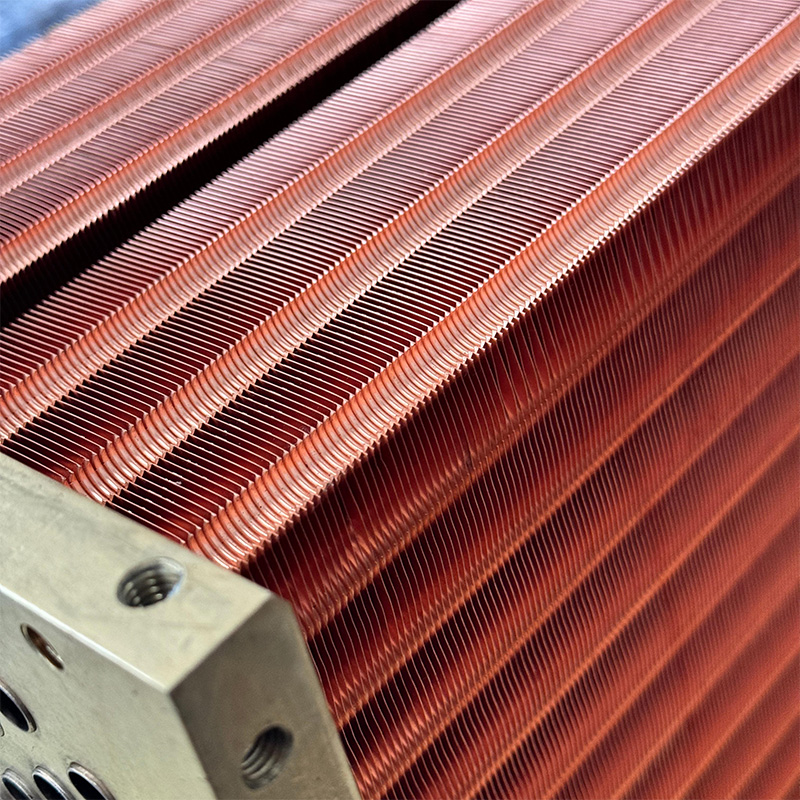
Choosing a reliable partner for the supply of infrastructure components is as important as choosing the grade of steel. In this context, it is worth noting the company’s experienceWuxi Kaisheng Electric Power and Petrochemical Equipment Co., Ltd., which specializes in the development and production of high-tech equipment for the energy and petrochemical industries. Хотя основной фокус компании лежит в области теплообменных аппаратов (титановые кожухотрубные теплообменники, воздушные охладители, котлы-утилизаторы), их производственная база обладает глубокими компетенциями в работе со сложными сплавами, критически важными и для трубных систем.
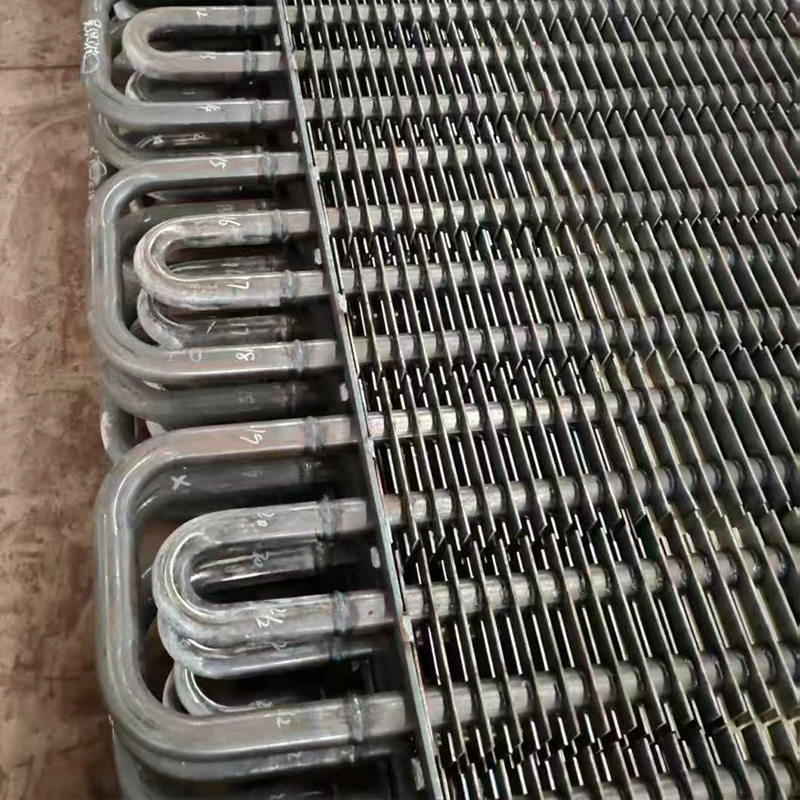
Опыт «Уси Кайшэн» в изготовлении гофрированных трубных пучков из нержавеющей стали 316, никелевых сплавов N06625 и медно-никелевых композиций напрямую коррелирует с требованиями к трубам большого диаметра для агрессивных сред. Продукция компании, сертифицированная по строгим международным стандартам ASME и PED, демонстрирует высочайшую коррозионную стойкость и способность работать под высоким давлением и температурой — те самые параметры, которые необходимы для магистральных трубопроводов 2026 года. Использование аналогичных материалов (нержавеющая сталь 321, латунь C46400, титановые сплавы) в теплообменном оборудовании подтверждает способность производителя контролировать качество металла на всех этапах: от плавки до финишной обработки.
Для заказчиков инфраструктурных проектов сотрудничество с такими производителями означает доступ к индивидуальным инженерным решениям и гарантию стабильности поставок. Глобальный опыт ком пании в оснащении объектов нефтепереработки, опреснения морской воды и судостроения позволяет применять лучшие практики контроля качества и к производству трубной продукции. Когда речь идет о системах, где отказ недопустим, наличие у поставщика опыта работы с экзотическими сплавами и подтверждения квалификации через сертификаты PED и ASME становится решающим фактором доверия.
Перспективы рынка и прогнозы до 2030 года
Рынок труб большого диаметра из нержавеющей стали находится в стадии активной трансформации. Глобальный дефицит качественного лома нержавейки и рост цен на легирующие элементы (никель, молибден) диктуют новые условия игры. Производители вынуждены оптимизировать составы сплавов, сохраняя при этом их эксплуатационные характеристики. Ожидается рост спроса на ферритные и дуплексные стали, которые содержат меньше никеля, но обладают высокой прочностью и коррозионной стойкостью. Это позволит снизить зависимость от волатильности цен на никелевом рынке LME.
Технологический прогресс в области аддитивного производства и лазерной сварки открывает возможности для создания труб сложной конфигурации и перехода на новые стандарты соединения. В проектах инфраструктуры 2026-2030 годов мы прогнозируем увеличение доли предварительно изолированных труб из нержавейки для теплосетей нового поколения, где потери тепла сведены к минимуму. Государственные программы импортозамещения стимулируют развитие отечественных производств полного цикла, включая выплавку стали и производство широкого сортамента труб. Однако выход на проектные мощности требует времени, поэтому в ближайшие 2-3 года импорт компонентов высокого качества останется актуальным.
Цифровизация цепочек поставок внедряет практику отслеживания происхождения металла с помощью блокчейн-технологий. Заказчик сможет в режиме реального времени видеть весь путь трубы от плавки до монтажа на объекте, получая доступ ко всем протоколам испытаний. Это повысит прозрачность рынка и исключит возможность подделки сертификатов. Для покупателей это означает возможность более точного планирования закупок и снижения рисков получения контрафактной продукции. Инвестиции в цифровые паспорта изделий станут конкурентным преимуществом для ведущих производителей.
Frequently Asked Questions
Какой максимальный диаметр труб из нержавеющей стали доступен для заказа?
Современные технологии позволяют производить электросварные трубы из нержавеющей стали диаметром до 2500 мм и более. Однако стандартный ряд, доступный на складах и в быстром производстве, обычно ограничивается диапазоном до 1420 мм. Для диаметров свыше 1000 мм чаще всего используется технология сварки под флюсом, обеспечивающая высокую производительность и качество шва. Бесшовные трубы большого диаметра (более 630 мм) встречаются крайне редко из-за технологических ограничений и высокой стоимости. Если ваш проект требует нестандартного диаметра, необходимо закладывать увеличенный срок изготовления (до 3-4 месяцев) и обсуждать индивидуальные технические условия (ТУ) с заводом-производителем.
Можно ли сваривать нержавеющие трубы большого диаметра с углеродистыми?
Да, такое соединение возможно, но оно требует применения специальных переходных вставок (биметаллических переходников) или наплавки кромок. Прямая сварка нержавейки с черной сталью обычными электродами недопустима, так как это приведет к образованию хрупких структур в шве и интенсивной электрохимической коррозии в месте контакта. Переходники изготавливаются методом взрывной сварки или наплавки и проходят строгий контроль качества. При монтаже переходник приваривается одной стороной к нержавеющей трубе, а другой — к углеродистой. Это решение широко применяется при реконструкции старых сетей, где часть трубопровода остается стальной, а новая вставка выполняется из нержавейки.
Как долго хранятся трубы из нержавейки на открытом воздухе?
Нержавеющая сталь обладает высокой атмосферостойкостью и может храниться на открытых площадках годами без существенной потери свойств, при условии соблюдения правил складирования. Главное требование — обеспечение стока воды и отсутствие застойных зон, где может скапливаться влага и грязь. Трубы должны лежать на деревянных или резиновых прокладках, исключающих контакт с грунтом. В промышленных районах с загрязненной атмосферой (высокое содержание серы или хлоридов) поверхность может покрыться легким налетом, который легко удаляется мойкой. В отличие от черной стали, нержавейка не требует консервационной смазки или покраски при хранении, что упрощает логистику и складскую обработку.
Какова минимальная партия отгрузки (MOQ) для труб большого диаметра?
Минимальная партия зависит от политики конкретного завода-производителя и наличия задела на складе. Для стандартных типоразмеров (например, 530х8 мм или 820х10 мм) многие поставщики готовы отгрузить от 1-2 труб (одна плеть). Однако для производства под заказ, особенно если требуется специфическая марка стали или нестандартная толщина, минимальная партия обычно составляет одну плавку металла, что эквивалентно 20-40 тоннам готовой продукции. Заказ меньшего объема возможен, но повлечет значительное удорожание единицы продукции из-за необходимости переналадки оборудования и закупки сырья малыми партиями. Рекомендуется консолидировать потребности проекта для формирования оптимальной партии отгрузки.
Conclusion and recommendations for action
Реализация инфраструктурных проектов 2026 года с использованием труб большого диаметра из нержавейки — это стратегическое решение, направленное на обеспечение надежности и экономической эффективности в долгосрочной перспективе. Правильный выбор марки стали, соблюдение технологий монтажа и жесткий входной контроль качества позволят создать систему, которая прослужит полвека без серьезных вмешательств. Не позволяйте сиюминутной экономии поставить под угрозу безопасность и бюджет вашего проекта в будущем. Инвестиции в качественные материалы окупаются отсутствием аварий и минимальными затратами на обслуживание.
Если вы планируете закупку труб для масштабного строительства или модернизации производства, не рискуйте, полагаясь на усредненные данные из интернета. Каждый проект уникален и требует индивидуального инженерного подхода. Наши специалисты готовы провести аудит вашей технической документации, предложить оптимальные аналоги импортных марок и организовать поставку сертифицированной продукции точно в срок. Мы понимаем специфику работы с крупными диаметрами и гарантируем сопровождение сделки от заявки до разгрузки на объекте.
Contact us today, чтобы получить детальный коммерческий расчет и консультацию ведущего инженера по вашему проекту. Обсудим ваши задачи и найдем лучшее решение длятруб большого диаметра из нержавейки, которое обеспечит бесперебойную работу вашей инфраструктуры на десятилетия вперед.