
Seamless pipe 321: application in oil and gas industry
2026-07-13
- Why 321 Seamless Pipe Has Become the Standard for Harsh Environments in the Oil and Gas Industry
- Technical characteristics and influence of alloy composition on reliability
- Critical application scenarios in oil refining and production
- Specifics of welding and installation: where fatal mistakes are made
- Quality standards and compliance control with GOST and ASTM
- Economic justification for choice and service life
- How to choose a reliable supplier and avoid counterfeit goods
- Frequently Asked Questions
- Conclusion and next steps
Why 321 Seamless Pipe Has Become the Standard for Harsh Environments in the Oil and Gas Industry
Seamless pipe 321: application in the oil and gas industry today is determined not simply by the availability of metal, but by stringent requirements for safety and durability in conditions of extreme temperatures and chemical aggression. In our work with major processing plants, we see a clear trend: the transition from classic 304 steel to titanium-stabilized 321 alloy occurs where process temperatures exceed 450°C or where sulfur compounds are present. This is not a matter of prestige, but a direct need to avoid intergranular corrosion, which can lead to depressurization of the pipeline within a few months of operation.
We encountered a situation where a customer tried to save money by purchasing a batch of pipes without proper control of titanium content. The result was the formation of cracks in the weld zone after just six months of operation of the hydrocracking unit. This incident taught us one simple rule: in oil and gas, the cost of an error is always higher than the cost of quality material. Pipes of grade 321 (analogous to 08Х18Н10Т according to GOST) solve this problem by introducing titanium, which binds carbon and prevents the precipitation of chromium carbides along the grain boundaries. If you are planning to modernize cracking plants or build new lines for high-temperature hydrocarbon transport, choosing this particular grade of steel is the first step to ensuring trouble-free operation.
Technical characteristics and influence of alloy composition on reliability
The chemical composition of AISI 321 steel is the foundation of its performance properties. The key difference from other austenitic steels is the presence of titanium in an amount of at least five times the carbon content, but not more than 0.70%. This formula acts as a chemical shield: titanium has a greater affinity for carbon than chromium. When heated in the sensitive range (425 to 850°C), which inevitably occurs when welding or operating furnaces, carbon tends to combine with chromium, depleting the border zones and making them vulnerable to corrosion. Titanium intercepts the carbon first, forming stable titanium carbides, leaving the chromium in solid solution to protect the metal matrix.
The mechanical properties of seamless pipes 321 allow them to withstand enormous loads. The yield strength is a minimum of 205 MPa, and the tensile strength is 515 MPa. However, for the design engineer, what is more important is not these static numbers, but the behavior of the material under cyclic loads. We recommend paying special attention to the relative elongation parameter, which for a high-quality pipe 321 should be at least 40%. This ensures that during thermal shock or water hammer, the pipe deforms plastically rather than breaking brittlely. In one of the projects in the North of Russia, we replaced imported analogues with locally produced pipes precisely because their actual elongation was 45%, which provided the necessary safety margin at temperatures down to -60°C.
Heat resistance is another critical parameter. Seamless pipe 321 maintains its mechanical characteristics during long-term operation up to 800°C and short-term operation up to 900°C. This makes it indispensable for turbine exhaust manifolds, flare systems and pyrolysis furnaces. It is important to understand the difference between heat resistance and heat resistance: 321 has both properties, but the limits vary depending on the environment. It performs excellently in oxidizing atmospheres, but in reducing environments with high sulfur content, additional wall thickness calculations are required to account for corrosion rates. If your project involves temperatures above 600°C, be sure to request a certificate from the supplier with material creep data for specific temperature ranges.
Critical application scenarios in oil refining and production
The use of seamless pipe 321 is most in demand in processes where high temperatures and aggressive chemistry are combined. Let's consider a specific case of a diesel fuel hydrotreating unit. Here the pipelines are exposed to hydrogen under pressure up to 10 MPa at temperatures of about 400-450°C. Under such conditions, ordinary carbon steel undergoes hydrogen corrosion and decarburization, losing strength. 304 stainless steel may begin to corrode in weld areas due to sensitization. Pipe 321 becomes the only rational choice, ensuring the tightness of the circuit for 10-15 years without the need for frequent stops to replace sections.
Another important sector is the production of ethylene and propylene. Pyrolysis ovens operate in extreme mode: the coils heat up to 850-900°C in seconds, and then quickly cool down when feeding raw materials. Such thermal cycles create enormous thermal stresses. We analyzed failure statistics at one petrochemical plant and found that the use of 321 pipes reduced the number of furnace emergency stops by 30% compared to the use of niobium-stabilized analogues (347), which under these specific conditions showed a tendency to form delta ferrite and subsequent cracking. Titanium stabilization in 321 turned out to be more resistant to these cyclic loads.
In oil production, especially when developing fields with high contents of hydrogen sulfide (H2S) and carbon dioxide (CO2), the problem of corrosion is particularly acute. While duplex steels or nickel-based alloys are often used for ultra-aggressive environments, 321 pipe fills a niche in oil recovery and treatment systems where temperatures are moderate but acid condensation is present. We recommend using 321 for piping separators and heat exchangers operating in the temperature range 200-500°C. Here it demonstrates excellent resistance to general corrosion and pitting. However, it is important to remember that if the chloride concentration exceeds 200 ppm at temperatures above 60°C, the risk of pitting corrosion increases and higher alloy grades should be considered. Always conduct a laboratory analysis of the operating environment before finalizing the specification.
Specifics of welding and installation: where fatal mistakes are made
Even the highest quality metal can be hopelessly damaged by improper welding. For seamless pipe 321, welding technology has its own nuances, ignoring which leads to loss of anti-corrosion properties. The main mistake that we regularly see on construction sites is neglecting to protect the joint root with inert gas. Welding austenitic steels requires ideal oxygen protection not only from the face of the weld, but also from the reverse side. If the inner surface of the pipe oxidizes (discoloration or scale appears), this is where pitting corrosion will begin under the layer of transported product. In our practice, there was a case when a new pipeline leaked after 3 months precisely because the welders saved argon when purging the internal cavity.
The second critical point is the choice of filler material. You cannot use 308 or 304 electrodes or wire to weld 321 pipe. You must use filler material suffixed as “321” or, in some cases, niobium-stabilized “347” if permitted by the worksheet. Using an unstabilized filler metal will cause the weld itself to become a risk area, even if the base metal of the pipe is perfect. In addition, the interpass temperature must be strictly controlled. It should not exceed 150°C. Overheating of the welding zone leads to grain growth and a decrease in toughness. We recommend using thermal chalks or pyrometers to control the temperature before applying each subsequent roller.
Post-weld heat treatment is generally not required for 321 steel because titanium prevents sensitization in the heat-affected zone. This is a huge advantage over 304 steel, which often needs to be hardened after welding large assemblies. However, if the pipe has undergone significant work hardening or deformation during installation, stabilizing annealing at a temperature of 850-900°C followed by air cooling may be required. Ignoring this step during severe cold deformation may result in stress corrosion cracking. Before starting work, be sure to agree on the welding map with a technologist certified to work with austenitic steels, and make sure that the personnel have been certified specifically for grade 321.
| Comparison parameter | Seamless pipe AISI 304 | Seamless pipe AISI 321 | Seamless pipe AISI 316 |
|---|---|---|---|
| Stabilizing element | Missing | Titanium (Ti) | None (Molybdenum Mo) |
| Resistance to intergranular corrosion after welding | Low (hardening required) | High (automatic protection) | Average (better than 304, but worse than 321 at high T) |
| Maximum operating temperature | up to 450°C | up to 800-900°C | up to 550°C |
| Resistance to chlorides (pitting) | Low | Low/Medium | High (thanks to Molybdenum) |
| Recommended application in oil and gas | Cold lines, water, non-aggressive media | Furnaces, torches, high temperature processes | Sea water, media with chlorides, chemistry |
| Cost (relative) | Basic (100%) | +15-20% | +25-30% |
Quality standards and compliance control with GOST and ASTM
When purchasing 321 seamless pipes for critical oil and gas industry facilities, it is not enough to simply indicate the steel grade in the specification. Reference must be made to specific standards governing test and acceptance methods. In international practice, the main document isASTM A312/A312M, which covers the requirements for seamless, welded and highly cold-worked austenitic stainless steel pipes. For Russian projects, the key standard remainsGOST 9940-81(Seamless hot-deformed pipes) or GOST 9941-81 (cold-deformed). The difference between them lies not only in the measurement system, but also in the permissible deviations in geometry and non-destructive testing methods.
Particular attention should be paid to hydraulic testing requirements. The standards require each pipe to be tested to a pressure that creates a stress in the wall equal to a certain percentage of the yield strength (usually 50-60%). However, for small diameter pipes or thin-walled pipes, it is possible to replace the hydraulic test with eddy current or ultrasonic testing. In our practice, we insist on carrying out ultrasonic testing (UT) of 100% of the pipe length, regardless of the minimum standard requirements. Defects such as delaminations or internal cavities that can be missed by hydraulics become sources of destruction under the influence of cyclic loads. Make sure that the quality certificate (Mill Test Certificate) contains a mark indicating that ultrasonic testing was carried out according to ASTM E213 or GOST 32346.
Certification also includes checking the chemical composition using spectral analysis. Tolerances for titanium content are very narrow. If titanium is less than the norm, there is no protection against corrosion. If it is more, the formation of large inclusions of titanium carbonitrides is possible, which impair machinability and can serve as stress concentrators. We require suppliers to provide an EN 10204 Type 3.1 certificate, which confirms that the tests were carried out by an independent laboratory of the manufacturer and the results correspond to the order. Acceptance of a batch without such a document at an oil and gas complex facility should be prohibited by the technical supervision service.
Economic justification for choice and service life
Buyers often ask the question: why does 321 pipe cost more than 304, and is it worth paying more? The answer lies in total cost of ownership (TCO). Initial savings of 15-20% on material can result in multiple losses due to unscheduled repairs. Replacing a section of a pipeline in an existing production facility involves more than just the cost of a new pipe and the work of welders. This means stopping the production line, loss of products, risks to the environment and personnel safety. We carried out calculations for a catalytic cracking unit: the use of pipes 321 instead of 304 increased capital costs by 5%, but extended the turnaround time from 2 to 6 years. Savings on downtime amounted to millions of rubles.
In addition, it is worth considering the factor of liquidity and versatility. 321 pipes are a more universal solution. If your process changes in the future and temperatures rise, you won't have to replace the entire pipeline. The heat resistance reserve built into this brand provides flexibility for modernizing production without replacing infrastructure. In conditions of unstable markets and constant changes in technological regulations, such insurance turns out to be a very profitable investment. We recommend installing 321 pipes in projects with a service life of more than 10 years, where reliability is of paramount importance.
Another aspect is reusability. 321 stainless steel retains its value as scrap. When dismantling installations, such pipes can be used in less critical areas or sold as high-quality secondary raw materials. Carbon pipes with anti-corrosion coating are not of such value, since the coating is destroyed during dismantling, and the metal is often thinned by corrosion. Thus, an investment in high-quality stainless steel products returns part of the funds at the end of the object’s life cycle.
How to choose a reliable supplier and avoid counterfeit goods
The rolled metal market is saturated with offers, but not all pipes with the “321” stamp actually correspond to the declared characteristics. The main problem is brand substitution. Unscrupulous suppliers may ship 304 steel under the guise of 321, saving on expensive titanium. It is impossible to visually distinguish these brands. The only method of protection is entrance control. We strongly recommend that you conduct a rapid analysis of the chemical composition of each batch upon receipt using portable spectrometers. The absence of titanium in the spectrum is an instant defect and grounds for returning the entire batch.
When choosing a supplier, pay attention to his specialization. Universal trading houses that sell everything from fittings to sheets often do not have deep expertise in stainless steels. It is better to work with companies that specialize in corrosion-resistant rolled products and have direct contracts with metallurgical plants. Check whether the supplier has its own warehouses with the correct storage conditions. Stainless steel should be stored indoors, separate from carbon steel. Contact with ordinary steel or outdoor storage can lead to surface contamination with iron and rust, which is then difficult to remove.
Request a reference list. A supplier operating in the oil and gas segment must have experience in shipments to large plants (Gazprom, Rosneft, SIBUR, etc.). The presence of such contracts indicates that the products have passed the strict qualifications and quality control of these giants. Do not hesitate to request reports of complaints, if there were any, and how they were resolved. Transparency in marriage matters is a sign of a reliable partner. If you are told that “only other people get married,” run away from such a supplier. Honesty in recognizing possible risks is more important than empty assurances of perfection.
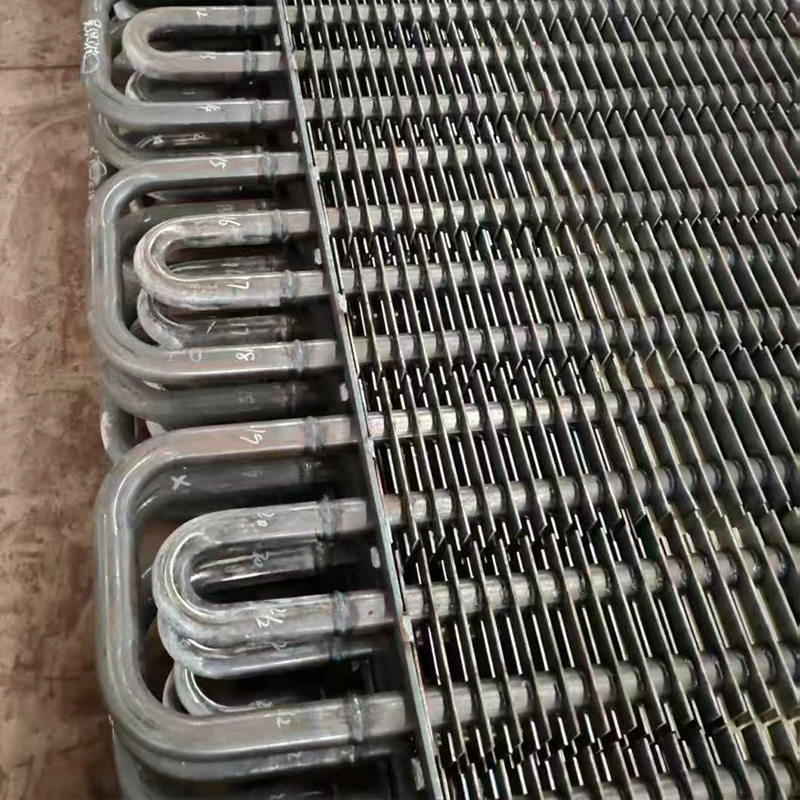
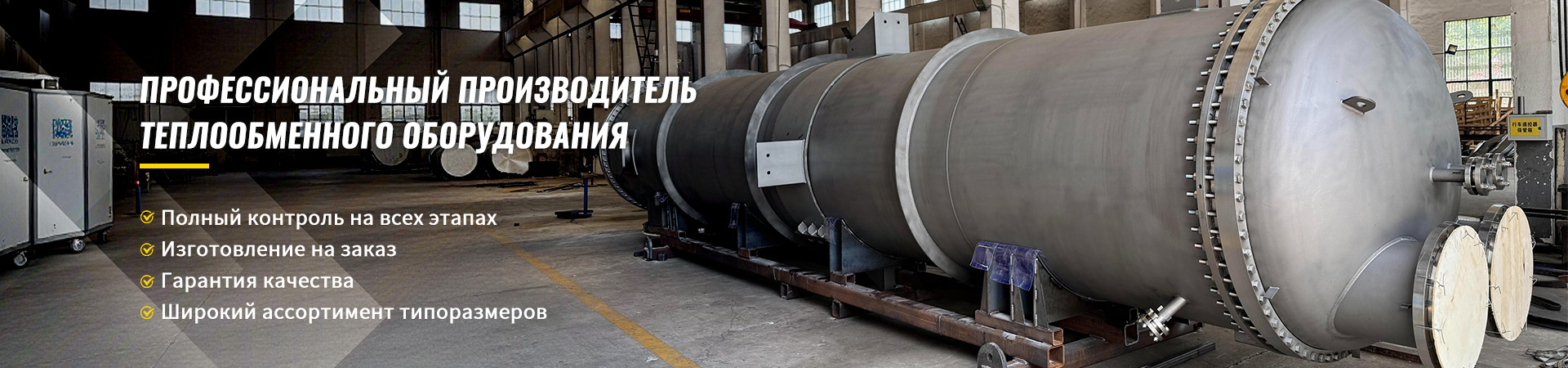
In this context, a special role is played by manufacturers who are deeply integrated into the industry and understand the specifics of how materials work in real equipment components. A striking example of this approach is the companyWuxi Kaisheng Electric Power and Petrochemical Equipment Co., Ltd.. Specializing in the development and production of heat exchange and oil and gas equipment, they do not just supply rolled metal, but create ready-made solutions where the quality of the source material is critically important. Their product line widely uses tube sheets and bundles made of 321 stainless steel, which confirms the high assessment of the performance properties of this brand under conditions of high temperatures and pressures. Certified to stringent international ASME and PED standards, the company's products include not only 321 steel components, but also titanium, nickel alloys (N06625) and marine brass, providing comprehensive supply for the most challenging projects in the petroleum refining, chemical and energy industries. Choosing such a partner ensures that you are not just getting a pipe with a tag, but a component that has been inspected as part of finished high-pressure equipment designed to last for decades.
Frequently Asked Questions
Can 321 pipe be used in high chloride environments?
The use of pipe 321 in environments with high chloride content (sea water, salt solutions) is limited. Хотя титан защищает от межкристаллитной коррозии, базовый состав стали (18% хрома, 10% никеля) не содержит молибдена, который необходим для сопротивления питтинговой коррозии в хлоридсодержащих средах. Если температура среды превышает 50-60°C, а концентрация хлоридов велика, риск возникновения питтингов (точечной коррозии) очень высок. В таких случаях мы рекомендуем перейти на марку 316L или дуплексные стали. Труба 321 подходит для хлоридов только при низких температурах и малых концентрациях, либо в качестве конструкционного элемента, не контактирующего напрямую с агрессивным потоком.
Нужно ли проводить термообработку трубы 321 после сварки?
В большинстве случаев проведение полной закалки (solution annealing) после сварки трубы 321 не требуется. Главное преимущество этой марки как раз и заключается в способности сохранять коррозионную стойкость в зоне сварного шва без дополнительной термической обработки благодаря стабилизации титаном. Однако, если труба подвергалась сильной холодной деформации перед сваркой или если условия эксплуатации предполагают работу в особо агрессивных средах под напряжением, может быть рекомендован стабилизирующий отжиг при температуре 850-930°C. Решение должно приниматься на основании технологической карты сварки (WPS), разработанной для конкре тного проекта. Для стандартных монтажных работ достаточно соблюдения правильного режима сварки.
Какова максимальная температура эксплуатации бесшовной трубы 321?
Максимальная температура непрерывной эксплуатации для трубы 321 составляет около 800-850°C. При кратковременных воздействиях (например, пусковые режимы печей) она может выдерживать нагрев до 900°C без существенной потери механических свойств и окалиностойкости. Превышение этого порога ведет к интенсивному росту зерна и снижению прочности, а также к ускоренному образованию окалины. Важно различать рабочую температуру и температуру начала интенсивного окалинообразования. Для проектов, где температуры стабильно превышают 900°C, целесообразно рассмотреть сплавы с более высоким содержанием никеля или специальные жаропрочные стали, так как ресурс трубы 321 в таких условиях будет резко сокращен.
Conclusion and next steps
Бесшовная труба 321 остается золотым стандартом для высокотемпературных узлов нефтегазового оборудования. Её способность противостоять межкристаллитной коррозии и сохранять прочность при нагреве делает её незаменимой для печей, факелов и реакторов. Однако, как показывает наш опыт, успех проекта зависит не только от выбора марки стали, но и от качества исполнения, контроля входящего материала и соблюдения технологии монтажа. Ошибки на этапе закупки или сварки могут нивелировать все преимущества дорогого сплава.
Если вы готовите спецификацию для нового проекта или столкнулись с проблемой частых отказов трубопроводов на действующем производстве, не полагайтесь на общие каталожные данные. Каждый случай уникален и требует анализа конкретных условий эксплуатации. Мы готовы провести аудит вашей текущей ситуации, предложить оптимальное техническое решение и обеспечить поставку сертифицированных труб 321, прошедших полный цикл входного контроля. Надежность вашего производства начинается с правильной трубы.
Contact us today, чтобы получить консультацию инженера-металловеда и коммерческое предложение с актуальными сроками поставки. Мы поможем подобрать трубы, которые прослужат десятилетия, а не месяцы.Бесшовная труба 321 от надежного поставщика— это гарантия безопасности вашего бизнеса.