
304/304L Dye Line: Corrosion Resistant
2026-07-08
- Why 304/304L Stainless Steel is the Standard for Dye Piping
- Metallurgical composition and corrosion protection mechanism
- Resistance to specific aggressive environments of dyeing production
- The influence of temperature and pressure on the choice of pipe wall thickness
- Welding, seam treatment and prevention of intergranular corrosion
- Сравнительный анализ: 304 против 304L — когда экономия недопустима
- Practical recommendations for installation and operation
- Комплексные решения от ООО «Уси Кайшэн»: надежность в каждом компоненте
- Frequently Asked Questions
- Conclusion and next steps
Why 304/304L Stainless Steel is the Standard for Dye Piping
In our practice of working with chemical production, we have repeatedly encountered a situation where the choice of pipeline material determined the fate of the entire project.304/304L Dye Line: Corrosion Resistantis not just a marketing headline, but a critical parameter that affects the safety of personnel, the purity of the final product and the life of the entire transportation system. The dyeing industry places unique demands on equipment: aggressive environments, frequent cleaning cycles with acids and alkalis, high temperatures and the need for absolute hygiene. AISI 304 and 304L steel grades have become the de facto global standard in this industry due to the optimal balance between cost and performance.
We have seen cases where an attempt to save 15% on the cost of a pipe by choosing a material with low chromium or nickel content resulted in through corrosion after 18 months of use. The consequences were catastrophic: toxic dyes leaked into the ground, production was stopped for three weeks to replace communications, and fines from environmental services exceeded the cost of the saved materials ten times. That is why in this article we will analyze in detail the metallurgical features of these alloys, the real indicators of their resistance in various environments and give specific recommendations for choosing between standard 304 and low-carbon 304L.
Our team of engineers has analyzed hundreds of defect reports and successful implementations over the past five years. We have found that understanding the differences between these two grades of steel is often overlooked by purchasers who consider them interchangeable. This is a dangerous misconception. In welded joints and high-temperature paint processes, the low carbon content of 304L grade becomes a decisive factor in preventing intergranular corrosion. Below, we'll take a closer look at the technical nuances that will help you make informed decisions when designing or upgrading your production lines.
Metallurgical composition and corrosion protection mechanism
To understand whyтрубопровод для красителей 304/304Ldemonstrates outstanding corrosion resistance, it is necessary to look inside the crystal lattice of the material. Both alloys belong to the class of austenitic stainless steels. Their main protection is based on a passive oxide layer that spontaneously forms on the surface upon contact with oxygen. This layer, just a few nanometers thick, provides an impenetrable barrier to aggressive agents. The key alloying elements here are chromium (Cr) and nickel (Ni). According to ASTM A240, chromium should be between 18% and 20%, and nickel should be between 8% and 10.5%. It is chromium that is responsible for the formation of a protective film of chromium oxide (Cr2O3), which is instantly restored during mechanical damage if there is a sufficient amount of oxygen in the environment.
The difference between the 304 and 304L grades is purely carbon (C) content. In standard AISI 304 steel, the maximum carbon content is allowed up to 0.08%. In the 304L modification (where the letter “L” stands for Low carbon) this figure is strictly limited to 0.03%. At first glance, a difference of five hundredths of a percent seems insignificant, but in metallurgy it is of fundamental importance. Carbon is highly reactive towards chromium. At temperatures above 450°C, which is typical for welding or hot pipe forming processes, carbon begins to migrate to the grain boundaries of the crystal lattice and bind chromium, forming chromium carbides.
This process, known as sensitization, causes areas along grain boundaries to become chromium-depleted. When the chromium content in these narrow zones falls below a critical level (approximately 12%), they lose the ability to form a protective oxide film. As a result, intergranular corrosion occurs - the destruction of the metal occurs not along the surface, but inside, along the grain boundaries, which can be visually invisible until the sudden destruction of the structure under load. In the context of dye production, where pipelines are constantly exposed to thermal cycling and acidic environments, the risk of sensitization is one of the main threats to system longevity.
Using 304L steel completely eliminates this risk. Due to its ultra-low carbon content, there are simply not enough “partners” for the formation of large quantities of chromium carbides, even in the heat-affected zone of the weld. This makes it possible to maintain high corrosion resistance of the entire structure, including welded joints, without the need for subsequent heat treatment (annealing), which is often impossible for long-distance pipelines installed on site. In our projects, we always recommend 304L for any welded structures operating in aggressive environments, although its cost may be slightly higher due to the more complex smelting process.
It is important to note that the passive layer of stainless steel is not resistant to all substances. It has excellent resistance to oxidizing environments (nitric acid, hydrogen peroxide), but may be vulnerable in reducing environments or in the presence of halides. This is especially true for the dyeing industry, since many technological processes involve the use of chlorides to fix dyes or heavy metal salts. Understanding the chemical composition of your work environment is the first step to choosing the right material. If you plan to transport solutions with high chloride content, 304/304L grade alone may not be sufficient and more alloyed alloys such as 316L will need to be considered, but for most organic dyes and intermediates 304L remains the gold standard.
Resistance to specific aggressive environments of dyeing production
The production of dyes is a complex cocktail of organic chemistry, mineral acids, alkalis and high temperatures. The piping system must withstand this onslaught 24 hours a day, 7 days a week. Let's break down the behavior of 304/304L steel in the main types of environments found in the industry, based on corrosion test data and our field experience.
Organic dyes and intermediates:Most synthetic dyes (azo dyes, anthraquinone dyes, triphenylmethane dyes) are organic compounds that in themselves are not highly aggressive to stainless steel. However, the process of their synthesis is often accompanied by the presence of by-products, residual reagents and solvents. Alcohols, ketones, esters used as solvents are absolutely inert towards AISI 304/304L at any concentration and temperature up to the boiling point. Problems can arise if the process uses strong oxidizing agents to synthesize certain pigments. In such cases, the corrosion rate may increase, but usually remains within acceptable limits (less than 0.1 mm/year), which ensures a pipeline service life of more than 20 years.
Acidic environments:Here the situation requires detailed analysis. The dyeing industry widely uses sulfuric (H2SO4), hydrochloric (HCl) and nitric (HNO3) acids.
—Nitric acid:This is the “native” environment for 304 stainless steel. It is a strong oxidizing agent that helps strengthen the passive layer. Pipelines made of 304/304L successfully work with nitric acid concentrations up to 65% at temperatures up to 60-70°C. Above these parameters, active dissolution of the metal begins.
—Sulfuric acid:The behavior of steel here depends on concentration and temperature. In dilute solutions (up to 10-15%) at room temperature, 304L shows good resistance. However, as the temperature or concentration increases, the corrosion rate increases dramatically. For hot concentrated solutions of sulfuric acid, grade 304 is not recommended.
—Hydrochloric acid:This is the most dangerous enemy for 304/304L steel. Chloride ions are capable of locally destroying the passive layer, causing pitting (pitting) corrosion. Even trace amounts of hydrochloric acid at elevated temperatures can lead to rapid pipe failure. If your process involves contact with HCl, we strongly recommend switching to AISI 316L steel with added molybdenum or using lined piping.
Alkaline solutions:Sodium hydroxide (NaOH) and potassium hydroxide (KOH) are widely used for neutralization and hydrolysis. 304/304L stainless steel has excellent alkali resistance over virtually the entire concentration and temperature range, up to the boiling point of solutions. The only limitation is the potential for alkali stress cracking to occur at very high concentrations (>40%) and temperatures above 100°C, but this is uncommon in typical paint shop piping systems.
Chloride and pitting problem:As already mentioned, chlorides are a weak point of 300 series austenitic steels. In the dyeing industry, chlorides can be supplied with raw materials, water for preparing solutions, or formed during reactions. The critical parameter here is temperature. At room temperature, 304L can withstand chloride levels up to 200-300 ppm (parts per million). But when heated to 60-80°C, this threshold drops to 50-100 ppm. Exceeding these values leads to the formation of micropitting, which over time turns into through holes. In our practice, there was a case at a textile mill where the use of tap water with a high chloride content to cool the reactor jacket led to external corrosion of pipeline 304 within two years. Solving the problem required the installation of a reverse osmosis system for the preparation of process water.
When designing a system, always request a complete chemical analysis of the process fluid, including all contaminants. Don't focus only on the main component. Often it is impurities such as fluorides or free chlorine that cause premature pipeline failure. If there are doubts about the cleanliness of the environment or the possibility of fluctuations in parameters, choose a material with a margin of safety.
The influence of temperature and pressure on the choice of pipe wall thickness
Corrosion resistance is a dynamic concept. It directly depends on the operating temperature. Van't Hoff's rule states that the rate of a chemical reaction (including corrosion) doubles for every 10°C increase in temperature. This means that a pipe that will last 20 years at 20°C can rust in 5 years at 80°C in the same environment. For dye pipelines, where cooking processes at temperatures of 90-120°C (especially under pressure) are often required, this factor cannot be ignored.
When working with hot media, the mechanical strength of steel also decreases. Although austenitic steels retain good performance at high temperatures, wall thickness calculations must be based not only on operating pressure, but also on corrosion wear. Standard practice is to add a “corrosion allowance” to the calculated wall thickness. For 304/304L steel in moderately aggressive dyeing environments, we recommend an allowance of at least 1.5–2.0 mm above the design pressure value. This ensures that even with some intensification of corrosion in hottest spots (the hottest spots), the pipe will maintain tightness throughout its entire planned service life.
System pressure also plays a role, indirectly affecting corrosion. High pressure can facilitate the penetration of aggressive agents into microcracks and surface defects, accelerating the development of corrosion processes. In addition, vibration, which often accompanies the operation of high-pressure pumps, can cause corrosion-mechanical wear (erosive corrosion), especially at pipeline bends and bends. In such areas, the flow velocity should not exceed 2-3 m/s for liquids with abrasive particles (pigment pastes). Exceeding this speed will lead to rapid abrasion of the protective oxide layer and local destruction of the metal.
Thermal cycles (heating and cooling) create additional stress in the material. If the pipeline is rigidly fixed and does not have expansion joints, these stresses are added to the internal pressure. Combined with a harsh environment, this increases the risk of stress corrosion cracking (SCC). Although 304/304L steel is less susceptible to SCC than some other alloys, in the presence of chlorides and at temperatures above 60°C the risk becomes real. Proper design of supports and expansion joints is as important a measure of corrosion protection as the choice of steel grade.
We recommend regular ultrasonic wall thickness (UT) testing of critical sections of the pipeline, especially after the first two years of operation. This will allow you to plot the corrosion rate and accurately predict the remaining life of the system, avoiding emergency situations. Monitoring data often show that the actual corrosion rate differs from the tabulated values to a greater extent due to the instability of the process regime.
Welding, seam treatment and prevention of intergranular corrosion
Even the best 304L steel pipe can become a weak link in the system if welding is not done correctly. The weld zone is where the metal is exposed to maximum thermal stress, passing through the critical sensitization temperature range. The quality of the welded joint determines the overall reliability of the dye pipeline.
For 304L steel, the main advantage is the ability to weld without subsequent tempering. However, this does not mean that technology can be ignored. We insist on using TIG/WIG welding for the root weld and all product contact joints. This method provides minimal heat input and high weld cleanliness, which is critical to prevent contamination of the product by slag particles or oxides. The use of coated electrodes (MMA) is only acceptable for secondary structures and not for product lines.
An extremely important step is post-welding treatment. After welding, scale and a chromium-depleted layer are formed on the surface of the weld and the adjacent area. If this scale is not removed, intense corrosion will begin underneath it, which will quickly spread deep into the metal. Mechanical cleaning with brushes (especially steel brushes, which can leave iron particles and cause rust) is not sufficient. Chemical treatment is required - etching and passivation. Pickling removes scale and the reduced metal layer, and passivation enriches the surface with chromium, restoring its protective properties. There are special etching pastes for stainless steel containing a mixture of nitric and hydrofluoric acids. Working with them requires strict adherence to safety precautions.
In our practice, we have encountered cases where customers ignored the passivation stage, considering it a waste of time. The result was the appearance of rusty streaks along the welds after just a month of operation. This is not only an aesthetic defect, but also a signal about the beginning of the destruction of the material. In the food and dyeing industries, where product purity is important, such roughness also becomes a breeding ground for bacteria and dye residues, leading to cross-contamination of batches.
Another aspect is the choice of filler material. When welding 304L steel, ER308L or ER309L grade filler wire should be used. The use of additives with a higher content of alloying elements (for example, 309) is sometimes advisable to compensate for chromium burnout and provide greater weld ductility, but for most applications 308L is sufficient. Важно следить, чтобы присадочный материал также имел низкое содержание углерода (L-класс), чтобы не вносить углерод в зону шва искусственным путем.
Контроль качества сварных швов должен включать визуальный осмотр, капиллярный контроль (PT) для выявления поверхностных трещин и, при ответственных применениях, рентгенографический контроль (RT). Шов должен быть гладким, без подрезов, пор и непроваров. Внутренняя поверхность шва в идеале должна быть промыта аргоном во время сварки (поддув), чтобы избежать образования окислов внутри трубы, которые будут смываться потоком красителя и портить его цвет.
Сравнительный анализ: 304 против 304L — когда экономия недопустима
Многие закупщики задаются вопросом: стоит ли переплачивать за 304L, если 304 дешевле? Ответ зависит от конструкции вашего трубопровода. Давайте структурируем выбор, чтобы вы могли принять взвешенное решение.
| Comparison criterion | AISI 304 (Standard) | AISI 304L (Low carbon) |
|---|---|---|
| Carbon content | Max. 0.08% | Max. 0.03% |
| Стойкость к межкристаллитной коррозии после сварки | Low. Требует обязательного отжига (термообработки) всей конструкции после сварки для восстановления свойств. | High. Сварные швы устойчивы к коррозии без дополнительной термообработки. |
| Применимость для сложных сварных конструкций | Не рекомендуется для трубопроводов, которые невозможно подвергнуть отжигу после монтажа (большинство промышленных систем). | Идеально подходит для любых сварных трубопроводов, резервуаров и емкостей. |
| Mechanical strength | Немного выше предел текучести за счет содержания углерода. | Чуть ниже предел текучести, но для трубопроводов низкого и среднего давления разница несущественна. |
| Cost | Ниже (базовый вариант). | Выше на 5-10% из-за сложности производства. |
| Рекомендация для красильной промышленности | Только для бесшовных фитингов, фланцев или конструкций без сварки, либо для неагресс ивных сред при низких температурах. | Настоятельно рекомендуетсядля всех основных технологических линий, где есть сварные стыки и контакт с горячими средами. |
Как видно из таблицы, экономия на материале при выборе обычной 304 для сварного трубопровода является ложной. Стоимость последующего ремонта, простоя производства и возможной утилизации бракованной партии красителей многократно перекроет первоначальную выгоду. Отжиг готового трубопровода длиной в сотни метров технически невозможен или экономически нецелесообразен. Поэтому в 95% случаев для красильных производств мы выбираем 304L.
Единственный сценарий, где оправдано использование 304 — это изготовление отдельных деталей методом литья или ковки, где структура металла формируется иначе, или использование механических соединений (фланцы, резьба) без сварки, где зона термического влияния отсутствует. Но даже в этом случае, учитывая близость цен и универсальность 304L, многие предприятия переходят на единую спецификацию 304L для упрощения логистики и складского учета.
Practical recommendations for installation and operation
Выбор правильного материала — это только половина успеха. Долговечность трубопровода для красителей зависит от того, как он установлен и эксплуатируется. Вот несколько советов из нашего опыта, которые помогут продлить жизнь вашей системе.
Во-первых, избегайте контакта нержавеющей стали с углеродистой сталью. При хранении и монтаже трубы 304/304L не должны лежать на обычных стальных стеллажах или крепиться черными металлическими хомутами без изолирующих прокладок. Частицы обычной стали, внедрившиеся в поверхность нержавейки, станут очагами ржавчины, которая затем может перерасти в питтинг. Используйте деревянные или пластиковые подкладки, а крепеж применяйте только из нержавеющей стали.
Во-вторых, обеспечьте полный дренаж системы. Застойные зоны — это рассадник коррозии и бактериального загрязнения. Конструкция трубопровода должна исключать “карманы”, где жидкость может оставаться после слива. Все участки должны иметь уклон в сторону сливных точек. В красильном производстве остатки краски в застойных зонах могут полимеризоваться, создавая твердые отложения, под которыми развивается подпленочная коррозия.
В-третьих, регулярно проводите мойку и пассивацию. Даже если система работает идеально, со временем пассивный слой может истончаться. Плановая профилактическая пассивация специальными составами (обычно на основе лимонной или азотной кислоты) раз в 1-2 года помогает восстановить защитные свойства поверхности. Это особенно важно после ремонтных работ, когда целостность покрытия могла быть нарушена.
Обратите внимание на изоляцию. Если трубопровод проходит через помещения с разной температурой или на улице, необходима качественная теплоизоляция. Однако важно помнить, что под изоляцией может скапливаться влага. Для предотвращения коррозии под изоляцией (CUI) используйте гидрофобные изоляционные материалы и предусматривайте пароизоляционные слои. Попадание дождевой воды или конденсата под изоляцию трубы из 304L может привести к скрытой коррозии, которую трудно обнаружить вовремя.
Комплексные решения от ООО «Уси Кайшэн»: надежность в каждом компоненте
Понимание теории коррозии и правил монтажа критически важно, но не менее значим выбор надежного поставщика оборудования, способного гарантировать качество материалов и соответствие международным стандартам. В этом контексте особого внимания заслуживает компанияWuxi Kaisheng Electric Power and Petrochemical Equipment Co., Ltd.. Специализируясь на разработке и производстве высокотехнологичного оборудования для нефтепереработки, нефтехимии и химической промышленности, компания предлагает решения, которые идеально дополняют системы трубопроводов из нержавеющей стали.
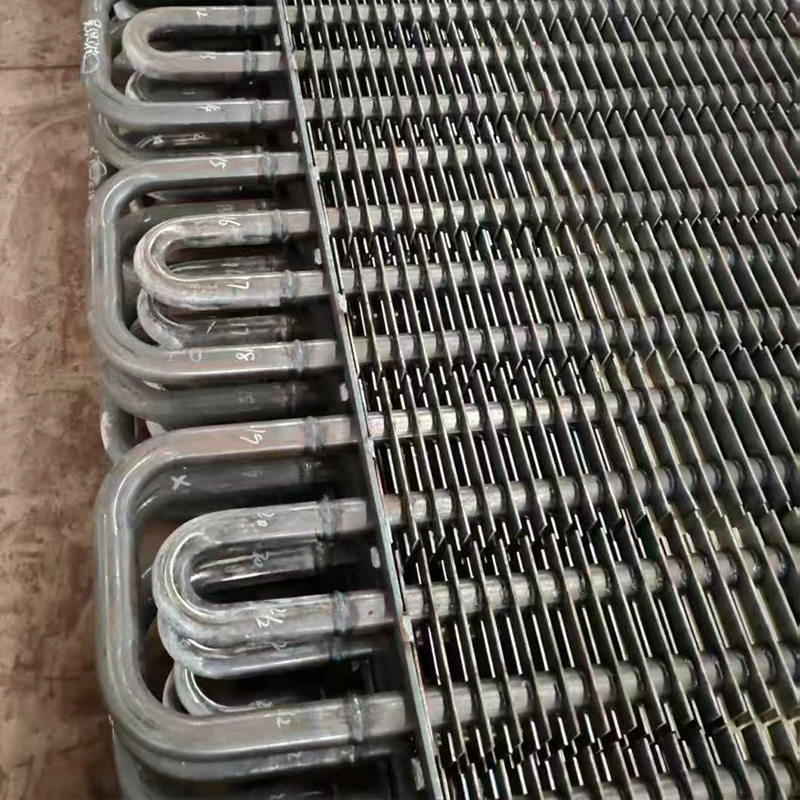
Хотя данная статья посвящена трубам марок 304/304L, в реальных производственных циклах красильной промышленности часто требуются материалы с еще более высокой стойкостью к агрессивным средам, особенно при наличии хлоридов или экстремальных температур. Продуктовый портфель ООО «Уси Кайшэн» включает широкий спектр изделий из различных сплавов: от нержавеющих сталей до титана, морской латуни C46400, медно-никелевых сплавов C70600 и суперсплавов на основе никеля (N06625). Например, для участков с повышенной коррозионной активностью компания производит гофрированные трубные пучки из нержавеющей стали 316 и титановые кожухотрубные теплообменники, которые обеспечивают непревзойденную теплоэффективность и долговечность.
Все изделия, включая воздушные охладители, котлы-утилизаторы и трубные решетки, сертифицированы по строгим международным стандартам PED и ASME. Это гарантирует, что оборудование способно выдерживать высокое давление и температуру, характерные для современных химических производств. Опыт компании в создании индивидуальных решений для судостроения, опреснения морской воды и энергосбережения позволяет предлагать заказчикам не просто отдельные компоненты, а интегрированные системы, работающие как единый организм. Сотрудничество с такими профессионалами, как ООО «Уси Кайшэн», позволяет минимизировать риски простоев и обеспечить стабильность технологических процессов на десятилетия вперед.
Frequently Asked Questions
Можно ли использовать трубопровод 304 для перевозки соляной кислоты?
No, this is absolutely not recommended. Соляная кислота вызывает быструю питтинговую и общую коррозию стали AISI 304 и 304L даже при низких концентрациях и комнатной температуре. Для соляной кислоты следует использовать трубопроводы из AISI 316L (при низких концентрациях и температурах), Hastelloy, титана или пластиковые трубы (PVDF, PP), армированные стекловолокном. Попытка использовать 304 приведет к аварии в кратчайшие сроки.
В чем главная опасность использования стали 304 вместо 304L при сварке?
Главная опасность — возникновение межкристаллитной коррозии в зоне сварного шва. При сварке сталь 304 нагревается до температур, при которых углерод связывает хром, делая границы зерен уязвимыми. В агрессивной среде красителей шов начнет разрушаться изнутри, что может привести к внезапной разгерметизации трубопровода под давлением. Сталь 304L лишена этого недостатка благодаря снижению содержания углерода до 0.03%.
Какой срок службы трубопровода из 304L в красильном производстве?
При правильной эксплуатации, соблюдении температурных режимов и отсутствии превышения концентраций хлоридов, срок службы трубопровода из 304L составляет от 15 до 25 лет и более. Однако этот показатель сильно зависит от конкретной химической среды. В агрессивных условиях с частыми перепадами температур и высокими концентрациями кислот срок может сократиться до 5-7 лет. Регулярный мониторинг толщины стенки позволяет точно прогнозировать остаточный ресурс.
Нужно ли проводить термообработку труб 304L после сварки?
В большинстве случаев для стали 304L проведение термообработки (отжига) после сварки не требуется. Низкое содержание углерода предотвращает сенсибилизацию даже при медленном охлаждении. Это является ключевым преимуществом 304L, позволяющим монтировать сложные трубопроводные системы непосредственно на объекте без использования печей для отжига. Исключение составляют случаи работы в экстремально агрессивных средах, где спецификация проекта может требовать дополнительного контроля структуры металла.
Conclusion and next steps
Подводя итог, можно с уверенностью сказать:трубопровод для красителей 304/304L— это надежное и проверенное решение для подавляющего большинства задач в красильной и текстильной промышленности. Выбор в пользу марки 304L является наиболее рациональным с точки зрения долгосрочной экономики и безопасности, устраняя риски, связанные со сварочными работами и высокими температурами. Понимание химических ограничений материала, особенно в отношении хлоридов и сильных кислот, позволит вам избежать дорогостоящих ошибок при проектировании.
Не позволяйте вопросам коррозии ставить под угрозу ваше производство. Правильно подобранный материал и качественный монтаж — это инвестиция в стабильность вашего бизнеса. Если вы сомневаетесь в совместимости вашей конкретной технологической среды с нержавеющей сталью или нуждаетесь в подборе оптимальной конфигурации трубопровода и теплообменного оборудования, наши эксперты готовы провести детальный анализ ваших условий.
Мы предлагаем полный цикл услуг: от аудита существующих коммуникаций и лабораторного тестирования образцов вашей продукции на коррозионную активность до поставки сертифицированных труб, фитингов и теплообменников (в партнерстве с ведущими производителями, такими как ООО «Уси Кайшэн») с полным пакетом документов (EN 10204 3.1). Свяжитесь с нами сегодня для получения консультации и расчета сметы вашего проекта.Contact us today, чтобы обсудить детали и обеспечить надежность вашей производственной линии.
Для получения дополнительной информации о наших решениях для химической промышленности посетите разделпромышленные трубопроводные системы, где представлены кейсы внедрения и технические спецификации.