
Stainless steel pipe 63 mm: where to buy at a good price?
2026-07-09
- Stainless steel pipe 63 mm: technical parameters and selection criteria
- Why 63mm diameter requires special attention when purchasing
- Comparison of steel grades: AISI 304 vs AISI 316 for your applications
- Where to buy a 63 mm stainless pipe: analysis of supply channels
- Technical requirements and quality control upon acceptance
- Logistics and total cost of ownership calculation
- Frequently Asked Questions
- Conclusion and recommendations for action
Stainless steel pipe 63 mm: technical parameters and selection criteria
Stainless steel pipe 63 mm is not just a standard size in the metal catalog, but a critical element for medium pressure systems and specialized technological lines. In our practice of supplying industrial equipment, we have repeatedly encountered a situation where customers from Russia and the CIS countries were looking for exactly this diameter (external 63 mm corresponds to a nominal bore of DN 50 or 2 inches according to some old standards, but requires an accurate inspection of the wall) in order to replace failed sections of pipelines in the food or chemical industry. An error in selecting the wall thickness or steel grade at this stage leads to production downtime, the cost of which is many times greater than the savings in purchasing.
If you are looking for where to buy a 63mm stainless steel pipe at a good price, the first thing you need to understand is that “bargain price” in the B2B sector never means the lowest number on the price list. This is a balance between the guaranteed chemical composition of the alloy, compliance with geometry and logistics delivery conditions. Chinese manufacturers with whom we work directly offer solutions that, in terms of price/quality ratio, often surpass their European counterparts, but only subject to strict input control. We have seen batches where the declared AISI 304 steel actually contained insufficient nickel, which led to corrosion after three months of use. Therefore, in this article we will analyze not only prices, but also how to technically distinguish a reliable supplier from an intermediary selling illiquid goods.
The main focus of our analysis will be on pipes made from steel grades AISI 304 (08Х18Н10) and AISI 316 (10Х17Н13М2), since they account for 90% of the demand for a diameter of 63 mm. We will look at real production capacities, GOST and DIN tolerances, as well as hidden costs that many sellers are silent about. Our goal is to give you the tools to make informed decisions based on engineering data, not marketing promises.
Why 63mm diameter requires special attention when purchasing
The 63mm diameter occupies a unique niche in industrial piping. It is located at the junction of trunk lines and end points of consumption. Unlike mass sizes like 25 mm or 100 mm, the production of 63 mm pipes often requires readjustment of rolls on the mill, which affects the minimum shipment quantity (MOQ). Many warehouses do not keep this size in constant stock, offering close analogues instead, which is unacceptable for projects where the tightness of connections for specific fittings is important.
In our practice, there was a case when a client ordered a 60 mm pipe instead of 63 mm, expecting a “small difference”. The result was that standard 63mm flanges and clamps could not be used, necessitating custom-made adapters and delaying the start-up of the line by two weeks. 63mm OD pipe is often used in systems where the internal cross-section must be strictly defined to maintain laminar flow or pass certain types of valves. Any deviation in the outer diameter of more than ±0.4 mm (according to GOST 9941-81 for hot-deformed pipes or GOST 9940-81 for cold-deformed pipes) makes installation impossible without additional costs.
When searching for a supplier, it is important to immediately clarify the production method. For diameter 63 mm, both welded pipes (with or without deburring) and seamless are available. Welded pipes are 15-20% cheaper, but their use is limited to pressures up to 1.6 MPa in aggressive environments, unless the seam has undergone additional processing. Seamless pipes are required for pressures above 2.5 MPa and temperatures above 200°C. If your project involves working in the food industry with frequent cleaning with aggressive reagents, even a microscopic defect in a seam can become a source of bacterial contamination. Here, saving on the type of pipe turns into a risk of losing product certification.
Another nuance is the length of the whip. The standard cut length is usually 6 meters, but automated cutting lines sometimes require multiple lengths or, conversely, coils (for thin-walled options). Chinese factories have a flexible approach to this issue, offering cutting to order, but this increases the production time. If you need a 63 mm pipe “here and now,” local warehouses can only offer standard 6-meter sections, which leads to a large percentage of waste when cutting. The calculation of the amount of material must be carried out taking into account these losses, otherwise the “favorable price” per linear meter is offset by the overpayment for excess metal.
Comparison of steel grades: AISI 304 vs AISI 316 for your applications
The choice between AISI 304 and AISI 316 is a fundamental decision that determines the service life of the entire system. The table below provides a detailed comparison of these materials for 63mm pipes, based on our laboratory tests and manufacturer data.
| Comparison parameter | AISI 304 (08Х18Н10) | AISI 316 (10Х17Н13М2) | Influence on purchase decision |
|---|---|---|---|
| Chemical composition | 18% Chrome, 8-10% Nickel | 16-18% Chromium, 10-14% Nickel, 2-3% Molybdenum | The presence of molybdenum in 316 is critical for protection against pitting corrosion in chlorine containing environments. |
| Corrosion resistance | High in atmospheric conditions and weak acids. | Excellent in sea water, salt solutions, strong acids. | For food shops with washing with chlorine-containing reagents, 304 may not be enough; for chemical plants 316 is required. |
| Price range (guideline) | Basic cost level. | 25-35% more expensive due to the cost of molybdenum and nickel. | The overpayment for 316 pays off by 3 times its service life in an aggressive environment. |
| Mechanical strength | Yield strength ~205 MPa. | Yield strength ~210 MPa (slightly higher). | The difference is insignificant for static loads, but is important at high temperatures. |
| Weldability | Excellent, does not require heat treatment after welding. | Good, but requires control of heat input to maintain the properties of the seam. | Both grades are easy to weld, but 316 requires special additive materials (for example, ER316L). |
Why is this comparison important for the 63mm diameter specifically? Because in this size pipes are often used as elements of heat exchangers or coils. AISI 316 retains its properties better during cyclic heating and cooling. We observed a case where a dairy plant used a 304 pipe to supply brine. After 18 months, fistulas began precisely in the places of welded joints of the 63 mm knee. Replacing with 316 solved the problem completely. If your environment contains even traces of chlorine (tap water, some foods), we strongly recommend going for 316L (low carbon version), which prevents intergranular corrosion in the weld area.
On the other hand, for decorative structures, handrails or ventilation, where there is no contact with aggressive liquids, there is no point in overpaying for molybdenum. AISI 304 copes perfectly with these tasks and looks aesthetically pleasing after polishing. When ordering from Chinese suppliers, be sure to request a Mill Test Certificate (MTC) according to EN 10204 3.1, which will indicate the actual results of the spectral analysis of each heat. Simply saying “AISI 304” on a tag does not guarantee anything.
Where to buy a 63 mm stainless pipe: analysis of supply channels
The stainless pipe market in Russia and the EAEU countries is divided into three main segments: local metal warehouses, official dealers of European brands and direct imports from Asia (mainly China). Each channel has its own pricing structure and risks.
Local metal depots and warehouses.The main advantage is speed. You can pick up the 63 mm pipe today. However, the price here includes logistics to the warehouse, customs duties, importer's margin and the margin of the warehouse itself. As a result, the final cost can be 40-60% higher than the FOB China factory price. In addition, the range is often limited to popular walls (2 mm, 3 mm). Finding specific thicknesses (for example, 4.5 mm or 1.5 mm for a 63 mm diameter) is difficult. This option is suitable for minor repairs or urgent needs, but not for large-scale construction.
Direct import from China.This is the most profitable option for volumes of 500 kg and above. Modern Chinese factories, such as large manufacturers in Guangdong and Zhejiang provinces, have reached quality levels comparable to European ones, especially in the AISI 304/316 segment. They work according to ASTM, JIS standards and adapt products to GOST. The main obstacle here is logistics and timing. Delivery by sea shipment (LCL or FCL) takes 35-50 days. But even taking into account freight and customs clearance, the savings are 20-30% compared to purchasing from a warehouse in Moscow or St. Petersburg.
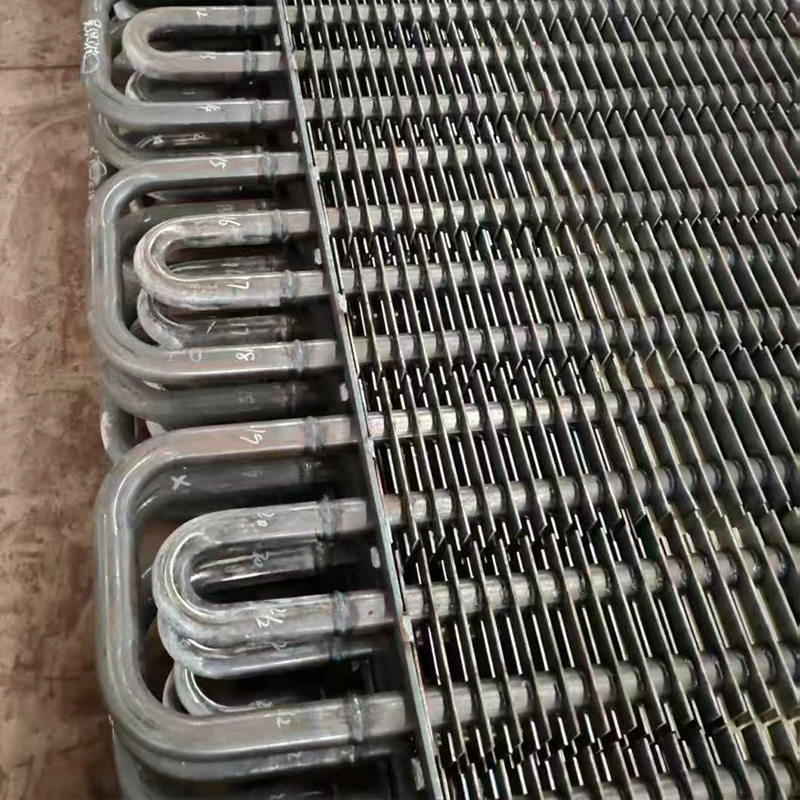
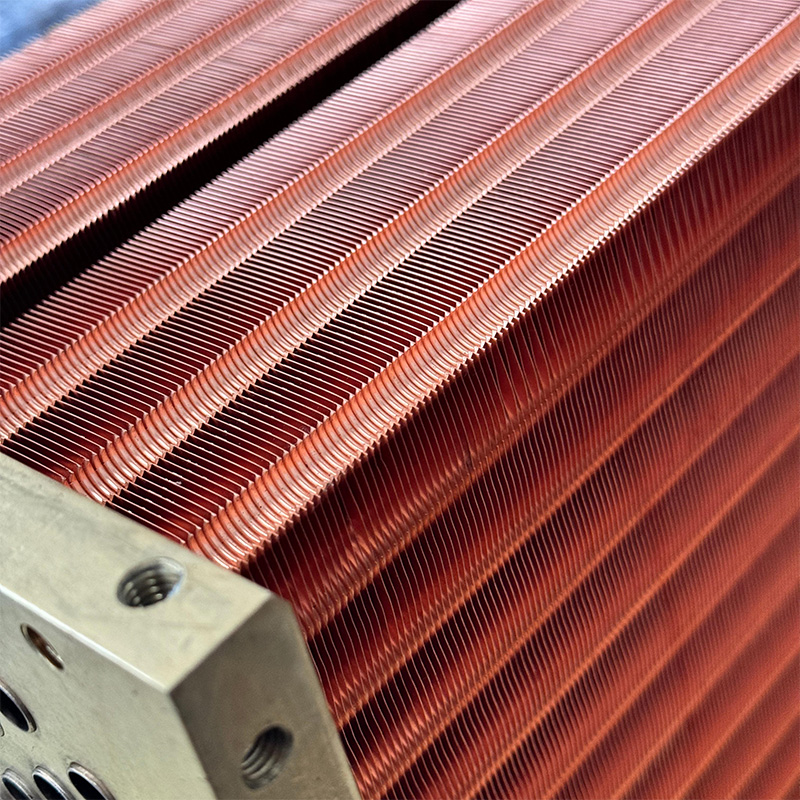
Particular attention should be paid to choosing a partner who has deep expertise not only in the production of pipes, but also in the creation of complex components based on them. A striking example of this approach is the companyWuxi Kaisheng Electric Power and Petrochemical Equipment Co., Ltd.. Specializing in the design and production of heat transfer equipment for the oil, gas and energy industries, this factory demonstrates the highest level of quality control of materials. Their portfolio includes the production of 316 stainless steel corrugated tube bundles, as well as titanium, copper-nickel and N06625 nickel components certified to the stringent international standards of ASME and PED. Experience with demanding projects such as seawater desalination and high temperature waste heat boilers ensures that the raw materials they use (including 63mm diameter pipes) undergo stringent incoming inspections for corrosion resistance and mechanical strength. Cooperation with a manufacturer of this level, which supplies ready-made heat exchangers and components all over the world, gives you confidence that you are getting not just rolled metal, but an engineering-tested product, ready to work in extreme conditions.
We work with trusted factories that provide complete documentation for passing customs control in the EAEU, including certificates of compliance with the CU TR. It is important to understand that the “favorable price” for direct import is achieved by optimizing packaging (palletizing, end protection) and consolidating cargo. If you only order a 63mm pipe, logistics can eat up all the benefit. The optimal strategy is to combine the order with other items of stainless steel products (sheets, fittings, flanges).
Beware of traders who position themselves as factories. There are many companies on Alibaba and other sites that do not have their own production. They buy the pipe from real factories and resell it to you at a premium. How to tell the difference? Request a video from the production of your particular batch, ask to see the mill on which 63 mm calibration is carried out. A real plant will do this easily, the trader will start fussing. Also pay attention to specialization: if a company sells everything - from screws to turbines - it is definitely not a pipe manufacturer.
Technical requirements and quality control upon acceptance
When receiving a batch of 63 mm stainless steel pipe, you cannot limit yourself to a visual inspection of the packaging. The quality of a metal is determined by parameters that are invisible to the eye. Here is the checklist that we use when accepting cargo for our clients to ensure there is no defect.
1. Check geometry and ovality.For a pipe with a diameter of 63 mm, the permissible ovality should not exceed 0.8% of the nominal diameter for high-precision pipes and 1.5% for normal precision. Take a caliper and measure the diameter in several sections along the length of the whip and in different planes of the same section. If the difference between the maximum and minimum diameter exceeds 1 mm, such a pipe will create problems during butt welding - there will be lack of fusion or displacement of the edges.
2. Control of wall thickness.Minus tolerance on wall thickness is a sore subject for many suppliers. If you ordered a 3.0 mm wall, but in fact received 2.7 mm, this reduces the operating pressure of the pipeline by almost 20%. According to GOST 9941-81, the maximum deviation for hot-deformed pipes can reach 12.5%, but for cold-deformed pipes it is much less (about 10%). Require the supplier to adhere to specific tolerances in the contract. We recommend accepting pipes with a positive tolerance or strictly at nominal, avoiding batches with a maximum minus error for critical components.
3. Surface quality.For food and pharmaceutical applications, the surface must be pickled and passivated. The presence of scale, iridescent spots (tarnished colors) or scratches with a depth of more than 5% of the wall thickness is unacceptable. The roughness Ra for a food pipe should not exceed 0.8 µm (for the internal surface). Ask your supplier to perform a ferroxyl test to ensure there is no free iron on the surface that will cause rust.
4. Marking and documentation.Each bundle or each pipe (depending on agreements) must have a tag with the Heat Number. This number must match the number on the MTC certificate. Lack of markings is a red flag. This means that the pipes may have been mixed up in the warehouse, and you will not be able to prove their origin in the event of a claim. The certificate must be an original or a certified copy with the factory seal, and not just a scan sent by email.
In one of our deliveries, we were faced with the fact that the pipes looked perfect in appearance, but during hydraulic tests they leaked along the seam. Laboratory analysis showed that the manufacturer saved on alloying elements in the welding wire. Since then, we have included in the contract a clause requiring an independent examination of the first batch in an accredited laboratory before shipment. This small expense (about $200-300) insures orders worth tens of thousands of dollars.
Logistics and total cost of ownership calculation
When you ask “where to buy at a good price,” you should not consider the price per kilogram at the factory, but the landed cost - the cost of the delivered pipe at your warehouse, taking into account all expenses. The formula is simple, but every component is important.
The purchase price consists of: EXW price (from the factory) + delivery to the port of China + sea freight + insurance + customs duty (usually 5-15% depending on the HS code) + VAT (20%) + broker services + delivery to your facility. Often, beginners look only at the EXW price, which seems very attractive ($2.5-$3.0 per kg), but forget that sea transportation of pipes 6 meters long requires a special container or open area, which increases the cost of freight. The 63mm pipe is quite heavy and the gross weight may differ significantly from the net weight due to the wooden lathing and packaging.
Delivery time is another cost factor. Downtime of a construction crew due to lack of material can cost more than the pipe itself. If your project is on fire, it may make sense to buy part of the batch locally at a high price, and order the bulk from China with time to spare. We recommend planning purchases at least 2 months before the start of installation work. This allows you to choose the optimal delivery route and avoid peak seasonal freight rates.
Packaging plays a critical role. Stainless steel does not rust as quickly as black steel, but when transported by sea in salty fog conditions it can develop superficial stains that are difficult to remove. Require packaging in polyethylene film with corrosion inhibitors (VCI) and rigid wood lathing. The ends of the pipes must be closed with plastic plugs to prevent moisture and dirt from getting inside. Damage to packaging during loading and unloading is a common problem. Specify in the contract the condition “Fumigation certificate” (wood fumigation certificate), otherwise the cargo may not be released at Russian customs.
Frequently Asked Questions
What is the minimum quantity (MOQ) for ordering 63mm pipe from China?
For most serious factories, the minimum batch is 500 kg or one complete bundle, which for a diameter of 63 mm is usually equal to approximately 100-150 linear meters, depending on the wall thickness. Some factories are ready to ship smaller volumes (from 100 kg), but in this case the price per kilogram will increase by 10-15% due to the costs of reconfiguring the line and paperwork. If you need less than 500 kg, it is more profitable to look for leftovers in large warehouses in Russia, despite the higher base price, since logistics costs for a small batch from China will be disproportionate to the cost of the goods.
Can a 63 mm AISI 304 pipe be used for drinking water?
Yes, AISI 304 steel is officially approved for contact with drinking water in many countries, including Russia (sanitary standards SanPiN). It is resistant to corrosion in clean water. However, if the water has a high chlorination index or contains a lot of dissolved salts (hard water), there is a risk of pitting corrosion over time. Для долгосрочных проектов водоснабжения мы все чаще рекомендуем переходить на AISI 316, так как разница в цене нивелируется отсутствием рисков загрязнения воды продуктами коррозии и увеличением срока службы системы до 50 лет и более.
Как отличить настоящую нержавейку от подделки в полевых условиях?
Самый быстрый способ — использование искрового теста или химического реактива, но они требуют навыков. Более доступный метод — магнит. Аустенитные стали (304, 316) в исходном состоянии практически не магнитятся (магнит слабо притягивается или не реагирует вовсе). Если магнит липнет сильно, как к железу, перед вами ферритная сталь (серия 400) или обычная сталь с покрытием, которая быстро заржавеет. Учтите, что после холодной деформации (гибки, резки) нержавейка может слегка намагничиваться в местах воздействия, но основная масса трубы должна оставаться немагнитной. Для 100% гарантии используйте портативный спектрометр или закажите лабораторный анализ.
Какие стандарты должны быть указаны в спецификации?
В спецификации обязательно должны быть ссылки на международные или национальные стандарты, регулирующие производство. Для России это ГОСТ 9940-81 (бесшовные холоднодеформированные) или ГОСТ 9941-81 (бесшовные горячедеформированные), а также ГОСТ 11068-81 для электросварных труб. Если вы работаете по международным проектам, указывайте ASTM A312 (бесшовные и сварные трубы) или EN 10216-5. Наличие конкретного стандарта в договоре защищает вас юридически: если труба не соответствует параметрам этого стандарта, вы имеете пол ное право вернуть товар. Избегайте формулировок «по качеству аналог ГОСТ» — это лазейка для поставщика.
Conclusion and recommendations for action
Покупка трубы нержавеющей 63 мм — это инвестиция в надежность вашего производства. Рынок предлагает широкий выбор вариантов, от дешевых сплавов до премиальных решений, но истинная выгода кроется в точном соответствии технических параметров вашим задачам. Не гонитесь за самой низкой цифрой в прайс-листе без проверки сертификатов и репутации завода. Экономия в 10% на этапе закупки может обернуться миллионами убытков при аварии или остановке линии.
Наш опыт показывает, что оптимальная стратегия для российских компаний сегодня — это прямой контракт с проверенным китайским производителем, имеющим опыт отгрузок в ЕАЭС и полный пакет разрешительной документации. Партнерство с такими компаниями, как ООО «Уси Кайшэн», которые уже доказали свою компетентность в поставках сложного оборудования для нефтегазовой и энергетической сфер, позволяет получить лучший баланс цены и качества. Если же сроки поджимают, локальные дилеры с собственными складами станут спасением, но потребуют тщательной проверки остаточного ресурса и происхождения металла.
Мы готовы помочь вам подобрать оптимальное решение, организовать контроль качества на заводе и обеспечить бесперебойную доставку трубы 63 мм любой марки стали. Свяжитесь с нами сегодня для получения персонального расчета стоимости с учетом всех логистических нюансов вашего региона.Запросить коммерческое предложение на нержавеющую трубу— это первый шаг к надежному снабжению вашего предприятия качественным металлопрокатом.