
Stainless steel pipe 40mm: resistance to mechanical damage
2026-07-13
- Why is the mechanical strength of a 40 mm stainless pipe critical for industrial facilities?
- The physics of deformation resistance: from steel grade to wall thickness
- Typology of mechanical damage and methods for their prevention
- Comparative Analysis: Seamless vs. Welded Pipes at Risk
- Standards and certification: Guarantee of declared characteristics
- Practical cases: Mistakes that cost a lot
- Алгоритм выбора и закупки надежной трубы 40 мм
- Роль специализированного производителя в обеспечении надежности систем
- Frequently Asked Questions
Why is the mechanical strength of a 40 mm stainless pipe critical for industrial facilities?
Stainless steel pipe 40mm: resistance to mechanical damage is not just a marketing slogan, but a fundamental safety requirement for any pipeline systems operating under pressure or in aggressive environments. In our engineering practice, we have repeatedly encountered situations where savings on wall thickness or the choice of steel grade led to depressurization of the circuit due to an accidental impact with a forklift or vibration fatigue of the metal. For the 40mm diameter, which is often used in steam, chemical and food distribution applications, the issue of mechanical durability becomes the deciding factor between scheduled maintenance and emergency shutdown.
Many buyers mistakenly believe that the word “stainless” automatically guarantees the invulnerability of the product. This is a dangerous misconception. Mechanical strength depends on a set of parameters: the chemical composition of the alloy, the production method (seamless or electric welded), the quality of heat treatment and compliance with GOST or ASTM tolerances. If you are choosing a 40 mm diameter pipe for installation in a workshop with heavy traffic or for installation in hard-to-reach places where installation with force is possible, you need to understand the physics of metal destruction. We have prepared this material to give you clear evaluation criteria based on real tests and many years of operating experience, and not on theoretical calculations from textbooks.
The physics of deformation resistance: from steel grade to wall thickness
Pipe resistance to external mechanical stress begins with choosing the right grade of steel. For a diameter of 40 mm, the most common options on the Russian and international markets are AISI 304 (analogous to 08Х18Н10) and AISI 316 (analogous to 10Х17Н13М2). The difference between them lies not only in corrosion resistance, but also in mechanical characteristics, which directly affect the pipe's ability to withstand shock loads without cracking.
AISI 304 steel has a yield strength of about 205 MPa and a tensile strength of about 515 MPa. This is a good indicator for static loads, but under dynamic loads, for example, when a heavy object falls on a pipeline, the material may experience permanent deformation. In our practice, there was a case when 304 pipes were used in food production to transport compressed air. Due to careless installation of adjacent equipment, a strong side impact was caused to the pipe. The pipe did not burst instantly, but received a dent, which created a stress concentrator. After three months of cyclic loading, a fatigue crack formed in this location, leading to the release of the medium.
For applications where the risk of mechanical damage is high, we strongly recommend considering AISI 316 steel or even stronger duplex steels if the budget allows. The addition of molybdenum to AISI 316 not only increases corrosion resistance, but also slightly changes the crystal lattice, making the material more viscous at low temperatures and more resistant to local deformation. The yield strength of 316 is also about 205-210 MPa, but its ability to absorb impact energy through plastic deformation is higher.
However, steel grade is only half the equation. The critical parameter for a pipe with a diameter of 40 mm is the wall thickness. Standard thickness ranges range from 1 mm (decorative purposes) to 4-5 mm (industrial pressure). Mechanical stability does not increase linearly, but exponentially with increasing thickness. A 40x2 mm pipe will bend under the same force, which a 40x4 mm pipe will not even notice. When choosing, you must be guided by the rule: if the pipe will be operated in an access area for personnel or equipment, the minimum wall thickness should be 3 mm for welded pipes and 2.5 mm for seamless pipes that have undergone hydrotesting.
It is important to note that the manufacturing method also dictates the behavior of the metal upon impact. Seamless hot-deformed pipes (GOST 8732) have a uniform structure along the entire perimeter, which ensures uniform stress distribution during a point impact. Electric-welded pipes (GOST 10704) have a seam, which, even after heat treatment, is a zone with properties different from the base metal. In a severe side impact, it is the seam that often becomes the point where destruction begins. Therefore, for critical components exposed to the risk of mechanical stress, priority should always be given to seamless rolled products.
Reader Action: Check the specification of your current project. If it specifies 40 x 1.5 mm 304 steel pipe for installation in a warehouse walk-through area, immediately initiate a revision of the specification to increase the wall thickness or change the steel grade.
Typology of mechanical damage and methods for their prevention
To effectively protect a pipeline, you need to know the enemy by sight. Mechanical damage to pipes with a diameter of 40 mm can be classified into several main types, each of which requires its own approach to prevention. Understanding these types will help you properly design your course and select safety features.
Local dents and shock loads
This is the most common type of damage in industrial workshops. Forklifts, carts, and falling tools all create high-energy pinpoint impacts. For a small diameter pipe, such as 40 mm, even a small dent of 1-2 mm deep can be critical. It reduces the effective cross section of the flow, creating turbulence that accelerates wall erosion. Moreover, residual stresses arise at the dent site, which, in combination with internal pressure, can lead to rupture.
The solution here is twofold. Firstly, the use of pipes with a larger wall thickness, as mentioned earlier. Secondly, competent tracing. Pipes should not pass at a height of less than 2 meters from the floor level in areas where equipment passes without additional protection. If it is impossible to change the route, it is mandatory to install metal casings or corner barriers in places of probable contact.
Abrasive wear and vibration fatigue
Mechanical damage often develops gradually. Vibration from operating pumping equipment is transmitted to the pipeline. If a pipe with a diameter of 40 mm is poorly secured or the clamps are installed too sparsely, a resonance phenomenon occurs. The metal begins to get tired. Microcracks accumulate, and one day the pipe bursts without any visible external impact. This is an insidious type of damage, since visually the pipe may look intact until the very moment of the accident.
We have seen cases where vibration has rubbed the pipe against the edge of the support structure. The sharp edge of the metal structure acted like a saw. To prevent this, all points of contact between the pipe and the supports must have damping pads made of rubber or polymers. The fastening pitch for a 40 mm pipe should not exceed 1.5-2 meters, depending on the temperature of the medium and pressure.
Deformation during installation
Paradoxically, a significant part of the mechanical damage occurs even before the system is put into operation. Installers, in an effort to connect pipes with slight misalignment, use levers and jacks, creating excessive bending moments. A 40 mm pipe has a certain bending radius. An attempt to forcibly bend it “in place” leads to corrugation of the inner wall or the formation of cracks on the outer side of the bend.
Installation quality control is a key stage of prevention. Use only certified pipe benders with mandrels that prevent the profile from flattening. Never straighten already bent pipes using heat or impact - this destroys the structure of the stainless steel.
Reader Action: Audit your piping attachment points. Make sure that there is a soft gasket between the clamp and the pipe, and that the spacing of the fasteners complies with the standards to reduce vibration load.
Comparative Analysis: Seamless vs. Welded Pipes at Risk
When purchasing a 40 mm stainless steel pipe, the engineer always faces a dilemma: take a cheaper electric-welded pipe or invest in a seamless one. When it comes to resistance to mechanical damage, the difference between these two types becomes obvious and measurable.
| Comparison parameter | Seamless Pipe (Hot/Cold Formed) | Electric welded pipe (Straight seam) |
|---|---|---|
| Structural homogeneity | Completely homogeneous structure along the entire perimeter. There are no zones with changed properties. | Presence of a weld seam. Even after annealing, the properties of the weld differ from the base metal by 10-15%. |
| Reaction to a targeted strike | The deformation is distributed evenly around the circumference. High energy absorption capacity. | High risk of cracking along the seam line upon impact. The seam is a stress concentrator. |
| Permissible operating pressure | 20-30% higher with the same wall thickness due to the absence of a weak link. | Limited by seam strength. Requires a larger thickness margin for the same conditions. |
| Cost | High. Due to the complexity of production technology. | 30-40% lower. Optimal for static unloaded systems. |
| Recommended scope of application | High pressure, vibration, risk of mechanical shock, aggressive environments. | Low pressure, decorative purposes, static structures, shockproof. |
The table shows that for tasks where resistance to mechanical damage is important, seamless pipe is the uncontested leader. However, this does not mean that a welded pipe cannot be used at all. If a pipe with a diameter of 40 mm is hidden in a cable duct, behind a false wall, or laid under the ceiling beyond the reach of equipment, a high-quality electric-welded pipe made of AISI 304 steel with ultrasonic seam control will cope with the task and save the budget.
A key point that is often missed: weld quality. Modern technologies make it possible to obtain seams that are almost as good as the base metal. Look for suppliers who provide certificates indicating the weld inspection method (eddy current or ultrasonic). A pipe that has passed such inspection is marked accordingly. Buying a cheap pipe without a seam inspection certificate is a lottery, where the winnings will be the absence of fistulas in the first month of operation.
In one of our projects to modernize a chemical shop, we replaced a batch of imported welded pipes with domestically produced seamless ones after, during hydraulic tests, two pipes leaked along a seam when slightly accidentally touched by fittings. The cost overrun for seamless pipe was 25%, but this eliminated the risk of downtime on the $50,000 per hour line. Saving must be smart.
Reader Action: Request a quality certificate from the supplier that clearly states the weld inspection method. If such information is not available, consider the pipe to be potentially vulnerable to mechanical loads.
Standards and certification: Guarantee of declared characteristics
There are many products of dubious origin circulating in the rolled metal market, especially in the stainless steel segment. To ensure that a 40mm pipe will actually withstand the stated loads, it is necessary to rely on authoritative standards. In Russia and the CIS countries, the main document is GOST, but for export-oriented industries ASTM and EN are also important.
GOST 9940-81 regulates the requirements for seamless hot-deformed pipes made of corrosion-resistant steel. This standard strictly normalizes not only the chemical composition, but also the mechanical properties: tensile strength, yield strength, relative elongation. It is important that GOST requires a hydraulic test of each pipe or batch, which is a direct test for integrity and the absence of hidden defects that can be revealed under mechanical stress.
For welded pipes, the main standard is GOST 10704-91. It allows various accuracy classes and control methods. When ordering pipes for critical components, be sure to indicate the requirement for non-destructive testing (NDT) of the entire batch volume. Without this clause in the contract, you may end up with a pipe that looks perfect visually, but has internal delaminations.
International standards such as ASTM A312 (for seamless and welded pipe) offer similar requirements, but with an emphasis on chemical compatibility and specific intergranular corrosion (ICC) tests. The presence of the EN 10217-7 certificate confirms that the pipe has passed pressure and impact tests in accordance with European standards. The CE mark on the pipe indicates compliance with Pressure Equipment Directives (PED).
One of our clients encountered a problem when the supplier provided a “certificate” that turned out to be a simple declaration of conformity without test reports. A batch of 40x3 mm pipes began to crack when bending on a machine. Laboratory analysis showed a low nickel content and the presence of harmful impurities, which made the steel brittle. The lack of reference to a specific standard with the requirement to provide test reports cost the company a week of downtime.
When working with Chinese suppliers who are actively entering our market, require Mill Test Certificate (MTC) type 3.1 according to EN 10204 standard. This document confirms that the characteristics of a particular batch have been tested by an independent factory laboratory and correspond to the order. A simple “quality certificate” of a general standard often has no legal force in case of complaints.
Action for the reader: Include in the terms of reference a clause on the need to provide an MTC 3.1 certificate with a breakdown of mechanical tests (yield strength, impact strength) for each shipment.
Practical cases: Mistakes that cost a lot
Theory is important, but nothing teaches better than other people's mistakes. We analyzed several industrial incidents involving mechanical failure of 40mm diameter pipes to identify common failure patterns.
Case No. 1: “Invisible” stress corrosion
The beverage plant used AISI 304 pipes with a diameter of 40 mm to supply purified water. The route ran along the wall, where cargo carts periodically passed by. After a year of use, fistulas appeared in several places. A visual inspection revealed no deep dents, only minor scratches. The investigation revealed that micro-scratches from contact with the carts had damaged the passive oxide layer. Combined with the constant stress from the mounting clamps (the pipe was over-tightened) and the humid environment, stress corrosion began. The pipe burst not from an impact, but from a combination of mechanical damage to the surface and chemical aggression.
Lesson:Any mechanical damage to the surface, even a scratch, reduces the overall service life of the pipe in an aggressive environment. Use polished pipes or protective coatings in risk areas.
Case No. 2: Installation error and domino effect
When reconstructing the heating unit, installers used 40x2.5 mm pipes. To connect the two sections with a slight offset, they used force to pull the pipe between the flanges. The tension was recorded in the metal. Two months later, during a planned water hammer in the system, the pipe burst exactly at the point of greatest tension. The shock wave was the final impulse that exceeded the tensile strength of the preloaded metal.
Lesson:Never install a pipeline under tension. Alignment should be ensured by correct marking and the use of expansion joints, and not by the force of the installers’ muscles.
Case No. 3: Choosing the wrong grade of steel
In the galvanizing shop, a pipeline made of AISI 304 was installed to remove ventilation gases. The pipes were attached openly to the ceiling. Due to the vibration of the fans, the fastenings became loose and the pipes began to hit the metal floor beams. Six months later, the pipes at the contact points were wiped through. Замена на AISI 316 не решила бы проблему полностью, так как причина была в отсутствии демпферов. Но более твердая поверхность 316 продержалась бы дольше.
Lesson:Механическая стойкость — это система. Материал трубы должен работать в паре с правильной системой крепления и виброизоляцией.
Действие для читателя: Организуйте внеплановый осмотр мест крепления и прохождения труб в зонах с высокой вибрацией или движением техники. Ищите следы истирания или ослабления хомутов.
Алгоритм выбора и закупки надежной трубы 40 мм
Чтобы минимизировать риски и получить продукт, который реально выдержит эксплуатационные нагрузки, следуйте этому пошаговому алгоритму при формировании заказа.
- Определите класс опасности зоны монтажа.Разделите трассу на участки: «защищенные» (шахты, потолки) и «рисковые» (проходные зоны, рядом с оборудованием). Для рисковых зон сразу закладывайте трубу с толщиной стенки +30% к расчетной или переходите на бесшовный прокат.
- Выберите марку стали обоснованно.Не гонитесь за AISI 316 везде, где можно обойтись 304, но и не экономьте там, где есть риск ударов или агрессивная среда. Помните: цена ремонта всегда выше цены материала.
- Сформулируйте технические требования.В запросе коммерческого предложения (RFQ) четко пропишите: стандарт (ГОСТ/ASTM), метод производства (бесшовный/сварной), обязательный тип контроля (гидроиспытания, УЗК шва), требование к сертификату (MTC 3.1).
- Проверьте поставщика.Работайте только с теми дистрибьюторами, которые хранят металл в крытых складах и имеют собственную службу входного контроля. Ржавчина на упаковке или грязь на торцах трубы — плохой знак.
- Проведите входной контроль.При получении партии выборочно проверьте геометрию (овальность не должна превышать допуски стандарта), качество поверхности и наличие маркировки. Отберите образцы для спектрального анализа, если партия крупная.
Помните, что труба нержавеющая 40мм: усто йчивость к механическим повреждениям которой вас интересует, — это инвестиция в бесперебойность вашего бизнеса. Дешевая труба может стать самой дорогой покупкой, если она приведет к аварии. Мы рекомендуем не полагаться на удачу, а строить систему закупок на основе данных и строгих стандартов.
Роль специализированного производителя в обеспечении надежности систем
Выбор качественного сырья и комплектующих — лишь первый шаг. Реальная надежность промышленной системы часто зависит от того, насколько грамотно спроектировано и изготовлено конечное оборудование, в котором эти трубы используются. This is where specialist manufacturers such asWuxi Kaisheng Electric Power and Petrochemical Equipment Co., Ltd..
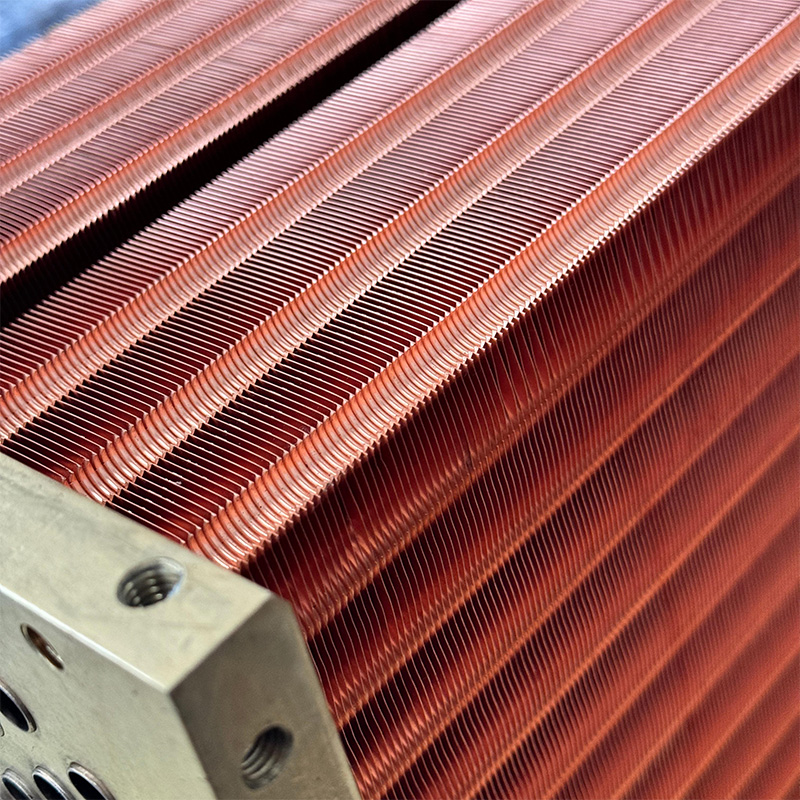
Компания специализируется на разработке и производстве сложного теплообменного и нефтехимического оборудования, где требования к механической прочности и коррозионной стойкости максимальны. В их продуктовой линейке представлены высоконапорные теплообменники стандарта ASME, титановые кожухотрубные аппараты и воздушные охладители, критически важные для нефтепереработки, химической промышленности и судостроения.
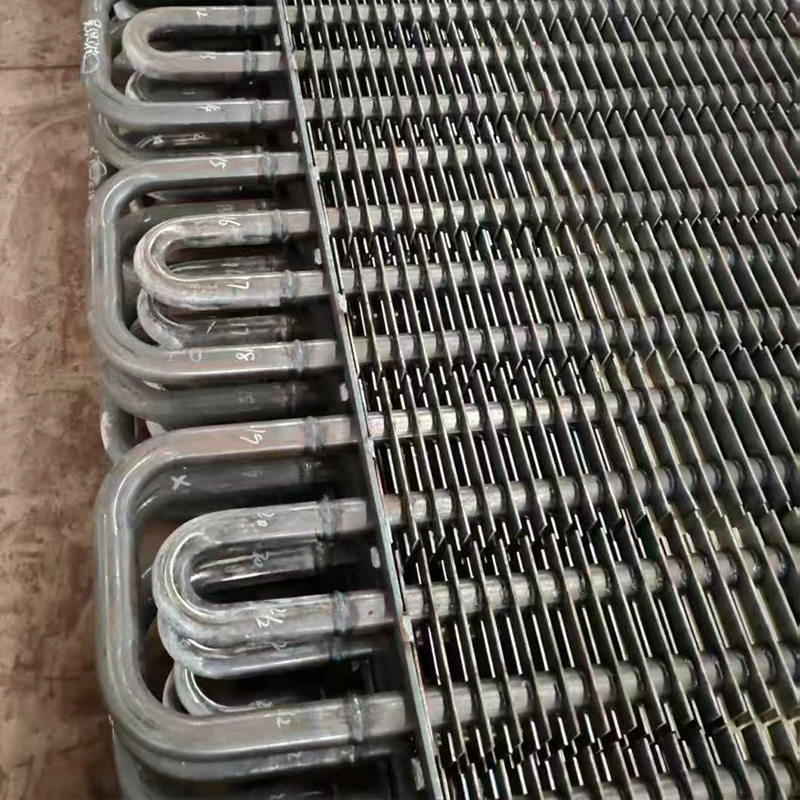
Особое внимание в производстве уделяется качеству трубных пучков. Например, гофрированные трубные пучки из нержавеющей стали AISI 316, изготавливаемые компанией, демонстрируют повышенную устойчивость к вибрационным нагрузкам и температурным деформациям по сравнению с гладкими аналогами. Использование сплавов морской латуни C46400, медно-никелевых композиций и никелевых сплавов N06625 позволяет создавать решения для экстремальных сред, включая опреснение морской воды и работу с агрессивными химреагентами.
Продукция «Уси Кайшэн» сертифицирована по международным стандартам PED и ASME, что гарантирует соответствие заявленным механическим характеристикам. Каждый элемент, будь то трубная решетка из стали 321 или латуни C70600, проходит строгий контроль качества. Сотрудничество с таким производителем позволяет заказчикам по всему миру получать не просто отдельные трубы, а готовые инженерные решения, где механическая стойкость заложена на этапе проектирования и подтверждена реальными испытаниями.
Frequently Asked Questions
Какая минимальная толщина стенки трубы 40 мм допустима для промышленного использования?
Для промышленных систем, где возможны механические воздействия, мы категорически не рекомендуем использовать трубы с толщиной стенки менее 2.5 мм. Оптимальным диапазоном для обеспечения баланса между прочностью и стоимостью является 3.0–4.0 мм. Трубы толщиной 1.0–1.5 мм подходят исключительно для декоративных целей или внутренних полостей оборудования, куда невозможен физический доступ.
Можно ли восстановить трубу после получения вмятины?
Нет, выправлять вмятины на нержавеющих трубах, особенно работающих под давлением, запрещено. Процесс правки создает зоны остаточных напряжений и микротрещин, которые неизбежно приведут к разрушению под нагрузкой. Поврежденный участок трубы должен быть вырезан и заменен новым. Попытка рихтовки — это прямое нарушение правил промышленной безопасности.
Как отличить качественную бесшовную трубу от сварной визуально?
Визуально отличить качественную сварную трубу (с удаленным гртом и шлифованным швом) от бесшовной практически невозможно без специального оборудования. Единственный надежный способ — наличие маркировки на самой трубе или бирке, а также проверка сопроводительной документации (сертификата MTC). Также можно использовать портативный спектрометр для анализа химического состава шва, если он доступен, но документальное подтверждение остается главным аргументом.
Влияет ли полировка поверхности на механическую прочность?
Полировка сама по себе не увеличивает прочность металла на разрыв, но она значительно повышает усталостную стойкость. Гладкая поверхность без рисок и царапин меньше подвержена зарождению трещин под воздействием вибрации. Кроме того, полированная поверхность легче моется и меньше накапливает агрессивные отложения, что косвенно продлевает срок службы трубы в corrosive средах.
Выбор правильной трубы — это начало долгой и безопасной эксплуатации. Если у вас остались сомнения в подборе марки стали или толщины стенки для вашего конкретного проекта, наши инженеры готовы провести бесплатный аудит вашей спецификации. Мы поможем избежать ошибок, которые могут стоить миллионов.
Перейти в каталог нержавеющих трубдля изучения полного ассортимента продукции с сертификатами качества.
Свяжитесь с нами сегодня для получения детальной консультации и расчета стоимости партии с учетом всех требований к механической стойкости.