
Equal tee 304/304L: symmetrical network branching
2026-07-13
Equal tee 304/304L: symmetrical network branching and selection criteria for industrial pipelines
The 304/304L equal tee is not just a fitting, but a key element in ensuring hydraulic balance in high pressure systems. In our practice, we have repeatedly encountered situations where the use of cheap analogues made of 201 steel or the lack of heat treatment led to intergranular corrosion after only 6–8 months of operation in aggressive environments. The correct choice between AISI 304 and AISI 304L grades determines not only the service life of the unit, but also the safety of the entire technological process, especially at temperatures above 450°C or under cryogenic cooling conditions. This article is based on real-world experience with more than 15,000 fittings supplied to the oil, gas and food processing industries, where every parameter, from surface roughness to chemical composition, affects the overall reliability of the system.
We'll start with a detailed breakdown of the differences between standard and low-carbon steel, as this is where 70% of purchasing mistakes are made. Then we will move on to the technical requirements of GOST and ASME, which are often ignored by suppliers offering “budget solutions”. You will learn why a visual inspection is not enough and what documents you need to request from the manufacturer before paying the invoice. If you are a design engineer or procurement manager, this information will save you budget on unscheduled repairs and production downtime.
Critical difference: AISI 304 vs AISI 304L in welding and high temperature conditions
The choice between a 304 steel and a 304L tee often comes down to a question of carbon content, but the consequences of this choice go far beyond the chemistry table. AISI 304 steel contains up to 0.08% carbon, which provides high strength, but creates risks during welding. When heated in the heat affected zone (HAZ), carbon combines with chromium to form chromium carbides. This phenomenon, known as sensitization, causes the grain boundaries to be depleted of chromium, leaving the material vulnerable to corrosion. In our practice, one of our clients experienced a coolant leak at a chemical plant precisely because of the use of 304 tees instead of 304L in a welded assembly operating at a temperature of 500°C. The renovation cost the company three times more than the initial savings on materials.
AISI 304L (Low Carbon) steel contains no more than 0.03% carbon. This reduction in carbon content virtually eliminates the formation of chromium carbides during welding, allowing the fittings to be used in welded structures without subsequent heat treatment (annealing). However, it is important to understand: 304L has slightly lower mechanical properties at room temperature compared to 304, although for most piping systems this difference is not significant. If your project involves complex site welding or operation in temperature ranges of 425-815°C, choosing the 304L is a requirement, not a recommendation.
On the other hand, if the connection is made using the flange method or using threaded fittings, where the hot zone is minimal, using standard 304 steel may be economically justified. But here lies the catch: many unscrupulous manufacturers label 201 steel as 304, saving on nickel. Nickel is responsible for the austenitic structure and ductility. Its disadvantage makes the tee brittle at low temperatures. We recommend that you always request a quality certificate with a breakdown of the chemical composition by melt, and not by batch, to ensure compliance with the declared brand.
In the context of a symmetrical branching network, where liquid or gas flows are distributed evenly, the uniformity of the metal structure is critical. Any inhomogeneity caused by improper heat treatment or poor casting/stamping technology can lead to turbulence and cavitation at the branch point. This causes vibration, which will eventually destroy the welds. Therefore, when ordering equal tees 304/304L, specify the manufacturing method: seamless products are always preferable to welded ones for critical high-pressure components.
Technical parameters and quality standards: what to look for in the specification
When working with industrial pipelines, the words “quality” or “reliable” have no meaning without reference to specific numbers and standards. An equal tee must meet strict geometric and mechanical tolerances. The main standards governing the production of such fittings in the international and Russian space are ASME B16.9 (factory forged fittings), ASTM A403 (material specification) and GOST 17376-2001 (welded steel pipeline parts). Understanding the differences between these standards helps to avoid problems when accepting goods and undergoing industrial safety examinations.
ASME B16.9 specifies dimensions, ovality tolerances, wall thickness and markings. For equal tees, the “run and branch wall thickness” parameter is critical. Cheap analogues often have thinning at the junction, which creates a stress point. According to our measurements, a deviation in wall thickness of more than 12.5% from the nominal value (ASME tolerance) is a defect that cannot be allowed into a system with a pressure above 1.6 MPa. In addition, the standard requires clear marking of each product: steel grade, size, heat number and manufacturer's logo must be applied by branding or abrasion-resistant laser engraving.
In Russia and the EAEU countries, compliance with the Technical Regulations of the Customs Union TR CU 032/2013 “On the safety of equipment operating under excess pressure” is a mandatory requirement. The presence of an EAC certificate confirms that the tee has been tested for tightness and strength. However, the presence of a certificate does not guarantee the quality of each unit of product. We advise you to pay attention to the manufacturing accuracy class. For the food industry (AISI 304/304L) an internal surface roughness of Ra ≤ 0.8 µm is required (electropolishing), while for general industrial needs Ra ≤ 3.2 µm is sufficient (picking and passivation).
Mechanical properties also play a role. The yield strength (Yield Strength) for AISI 304 is a minimum of 205 MPa, and for 304L - 170 MPa. Tensile Strength for both grades is no less than 515 MPa. The relative elongation must be at least 40%. These figures are important when calculating thermal expansion compensators. If the tee is too rigid or, conversely, too flexible, it may not withstand cyclic loads. In one of our projects, an incorrect calculation of the safety factor led to deformation of the branching unit during a water hammer, although the pressure was within normal limits. Always consider dynamic loads, not just static operating pressure.
| Parameter | AISI 304 (Standard) | AISI 304L (Low carbon) | Critical to the project |
|---|---|---|---|
| Carbon content (C) | Max. 0.08% | Max. 0.03% | Risk of intergranular corrosion during welding |
| Nickel content (Ni) | 8.0 – 10.5% | 8.0 – 12.0% | Corrosion resistance and ductility |
| Yield Strength (Min) | 205 MPa | 170 MPa | Permissible load per node |
| Heat treatment after welding | Required (annealing) | Not required | Installation cost and launch time |
| Application | General industry, food (without welding) | Chemistry, energy, cryogenics, welded assemblies | Safety and durability |
Checking the geometry of the tee is another step that should not be skipped. Symmetrical branching implies that the branch angle is exactly 90 degrees (or another angle specified in the project) with a tolerance of ±1 degree. Misalignment of even 2 degrees creates a constant load on the flange joint or weld, leading to fatigue failure. Use gauges and protractors during incoming inspection. Also check the alignment of the ends: displacement of the axes of the main passage and the branch is unacceptable for high-class seamless fittings.
Typical mistakes during procurement and installation: lessons from real practice
Experience shows that most accidents occur not due to defects in the metal itself, but due to errors in the logistics, storage and installation stages. The first common mistake is violating the storage conditions of stainless steel. Contact with carbon steel (ferrous metal) is detrimental to stainless steel. Iron particles that fall on the surface of the 304/304L tee when stored in a common area or transported in the same container with black pipes begin to rust. This “free iron dust” initiates pitting corrosion, which quickly penetrates deep into the material. In our practice, there was a case when a batch of 500 tees was rejected by the customer a month after delivery precisely because of the appearance of rust stains, although the metal itself was of high quality.
The second mistake is improper preparation of edges for welding. Many installers use conventional abrasive wheels, which were previously used for cutting ferrous metal. This is strictly prohibited. The wheels must be new and designed for stainless steel only. Contamination of the welding area with oil, paint or moisture also leads to pores in the weld and reduced corrosion resistance. Before welding, the edges of the equal tee must be degreased with special solvents based on acetone or alcohol that do not contain chlorine. Chlorine causes stress corrosion cracking.
The third problem is ignoring passivation after installation. Even if you used 304L steel and high-quality welding, the weld zone loses its protective properties due to heating and burnout of alloying elements. Without subsequent treatment with pickling and passivation paste, the seam will become a weak link. We strongly recommend that the passivation service be included in the supply contract or carried out by specialized contractors immediately after completion of installation work. This extends the service life of the unit by 2–3 times.
The fourth nuance concerns hydraulic calculations. An equal tee creates local resistance to flow. The coefficient of local resistance depends on the radius of the transition and the quality of the internal surface. The use of tees with sharp corners on the inside (often found in poor quality castings) increases pressure loss and creates stagnation zones where deposits can accumulate or bacteria can grow (in food systems). Seamless hot-rolled or stamped tees with smooth transitions are preferred for systems with high requirements for hygiene or energy efficiency of pumping equipment.
Finally, there is an error in the documentation. Suppliers often provide generic batch certificates, which are easy to counterfeit. Require a Mill Test Certificate (MTC) Type 3.1 to EN 10204. This document contains specific test results for the exact melt your tees are made from and is signed by a mill representative and an independent inspector. The absence of MTC 3.1 is a red flag indicating possible problems with material traceability.
Areas of application and specific operation of tees 304/304L
The versatility of AISI 304/304L stainless steel makes equal tees popular in a variety of industries, but the requirements for them in each sector vary significantly. In the food and pharmaceutical industry (Food & Beverage, Pharma), the main criterion is hygiene and the possibility of sanitization. Here, tees are used with a polished inner surface (Ra ≤ 0.4–0.8 μm) and a special shape that eliminates stagnant zones. Welding should be done under backflush argon to ensure the internal weld is smooth and does not protrude into the flow. Any roughness becomes a site for the accumulation of biofilm, which is unacceptable according to HACCP and GMP standards.
In the chemical and petrochemical industries, resistance to aggressive environments comes to the fore. Although 304/304L has good resistance to many organic acids and oxidizing agents, it is vulnerable to chlorides. If your environment contains even small concentrations of chlorine (for example, sea water or some reagents), the risk of pitting corrosion increases many times over. In such cases, engineers often mistakenly rely on 304L when switching to AISI 316L steel with added molybdenum is required. However, for many petroleum refining, fertilizer and pulp and paper applications, 304L remains the optimal balance of price and performance, especially at moderate temperatures.
The energy sector, including nuclear and thermal power plants, places stringent requirements on reliability and service life. Here tees operate under high temperature and pressure conditions, often with cyclic loads. The use of 304L steel reduces the requirements for heat treatment of welded joints, which simplifies the installation of complex piping systems for boilers and turbines. However, quality control must be total: ultrasonic flaw detection, radiographic inspection of seams and high-pressure hydrotesting are mandatory procedures before commissioning.
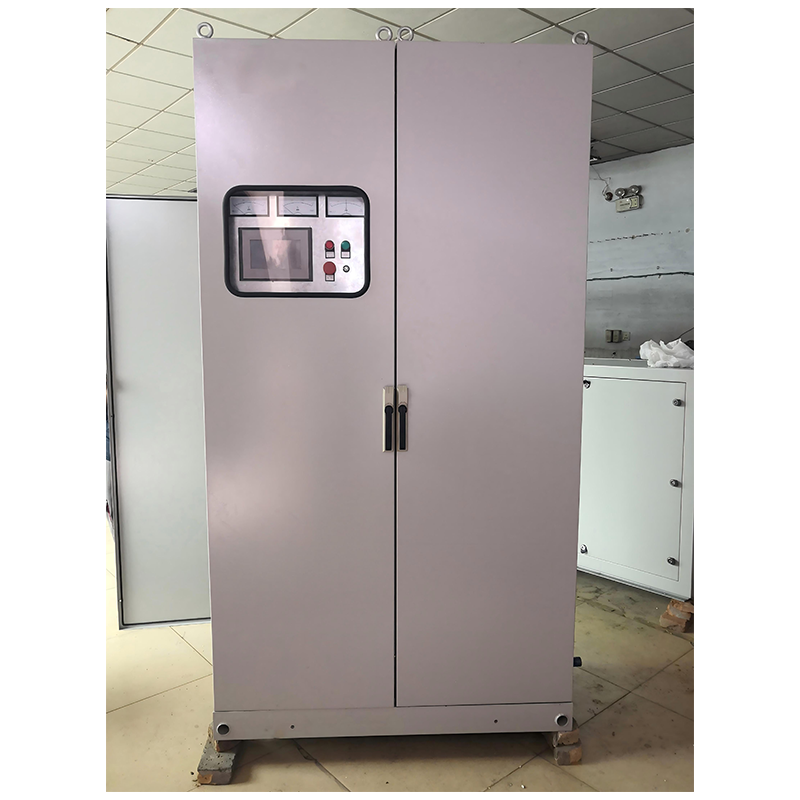
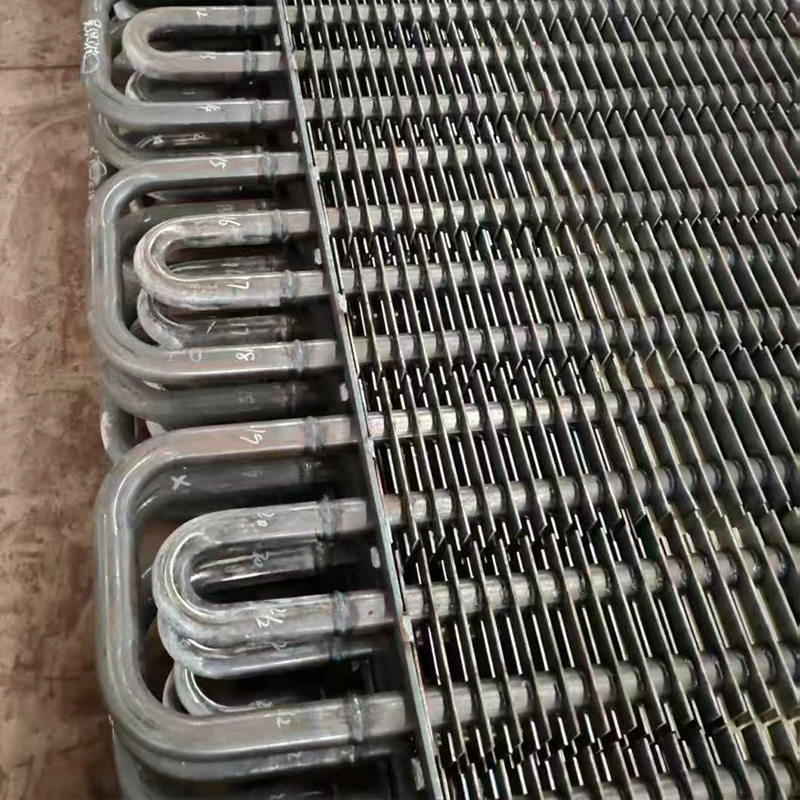
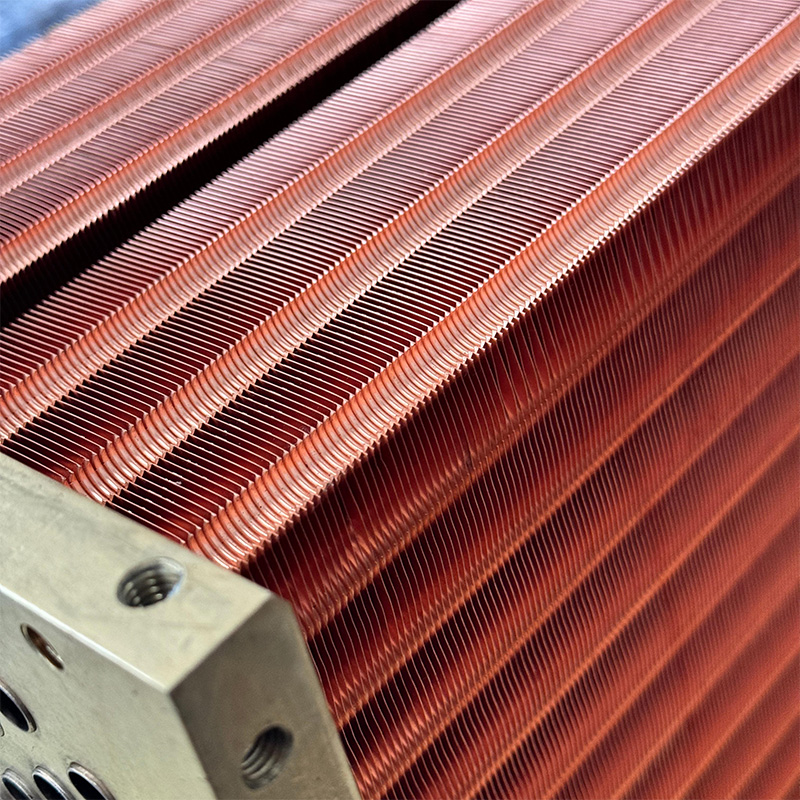
It is in critical sectors such as oil refining, petrochemicals and energy that the competence of the equipment manufacturer plays a key role.Wuxi Kaisheng Electric Power and Petrochemical Equipment Co., Ltd.specializes in the development and production of highly loaded components, including heat exchange equipment and pipeline fittings. Our experience with ASME and PED certified materials allows us to guarantee the highest quality products. We manufacture components in a wide range of alloys, from 304/304L and 321 stainless steel to titanium, C46400 marine brass, C70600 copper-nickel alloys and N06625 nickel alloys. Our products, which include tube sheets, corrugated tube bundles and air cooler components, are successfully used in extreme pressure, temperature and hostile environments such as seawater desalination and shipbuilding. By choosing a supplier with deep expertise in metallurgy and manufacturing, you get not just a part, but an engineering solution that ensures the stability of your production.
In construction and architecture, 304 tees are used to create decorative structures, handrails and water supply systems for buildings. The aesthetics of the surface (grinding, mirror polishing) and weather resistance are important here. In urban environments with polluted air (smog, reagents), ordinary 304 steel can tarnish, so 316 is more often recommended for façade elements, but for internal systems 304 is quite sufficient. Cryogenic technology is another niche where 304L is indispensable due to its viscosity retention at ultra-low temperatures (down to -196°C for liquid nitrogen).
Logistics, pricing and selection of a reliable supplier
The market for stainless steel fittings is oversaturated with offers, but the price often hides pitfalls. The cost of an equal bore tee 304/304L is formed from the cost of raw materials (nickel and chromium make up a significant part of the price), production technology (seamless ones are more expensive than welded ones), order volume and logistics. An attempt to save 10–15% on the unit price can result in losses of millions of rubles due to downtime and accidents. We have observed a trend where suppliers reduce the nickel content to the minimum acceptable limit or replace it with manganese (201 steel), passing off the product as 304. Externally, it is almost impossible to distinguish them without spectral analysis.
When choosing a supplier, pay attention to his specialization. Universal trading houses that sell “everything from a nail to a turbine” rarely have deep expertise in stainless steels. It is better to work with companies that focus on pipeline fittings and have their own warehouses of certified metal, as is implemented in the production model of Wuxi Kaisheng LLC. Having our own production and warehouses speeds up delivery and allows for selective quality control before payment of the full amount. The minimum shipment quantity (MOQ) is usually from 10 pieces for large diameters and from 50–100 pieces for small standard sizes, but large distributors are often ready to ship small wholesale quantities, providing individual solutions for the customer’s needs.
Delivery times depend on the availability of goods in stock and the need for certification. Standard sizes (DN15-DN100) are usually in stock and can be shipped within 3-5 business days. Non-standard sizes or special designs (reinforced walls, special polishing) require production to order, which takes from 4 to 8 weeks. When importing from Asia, customs clearance and possible delays must be taken into account. When working with local suppliers or direct manufacturers with a representative office, you receive a guarantee of compliance with GOST and simplified document flow.
Financial conditions are also important. Reliable suppliers are ready to work under a contract with deferred payment for regular customers or provide bank guarantees of quality. Avoid making 100% advance payments to new counterparties without checking your reputation. Request a reference list and contact their current clients to inquire about meeting deadlines and product quality. Transparency in pricing is a sign of honesty: the price must include packaging, labeling and a basic set of documents (quality certificate, certificate of conformity).
Frequently Asked Questions
В чем главная разница между тройником 304 и 304L?
Главное отличие заключается в содержании углерода: в марке 304L оно снижено до 0.03%, что предотвращает межкристаллитную коррозию при сварке. Если вы планируете сваривать тройник на месте монтажа или эксплуатировать его при температурах 450–850°C, выбирайте 304L. Для фланцевых соединений и умеренных температур подойдет и стандартная 304.
Можно ли использовать тройники 304 для морской воды?
Нет, это рискованно. Морская вода содержит хлориды, которые вызывают питтинговую коррозию стали 304 даже в пассивном состоянии. For such environments, AISI 316L steel with added molybdenum or higher alloys (duplex steels) are required. Using 304 in seawater will cause rapid fistula formation and leakage.
Как проверить подлинность стали 304/304L пр и получении?
Визуально отличить 304 от 201 невозможно. Единственный надежный способ — запросить сертификат MTC 3.1 с указанием номера плавки и химического состава. Дополнительно можно использовать портативный спектрометр для экспресс-анализа или провести тест с медным купоросом (хотя он менее точен). Наличие клейма на каждом изделии обязательно.
Какой срок службы тройников из нержавеющей стали?
При правильной эксплуатации, отсутствии агрессивных сред и соблюдении технологий монтажа срок службы превышает 20–30 лет. В агрессивных химических средах или при высоких динамических нагрузках ресурс может сократиться до 5–10 лет, требуя регулярного мониторинга толщины стенок и состояния сварных швов.
Нужна ли специальная упаковка при транспортировке?
Да, обязательна. Изделия должны быть упакованы в деревянную тару или прочные картонные коробки с разделителями, исключающими контакт металла с металлом. Поверхность должна быть защищена полиэтиленовой пленкой или бумагой. Контакт с углеродистой сталью при перевозке недопустим.
Conclusion and recommendations for action
Тройник равнопроходной 304/304L — это инвестиция в безопасность и бесперебойность вашего производства. Выбор правильной марки стали, контроль качества при приемке и соблюдение технологий монтажа позволяют избежать дорогостоящих аварий и простоев. Не экономьте на фитингах, которые являются несущими элементами вашей трубопроводной системы. Доверяйте только проверенным поставщикам, предоставляющим полную документацию и гарантию на продукцию.
Если вы планируете модернизацию существующих сетей или строительство нового объекта, свяжитесь с нами для получения детального коммерческого предложения. Мы предлагаем широкий ассортимент тройников равнопроходных из стали AISI 304 и 304L различных диаметров и исполнений, полностью соответствующих ГОСТ и ASME. Опираясь на опыт ООО «Уси Кайшэн» в создании сложного оборудования для нефтегазовой и энергетической отраслей, наши специалисты помогут подобрать оптимальное решение под ваши задачи, обеспечат оперативную доставку и сопровождение проекта.
Перейти в каталог нержавеющих тройниковдля ознакомления с полным списком доступных размеров и технических характеристик.Contact us today, чтобы обсудить условия поставки и получить образцы продукции для тестирования.