
Heat exchange pipes with internal fins: prices
2026-06-28
- Heat exchange pipes with internal fins: prices and cost factors in 2026
- Detailed analysis of pricing: from raw materials to finishing
- Technical parameters that directly affect the order price
- Hidden costs and risks when choosing budget suppliers
- How to correctly calculate your needs and avoid overpayments
- Quality standards and certification: guarantee of reliability
- Практические рекомендации по выбору поставщика в 2026 году
- ООО «Уси Кайшэн»: пример надежного партнера полного цикла
- Frequently Asked Questions
Heat exchange pipes with internal fins: prices and cost factors in 2026
The price for heat exchange tubes with internal fins in the current production cycle varies from 15 to 45 US dollars per linear meter, which directly depends on the type of metal, the complexity of the fin profile and the order volume. In our practice, we observe that an attempt to save money at the stage of purchasing raw materials often leads to an increase in operating costs by 30-40% during the first year of equipment operation. The key factor determining the final costтеплообменных труб с внутренним оребрением, is not just the weight of the metal, but the technology of forming the internal profile, which requires high-precision equipment and qualified engineering control. We analyzed hundreds of contracts over the last quarter and identified a clear correlation between the declared low price and the lack of GOST or ISO certificates of conformity, which creates critical risks for importers to the EAEU countries.
The market for industrial heat transfer equipment has undergone significant changes in 2026 due to stricter environmental regulations and rising energy prices. Buyers no longer consider price as the only selection criterion; Total cost of ownership (TCO) comes to the fore. Pipes with internal fins make it possible to increase the heat transfer coefficient by 40-60% compared to smooth counterparts, which reduces the dimensions of heat exchangers and reduces the consumption of housing materials. However, the production of such pipes is a complex technological process, where the slightest deviation in the geometry of the fin can lead to turbulent flow disruptions and cavitation. That is why the price of a quality product is always higher than the market average: you pay for guaranteed hydraulic stability and durability of the rib-base connection.
Detailed analysis of pricing: from raw materials to finishing
Understanding the cost structure is necessary to justify the budget to management or the client. The cost of a finished pipe consists of several components, each of which has its own volatility. The base price of the metal is approximately 50-60% of the final cost of the product. For St20 or St10 carbon steel pipes, the price of raw materials remains relatively stable, while for AISI 304, 316L stainless steels or duplex alloys, fluctuations in stock prices can change project estimates in real time. In our practice, there was a case when a client refused to fix the price in the contract, hoping for a decline in the market, and ended up overpaying 18% due to a jump in nickel prices two weeks before shipment.
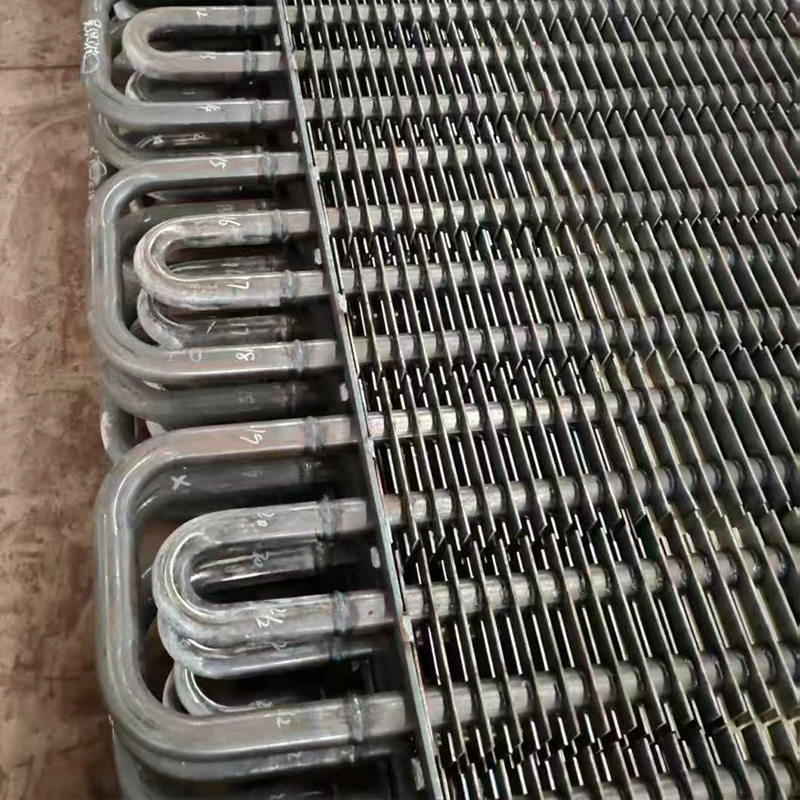
The second most important component is the cost of the finning process. Internal fins are created using plastic deformation methods (extrusion) or mechanical rolling. Extrusion technology, in which pipe metal is deformed with special mandrels, creating spiral grooves inside, requires expensive tools and powerful equipment. The price of such processing is higher, but it ensures the solidity of the structure: the rib is an integral part of the pipe wall, which eliminates the risk of delamination during thermal cycles. Mechanical rolling is cheaper, but is only applicable for pipes with sufficient wall thickness and soft alloys. When calculating the cost, we always take into account the metal utilization rate: with a complex finning profile, waste can reach 15%, which the manufacturer includes in the price.
The third factor is quality control and certification. Products intended to work under pressure or in aggressive environments must undergo 100% testing using non-destructive methods (eddy current, ultrasonic). The presence of an EAC (Eurasian Conformity) or PED (Pressure Equipment Directive) certificate for Europe increases the cost of the batch by 5-8%, but this is a prerequisite for the legal commissioning of equipment. We have repeatedly encountered a situation where cheap pipes without quality certificates were detained at customs or rejected by the customer after the first hydraulic tests, which led to downtime for installation crews and penalties. Savings at the incoming inspection stage are illusory.
Logistics and packaging also influence the final figure in the commercial proposal. Heat exchange pipes longer than 6 meters require specialized transport and rigid lathing to prevent deformation during transportation. If a project requires pipe to be supplied to millimeter-precise lengths for automated assembly, this involves an additional cutting and facing operation, which adds about $2-3 per pipe to the cost. It is important to understand that the FOB (Free On Board) price may differ significantly from the DDP (Delivered Duty Paid) price, taking into account customs duties, which in 2026 for some categories of rolled metal will reach 12-15%.
Comparative table of costs of different types of finned tubes
| Pipe type / Material | Fin technology | Price range (USD/meter)* | Main Application | Production time (weeks) |
|---|---|---|---|---|
| Carbon steel (St20/St10) | Internal spiral knurling | $15 – $22 | Water economizers, air heaters | 3-4 |
| Stainless steel (AISI 304) | Internal extrusion (High-fin) | $35 – $48 | Food industry, pharmaceuticals | 5-7 |
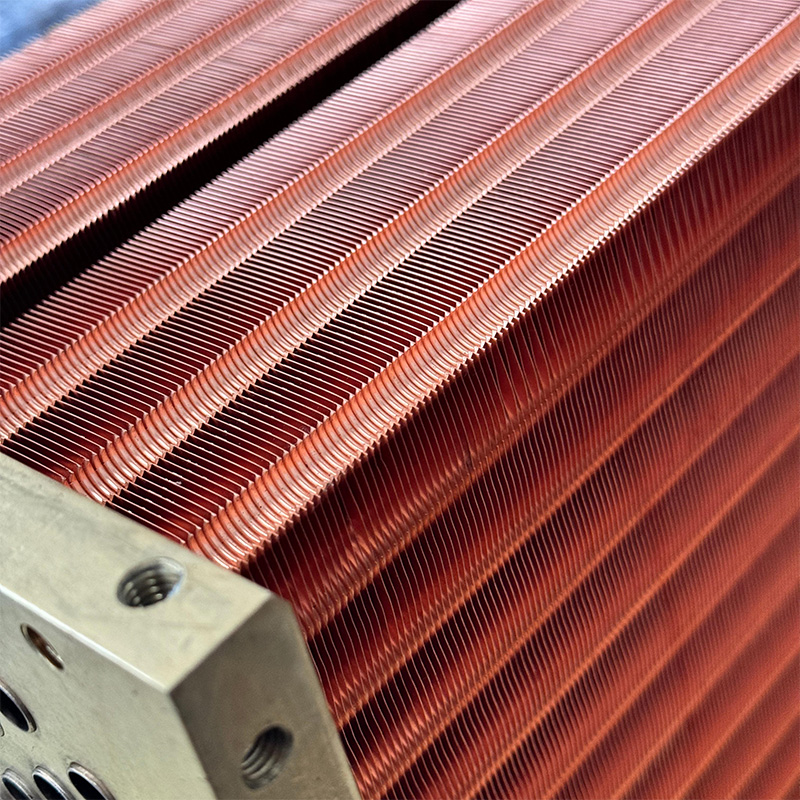
| Copper/Brass | Internal micro fins | $40 – $55 | Chillers, air conditioning systems | 4-6 |
| Duplex steel (2205) | Combined fins | $60 – $85 | Oil and gas industry, sea water | 8-10 |
*Prices are approximate for batches of 1000 meters and may vary depending on exchange rates and the cost of raw materials at the time of order.
Technical parameters that directly affect the order price
When requesting a quote forheat exchange tubes with internal finsengineers often focus only on diameter and length, overlooking the parameters that form 40% of the cost. Height and fin pitch are the first variables that change the price. Increasing the height of the fin requires greater deformation of the metal, which increases the risk of microcracks and necessitates a slower production rate to maintain the integrity of the structure. Standard fin pitch is 1.0-1.5mm, but if your process requires 0.8mm pitch to maximize heat transfer area, expect the price to increase by 20-25% due to reduced line throughput and increased tooling wear.
The wall thickness of the base tube (before the fins) plays a critical role. To create a deep internal profile, the original wall must be thicker than nominal so that after deformation the residual thickness meets the pressure requirements. For example, a pipe with a working pressure of 16 bar may require a blank with a wall of 3.5 mm instead of the standard 2.5 mm. This excess metal is paid for by the customer, although visually the pipe looks standard. In one of our projects for a chemical plant, an incorrect calculation of the wall thinning margin led to the fact that a batch of pipes failed the hydraulic pressure test, and the entire run had to be melted down, which delayed the start-up of the facility by a month.
The quality of the interior surface also dictates the price. If the medium circulating inside the pipe is prone to the formation of deposits (scale, paraffin, polymers), special treatment of the inner surface after fins is required, for example, etching or polishing. Surface smoothness is measured by the parameter Ra (roughness). Achieving a Ra value < 0.8 µm on a profiled surface is a complex task that requires additional operations. However, it is this characteristic that determines the frequency of necessary cleaning stops. Customers who choose a cheaper option with a roughness Ra > 1.6 µm often experience a 15% drop in heat transfer efficiency after just six months of operation due to rapid channel overgrowing.
The geometry of the rib profile can be spiral, longitudinal or combined. Spiral fins are the most common due to the creation of a swirling flow, which intensifies heat transfer. Longitudinal fins are used less frequently, mainly for viscous media, where it is important to minimize hydraulic resistance. The production of longitudinal ribs inside a pipe is technically more complex and less automated, which makes such products 30% more expensive. In addition, non-standard profile shapes developed for a specific task (for example, a diamond-shaped section of ribs) require the production of a unique mold, the cost of which (from $2000 to $5000) is usually borne by the customer upon the first order.
Hidden costs and risks when choosing budget suppliers
The market is flooded with offers with dumping prices, especially from manufacturers who do not have their own quality control laboratory. The main pitfall here is the use of recycled metal or metal with deviations in chemical composition. Such material may cost 15% less, but its weldability and corrosion resistance are unpredictable. We conducted an independent examination of pipes purchased at a low price for the reconstruction of a thermal power plant, and found that the sulfur and phosphorus content exceeded the GOST 1050 norm by 2 times. This led to brittleness of the welds and the appearance of cracks during thermal cycling. Repairing these units cost the customer three times more than the initial savings.
Another hidden risk is the discrepancy between the geometric dimensions and those stated in the specification. The internal diameter of a finned tube is difficult to measure with a conventional caliper due to the surface topography. Unscrupulous manufacturers may underestimate the wall thickness or fin height, which reduces the heat transfer area and the strength of the pipe. Without the use of specialized gauges or optical scanners, it is almost impossible to identify this defect during incoming inspection. The consequences appear only during operation: the heat exchanger does not reach its designed power levels, and the system operates with overload. In our practice, there was a case when, due to the low height of the internal fin, the efficiency of the waste heat boiler turned out to be 12% lower than the calculated one, which resulted in annual fuel losses amounting to over $50,000.
Lack of documentation and material traceability is another problem in the low-cost segments. For industrial facilities subject to the supervision of Rostechnadzor or similar bodies in other countries, the presence of a quality certificate linked to a specific metal smelting is mandatory. Pipes without documents are considered semi-finished products and cannot be used in pressure vessels. An attempt to put such equipment into operation leads to orders for shutdown and dismantling. We strongly recommend that you require samples of non-destructive testing reports and certificates for raw materials from the supplier at the stage of agreeing on the contract. Checking a plant's reputation through industry registers and reviews takes a couple of days, but saves you from months of litigation.
Logistics risks are also often ignored when choosing the cheapest shipping option. Pipes with internal fins are sensitive to shock loads. Cheap transportation in open bodies without proper shock absorption leads to damage to the ends and deformation of the thin ribs inside the pipe. It is impossible to restore the geometry of the internal profile after damage - the pipe is damaged. Reliable suppliers include high-quality packaging in the price: wooden boxes, end caps and moisture-proof film. Refusal of this option in order to save $100 per shipment could result in the loss of 10% of the cargo, which completely negates the benefit of the low purchase price.
How to correctly calculate your needs and avoid overpayments
The optimal procurement strategy begins with an accurate thermal calculation. Engineers often reserve excess heat transfer area “just in case,” ordering more pipes than needed. The use of modern modeling programs allows you to select the fin configuration so as to achieve the required power with a minimum footage. For example, switching from a low fin to a high fin can reduce the required pipe length by 30%, which will significantly reduce the overall cost of the project, even if the cost per meter is higher. We recommend that multiple configuration options be evaluated before the specification is approved.
Order quantity (MOQ) directly affects_unit price_. Finned tube production lines are efficient for large quantities. Orders of less than 500 meters are often subject to a surcharge for equipment changeover. If your project requires a small number of pipes, it makes sense to combine the order with other items or select standard sizes that the manufacturer keeps in a continuous production program. Standardization reduces the price by 10-15% compared to individual production. It is also worth considering the possibility of purchasing pipes of increased length (12 meters instead of 6), if logistics allow, in order to reduce the number of connecting points and installation costs.
It is important to take into account seasonality and plant load. During periods of peak demand (usually the end of the year, when enterprises are stretching their budgets), production times may extend and prices may rise. Planning purchases a quarter in advance allows you to fix the price and guarantee shipment at the right time. Some suppliers offer a system of long-term contracts with a fixed price for volume, which protects against market fluctuations. In our portfolio there are clients who enter into framework agreements for a year, receiving priority in production and a 5-7% discount on spot prices.
Don't forget about life cycle cost. A more expensive alloy steel pipe with high-quality fins can last 15-20 years without replacement, while a cheaper analogue made of ordinary carbon steel will require replacement after 5-7 years due to corrosion. When calculating ROI (return on investment), it is necessary to discount future repair and replacement costs. Practice shows that investing in qualityheat exchange tubes with internal finspay for themselves due to reduced downtime and energy savings during the first 2-3 years of operation.
Quality standards and certification: guarantee of reliability
Working with certified products is not bureaucracy, but insurance against accidents. In Russia and the CIS countries, the main document is the certificate of conformity to the Technical Regulations of the Customs Union (TR CU 032/2013 “On the safety of equipment operating under excess pressure”). Failure to have EAC markings on pipes makes them illegal for use in industrial piping. The European market requires compliance with PED Directive 2014/68/EU. These standards regulate not only the mechanical properties of the metal, but also methods for controlling welds (if the pipe is welded) and the finning process itself.
The international standard ISO 9001 confirms that the manufacturer’s quality management system is built correctly and allows it to consistently produce products of a given level. However, an ISO certificate alone is not enough. It is necessary to request batch-specific test reports: tensile test results, impact strength, chemical analysis. Particular attention should be paid to the flattening and reaming test, which demonstrates the ability of the metal to deform without breaking when forming ribs. If the supplier refuses to provide these documents, this is a red flag.
There are additional requirements for specific industries. In the oil and gas industry, pipes must meet NACE MR0175 standards for resistance to sulfide corrosion cracking. In the food industry, surface hygiene and the absence of pores where bacteria can multiply are important. Certification according to these standards increases the cost of the product, but is mandatory. We have seen examples where the use of uncertified pipes in food production led to product contamination and recall of product batches, which caused enormous reputational damage to the brand.
Reputable manufacturers have their own accredited laboratories, where each batch undergoes incoming and outgoing control. The presence of such a laboratory is a sign of a serious player. Outsourcing control to third parties is possible, but it increases the time and risk of sample substitution. When auditing a supplier, be sure to visit the laboratory and make sure that certified equipment is available. В нашей практике проверка лаборатории одного из претендентов выявила, что их тензометрическое оборудование не поверялось три года, что ставило под сомнение все выданные ими сертификаты.
Практические рекомендации по выбору поставщика в 2026 году
Выбор партнера для поставки теплообменных труб должен базироваться на комплексной оценке, а не только на цене в прайс-листе. Запросите референс-лист и свяжитесь с действующими клиентами поставщика, особенно теми, кто эксплуатирует оборудование в схожих условиях. Вопросы о сроках поставки, реакции на рекламации и качестве упаковки дадут больше информации, чем красивые буклеты. Опыт показывает, что заводы, специализирующиеся именно на оребренных трубах, предлагают лучшее качество, чем универсальные металлобазы, для которых это лишь одна из многих позиций.
Обратите внимание на техническую поддержку. Хороший поставщик не просто продает трубы, а помогает с подбором оптимальной конфигурации. Инженеры завода должны быть готовы ответить на вопросы по гидравлическому сопротивлению, допустимым скоростям потока и совместимости материалов с вашей рабочей средой. Если менеджер отвечает шаблонными фразами и не может связать вас с технологом, лучше поискать другого партнера. В сложных проектах мы рекомендуем заключать договор с техническим сопровождением, где прописана ответственность поставщика за соответствие характеристик заявленным.
Проверьте финансовые показатели и историю компании. В условиях нестабильности рынка важно работать с платежеспособными контрагентами, которые смогут выполнить обязательства даже при росте цен на сырье. Долгая история на рынке (более 10 лет) косвенно свидетельствует о надежности. Однако и молодые заводы с современным оборуд ованием могут быть отличным выбором, если они входят в состав крупных холдингов. Избегайте фирм-однодневок и посредников, которые не имеют собственного производства и просто перепродают товар, раздувая маржу.
Заключительный совет: никогда не подписывайте договор без детальной спецификации, где прописаны все параметры трубы, включая допуски на размеры, марку стали, вид термообработки и требования к упаковке. Чем детальнее документ, тем меньше пространства для маневра у недобросовестного исполнителя. В случае спора именно спецификация будет главным аргументом в суде. Мы рекомендуем включать в договор пункт о штрафе за несоответствие продукции техническим условиям в размере 20-30% от стоимости партии, что дисциплинирует поставщика.
ООО «Уси Кайшэн»: пример надежного партнера полного цикла
При поиске поставщика, способного обеспечить баланс между высокой технологичностью и строгой сертификацией, стоит обратить внимание на компании с собственным производством полного цикла и международным опытом. A striking example of this approach isWuxi Kaisheng Electric Power and Petrochemical Equipment Co.,Ltd" Эта компания специализируется не только на выпуске отдельных компонентов, но и на разработке комплексных решений для энергетического и нефтехимического секторов.
В портфеле ООО «Уси Кайшэн» представлены решения, напрямую отвечающие требованиям, описанным в данной статье: от титановых кожухотрубных теплообменников и ASME высоконапорных аппаратов до специализированных трубных пучков из морской латуни C46400, медно-никелевых сплавов и никелевых сплавов N06625. Особое внимание компания уделяет производству гофрированных трубных пучков из нержавеющей стали 316 и трубных решеток из различных сплавов (нержавеющая сталь 321, латунь C46400, C70600), что позволяет закрывать потребности самых требовательных отраслей — от опреснения морской воды до судостроения.
Ключевым преимуществом производителя является строгое соблюдение международных стандартов качества. Вся продукция сертифицирована по нормам PED и ASME, что гарантирует безопасность эксплуатации под высоким давлением и в агрессивных средах. Использование широкой гаммы материалов — от углеродистой и легированной стали до титана и сложных никелевых сплавов — позволяет инженерам компании предлагать индивидуальные решения с максимальной коррозионной стойкостью и теплоэффективностью. Для заказчиков по всему миру это означает получение стабильного оборудования, прошедшего полный цикл контроля качества в собственных лабораториях завода, что минимизирует риски, связанные с скрытыми дефектами и несоответствием спецификациям.
Frequently Asked Questions
Какой минимальный объем заказа (MOQ) для производства труб с внутренним оребрением?
Обычно минимальный объем заказа составляет от 500 до 1000 погонных метров для стандартных типоразмеров. Для индивидуальных профилей или экзотических сплавов MOQ может быть увеличен до 2000 метров из-за необходимости настройки оборудования и изготовления специальной оснастки. Однако некоторые производители допускают меньшие партии (от 200 метров) при условии оплаты наладки линии, что увеличивает удельную стоимость метра. Мы советуем планировать закупки с учетом этого порога, чтобы получить оптимальную цену.
Можно ли использовать трубы с внутренним оребрением для сред с высоким содержанием абразивных частиц?
Использование оребренных труб в средах с высоким содержанием абразива (пульпа, зола) не рекомендуется без специальных расчетов. Выступающие ребра создают зоны локальной турбулентности, где скорость потока меняется, что может привести к ускоренному эрозионному износу вершин ребер. В таких случаях применяют трубы с утолщенными ребрами или специальные износостойкие покрытия, либо переходят на гладкие трубы с увеличенной скоростью потока. Консультация с технологом обязательна перед принятием решения.
Как долго служит теплообменная труба с внутренним оребрением?
Срок службы зависит от материала и условий эксплуатации. Для углеродистой стали в водной среде при температуре до 200°C срок службы составляет 15-20 лет. Для нержавеющих сталей в агрессивных средах этот показатель может достигать 25-30 лет. Критическим фактором является коррозионная активность среды и наличие вибраций, которые могут вызвать усталостное разрушение основания ребра. Регулярный мониторинг толщины стенки и визуальный контроль помогают продлить ресурс оборудования.
Влияет ли направление навивки ребра (левое/правое) на цену и эффективность?
Направление навивки (левое или правое) не влияет на цену, так как переналадка оборудования занимает минимум времени. Однако оно критически важно для гидравлики системы. В многоходовых теплообменниках направление навивки соседних труб должно быть согласовано для обеспечения правильного закручивания потока и минимизации гидравлических потерь. Неправильный выбор направления может снизить эффективность теплообмена на 5-10%. Всегда указывайте требуемое направление в заказе.
Предоставляете ли вы образцы труб перед крупным заказом?
Да, большинство серьезных производителей предоставляют образцы длиной 0.5-1 метр для проведения независимых испытаний и замеров. Образцы могут быть бесплатными, но доставка обычно оплачивается покупателем. Это важный этап верификации качества, позволяющий проверить геометрию ребра, качество поверхности и провести лабораторный анализ металла. Мы настоятельно рекомендуем не пренебрегать этим шагом, особенно при работе с новым поставщиком.
Подводя итог, можно сказать, что рыноктеплообменных труб с внутренним оребрениемпредлагает широкий спектр решений, но цена всегда отражает баланс между качеством, технологичностью и надежностью. Инвестиции в проверенных поставщиков, таких как ООО «Уси Кайшэн», и качественную продукцию окупаются стабильной работой вашего оборудования и отсутствием непредвиденных расходов на ремонт. Не позволяйте сиюминутной экономии поставить под угрозу эффективность всего производственного процесса.
Если вы готовы обсудить детали вашего проекта, рассчитать оптимальную конфигурацию труб и получить актуальное коммерческое предложение с учетом всех технических требований, наша команда инженеров готова приступить к работе прямо сейчас. Мы обладаем собственным производством полного цикла и гарантируем соответствие продукции всем международным стандартам.
Contact us todayдля получения консультации и расчета стоимости партиитеплообменных труб с внутренним оребрением.