
China Suppliers: Food Waste Processing Centrifuge (Summer 2026)
2026-06-27
- China Supplier Market: Food Waste Processing Centrifuge (Summer 2026)
- Technical Parameters: What to Look for in the Specifications Before Buying
- Certification and compliance: EAC, GOST and CE in 2026
- Logistics and Hidden Costs: The Real Cost of Ownership
- Supplier comparison: First-tier factories versus trading companies
- Frequently Asked Questions
- Практические шаги по выбору и закупке
China Supplier Market: Food Waste Processing Centrifuge (Summer 2026)
In our industrial procurement practices over the past 15 years, we have seen a dramatic shift in phase separation requirements. If five years ago the key factor was only the FOB price, then in the summer of 2026 priorities shifted towards energy efficiency and compliance with strict environmental standards of the EAEU. The query “China suppliers: Centrifuge for processing food waste” now means finding a partner who can guarantee not just the delivery of metal, but a working recycling technology with a predictable ROI. We analyzed more than 40 production lines in the organics sector and found that the wrong separator selection can increase operating costs by 30% in the first year of operation due to high energy consumption and frequent cleaning downtime.
The market situation has changed. Chinese factories, which previously copied European designs, are now introducing their own developments in the field of frequency drive and automation of cake moisture control. However, the risk of running into a “garage assembly” under the guise of a factory brand remains high. In this material we will analyze the technical nuances that distinguish a reliable manufacturer from a reseller, based on real test data and specifications of models relevant for the 2026 season.
Technical Parameters: What to Look for in the Specifications Before Buying
The first thing we pay attention to when auditing a potential supplier is not the total engine power, but the specific energy consumption per ton of processed raw materials. The specifications of Chinese manufacturers often indicate peak power, which is achieved only briefly when the drum accelerates. Real-life workload, especially when processing viscous food waste (table sludge, fats, pulp), requires low-speed torque analysis. 2026 models should demonstrate consumption in the range of 18-22 kWh per ton of dry matter with a centrate moisture content of no more than 75%. If the supplier cannot provide a load diagram or only refers to the motor's nameplate data without taking into account gearbox efficiency, this is a red flag.
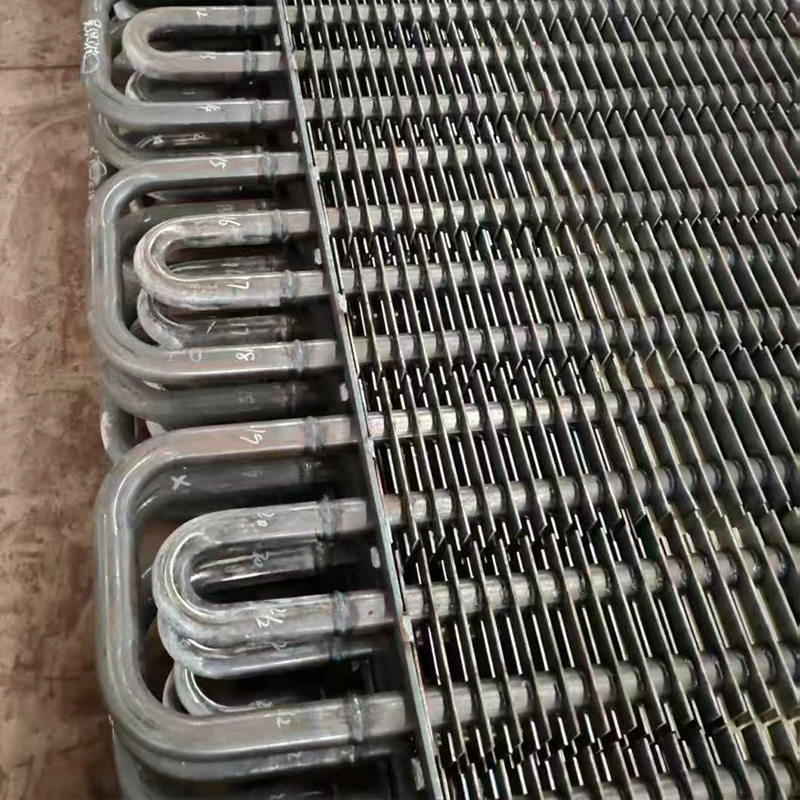
The material of the contact parts is the second critical parameter. Food waste is an aggressive environment with a high content of chlorides and organic acids. Standard AISI 304 stainless steel, often offered by budget suppliers, begins to corrode after 12-18 months of intensive use, especially in weld areas. Reliable Chinese suppliers for export to Russia and the CIS countries in 2026 switched to using AISI 316L steel or even duplex steels for rotors and screws. This is where the competence of specialized enterprises such asWuxi Kaisheng Electric Power and Petrochemical Equipment Co., Ltd.. While the company is historically known for its heat exchangers and components for the oil and gas industry, its deep expertise in corrosion-resistant alloys (titanium, N06625 nickel alloys, C46400 marine brass) and certification to the stringent international standards of ASME and PED make it the benchmark for quality in metallurgical matters. Wuxi Kaisheng's approach to material selection—where every 316/321 steel tube bundle or grid is tested to withstand high pressures and corrosive environments—is the standard that centrifuge equipment manufacturers should also look for. Saving 15% on the cost of equipment due to the choice of cheaper steel, as we saw earlier, leads to the replacement of the entire separation unit after a year and a half, completely negating the initial benefit. Require a Mill Certificate for each batch of steel prior to shipment.
The vibration and imbalance protection system has become the de facto standard for equipment in this class. Modern centrifuges are equipped with real-time vibration sensors that automatically adjust auger feed speed or initiate a wash cycle when uneven loading is detected. The absence of such a system in the 2026 proposal indicates the use of an outdated platform. In our tests, models with adaptive control reduced the number of emergency stops by 40% compared to static settings. This directly affects the service life of bearing units, the replacement of which is the most expensive item in service maintenance.
Performance is always specified in a range rather than as a fixed number. The phrase “10 tons per hour” without specifying the type of raw material (density, solids content, temperature) has no engineering meaning. For food waste, the density can vary from 980 to 1050 kg/m³ depending on the season and source of collection. A competent supplier will ask you for a sludge sample or a detailed analysis of it before calculating the model. If they immediately tell you a number without asking you about the composition of the waste, most likely they are selling you a standard solution that will require modification on site. We recommend requesting a performance calculation specifically for your type of waste with a safety factor of 15–20% for peak loads.
An important aspect is the type of drive. 2026 will see a massive shift to variable frequency drives (VFDs) with vector control. They allow you to smoothly adjust the differential speed between the drum and the auger, which is critical for obtaining a dry cake without destroying the flakes. Direct starting or simple star-delta circuits are becoming a thing of the past, as they create huge starting currents and mechanical shocks to the gearbox. Make sure that the specification indicates the brand of the inverter (for example, Siemens, Danfoss or top Chinese alternatives like Inovance with proven reliability) and the presence of DC braking for quick stopping.
Key indicators for comparing models
- Separation factor (G-force):For food waste, the optimal range is 2500–3000 G. Higher values can lead to grinding of the solid phase and deterioration in the quality of the concentrate; lower values can lead to high sludge moisture.
- Differential speed:The adjustable range from 5 to 30 rpm allows you to adapt the machine to different types of fats and fibers.
- Specific weight of the structure:High-quality machines have a high weight relative to their dimensions due to the thick-walled rotor elements. A machine that is too light often means skimping on metal.
- Noise level:Current standards require levels below 85 dB(A) at 1 meter. Exceeding this threshold will require additional costs for noise insulation of the workshop.
Certification and compliance: EAC, GOST and CE in 2026
The issue of certification has ceased to be a formality and has become a barrier to entry into the market. Since the summer of 2026, customs control requirements in the EAEU countries have become more stringent. The presence of a certificate of compliance with the technical regulations of the Customs Union (TR CU 010/2011 “On the safety of machinery and equipment” and TR CU 004/2011 “On the safety of low-voltage equipment”) is a prerequisite for customs clearance. Chinese suppliers who work seriously must provide not just a copy of a certificate found on the Internet, but an original or a certified copy issued by an accredited body included in a unified register. We have encountered situations where cargo was delayed at the border for a month due to the fact that the serial numbers in the product passport did not match the numbers in the certificate.
The CE mark, although a requirement for the European market, is often used by Chinese factories as a marker of overall build quality. However, it is important to understand the difference between self-declaration and CE certified. For the Russian market, the priority is the EAC mark. In addition, it is worth paying attention to compliance with the climatic design in accordance with GOST 15150. Equipment intended for operation in unheated rooms or outdoors in Russian winter conditions must have a UHL design (moderate and cold climate). The usual design, designed for +5°C...+40°C, will lead to electronic failure and thickening of the lubricant in the gearbox at the first frost. Request confirmation from the supplier of the use of frost-resistant materials and lubricants.
Electrical safety is another critical point. IP (Ingress Protection) standards for food waste centrifuges must be at least IP55 for the control cabinet and IP65 for the motors, taking into account high humidity and the possibility of washing the equipment with pressure water. The 2026 specifications also increasingly require the use of components resistant to explosive atmospheres (Ex-protection) if waste that produces methane or other flammable gases is processed. Ignoring this requirement may lead to refusal to issue an operating permit by Rostechnadzor.
Documentation in Russian must be complete and of high quality. Often Chinese suppliers send machine translated instructions, which makes them useless for service engineers. The supply agreement must specify the requirement to provide an instruction manual, product data sheet and electrical diagrams translated by professional technical translators. The lack of clear documentation increases the time it takes to put equipment into operation by 2–3 times and creates risks of improper maintenance. Check the availability of the "Spare parts" section with detailed drawings and catalog numbers, so that in the future you do not have to order the entire assembly due to the absence of one gasket.
Logistics and Hidden Costs: The Real Cost of Ownership
The FOB (Free On Board) price that you see in the price list is only 60–70% of the final cost of the equipment in your warehouse. The remaining costs are made up of sea freight, insurance, customs duties, VAT, brokerage and domestic delivery. In the summer of 2026, rates for container transportation from the ports of China (Shanghai, Ningbo, Qingdao) to the ports of the Russian Far East have stabilized, but remain volatile depending on the season. Large equipment such as centrifuges often require transportation in an open container (Flat Rack) or even general cargo, which is significantly more expensive than a standard 40-foot container. Ask your logistics partner for an accurate calculation of the cost of door-to-door delivery, taking into account all overloads.
Customs classification plays a decisive role in the amount of duty. Centrifuges usually fall under HS code 8421 19. Correct description of the goods in the declaration allows you to avoid delays and additional checks. An error in the code or an incomplete description of technical characteristics may lead to additional charges or a fine. We recommend pre-classification with the involvement of an experienced customs broker at the stage of signing the contract. It is also worth considering exchange rate risks: settlements in yuan (CNY) have become the standard, but fluctuations in the ruble exchange rate can significantly affect the final amount in rubles.
Delivery time is another factor that affects the project budget. The standard production time for a centrifuge is 45–60 days after receiving advance payment and approval of drawings. However, during periods of high demand (spring-summer) this period may increase to 90 days. Add to this time 20-30 days for sea transportation and 10-15 days for customs clearance. Plan your purchase at least 4–5 months before the planned launch of the line. An attempt to speed up the process through air delivery of critical components is not economically feasible due to the weight of the equipment and can cost 5–6 times more than sea.
Warranties and after-sales support require special attention. The standard warranty from Chinese factories is 12 months from the date of shipment or 18 months from the date of production (whichever comes first). It is important to clearly define in the contract exactly which components are covered by the warranty and what the procedure for replacing defective parts is. Shipping a heavy rotor or auger back to China for repair is not economically feasible. The contract must provide for replacement of components on site at the expense of the supplier or compensation for the cost of a new component. Having a spare parts warehouse in Russia at an official dealer is a huge advantage, reducing downtime from weeks to days.
Supplier comparison: First-tier factories versus trading companies
The choice between a direct factory and a trading company is one of the most difficult dilemmas for importers. Trading companies often offer lower prices and better service during the negotiation phase because they aggregate orders and can negotiate with multiple factories at the same time. However, they do not have deep technical knowledge and do not control the production process. In case of quality problems, they only act as an intermediary, which delays the resolution of issues. Tier 1 factories, which have their own design department and foundry, offer more stability, but their minimum order quantity (MOQ) may be higher and their negotiating flexibility may be lower.
For food waste processing centrifuges where balancing accuracy and weld quality are important, we strongly recommend working directly with the manufacturer or their exclusive representative. You can check the status of a company by requesting a video tour of the workshop in real time, checking a business license indicating activity codes, and analyzing export history through customs databases. The real factory will show CNC machines, balancing stands and assembly area. A trading company is often limited to showing office and warehouse premises.
| Comparison criterion | Direct Factory (Manufacturer) | Trading Company |
|---|---|---|
| Price | 10–15% lower (no intermediary markup) | Higher (includes 10–20% margin) |
| Technical expertise | High (development engineers) | Medium/Low (sales managers) |
| Flexibility of modifications | High (possibility of changing drawings) | Low (depending on plant) |
| Quality control | Direct control at every stage | Indirect control (spot checks) |
| Assortment | Highly specialized (separation only) | Wide (various turnkey equipment) |
| Reaction to complaints | Slower (factory bureaucracy) | Faster (interested in the client) |
One of our clients was faced with a situation where a trading company sold a centrifuge assembled from components from different factories. As a result, the control system did not work correctly with the hydraulics, and it was not possible to achieve the declared moisture content of the cake. The rotor manufacturer refused to provide a guarantee, since the machine was not assembled by them. This case clearly demonstrates the risks of working with non-core intermediaries when purchasing complex rotating equipment.
Frequently Asked Questions
What is the minimum order quantity (MOQ) for centrifuges in 2026?
For most large Chinese factories, the minimum order quantity is 1 piece of equipment. However, when ordering one piece, the price will be maximum, and the production time may be increased, since the plant will plan its production during the “window” between large batches. The optimal solution from the point of view of logistics and price is to order a container (1–2 large centrifuges or several medium ones). Some factories may require a MOQ of 2-3 units for custom models with modified materials or drives. Always check this parameter in your commercial offer, as conditions may vary depending on the workload of the production line.
How long is the warranty period and what does it cover?
The standard warranty period is 12 months from the date of shipment from the port of China. The warranty covers defects in materials and workmanship discovered during normal use. It does not apply to wear parts (bearings, seals, belts) if their wear occurs within standard values, as well as to damage caused by improper installation, violation of operating rules or force majeure. It is critical to carry out commissioning with a specialist from the supplier or a certified engineer to document the initial status of the equipment and activate the warranty. Without a commissioning certificate, the guarantee may be canceled.
Is it possible to adapt a centrifuge to specific Russian conditions?
Да, ведущие китайские поставщики предлагают опцию адаптации под климатические условия России. Это включает в себя установку подогревателей масла в редукторе, использование низкотемпературной смазки, применение морозостойкой резины для уплотнений и окраску корпуса специальными составами, устойчивыми к перепадам температур и ультрафиолету. Также возможна адаптация электрической части под нестабильность сетей (установка стабилизаторов или расширенного диапазона входного напряжения). Эти опции должны быть заказаны на этапе заключения контракта, так как внесение изменений в готовое изделие невозможно или крайне затратно.
Какие сроки поставки актуальны на лето 2026 года?
С учетом текущей логистической обстановки и производственных циклов, реалистичный срок поставки «под ключ» составляет 3–4 месяца. Из них 45–60 дней занимает производство и тестирование на заводе, 20–30 дней — морская доставка до порта назначения (Владивосток, Новороссийск, Санкт-Петербург) и 15–20 дней — таможенное оформление и внутренняя доставка. В летний период возможны небольшие задержки из-за сезона отпусков в Китае и повышенного спроса на фрахт. Рекомендуем закладывать временной буфер в 2–3 недели при планировании запуска производства, чтобы избежать простоев.
Практические шаги по выбору и закупке
Процесс закупки центрифуги должен начинаться не с поиска цены, а с технического аудита ваших потребностей. Подготовьте детальное описание обрабатываемого сырья: процентное содержание твердой фазы, размер частиц, температуру, pH среды, наличие абразивных включений. Чем точнее вы опишете задачу, тем точнее будет подобрано оборудование. Запросите у 3–5 потенциальных поставщиков технико-коммерческое предложение (ТКП) с деталь ной спецификацией. Сравните не только цены, но и заложенные в проект компоненты (бренды двигателей, редукторов, автоматики).
На следующем этапе организуйте видеоконференцию с техническим директором завода. Задайте прямые вопросы о количестве реализованных проектов в России и СНГ, попросите контакты референс-клиентов. Не стесняйтесь запросить видео работающей машины на объекте, желательно снятое недавно. Проверка репутации поставщика через независимые инспекционные компании (например, SGS, Bureau Veritas) перед отгрузкой является обязательной процедурой для минимизации рисков. Инспектор проверит соответствие геометрии, качество сварных швов, балансировку ротора и комплектацию согласно контракту.
Финальным этапом является грамотное составление контракта. В нем должны быть прописаны все технические параметры, штрафные санкции за срыв сроков поставки, условия оплаты (рекомендуем схему 30% аванс, 60% по факту готовности к отгрузке после инспекции, 10% после успешного запуска), а также юрисдикция разрешения споров. Избегайте расплывчатых формулировок. Каждый пункт должен быть однозначным и проверяемым. Помните, что сэкономленные на этапе подготовки документы доллары могут обернуться тысячами долларов убытков на этапе эксплуатации.
Выбор надежного партнера в Китае — это инвестиция в стабильность вашего бизнеса на годы вперед. Рынок 2026 года предлагает отличные возможности для модернизации линий переработки пищевых отходов, но требует от покупателя высокой компетенции и внимательности к деталям. Не гонитесь за самой низкой ценой, ориентируйтесь на совокупную стоимость владения и техническую поддержку. Правильно подобранная центрифуга окупится за 12–18 месяцев за счет снижения затрат на утилизацию отходов и продажи вторичного сырья.
Если вы готовы обсудить детали вашего проекта и получить индивидуальное технико-коммерческое предложение от проверенных производителей,contact us today. Наши эксперты помогут провести аудит задачи, выбрать оптимальную модель и организовать безопасную сделку. Для получения дополнительной информации о других видах оборудования для переработки отходов, посетите наш разделоборудование для переработки отходов.