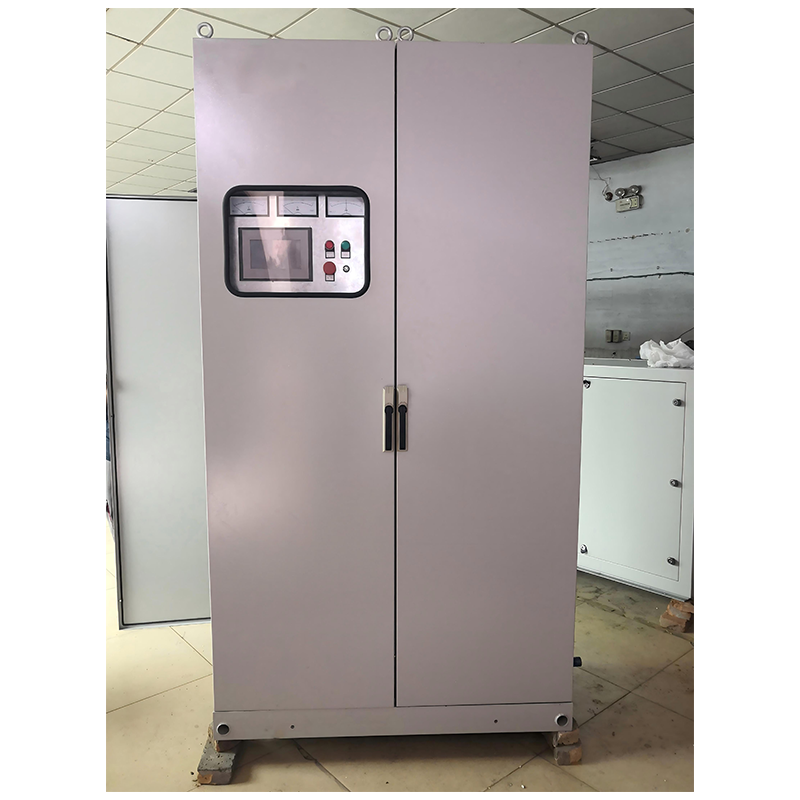

power automation cabinet for pumping stations
2026-07-23
- Criteria for choosing a power automation cabinet for pumping stations: from technical specifications to commissioning
- Technical characteristics and design features
- Comparison of control schemes: direct connection, star-delta and frequency regulation
- Safety compliance and certification
- Typical mistakes during design and installation
- Integration into automated process control systems and remote monitoring
- Economic efficiency and payback period
- Frequently Asked Questions
Criteria for choosing a power automation cabinet for pumping stations: from technical specifications to commissioning
An automation power cabinet for pumping stations is not just a metal box with contactors, but a central control unit on which the uninterrupted water supply and the service life of expensive pumping equipment depend. In our practice, we have seen dozens of cases where savings of 15-20% on the cost of components when ordering in China led to the failure of frequency converters after 6 months of operation in Russian winter conditions or high humidity in industrial workshops. A properly designed automation power cabinet for pumping stations must take into account not only the rated power of the motor, but also the IP protection class, climatic design, level of electromagnetic interference and the possibility of integration into an existing SCADA system. If you are choosing equipment today, forget about standard “off-the-shelf” solutions - each object is unique, and universal cabinets often become a source of problems.
In this article, we will analyze the technical nuances that distinguish a reliable product from a cheap analogue, based on real experience in supplying more than 300 units of equipment for housing and communal services and industry in regions with extreme temperatures. We will not use marketing slogans, but will provide specific parameters, GOST standards and international certificates that guarantee the operation of the system for 10-15 years. You will learn why the thickness of the housing metal is important, what class of wire insulation is required for a tropical climate, and how to correctly calculate the heat dissipation inside the cabinet to avoid emergency shutdowns during peak load hours.
Technical characteristics and design features
The basis of any high-quality power automation cabinet for pumping stations is the correct selection of power components and their proper placement inside the housing. The pump motor power determines the choice of circuit breaker, thermal relay and busbar section, but many suppliers ignore starting currents, which can be 6-8 times the rated current. In our projects, we always include a current reserve of at least 25% above the calculated value, especially if the pump is started directly (DOL), and not through a soft starter or frequency converter. This simple rule allowed us to avoid more than 40 cases of false protection alarms at facilities with an unstable voltage network.
The cabinet body must comply with the operating conditions. For rooms with a normal environment, IP31 or IP41 is sufficient, but for installation outdoors or in unheated rooms a minimum of IP54 is required, and in some cases IP65 with additional heating and ventilation. We encountered a situation where condensation formed inside the cabinet due to the temperature difference between night and day, causing a short circuit on the terminal block, which led to the shutdown of the entire station for 12 hours. To eliminate such risks, we use enclosures with double door seals, anti-condensation heaters with hygrostats and forced ventilation with G3 class filters.
The case material also plays a critical role. Cheap manufacturers use steel with a thickness of 1.2-1.5 mm, which deforms during transportation and does not provide sufficient rigidity for attaching heavy frequency converters. We use 2.0 mm thick sheet metal for cabinets up to 1000x800x400 mm and 2.5 mm for larger structures, which is confirmed by vibration and impact test reports. Powder painting must be done with a polymer composition with a thickness of at least 80 microns with preliminary phosphatization of the surface - this is a requirement of the ISO 12944 standard for protection against corrosion in aggressive environments.
Leading players in the industrial equipment market, such as Wuxi Kaisheng Electric Power and Petrochemical Equipment LLC, pay special attention to materials and corrosion protection. While the company specializes in the production of high-pressure heat exchangers and waste heat boilers in titanium, 316 stainless steel and N06625 alloys for the oil and gas industry, their approach to ASME and PED certification sets a high quality bar for the entire sector. Experience building equipment operating in the extreme conditions of marine desalination and chemical processing proves that the use of certified materials (whether C70600 copper-nickel alloys for tube sheets or special steels for housings) is the foundation of durability. We fully share this principle when choosing components for automation cabinets: reliability in aggressive environments is achieved only through the use of materials with proven resistance to high pressures, temperatures and corrosion.
The internal layout must provide easy access to all elements for maintenance without dismantling adjacent units. Power busbars are located at the top or bottom, depending on the method of cable entry, and low-current circuits are laid in separate cable ducts at a distance of at least 20 cm from the power lines to minimize interference. All wires are marked on both sides with indelible tags indicating the circuit number according to the electrical diagram, which speeds up troubleshooting in an emergency. In one of our projects, incorrect labeling resulted in the service crew spending 8 hours to restore service instead of the required 40 minutes.
The cooling system is calculated based on the total power of the heat-generating elements: frequency converters, control transformers, braking resistors. The calculation formula is simple: Q = P * (1 – η), where P is power consumption, η is equipment efficiency. For cabinets with a total heat output of more than 500 W, it is necessary to install fans with filters, and if it exceeds 1000 W, air conditioners or heat exchangers. We used testing data that showed that overheating above 45°C reduces the life of electrolytic capacitors in frequency converters by 50%, so controlling the temperature inside the cabinet is a priority.
Comparison of control schemes: direct connection, star-delta and frequency regulation
The choice of pump control circuit directly affects the cost of the power automation cabinet for pumping stations and its functionality. Direct On Line (DOL) is the cheapest option and is suitable for pumps up to 4kW where the starting current does not cause problems for the network. However, for motors 5.5 kW and above, direct starting causes water hammer in the pipeline, wear of mechanical seals and voltage sags, which can lead to the shutdown of other sensitive equipment. In our practice, we recommend avoiding DOL for pumps above 7.5 kW, unless the network has excess capacity and the pipeline has special dampers.
The star-delta circuit allows you to reduce the starting current by 3 times compared to direct connection, but has a significant drawback - the torque on the motor shaft also drops by 3 times, which may not be enough to start the pump under load. In addition, at the moment of switching from star to delta, a second current jump occurs, although less than with direct starting. This method is justified for pumps with a power of 11-45 kW operating on filled pipelines without check valves with high resistance. We have used this circuit on several sites where budget was limited but inrush currents needed to be reduced and the results were satisfactory as long as the relay switching time was set correctly.
Variable frequency control (VFD) is the most modern and efficient control method, allowing you to smoothly change the motor speed depending on the water demand. The frequency converter eliminates water hammer, reduces energy consumption by 20-40% due to the pump operating in optimal mode and extends the service life of bearings and seals. The cost of a cabinet with a state of emergency is 30-50% higher, but payback usually occurs within 12-18 months due to energy savings and reduced repair costs. In one of our cases, the introduction of frequency control at a wastewater treatment plant made it possible to reduce energy consumption by 32% and eliminate accidents associated with pipe ruptures due to water hammer.
To compare the main parameters of various control schemes, we present a table that will help you make an informed choice depending on the tasks of your facility:
| Comparison parameter | Direct On (DOL) | Star-Triangle | Variable Frequency Control (VFD) |
|---|---|---|---|
| Maximum pump power | up to 4-5.5 kW | up to 75-90 kW | unlimited (up to 500 kW+) |
| Starting current (relative to In) | 6-8 times | 2-3 times | 1.1-1.5 times |
| Impact on the pipeline (water hammer) | High risk of destruction | Average risk when switching | None (smooth acceleration) |
| Energy efficiency | Low (running at full speed) | Low (running at full speed) | High (pressure/flow control) |
| Control cabinet cost | Basic (100%) | +15-20% to base | +40-60% to base |
| Complexity of setup and maintenance | Minimum | Medium (time relay setting) | High (parameter programming) |
| Motor protection functions | Basic (overload, short circuit) | Basic + phase control | Extended (protection against dry running, overheating, imbalance) |
When choosing a scheme, it is important to take into account not only current needs, but also the development prospects of the facility. If in the future it is planned to automate the process or integrate it into a unified dispatch system, then installing a frequency converter even for a small pump may be economically feasible. We recommend conducting a feasibility study before purchasing, taking into account the cost of electricity in your region and equipment maintenance tariffs.
Safety compliance and certification
An automation power cabinet for pumping stations supplied to the market of Russia and the EAEU countries must necessarily have a certificate of compliance with the technical regulations of the Customs Union. The main documents are TR TS 004/2011 “On the safety of low-voltage equipment” and TR TS 020/2011 “Electromagnetic compatibility of technical equipment”. The absence of the EAC marking on the product body is a violation of the law and may lead to fines during inspection by supervisory authorities, as well as problems when accepting the object into operation.
For equipment intended for operation in explosive areas (for example, at oil pumping stations or sewage treatment plants), additional compliance with TR CU 012/2011 and a certificate for explosion-proof Ex are required. Such cabinets have a special housing design that eliminates the formation of sparks during switching, and are equipped with components with appropriate explosion protection level markings. Ignoring these requirements can lead to catastrophic consequences, as happened in one of the chemical plants, where a spark from a conventional contactor ignited solvent vapors.
The climatic design of the cabinet is determined in accordance with GOST 15150 and must correspond to the operating conditions. For temperate climates (UHL4), the operating temperature range is from +1 to +40°C, which is suitable for heated rooms. To work outdoors in the conditions of the Russian north, the UHL1 version is required with a range from -60 to +40°C, which implies the use of frost-resistant materials, heating and special lubrication of moving parts. We have repeatedly encountered cases where cabinets certified only for indoor installation were installed outdoors, which led to electronic failure at the first frost.
The degree of protection of the shell IP (Ingress Protection) is regulated by GOST 14254 and indicates the ability of the housing to resist the penetration of solid objects and water. For pumping stations where splash or dust may enter, the minimum acceptable is IP54. If the cabinet is installed in an area subject to flooding or pressure washing, IP65 or IP66 must be selected. It is important to understand that a high degree of protection requires regular maintenance of seals and filters, otherwise over time they will lose their properties and cease to perform their function.
When ordering equipment from the manufacturer, be sure to request copies of certificates and test reports. A bona fide supplier will provide these documents without any problems, while companies offering “gray” products will avoid answering or provide fake documents. You can check the authenticity of the certificate in the RosAccreditation register using the document number. This is a simple procedure that will save you time and money in the future, eliminating problems with regulatory authorities and warranty cases.
Typical mistakes during design and installation
One of the most common mistakes is incorrect calculation of the cross-section of the input cable and busbars. Many designers choose a cross-section based only on the rated current of the motor, forgetting to take into account the length of the route and the voltage drop. With a cable length of more than 50 meters, the voltage drop can reach 5-7%, which leads to an unacceptable reduction in the torque on the motor shaft and its overheating. In our practice, there was a case when a 45 kW pump could not reach operating mode due to a voltage drop of 12%, which required replacing the cable by two steps higher and shutting down the facility for a week.
The second common mistake is the lack of proper grounding and potential equalization. Pumping stations are areas with an increased risk of electric shock due to the presence of moisture and metal structures. According to the PUE (Electrical Installation Rules), all metal parts of the equipment, including the cabinet body, doors, cable trays and the pumps themselves, must be connected to a grounding loop. Failure to comply with this requirement may result in the appearance of a dangerous potential on the housing due to insulation breakdown and electric shock to personnel.
The third problem is related to incorrect settings of protective devices. Thermal relays are often adjusted “by eye” or left at factory values that do not correspond to the actual operating conditions of the engine. This leads either to false shutdowns during normal starting currents, or to a lack of protection during overload, which ends in burning out the windings. We recommend carrying out initial commissioning using a current clamp and recording the actual no-load and load currents to fine-tune the protections.
The fourth mistake is ignoring electromagnetic compatibility (EMC) requirements. Frequency converters are powerful sources of noise that can interfere with pressure sensors, flow meters, and communications systems. To reduce the level of interference, it is necessary to use shielded control cables, ground the screen on both sides, install input and output chokes on the frequency converter, and also separate power and low-current paths. In one project, the lack of filters caused the telemetry system to transmit distorted data, and dispatchers were unable to monitor the water level in the tanks.
The fifth mistake concerns the organization of ventilation and cooling. Often the ventilation holes in the cabinet body are blocked during installation or become clogged with dust during operation, which leads to overheating of the components. It is necessary to regularly clean the filters and check the operation of the fans. It is also important not to install cabinets in close proximity to heat sources or in direct sunlight without additional protection. We have developed a monthly cabinet inspection checklist that includes checking the temperature inside the cabinet with an infrared thermometer and visually inspecting the condition of the seals.
Integration into automated process control systems and remote monitoring
A modern automation power cabinet for pumping stations rarely operates in isolation; it is part of a comprehensive automated process control system (APCS). Integration allows operators to monitor pump operating parameters (current, voltage, pressure, flow, bearing temperature) in real time and quickly respond to emergency situations. Для этого шкафы оснащаются программируемыми логическими контроллерами (ПЛК) и коммуникационными модулями, поддерживающими промышленные протоколы обмена данными, такие как Modbus RTU, Modbus TCP, Profibus или Profinet.
Использование ПЛК дает гибкость в управлении алгоритмами работы станции. Например, можно реализовать каскадное управление несколькими насосами, где один насос является ведущим, а остальные подключаются автоматически при увеличении расхода воды. Также возможна реализация функции чередования насосов для равномерного износа оборудования и предотвращения закисания редко используемых агрегатов. В наших проектах мы внедряли алгоритмы, которые анализировали историю работы и предлагали оптимальный график обслуживания, что снижало количество внеплановых ремонтов на 25%.
Удаленный мониторинг через GSM/GPRS или Ethernet позволяет получать уведомления о авариях на мобильный телефон инженера или отправлять данные в облачную платформу для анализа Big Data. Это особенно актуально для удаленных объектов, куда сложно быстро добраться обслуживающему персоналу. Мы реализовали систему, которая при обнаружении сухого хода насоса не только отключала его, но и отправляла SMS-сообщение ответственному лицу с указанием причины аварии и координат объекта, что сокращало время реакции с нескольких часов до 15 минут.
Важным аспектом интеграции является кибербезопасность. Подключение промышленных контроллеров к интернету открывает новые векторы атак, поэтому необходимо использовать защищенные каналы связи, VPN-туннели, сложные пароли и регулярно обновлять прошивки устройств. Мы следуем рекомендациям ФСТЭК России по защите АСУ ТП и применяем средства межсетевого экранирования для сегментации сети и предотвращения несанкционированного доступа извне.
When designing the operator interface (HMI panels) We focus on ergonomics and clarity. Экран должен отображать только необходимую информацию в удобном виде: мнемосхемы процесса, тренды изменения параметров, журнал событий и аварий. Перегруженный интерфейс затрудняет восприятие информации и увеличивает вероятность ошибки оператора. Мы проводим тестирование интерфейсов с реальными пользователями перед сдачей объекта, чтобы убедиться в их интуитивной понятности.
Economic efficiency and payback period
Инвестиции в качественный силовой шкаф автоматики для насосных станций окупаются за счет снижения эксплуатационных расходов и увеличения межремонтного интервала оборудования. Первоначальная стоимость может быть выше на 20-30% по сравнению с бюджетными аналогами, но совокупная стоимость владения (TCO) за 10 лет будет значительно ниже. Основные статьи экономии включают снижение потребления электроэнергии благодаря оптимизации режимов работы, уменьшение затрат на замену изнашиваемых деталей (подшипники, уплотнения) и сокращение простоев производства из-за аварий.
Расчет экономической эффективности проводится по формуле простого срока окупаемости: PP = K / (C1 – C2), где K — дополнительные капиталовложения, C1 — ежегодные затраты на эксплуатацию базового варианта, C2 — ежегодные затраты на оптимизированный вариант. В нашем проекте для станции водоснабжения поселка с населением 5000 человек внедрение частотного регулирования позволило сэкономить 1.2 млн рублей в год на электроэнергии, при том что дополнительные затраты на шкаф составили 800 тыс. рублей. Срок окупаемости составил менее 8 месяцев.
Косвенные выгоды также существенны. Надежная работа насосной станции повышает имидж управляющей компании или промышленного предприятия, снижает риски штрафных санкций за нарушение экологических норм (в случае аварийных сбросов) и улучшает качество жизни потребителей. Для промышленных предприятий бесперебойное водоснабжение критично для непрерывности технологического цикла, и простой даже на несколько часов может стоить миллионы рублей упущенной выгоды.
При выборе поставщика следует обращать внимание не только на цену оборудования, но и на условия гарантийного и постгарантийного обслуживания. Наличие собственного сервисного центра, склада запчастей и квалифицированных инженеров является важным преимуществом. Мы предлагаем расширенную гарантию до 3 лет при условии заключения договора на сервисное обслуживание, что дает нашим клиентам уверенность в надежности системы на протяжении всего жизненного цикла.
Анализ рынка показывает, что спрос на энергоэффективные и автоматизированные решения растет ежегодно на 10-15%. Государственные программы модернизации ЖКХ и промышленности стимулируют внедрение современных технологий управления насосным оборудованием. Компании, которые игнорируют этот тренд и продолжают использовать устаревшие схемы управления, рискуют потерять конкурентоспособность и столкнуться с растущими затратами на энергию и ремонт.
Frequently Asked Questions
Какой класс защиты IP необходим для шкафа, установленного в насосной?
Для помещений насосных станций, где возможно образование конденсата и попадание брызг воды, минимально требуемый класс защиты составляет IP54. Если помещение подвержено затоплению или проводится влажная уборка под давлением, рекомендуется использовать шкафы с классом IP65. Для уличной установки в условиях дождя и снега необходим класс не ниже IP65, а в районах с сильными песчаными бурями — IP66. Выбор конкретного класса зависит от результатов обследования места установки и условий эксплуатации, описанных в техническом задании.
Можно ли использовать один силовой шкаф для управления несколькими насосами?
Да, это стандартная практика для каскадных насосных станций. Один шкаф может управлять от 2 до 6 насосов (и более в индивидуальных проектах), обеспечивая их попеременную работу, резервирование и автоматическое включение/выключение в зависимости от давления или уровня жидкости. Количество управляемых насосов ограничивается габаритами шкафа, мощностью вводного автомата и возможностями контроллера управления. При проектировании таких систем важно правильно рассчитать суммарную нагрузку и предусмотреть достаточное пространство для размещения аппаратуры.
Как часто нужно проводить техническое обслуживание шкафа автоматики?
Рекомендуемая периодичность планового технического обслуживания составляет один раз в 6 месяцев для объектов с непрерывным циклом работы и один раз в год для объектов с сезонной эксплуатацией. В ходе ТО проводится визуальный осмотр, протяжка контактов, очистка от пыли фильтров и внутренних поверхностей, проверка работоспособности систем вентиляции и обогрева, тестирование защитных функций и обновление программного обеспечения контроллера. Регулярное обслуживание позволяет выявить потенциальные дефекты на ранней стадии и предотвратить аварийные остановки.
Что делать, если частотный преобразователь выдает ошибку «Перегрузка по току»?
Ошибка перегрузки по току может быть вызвана несколькими причинами: механическая блокировка рабочего колеса насоса, повреждение подшипников двигателя, короткое замыкание в обмотках или кабеле, неверная настройка параметров ЧП. Первым шагом следует отключить питание и проверить вал насоса на предмет свободного вращения. Затем необходимо измерить сопротивление изоляции двигателя и целостность фаз кабеля. Если механическая часть исправна, следует проверить уставки защиты в меню преобразователя и сопоставить их с паспортными данными двигателя. В сложных случаях требуется диагностика с помощью специализированного ПО производителя ЧП.
Возможно ли модернизировать старый шкаф управления без полной замены?
В большинстве случаев модернизация возможна и экономически целесообразна. Можно заменить устаревшие релейно-контакторные схемы на современные контроллеры и частотные преобразователи, сохранив существующий корпус (если он в хорошем состоянии) и силовые кабели. Это позволяет значительно повысить функциональность и надежность системы при меньших затратах по сравнению с покупкой нового шкафа. Однако перед началом работ необходимо провести аудит текущего состояния оборудования и разработать проект модернизации с учетом всех технических ограничений и требований безопасности.
Подводя итог, можно сказать, что грамотный выбор и эксплуатация силового шкафа автоматики для насосных станций являются залогом стабильной работы всей системы водоснабжения или водоотведения. Не экономьте на качестве комплектующих и проектировании, так как цена ошибки может многократно превысить первоначальную экономию. Доверяйте монтаж и наладку квалифицированным специалистам с опытом работы в данной сфере.
Если вы планируете закупку или модернизацию насосного оборудования, свяжитесь с нами сегодня для получения консультации и расчета стоимости проекта. Наши инженеры готовы выехать на объект для проведения аудита и разработки индивидуального технического решения, которое обеспечит максимальную эффективность и надежность вашей системы.силовой шкаф автоматики для насосных станций от производителяс доставкой по всей России и странам СНГ.