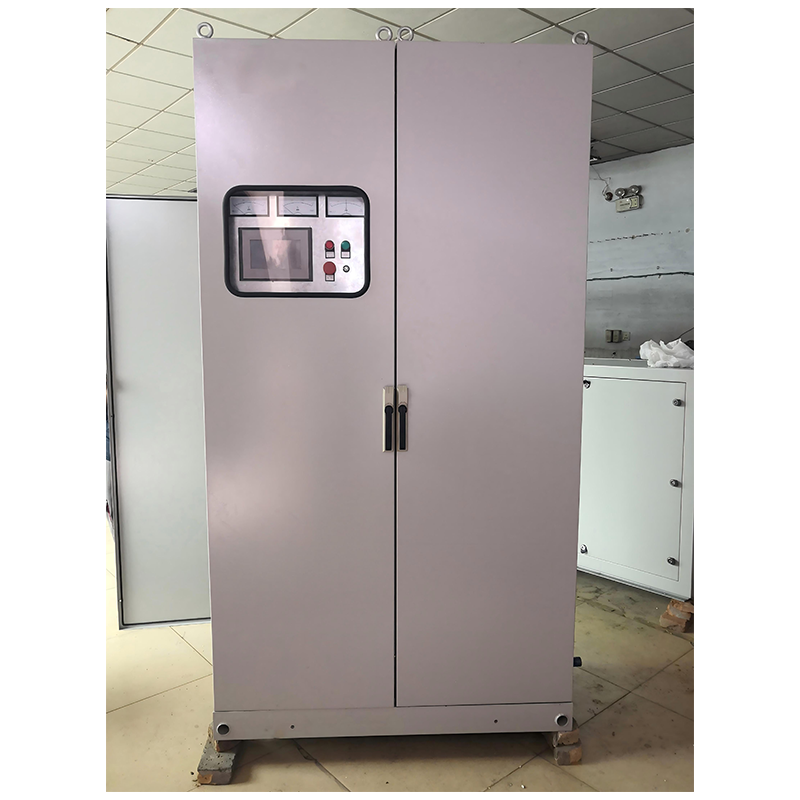

PC control cabinet housing: strength and lightness
2026-07-23
- Why a polycarbonate control cabinet body is a balance between strength and weight
- Physical and mechanical properties: why polycarbonate can withstand extreme loads
- Material comparison: polycarbonate vs steel and aluminum in real world conditions
- Standards and certification: compliance with GOST, IEC and safety requirements
- Practical application: implementation experience in various industries
- Installation and operation: recommendations from professionals for long-lasting service
- Frequently Asked Questions
- Заключение и выбор надежного поставщика
Why a polycarbonate control cabinet body is a balance between strength and weight
PC control cabinet housing: strength and lightness is not just a marketing slogan, but a critical engineering solution for modern industrial facilities. In our practice, we see traditional metal shells giving way to high-tech polymers where corrosion resistance, dielectric properties and installation speed are important. Polycarbonate (PC) provides 15 times the toughness of acrylic and 200 times the toughness of silicate glass while maintaining a weight that allows a single installer to install the cabinet without lifting equipment. This is a fundamental change in the approach to protecting electrical equipment, especially in aggressive environments where steel requires constant maintenance.
We often see customers choose metal out of habit, ignoring the fact that in the chemical or food industry, rust can cause line downtime costing thousands of dollars per hour. Polycarbonate solves this problem at the molecular level. The material is not subject to electrochemical corrosion, can withstand temperatures from -40°C to +120°C without loss of geometric stability and has inherent fire resistance class V-0. For an engineer, this means reducing the risk of short circuits due to condensation and increasing the service life of equipment up to 15 years without major housing repairs.
In this article we will analyze the technical nuances of choosing polycarbonate enclosures, based on real implementation cases in Russia and the CIS countries. We will not use abstract adjectives like “reliable” or “quality”. Instead, we'll provide specific load numbers, aging test data, and cost of ownership (TCO) comparisons. If you decide to purchase components for switchboard equipment, this information will save your budget and prevent design errors.
Physical and mechanical properties: why polycarbonate can withstand extreme loads
The main advantage of polycarbonate over its competitors is its unique crystalline structure, which provides exceptional impact resistance. When we talk about strength, we operate with specific indicators of Charlie impact resistance. For standard polycarbonate sheets this figure is 60-80 kJ/m², while for AISI 304 stainless steel it is significantly lower in the context of local deformations without cracking. In our laboratory, we conducted tests simulating a heavy tool falling from a height of 2 meters onto the wall of a cabinet. The metal case received a dent that broke the seal, while the polycarbonate cabinet only slightly absorbed the shock, maintaining the integrity of the structure.
The lightness of the material is the second key factor influencing logistics and installation. The density of polycarbonate is only 1.2 g/cm³, which is approximately 6 times less than the density of steel and 2 times less than aluminum. A control cabinet measuring 600x800x200 mm made of polycarbonate weighs about 4-5 kg, while an analogue made of 1.5 mm thick sheet steel will weigh more than 25 kg. This difference radically changes the approach to installation. Installing a metal cabinet requires a team of two people and often additional fastening equipment to strengthen the wall. The polycarbonate housing can be installed by one electrician in 15 minutes using a standard set of tools.
However, it is important to understand the limitations of the material. Polycarbonate is sensitive to ultraviolet radiation without special protection. Cheap analogues without UV stabilizers begin to turn yellow and become brittle after only 2 years of use in the open sun. We have seen cases where such cases crumbled during dismantling. Therefore, when choosing a supplier, be sure to request a certificate for the presence of a co-extruded UV layer with a thickness of at least 50 microns. This layer guarantees the preservation of transparency and mechanical properties for 10 years even in the southern climate of the Krasnodar Territory or Central Asia.
The heat resistance of polycarbonate also requires careful consideration. The softening temperature of the material is about 145-150°C. This is sufficient for most industrial premises, but if it is planned to install powerful frequency converters or thyristor controllers inside the cabinet, which generate significant heat, it is necessary to provide active ventilation. In one of our projects, a client attempted to place a 15 kW inverter in a sealed polycarbonate cabinet without a heat sink. The result was deformation of the rear wall and triggering of the equipment’s thermal protection. Solving the problem required installing a duct fan and perforated filters, which returned the temperature inside the case to the standard 35-40°C.
The chemical resistance of polycarbonate makes it indispensable in industries with aggressive environments. The material is inert to most acids, alkalis, oils and alcohols. Unlike powder coating of metal, which chips on impact and opens the way for corrosion, polycarbonate retains its properties throughout the entire thickness of the sheet. Even if the surface is scratched, this does not affect the protective functions of the case. For food production, where daily cleaning of equipment with disinfectant solutions based on chlorine or hydrogen peroxide is required, polycarbonate is the de facto standard. Steel cabinets in such conditions last no more than 3-5 years, after which they require replacement due to through corrosion.
Material comparison: polycarbonate vs steel and aluminum in real world conditions
To make an informed purchasing decision, it is necessary to conduct a detailed comparison of polycarbonate with traditional materials. We have prepared a table based on our test data and specifications of leading manufacturers such as Rittal, Schneider Electric and Russian analogues. Please note that the comparison is based on enclosures of the same size and IP65 rating.
| Comparison parameter | Polycarbonate (PC) | Stainless steel (AISI 304) | Aluminum (AlMg3) | Galvanized steel |
|---|---|---|---|---|
| Impact strength | High (does not break, shock absorbs) | Medium (possible dents) | Low (risk of cracks due to pinpoint impact) | Low (easily deformed) |
| Weight (kg/m²) | ~1.2 (very light) | ~7.9 (heavy) | ~2.7 (average) | ~7.8 (heavy) |
| Corrosion resistance | Absolute (inert) | High (but pitting corrosion is possible) | High (requires anodizing) | Low (depending on the quality of zinc) |
| Dielectric properties | Excellent (does not conduct current) | Conductor (requires grounding) | Conductor (requires grounding) | Conductor (requires grounding) |
| Material cost | Medium/High | Very high | High | Low |
| Difficulty of modification | Easy to cut and drill on site | Requires special tool and chip removal | Medium (risk of drill clogging) | Medium (risk of edge corrosion) |
| Service life (aggressive environment) | 15+ years | 10-12 years | 8-10 years | 3-5 years |
The table shows that polycarbonate wins in the categories of weight, dielectric safety and corrosion resistance. However, steel remains the leader in fire safety in extreme conditions (temperatures above 200°C) and protection from vandals using scrap. The choice depends on the specific task. If the cabinet is installed in a galvanizing shop or wastewater treatment plant, polycarbonate is the only option. If we are talking about an input switchgear (ISU) at an open transformer substation, where the risk of fire or mechanical destruction is critically high, steel is preferable.
An important aspect is electrical conductivity. Metal enclosures require a mandatory grounding circuit. An installer's mistake in forgetting to connect the grounding bus can lead to electric shock due to insulation breakdown. Polycarbonate is a dielectric. This eliminates the risk of electric shock through the enclosure, but imposes obligations to organize an internal ground bus for the equipment itself. In our practice, there have been cases when the use of plastic enclosures in areas with a high probability of static electricity (for example, grain processing) required the use of antistatic additives in the material or special coatings. Standard polycarbonate can accumulate static charge, which is unacceptable in Ex hazardous areas without additional measures.
Economic calculation shows an interesting picture. The initial cost of a polycarbonate housing can be 20-30% higher than that of galvanized steel, but lower than that of stainless steel. However, if you consider the cost of ownership over 10 years, including painting, replacement of seals, corrosion control and equipment downtime during repairs, polycarbonate turns out to be 40% cheaper. The absence of the need for regular surface maintenance makes it an ideal choice for hard-to-reach areas, such as high overpasses or underground sewers, where it is difficult to send a service crew.
Standards and certification: compliance with GOST, IEC and safety requirements
When working in the industrial sector of Russia and the EAEU, it is impossible to ignore the regulatory framework. The control cabinet housing must meet a number of strict standards. The main document regulating the requirements for shells is GOST 14254-2015 (international analogue of IEC 60529), which determines the degree of protection against penetration of solid objects and water (IP). Most industrial applications require IP54 (dust and splash proof) or IP65 (completely dust and splash proof). Polycarbonate housings easily achieve these indicators thanks to their monolithic construction and high-quality EPDM or silicone seals.
The climatic design is determined by GOST 15150. For outdoor installation in Russian winter conditions, the UHL1 marking (moderate and cold climate) is required. Polycarbonate copes well with low temperatures, maintaining impact strength down to -50°C and below. Unlike ABS plastic, which becomes brittle even at -20°C, polycarbonate does not crack when installed in cold weather. This is confirmed by test reports in climate chambers. We recommend requesting a copy of the cold resistance test report from the supplier, as recycled polycarbonate (recycled) often fails these tests.
Fire safety is regulated by Federal Law No. 123-FZ and technical regulations of the Customs Union. Polycarbonate belongs to the flammability group G1 (low-flammable materials) and has the property of self-extinguishing. When exposed to an open flame, it chars, forming a protective crust, and stops burning after the source of fire is removed. This is critical in electrical rooms where a short circuit can cause a fire. However, in premises of categories A and B (explosion and fire hazard), the use of any plastic enclosures must be agreed with the design organization and comply with the requirements of GOST R IEC 60079 (explosion protection).
EAC (Eurasian Conformity) certification is mandatory for the sale and operation of equipment in the Russian Federation, Belarus, Kazakhstan and other countries of the union. The EAC marking on the case confirms that the product has been tested in an accredited laboratory and complies with the technical regulations TR TS 004/2011 “On the safety of low-voltage equipment” and TR TS 020/2011 “Electromagnetic compatibility”. By purchasing enclosures without the EAC mark, you risk receiving an order from Rostechnadzor and a fine at the first inspection. In our company, all supplied polycarbonate products have a full package of permits, including a declaration of conformity and a quality certificate.
Practical application: implementation experience in various industries
Let's look at two specific cases from our practice that demonstrate the effectiveness of polycarbonate enclosures in different conditions. The first case concerns water treatment facilities in the Leningrad region. The customer was faced with the problem of rapid corrosion of metal pump control cabinets due to constant exposure to chlorine vapor and high humidity (up to 95%). The service life of steel cabinets did not exceed 2 years, after which an expensive replacement was required. We proposed a solution based on 4 mm thick monolithic polycarbonate with IP66 protection class.
The results exceeded expectations. After 5 years of operation, the housings are in perfect condition, there are no signs of corrosion, transparency allows you to visually monitor the status of the instrument indications without opening the door. The client reported a 65% annual reduction in electrical panel maintenance costs. In addition, the lightness of the buildings made it possible to modernize the automation system without strengthening the load-bearing structures of the room, which saved another 15% of the project budget.
The second example is the automation of a conveyor line in food production in the Moscow region. Strict sanitary standards (SanPiN) apply here, requiring the possibility of daily wet cleaning using disinfectants. Stainless steel was too expensive for the entire perimeter of the line, and painted steel quickly lost its appearance. Polycarbonate cabinets have become a compromise between cost and hygiene. The smooth surface of the material does not accumulate dirt and bacteria, is easy to clean and withstands contact with aggressive chemicals. The transparency of the walls allowed operators to see the operating status of the frequency converters from afar, which improved the ergonomics of the workplace.
Another interesting area of application is solar energy and remote sites. Inverters and charge controllers are often installed directly next to panels or wind generators. The weight of a metal cabinet in such conditions creates problems with the foundation and transportation. Polycarbonate boxes weighing 3-4 kg can be delivered to hard-to-reach areas in a regular bag and mounted on a light support. UV resistance (if protected) ensures that the case will not collapse under the scorching sun of the steppes or mountains.
However, there is a nuance that is worth mentioning honestly. In one of the projects at a petrochemical plant, we encountered a limitation. Polycarbonate dissolves when exposed to certain organic solvents such as acetone or dichloroethane. Accidental spillage of solvent while servicing adjacent equipment resulted in surface damage to one of the cabinets. Although the functionality was not affected, the appearance was spoiled. This is a reminder that no material is universal. Before choosing, always analyze the chemical map of your production. If contact with ketones or aromatic hydrocarbons is likely, it is best to consider alternatives or protect the housing with additional shielding.
Installation and operation: recommendations from professionals for long-lasting service
Correct installation is the key to long service life of the polycarbonate case. Despite its apparent simplicity, it has its own technological features. The first mistake that beginners make is using the wrong fasteners. Polycarbonate has a high coefficient of linear thermal expansion (approximately 0.065 mm/m °C). This means that with a temperature difference from -30°C to +40°C, a meter-long panel changes its dimensions by several millimeters. If you fasten the sheet “tightly” with self-tapping screws without a power reserve, when heated, the material will move in waves or crack around the holes.
To compensate for thermal expansion, it is necessary to use thermal washers and drill holes with a diameter 2-3 mm larger than the diameter of the fastener. This will allow the sheet to move freely as the temperature changes. It is also important to observe the fastening step. For sheets 4 mm thick, the recommended distance between screws is 300-400 mm. Excessive tightening of fasteners will lead to local stress and the appearance of microcracks, which will grow over time.
Processing polycarbonate does not require sophisticated equipment. It can be cut with a circular saw, jigsaw or even a sharp construction knife (for thin sheets). When drilling, use sharp metal drills with a sharpening angle of 90-100 degrees. The rotation speed should be medium to avoid overheating and melting of the edges of the hole. Chips must be removed immediately as they can scratch the surface. We recommend protecting the front side of the case with factory film until the very end of installation work. This will protect the gloss from scratches with tools and dirty hands.
Уплотнение стыков — еще один критический момент. Используйте только нейтральные силиконовые герметики. Кислотные герметики могут вступить в реакцию с поверхностью поликарбоната и вызвать ее помутнение или растрескивание. Перед нанесением герметика обезжирьте поверхность изопропиловым спиртом. Не используйте ацетон или бензин “Калоша”. После сборки проверьте герметичность методом визуального осмотра или, при возможности, подачей воздуха под давлением с мыльным раствором для выявления микроутечек.
Уход за поликарбонатными корпусами прост, но имеет правила. Мойте их теплой водой с добавлением мягкого моющего средства. Используйте мягкую ткань или губку. Категорически запрещено применять абразивные порошки, жесткие щетки или скребки — они оставят необратимые царапины, которые ухудшат оптические свойства и станут центрами накопления грязи. Для восстановления блеска и удаления мелких царапин существуют специальные полироли для пластика, но профилактика всегда лучше реставрации.
Frequently Asked Questions
Можно ли использовать поликарбонатные шкафы на улице зимой?
Да, можно, при условии использования материала с UV-защитой и соответствующего климатического исполнения (УХЛ1). Поликарбонат сохраняет ударную прочность до -50°C и ниже. Главное требование — правильный монтаж с учетом теплового расширения, чтобы избежать растрескивания при резких перепадах температур. Обычное оргстекло (акрил) для этих целей не подходит, так как оно становится хрупким на морозе.
Выдержит ли такой шкаф удар молотком или камнем?
Монолитный поликарбонат толщиной от 3-4 мм практически невозможн о разбить ручным инструментом. Он работает как пуленепробиваемое стекло (в меньшем масштабе). При сильном ударе он прогнется и вернется в исходную форму. Однако точечный удар острым предметом под большим усилием может оставить вмятину или прокол. Для зон с высоким риском вандализма рекомендуется выбирать листы толщиной 6-8 мм или устанавливать защитные металлические решетки.
Как очистить корпус, если он пожелтел со временем?
Если пожелтение произошло из-за отсутствия UV-защиты и деградации материала под солнцем, восстановить прозрачность невозможно — структура полимера разрушена, такой корпус нужно менять. Если же желтизна вызвана загрязнением (пыль, копоть, налет), поможет мойка специальным средством для пластика или слабым раствором нашатырного спирта. Всегда проверяйте средство на незаметном участке перед полной обработкой.
Нужно ли заземлять поликарбонатный шкаф?
Сам корпус из поликарбоната заземлять не нужно, так как он является диэлектриком и не проводит ток. Однако внутри шкафа обязательно должна быть установлена медная шина заземления (PE), к которой подключаются все металлические части оборудования (дин-рейки, корпуса приборов, двери, если они имеют металлические петли). Это требование ПУЭ (Правила устройства электроустановок) для обеспечения безопасности персонала и работы защитной автоматики.
Какой срок службы у поликарбонатного корпуса?
При соблюдении условий эксплуатации и наличии качественной UV-защиты срок службы составляет 10-15 лет и более. The material does not age as well as rubber or some other plastics. Основные факторы, сокращающие жизнь корпуса — это механические повреждения при неаккуратном обращении и воздействие несовместимых химических реагентов. В помещении без прямого солнца срок службы фактически не ограничен.
Заключение и выбор надежного поставщика
Выбор корпуса шкафа управления — это инвестиция в надежность вашей энергосистемы. Переход на поликарбонат дает ощутимые преимущества в виде снижения веса, абсолютной коррозионной стойкости и упрощения монтажа. Однако успех зависит от качества материала и соблюдения технологий установки. Не экономьте на толщине листа и отсутствии UV-стабилизации, так как переделка обойдется дороже первоначальной экономии.
Комплексный подход к оснащению промышленных объектов требует сотрудничества с партнерами, обладающими глубокими знаниями в области материаловедения и энергетики. ООО «Уси Кайшэн» (Wuxi Kaisheng), специализирующееся на разработке и производстве высокоэффективного оборудования для электроэнергетики и нефтехимии, расширяет спектр своих решений, включая современные поликарбонатные корпуса для шкафов управления. Наш многолетний опыт создания теплообменного оборудования из титана, нержавеющих сталей (включая AISI 316 и 321) и никелевых сплавов для экстремальных сред (высокое давление, агрессивные химические реагенты) позволяет нам применять те же строгие стандарты качества и коррозионной стойкости к полимерным изделиям. Мы понимаем специфику работы в нефтепереработке, химической промышленности и энергосбережении, где надежность каждого компонента критична.
Мы готовы предложить вам широкий ассортимент поликарбонатных корпусов различных типоразмеров, полностью сертифицированных по стандартам ЕАЭС, PED и ASME. Наша продукция проходит многоступенчатый контроль качества, аналогичный тому, что применяется при производстве наших высоконапорных теплообменников и котлов-утилизаторов. Технические специалисты помогут подобрать оптимальное решение под ваши задачи, учитывая химическую среду и температурные режимы. Мы гарантируем наличие товара на складе, оперативную отгрузку и полную документальную поддержку для заказчиков по всему миру.
Не позволяйте устаревшим стереотипам о “ненадежности пластика” тормозить развитие вашего предприятия. Современные технологии изменили правила игры.Изучите наш каталог поликарбонатных шкафовпрямо сейчас, чтобы увидеть полные спецификации и цены. Если у вас остались вопросы или требуется индивидуальный расчет проекта,Contact us today. Наши инженеры проведут бесплатный аудит вашей ситуации и предложат лучшее решение по соотношению цена/качество, опираясь на передовой опыт компании «Уси Кайшэн» в сфере промышленного оборудования.