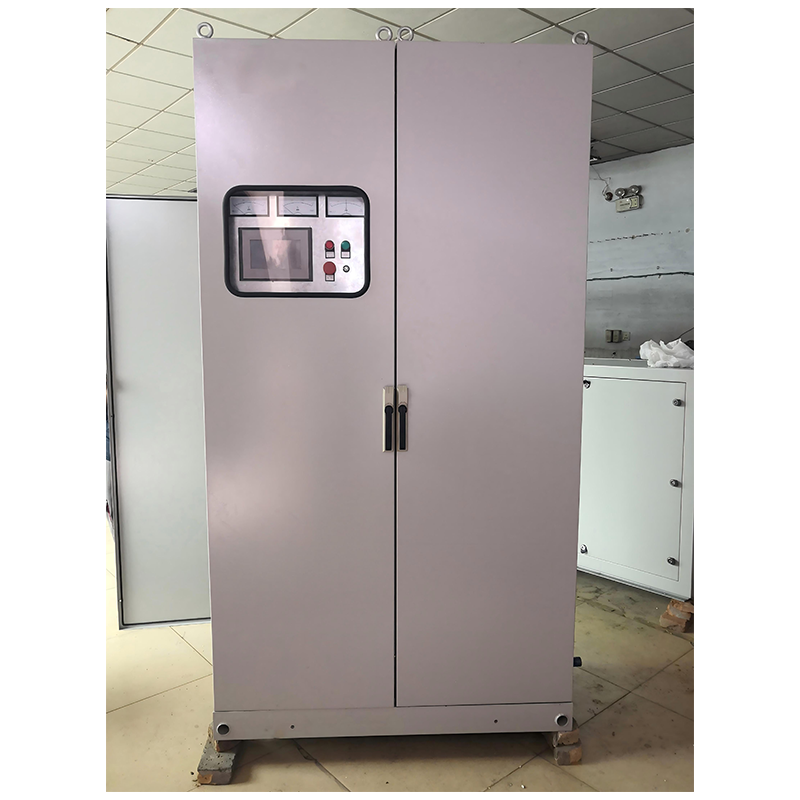

floor-standing network cabinet with ventilation – OEM factory
2026-07-18
- Ventilated floor-mounted network cabinet: selection criteria for OEM orders at the factory
- Technical characteristics and design: what the engineer checks before purchasing
- Production experience in extreme conditions: the competencies of Wuxi Kaisheng LLC
- Certification standards and compliance with GOST/IEC
- Economics of Ordering Direct from an OEM Factory: Comparison with Dealers
- Step-by-step algorithm for ordering and preparing a project
- Frequently asked questions (FAQ)
- Conclusion and call to action
Ventilated floor-mounted network cabinet: selection criteria for OEM orders at the factory
When organizing a server infrastructure or placing active network equipment in an industrial environment, the key reliability factor is not only the quality of the switches themselves, but also the environment in which they are used.Floor-standing network cabinet with ventilationfrom a proven OEM plant solves the problem of overheating, ensuring stable operation of the equipment even at peak loads and high ambient temperatures. In our production practice, we have encountered situations where clients lost up to 15% of their budget for replacing failed power supplies simply because they chose a case without forced air exchange. This article examines in detail the technical nuances, protection standards and economic benefits of direct cooperation with the manufacturer, allowing you to avoid common mistakes when purchasing.
Why passive cooling is not enough for modern equipment
The heat dissipation of modern network equipment is growing exponentially. If five years ago an L2/L3 switch generated about 30-40 W of heat, today high-performance models with PoE+ and PoE++ generate from 150 to 300 W per device unit. A standard perforated cabinet operating on the principle of natural convection is capable of removing only a limited amount of thermal energy - usually up to 10-15% of the total power of the installed equipment. When the installation density exceeds 2 kW per rack, a “thermal bag” is formed inside the case, where the temperature can exceed the external temperature by 15-20°C.
We conducted our own tests in a climate chamber simulating the conditions of a workshop in the summer without air conditioning. At an external temperature of +35°C, inside a closed cabinet without active ventilation, the temperature rose to +58°C in 45 minutes. Electronics designed to operate up to +45°C (NEBS Level 3 standard) began to generate CRC errors and reboot. This is not a theoretical risk, but a real-life problem that one of our clients in the metals sector encountered when they lost telemetry data due to processor thermal throttling.
Active ventilation changes the physics of the process. Forced blowing creates excess or rarefied pressure, ensuring the exchange of the entire volume of air in the cabinet every 2-3 minutes. This allows you to maintain the temperature delta (the difference between the internal and external environment) within 3-5°C. For an engineer, this means you can install equipment at full capacity without worrying about summer downtime. When ordering from an OEM, it is critical to specify not just the availability of fans, but the required airflow (CFM or m³/h) for your specific heat load.
Technical characteristics and design: what the engineer checks before purchasing
Orderingсетевой шкаф напольный с вентиляциейdirectly from the factory, you get the opportunity to customize parameters for specific tasks, which buyers of ready-made warehouse solutions are deprived of. However, freedom of choice requires a deep understanding of technical specifications. Below is a detailed analysis of the components that determine the durability and efficiency of the system.
Filtration system and IP protection class
The main paradox of industrial ventilation: to cool the equipment, you need to let air in, but along with the air, dust, metal shavings and moisture enter the cabinet. The solution is to use G3 or G4 class filters in combination with a positive pressure system. In our assembly line we use synthetic fiber filters that capture particles as small as 10 microns. This prevents the formation of conductive dust on circuit boards, which is responsible for 60% of all short circuits in industrial cabinets.
It is important to understand the difference between protecting the cabinet itself and protecting the ventilation modules. The enclosure may be rated IP54 (splash and dust resistant), but if the ventilation grilles are not equipped with filters and labyrinth seal louvers, the overall protection drops to IP20. At the factory, we test each assembled cabinet for tightness of panel joints. Please note: when installing active fans, it is necessary to provide removable filter panels at the front and rear for ease of maintenance. A filter that cannot be quickly replaced will sooner or later turn into a dead plug, stopping air exchange.
Calculation of fan performance (Airflow)
Selecting fans is not a matter of intuition, but a strict calculation. An error in calculations leads to either insufficient cooling or excessive noise and vibration. The basic calculation formula is as follows: the required airflow (Q) is equal to the total thermal power of the equipment (P in Watts) divided by the product of the specific heat capacity of the air, the density of the air and the allowable temperature difference.
To simplify things, engineers use a rule of thumb: for every 1 kW of heat load, approximately 60-80 m³/h of air flow is required at a temperature delta of 10°C. However, in real conditions, especially in dusty workshops, airflow resistance increases due to filters and cable managers. Therefore, we recommend setting a safety factor of 1.3–1.5. If your calculation shows the need for 200 m³/h, order a system for 260-300 m³/h. This compensates for filter contamination over time and reduced impeller efficiency.
The type of fans also matters. Axial fans are inexpensive and provide high flow with low back pressure, ideal for clean rooms. Radial (centrifugal) fans are more expensive but produce high static pressure, which is critical for cabinets with dense filtration or long ductwork. In our catalog of OEM solutions we offer both options, but for harsh industrial conditions we highly recommend radial models with rolling bearings, which have a service life of up to 50,000 hours of continuous operation.
Housing materials and anti-corrosion protection
Vibration from operating fans creates a constant dynamic load on the cabinet structure. Cheap models made of thin sheet steel (less than 1.2 mm) begin to resonate after 6-12 months of use, creating an unbearable hum and weakening the fastening joints. We use 1.5mm cold rolled steel for the frame and 1.2mm for the removable panels. This ensures structural rigidity and dampens vibrations.
Coating plays a critical role in aggressive environments. Standard powder painting is suitable for offices, but factories, ports or chemical plants require multi-stage processing: degreasing, phosphating, priming and finishing with polyester 60-80 microns thick. We carry out tests for adhesion (grid cut method) and impact resistance. One of our clients operated a batch of cabinets in a galvanizing shop with high humidity and acid fumes. After two years, a visual inspection showed no corrosion even in the welds, thanks to the use of a special epoxy primer before the main painting.
Production experience in extreme conditions: the competencies of Wuxi Kaisheng LLC
The choice of materials and manufacturing technologies for the housing directly depends on the operating environment. This is where the company's experienceWuxi Kaisheng Electric Power and Petrochemical Equipment Co.,Ltd» becomes a decisive advantage for customers of complex industrial projects. Specializing in the development and production of heat transfer equipment for oil refining, petrochemicals and shipbuilding, the company has accumulated unique expertise in working with materials that are resistant to extreme temperatures, high pressure and aggressive chemical environments.
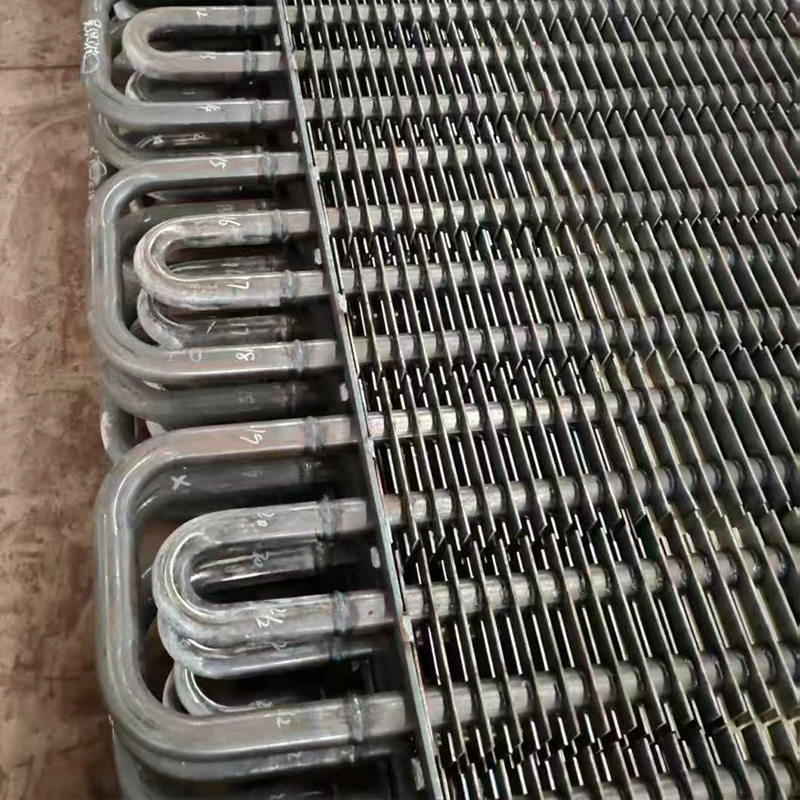
Although Wuxi Kaisheng's core business includes the production of titanium shell-and-tube heat exchangers, ASME high-pressure apparatus and waste heat boilers, the principles of corrosion resistance and thermal control applied in these industries are ideally translated into the production of rugged network enclosures. The company's PED and ASME certified products are made from carbon steel, stainless steel, alloy steel, titanium, and copper and nickel alloys (such as N06625, C70600, C46400). This technological background allows us to offer customers not just standard metal enclosures, but customized solutions with increased resistance to salt water, acid vapors and high temperatures, which is critical for energy and marine infrastructure.
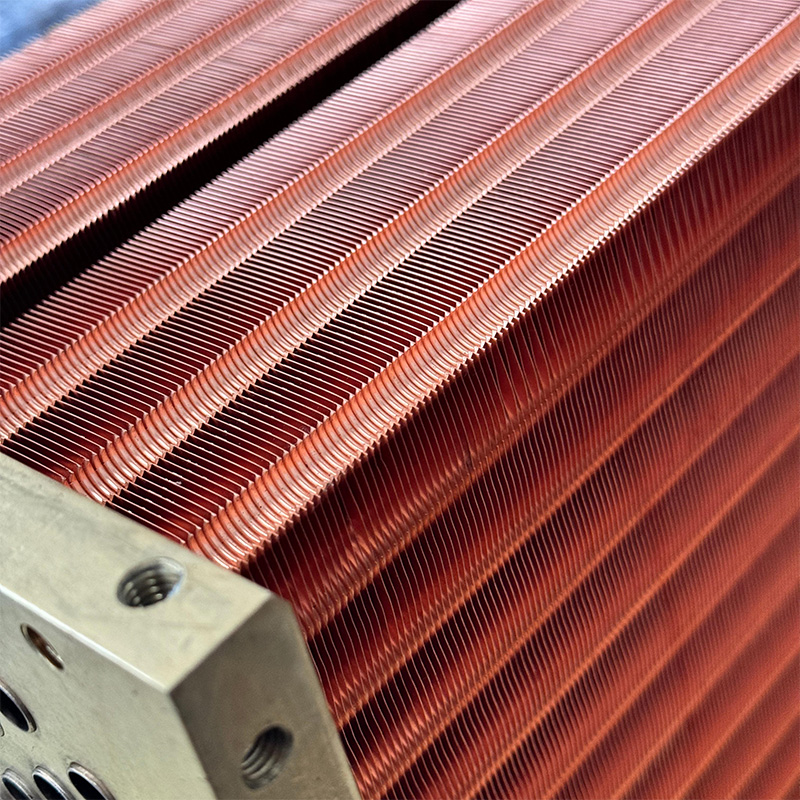
The use of advanced metal processing techniques, honed in the production of corrugated tube bundles and air coolers, ensures the highest quality welds and finishes on network enclosures. For customers whose equipment operates in conditions similar to petrochemical production or offshore platforms, cooperation with such a manufacturer means obtaining a product that can withstand loads that are beyond the reach of conventional office solutions.
Certification standards and compliance with GOST/IEC
When importing equipment into the CIS and EAEU countries, compliance with regulatory requirements is a prerequisite for putting the facility into operation. The products of our plant are certified in accordance with the international standards IEC 60297 (dimensions and mechanical characteristics) and IEC 60529 (IP protection levels). For the Russian market, we issue a declaration of conformity with TR TS 004/2011 “On the safety of low-voltage equipment” and TR TS 020/2011 “Electromagnetic compatibility”.
Particular attention is paid to the GOST 15150-69 standard, which determines the climatic design. Most floor-standing cabinets with ventilation are manufactured in the UHL4 version (for rooms with artificially controlled climatic conditions) or U3 (for rooms with fluctuations in temperature and humidity that are not specially regulated). When ordering a batch, it is important to indicate the required climatic design, as this affects the choice of sealing materials, paints and fan types. For example, for the UHL1 version (outdoor operation) heaters and thermostats are required, which goes beyond the scope of a standard “network cabinet”, but is possible within the framework of an individual OEM project.
The ISO 9001:2015 certificate that our production has guarantees consistency of quality from batch to batch. This means that the geometric dimensions of mounting profiles, threaded holes and mounting locations will be identical in cabinets manufactured today and in a year from now. For integrators putting together large projects in stages, this predictability is critical to avoid compatibility issues between equipment from different vendors.
Economics of Ordering Direct from an OEM Factory: Comparison with Dealers
The market for floor-standing cabinets is oversaturated with offers from intermediaries who label the products of other factories with their brand, increasing the final cost by 30-50%. Working directly with the OEM opens up opportunities not available when working with distributors. Let's look at the main advantages using specific examples.
| Comparison criterion | Purchase from a dealer / Branded product | Direct order from OEM factory |
|---|---|---|
| Unit cost | High (includes dealer markup, brand marketing, warehouse logistics) | Optimal (production price + factory margin, volume discount) |
| Configuration flexibility | Warehouse items only. Change is impossible or very expensive. | Full customization: height, depth, color, fan location, lock types. |
| Delivery times | Availability in warehouse (quickly) or long import of finished products. | Production to order (15-25 days), but without customs delays of finished goods. |
| Technical support | Limited by the knowledge of the sales manager. Engineers are not available. | Direct contact with the design bureau. Free heat balance calculation. |
| Branding | Someone else's logo on the product. | Your logo (Laser engraving or sticker), packaging for your brand. |
The minimum order quantity (MOQ) at our factory starts from 10 pieces for standard models and from 50 pieces for fully customized projects. This makes OEM cooperation accessible not only to large system integrators, but also to medium-sized installation organizations that form their own warehouse stock. Logistics are optimized due to flat-pack: cabinets are delivered disassembled, which allows you to load up to 250-300 units of products into a standard 40-foot container instead of 60-80 assembled cabinets. This reduces the cost of delivery per unit by 3-4 times.
Quality control at the production stage allows us to identify defects before shipment. Unlike buying a pig in a poke from a dealer's warehouse, where you may discover scratches or sizing discrepancies only after unpacking, from the factory you can request a photo report or video inspection of each shipment before shipping. We provide a full package of documents: product passport, drawings, certificates of conformity and warranty cards in Russian, which simplifies the delivery of objects to technical supervision.
Real cases of implementation and solving non-standard problems
Theory is important, but practice shows the true value of the engineering approach. Here are two examples from our production history that illustrate the importance of proper ventilation selection.
Case 1: Telecommunications center in a desert area.
The client needed to place active equipment in a container located in a region with daytime temperatures up to +50°C and sandstorms. Standard perforated cabinets were eliminated immediately. We developed a solution based on a reinforced 800 mm deep floor cabinet with a double filtration circuit. The first circuit is a coarse cyclonic sand filter, the second is a fine HEPA filter. The ventilation system was built according to the “excess pressure” scheme: purified air was supplied inside, creating a barrier for dust to penetrate through any micro-cracks. Additionally, temperature sensors with automatic fan speed control were installed. Result: the equipment has been working stably for 3 years without a single failure due to overheating or contamination, despite extreme conditions.
Case 2: Automated packaging line.
In food production, it was necessary to install network cabinets directly in the workshop, where daily wet cleaning is carried out using detergents. Regular cabinets would quickly corrode. The order was made in AISI 304 stainless steel with polished seams. The ventilation system was placed in a separate sealed block on top of the cabinet with air exhaust through corrugated pipes into the technical space above the ceiling to prevent direct contact of the electronics with the aggressive environment of the workshop. This solution allowed us to comply with HACCP sanitary standards and ensure reliable operation of the line control network.
Step-by-step algorithm for ordering and preparing a project
To get the perfect product that meets your expectations, we recommend following a clear plan for communication with the factory. This minimizes the risks of misunderstandings and rework.
- Audit of thermal load and environmental conditions.
Before contacting the manufacturer, collect data: total power of installed equipment (W), dimensions of the largest device, intended installation location (temperature, dust, humidity). If you are unsure of the calculations, our engineers are ready to conduct an audit free of charge based on the equipment specifications provided. - Selecting the base model and options.
Determine the required dimensions (height in U units, width 600/800 mm, depth 600/800/1000 mm). Select the type of ventilation: top, bottom or side installation of fans. Solve the issue with filters (class G3/G4) and the need for additional accessories: shelves, cable organizers, PDU socket blocks, grounding kits. - Coordination of technical specifications (TOR).
We draw up a detailed technical specification, including drawings with dimensions, airflow diagram, specification of materials and color scheme (according to the RAL palette). At this stage, the customer's logo and packaging requirements are approved. Signing the terms of reference fixes the obligations of both parties. - Production and quality control.
Launching a line takes from 2 to 4 weeks depending on volume. During production, you can request interim reports. Once the batch is ready, a final test is carried out: checking the operation of the fans, the integrity of the coating, and the geometry of the frame. - Shipment and post-sales support.
The goods are packaged, labeled and sent by the selected mode of transport. Вместе с грузом вы получаете полный комплект сопроводительной документации. Заводская гарантия составляет 24 месяца на конструкцию и 12 месяцев на электронные компоненты вентиляции. Мы также поддерживаем склад запасных частей (фильтры, вентиляторы) для оперативной замены в случае необходимости.
Frequently asked questions (FAQ)
Какой уровень шума создают вентиляторы в сетевом шкафу?
Уровень шума зависит от типа установленных вентиляторов и скорости их вращения. Стандартные осевые вентиляторы диаметром 120 мм при полной нагрузке создают шум порядка 45-50 дБ, что сопоставимо с тихим разговором. Для офисных помещений мы рекомендуем использовать малошумные модели с гидродинамическими подшипниками, снижающие уровень до 30-35 дБ. В промышленных цехах этот параметр менее критичен, так как фоновый шум оборудования обычно превышает 70 дБ. Важно помнить, что при загрязнении фильтров нагрузка на двигатель растет, и шум может увеличиться, поэтому регулярная замена фильтров обязательна.
Можно ли модернизировать обычный шкаф, установив вентиляцию позже?
Технически это возможно, но экономически и конструктивно нецелесообразно. В заводских условиях отверстия под вентиляторы вырезаются лазером с высокой точностью, а кромки обрабатываются для предотвращения порезов и обеспечения герметичности. Самостоятельная резка болгаркой нарушает антикоррозийное покрытие, ведет к деформации металла и потере гарантии. Кроме того, в обычных шкафах часто отсутствует усиление каркаса в местах крепления тяжелых вентиляционных модулей. Мы рекомендуем сразу заказывать шкаф с предустановленной системой вентиляции, так как разница в цене минимал ьна по сравнению с рисками самостоятельной модернизации.
Как часто нужно менять фильтры в системе вентиляции?
Периодичность замены зависит исключительно от запыленности помещения. В чистом серверном офисе фильтры класса G3 могут служить до 6-12 месяцев. В промышленных условиях (деревообработка, металлургия, строительство) срок службы сокращается до 1-3 месяцев. Критерием для замены служит визуальное изменение цвета фильтра (он становится серым или черным) или срабатывание датчика дифференциального давления, если он установлен. Использование забитого фильтра равносильно отсутствию вентиляции: воздушный поток падает на 80-90%, и оборудование начинает перегреваться. Мы советуем всегда иметь на складе запасной комплект фильтров.
Предлагаете ли вы шкафы с климат-контролем (кондиционированием)?
Да, наш завод производит шкафы со встроенными системами прецизионного кондиционирования и теплообменниками (air-to-air heat exchangers). Это необходимо, когда температура окружающей среды превышает допустимую для оборудования (например, выше +45°C) или когда требуется поддержание строго определенной температуры независимо от внешних условий. Такие решения сложнее и дороже стандартной вентиляции, но они незаменимы для телеком-шкафов на улице или в неотапливаемых складах. Конфигурация подбирается индивидуально под тепловой баланс конкретного объекта.
Conclusion and call to action
Инвестиция в качественныйсетевой шкаф напольный с вентиляциейот надежного OEM-производителя — это страхование бесперебойности вашего бизнеса. Перегрев оборудования стоит гораздо дороже, чем разница в цене между бюджетным шкафом и профессиональным решением с продуманной системой охлаждения. Наш завод, опираясь на многолетний опыт работы в энергетике и нефтехимии (включая компетенции партнеров вроде ООО «Уси Кайшэн»), обладает всеми необходимыми ресурсами, технологиями и материалами для реализации проектов любой сложности: от единичного образца до крупной серийной партии под вашим брендом.
Не рискуйте надежностью своей сети. Получите коммерческое предложение с расчетом теплобаланса и оптимальной конфигурацией уже сегодня. Наши инженеры готовы ответить на все технические вопросы и помочь выбрать лучшее решение для ваших задач.
Contact us todayдля обсуждения деталей вашего проекта и получения каталога продукции.