
Certification of pipeline fittings: new requirements 2026
2026-07-15
- Certification of pipeline fittings: new requirements 2026 - what changes for importers
- Key changes in the regulatory framework and technical nuances
- Conformity assessment schemes: which one to choose in 2026
- Digital marking and traceability system
- Typical mistakes when preparing documentation and how to avoid them
- Impact of sanctions and changes in supply chains
- Practical steps for successful certification
- The role of specialized manufacturers in the new conditions
- Frequently Asked Questions
- Conclusion and recommendations
Certification of pipeline fittings: new requirements 2026 - what changes for importers
From January 1, 2026, strict amendments to the technical regulations of the Customs Union come into force, which radically change the rules of the game in the shut-off and control valves market.Certification of pipeline fittings: new requirements 2026now they require not just a paper certificate of conformity, but full digital traceability of each unit of product from casting to installation. In our practice, we have already encountered a situation where a batch of valves worth 450,000 euros was detained at the border of Kazakhstan due to the lack of a QR code in the Rosakkreditatsiya register, although all physical tests were passed successfully. This is not an isolated case: the transition to the “Honest ZNAK” system and tightening control over certification schemes mean that the old methods of “gray” import will no longer work.
For manufacturers and buyers, this means the entire supply chain needs to be reconsidered. If previously it was enough to obtain a product type certificate once every three years, now the emphasis is shifting to checking the production process and incoming control of raw materials. We are seeing smaller players exit the market, unable to bear the costs of new laboratory facilities and audits. Large projects, such as the modernization of refineries or the construction of gas pipelines, now require suppliers to confirm compliance not only with TR CU 032/2013, but also with new industry standards introduced at the end of 2025.
Key changes in the regulatory framework and technical nuances
The main driver of the changes was the need to eliminate accident risks at hazardous production facilities (HIF). An analysis of incidents for 2024-2025 showed that 34% of failures are not due to design errors, but to the use of materials that do not meet the declared characteristics. New requirements for 2026 require spectral analysis of the body and stem metal immediately before issuing permits. Previously, the supplier could provide the manufacturer's report, but now the testing laboratory must take samples from the batch themselves.
Particular attention is paid to fittings operating in extreme conditions. For temperatures below -60°C and pressures above 16 MPa, a mandatory requirement is introduced for the availability of a material passport with the full chemical composition and mechanical properties at cryogenic temperatures. This is critical for projects in the Arctic zone, where traditional steel grades 20 or 09G2S can exhibit cold brittleness. In our practice, there was a case where a flanged valve, certified according to the old rules, cracked during hydrotesting at -65°C, because the manufacturer skimped on nickel in the alloy. The new rules eliminate this possibility.
Another important aspect was the tightening of requirements for the tightness of valves. Tightness class “A” according to GOST 9544-2015 must now be confirmed not only by air, but also by hydraulic tests using a helium leak detector for particularly critical components. This is due to stricter environmental regulations on emissions of volatile organic compounds. If your valves are designed to work with aggressive media or liquefied gases, ignoring this point will lead to automatic refusal of certification.
It is important to understand that the changes apply not only to imported products. Domestic factories are also required to undergo a compliance reassessment. However, for importers, the barrier to entry has become significantly higher due to the need to accredit foreign testing laboratories or conduct tests on the territory of the EAEU. We recommend that you specify in advance, even at the stage of concluding a contract, the responsibility for obtaining updated documents in order to avoid downtime at the construction site.
Conformity assessment schemes: which one to choose in 2026
The choice of certification scheme now determines not only the cost of the procedure, but also the very possibility of legal sale of products. In 2026, the most popular schemes include inspection control of production. A simple declaration based on one’s own evidence (Diagram 1d) has practically disappeared for fittings used in hazardous production facilities. Now schemes 3c and 4c dominate, requiring an on-site audit of the plant.
Below is a comparison table of the main schemes applicable to pipeline fittings in current conditions:
| Comparison parameter | Scheme 1c (Serial production) | Scheme 3c (Batch) | Scheme 4c (Single product) | Scheme 6c (Type Certificate) |
|---|---|---|---|---|
| Scope of application | Mass production, constant supply | One-time deliveries, limited volume | Unique equipment, prototypes | Wide range of products, export contracts |
| Production audit | Mandatory annually | Not required (documentation analysis only) | Not required | Mandatory before issuance and annually |
| Sample testing | Typical + periodic (once a year) | Full type testing of the entire batch | Individual tests of each product | Type tests representative samples |
| Validity period | Up to 5 years | For the shelf life of the batch (usually up to 1 year) | Indefinitely for a specific product | Up to 5 years |
| Risk of failure | Medium (depends on quality stability) | High (any defect in the party is fatal) | Low (control of each node) | High at the stage of initial certification |
For large distributors planning a long-term presence in the market of Russia and the CIS countries, the optimal choice remains the 1c or 6c scheme. Despite the high cost of the initial audit, it allows the import of products in small quantities without repeated testing. In our practice, clients who chose the 3c scheme to save money at the start ended up overpaying up to 40% of the budget due to the need to certify each new delivery separately and the cargo being idle at customs awaiting protocols.
However, there is a nuance: if your plant is located in a country outside the EAEU and does not have accredited partners in the union, the audit procedure may take 3-4 months. In this case, we often recommend starting with the 4c circuit for a pilot batch to check the response of the regulator and the quality of the documentation, and then moving on to the production circuit. This reduces financial risks when entering a new market.
Digital marking and traceability system
One of the most painful innovations of 2026 was the integration of the certification system with state information labeling systems. Each unit of pipeline fittings subject to mandatory certification must now have a unique Data Matrix code, which is applied directly to the body or a permanent tag. This code contains information about the manufacturer, date of issue, certificate number and results of incoming inspection.
The absence of such a code or its discrepancy with the data in the RosAccreditation register is grounds for withdrawal of products from circulation. We have seen cases where large construction holdings stopped the installation of entire sections of pipelines due to the fact that the scanner did not read the mark on the valve. The problem often lies not in counterfeiting, but in technical application errors: the use of paint that is not weather-resistant, or placing the code in an area subject to mechanical damage during transportation.
The procedure for obtaining a code requires prior registration in the Chestny ZNAK system and linking it to a certificate of conformity. This creates additional burden on the supplier's logistics and document management department. It is important to note that the code must be generated before the product leaves the manufacturer. An attempt to paste labels already in a temporary storage warehouse in the Russian Federation often leads to a data conflict and blocking of the batch.
For end customers, this means the need to purchase scanning equipment and train staff to use it. When accepting goods, it is no longer enough to simply check the number of places and visual inspection. Requires random scanning of codes and verification of their validity through a mobile application or web portal. Ignoring this stage may lead to the fact that the installed fittings will be declared illegal at the first inspection by Rostechnadzor, which will entail fines and orders for dismantling.
Typical mistakes when preparing documentation and how to avoid them
Preparing a package of documents for certification in 2026 requires pinpoint precision. The slightest discrepancy between the technical documentation of the plant and the data specified in the application leads to refusal. The most common mistake is that the drawings do not correspond to the actual product. Manufacturers often make design changes to the production process (for example, changing seal material or stuffing box design) without updating the design documentation. To the certifying authority, this looks like an attempt to deceive.
The second common problem is incorrect translation of technical documentation. The requirements of TR CU 032/2013 state that all documentation must be in Russian. Machine translation of passports and operating manuals is not permitted. Terminology must strictly comply with GOST 24856-2014 “Pipeline fittings. Terms and definitions". We encountered a situation where the word “stem” was translated as “stem” instead of the correct “stock”, which raised questions among experts and delayed the process by two weeks.
The third mistake is the lack of test reports for specific media. Many suppliers provide general protocols for water or air, forgetting that acids, alkalis or hydrocarbons require separate corrosion resistance and intrinsic safety testing. The new requirements for 2026 clearly state: if the product passport indicates the “sulfuric acid” medium, there must be a test report with this particular medium or its analogue in terms of aggressiveness.
To minimize risks, we recommend conducting a preliminary audit of documentation by independent experts before submitting an application to the certification body. This allows you to identify weaknesses and correct them without official refusals that spoil the applicant’s reputation in the system. It is also worth carefully checking the validity periods of certificates for components (seals, electric drives), since an expired certificate for a drive automatically makes certification of the entire assembly impossible.
Impact of sanctions and changes in supply chains
The geopolitical situation continues to put pressure on the pipeline fittings market. The departure of many Western brands freed up a niche, but at the same time created a shortage of high-quality components for certification. If previously it was possible to easily obtain European PED (Pressure Equipment Directive) certificates and use them as a basis for obtaining EAC, now this path is closed. Russian certification bodies no longer accept test reports from laboratories in unfriendly countries without additional verification.
This led to a reorientation towards Asian manufacturers and the development of its own testing base within the EAEU. However, there are pitfalls here. Chinese fittings often require modification to Russian standards (for example, changing the connecting dimensions of flanges from ANSI to GOST or DIN). Certification of such modified products requires the issuance of a modification certificate, which is a separate complex procedure.
Logistics gaps also impact the timing of receiving samples for testing. Delivery of samples from China or India can take up to 45 days, which is critical to meeting project deadlines. We recommend creating buffer stocks of samples in warehouses in friendly countries or creating joint testing centers in partner territories. This allows you to reduce logistics time and speed up the process of obtaining permits.
In addition, the requirements for the origin of raw materials have changed. For strategic facilities, priority is now given to fittings made from metal produced in Russia or the Union. The use of Chinese casting for objects of categories A and B may be limited or require additional justification for the lack of analogues. This must be taken into account when planning purchases for 2026-2027.
Practical steps for successful certification
To successfully complete the procedure in new conditions, it is necessary to act algorithmically. The first step is to conduct a gap analysis of your current documentation and products for compliance with the new requirements. Don't expect your old certificate to renew automatically. The second step is to select an accredited certification body with a good reputation and experience working specifically with your product range. Check the presence of the body in the RosAccreditation register for suspensions of activities.
The third step is sample preparation. They must be absolutely identical to those that will be supplied serially. Any discrepancy will be detected during inspection and will lead to the cancellation of the certificate. The fourth step is organizing an on-site audit. Prepare production for the visit of experts: put things in order in the incoming inspection logs, equipment calibration and personnel training. The fifth step is the implementation of a labeling system and integration with state registers.
It is important to remember that the certification process is not a one-time event, but a continuous cycle of maintaining quality. Regular inspections will become the norm. Companies that perceive certification as a formality risk losing the market. Those who build a transparent and honest quality control system will receive a serious competitive advantage in the form of the trust of large customers and access to government tenders.
The role of specialized manufacturers in the new conditions
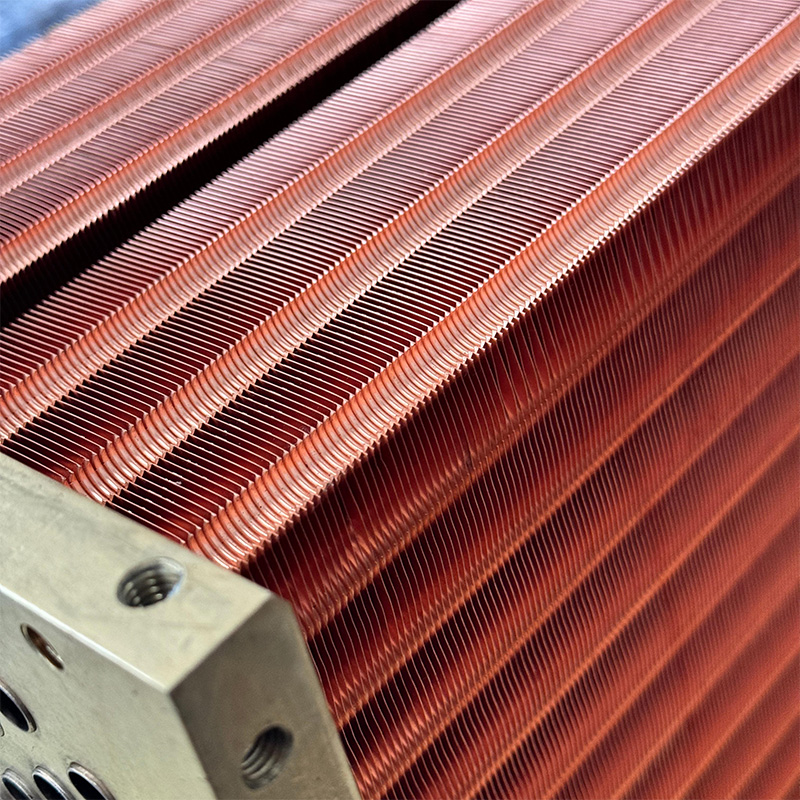
With increasingly stringent requirements for materials and workmanship, the role of reliable manufacturing partners has become critical. The market is increasingly focused on companies that can guarantee not only compliance with drawings, but also the provision of comprehensive documentation for raw materials. A striking example of this approach isWuxi Kaisheng Electric Power and Petrochemical Equipment Co.,Ltd" This company specializes in the design and manufacture of high-tech equipment for the oil, gas and power generation industries, including heat exchangers made from titanium, 316 stainless steel, C46400 marine brass and N06625 nickel alloys.
The experience of manufacturers such as Wuxi Kaisheng demonstrates the importance of having a certified material base (ASME, PED) and in-house quality control at all stages - from metal smelting to assembly of finished components, such as tube sheets made of 321 steel or C70600 copper-nickel alloys. Their products, widely used in the harsh environments of petroleum refining, chemicals and water desalination, are designed from the ground up to high standards of corrosion resistance and high pressure performance. For importers, cooperation with manufacturers of this level, who are ready to provide complete material passports and test reports in Russian, becomes the key to smoothly passing the new certification procedure in 2026. Individual solutions and stable quality offered by such companies make it possible to minimize the risks of failure at the stage of incoming control of raw materials.
Frequently Asked Questions
How long will it take to get certified in 2026?
On average, the process takes from 3 to 6 weeks, provided that documentation and samples are ready. However, if an on-site audit of production abroad or additional complex tests (cryogenic, fire resistance) are required, the period may increase to 2-3 months. The delay most often occurs not because of the work of the laboratory, but because of the time it takes to correct the experts’ comments on the documents.
Can I use a certificate received in 2024?
Yes, certificates issued before the new requirements come into force are valid until their expiration date. However, if you make changes to the design of a product or change the manufacturer of components, you will need to draw up a new document according to the new rules. It is also important to check whether your product is included in the expanded list of products requiring mandatory labeling.
What to do if the manufacturing plant is located in a country outside the EAEU?
In this case, the applicant must be a resident of the EAEU (importer or authorized person). Процедура включает в себя обязательный анализ состояния производства, который может проводиться дистанционно или с выездом российской комиссии. Вам потребуется подготовить полный пакет технической документации на русском языке и обеспечить доставку образцов в аккредитованную лабораторию на территории Союза.
Какова стоимость сертификации одной позиции арматуры?
Стоимость варьируется от 15 000 до 100 000 рублей и выше, в зависимости от схемы сертификации, количества типоразмеров в одном сертификате и сложности испытаний. The price includes laboratory services, expert work, a certificate form and registration in the register. Дополнительные расходы могут возникнуть на командировки экспертов для аудита и доставку образцов.
Conclusion and recommendations
Новые требования 2026 года к сертификации трубопроводной арматуры — это не просто бюрократическое усложнение, а необходимый фильтр для повышения безопасности промышленных объектов. Рынок очищается от некачественной продукции, и у добросовестных поставщиков открывается окно возможностей. Ключ к успеху лежит в прозрачности процессов, качественной документации и готовности к цифровому взаимодействию с регуляторами.
Не откладывайте подготовку на последний момент. Начните аудит своей продуктовой линейки уже сегодня, чтобы встретить 2026 год во всеоружии. Помните, что цена ошибки сейчас — это не просто штраф, а потеря репутации и доступа к крупным проектам на годы вперед. Если вы сомневаетесь в правильности выбора схемы или интерпретации новых стандартов, лучше обратиться к профессионалам, чем рисковать партией товара.
Мы готовы помочь вам nav igate through these changes with our expertise in industrial compliance. Our team has successfully guided dozens of manufacturers through the transition to the new regulatory framework, ensuring zero downtime for their supply chains.Contact us todayдля получения индивидуальной консультации по вашему конкретному случаю и расчета стоимости сертификации. Не позволяйте бюрократии тормозить ваш бизнес — превратите соблюдение стандартов в ваше конкурентное преимущество.
Для более глубокого погружения в тему рекомендуем ознакомиться с нашим материалом постандартам ГОСТ для промышленной арматуры, где мы разбираем технические детали требований к материалам и испытаниям.