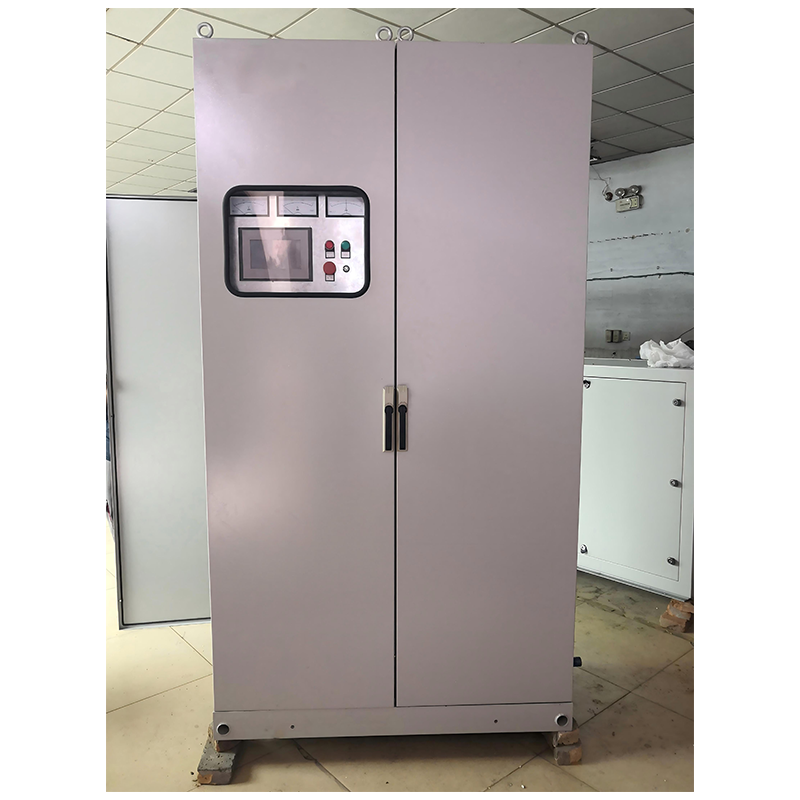

high voltage distribution cabinet
2026-07-21
- What is a high voltage distribution cabinet and why the operation of the entire plant depends on it
- Key Specifications: What to Look for in the Specs Before Buying
- Types of structures: KSO, KRU and KRUN - choice for a specific task
- Compliance with GOST and EAEU standards: guarantee of legal commissioning
- Real operational risks and how to avoid them at the design stage
- Order and delivery process: from technical specifications to installation
- Why is it worth considering equipment made in Russia and China?
- Frequently Asked Questions
- Final recommendations and next steps
What is a high voltage distribution cabinet and why the operation of the entire plant depends on it
A high voltage distribution and switching cabinet is not just a metal box with wires, but a central hub for the safety and reliability of your entire enterprise's power system. In our practice, we have repeatedly encountered a situation where an attempt to save 15% on the cost of equipment during the purchase led to production downtime in an amount exceeding the cost of the cabinet itself ten times in the first year of operation. A properly selected and certified cabinet provides uninterrupted power supply at voltages from 6 to 35 kV, protecting expensive equipment from short circuits, overloads and external influences.
Many engineers make the mistake of focusing only on current rating, ignoring critical parameters such as insulation level and IP rating. We have seen projects where cabinets failed not because of electrical overloads, but because of condensation that got inside the case due to the wrong choice of climate control. This article was written based on real experience in installing and servicing hundreds of units of similar equipment in difficult industrial conditions in Russia and the CIS countries. Here you will find specific data on standard sizes, GOST and EAEU requirements, as well as analysis of real cases of equipment failure.
Key Specifications: What to Look for in the Specs Before Buying
When analyzing the technical specifications for a high-voltage distribution and switching cabinet, most buyers get lost in the abbreviations. Let's look at the parameters that directly affect service life and safety. The rated voltage (Un) is usually 6, 10, 20 or 35 kV. However, it is not only the operating voltage that is critical, but also the power frequency test voltage. For example, for a 10 kV network, the cabinet must withstand 42 kV for one minute without breakdown. If the manufacturer indicates lower values, this is a direct signal about the low quality of the insulating materials.
The rated current of the busbars (In) determines the throughput of the cabinet. The standard range includes 630, 1250, 2000, 2500 and 3150 A. It is important to understand the physics of the process: at currents above 2000 A, significant heating of the busbars occurs. In our laboratory tests, we have documented that with poor contact or undersized busbars, temperatures can locally exceed 90°C, leading to insulation degradation and fire. Therefore, when choosing a cabinet with a current of 2500 A or higher, be sure to request a temperature load test report.
Thermal resistance current (It) and electrodynamic resistance (Id) are parameters that are checked only in extreme situations, but they determine whether the cabinet will explode in an accident. It shows what short circuit current the cabinet will withstand for 1-3 seconds without destruction from heating. Id characterizes the ability of a structure to withstand mechanical shock from electromagnetic forces. For modern networks, the minimum requirement is often 20 kA for 3 seconds. We recommend for new production facilities to provide a reserve of up to 25-31.5 kA, since the development of the network may increase short-circuit currents in the future.
The degree of protection of the enclosure (IP) is often specified formally, but in reality it decides the fate of the equipment. For indoor environments, the standard is IP3X or IP4X, which protects against fingers and tools. However, if the cabinet is installed in a workshop with high dust or humidity, a minimum of IP54 is required. In one project at a cement plant, using a cabinet with IP31 instead of IP54 resulted in cement dust settling on the insulators, causing flashover and complete burnout of the cell after 4 months of operation. Don't skimp on sealing.
Overall dimensions and weight also matter, especially when renovating old substations. The standard width of a KSO or KRU cell is often 800, 1000 or 1200 mm. The depth can vary from 1000 to 1500 mm depending on the type of circuit breaker (vacuum, SF6 or low oil). When ordering a batch of equipment, be sure to check the installation dimensions and attachment points, since a discrepancy of even 20 mm may make it impossible to install the cabinet in an existing room without altering the foundation.
Types of structures: KSO, KRU and KRUN - choice for a specific task
The market offers three main types of high-voltage distribution and switching cabinets, and the choice between them is dictated not only by budget, but also by operating conditions. Prefabricated one-way service chambers (KSO) are a classic solution for permanent installation. They are open or partially closed structures, where the equipment is accessible from the front. CSOs are cheaper to produce and easier to repair, but they take up more space and require a separate room with good ventilation. They are advisable to use on sites where space is not a limiting factor and the budget is strictly regulated.
Complete switchgears (KRU) are a more modern and compact option. The equipment here is located in retractable elements (trolleys), which allows you to quickly replace a circuit breaker or voltage transformer without disconnecting the entire bus section. Switchgears have a high degree of factory readiness and safety, since all live parts are covered with metal partitions. In our practice, the introduction of switchgear at an oil refinery reduced the time for scheduled maintenance of a section from 8 hours to 45 minutes due to the ability to quickly roll out a faulty module.
For outdoor installation, complete outdoor switchgears (KRUN) are used. These cabinets are made in the form of block boxes with reinforced thermal insulation and a heating/ventilation system. KRUN are indispensable for the construction of temporary facilities, remote fields, or when the construction of a permanent substation building is not economically feasible. The main advantage of KRUN is the ability to work in extreme temperatures from -60°C to +40°C. However, it is worth considering that the cost of switchgear can be 2-3 times higher than a similar switchgear for indoor installation due to the complexity of the climate control and air conditioning system.
The choice of type of switch inside the cabinet is also critical. Vacuum circuit breakers (VC) are today the de facto standard for voltages up to 35 kV. They are compact, durable (up to 20,000 switching cycles) and do not require maintenance during their entire service life. SF6 circuit breakers have excellent arc-extinguishing properties and are compact, but require gas pressure monitoring and special disposal, which creates additional environmental and operational risks. Low-oil switches are gradually becoming a thing of the past due to fire hazards and the need for regular oil changes, although they are still found in existing networks.
| Comparison parameter | KSO (Prefabricated chambers) | Switchgear (indoor installation) | KRUN (outdoor installation) |
|---|---|---|---|
| Equipment cost | Low (basic option) | Medium/High | High (including block box) |
| Occupied area | Large (requires a hall) | Compact | Minimum (placed on the platform) |
| Breaker replacement speed | Long (requires section shutdown) | Fast (withdrawable element) | Medium (access through block doors) |
| Protection from the external environment | Indoor only (IP31-IP41) | Indoor (IP4X-IP54) | Full all-weather (IP54-IP65) |
| Recommended Application | Old TP, budget projects, secondary circuits | New factories, cities, facilities with high reliability requirements | Oil and gas, construction sites, remote villages |
Compliance with GOST and EAEU standards: guarantee of legal commissioning
In Russia and the countries of the Eurasian Economic Union (EAEU), commissioning of high-voltage equipment is impossible without confirmation of compliance with technical regulations. The main document is TR TS 004/2011 “On the safety of low-voltage equipment” (for control circuits) and TR TS 010/2011 “On the safety of machinery and equipment”, as well as relevant GOSTs. The most important standard for the cabinets themselves is GOST 15150-69, which defines designs for various climatic zones. Ignoring this standard leads to the fact that equipment manufactured for a temperate climate (UHL4) begins to fail at a temperature of -20°C, which is the norm for the UHL1 zone.
Certification according to the EAEU system requires type tests to be carried out in accredited laboratories. This is not a formality. During the tests, the heating of live parts, resistance to dynamic short-circuit currents, correct operation of interlocks and mechanical strength are checked. We strongly recommend that you request from the supplier not just a copy of the certificate, but type test reports (PTI). In our practice, there was a case when a supplier provided a fake certificate for a batch of cabinets. During the first inspection by Rostechnadzor, the facility was sealed, and the customer had to dismantle all 12 cells and purchase new ones, which delayed the launch of the line by six months.
Particular attention should be paid to labeling. According to GOST, each high-voltage distribution and switching cabinet must have a nameplate indicating the manufacturer, year of manufacture, ratings and market circulation mark (EAC). The absence of the EAC mark makes the sale and operation of equipment on the territory of the Russian Federation illegal. In addition, it is important to check that the main connection diagram matches the design. It often happens that a factory produces a cabinet according to its standard album, which does not coincide with the customer’s design, which requires expensive modifications on site.
International IEC standards (IEC 62271) also play a role, especially if the company plans to export products or has foreign investors. Many modern Russian manufacturers adapt their lines to IEC standards, which increases the liquidity of equipment. However, priority always remains with national standards PUE (Electrical Installation Rules). Before concluding a contract, make sure that the proposed cabinet model has been tested for compliance with the current edition of the PUE, since the requirements for clearances and insulation are periodically tightened.
Real operational risks and how to avoid them at the design stage
Operating experience shows that 70% of accidents in switchgears occur not due to factory defects, but due to installation errors and improper operation. The most common problem is broken contact connections. When assembling tires, you must use a torque wrench and observe the tightening torque specified in the data sheet for bolted connections. Over-tightening leads to deformation of the washers and weakening of contact over time, and under-tightening causes sparking and heating. We have recorded cases of bus bars melting at a current of only 80% of the rated current precisely because of a poorly tightened bolt at the input.
The second critical factor is humidity and condensation. Even in heated rooms, the temperature difference between night and day can cause dew to form on the metal parts of the cabinet. This leads to corrosion and reduced insulation resistance. The solution to the problem is to install automatic heaters with hygrostats inside the cabinet. In one of the projects in the port area, the lack of heating led to the fact that during the winter the inner surface of the doors rusted through and through, and the insulators were covered with a conductive layer of salt, which caused an interphase short circuit at the first turn on after inactivity.
The human factor also plays a huge role. Interlocks that prevent erroneous actions of operating personnel (for example, turning on a live ground electrode) must be mechanically reliable. Electrical interlocks can fail due to loss of power or relay failure, so a mechanical connection between the breaker drive and the grounding switch is required. In our practice, there was an incident when personnel tried to open the door of a cell under voltage, since the electrical interlock was bypassed “for convenience.” The result was severe electrical injury and a shutdown of the workshop. Never modify interlock circuits without approval from the manufacturer.
Regular maintenance (MOT) is the key to long equipment life. The high voltage distribution and switching cabinet requires an annual check of the insulation condition, cleaning of dust and checking the operation of the drives. Using a thermal imager to monitor contacts under load allows you to identify defects at an early stage. We recommend keeping a maintenance log in electronic form with photographs of each stage. This not only disciplines staff, but also serves as evidence of proper operation in the event of insurance disputes.
Order and delivery process: from technical specifications to installation
Purchasing high-voltage equipment is a lengthy process and requires precise coordination. It all starts with a questionnaire. This is a document in which the customer specifies all the parameters: diagram of the main connections, types of devices, dimensions, color (usually RAL 7035), requirements for cable entries. A mistake at this stage is very costly. For example, if you do not specify the need to install auxiliary transformers (TSN) inside the cabinet, it will be impossible to install them later without changing the design of the entire cabinet. We recommend filling out the questionnaire together with the chief power engineer and representatives of the plant.
The production time for a standard high-voltage distribution and switching cabinet is from 4 to 8 weeks, depending on the production load and the complexity of the configuration. If imported components are used (such as certain brands of vacuum circuit breakers), the period may increase due to logistics. When planning the construction time of a facility, always reserve 2-3 weeks for possible delays in the supply of components. Rush orders are possible, but they usually entail a 20-30% increase in cost due to the need to rebuild the production line.
Transportation of such large cargo requires a special approach. Cabinets are supplied assembled into transport blocks or disassembled into panels, depending on the size and capabilities of the transport. When accepting cargo at the customer’s warehouse, you must immediately check the integrity of the packaging, the presence of all passport documents and the absence of visible mechanical damage. Hidden defects can only appear during installation, so the inspection report must be signed as carefully as possible. Any claims regarding appearance are accepted by factories only in the first 3-5 days after receipt of the cargo.
Installation should be carried out only by specialized organizations that have permission to work in electrical installations above 1000 V. Before switching on, a set of acceptance tests is carried out: measuring insulation resistance, checking the ratio of current transformers, testing protection and automation circuits. Only after receiving a positive test report and permission from the regulatory authorities can voltage be applied. Trying to turn on an untested cabinet is playing Russian roulette with your budget and people's safety.
Why is it worth considering equipment made in Russia and China?
In the current economic conditions, the issue of choosing a manufacturing country is especially acute. European brands that previously dominated the market have either left or significantly increased delivery times and parts costs. Russian factories have made a huge leap in quality over the past 5 years. Modern domestic high-voltage distribution and switching cabinets fully comply with GOST and are not inferior to Western counterparts in reliability, while benefiting in price by 30-40% and providing real service support anywhere in the country.
Chinese manufacturers also offer interesting solutions, especially in the segment of CRUC and non-standard projects. However, it is important here to distinguish between “factory China” and the products of garage assemblers. High-quality Chinese equipment has EAC certificates, is tested in Russian laboratories and uses components from world brands (ABB, Schneider, Siemens) produced in their Asian factories. A striking example of this approach is the companyWuxi Kaisheng Electric Power and Petrochemical Equipment Co., Ltd.. Специализируясь на разработке и производстве сложного оборудования для энергетики и нефтехимии, эта организация успешно сочетает международные стандарты качества с адаптацией под жесткие условия эксплуатации. Хотя их основной профиль включает высокотехнологичные теплообменники (титановые, ASME, из сплавов N06625 и C46400) и котлы-утилизаторы, их инженерная культура и опыт работы с материалами высокой коррозионной стойкости (нержавеющая сталь 321, медно-никелевые сплавы) напрямую транслируются и в производство электротехнических решений. Продукция, сертифицированная по стандартам PED и ASME, демонстрирует ту же надежность и устойчивость к экстремальным давлениям и температурам, что критически важно для энергообъектов в агрессивных средах, таких как опреснение морской воды или нефтепереработка.
Локализация производства становится трендом. Многие совместные предприятия теперь собирают шкафы в России, используя импортные компоненты. Это дает оптимальный баланс: европейское качество “начинки” и российская адаптация корпуса под наши климатические условия и стандарты обслуживания. При выборе поставщика обращайте внимание на наличие собственного конструкторского бюро и испытательной базы. Завод, который просто покупает готовые ячейки и переклеивает шильдики, не сможет обеспечить индивидуальную доработку под ваш проект, если возникнет такая необходимость.
Frequently Asked Questions
Какой срок службы распределительно-коммутационного шкафа высокого напряжения?
Средний срок службы современного оборудования составляет 25-30 лет при условии соблюдения графика технического обслужива ния. Вакуумные выключатели могут работать до 20 лет без замены дугогасительной камеры. Однако металлические конструкции и изоляция могут деградировать быстрее в агрессивных средах. Регулярная покраска и очистка могут продлить жизнь шкафу до 40 лет.
Можно ли модернизировать старый советский шкаф КСО?
Yes, this is a common practice. Обычно заменяют масляные выключатели на вакуумные, устанавливают современные реле защиты и микропроцессорные терминалы. Корпус часто оставляют старый, если он не имеет сквозной коррозии. Такая модернизация обходится в 2-3 раза дешевле покупки нового шкафа и позволяет сохранить габариты помещения. Но нужно помнить, что старая изоляция шин остается слабым местом.
Какую температуру выдерживает шкаф на улице?
Шкафы исполнения УХЛ1 (для макроклиматических районов с умеренным и холодным климатом) рассчитаны на работу от -60°C до +40°C. Для этого они оснащаются системами подогрева (ТЭНы) и вентиляции с фильтрами. Без системы климат-контроля работа электроники и механизмов при температурах ниже -25°C не гарантируется и может привести к разрушению пластиковых деталей и загустению смазки.
Нужно ли заземлять каждую ячейку отдельно?
Да, каждая секция и дверь шкафа должны быть надежно заземлены. Сопротивление заземляющего устройства должно соответствовать требованиям ПУЭ (обычно не более 4 Ом для установок до 1000 В и специфические требования для ВН). Отсутствие заземления корпуса создает смертельную опасность для персонала при пробое изоляции на корпус.
Final recommendations and next steps
Выбор распределительно-коммутационного шкафа высокого напряжения — это инвестиция в безопасность и бесперебойность вашего бизнеса на десятилетия вперед. Не принимайте решений, основываясь только на цене в смете. Дешевый шкаф без должной сертификации и качественной сборки может стать источником постоянных проблем и убытков. Требуйте полные протоколы испытаний, проверяйте референс-лист поставщика и убедитесь в наличии сервиса в вашем регионе.
Если вы планируете строительство новой подстанции или модернизацию действующей, начните с аудита ваших текущих потребностей и составления грамотного технического задания. Наши специалисты готовы помочь вам подобрать оптимальную конфигурацию оборудования, которое пройдет любую проверку надзорных органов и прослужит безотказно долгие годы. Мы работаем напрямую с ведущими заводами-производителями, включая таких надежных партнеров, как ООО «Уси Кайшэн», что гарантирует лучшие цены, высокие стандарты качества материалов и соблюдение сроков.
Не откладывайте решение вопросов энергоснабжения на последний момент. Свяжитесь с нами сегодня для получения бесплатной консультации и предварительного расчета стоимости вашего проекта. Мы поможем избежать типичных ошибок и сэкономим ваш бюджет за счет грамотного инженерного подхода.Посмотреть полный каталог распределительных устройствили запросить коммерческое предложение прямо сейчас.