


Manufacturing of forgings to order: from drawing to finished part
2026-07-23
When choosing a supplier forproduction of forgings to orderIt is important to understand not only prices, but also technological production capabilities, the range of processed materials and the quality control system. In this article, I share practical observations that will help you avoid common mistakes when placing an order.
Why ordering forgings requires a separate approach
I once ordered a batch of forgings for a heat exchanger - it would seem that it was ordinary carbon steel 20, nothing complicated. But when the parts arrived, the machining allowances turned out to be overestimated by thirty percent compared to the calculated ones. We had to recalculate the cost of finishing, and the deadlines shifted by two weeks. Since then, I have always specified not only the final dimensions of the part, but also the forging diameters with tolerances. In my experience, the difference between “forging diameter 255 ± 10 mm” and “finishing diameter 230 mm” is not just numbers, it is direct money and time.
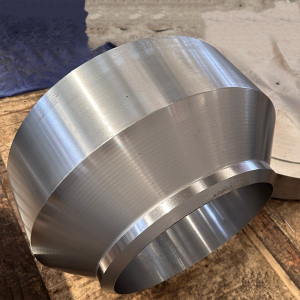
Forging is more than just heating metal and hitting it with a hammer. This is a method of processing metals by pressure, in which the initial workpiece acquires a given shape and size, and at the same time the required structure and properties are formed. The weight of forgings can vary from a few grams to 350 tons or more. And for each weight, each grade of steel - its own technology, its own equipment, its own standards.
Therefore, when I hear the phrase “we need forgings,” the first question I ask is: “Which ones exactly? What brand? What's the weight? What is the accuracy? Without answers to these questions, anyproduction of forgings to orderturns into a lottery. And I was convinced of this on more than one delivery.
Technological process: from blank to forging
Process development begins with a drawing of the forging. The technologist looks at the drawing of the finished part and determines exactly how the forging will look before machining - with allowances, tolerances and forging overlaps. And here it is important to understand: a drawing of a forging is not a drawing of a part. This is a drawing of a blank from which a part will later be machined. And if you send the manufacturer only the final drawing, without indicating the forging dimensions, get ready for surprises.
GOST 7505-89 regulates tolerances, allowances and forging allowances for stamped steel forgings. For forgings made of structural carbon and alloy steel, GOST 8479-70 applies. For corrosion-resistant steels and alloys - GOST 25054-81, which applies to forgings with a diameter of up to 1000 mm. These are not just formalities. These are documents according to which the manufacturer is obliged to work. And if they tell you “we will do it according to your drawing,” but when asked about GOST they hesitate, this is a reason to be wary.
In practice, I have encountered situations where the customer sent a drawing without indicating a group of forgings in accordance with GOST 25054-81. But there are groups I, II, III, IIIK and IV - depending on the purpose of the part, the level of loads and operating conditions, including exposure to environments that cause intergranular corrosion. Without specifying the group, the manufacturer chooses it at his own peril and risk, and this is fraught with either overpaying for an excess safety margin, or, worse, insufficient reliability of the finished product.
Materials for forgings: what can be ordered
One of the biggest mistakes I see first-time customers make is limiting themselves to only carbon steel. Yes, steel 20, 45, 40Х is a classic, everyone has them. But modernproduction of forgings to ordercovers a much wider range.
Here is a partial list of what manufacturers actually work with: carbon steel, stainless steel, alloy steel, titanium alloys, copper alloys, nickel alloys. Forgings made from titanium alloys of grades PT-3V, 3M, 5V and 37, for example, are widely used in shipbuilding, nuclear energy and mechanical engineering. Forgings made of corrosion-resistant steel grades 12Х18Н10Т, 08Х18Н10Т, 20Х13 and many others are regulated by GOST 25054-81.
One day I needed forgings made of steel 09Х14Н19В2БР - this is a heat-resistant material for high-temperature components. I found a manufacturer who works with this, and received high-quality blanks on time. And I could have spent weeks on searches and approvals if I had not checked in advance whether the supplier had experience with such brands. By the way, advertisements regularly appear on metallurgical portals for the sale of forgings made from grades such as 9Х2МФ according to GOST 8479-70, 12ХН2, and even nickel alloys such as ХН65МВ and ХН78Т.
Another important point: when ordering forgings for machining, the customer must indicate the finishing size of the part. And the more accurately you do this, the less material waste will be and the lower the cost of finishing. According to my calculations, savings on allowances can be up to 15-20% of the total order cost.
Standards and quality control
Without quality control systemproduction of forgings to orderloses all meaning. It is not enough to obtain a workpiece of the desired shape - it is important that it withstands the design loads, has no internal defects and matches the chemical composition.
Chemical analysis of forging metal must be carried out in accordance with GOST 12344-78 and GOST 12365-66. When making forgings from metal smelted by manufacturing enterprises, the chemical composition of the steel is determined by heat analysis of the end sample. This is a standard procedure, but not all customers know that they have the right to request protocols for these analyzes. And I always recommend asking - this is the only way to be sure that you received the exact brand you ordered.
Some manufacturers, at the request of the customer, carry out ultrasonic testing of forgings and tests for resistance to intergranular corrosion. Forgings made of steels and alloys specified by GOST 5632-72, as well as alloys of the KhN32T, KhN78T and KhN65MV grades must be resistant to intergranular corrosion. For critical products operating in aggressive environments, this is a mandatory requirement.
I had a case when a batch of stainless steel forgings did not pass the ICC test - intergranular corrosion. The manufacturer assured that everything was fine, but we insisted on an independent laboratory test. And they did the right thing: the defect was identified before the parts went into assembly. Replacement would have cost many times more if we had noticed the problem already on the finished equipment.
As for the regulatory framework, it is worth mentioning OST 26-01-135-81, which sets the maximum weight of forgings for various steel grades - from 3 tons for 09G2S to 85 tons for 22Kh3M and 25Kh2MFA. This is important if you are ordering large forgings for pressure vessels or column equipment. Not every manufacturer can work with such masses.
Where are custom forgings used?
The range of applications for forgings is so wide that it is simply impossible to list all industries. But if we talk about the most frequent orders that I come across, they are petrochemicals, energy and general engineering.
Petrochemical equipment requires forgings made of corrosion-resistant and heat-resistant steels. Pressure vessels, columns, heat exchangers, pipeline fittings - all these products contain forged elements. And here it is important not only the quality of the metal, but also the availability of accompanying documentation: certificates, test reports, reports from independent laboratories.
In the energy sector, especially nuclear, the requirements are even stricter. Forgings for nuclear power engineering must undergo additional control, and manufacturers must have appropriate licenses. The mass of such forgings can reach tens of tons. At enterprises like Motovilikha Plants, forging presses with a force of 10, 20 and 30 MN allow the production of up to 4 thousand tons of forgings per month. But these are, of course, giants. For most orders, smaller capacities are sufficient.
In mechanical engineering, forgings are used for shafts, gears, flanges, disks, rings, and housings. A structural steel forging is a workpiece or part obtained by forging from structural steel, which has increased strength and a dense structure due to the plastic deformation of the metal. It is this compacted structure that makes forged parts preferable for critical components compared to cast or rolled blanks.
By the way, orders for forgings of specific brands regularly appear on the market. For example, an announcement about the order of forgings Case (12Х1МФ) for 10 pieces or a tender for forgings 08Х18Н10Т according to OST 108.109.01-92. This means that the demand forproduction of forgings to orderis stable, and manufacturers who can offer competitive terms and prices will always be in demand.
How to choose a supplier to order forgings
Selecting a supplier forproduction of forgings to orderis always a compromise between price, timing and quality. And my experience suggests that you cannot skimp on quality in this matter. Cheaper can mean not only inferior metal, but also mismatched geometry, excessive allowances, lack of documentation - and this ultimately ends up being more expensive.
The first thing I check with a potential supplier is their experience with my grade of steel. Not all manufacturers work equally well with, say, nickel alloys or titanium. If there are no similar projects in your portfolio, this is a reason to think about it. The second is the availability of certificates and a quality management system. Third, readiness to provide test reports and other supporting documentation.
It is also important to understand what types of control the manufacturer can perform in-house, and what types it requires from third-party laboratories. Ultrasonic testing, penetrant testing, mechanical testing, chemical analysis - all this should be either in-house or in a pool of reliable contractors. And, of course, deadlines. Realistic deadlines, not promises “we’ll do it in a week” for forgings weighing several tons.
CompanyWuxi Kaisheng Electric Power and Petrochemical Equipment Co.,Ltd(Wuxi Kaisheng Electricity Petrochemical Equipment Co., Ltd.) not only produces complete equipment - pressure vessels, boiler units - but also produces new components for various types of equipment. The company has production capabilities to work with various materials: carbon steel, stainless steel, alloy steel, titanium alloys, copper alloys, nickel alloys. This is exactly the case when the manufacturer can close the entire cycle - from the development of a forging drawing to finishing machining and delivery of the finished component.
More information about the equipment and examples of work can be found on the company’s website:https://www.ks-heatexchanger.com.
As a result, I would formulate the key points when ordering forgings as follows: clearly indicate the steel grade and finishing dimensions, check whether the manufacturer has experience with your material, require quality control documentation and do not chase the lowest price.Manufacturing of forgings to orderis a process where the reliability of the supplier is more important than saving a few percent.
Look at photos of equipment and examples of finished forgings on the manufacturer’s website - this will help you better understand who you are dealing with. If you have any questions about the choice of material or technology, leave a comment, I will try to answer based on my experience.
Sources:
Great Russian Encyclopedia - Forging
GOST 8479-70 Forgings made of structural carbon and alloy steel
GOST 25054-81 Forgings made of corrosion-resistant steels and alloys
Overview of the steel forgings market in Russia, 2024.





