
energy distribution in commercial buildings
2026-07-26
- Why 80% of commercial properties overpay for electricity due to errors in the distribution design
- Critical errors when designing power supply systems
- Modern technologies for managing energy flows
- Equipment selection: parameters affecting reliability
- Cost-effectiveness and reduced operating costs
- Regulatory framework and safety requirements
- Практические шаги по модернизации существующих сетей
- Frequently Asked Questions
- Conclusion and next steps
Why 80% of commercial properties overpay for electricity due to errors in the distribution design
Incorrectраспределение энергии в коммерческих зданияхis not just a technical error, but a direct threat to business profitability. In our practice, we regularly encounter situations where owners of shopping centers or logistics complexes lose up to 15-20% of their budget annually solely due to suboptimal power supply architecture. The problem often lies not in the cost per kilowatt itself, but in transmission losses, low power factor and lack of intelligent load management. When a system is designed without real-world peak loads in mind or with excess “just in case” safety margins, equipment capital costs skyrocket and operating costs become unaffordable.
We have seen cases where an attempt to save money at the design stage led to the need to completely replace input distribution devices (IDUs) after just three years of operation. One of our clients, the owner of a warehouse complex in the Moscow region, was faced with constant shutdowns of refrigeration equipment during peak hours. The reason turned out to be trivial: uneven phase distribution and the lack of a monitoring system that could predict overload. Losses from damage to goods exceeded the cost of upgrading the system five times. This article is based on real-world experience with energy distribution systems in over 40 industrial and commercial installations, and we'll look at how to avoid similar scenarios.
Critical errors when designing power supply systems
Designing an electrical distribution system requires a balance between current needs and future scaling. The most common mistake we see in 9 out of 10 audits of existing networks is ignoring the concurrency ratio. Engineers often add up the maximum power of all installed equipment, assuming that all devices can operate at full power simultaneously. In practice, for office buildings this coefficient rarely exceeds 0.7, and for warehouses with conveyor lines it can be even lower. Over-designing the load leads to the installation of excess capacity transformers, which operate in an inefficient no-load mode, consuming reactive energy and increasing bills.
The second critical problem is the lack of consumer segmentation by reliability categories. In a commercial building there is always a load that cannot be stopped (server rooms, security systems, refrigeration units), and a load that can be turned off without catastrophic consequences (decorative lighting, part of the outlet groups). If these groups are not divided into different buses or are not equipped with automatic prioritization, any failure at the input de-energizes the entire facility. We recommend using the principle of cascade protection, where each subsequent stage has a time delay greater than the previous one, in order to localize the accident within one room or floor.
The third mistake concerns the choice of location of distribution boards. They are often hidden in remote technical rooms for the sake of aesthetics or to save rental space. This leads to lengthening of cable routes and, as a consequence, to an increase in active losses in the lines. Voltage drop over long sections can reach 5-7%, which damages sensitive electronic equipment or shortens its service life. The optimal solution is to place floor panels as close as possible to the center of the floor's electrical loads. This reduces copper consumption, reduces losses and simplifies maintenance.
A fourth point that is often overlooked is the quality of the operating environment itself. In production facilities or restaurant kitchens, humidity and temperature may differ significantly from normal conditions. The use of standard IP31 switchboards in such areas will inevitably lead to contact corrosion and short circuits. We insist on using equipment with a degree of protection of at least IP54 for areas with high dust and moisture, even if this increases the initial costs. It is cheaper to buy a protected shield right away than to replace burnt-out automation every six months.
How to calculate the real load and avoid overpayments
Load calculations should be based not on equipment specifications, but on actual consumption profiles. To do this, it is necessary to conduct an energy audit or use data from similar facilities. The formula is simple: installed capacity multiplied by demand factor and capacity factor. However, the nuance lies in the details. For example, LED lighting has a high power factor (close to 1), while older fluorescent lamps or induction motors may have a cos φ of around 0.7-0.8. Ignoring this parameter leads to fines from energy supply companies for reactive power consumption.
When planning the future development of a building, it is important to reserve power, but do it wisely. Instead of installing one huge transformer, it is better to provide for the possibility of parallel operation of several smaller units or leave room for expanding the switchboard. This allows you to flexibly scale the system as the building fills with tenants. In our practice, there was a case when a shopping center opened only at 30% occupancy, but paid for the maintenance of a transformer substation of full capacity. The transition to a modular distribution system reduced fixed costs by 40% in the first two years of operation.
Modern technologies for managing energy flows
Traditional energy distribution based on passive elements is becoming a thing of the past. Todayраспределение энергии в коммерческих зданияхIt is impossible to imagine without intelligent management systems (BMS - Building Management Systems). These systems allow not only to record the fact of consumption, but also to actively manage it. Current and voltage sensors installed on each feeder transmit data to the cloud in real time. This makes it possible to detect anomalies, such as current leaks or phase unbalances, before they lead to an accident.
One of the most effective technologies is dynamic load shedding. The system automatically turns off non-essential consumers at times of peak consumption so as not to exceed the contractual power limit. This is especially true for facilities with high peak power tariffs. AI algorithms can predict peaks based on historical data and weather conditions, preparing the system in advance. For example, on a hot day, the system can pre-cool the room to a lower temperature, so that in the evening the air conditioners do not turn on at full power at the same time as the lighting.
Microprocessor-based protection relays replace outdated electromechanical circuit breakers. They provide not only short circuit and overload protection, but also protection against arc flash, which is a common cause of fires. Such relays have a built-in event memory, which allows you to accurately determine the cause of the outage months after the incident. For commercial buildings, this is critical when handling insurance claims. We recommend installing smart machines with the ability to remotely turn on/off, which allows the dispatcher to manage the network from anywhere in the world.
The integration of renewable energy sources (RES) is also changing the distribution architecture. Rooftop solar panels or heat pumps require bidirectional energy flows. Old networks were not designed to transfer energy into the general network, which could lead to voltage instability. Modern inverters and charge controllers ensure synchronization with the general network and smooth switching between sources. This transforms the building from a simple consumer into an active participant in the energy market (Prosumer), able to earn money by selling excess energy.
The role of energy storage devices in grid stabilization
Energy storage systems (ESS) are becoming an integral part of modern infrastructure. They act as a buffer, smoothing out consumption peaks and filling gaps. In the commercial sector, this allows for a tariff arbitrage strategy: charging batteries at night at a low rate and discharging them during the day when the price of electricity is highest. The payback period for such systems in large offices or hypermarkets is now 3-5 years, which makes investments attractive. In addition to economic benefits, power supply systems provide uninterrupted power supply to critical loads during emergency outages of the external network.
Equipment selection: parameters affecting reliability
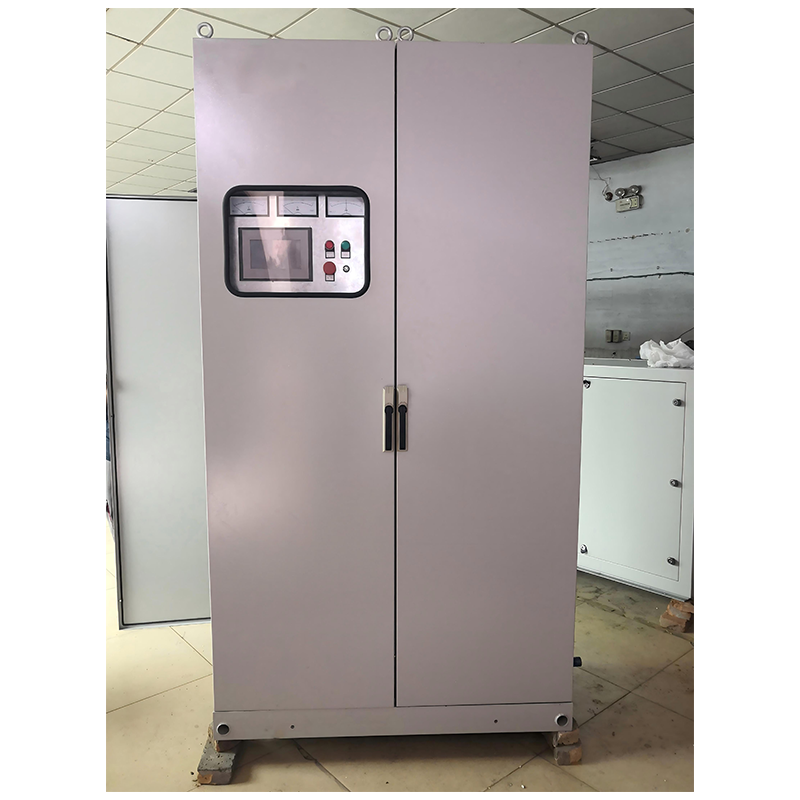
The electrical equipment market is oversaturated with offers, but not all of them are suitable for serious commercial projects. When selecting circuit breakers, contactors and busbars, the key parameter is the breaking capacity (Icu). It shows how much short circuit current the device can break without destruction. For input switchboards of large buildings, this parameter should be at least 50 kA, and sometimes higher. The use of devices with low breaking capacity (for example, 6 kA) at the input can lead to an explosion of the switchboard in the event of a serious accident in the city network.
The material of the busbars also plays an important role. Copper has better conductivity, but aluminum is cheaper and lighter. In modern distribution systems, aluminum buses with high-quality coating are often used, which allows reducing the cost of the project by 20-30% without loss of reliability. However, it is important to be aware of galvanic corrosion: you cannot directly connect copper and aluminum without special adapter plates or lubricants. We have seen cases where such a connection heats up and melts after a year of use due to oxidation of the contact.
The enclosure's degree of protection (IP) must correspond to the installation location. For dry heated rooms, IP31 or IP41 is sufficient. For basements where flooding is possible or for outdoor installations, IP54 or higher is required. Particular attention should be paid to the ventilation system of the panels. Overheating of equipment reduces its service life exponentially. Arrhenius' rule states that a 10°C increase in temperature reduces the life of insulation by half. Therefore, installing forced ventilation with filters or air conditioning cabinets is not a luxury, but a necessity for long-term operation.
Equipment certification is a mandatory selection criterion. In Russia and the EAEU countries, a TR CU (EAC) certificate is required. International projects may require CE or UL certifications. The absence of a conformity mark is not only illegal, but also indicates that the manufacturer has not carried out the necessary tests. We never use equipment in our projects without a complete package of documents, since responsibility for a fire or accident falls entirely on the designer and installer.
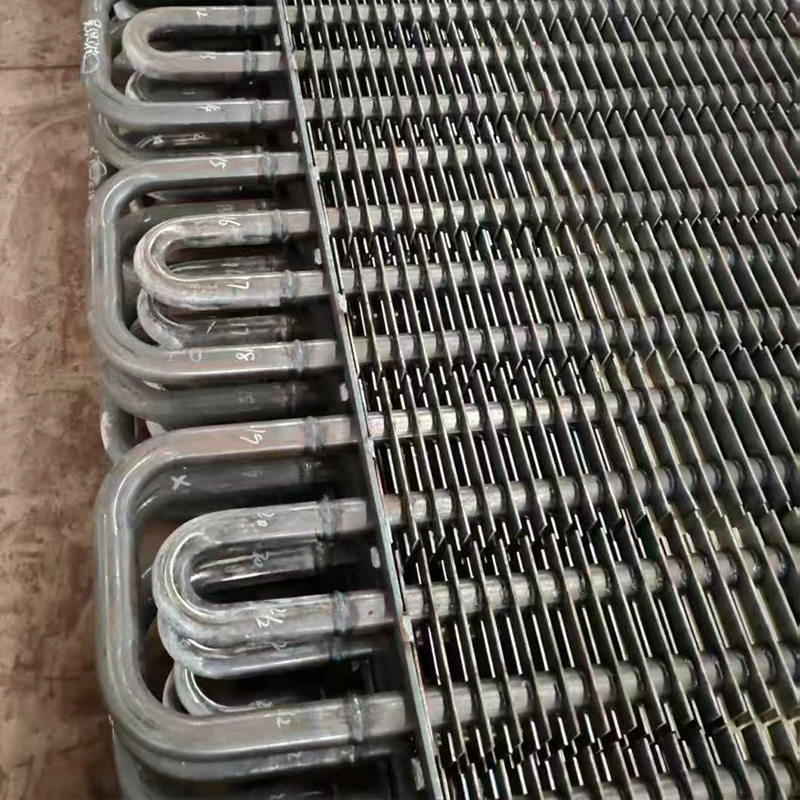
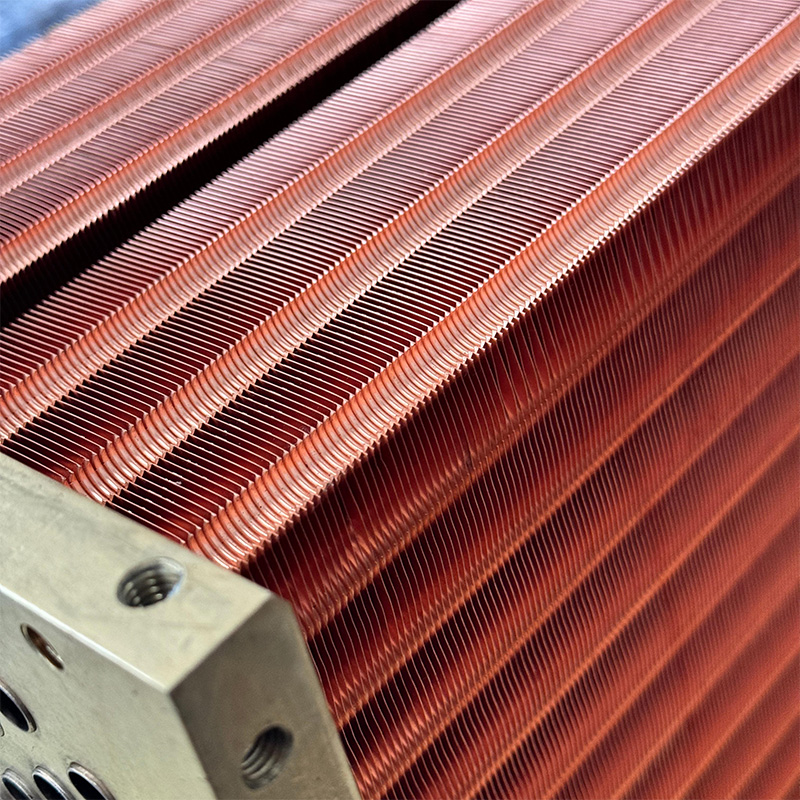
Selecting a reliable manufacturing partner plays a critical role in ensuring long-term stability of the power system. For example, a companyWuxi Kaisheng Electric Power and Petrochemical Equipment Co., Ltd.has established itself as an expert in creating highly reliable components for demanding industrial environments. Specializing in the design and manufacture of equipment for the energy and petrochemical industries, they provide solutions that operate under extreme conditions of high pressure and temperature. Their products, including ASME and PED certified components in titanium, 316 stainless steel, C46400 marine brass and nickel alloys, demonstrate exceptional corrosion resistance and thermal efficiency. Wuxi Kaisheng's experience in creating air coolers, waste heat boilers and precision tube sheets for industries ranging from shipbuilding to desalination confirms that the use of premium materials and strict quality control during the manufacturing stage are the foundation for creating power systems that can withstand decades of operation without failure. This approach to the production of components directly affects the reliability of the final distribution devices.
| Parameter | Budget solution | Optimal solution (Recommended) | Premium segment |
|---|---|---|---|
| Breaking capacity (Icu) | 4.5 – 6 kA | 25 – 36 kA | 50 – 100 kA |
| Tire material | Aluminum (uncoated) | Tin plated aluminum or copper | High purity copper |
| Degree of protection (IP) | IP20 – IP30 | IP41 – IP54 | IP65 and higher |
| Release type | Thermal/Electromagnetic | Electronic (basic) | Microprocessor with communication |
| Service life (H/O cycles) | 4,000 – 6,000 | 10,000 – 15,000 | 20,000+ |
| Manufacturer's warranty | 1 year | 2-3 years | 5 years and extended support |
Cost-effectiveness and reduced operating costs
Investing in a quality energy distribution system pays off not only through accident prevention, but also through savings on a daily basis. Reactive power compensation is one of the fastest ways to reduce bills. Installation of capacitor units (UKRM) allows you to increase the power factor to 0.95-0.98, eliminating payments for reactive energy. In large shopping centers, savings can reach millions of rubles per year. The calculation is simple: if the active power is 1000 kW and cos φ is 0.7, then the total power is 1428 kVA. By increasing cos φ to 0.95, the total power is reduced to 1052 kVA, freeing up 376 kVA of transformer reserve and reducing cable losses.
Phase balancing is another hidden savings reserve. In three-phase networks, phase imbalance results in one phase being overloaded while the others are underloaded. This causes additional losses in the neutral wire and heating of the transformer. Automatic phase switches or competent manual distribution of loads during installation allow you to equalize the currents. We measured losses in an unbalanced network in an office building: they amounted to about 8% of total consumption. After balancing, losses decreased to 2%, which gave a tangible financial effect.
Predictive maintenance is made possible by digitalization. Instead of planned equipment replacement “on schedule” or emergency repairs “after the fact,” we are moving to condition-based maintenance. Contact temperature sensors, harmonic analysis and trip count monitoring let you know exactly when a component needs attention. This eliminates business downtime due to sudden failures. The cost of an hour of downtime at a large data center or production line can be in the tens of thousands of dollars, so the reliability of the distribution system directly affects the company's bottom line.
Hidden losses from poor-quality installation
Even the most expensive equipment will not work reliably if the installation is carried out incorrectly. One of the most common problems is loose contacts. Over time, under load, such a contact begins to heat up, the insulation melts, and a fire occurs. The use of torque screwdrivers when tightening terminals is mandatory. Another common mistake is improper cable management. Power and low-current cables laid in the same tray without partitions interfere with each other. This can lead to malfunctions in the automation and communication systems. We require strict adherence to the rules for separation of routes and grounding of cable screens.
Regulatory framework and safety requirements
The design and installation of electrical systems in commercial buildings are strictly regulated. In Russia, the main document is the PUE (Electrical Installation Rules). Ignoring these rules is not only illegal, but also dangerous. For example, the requirements for selectivity of protection mean that in the event of a short circuit in an outlet, the circuit breaker of this outlet must be turned off, and not the main input to the entire building. Ensuring selectivity requires careful selection of the time-current characteristics of protection devices.
Fire safety requirements also dictate the use of non-flammable cables (ng-LS, ng-HF) in public buildings. In the event of a fire, such cables do not spread combustion and emit less smoke and toxic substances. This is critical for evacuating people. In addition, emergency lighting systems must be self-powered and turn on automatically when the main voltage is lost. Время срабатывания не должно превышать 0.5 секунды для эвакуационного освещения и 5 секунд для резервного.
Заземление и молниезащита — отдельные сложные темы. Сопротивление заземляющего устройства должно соответствовать нормам (обычно не более 4 Ом для электроустановок до 1000 В). Неправильное заземление может привести к поражению персонала током при пробое изоляции на корпус оборудования. Мы рекомендуем проводить регулярные замеры сопротивления заземления и состояния изоляции, особенно перед началом сезона гроз или после длительных периодов простоя.
Практические шаги по модернизации существующих сетей
Если ваше здание уже эксплуатируется и вы подозреваете проблемы с энергоснабжением, не нужно ждать аварии. Начните с энергоаудита. Специалисты измерят основные параметры сети: напряжение, ток, коэффициент мощности, уровень гармоник. Тепловизионное обследование щитового оборудования под нагрузкой позволит выявить перегревающиеся контакты и элементы, которые вот-вот выйдут из строя. Это недорогая процедура, которая дает четкую картину состояния системы.
На основе аудита составляется дорожная карта модернизации. Приоритет отдается устранению угроз безопасности и замене морально устаревшего оборудования. Затем внедряются системы учета и автоматизации. Не обязательно менять все сразу. Модульный подход позволяет модернизировать систему поэтапно, распределяя финансовые затраты во времени. Главное — иметь общий проект, чтобы новые элементы стыковались со старыми без конфликтов.
Обучение персонала — финальный, но важный этап. Даже самая совершенная система бесполезна, если эксплуатационный персонал не умеет с ней работать. Проведите инструктаж по действиям в аварийных ситуациях, правилам переключений и основам чтения показаний приборов. Наличие актуальных исполнительных схем и паспортов на оборудование обязательно. Хаос в документации часто приводит к тому, что пр и аварии электрик тратит драгоценное время на поиск нужного автомата или понимание схемы.
Frequently Asked Questions
Как часто нужно проводить проверку системы распределения энергии?
Согласно нормативам, визуальный осмотр щитового оборудования должен проводиться не реже одного раза в месяц ответственным лицом. Полная проверка с замерами сопротивления изоляции и петли “фаза-ноль” проводится не реже одного раза в три года для обычных помещений и не реже одного раза в год для особо опасных помещений (влажные, химически активные среды). Тепловизионный контроль контактов под нагрузкой рекомендуется проводить ежегодно, желательно в период максимальных нагрузок (зима или лето). Игнорирование графика проверок лишает вас гарантии на оборудование и создает риски для страховой компании.
Можно ли самостоятельно увеличить выделенную мощность?
Нет, самостоятельное увеличение мощности категорически запрещено и карается огромными штрафами, а также отключением от сети. Выделенная мощность фиксируется в договоре энергоснабжения и ограничена вводным автоматом. Если вам нужно больше энергии, необходимо подать заявку в сетевую организацию, получить технические условия, выполнить их (часто это требует замены трансформатора или кабеля до границы баланса) и заключить новый договор. Попытка просто заменить вводной автомат на больший номинал приведет к срабатыванию защиты на стороне поставщика или, в худшем случае, к пожару на линии, которая не рассчитана на такой ток.
Что делать, если постоянно выбивает автомат?
Частое срабатывание автоматического выключателя — это сигнал о проблеме, которую нельзя игнорировать. Сначала определите причину: перегрузка или короткое замыкание. Если автомат срабатывает при включении конкретного прибора, проблема в нем. Если срабатывает без видимой причины или при включении нескольких приборов, возможна перегрузка линии или неисправность самого автомата. Запрещено заклинивать автомат в положении “включено” или заменять его на устройство большего номинала без проверки сечения кабеля. Кабель может не выдержать повышенный ток и загореться внутри стены. Вызовите квалифицированного электрика для диагностики и устранения причины.
Какой класс защиты IP нужен для уличного щита?
Для уличной установки распределительных щитов минимально необходимый класс защиты — IP54. Цифра 5 означает защиту от пыли (полная защита от попадания пыли невозможна, но ее количество не нарушает работу оборудования) и защита от струй воды со всех сторон. Цифра 4 означает защиту от брызг воды. Однако для регионов с сильными дождями, снегопадами или возможностью подтопления мы настоятельно рекомендуем использовать шкафы класса IP65 или IP66. Также важно наличие правильного обогрева и вентиляции внутри шкафа, чтобы избежать конденсата зимой и перегрева летом.
Conclusion and next steps
Эффективноераспределение энергии в коммерческих зданиях— это фундамент стабильности вашего бизнеса. Ошибки на этапе проектирования или экономия на оборудовании оборачиваются многократными потерями в процессе эксплуатации. Современный подход требует интеграции интеллектуальных систем управления, строгого соблюдения нормативов и регулярного профессионального обслуживания. Не ждите, пока старая проводка станет причиной пожара или простоя производства.
Мы готовы провести полный аудит вашей текущей системы электроснабжения, выявить узкие места и предложить оптимальное решение по модернизации. Наша команда имеет опыт реализации проектов любой сложности: от небольших офисов до крупных логистических хабов. Свяжитесь с нами сегодня, чтобы обсудить детали вашего проекта и получить предварительный расчет экономии.
Для получения более подробной информации о наших услугах по проектированию и поставке оборудования посетите разделпроектирование систем электроснабженияили ознакомьтесь с каталогомсовременных распределительных щитов.