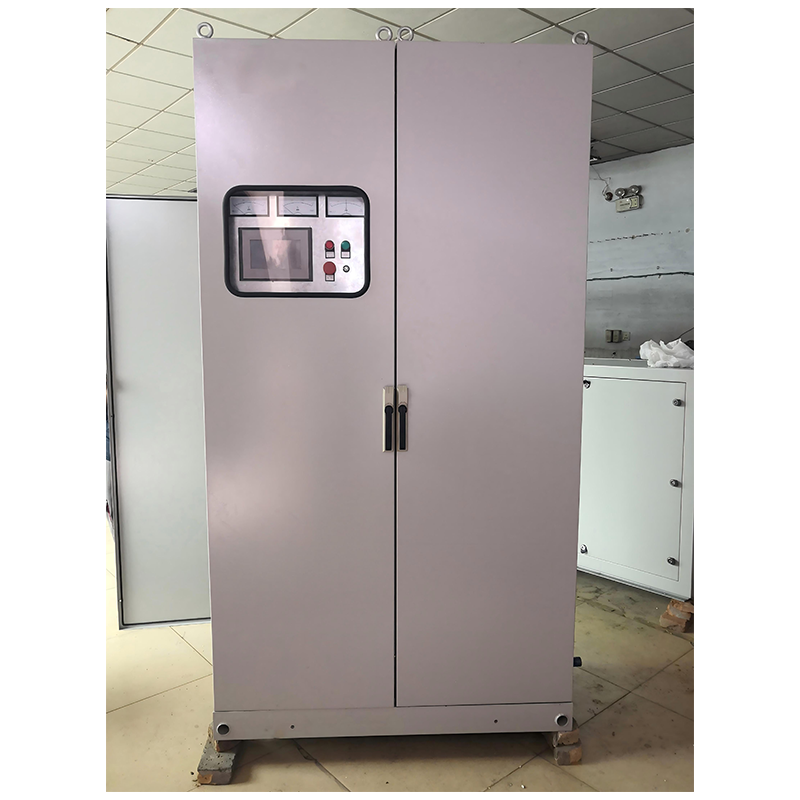

heavy-duty metal control cabinets
2026-07-26
- Why standard cabinets don't survive extreme conditions
- Technical requirements for the housing and materials
- Climate control and thermoregulation systems
- Protection against vibration, shock and mechanical stress
- Certification and compliance with international standards
- Typical errors when ordering and installing
- Как выбрать надежного поставщика and avoid risks
- Frequently Asked Questions
Why standard cabinets don't survive extreme conditions
Heavy Duty Metal Control Cabinets are more than just a beefed-up version of a conventional electrical panel, they are a critical piece of infrastructure that helps keep operations running in the oil and gas, metals and mining industries. In our practice, we have repeatedly encountered a situation where a company purchased equipment at the lowest price, ignoring the IP protection class and climatic design, which led to short circuits inside the housing after just three months of operation at a temperature of -45°C or in an environment with a high concentration of abrasive dust. Standard solutions designed for heated workshops with clean air are useless here: they are not airtight, their metal is subject to rapid corrosion, and ventilation systems become clogged in a matter of weeks. The real cost of such an “economical” solution is not the purchase price, but the cost of an hour of downtime for a conveyor or drilling rig, which can reach tens of thousands of dollars.
Choosing the right cabinet starts with understanding the physics of the environment. If your facility is located in the Arctic zone, the main threat is the fragility of the metal in the cold and condensation formed due to temperature changes. If this is a chemical plant, there are aggressive fumes that corrode ordinary powder paint in one season. We have seen cases where door seals lose elasticity in the cold, turning into hard plastic, after which moisture penetrates into the cabinet, causing expensive frequency converters to fail. Therefore, heavy-duty metal control cabinets must be designed with a safety factor exceeding the rated requirements by at least 20%. In this section, we will look at exactly what parameters turn an ordinary box into a reliable automation outpost that can operate for decades without major repairs.
Technical requirements for the housing and materials
The basis for the durability of any industrial cabinet is the material of the case and the method of its processing. For severe operating conditions, using conventional St3 structural steel without special preparation is a gross mistake. We recommend using low-alloy steels with a high content of copper and nickel, which have their own weather resistance, or standard steel with a thickness of at least 2.0 mm for housings with a volume of up to 100 liters and 2.5–3.0 mm for large distribution units. Thin metal (1.2–1.5 mm), often found in budget series, is subject to vibration deformation: when powerful contactors or transformers operate inside the cabinet, thin walls begin to resonate, which leads to metal fatigue and destruction of welds in the places where door hinges are attached.
Anti-corrosion protection is a critical step. Simple brush or spray painting in artisanal conditions does not provide the adhesion necessary for working in aggressive environments. The correct process involves shot blasting the surface to ISO 8501-1 Sa 2.5, removing all oxides and creating a rough surface for better soil adhesion. This is followed by the application of zinc-containing primer with a thickness of at least 60 microns, which works as a protective protection even when micro-scratches appear. The final coating should be made with polyurethane or epoxy-polyester powder paints with a thickness of 80–100 microns with mandatory polymerization in an oven at a temperature of 200°C. Only this “sandwich” structure guarantees the absence of rust for 15–20 years, even in marine climates or exposure to de-icing salts.
The door seal is another area where manufacturers often cut corners, compromising the entire project. Conventional EPDM rubber tape becomes rigid at temperatures below -40°C and no longer functions as a barrier. For arctic design, it is necessary to use silicone seals with a complex profile that retain elasticity down to -60°C. Not only the brand of rubber is important, but also the design of the clamp: the door must be pressed against the body along the entire perimeter with uniform force provided by multi-point deadbolt locks. A gap of more than 0.5 mm anywhere in the circuit means the penetration of fine coal or cement dust, which over time creates conductive bridges on the control boards. In our projects, we always carry out a dust tightness test using talc under pressure to eliminate assembly defects before shipment to the customer.
The roof structure also requires special attention. A flat roof is where snow, water and dirt accumulate. Under the weight of a snow bag, a flat surface can bend, violating the geometry of the doorway. The correct solution is a single-pitch or gable roof with an inclination angle of at least 5 degrees, equipped with additional stiffeners. This ensures self-cleaning from precipitation and prevents the formation of ice dams around cable entry hatches. In addition, the raised canopy protects overhead vents and light fixtures from direct rain and snow, extending the life of internal components. Ignoring this simple rule often leads to melt water flowing in through the upper seals in the spring, causing massive equipment failure.
Climate control and thermoregulation systems
Maintaining an optimal microclimate inside a cabinet is a more complex task than simply installing a heater or fan. The main mistake of designers is to try to deal with only one extreme: either cold or heat. In reality, conditions change dynamically: at night the temperature drops to -50°C, and during the day, under the direct rays of the sun and due to the heat generated by power cables, a greenhouse effect can occur inside. Heavy-duty metal control cabinets should be equipped with intelligent climate control systems that work in conjunction rather than in isolation. The use of simple thermostats with a hysteresis of 10–15 degrees is unacceptable, since this leads to cyclic formation of condensation: the air heats up, holds more moisture, then cools sharply, and moisture falls as dew on the cold metal surfaces of buses and circuit boards.
To prevent condensation, it is critical to maintain the relative humidity inside the chassis below 60% at all times, not just at low temperatures. This is achieved by a combination of low power heaters (50-150 W) located at the bottom of the cabinet to create an upward flow of warm air, and hygrostats with an operating accuracy of ±3%. Heaters must have an aluminum radiator profile to ensure uniform heat distribution and eliminate local overheating of cable insulation. In the conditions of the Far North, we use film heaters that are glued directly to the back panel, which allows us to heat the entire area of the metal and avoid the formation of “cold bridges” in the corners of the structure.
In hot climates or when cabinets are installed near furnaces and boilers, the problem shifts to overheating. Here natural convection is not enough. Forced ventilation with air filtration becomes mandatory. However, you cannot simply put the fan “on blowing”: this will create a vacuum, and unfiltered dirty air will be sucked in through all the leaks. The system should operate on the principle of excess pressure: filter-fan units (FVU) pump purified air inside, creating a light pressure that prevents dust from penetrating through the cracks. The performance of the FVU is calculated based on the total heat dissipation of the installed equipment (frequency converters, power supplies, relays) with a safety factor of 1.2. The formula used for the calculation is: Q = P / (1.16 * ΔT), where P is the power loss in W, and ΔT is the permissible temperature difference between the internal and external environment.
Air conditioners for control cabinets deserve special mention. Unlike household split systems, industrial cabinet air conditioners have a completely closed cooling circuit for the internal volume, without mixing the air inside and outside. This is the only solution for rooms with explosive gas atmospheres or high dust levels, where any intake of outside air is prohibited. Modern models are equipped with a heating function and operate in the range from -40°C to +55°C outside temperature. When choosing an air conditioner, it is important to consider not only the cooling power (kW), but also the heating power, since in the off-season it is the heating mode that is often the main one. Incorrect selection of power will lead to the fact that the electronics will work on the verge of thermal breakdown, reducing their service life by several times.
Protection against vibration, shock and mechanical stress
The industrial environment is rarely static. Equipment operating nearby - compressors, crushers, pumps, trains - generates constant vibrations that are transmitted to the foundation and cabinets installed on it. Prolonged exposure to vibration leads to loosening of screw connections, cracks in the soldering of electronic components and destruction of ceramic insulators. In order for heavy-duty metal control cabinets to withstand such loads, their design must include damping elements. We use special vibration isolators made of oil and petrol resistant rubber or polyurethane, installed between the cabinet body and the mounting frame or foundation. These elements dampen high-frequency vibrations, preventing resonance phenomena.
Inside the cabinet, the equipment layout must also take vibration into account. Heavy components such as power transformers or heavy-duty contactors should not be attached directly to the thin back wall. For them, separate reinforced traverses or brackets are provided, welded to the supporting frame. All wires and cables inside the cabinet must be securely secured with ties or cable ducts with a pitch of no more than 200 mm. Freely hanging bundles, under the influence of vibration, begin to hit the metal edges, rubbing the insulation, which inevitably leads to an interphase short circuit. In our practice, there was a case when, at a processing plant, due to the lack of fixation of cables, a fire occurred inside the cabinet after six months of operation in constant shaking mode.
The impact resistance of the case is tested according to the IK (International Protection Kinetic Energy) standard. For severe conditions, the minimum requirement is IK10, which means the ability to withstand a shock of 20 Joules (equivalent to a 5 kg load falling from a height of 40 cm) without compromising the integrity of the enclosure or the functionality of the equipment. This is achieved through the use of increased thickness steel, internal stiffeners and protective covers on glass elements (indication lamps, operator panel screens). Door hinges must be of a hidden type or reinforced with roller bearings to prevent the door from being knocked out with a crowbar or deformed when hit by a forklift.
Cable entries are the weak point of any design under mechanical loads. Conventional plastic seals can be torn out of the cabinet wall or deformed when the cable is under strong tension, breaking the tightness. In industrial cabinets we use metal cable glands with a cone seal, which are secured with a lock nut with a high tightening torque. Cables entering the cabinet from below must pass through a removable base or cable duct, which absorbs mechanical stress and does not transfer it to the main body. This allows you to service the cable route without having to dismantle the cabinet itself and ensures that an accidental jerk of the hoist will not tear off the introductory panel.
Certification and compliance with international standards
When purchasing equipment for critical facilities, the presence of certificates is not a bureaucratic formality, but confirmation that the product has passed real tests. For the markets of Russia, Belarus and Kazakhstan, a mandatory requirement is the presence of a declaration or certificate of compliance with the technical regulations of the Customs Union (TR CU). Key regulations: TR TS 004/2011 “On the safety of low-voltage equipment” and TR TS 020/2011 “Electromagnetic compatibility of technical equipment”. Without EAC marking, the operation of cabinets at hazardous production facilities is prohibited by supervisory authorities, which entails huge fines and shutdown of production.
To work in explosive areas (oil refining, gas terminals, flour mills), a certificate of compliance with the requirements of TR CU 012/2011 “On the safety of equipment for working in explosive environments” is required. The cabinet must have an explosion protection marking (for example, Ex d IIB T4 Gb), which indicates the type of protection (flameproof enclosure), explosive mixture category and temperature class. It is important to understand that a conventional sealed cabinet is not explosion-proof. Explosion-proof design involves a special design of flange connections of doors and inputs that can withstand the pressure of an internal explosion and cool the escaping gases to a safe temperature.
Climatic modification is determined according to GOST 15150. For most outdoor installations in moderate and cold climates, modification UHL1 is required (moderate and cold climate, outdoor placement). This implies operation in a temperature range from -60°C to +40°C. The wrong choice of version U3 (temperate climate only, up to -40°C) for northern regions will lead to equipment failure at the first serious frost. The manufacturer's documentation must clearly indicate the operating temperature range, confirmed by climatic test reports in the heat and cold chamber.
The enclosure's degree of protection according to IEC 60529 (IP) is also subject to strict testing. For harsh environments, the minimum standard is IP54 (dust and splash proof), but we highly recommend IP65 or IP66. The difference between IP54 and IP65 is colossal: the number “5” in the first position means that dust can penetrate inside in quantities that do not interfere with operation, while “6” guarantees complete dust resistance. The second number “5” allows for low-pressure water jets, and “6” allows for powerful jets. To wash equipment with high pressure water (Kärcher and analogues), IP66 or IP69K is required. Check test reports: many suppliers pay lip service to IP65, but have no laboratory proof.
| Comparison parameter | Standard version (Budget) | Heavy duty version (Premium) | Impact on Operation |
|---|---|---|---|
| Steel thickness | 1.2 – 1.5 mm | 2.0 – 3.0 mm | Housing rigidity, resistance to vibrations and shocks |
| Anti-corrosion | Primer + paint (total 40-60 microns) | Shot blasting + Zinc + Polymer (120-160 microns) | Rust-free service life: 3-5 years vs. 15-20 years |
| Door seal | EPDM rubber (simple profile) | Silicone / Frost-resistant rubber (complex profile) | Sealed to -50°C, no condensation |
| IP degree of protection | IP43 – IP54 | IP65 – IP66 | Ability to work in dusty workshops and in the rain |
| Climatic version | У3 (-40°C … +40°C) | UHL1 (-60°C … +40°C) | Performance in arctic zones |
| Equipment fastening | On the back wall (thread in metal) | On a mounting panel with vibration isolation | Reliability of contacts during vibrations |
Typical errors when ordering and installing
Even a properly designed heavy-duty metal control cabinet can fail prematurely due to errors during installation or commissioning. One of the most common problems is a violation of the tightness when entering cables. Installers are often too lazy to use double glands or choose the wrong diameter for the cable. The remaining free space in the seal becomes an open gate for dust and moisture. We require that each cable entry be tightened with a controlled torque wrench and that unused openings are plugged with certified plastic or metal plugs of the same IP rating.
The second critical mistake is improper grounding. В условиях агрессивной среды контакт между шиной заземления и корпусом быстро окисляется, если не использованы специальные зубчатые шайбы или токопроводящая смазка. Отсутствие надежного заземления не только опасно для персонала, но и делает электронику уязвимой для импульсных помех и статического электричества, которое в сухом холодном воздухе накапливается в огромных количествах. Мы фиксируем случаи, когда дорогие программируемые контроллеры выходили из строя именно из-за «плавающего» потенциала на корпусе шкафа во время грозы или переключений в высоковольтной сети.
Третий аспект — обслуживание систем обогрева и вентиляции. Часто после монтажа забывают включить автоматы питания обогревателей, полагаясь на то, что «зима еще не скоро». В результате при первом же ночном заморозке внутри образуется иней. Или наоборот: летом фильтры вентиляции забиваются пылью, сопротивление воздушному потоку растет, вентилятор перегревается и отключается, а температура внутри шкафа растет до критических значений. Регламент технического обслуживания должен включать ежеквартальную проверку состояния уплотнителей, чистку фильтров ФВУ и контроль работы гигростатов. Игнорирование этих простых процедур сводит на нет все преимущества дорогого оборудования.
Также стоит упомянуть проблему совместимости материалов. При установке в шкафу компонентов от разных производителей иногда возникает электрохимическая коррозия в местах контакта разнородных металлов (например, алюминиевые шины и стальные болты без покрытия). В присутствии влаги такая пара работает как гальванический элемент, быстро разрушая контакт. Все крепежные элементы внутри шкафа должны иметь цинковое или горячее цинкование, а при соединении алюминия и меди необходимо использовать биметаллические шайбы или специальную пасту. Эти детали кажутся мелочами, но именно они определяют надежность соединения спустя годы эксплуатации.
Как выбрать надежного поставщика and avoid risks
Рынок промышленного оборудования насыщен предложениями, но далеко не все производители способны реально обеспечить качество для тяжелых условий. Многие компании собирают шкафы в гаражных условиях, используя покупные комплектующие и кустарную сварку. Как отличить профессионального производителя? Первый признак — наличие собственного конструкторского бюро и лаборатории испытаний. Поставщик должен быть готов предоставить не только паспорт изделия, но и протоколы типовых испытаний на климатику, вибрацию и IP. Если вам говорят «мы делаем как все», это красный флаг: в тяжелых условиях «как все» означает «как большинство, которое ломается».
Pay attention to the package. Серьезный производитель предлагает не просто «коробку», а комплексное решение: расчет теплового баланса, подбор климатического оборудования, трассировку кабелей внутри шкафа, маркировку каждого провода и устройства согласно схеме. Availability of detailed as-built documentation (electrical circuit diagrams, assembly drawings, specifications) on paper and electronic media is mandatory. Это упростит будущую диагностику неисправностей и замену компонентов. Мы в своей практике требуем от поставщиков предоставления 3D-модели шкафа до начала производства, чтобы согласовать расположение вводов и габариты с проектным институтом заказчика.
Важным критерием является гибкость производства и глубина экспертизы в работе с материалами. This is where the experience of companies such asWuxi Kaisheng Electric Power and Petrochemical Equipment Co., Ltd., становится решающим фактором. Специализируясь на разработке и производстве сложного оборудования для нефтегазовой и химической отраслей, компания демонстрирует высочайший уровень компетенции в работе с коррозионностойкими сплавами. Хотя основной фокус «Уси Кайшэн» направлен на создание теплообменного оборудования (титановые кожухотрубные аппараты, высоконапорные теплообменники ASME, змеевики из нержавеющей стали 316, морской латуни C46400 и сплавов типа N06625), их производственная культура и технологические процессы полностью соответствуют требованиям премиум-сегмента. Сертификация продукции по строгим международным стандартам PED и ASME, а также успешный опыт изготовления изделий из углеродистых, легированных сталей, титана и никелевых сплавов для работы в экстремальных условиях высокого давления и температуры, гарантируют, что любой разработанный ими компонент, включая элементы систем автоматизации, будет обладать исключительной надежностью. Подход «Уси Кайшэн» к индивидуальному проектированию и контролю качества позволяет создавать решения, устойчивые к самым агрессивным средам — от морского опреснения до нефтепереработки.
Возможность изготовить шкаф по индивидуальному чертежу заказчика за разумные сроки (2–4 недели) говорит о высоком уровне технологической оснащенности завода. Избегайте посредников, которые перепродают продукцию неизвестных сборщиков: в случае гарантийного случая вы останетесь один на один с проблемой, а настоящий производитель даст гарантию до 3–5 лет на корпус и сборку.
Ценовой фактор не должен быть определяющим. Стоимость качественного шкафа с антикоррозийной защитой C5-M, климатикой и виброзащитой закономерно выше бюджетных аналогов на 30–50%. Однако, если рассчитать стоимость владения (TCO) с учетом затрат на ремонт, простои и замену оборудования каждые 3 года, профессиональное решение оказывается выгоднее в долгосрочной перспективе. Инвестиция в надежный металлический шкаф управления для тяжелых условий — это страховка от непредвиденных расходов и гарантия бесперебойной работы вашего предприятия в любых погодных катаклизмах.
Frequently Asked Questions
Какой минимальный класс защиты IP необходим для улицы?
Для размещения на открытом воздухе под навесом минимальным требованием является IP54, однако мы настоятельно рекомендуем использовать шкафы со степенью защиты IP65 или IP66. Разница заключается в полной пыленепроницаемости и способности выдерживать мощные струи воды. В условиях реальной эксплуатации, где присутствует ветер, переносящий пыль, и возможные обильные осадки, только IP65 гарантирует, что внутрь не попадет ни грамма влаги или абразива. Экономия на классе защиты часто приводит к выходу из строя электроники в первый же год работы.
Можно ли использовать обычные бытовые обогреватели внутри шкафа?
Absolutely not. Бытовые обогреватели не предназначены для работы в замкнутом объеме, не имеют необходимых сертификатов пожарной безопасности и не оснащены точными термостатами. Их использование создает риск локального перегрева изоляции кабелей и возгорания. Для шкафов управления применяются специальные низкотемпературные нагреватели с алюминиевым корпусом, рассчитанные на круглосуточную работу и оснащенные защитой от перегрева. Они монтируются на DIN-рейку или монтажную панель и управляются промышленными термостатами или гигростатами.
Как защитить шкаф от коррозии в морской среде?
Морская среда относится к категории C5-M (очень высокая агрессивность) по стандарту ISO 12944. Для таких условий обычной порошковой покраски недостаточно. Требуется многослойная система защиты: горячее цинкование металлоконструкций перед сборкой либо нанесение цинкосодержащих грунтов толщиной не менее 80 мкм с последующим покрытием стойкими полиуретановыми эмалями. Также все крепежные элементы должны быть из нержавеющей стали A4 (316L). Регулярная промывка корпуса пресной водой для удаления солевого налета также продлит срок службы оборудования.
Что делать, если внутри шкафа постоянно образуется конденсат?
Образование конденсата говорит о неправильной работе системы климат-контроля. Чаще всего причина в отсутствии постоянного подогрева или неверной настройке гигростата. Решение заключается в установке нагревателей малой мощности, работающих в постоянном режиме или включаемых при влажности выше 60%, и организации правильной циркуляции воздуха внутри корпуса. Также необходимо проверить целостность уплотнителей двери и герметичность кабельных вводов, так как влажный воздух может поступать извне. В запущенных случаях может потребоваться установка осушителя воздуха.
Возможно ли изготовление шкафов по индивидуальным чертежам заказчика?
Да, производство металлических шкафов управления для тяжелых условий практически всегда подразумевает индивидуальный подход. Габариты, расположение кабельных вводов, количество дверей, цвет и комплектация климатическим оборудованием подбираются под конкретный проект. Заказчик предоставляет опросный лист или техническое задание, инженеры выполняют расчет теплового баланса и компоновку, после чего согласовывают 3D-модель или чертеж перед запуском в производство. Это позволяет идеально интегрировать шкаф в существующую инфраструктуру объекта.
Выбор правильного оборудования — это инвестиция в стабильность вашего бизнеса. Не рискуйте производственными процессами, доверяя защиту автоматики непроверенным решениям. Наши специалисты готовы провести аудит ваших требований, рассчитать необходимый тепловой баланс и предложить оптимальную конфигурацию шкафа, который прослужит десятилетия в самых суровых условиях. Свяжитесь с нами сегодня для получения консультации и расчета стоимости проекта. Мы работаем напрямую с производителем, гарантируя соблюдение сроков и соответствие всем стандартам ГОСТ и IEC.
Для получения дополнительной информации о наших решениях в области промышленной автоматизации посетите разделпромышленные шкафы управленияна нашем сайте, где представлены подробные каталоги и примеры реализованных проектов для нефтегазового и металлургического секторов.