
Foundry tooling development: professional services
2026-08-03
- Development of foundry equipment: why accuracy at the design stage determines the profitability of the entire production
- Stages of professional development: from concept to finished tool
- Materials Science and Steel Selection: The Basis of Tool Reliability
- Computer modeling and simulation of foundry processes
- Typical mistakes when ordering development and how to avoid them
- Certification and compliance with international standards
- Экономическая эффективность инвестиций в качественную оснастку
- Опыт работы со сложными сплавами: от литья до теплообменного оборудования
- Frequently Asked Questions
- Conclusion and next step
Development of foundry equipment: why accuracy at the design stage determines the profitability of the entire production
Professionaldevelopment of foundry equipment— it’s not just about creating drawings for a form; This is a fundamental step that dictates the cost of each casting throughout the entire life cycle of the product. In our practice, we have repeatedly encountered situations where clients tried to save 15-20% of the budget at the engineering design stage, only to lose three times as much due to defects, press downtime and premature wear of the dies. An error in calculating alloy shrinkage by 0.1 mm or an incorrect choice of gating system leads to the fact that the finished mold becomes unsuitable for serial production, and its rework requires stopping the production line.
When you order tooling development services, you are essentially buying predictability for your business. We view this process as a complex problem where metallurgy, mechanics and thermodynamics intersect with economics. Our team of engineers doesn't just draw 3D models; we simulate the behavior of the melt even before the first kilogram of steel is smelted. This makes it possible to exclude defects such as “cold junctions” or gas holes at the virtual stage. If you are looking for a reliable partner for creating a tool base, remember: high-quality development of foundry equipment pays off already in the first batch of 500 pieces by reducing the scrap rate to a minimum.
Stages of professional development: from concept to finished tool
The process of creating a casting mold cannot be reduced to linear execution of drawings. This is an iterative cycle that requires constant interaction between the casting technologist, mold designer and CNC specialist. In our approach, we identify four critical stages, ignoring any of which jeopardizes the entire project. The first stage is design manufacturability analysis (DFM). Here we are not shy about telling a client “no” if the geometry of the part makes casting uneconomical without changing the design. We offer alternatives: changing the mating radii, moving the parting plane or replacing the material.
The second stage is mathematical modeling and calculation of shrinkage. Different alloys behave differently when cooled. Aluminum of the AD31 series shrinks differently than zinc alloy TsAM-4, and high-alloy steels require consideration of phase transformations. We use shrinkage coefficients obtained empirically in our own production, and not just reference data. The third stage is the design of power and cooling systems. Errors here lead to warping of the castings. We calculate the diameter of the gates and the location of the cooling channels to ensure laminar metal flow and uniform heat dissipation. The fourth stage is the preparation of control programs for CNC machines and electrical discharge machining. This is where the digital model turns into a physical object.
It is important to understand that modern foundry tooling development is not possible without the use of specialized Completion Analysis (CAE) software. We use software systems that allow us to visualize the filling front, air capture zones and temperature fields. This gives us the opportunity to provide slag traps in advance and optimize the ventilation system. The client receives not just a mold, but a guarantee that the casting process will be stable. Each stage ends with an interim report, which records the technical decisions taken. It's the transparency that differentiates professional service from garage production.
Critical parameters affecting tool life
When ordering development, many focus only on the geometry of the final part, losing sight of the parameters that determine the resource of the form itself. The hardness of the working surfaces is a key indicator. For aluminum die casting we recommend using steels of type 1.2344 (H13) hardened to 46-48 HRC, while for aggressive environments or large production runs (>100,000 cycles) it is advisable to use powder steels with nitriding or PVD coating. Ignoring this requirement leads to the rapid formation of chipping and erosion of the mold surface, which immediately affects the quality of the cast products.
The cooling system is the second critical factor. An incorrectly calculated cooling circuit increases the casting cycle by 20-30%, which in mass production means colossal losses in productivity. We design conformal cooling channels where 3D printed metal inserts technology allows it, allowing heat to be removed directly from hot zones. The material of the forming plates is also important. The use of standard structural steels instead of preformed blanks can lead to internal stresses and deformation of the shape during operation. We always carry out ultrasonic testing of workpieces before starting machining to eliminate hidden metal defects.
The accuracy of manufacturing of seats and guide elements directly affects the absence of flash (burrs) on castings. Tolerances on the relative position of the mold halves should not exceed 0.02 mm for high-precision parts. In our practice, there was a case when a client received a mold from a third-party contractor, where the guide columns had a backlash that was allowed by GOST for general mechanical engineering, but unacceptable for thin-walled casting. The result was a permanent flash that required expensive post-processing. Therefore, in our contract for the development of foundry equipment, we strictly fix the accuracy class in accordance with ISO 2768-mK or higher, depending on the customer’s requirements.
Materials Science and Steel Selection: The Basis of Tool Reliability
Selecting a steel grade for a casting mold is a trade-off between cost, machinability, and performance. There is no “universal steel” suitable for all applications. For small-scale production (up to 5000 cycles), the use of aluminum or mild steels such as 1.2311 is sometimes justified, which reduces the cost of production and speeds up the product's time to market. However, for large-scale production, especially non-ferrous metals under high pressure, savings on mold material are false. We insist on using hot-stamped steels with a high content of chromium, molybdenum and vanadium.
Steel 1.2343 (H11) and 1.2344 (H13) remain the gold standard in the die casting industry. They have an excellent combination of toughness and heat resistance, resisting the formation of thermal cracks (“mesh”) on the cavity surface. However, for particularly critical components, such as cores operating under intense heat transfer conditions, we often use vacuum arc remelting (VAR) steels. This cleaning of metal from non-metallic inclusions increases the fatigue strength of the material by 30-40%. In one project for an automotive component, replacing conventional H13 with premium steel increased core life from 45,000 to 85,000 cycles without repair.
Special attention should be paid to surface treatment. The development of casting equipment includes the selection of a hardening method. Nitriding creates a hard diffusion layer, increasing wear resistance, but may reduce edge toughness. PVD coatings (titanium nitride, chromium aluminum nitride) work as a thermal barrier, facilitating casting removal and preventing metal pouring. We carry out tests on the adhesion of the coating and its thickness, since a layer that is too thick can peel off under load. The choice of a specific method depends on the chemical activity of the alloy being poured: magnesium requires some coatings, zinc requires others.
Don't forget about corrosion resistance. When casting PVC or other polymers (if we are talking about injection molding machines, although here we are talking about metals, the principle is similar for some special alloys) or when using water cooling with incorrect water chemistry, the molds can corrode from the inside. We recommend using steels with a high chromium content (type 1.2085 / 420 SS) for the cooling system elements or galvanizing the internal channels. This prevents clogging of the channels with corrosion products and maintains heat removal efficiency over years of operation.
Computer modeling and simulation of foundry processes
Modern development of foundry equipment is unthinkable without the computer-aided engineering (CAE) stage. An attempt to design a complex shape “by eye” or relying only on the experience of a master toolmaker in 2026 looks like an archaism leading to financial losses. We use advanced finite element analysis packages to simulate mold filling, crystallization, and subsequent cooling. This allows you to see a problem before it becomes a physical reality. The simulation shows areas of potential pores, cold junctions and stresses that cannot be visually detected on the drawing.
One of the main benefits of simulation is the optimization of the gate system. The traditional approach of “doing more to ensure it fills accurately” leads to excessive metal consumption and an increase in the cycle time for removing the gating system. Our engineers simulate various options for metal input (point, fan, tunnel), selecting the optimal flow speed and temperature. We achieve laminar filling, eliminating turbulence and air entrapment. As a result, the metal utilization rate (yield) increases by 10-15%, which, given annual production volumes, provides significant savings.
Analysis of thermal fields makes it possible to predict warping of the casting. The metal cools unevenly: thin walls cool faster than thick ones, creating internal stress. If this is not taken into account at the design stage, the part will bend beyond acceptable tolerances after removal from the mold. We use the simulation data to adjust the geometry of the mold by introducing a deliberate distortion (reverse warpage) so that when the part cools, it takes on the ideal shape. It also helps to position the pushers correctly to avoid push marks in critical areas.
It is important to note that simulation does not replace real experience, but rather complements it. Software systems operate on mathematical models that may not take into account all the nuances of the behavior of a particular alloy from a particular supplier. Therefore, we calibrate our models based on data from real production runs. If the simulation shows the risk of a defect in a certain area, we don’t just change the parameters in the program, but provide design options for adjusting the shape: replaceable inserts, adjustable chokes in the cooling system. This is the flexibility that saves the project in case of unforeseen circumstances.
Typical mistakes when ordering development and how to avoid them
The market for services for creating equipment is overflowing with offers, but not all performers have the necessary competence. One of the most common mistakes customers make is focusing exclusively on the lowest price. Cheap development often means using outdated software, lacking simulation, using low-quality materials and employing low-skilled operators. In our practice, there was a case when a client brought a form made “at a bargain price.” Outwardly, it looked good, but during the first test it turned out that the cooling system was broken in several places due to an error when drilling deep channels, and the hardness of the working surfaces did not correspond to the declared one. The rework cost more than the original production.
The second common mistake is incomplete technical specifications. The customer often provides only a 3D model of the part without specifying surface requirements, critical dimensional tolerances, estimated batch size and type of casting machine. Without this information, the developer is forced to make decisions on his own, which may not coincide with the real needs of production. For example, the choice of ejector system type depends on the available ejector stroke on the customer's machine. Inconsistency leads to the fact that the form simply will not fit on the equipment or will not be able to work correctly.
The third mistake is ignoring maintainability. Foundry equipment is a consumable tool that is subjected to extreme loads. The design should allow easy replacement of worn elements (inserts, cores, guides) without the need to dismantle the entire mold or undergo complex welding. We build modularity into the design: critically loaded components are made in the form of replaceable blocks. This reduces equipment downtime during repairs from several days to several hours. If the project does not provide for such a possibility, any small chip can stop the conveyor for a week.
You should also be wary of contractors who do not provide a full package of design documentation. You should receive not only the mold itself, but also an assembly drawing, specification, and a mold passport with recommendations for maintenance, lubrication and storage. The absence of these documents turns the mold into a “black box”: if it breaks, no one knows what bearings are inside, what steel was used for repairs and what torque of the bolts is required. Professional development of foundry equipment always ends with the transfer of a complete archive of documentation in a format convenient for the customer.
Certification and compliance with international standards
In the context of global trade and strict requirements for product quality, compliance with international standards becomes a prerequisite for successful cooperation. Our company operates in strict accordance with the ISO 9001:2015 quality management system. This ensures that every stage of development - from incoming metal inspection to final mold acceptance - is documented and controlled. For suppliers to the countries of the Eurasian Economic Union (EAEU), it is critically important to have certificates of compliance with the technical regulations of the Customs Union (TR CU), confirming the safety and quality of products.
When exporting tooling to Europe or the USA, specific requirements for materials and markings must be taken into account. Steels must have EN 10204 3.1 certificates confirming their chemical composition and mechanical properties based on batch specific tests. We provide such documents for every critical detail of the form. Additionally, certain industries, such as automotive or aerospace, may require additional IATF 16949 or AS9100 qualifications. The presence of these certificates from the developer relieves the customer of some of the risks during audits by his own clients.
An important aspect is compliance with environmental standards. Modern technologies for the development and production of tooling should minimize the impact on the environment. This applies to both the choice of cutting fluids (coolants) and methods of processing waste disposal. We use biodegradable coolant and chip filtration systems to comply with EU environmental directives. For Russian enterprises, it is important to comply with the requirements of GOST 15150 regarding execution for different climatic conditions, if the form is intended for use in specific conditions (for example, in unheated workshops in the Far North).
Warranty obligations are also regulated by standards. We provide a guarantee for designed and manufactured equipment for a period of up to 24 months or a certain number of cycles (usually up to 100,000), depending on operating conditions. The warranty covers defects in materials and workmanship, but does not cover normal wear and tear or damage due to improper use. Transparency of the warranty conditions fixed in the contract is a marker of the supplier’s reliability and protects the interests of both parties.
| Comparison criterion | Budget option (Garage production) | Профессиональная разработка (Наш подход) |
|---|---|---|
| Design | 2D чертежи, отсутствие 3D моделирования, расчет «на глаз». | Полное 3D моделирование, CAE симуляция заполнения и охлаждения, DFM анализ. |
| Materials | Серый металл без сертификатов, обычная сталь 45 или аналоги. | Брендовые стали (Bohler, Uddeholm, Assab) с сертификатами 3.1, термообработка по режиму. |
| Precision manufacturing | Допуски по общему машиностроению, ручная доводка полировкой. | Высокоточная ЧПУ обработка, электроэрозия, допуски IT6-IT7, автоматизированный контроль. |
| Ресурс формы | Непредсказуем, часто менее 10 000 циклов до первого ремонта. | Гарантированный ресурс от 50 000 до 500 000+ циклов в зависимости от класса формы. |
| Documentation | Минимальный комплект или отсутствует. | Полный пакет: сборочные чертежи, паспорта, инструкции по ТО, отчеты симуляции. |
| Cost of ownership | Низкая начальная цена, высокие затраты на ремонт и брак. | Оптимальная TCO (Total Cost of Ownership) за счет долговечности и стабильности процесса. |
Экономическая эффективность инвестиций в качественную оснастку
Многие руководители производств рассматривают затраты на разработку литейной оснастки как статью расходов, которую нужно минимизировать. Это стратегическая ошибка. На самом деле, это инвестиция, которая напрямую влияет на операционную маржу каждого произведенного изделия. Давайте посчитаем: разница в стоимости между «дешевой» и «профессиональной» формой может составлять 30%. Но если дешевая форма требует остановки каждые 5000 циклов для полировки и ремонта, а профессиональная работает 50 000 циклов без вмешательства, то потери от простоев и брака на дешевой форме перекроют сэкономленные деньги уже через два месяца работы.
Кроме того, качественная форма обеспечивает стабильность размеров отливок. Это снижает затраты на контрольно-измерительные операции и постобработку. Если деталь выходит из формы с минимальным облоем и точной геометр ией, отпадает необходимость в трудоемкой механической обработке или ручной зачистке. В массовом производстве экономия даже 10 секунд на цикл за счет оптимизированной системы охлаждения и быстрого съема детали дает прирост производительности на тысячи единиц продукции в год. Это прямой вклад в выручку предприятия.
Также стоит учитывать фактор репутации. Поставка бракованной партии деталей вашему клиенту из-за проблем с оснасткой может привести к потере контракта и штрафным санкциям. Надежная форма, разработанная профессионалами, минимизирует риски человеческого фактора и технологических сбоев. Она позволяет планировать производство точно в срок (JIT), не создавая страховых запасов «на случай брака». Финансовая модель современного литейного производства строится на предсказуемости, которую может обеспечить только высокий уровень инженерной подготовки инструмента.
Мы помогаем нашим клиентам рассчитывать ROI (возврат инвестиций) для каждого проекта разработки. Часто оказывается, что переход на более дорогую сталь или внедрение конформного охлаждения окупается менее чем за полгода за счет сокращения цикла литья и увеличения срока службы инструмента. Прозрачная экономика проекта — один из наших принципов работы. Мы не навязываем лишние услуги, но честно показываем, где экономия выгодна, а где она приведет к убыткам в будущем.
Опыт работы со сложными сплавами: от литья до теплообменного оборудования
Глубокое понимание поведения различных сплавов под экстремальными нагрузками является фундаментом нашей экспертизы. Наш многолетний опыт не ограничивается только созданием литейной оснастки; он подкреплен реальной практикой производства сложнейшего промышленного оборудования. ООО «Уси Кайшэн Электроэнергетическое и Нефтехимическое Оборудование» специализируется на разработке и выпуске высокотехнологичных решений для энергетического и нефтехимического секторов, где требования к материалам и точности изготовления максимальны.
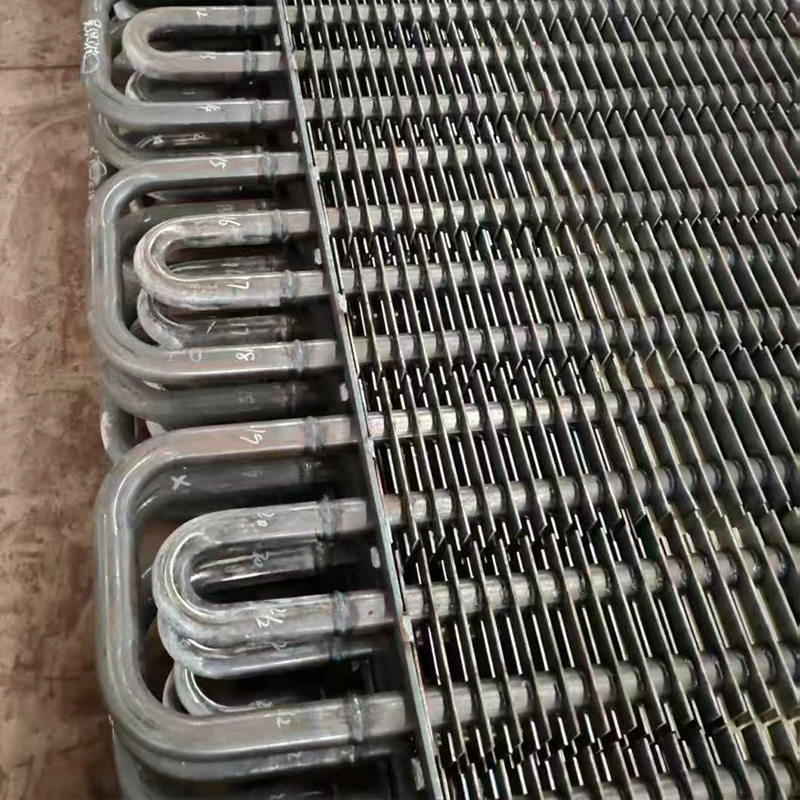
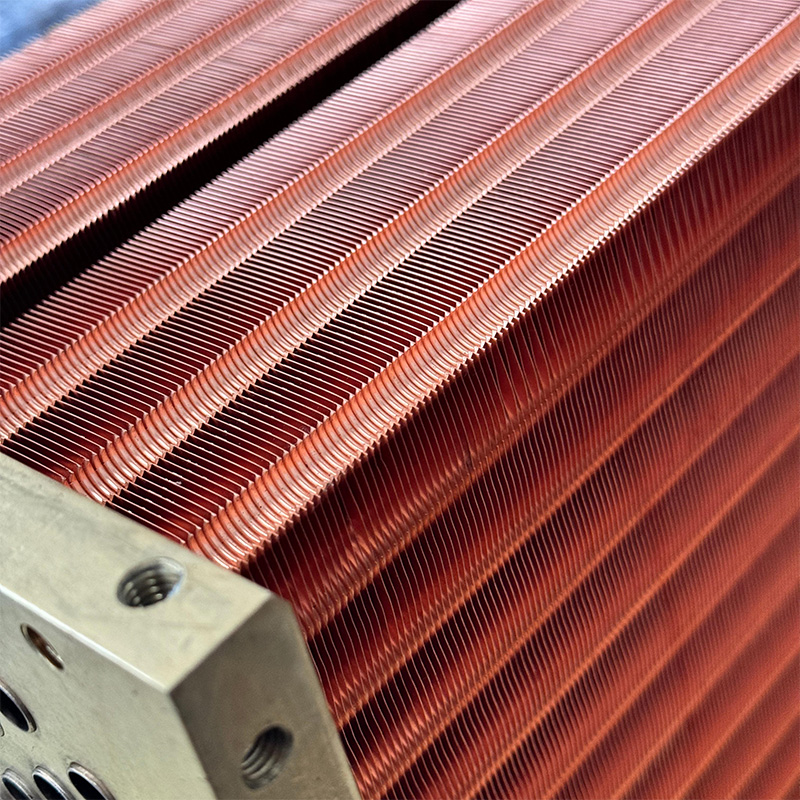
Наш производственный портфель включает титановые кожухотрубные теплообменники, высоконапорные аппараты стандарта ASME, а также гофрированные трубные пучки из нержавеющей стали 316, морской латуни C46400, медно-никелевых сплавов и никелевых сплавов N06625. We also manufacture air coolers, recovery boilers, and critical components such as tube sheets made from 321 steel and C70600 alloys. Работа с такими материалами, как титан, специальные медные и никелевые сплавы, требует безупречного знания их металлургических свойств, коррозионной стойкости и поведения при высоких температурах и давлениях.
Этот уникальный бэкграунд позволяет нам привносить в разработку литейной оснастки уровень компетенции, недоступный обычным инструментальным цехам. Когда мы проектируем форму для литья деталей из коррозионно-стойких сплавов или компонентов, работающих под высоким давлением, мы опираемся на данные реальной эксплуатации нашего собственного оборудования, сертифицированного по стандартам PED и ASME. Мы понимаем, как микроструктура металла влияет на долговечность изделия в агрессивных средах нефтепереработки, химической промышленности или судостроения. Выбирая нас в качестве партнера, вы получаете не просто исполнителя чертежей, а команду инженеров, которая видит полную картину: от расплава в печи до готового узла, работающего в условиях экстремальных нагрузок на объектах по всему миру.
Frequently Asked Questions
Какой срок разработки литейной оснастки считается нормальным?
Сроки зависят от сложности конструкции и класса точности формы. Для простой однопостовой формы срок составляет 3-4 недели. Для сложных многоместных форм с горячеканальной системой или слайдерами процесс занимает от 6 до 10 недель. Этот период включает проектирование, закупку материалов, механическую обработку, термообработку, сборку и пробные отливки. Ускорение сроков возможно за счет работы в несколько смен и использования готовых стандартных элементов, но это требует дополнительного согласования и может повлиять на стоимость.
Можно ли модернизировать старую форму или лучше сделать новую?
Это зависит от состояния базовой плиты и степени износа рабочих поверхностей. Если геометрия плиты нарушена или трещины пошли глубоко в тело формы, восстановление экономически нецелесообразно. В таких случаях мы рекомендуем разработку новой оснастки с учетом ошибок предыдущей версии. Если же износ локальный (только вставки или сердечники), то замена этих элементов и модернизация системы охлаждения могут продлить жизнь формы еще на десятки тысяч циклов. Мы проводим дефектовку и даем обоснованное заключение.
Предоставляете ли вы гарантию на разработку?
Да, мы предоставляем гарантию на все виды работ по разработке и изготовлению оснастки. Гарантийный срок обычно составляет 12-24 месяца или определенное количество циклов литья. Гарантия покрывает дефекты проектирования, материалы и качество изготовления. В течение гарантийного периода мы бесплатно устраняем выявленные недостатки, включая доставку формы в наш сервисный центр при необходимости. Условия гарантии подробно прописываются в договоре и зависят от соблюдения рекомендаций по эксплуатации.
Какое оборудование используется для изготовления форм?
Наш парк оборудования включает 5-осевые обрабатывающие центры с ЧПУ для сложной пространственной обработки, высокоскоростные фрезерные станки для чистовой отделки, электроэрозионные станки (EDM) для труднодоступных полостей и проволочную резку для прецизионных контуров. Также используются координатно-измерительные машины (CMM) для контроля геометрии на каждом этапе. Использование современного оборудования позволяет достигать шероховатости поверхности Ra 0.2-0.4 мкм без ручной полировки.
Conclusion and next step
Разработка литейной оснастки — это сложный инженерный процесс, требующий глубоких знаний в области металловедения, механики и технологий производства. От качества выполнения этого этапа зависит эффективность всего вашего литейного бизнеса. Мы предлагаем не просто услугу по изготовлению формы, а комплексное решение, включающее аудит конструкции, симуляцию процессов, подбор оптимальных материалов и пожизненную поддержку инструмента. Наш опыт, усиленный практикой создания высоконагруженного оборудования для глобальных рынков, показывает, что партнерство с профессионалами на этапе старта проекта экономит миллионы рублей в долгосрочной перспективе.
Если вы планируете запуск нового продукта или модернизацию существующего производства, не рискуйте качеством и сроками. Доверьте разработку команде с подтвержденной экспертизой, современным технологическим парком и глубоким пониманием свойств специальных сплавов. Свяжитесь с нами сегодня для бесплатной консультации и предварительного расчета стоимости вашего проекта. Мы готовы обсудить ваши задачи, предложить оптимальные технические решения и подготовить коммерческое предложение в кратчайшие сроки.
Услуги разработки литейной оснастки под ключ— это ваш надежный фундамент для стабильного производства. Не откладывайте решение вопросов инструментального обеспечения на потом, ведь время запуска продукта на рынок часто становится решающим фактором успеха. Начните диалог с нашими инженерами прямо сейчас.