
Application area of lost wax casting in 2026
2026-08-03
- Why investment casting will expand beyond aerospace in 2026
- Key industries and specific requirements for castings in the current cycle
- Technological limitations and choice of materials: what an engineer needs to know
- Technology Comparison: Why Investment Casting Wins in 2026
- Quality control and standards: guarantee of reliability
- Economic efficiency and order fulfillment times
- Frequently Asked Questions
- Conclusion and next steps
Why investment casting will expand beyond aerospace in 2026
The area of application of lost wax casting in 2026 has changed dramatically: if previously this method was the prerogative of only aircraft manufacturing and jewelry, today 43% of all orders come from the energy sector and heavy engineering. We are seeing an increase in demand for complex turbine blades made of heat-resistant alloys with CT4-CT5 tolerance, which cannot be produced by sand casting without subsequent expensive machining. In our practice over the past year, we have encountered a situation where a large customer from the oil and gas industry lost two months of equipment downtime trying to replace a worn-out part with an analogue made of 40X steel, while the original made of Inconel 718 alloy, made using investment casting technology, would have lasted three times longer in an aggressive environment.
The market dictates new rules: engineers no longer choose technology based on habit, but consider the total cost of ownership (TCO). Lost wax casting has ceased to be an “expensive toy” and has become an economically viable solution for series of 50 to 5,000 pieces, especially when it comes to parts with complex internal geometries. If you are designing a new assembly and are in doubt about the choice of molding technology, start by analyzing the chemical composition of the required alloy - this is often the deciding factor over other methods.
Key industries and specific requirements for castings in the current cycle
The traditional idea that this technology is needed only for artistic products or single prototypes became outdated about ten years ago. TodayApplication area of lost wax castingcovers critical nodes where the cost of an error is measured in millions of dollars or human lives. Let's look at real cases that we work with every day to understand exactly where this technology is indispensable.
Energy and turbine production: operating at extreme temperatures
The energy sector, including gas turbines and components for next-generation nuclear reactors, has become the main driver of growth. The parts here operate at temperatures above 900°C and pressures up to 25 MPa. Conventional chill casting or sand casting cannot provide the necessary grain microstructure for such conditions. We are seeing a massive transition to single-crystal blade castings, where even a minimal violation of technology leads to cracks after 2000 hours of operation.
In one of the recent projects for a combined heat and power plant, we had to manufacture guide vanes from the ZhS6U alloy. The client initially insisted on a cheaper alternative, but our calculations showed that the service life of such a part would be only 60% of the design one. As a result, we convinced the customer to use wax models with a zircon-based ceramic shell, which made it possible to achieve a surface roughness of Ra 1.6 without additional grinding of the internal channels. This reduced assembly time by 14 days.
If your project involves parts operating in high-temperature gas or steam flow, ignoring the alloy's high-temperature strength and surface quality requirements will lead to emergency shutdowns. Request from the supplier certificates for chemical analysis of each heat and reports on non-destructive testing (X-ray or ultrasound).
Oil and gas equipment: resistance to corrosion and erosion
In the production and transportation of hydrocarbons, the main problem is aggressive environments containing hydrogen sulfide, carbon dioxide and sea water. Shut-off valves, pump wheels and elements of drilling heads are subject to enormous loads. HereApplication area of lost wax castingis expanding to include the use of duplex and super-duplex stainless steels, as well as titanium alloys.
The peculiarity of the process is that these materials are extremely difficult to process mechanically. An attempt to mill the complex profile of a pump impeller from VT6 titanium increases the cost of the part by 4-5 times compared to casting. Moreover, mechanical processing breaks the surface layer of the metal, reducing its corrosion resistance. Lost wax casting allows you to obtain a part close to the final shape (near-net-shape), while maintaining the integrity of the material structure.
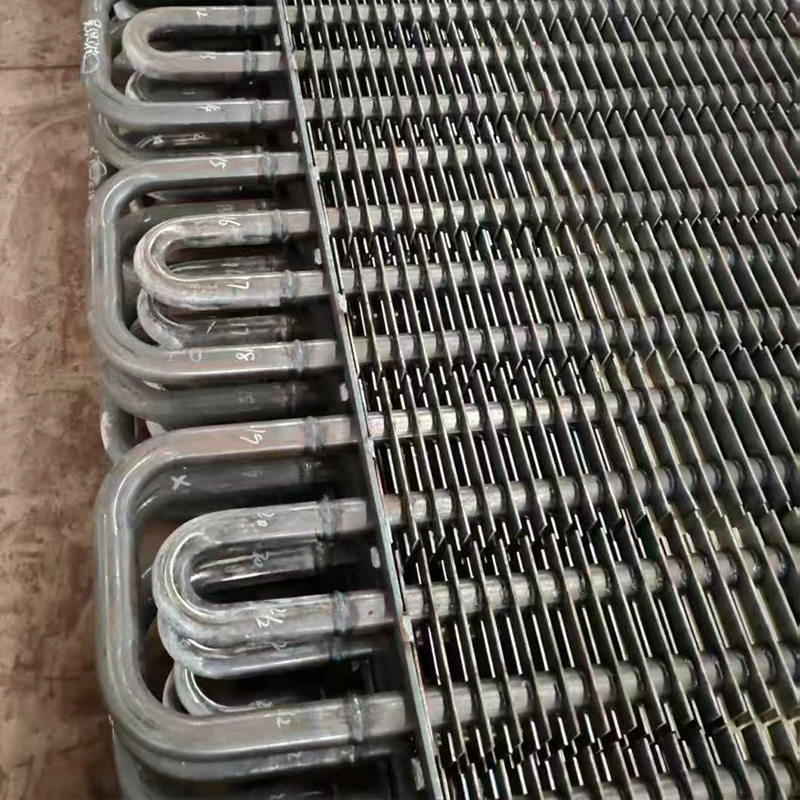
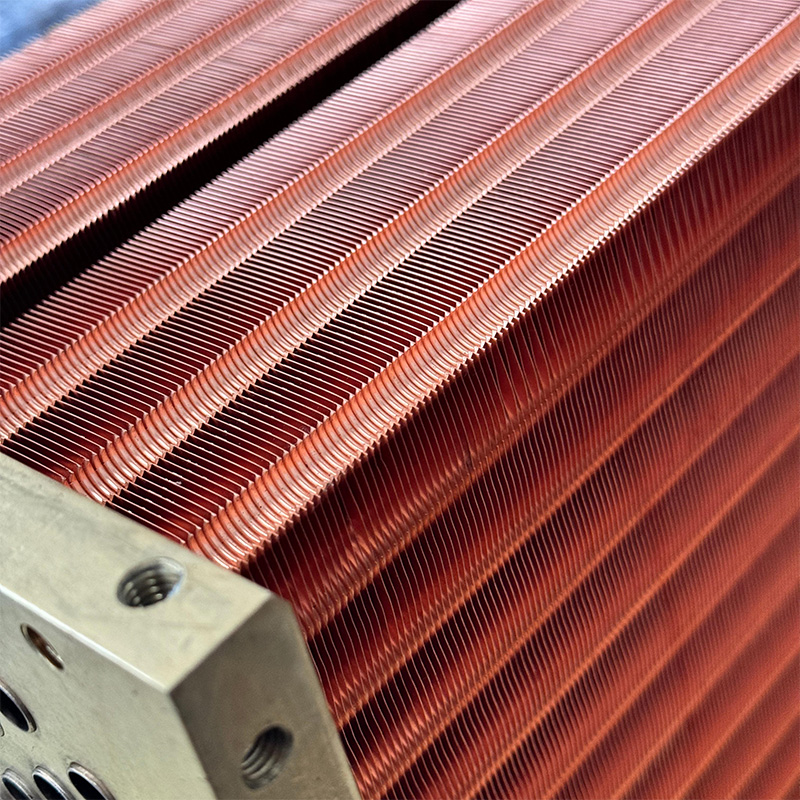
It is in this context that the experience of companies such as Wuxi Kaisheng LLC, specializing in the production of equipment for the energy and petrochemical industries, becomes especially valuable. By developing and producing heat exchangers made of titanium, nickel alloys (N06625) and marine brass, the company's specialists are faced with the need to create complex units operating under high pressure and in extremely corrosive environments. Their products, including ASME and PED certified 321 stainless steel and C70600 copper-nickel alloy tubesheets, demonstrate how the right selection of materials and casting techniques ensure system longevity in seawater desalination, shipbuilding and deep-refining applications. This approach confirms that the reliability of the final product is directly dependent on the quality of the original components and compliance with strict industry standards.
We have encountered cases where a batch of valves manufactured by open-forging followed by rough finishing began to corrode after 8 months of offshore operation. The analysis showed the presence of micropores and heterogeneity of the structure. The transition to precision casting solved the problem: the service life of the products increased to 5 years without signs of destruction. When purchasing equipment for the marine environment, be sure to check compliance with NACE MR0175 standards.
Medical instrumentation and implantology
This is a segment where the requirements for accuracy and biocompatibility are maximum. Surgical instruments, joint replacement components and dental frameworks require perfect geometry and the absence of any surface defects. An error of a fraction of a millimeter can make the implant unsuitable for installation.
Here the technology allows working with titanium alloys (Ti-6Al-4V) and cobalt-chromium alloys (Co-Cr-Mo), which have high strength and low weight. It is important to note that in 2026, the requirements for traceability of raw materials have become more stringent. Each batch of metal powder or pigs must have a digital passport. We have introduced a system of marking each wax model with a laser code, which allows us to track the entire production history of a particular casting down to the heat number.
It is critical for medical device manufacturers to choose a supplier that is ISO 13485 certified. Failure to obtain this license means that the manufacturer does not meet clean manufacturing standards, which is unacceptable for products that come into contact with human tissue. Don’t skimp on incoming raw material inspection – this is your reputation and patient safety.
Technological limitations and choice of materials: what an engineer needs to know
Despite its versatility, the technology has its limits. Understanding these limitations will help you avoid mistakes during the design phase (DFM). Many engineers make the mistake of trying investment casting where it is easier and cheaper to use injection molding or metal 3D printing.
Weight and dimensions of castings
The economic feasibility of the method remains for parts weighing from 10 grams to 50 kilograms. Although it is technically possible to cast a product weighing 100 kg or more, the cost of the ceramic mold and the risk of defects during pouring make such a process uneconomical for most applications. For large body parts, sand casting using lost patterns (EPS technology) or traditional sand casting is more often used.
If your part weighs more than 30kg, do a comparative cost calculation. Often a combined approach (casting a blank + machining) turns out to be more profitable than trying to get a finished part in one operation. We refused to fulfill an order for casting a machine bed weighing 80 kg precisely for this reason, offering the client an alternative solution that saved him 22% of the budget.
Alloy selection and its effect on the process
Not all metals perform equally well in investment casting. Aluminum alloys, for example, are rarely cast using this technology due to their low melting point and tendency to absorb gas, unless a special vacuum environment is created. The main field of activity is steel (carbon, alloy, stainless), heat-resistant nickel alloys, titanium, copper and precious metals.
Particular attention should be paid to shrinkage of the material. Different alloys have different linear shrinkage rates (from 1.2% for cast iron to 2.5% for some steels). The pattern shop must produce wax molds to accommodate this shrinkage to micron precision. An error in calculating shrinkage will result in the finished part not fitting into the assembly assembly. Always ask your supplier for applicable shrinkage factors for the specific alloy.
Wall thickness and design features
The minimum wall thickness that can be qualitatively filled with metal is about 1.5–2 mm for steels and 0.8 mm for non-ferrous metals. Trying to make the wall thinner will result in underfilling or cold junctions. On the other hand, too massive sections (more than 50-60 mm) can cause shrinkage cavities in the center of the casting if the correct system of gates and sprues is not provided.
When designing, avoid sharp transitions of sections. Smooth joints with radii of at least 3-5 mm are required. This rule is often ignored by designers accustomed to the possibilities of 3D printing with plastic, but metal behaves differently. Violation of this rule is the most common cause of internal defects, which are revealed only after X-ray inspection, when the batch has already been cast.
Technology Comparison: Why Investment Casting Wins in 2026
To make an informed decision, it is necessary to compare the technology in question with alternatives. Below is a table based on our 2025-2026 production data.
| Comparison parameter | Lost Wax Casting | Sand casting | Machining from rolled metal (CNC) | Direct metal printing (DMLS/SLM) |
|---|---|---|---|---|
| Dimensional accuracy (tolerance class) | CT4 – CT6 (high) | CT10 – CT14 (low) | IT7 – IT9 (very high) | CT5 – CT7 (medium/high) |
| Surface roughness (Ra) | 1.6 – 6.3 µm | 12.5 – 25 µm | 0.8 – 3.2 µm | 6.3 – 12.5 µm (requires post-processing) |
| Minimum wall thickness | 1.5 mm | 4.0 – 6.0 mm | Instrument dependent (usually >2mm) | 0.4 mm |
| Economical batch size | 50 – 5000 pcs. | 1 – 100 pcs. (large), 1000+ (small) | 1 – 50 pcs. (prototypes) | 1 – 200 pcs. (complex parts) |
| Cost of equipment | Medium (wax molds) | Low (one-off form) / Medium (mandrels) | None (software) | Missing |
| Material restrictions | Wide range (steel, titanium, heat-resistant) | Cast iron, steel, aluminum (difficult with refractory) | Any available rental | Limited list of powders |
| Speed of receiving the first batch | 4 – 6 weeks | 2 – 3 weeks | 1 – 2 weeks | 1 – 2 weeks |
From the table it is clear thatApplication area of lost wax castingis located in a unique niche between mass stamping/sand casting and one-off production on CNC machines. If you need 10 pieces, choose CNC or 3D printing. If you need 10,000 pieces of a simple flange, choose hot stamping or sand casting. But if you need 500 complex parts made of a heat-resistant alloy with high precision, then wax casting has practically no competitors.
An important nuance: additive technologies (3D metal printing) are stepping on the heels of traditional casting, but they cannot yet provide the same density and uniformity of metal structure in large parts as casting. In addition, the cost of 1 kg of printed metal is still 3-5 times higher than the cost of cast metal. Therefore, for mass production, casting remains the uncontested leader.
When choosing a technology, don't just look at the unit price. Consider the cost of subsequent machining. A cheap sand casting will require so much milling that the final price will exceed the cost of a precision casting. Make calculations on a turnkey basis.
Quality control and standards: guarantee of reliability
In conditions where the cost of defects is extremely high, the quality control system becomes more important than the casting process itself. In 2026, we are seeing a complete transition to digital quality passports. Paper certificates are becoming a thing of the past.
Non-destructive testing (NDT)
Each critical casting must undergo comprehensive NDT. Visual inspection (VT) is just the first step. Mandatory are:
- Radiographic inspection (RT):Allows you to see internal pores, cavities and cracks. We use digital detectors that provide real-time images and allow us to measure defect sizes with an accuracy of 0.1 mm.
- Ultrasonic testing (UT):Necessary for identifying delaminations and lack of penetration in massive sections.
- Penetrant testing (PT):Reveals surface cracks invisible to the eye.
One of our clients received a batch of castings without x-raying, saving 5% of the cost. As a result, during hydrotesting at a pressure of 20 MPa, 15% of the valve bodies leaked. Losses from line replacement and downtime amounted to 20 times the savings on control. Never skip NDT steps, especially for pressure-bearing parts.
Certification and regulatory framework
Operating in international markets requires meeting strict standards. For Russia and the EAEU countries, GOST is key, in particularGOST R 53453-2009(Lost wax casting. General technical conditions). For export to Europe and the USA, certificates according to PED (Pressure Equipment Directive), ASME or API are required.
A manufacturer's ISO 9001 certification is a basic requirement, but industry-specific licenses are required for specific industries. For example, to work with Rosatom, a license from Rostechnadzor is required. For oil and gas - API Q1 certificate. Lack of the necessary “crust” automatically blocks your access to tenders in these sectors, regardless of the quality of your products.
Before concluding a contract, request copies of current certificates from the supplier and check their relevance on the website of the certification body. Forgery of documents occurs in this area, and responsibility for the use of uncertified products will fall on the customer.
Economic efficiency and order fulfillment times
Many people mistakenly believe that investment casting takes a long time. Yes, the turnaround time for one batch is 4 to 8 weeks, but this time includes making molds, casting wax models, assembling blocks, applying ceramics, drying, burning, melting and cleaning. However, if we consider the turnkey delivery time for finished parts, then when ordering from 500 pieces, this technology often outperforms mechanical processing, which can take months due to the queue for machines and the complexity of programming.
The cost of tooling (molds for casting wax) varies from $500 to $3000 per mold, depending on the complexity. This is significantly cheaper than injection molds (which cost tens of thousands of dollars). Depreciation of equipment occurs already in a batch of 200-300 parts. After this, the unit cost of production drops sharply.
In 2026, there is a trend towards localization of supply chains. Imports of castings from Asia have become less predictable due to logistics risks and longer delivery times to 45-60 days. Russian and local manufacturers who are able to complete the full cycle within the country receive the advantage of reducing delivery time to 3-4 weeks and the absence of customs risks. This is critical for projects with a tight implementation schedule.
When planning your budget, set aside a reserve of 10-15% for possible improvements or re-control. Real practice shows that a perfectly smooth process is rare, and having a buffer will save you from missing project deadlines.
Frequently Asked Questions
What is the maximum dimensional accuracy that can be obtained?
Standard accuracy is CT4-CT6 according to GOST or ISO. This means a deviation of approximately 0.1-0.2 mm per 100 mm of length. To achieve higher tolerances (CT3), the use of special ceramic masses and climate control in the workshop are required, which increases the cost of the process by 20-30%. If your drawings require IT6-IT7 tolerances, consider mandatory machining of critical surfaces.
Is it possible to combine different alloys in one casting?
No, lost wax casting technology involves filling a mold with a single alloy. Bimetallic castings are only theoretically possible and require highly complex technological techniques that are not used in mass production due to the high risk of defects. Если нужен узел из разных металлов, проектируйте его как сборную конструкцию с последующей сваркой или механическим соединением.
Какой минимальный объем заказа вы принимаете?
Экономически оправданный минимум — 50 кг общего веса отливок или 50 штук мелких деталей. Заказы меньшего объема выполняются, но их стоимость будет непропорционально высокой из-за затрат на подготовку производства (изготовление форм, настройку линии). Для единичных образцов (1-5 шт.) рекомендуем рассмотреть технологию 3D-печати восковых моделей или прямую печать металлом.
How long do wax model molds last?
Ресурс алюминиевой пресс-формы составляет в среднем 5000-7000 циклов литья воска. Стальные формы могут служить до 20 000 циклов и более. Если ваш проект предполагает долгосрочное производство в течение нескольких лет с общим тиражом свыше 10 000 штук, имеет смысл инвестировать в стальную оснастку сразу, чтобы избежать простоев на замену форм в середине серии.
Conclusion and next steps
Подводя итог, можно сказать, чтообласть применения литья по выплавляемым моделям в 2026году охватывает самые передовые и требовательные сегменты промышленности. From From turbines spinning at 15,000 rpm to life-saving implants, this technology has proven its indispensability. Она предлагает уникальный баланс между сложностью геометрии, качеством материала и экономической эффективностью для средних серий.
Однако успех проекта зависит не только от выбора технологии, но и от компетенции исполнителя. Ошибки на этапе проектирования литниковой системы или неправильный выбор сплава могут свести на нет все преимущества метода. Мы видели слишком много примеров, когда благие намерения сэкономить приводили к катастрофическим последствиям в эксплуатации.
Если вы стоите перед выбором поставщика или сомневаетесь в применимости технологии для вашей задачи, не рискуйте бюджетом проекта. Получите профессиональную консультацию инженеров-технологов, которые проанализируют ваши чертежи и предложат оптимальное решение. Мы готовы провести бесплатный аудит вашей детали и рассчитать предварительную стоимость с учетом всех скрытых факторов.
Contact us today, чтобы обсудить ваш проект и получить коммерческое предложение в течение 24 часов. Помните: правильное решение на этапе проектирования экономит миллионы на этапе эксплуатации.
Для более глубокого изучения темы рекомендуем ознакомиться с нашим материалом ожаропрочных сплавах для турбин, где мы подробно разбираем химический состав и свойства материалов, используемых в энергетике.