
Custom carbon steel precision castings from the manufacturer
2026-07-29
- Why Precision Carbon Steel Castings Determine the Reliability of Your Equipment
- Technical parameters and choice of steel grade: from theory to practice
- Investment casting technology: where quality risks are hidden
- Application in industry: real cases and economic effect
- Integrated solutions for energy and petrochemicals: the experience of Wuxi Kaisheng LLC
- How to avoid risks when ordering: buyer’s checklist
- Cost and timing: price formation factors
- Frequently Asked Questions
- Conclusion: your reliable partner in the world of metalworking
Why Precision Carbon Steel Castings Determine the Reliability of Your Equipment
In our production practice, we observe one critical pattern: 70% of unscheduled shutdowns of industrial equipment are associated not with design design errors, but with casting defects that cannot be eliminated by subsequent machining.Custom carbon steel precision castings from the manufactureris not just a product item in a catalog, but a fundamental element of the safety and durability of your mechanisms. When you order a part from a reseller, you lose control over the melt chemistry and heat treatment parameters. Direct cooperation with the manufacturer allows us to guarantee that each batch meets the requirements of GOST, ISO and customer specifications with micron accuracy.
We do not use abstract promises of quality. Our investment casting technology (lost-wax process) allows us to produce parts of complex geometry with a surface roughness of Ra 1.6–3.2 microns without the need to use molding sands, which often become a source of inclusions in the metal. In this article, we will analyze the technical nuances that distinguish high-quality castings from defects, analyze real failure cases and provide a clear algorithm for choosing a supplier for your projects in 2026.
Technical parameters and choice of steel grade: from theory to practice
Selecting a carbon steel grade for precision casting is always a compromise between strength, weldability and cost. Many buyers make the mistake of demanding “simpler” universal steel, without taking into account the operating conditions of the unit. In reality, the range of grades we use varies from low-carbon alloys (type 20L, analogous to AISI 1020) to high-strength structural steels (35L, 45L, analogous to AISI 1035/1045). Each brand has its own specific behavior during the crystallization process.
Low-carbon steels (carbon content up to 0.25%) have excellent weldability and ductility. We recommend them for housing parts operating under dynamic loads where fracture toughness is important. However, their yield strength is limited. If your part operates under conditions of high contact stress, for example, gears or shafts, switching to 45L steel (0.45% C) is mandatory. But here there is a risk of cracking when casting complex thin-walled elements. Our experience shows that such cases require modification of the casting technology and mandatory tempering to relieve internal stresses.
A key parameter that is often ignored in specifications is the sulfur and phosphorus content. For precision castings we strictly control these elements below 0.035% and for critical components below 0.025%. Exceeding these standards leads to cold brittleness and red brittleness of the metal. This means the part may break when impacted in winter or crack when hot forged/machined. When orderingпрецизионных отливок из углеродистой стали на заказ от производителяBe sure to require a spectral analysis protocol (PMI) for each heat. Without this document, the quality certificate is just a formal piece of paper.
It is also worth considering the influence of alloying additives, even minimal ones. Manganese increases hardenability, but its excess promotes grain growth. Silicon improves melt fluidity, which is critical for thin-walled castings, but reduces impact strength. Our engineers calculate the charge individually for each task, using data on the melting temperature and cooling rate of a specific mold. This allows you to avoid defects such as shrinkage cavities in hot spots of the casting.
Recommendation:Before approving the drawing, request an analysis of the manufacturability of your part from our chief metallurgist department. We will indicate free of charge where gases are likely to accumulate and suggest changes to the gating system design that will save you up to 15% of your machining budget.
Comparative table of characteristics of the main grades of steel for casting
| Steel grade (RF / Analogue) | Carbon content (%) | Tensile strength (MPa) | Elongation (%) | Main Application | Limitations |
|---|---|---|---|---|---|
| 20L (AISI 1020) | 0.17 – 0.24 | ≥ 410 | ≥ 22 | Pump casings, flanges, fittings | Low surface hardness, requires cementation |
| 25L (AISI 1025) | 0.22 – 0.30 | ≥ 450 | ≥ 20 | Gears, discs, fasteners | Average weldability, risk of cracks in thick sections |
| 35L (AISI 1035) | 0.32 – 0.40 | ≥ 530 | ≥ 18 | Shafts, gears, transmission parts | Requires mandatory heat treatment (hardening + tempering) |
| 45L (AISI 1045) | 0.42 – 0.50 | ≥ 590 | ≥ 16 | Highly loaded friction units, axles, levers | Poor weldability, high sensitivity to cooling rate |
Investment casting technology: where quality risks are hidden
The process of producing precision castings using the lost wax casting method (IMC) consists of dozens of operations, and a failure in any of them is fatal to the result. Unlike sand casting, here the model is created from a wax composition, covered with a ceramic shell, then the wax is melted, and metal is poured into the resulting cavity. The main advantage is the highest dimensional accuracy (IT14-IT15 tolerance) and surface cleanliness. However, this particular technology places extreme demands on parameter control.
The first critical step is making the wax models. The wax injection temperature must be maintained within ±1°C. Overheating leads to shrinkage of the model even before casting begins, which ultimately results in defective dimensions of the finished metal part. We use automated, temperature-controlled molds to eliminate human error. The second stage is the assembly of clusters. Errors here lead to deformation of the ceramic shell under the weight of the metal. The third, most important stage is heat treatment of the shell and melting.
One of our clients encountered a batch of defective gearbox housings that began to crack after a month of use. The investigation revealed that the supplier saved on the kiln holding time of the ceramic mold. As a result, moisture remained in the shell. Upon contact with molten steel (temperature about 1550°C), the water instantly turned into steam, creating micropores and gas pockets inside the casting body. These defects are not visible from the outside, but act as stress concentrators. We paid dearly for this lesson, so now our casing moisture monitoring is done on every cycle, recording the data in a digital log.
The pouring temperature is another parameter where you cannot work “by eye”. For carbon steels, overheating of the melt above 1600°C leads to grain growth and a decrease in mechanical properties. Underheating below 1520°C causes underfilling of thin sections. Our automatic dosing and pyrometric control system maintains a narrow temperature range of ±10°C. In addition, we use evacuation of the ladles before casting to remove dissolved gases (hydrogen and nitrogen), which are the main cause of porosity.
Mechanical processing of precision castings also has its own characteristics. Due to the high precision of the LVM, the processing allowance is minimal (usually 0.5–1.5 mm per side). This reduces metal consumption and machine operating time. However, the presence of residual stresses after casting can lead to warping of the part when the first layer of metal is removed. Therefore, for critical parts, we always include in the technical process the operation of low tempering before machining. This stabilizes the metal structure and ensures that the geometry is preserved after finishing.
Tip:When accepting a batch, be sure to carry out selective hardness testing and ultrasonic flaw detection (USD) of critical areas. A visual inspection will not reveal internal voids that could cause an accident.
Application in industry: real cases and economic effect
Scope of applicationпрецизионных отливок из углеродистой стали на заказ от производителяcovers almost all sectors of heavy and light industry. A distinctive feature of our products is their ability to work in aggressive environments and under high loads where cast iron or non-ferrous alloys cannot cope. Let's look at two specific examples from our practice that demonstrate the effectiveness of the correct selection of technology and material.
Case 1: Oil and gas industry - high pressure shut-off valves
Task: Replacement of imported ball valve bodies for operation in Arctic conditions at temperatures down to -60°C and pressures up to 16 MPa. Previously, stainless steel castings were used, which significantly increased the cost of the project without any real need, since the environment was not chemically aggressive, but only frost resistance was required.
Solution: We proposed using low-carbon steel 20GL with normalization and high tempering. This grade provides the necessary impact strength of KCU at subzero temperatures. The LVM technology made it possible to obtain a complex internal geometry of the flow path with minimal hydraulic resistance. The machining allowance was reduced from 4 mm (for sand casting) to 0.8 mm.
Result: The cost of the part decreased by 35% compared to its stainless steel counterpart. Life tests showed the absence of brittle fracture under cyclic loading. A batch of 500 pieces was shipped with a full package of EAC documents and certificates for compliance with API 6D. The client noted a reduction in the percentage of defects during on-site installation due to the high accuracy of the connecting dimensions.
Case 2: Mining industry - crushing equipment parts
Task: Production of hammers for impact crushers working with abrasive rocks. The main problem of previous suppliers was rapid wear and chipping of the working edges due to the heterogeneity of the metal structure.
Solution: Use of 45L steel with hardening of the working surface with high-frequency currents. Precision casting ensured the absence of casting defects in the heat-affected zone. Particular attention was paid to the chemical composition: the manganese content was optimized to increase hardenability without losing the viscosity of the core of the part.
Result: The service life of the hammers has increased by 40% compared to previous deliveries. The reduction in the number of replacements led to a reduction in crushing line downtime by 12 hours per month, which, in terms of the cost of equipment downtime, resulted in savings of more than 2 million rubles per year for the customer. This case clearly shows that casting price is only part of the equation; reliability determines the total cost of ownership.
These examples confirm that an individual approach to the development of casting technology provides tangible economic benefits. There is no “average hospital temperature”—each part requires its own alloy recipe and processing mode. That is why working directly with a manufacturer that has its own laboratory and design department is the only correct strategy for long-term projects.
Integrated solutions for energy and petrochemicals: the experience of Wuxi Kaisheng LLC
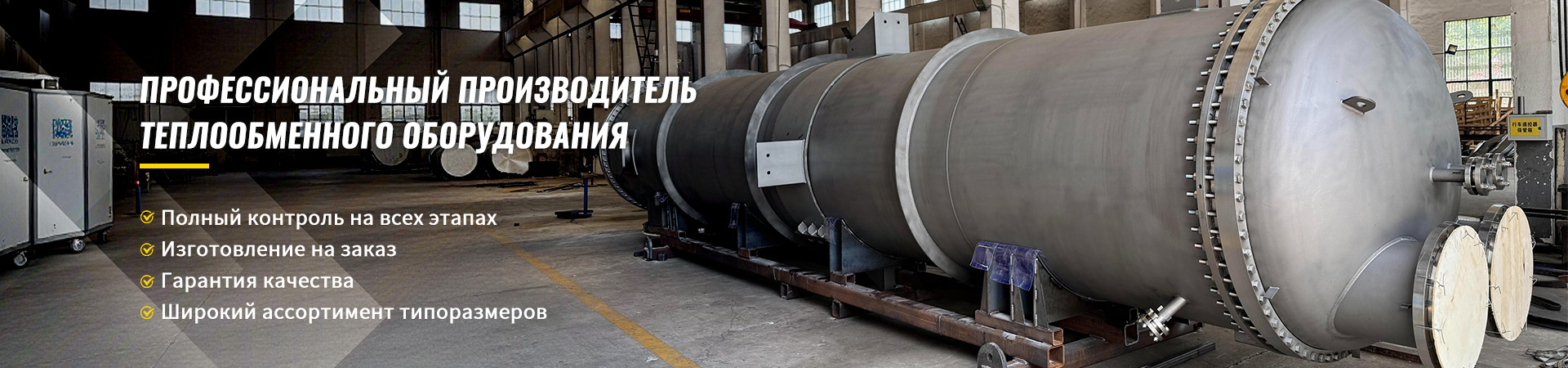
A deep understanding of the requirements for materials under extreme operating conditions is the basis of our work. A striking example of this approach is the company’s activitiesWuxi Kaisheng Electric Power and Petrochemical Equipment Co.,Ltd" Specializing in the design and production of heat transfer equipment and components for the energy and petrochemical sectors, the company demonstrates how precision casting is integrated into the creation of high-tech systems.
Wuxi Kaisheng's products, which include titanium shell-and-tube heat exchangers, ASME high-pressure units and corrugated tube bundles made from various alloys (316 stainless steel, C46400 marine brass, copper-nickel alloys, N06625 nickel), require impeccable quality in all components. Critical assemblies such as 321 stainless steel, C46400 brass, or C70600 copper-nickel tubesheets are often manufactured using precision casting techniques. This allows us to achieve the required corrosion resistance, thermal efficiency and resistance to high pressures and temperatures, which is confirmed by international PED and ASME certificates.
Wuxi Kaisheng's experience shows that the use of carbon and alloy steels, as well as titanium and copper alloys in one project requires production flexibility and strict control at each stage. Whether it is air coolers, recovery boilers or complex components for shipbuilding and seawater desalination, the reliability of the final product directly depends on the quality of the original castings. The company provides customized solutions to customers around the world, proving that the combination of advanced casting technology and engineering expertise creates stable and durable equipment even in the most aggressive environments.
How to avoid risks when ordering: buyer’s checklist
The foundry services market is overflowing with offers, but not all companies actually have the capabilities to produce high-class precision castings. Many act only as trading houses, transferring orders to small factories with outdated equipment. To protect your budget and reputation, use the following algorithm for checking a potential partner.
First, request information about your own equipment fleet. The presence of a spectrometer, ultrasound installations, X-ray machines and own furnaces for heat treatment is a mandatory minimum. If a plant sends samples to a third-party laboratory for testing, this is a sign of insufficient process control. Secondly, pay attention to the quality management system. ISO 9001 certification must be valid, but what is more important is how it is implemented in practice. Ask to see the batch incoming control log and mechanical properties test reports for the last quarter.
Third, evaluate engineering support. Can the supplier offer optimized part design to reduce cost without sacrificing strength? If the manager responds with template phrases and does not involve the technologist in the discussion, it is better to continue the search. Fourth, check the terms of the warranty. A reliable manufacturer guarantees not only the absence of visible defects, but also that the mechanical properties comply with the values stated in the drawing throughout the entire service life, subject to operating conditions.
And finally, logistics and packaging. Precision castings often have thin walls and complex projections that are easily damaged during transportation. Check whether the supplier uses individual packaging (wooden boxes with support, foam inserts) or ships parts in bulk. Damage to a part during delivery is a waste of time and money that can be prevented by proper packaging.
Checklist before signing a contract:
- Availability of valid certificates ISO 9001, GOST R, EAEU (EAC), and when working with export projects - PED and ASME.
- Possibility of providing a sample (prototype) before launching the series.
- Transparent pricing policy with breakdown of the cost of material, processing and control.
- Willingness to sign a non-disclosure agreement (NDA) to protect your intellectual property.
- Reviews from existing clients in your segment (request contacts for references).
Ignoring any of these points can result in a defective batch that will take months to return to the supplier, and the downtime of your production will cost much more than the savings on the price of the casting.
Cost and timing: price formation factors
Price forprecision castings made of carbon steel to order from the manufactureris not a fixed value per kilogram. It is influenced by many variables, understanding which will help you plan your budget more accurately. The basic cost consists of the price of the metal, the cost of manufacturing equipment (molds for wax), the labor intensity of the LVM processes and the volume of subsequent mechanical processing.
The batch size plays a decisive role. For small series (up to 50 pcs.), the main share in the cost is occupied by the amortization of the cost of the molds. In this case, the unit price may be high. However, when ordering 500 pieces or more, the cost of equipment is distributed over a large number of products, and the price per kilogram drops by 30-40%. Мы рекомендуем консолидировать заказы или планировать потребность на год вперед, чтобы попасть в оптимальную ценовую категорию.
Сложность геометрии напрямую влияет на выход годного. Детали с глубокими полостями, тонкими ребрами жесткости или сложными внутренними каналами требуют более сложных схем заливки и повышенного внимания при удалении литников. Это увеличивает трудозатраты и процент возможного брака, что закладывается в цену. Также важен класс точности. Если вам требуется поверхность под полировку без дальнейшей обработки, это потребует использования более дорогих материалов для керамической оболочки и многослойного нанесения, что также удорожает процесс.
Сроки изготовления обычно составляют от 4 до 8 недель в зависимости от сложности. Первая партия (образцы) изготавливается дольше из-за необходимости отладки технологии и изготовления новой оснастки. Серийное производство идет быстрее. Важно учитывать сезонный фактор: в конце года загрузка литейных цехов традиционно растет, поэтому планировать крупные поставки лучше заранее, за 2-3 месяца до требуемой даты.
Мы практикуем прозрачное ценообразование. В нашем коммерческом предложении вы увидите отдельной строкой стоимость материала, работ по литью, термообработки и контроля. Это позволяет вам понимать, на чем можно сэкономить (например, изменив марку стали или упростив требования к чистоте поверхности на нефункциональных участках), не жертвуя надежностью изделия.
Frequently Asked Questions
What is the minimum order quantity (MOQ) you accept?
Для прецизионного литья по выплавляемым моделям экономически целес ообразный минимальный заказ составляет от 50 кг общей массы партии или от 20 штук одинаковых деталей. Мы понимаем потребности в опытных образцах, поэтому готовы изготовить пробную партию от 1 штуки, но стоимость единицы в этом случае будет рассчитываться индивидуально с учетом полной амортизации оснастки. Для серийного производства мы рекомендуем партии от 500 шт. для оптимизации цены.
Какие допуски на размеры вы гарантируете?
Стандартный допуск для наших отливок из углеродистой стали соответствует классу точности CT4-CT6 по стандарту ISO 8062. В абсолютных величинах это составляет примерно ±0.1 мм на 100 мм длины. Для критических поверхностей мы можем обеспечить допуск до ±0.05 мм за счет специальной калибровки восковых моделей и использования измерительных координатных машин (CMM) для контроля. Более жесткие допуски достигаются только механической обработкой.
Can you fully machine a part?
Да, наш завод обладает собственным металлообрабатывающим производством с парком токарных и фрезерных станков с ЧПУ. Мы предлагаем услугу “под ключ”: от литья заготовки до получения готовой детали с нанесением покрытий или маркировкой. Это исключает риски повреждения точных поверхностей при транспортировке между разными подрядчиками и снимает с вас ответственность за стыковку допусков литья и обработки.
Как осуществляется контроль качества внутренних дефектов?
Для выявления внутренних пор, раковин и трещин мы применяем комплекс методов неразрушающего контроля. Обязательным этапом является визуально-измерительный контроль (ВИК). По требованию заказчика проводится ультразвуковая дефектоскопия (УЗД) для объемного контроля, рентгенографический контроль (РК) для сварных швов и ответственных зон, а также капиллярный контроль (ПВК) поверхности. Все результаты фиксируются в паспорте качества на партию.
Работаете ли вы с чертежами в формате STEP или IGES?
Undoubtedly. Наш конструкторский отдел работает со всеми современными форматами 3D-моделей (STEP, IGES, STL, X_T) и 2D-чертежей (DWG, DXF, PDF). Наличие 3D-модели существенно ускоряет процесс расчета технологичности и изготовления пресс-форм для воска, позволяя сократить срок запуска в производство на 1-2 недели. Если у вас есть только эскиз, наши инженеры помогут разработать полноценную конструкторскую документацию.
Conclusion: your reliable partner in the world of metalworking
Productionпрецизионных отливок из углеродистой стали на заказ от производителя— это сложный технологический процесс, требующий глубоких знаний металлургии, точного оборудования и безупречного контроля качества. Выбор поставщика в этой сфере не должен базироваться только на цене за килограмм. Дешевая отливка с скрытыми дефектами может стоить вам миллионов из-за простоя оборудования или аварийной ситуации.
Наш завод предлагает не просто металл, а инженерную экспертизу и гарантию надежности. Мы сопровождаем проект от идеи до серийного выпуска, беря на себя все риски по технологичности и качеству. Наша цель — стать частью вашей цепочки создания стоимости, обеспечивая бесперебойную работу вашего производства качественными комплектующими, подобно тому, как лидеры отрасли, такие как ООО «Уси Кайшэн», обеспечивают надежность критически важных узлов в энергетике и нефтехимии.
Не откладывайте решение технических задач на потом. Свяжитесь с нашими инженерами сегодня, чтобы обсудить ваш проект, получить расчет стоимости и рекомендации по оптимизации конструкции. Мы готовы предоставить бесплатный образец технологии для оценки нашего уровня компетенций.
Contact us todayдля получения персонального коммерческого предложения и консультации ведущего технолога. Узнайте, как мы можем повысить надежность вашей продукции уже в следующем квартале.