
Precision casting of structural elements for electrical engineering
2026-07-30
- Why Casting Accuracy Determines the Lifespan of Electrical Equipment
- Critical parameters for selecting alloys for electrical enclosures
- Precision casting technologies: comparison of methods and applications
- Quality control and tolerance standards in electrical casting
- Cost efficiency and supply chain management
- Frequently Asked Questions
- Prospects for development and innovation in foundry production
- Integrated solutions from Wuxi Kaisheng LLC
Why Casting Accuracy Determines the Lifespan of Electrical Equipment
In our practice of working with large energy holdings, we have repeatedly encountered a situation where the failure of an expensive transformer or distribution board occurred not due to an insulation breakdown or network overload, but due to microscopic deformation of a structural element.Прецизионное литьё конструкционных элементов для электротехникиis not just a manufacturing process, it is a fundamental guarantee of the safety and durability of the entire system. When tolerances exceed 0.05 mm, even a perfect assembly becomes a source of vibration, overheating and, ultimately, production shutdown.
Many buyers make the mistake of estimating the cost of a part solely by the weight of the metal and the price per kilogram of raw materials. This approach ignores the hidden costs of post-processing, quality control and, most critically, the risks of equipment downtime. In this article, we will analyze the technical nuances that distinguish high-quality casting from defects, based on real cases of our clients from Russia and the CIS countries, and will also provide specific data on alloys, tolerances and certification.
Critical parameters for selecting alloys for electrical enclosures
The choice of material for casting in electrical engineering is dictated not so much by mechanical strength as by a set of requirements for electrical conductivity, heat dissipation and corrosion resistance under specific operating conditions. We are seeing a steady shift from traditional cast irons to aluminum and zinc alloys, especially in the segment of high-voltage equipment and components for renewable energy.
Aluminum alloys of the AD31 series (analogous to AlSi7Mg) and AK12 (AlSi12) remain the gold standard for transformer housings and terminal boxes. Their key advantage is the optimal weight-to-strength ratio while maintaining high thermal conductivity. However, in our practice, there was a case when a batch of AD31 housings, cast without strict control of the iron content, led to the fragility of the parts when installed in northern regions at a temperature of -40°C. Iron, entering the alloy in the form of plate-like inclusions, creates stress concentrators. Therefore, when ordering precision castings, we always require a spectral analysis of each cast, limiting the Fe content to 0.6% for critical components.
For elements requiring high dimensional accuracy and complex geometry of thin-walled structures, we recommend zinc alloys TsAM-4 (Zamak-4). They make it possible to produce castings with minimal allowances for machining, which is critical for mass production of contact groups. The cost of a mold for injection molding (HPDC) is higher, but the unit cost of the finished part for a run of 5,000 pieces is reduced by 30-40% compared to sand casting.
Copper alloys, such as BrAZH9-4 bronze, are used less frequently, mainly for busbars and contacts, where maximum electrical conductivity is required. It is important to understand here that copper casting carries high risks of gas porosity. One of our clients was faced with the fact that a batch of copper bushings passed the incoming inspection, but after thermal cycling in operation it began to leak due to micropores that were not visually identified. The solution required the introduction of X-ray inspection of each unit of production, which increased the cost of the order, but saved the reputation of the equipment manufacturer.
Recommendation:Before approving the technical specifications, be sure to request samples of metallographic sections for the selected alloy from the supplier. This will allow you to evaluate the grain size and distribution of intermetallic compounds, which directly affects the fatigue strength of the part.
Precision casting technologies: comparison of methods and applications
The choice of casting technology is a decisive factor that determines the final cost of the product and its technical characteristics. There is no universal method that would be suitable for all electrical engineering problems. Understanding the differences between injection molding, investment casting and die casting allows you to optimize your project budget without sacrificing quality.
High pressure die casting (HPDC) dominates the production of mass-produced components for low-voltage equipment, energy meters and instrument housings. The process provides high productivity and excellent surface finish (Ra 1.6–3.2 µm). The main limitation of the method is the presence of porosity in the casting body, which makes such parts unsuitable for vacuum applications or high-pressure conditions without additional impregnation with sealants. Additionally, high mold filling rates can result in air entrapment if the gate system is not properly sized.
Lost wax casting is used for the manufacture of complex current-carrying parts where no mechanical processing is allowed due to the risk of damaging the metal structure. This method guarantees a metal density comparable to a forged blank. We use this technology to produce unique contact groups for high-voltage circuit breakers. The dimensional accuracy here reaches IT8-IT9, which eliminates the need for milling base surfaces. However, the cost of the process is high due to the labor-intensive production of wax models and ceramic shells, so it is economically justified only for medium and small-scale production.
Gravity die casting occupies a niche for large-sized parts, such as power transformer housings and support structures. The method provides directional crystallization, which gives a fine-grained structure and high mechanical properties. Unlike HPDC, there is no filling turbulence, which minimizes oxide inclusions. However, the production cycle is longer and the surface requires more thorough cleaning.
| Comparison parameter | High pressure injection molding (HPDC) | Lost wax casting | Gravity die casting |
|---|---|---|---|
| Dimensional accuracy | High (IT11-IT13) | Very high (IT8-IT9) | Medium (IT12-IT14) |
| Surface roughness | Ra 1.6 – 3.2 µm | Ra 3.2 – 6.3 µm | Ra 6.3 – 12.5 µm |
| Metal density | Medium (porosity possible) | Maximum (monolith) | High |
| Economic efficiency | Mass production (>5000 pcs.) | Small and medium series | Large single items |
| Dimensions restrictions | Up to 50 kg (usually less) | Up to 10-15 kg | Up to several tons |
| Mold production time | 4-8 weeks | 2-4 weeks (equipment is simpler) | 6-10 weeks (metal mold) |
When choosing a technology, it is important to consider not only current needs, but also scaling prospects. Switching from gravity casting to HPDC with increasing production volumes can reduce unit costs by 2-3 times, but will require significant initial investment in tooling. We recommend calculating the break-even point for each project separately.
Action:Ask your potential supplier to calculate the cost-effectiveness for your print run, taking into account tooling depreciation. Often the more expensive casting method turns out to be more profitable over the course of a year.
Quality control and tolerance standards in electrical casting
In electrical engineering, the concept of “precision” has a strict quantitative expression. If in general mechanical engineering a tolerance of 0.2 mm can be considered acceptable, then for mating elements of electrical connections or magnetic circuits such an error is unacceptable.Прецизионное литьё конструкционных элементов для электротехникиimplies maintaining tolerances within 0.05–0.1 mm on critical surfaces.
Our experience shows that the main source of assembly problems is not linear expansion, but the warping of castings after removal from the mold. Aluminum has a high coefficient of thermal expansion, and uneven cooling of thick and thin walls leads to residual stresses. To avoid this, we insist on mandatory thermal stabilization (artificial aging) immediately after casting. The part is heated to a temperature of 180-200°C and held for 4-6 hours. This relieves up to 90% of internal stresses and stabilizes the geometry.
Leak control is another critical step. For cases operating in conditions of high humidity or dust (standard IP65 and higher), any micropore becomes a path for moisture penetration. We use the helium leak scanning method for critical components. Unlike water baths, helium penetrates through channels less than 1 micron in diameter. One of our partners in the street lighting industry experienced massive product returns due to condensation inside the housings. The audit found that the casting supplier skimped on injection parameters, which resulted in cold welding of the metal in the mold parting area. The introduction of 100% underwater air pressure control and selective helium testing completely solved the problem.
Geometric control is carried out using coordinate measuring machines (CMMs). Visual inspection and the use of calipers are not sufficient to confirm compliance with drawings with complex profiles. We require a CMM report for the first production batch and then selectively every 500 pieces. Particular attention is paid to the flatness of the mating surfaces, since the quality of the thermal contact of the cooling radiators depends on this.
Certification plays the role of a guarantor of process stability. The manufacturer must have an ISO 9001 certificate, but for work in Russia and the EAEU countries, compliance with GOST requirements and the presence of a declaration of conformity with the technical regulations of the Customs Union (TR CU) are critically important. For example, GOST 15150-69 regulates designs for various climatic regions. The casting intended for installation in Yakutia (version UHL1) must be tested at temperatures down to -60°C, which requires special requirements for the chemical composition of the alloy and the absence of surface defects.
Tip:Include in the supply contract a clause regarding the right to conduct a production audit on the territory of the manufacturer. The personal presence of your technologist during the trial run of the molds allows you to identify potential problems before mass production begins.
Cost efficiency and supply chain management
Purchasing precision castings is often viewed through the lens of minimizing cost per kilo. This is a dangerous misconception. The real cost of owning a part includes the costs of incoming inspection, rework, logistics and, most importantly, the risks of stopping the conveyor. A cheap casting with an unstable geometry can increase assembly time by 20%, which offsets any savings in metal price.
When working with Chinese or Indian suppliers, we often see a situation where the initial price is attractive, but hidden costs eat into the margin. Logistics delays, customs difficulties and language barriers when agreeing on technical changes lead to missed deadlines. Localization of production or working with trusted partners who have warehouses of finished products in the Russian Federation becomes a strategic advantage. The delivery time for a standard batch of castings from the domestic warehouse is 3-5 days, while imports from Asia take 45 to 60 days, including sea and customs.
Minimum order quantity (MOQ) is another important parameter. For injection molding, the MOQ is usually determined by the number of cycles required to pay for the machine changeover, and is 500-1000 pieces. For investment casting, this threshold is lower - from 100 pieces, but the unit price will be significantly higher. Supplier flexibility for small batch sizes is important for the development and development (R&D) phases and new product launches.
Inventory management also requires attention. Aluminum castings are sensitive to storage conditions. High humidity may cause oxidation on untreated surfaces, making subsequent painting or coating difficult. We recommend storing parts in dry, humidity-controlled areas and using a protective preservative for long periods of storage.
Financial terms of cooperation must be transparent. Prepayment of 100% before shipment carries high risks for the buyer. The optimal scheme is a letter of credit or payment of part of the amount after passing the incoming control at the buyer’s warehouse. This disciplines the supplier and ensures that specifications are met.
Strategy:Consider concluding a long-term framework agreement with a fixed price for raw materials and a conversion formula depending on aluminum exchange quotations (LME). This will protect your budget from the volatility of the metals market.
Frequently Asked Questions
What is the minimum quantity required to start production of precision castings?
The minimum circulation depends on the chosen technology. For injection molding (HPDC), the economically viable minimum is 500-1000 pieces, since the cost of metal molds is high ($3,000 to $15,000 depending on complexity). For investment casting, you can start with a batch of 50-100 pieces, since the tooling is cheaper, but the unit cost will be 2-3 times higher. For single large parts (transformer housings), it is possible to produce one piece at a time using sand casting, but the accuracy will be lower.
What guarantees do you provide for the geometric dimensions of castings?
We guarantee compliance with tolerances in accordance with the accuracy class GOST 26645-85 or the international standard ISO 8062. For precision electrical components, we work within the 7-8 accuracy class. If deviations beyond acceptable standards are detected, the batch must be returned or processed at the manufacturer’s expense. Each batch is accompanied by a quality certificate with the results of CMM measurements and spectral analysis.
Is it possible to obtain castings immediately with the required color or coating?
Yes, modern technology makes it possible to integrate finishing processes into the supply chain. We offer anodizing, powder coating, galvanizing or conversion coating directly from the factory. This eliminates additional logistics burdens and reduces the risk of damage to parts during transportation between different contractors. It is important to agree in advance on the requirements for coating adhesion and layer thickness.
How quickly can a prototype be produced for testing?
The production time for prototypes depends on the complexity of the geometry. When using rapid prototyping technologies (3D printing of sand molds or lost wax models), the first sample can be received 7-10 days after the 3D model is approved. If a full metal injection mold is required, the lead time will be 4-6 weeks. We recommend starting with rapid prototyping to test functionality and then moving to solid tooling for mass production.
Do you work with customer-supplied raw materials?
Yes, we accept orders for customer-supplied raw materials, but this requires careful incoming control of the material on the part of the customer. In this case, responsibility for the chemical composition and mechanical properties of the finished casting partially passes to the supplier of raw materials. We recommend using a turnkey scheme, where the casting supplier itself purchases certified metal from verified factories, which guarantees traceability and compliance with the declared characteristics.
Prospects for development and innovation in foundry production
The electrical foundry industry is on the cusp of significant change. The introduction of digital twins allows you to simulate the process of filling the mold and crystallization of the metal even before the manufacture of physical equipment. This reduces the number of trial runs and reduces the percentage of defects at the start of production. Our engineers use MAGMASOFT software to simulate thermal fields, allowing shrinkage zones to be determined in advance and the gating system to be adjusted.
The trend towards environmental friendliness dictates new requirements for production. The use of high quality recycled aluminum is becoming the norm. Modern melt purification technologies make it possible to obtain an alloy from scrap whose properties are not inferior to the primary one, while the carbon footprint of such production is 90% lower. For European customers and companies pursuing ESG goals, this becomes an important competitive advantage.
Развитие аддитивных технологий открывает возможности для создания гибридных конструкций, где литые элементы комбинируются с 3D-печатными вставками сложной формы. Это позволяет создавать теплообменники и радиаторы с внутренней структурой, невозможной для традиционного литья, значительно повышая эффективность отвода тепла от силовой электроники.
Integrated solutions from Wuxi Kaisheng LLC
Высокая точность литья и правильный выбор материалов являются фундаментом надежности, однако конечный результат зависит от интеграции этих компонентов в готовые инженерные системы. Именно здесь ключевую роль играет опыт специализированных производителей, таких какWuxi Kaisheng Electric Power and Petrochemical Equipment Co.,Ltd" Компания не просто поставляет отдельные детали, а специализируется на разработке и производстве сложных узлов, где прецизионное литье сочетается с передовыми технологиями теплообмена и коррозионной защиты.
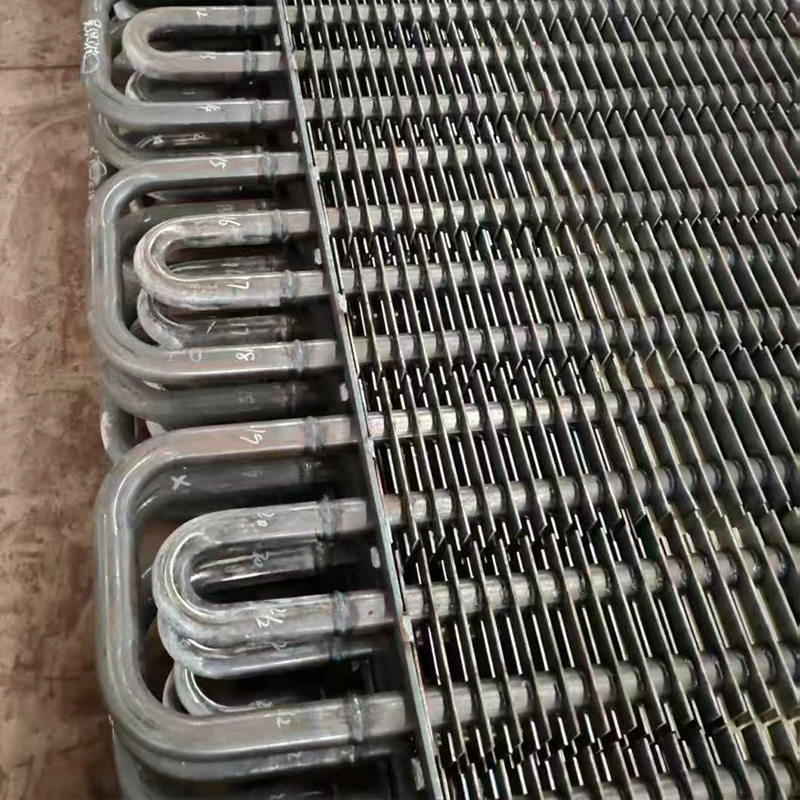
В портфеле решений «Уси Кайшэн» представлены титановые кожухотрубные теплообменники, высоконапорные аппараты стандарта ASME, а также гофрированные трубные пучки из нержавеющей стали 316, морской латуни C46400 и медно-никелевых сплавов. Особое внимание уделяется компонентам из никелевых сплавов (например, N06625) и трубным решеткам из стали 321, которые критически важны для работы в агрессивных средах нефтепереработки, химической промышленности и опреснения морской воды. Продукция компании, сертифицированная по стандартам PED и ASME, демонстрирует исключительную устойчивость к вы соким давлениям и температурам, что делает её идеальным выбором для энергетического сектора и судостроения.
Синергия точного литья конструкционных элементов и высокоэффективного теплообменного оборудования позволяет создавать системы с максимальным ресурсом работы. Подход «Уси Кайшэн», ориентированный на предоставление индивидуальных решений и стабильного качества для заказчиков по всему миру, подтверждает, что надежность современного энергооборудования строится на сочетании глубокой экспертизы в металлургии, литейном производстве и инженерном проектировании.
Прецизионное литьё конструкционных элементов для электротехники— это область, где ошибки недопустимы, а качество измеряется десятилетиями безаварийной работы. Выбирая партнера, обращайте внимание не только на цену, но и на технологическую зрелость, наличие собственной лаборатории и готовность брать на себя ответственность за результат.
Если вы ищете надежного поставщика для реализации своего проекта, свяжитесь с нами сегодня. Наши специалисты готовы провести бесплатный аудит вашего чертежа, предложить оптимизацию конструкции для снижения стоимости и рассчитать сроки поставки.Contact us todayдля получения коммерческого предложения и консультации ведущего инженера-технолога.
Для ознакомления с полным каталогом наших возможностей и примерами выполненных проектов посетите разделпрецизионное литье для энергетики.