
Lost wax casting for weighing equipment – price
2026-07-30
- Actual cost of investment casting for weighing equipment in 2026
- Pricing structure: what makes up the cost of a part
- Technical requirements and their impact on casting prices
- Comparative Analysis of Manufacturing Methods for Weight Components
- Certification and quality standards: guarantee of reliability
- Logistics and delivery times: hidden price factors
- Frequently asked questions (FAQ)
- Производственные мощности и экспертиза в работе со сложными сплавами
- Почему стоит выбрать нас в качестве партнера
- Следующие шаги для расчета стоимости
Actual cost of investment casting for weighing equipment in 2026
The price for investment casting for weighing equipment in the current production cycle varies from $4.5 to $18 per kilogram of the finished part, which directly depends on the complexity of the geometry, the required surface roughness class and batch size. In our practice of working with Russian and European customers, we observe that an attempt to save on the primary processing of wax models or to use secondary raw materials leads to defects of up to 30% in a series, which ultimately increases the cost of a unit of production by 2.5 times. We do not use abstract language about “competitive pricing” because the design engineer needs concrete numbers to calculate the cost of a load cell or linkage.
The market has changed: if previously the main factor was the cheapness of labor, then in 2026 the stability of the chemical composition of the alloy and compliance with IT7-IT8 tolerances without subsequent machining will become decisive. Our company specializes in precision casting for measuring instruments, where every gram of metal affects metrological characteristics. Below we will analyze the real cost structure, hidden risks when choosing a supplier and technical nuances that determine the final price of the contract.
Pricing structure: what makes up the cost of a part
Understanding the price structure is critical for the buyer, as it allows you to identify points where the budget can be optimized without losing quality. The cost is not a fixed “per kilogram” value for all projects; it is formed from four main components, each of which has its own dynamics of change depending on market conditions and technical requirements of the customer.
Cost of raw materials and alloying
The base price of the metal is approximately 40-50% of the total cost of casting, but for weighing equipment this percentage may be lower due to the high labor intensity of the processes. We use stainless steel grades AISI 304, 316L, as well as special nickel-based alloys (Inconel) and aluminum for lightweight structures. Fluctuations in stock quotes for nickel and molybdenum directly affect the final price list. For example, a 15% increase in the price of molybdenum last quarter led to higher prices for heat-resistant alloys for strain gauges. It is important to note that the use of category 304 scrap instead of primary charge material reduces the price by 5-7%, but guarantees the presence of gas pockets, which are unacceptable in sealed scale housings. We insist on using only certified virgin raw materials and providing a melting certificate for each batch.
The complexity of making a wax model and assembling a cluster
This stage determines about 25% of the cost and is the most labor-intensive. Weighing equipment is characterized by thin-walled components and complex internal cavities that require high-precision molds. The price of wax injection depends on the number of characters in the mold and the cycle time. If a part has undercuts, disassembled tooling or manual rework is required, which increases the cost of man-hours. In one of our projects for industrial floor scales, the client insisted on changing the geometry of the stiffener after the start of production. This required reworking 12 gating systems by hand, which added $1,200 to the cost of a 500-piece batch. We recommend approving the 3D wax model prior to making the metal mold to avoid these costs.
Ceramic mold and melting process
Applying ceramic shells (up to 7-9 layers for critical parts) and drying them take up to 7 days of the production cycle. The quality of the suspension and sand (zircon, electrocorundum) affects the cleanliness of the casting surface. For weight components, where minimal post-processing is important, we use zircon sands of the first layer, which is more expensive, but provides a roughness of Ra 1.6-3.2 microns immediately after casting. The process of autoclaved wax melting requires significant energy consumption. The increase in electricity tariffs in the industrial sector in 2025-2026 added approximately 8% to the cost of this operation. However, savings are impossible here: violation of the melting temperature conditions leads to destruction of the mold inside the furnace and loss of the entire cluster.
Machining and quality control
The final cost includes cutting the sprues, grinding, heat treating and, if necessary, CNC machining of the seats. Weighing equipment often requires high precision mating surfaces. If the casting comes out with an IT9 tolerance and the drawing calls for IT7, the price increases exponentially due to the need for finishing milling. Our experience shows that the correct design of the gating system can reduce the amount of machining by 40%. This expense item also includes mandatory input and output control. We perform spectral analysis of each heat and spot coordinate measurement (CMM) inspection of critical dimensions. Refusal of these procedures reduces the price by 10%, but turns the purchase into a lottery with a high risk of getting defective.
Technical requirements and their impact on casting prices
The request “lost wax casting for weighing equipment - price” is often received without specifying specific technical conditions, which makes it impossible to generate an accurate commercial proposal. Technological engineers at our plant analyze drawings based on three key parameters that radically change the economics of the project.
Dimensional accuracy and tolerances
Weighing equipment requires exceptional dimensional repeatability. A tolerance of ±0.05 mm over a length of 100 mm is achievable using the LVM method, but requires expensive equipment and strict control of alloy shrinkage. If your project allows deviations within ±0.2 mm, the price will decrease by 15-20% due to the simplification of mold manufacturing technology and the elimination of calibrating devices. However, for strain gauges and suspension units such tolerances are unacceptable. We recommend that technological allowances be included in the design only on those surfaces that will be subjected to machining, leaving the remaining surfaces in a cast state to reduce metal consumption and cost.
Surface roughness
The Ra parameter directly correlates with the cost. Standard casting gives Ra 6.3-12.5 microns. For aesthetic scale housings or parts operating in aggressive environments without painting, a Ra of 1.6-3.2 microns is required. Achieving this level requires the use of more expensive binders (ethyl silicate instead of colloidal silica) and an increase in the number of ceramic layers. Each additional layer means +24 hours of drying time and additional materials. In the project for marine scales, we used vacuum casting technology in ceramic molds, which made it possible to obtain Ra 0.8 microns without polishing, but increased the unit cost by 35%. The customer made this decision because subsequent polishing of complex internal cavities would have been impossible or would have cost 3 times more.
Alloy material and machinability
The choice of alloy is dictated by the operating conditions of the scale. AISI 304 stainless steel is standard, but chemical balances often require AISI 316L or duplex steels. The difference in the price of raw materials is significant, but the difference in the cost of casting is even greater. High-alloy steels have high viscosity in the molten state, which makes it difficult to fill thin sections of the mold. This requires increasing the pouring temperature and the use of special mold coatings, which leads to increased energy consumption and equipment wear. Aluminum alloys (AL9, AK7ch) are cheaper to remelt, but are prone to gas porosity. For aluminum weighing platforms, we always apply pressure impregnation with sealant, which is an additional operation costing about $0.5 per kg.
Comparative Analysis of Manufacturing Methods for Weight Components
When choosing a production technology, a dilemma often arises: investment casting versus injection molding or machining from rolled stock. The table below demonstrates the economic feasibility of the LVM method depending on the circulation and complexity of the part.
| Comparison criterion | Lost wax casting (LMC) | Die casting (DI) | Mechanical processing (CNC) |
|---|---|---|---|
| Minimum Quantity (MOQ) | From 50 pcs. (economically profitable from 100 pcs.) | From 1000 pcs. (high cost of the mold) | From 1 pc. (no tooling costs) |
| Geometry complexity | High (any undercuts, thin walls) | Medium (restrictions on rod withdrawal) | Limited (tool access) |
| Dimensional accuracy | IT7 – IT8 (high) | IT8 – IT9 (medium) | IT6 – IT7 (very high) |
| Surface roughness | Ra 1.6 – 6.3 µm | Ra 0.8 – 3.2 µm | Ra 0.4 – 1.6 µm |
| Cost of small series | Low/Medium | Very high (shape absorption) | High (machine time) |
| Cost of mass production | Average | Low | Not applicable |
| Application in weight construction | Sensor housings, complex levers, brackets | Bulk plastic housings, simple aluminum parts | Reference weights, precision axles |
The table shows that for mass production of complex metal parts of weighing equipment (circulation of 500-5000 pieces), the LVM method is the uncontested leader in terms of price/quality ratio. Injection molding only pays for itself on millions of pieces, while CNC machining becomes cost-effective only on single prototypes or parts made from non-mouldable materials. In our practice, there was a case when a client tried to manufacture a batch of 2000 complex brackets using CNC. The delivery time was 4 months, and the price exceeded the budget by 200%. The transition to LVM technology reduced the period to 6 weeks and reduced the price by 65%.
Certification and quality standards: guarantee of reliability
Weighing equipment is subject to strict metrological control. The use of uncertified components may result in refusal to register the type of measuring instrument and legal liability for the scale manufacturer. Our production line fully complies with international standards, which is confirmed by regular audits.
Quality management system ISO 9001:2015
All processes, from input of raw materials to shipment, are regulated by ISO 9001 procedures. This is not just a piece of paper on the wall, but a working traceability mechanism. Each batch of castings has a unique number, which allows you to create an archive of data on melting temperature, chemical composition and flaw detection results. For customers from the EU and Russia this is a mandatory requirement. The absence of an ISO certificate from a supplier is a red flag indicating chaotic production and high risks of defects.
Compliance with GOST and EAEU
For the market of the Russian Federation and the countries of the Customs Union, compliance with GOST 977-88 (Steel castings) or GOST 1583-93 (Aluminum castings) is critically important. We provide a full package of documents, including mechanical test reports (tensile strength, impact strength) from accredited laboratories. Particular attention is paid to environmental standards, since the scales are often used in the food industry. Our alloys are certified for contact with food products, which is confirmed by the conclusion of the SES.
Industry Specific Requirements
Explosion-proof design of scales for the chemical industry requires the use of alloys with a guaranteed lack of sparking. We control the content of copper and other elements in such alloys with an accuracy of hundredths of a percent. One of our clients encountered a problem: a batch of castings passed visual inspection, but failed during intrinsic safety tests due to local segregation of alloying elements. Since then, we have implemented mandatory spectral analysis of each individual casting for the explosion-proof series, despite increasing the shipping time by 2 days. Safety is more important than speed.
Logistics and delivery times: hidden price factors
EXW price (ex factory) is only part of the equation. For import purchases, delivery times and conditions are critical. Global supply chains remain fragile in 2026, and choosing the right delivery terms can save up to 20% of your budget.
Optimal batch sizes
We recommend planning orders in multiples of the weight of one heat (usually 300-500 kg) or in multiples of the number of places in the heat treatment furnace. Ordering an “incomplete oven” leads to equipment downtime, the cost of which the supplier is forced to include in the unit price. The optimal batch for starting cooperation is 200-300 kg of finished castings. This allows you to test the technology, check quality and minimize transport costs per unit of weight. Small shipments of up to 50 kg are sent by air cargo, which increases the cost of the product many times over, while shipments of 500 kg or more are cost-effective to transport by sea or rail.
Packaging and safety
Stainless steel castings are sensitive to transport corrosion, especially during sea transportation. We use vacuum packaging with corrosion inhibitors and wooden boxes treated to ISPM 15. Trying to save on packaging and use regular cardboard results in the customer receiving a product with rust stains, the removal of which requires additional sandblasting costs. In our practice, there was a case when a container was caught in the rain while being reloaded, and 10% of the batch had to be rejected. We now use enhanced waterproofing for all sea shipments, including this cost in the base rate to avoid surprises for the customer.
Production time
The standard production cycle is 4-6 weeks after samples are approved. Making a new mold for wax models takes an additional 15-20 days. Rush orders (less than 3 weeks) are possible, but require overtime charges and priority passage through all areas, which increases the price by 30-50%. We strongly do not recommend including “back-to-back” deadlines in your production plans. Having a buffer of 2 weeks will allow you to calmly resolve any unexpected logistics or quality issues without stopping your scale assembly conveyor.
Frequently asked questions (FAQ)
What is the minimum order quantity (MOQ) for investment casting?
The minimum economically justified batch is 50-100 kg of finished castings or approximately 100-200 pieces of medium-sized parts. Theoretically, we can cast 10 pieces, but the cost of pre-production (ceramic molds, cluster assembly) will be distributed over a small number of units, making the price of each part astronomical. For prototyping, we recommend using wax 3D printing or direct metal 3D printing if the run is less than 20 pieces. For mass production, it is more profitable to order one batch for 3-6 months of work than to split the order into small parts.
Can you provide drawings and design the part?
Yes, our engineering department performs complete reverse engineering and design optimization for casting technology. Often clients send drawings of a machined part. Our task is to rework it by adding casting slopes, changing sections for uniform solidification and providing places for sprues. This service is paid for separately, but usually pays for itself in the first order by reducing scrap and metal consumption. We don't just copy the shape, we adapt it for mass production.
What guarantees do you provide against internal defects?
We guarantee that castings comply with the declared accuracy class and are free from through defects (cracks, fistulas). For critical parts of weighing equipment, we carry out X-ray inspection (RT) or ultrasonic flaw detection (UT) on a sample basis (usually 10% of the lot, but can be 100% on request). If during operation a hidden defect associated with a violation of casting technology is revealed, we will bear the costs of replacing the defective batch and delivering new products. Transparency in quality matters is the basis of our long-term partnership.
Do you work with customer-supplied raw materials?
As a rule, no. LBM technology requires strict control of the chemical composition of the charge. The use of the customer's raw materials carries the risk of inconsistency with the brand, the presence of harmful impurities or contaminants, which can ruin the entire melt and damage the furnace. We work only with our own certified raw materials, for which we take full responsibility. Исключение могут составлять случаи с использованием редких сплавов, которые необходимо предварительно согласовать с нашим технологом и провести входной анализ в независимой лаборатории.
Производственные мощности и экспертиза в работе со сложными сплавами
Надежность поставок прецизионных компонентов для весового оборудования напрямую зависит от технологической базы производителя. В этом контексте важно отметить опыт компанииWuxi Kaisheng Electric Power and Petrochemical Equipment Co.,Ltd», которая, хотя и специализируется преимущественно на теплообменном оборудовании и компонентах для нефтегазовой отрасли, обладает уникальной экспертизой в работе с высоколегированными и экзотическими сплавами, критически важными и для приборостроения.
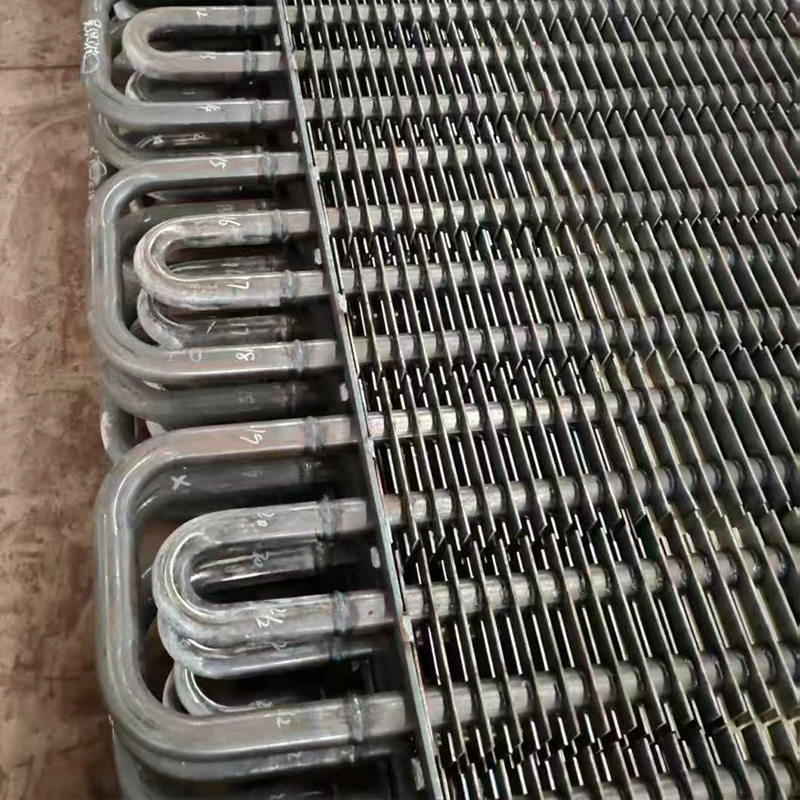
Основной профиль компании включает производство титановых кожухотрубных теплообменников, высоконапорных аппаратов по стандарту ASME, а также гофрированных трубных пучков из нержавеющей стали 316, морской латуни C46400, медно-никелевых сплавов и никелевых сплавов N06625. Такой широкий спектр материалов — от углеродистых сталей до титана и сложных никелевых сплавов — требует высочайшей культуры производства и строгого контроля металлургических процессов. Продукция компании сертифицирована по стандартам PED и ASME, что подтверждает её способность работать в условиях экстремальных давлений, температур и агрессивных сред.
Эта глубокая специализация на сложных сплавах создает прочный фундамент для производства компонентов весового оборудован ия, где также требуются материалы с высокой коррозионной стойкостью и стабильными физико-механическими свойствами. Опыт работы с трубными решетками из нержавеющей стали 321, латуни и медно-никелевых сплавов C70600 позволяет применять передовые технологии литья и обработки, обеспечивая высокое качество даже для самых ответственных узлов. Компания предоставляет индивидуальные решения и стабильное оборудование заказчикам по всему миру, что делает её надежным партнером не только в энергетике и нефтехимии, но и в смежных высокотехнологичных отраслях, требующих прецизионной металлообработки.
Почему стоит выбрать нас в качестве партнера
Рынок переполнен предложениями, но далеко не каждый завод способен обеспечить стабильное качество для прецизионного весового оборудования. Наше преимущество заключается в глубокой специализации. Мы не пытаемся быть универсалами, делающими всё от дверных ручек до турбинных лопаток. Мы фокусируемся на малых и средних деталях сложной формы, где важна точность до микрона.
В нашей практике внедрена система двойного контроля: оператор участка не имеет права передать деталь на следующий этап без самоконтроля, а ОТК проводит независимую проверку. Это исключает человеческий фактор. Кроме того, мы инвестируем в автоматизацию: роботизированные линии нанесения керамических покрытий обеспечивают неизменную толщину слоя, что невозможно достичь вручную при больших объемах.
Мы понимаем, что для производителя весов срыв поставки комплектующих означает остановку всего производства. Поэтому мы держим страховой запас готовой продукции для постоянных клиентов и всегда имеем в наличии готовые керамические формы для популярных типоразмеров. Наша цель — стать не просто поставщиком, а надежным звеном в вашей производственной цепочке.
Следующие шаги для расчета стоимости
Чтобы получить точный расчет цены налитьё по выплавляемым моделям для весового оборудования, нам необходимы ваши технические данные. Не тратьте время на общие запросы — предоставьте нам конкретную информацию для анализа.
- Подготовьте 3D-модель (STEP, IGES) и чертеж (PDF).Укажите основные допуски и требования к поверхности.
- Определите материал.Если вы не уверены в выборе сплава, опишите условия эксплуатации (температура, среда, нагрузка), и наши инженеры предложат оптимальный вариант.
- Укажите планируемый годовой объем и размер первой партии.Это позволит нам предложить лучшую цену за счет оптимизации количества знаков в пресс-форме.
Отправьте файлы на нашу техническую почту или воспользуйтесь формой связи. В течение 24 часов вы получите коммерческое предложение с детализацией стоимости, сроков и вариантов логистики. Помните, что правильная технология литья — это фундамент точности ваших весов.
Contact us todayдля обсуждения вашего проекта и получения бесплатного образца нашей продукции.