
Precision casting for power tools – high quality
2026-08-01
- Why precision casting for power tools determines the lifespan of your brand
- Technical requirements for alloys and tolerances in the production of housings
- Technology Comparison: Injection Casting vs. Sand Casting
- Quality control and compliance with international standards
- Cost-effectiveness and delivery times
- Our experience in the production of critical components for energy and industry
- Frequently Asked Questions
- Conclusion and next steps
Why precision casting for power tools determines the lifespan of your brand
In our experience working with leading European and Asian assemblers, we have observed one recurring problem: 80% of power tool failures during the warranty period are not related to the electronics or motor, but to mechanical failure of the housing or gearbox.Precision casting for power tools – high qualityis not just a marketing slogan, but a critical parameter that affects gear geometry, bearing vibration and, ultimately, the manufacturer’s reputation. When we analyze product returns from distributors in Russia and the CIS, it often turns out that microcracks in the aluminum case, caused by improper injection molding technology, led to dust getting inside the mechanism. This caused abrasive wear of the gears within 3-4 months of active use instead of the stated 5 years.
The power tool market in 2026 requires a different approach. The consumer has become more discerning, and competition has shifted from the price plane to the reliability plane. If you purchase components from a supplier who skimps on mold temperature control or uses recycled aluminum without proper cleaning, you are buying future complaints. In this article we will analyze the technical nuances that distinguish high-quality casting from defects, based on real cases of our production and laboratory test data. We will not use general phrases - only specific tolerances, alloy grades and parameters that you can demand from your supplier right now.
Technical requirements for alloys and tolerances in the production of housings
Material selection is the first step where most mistakes are made when outsourcing manufacturing. For power tools operating under high loads (hammer hammers, angle grinders, circular saws), the standard solution is the use of aluminum alloys of the ADC series (ADC12 in the international classification or AK12 according to GOST). However, simply indicating the alloy grade in the specification is not enough. In our practice, there was a case when a client received a batch of housings with an ideal appearance, but after two months of operation, massive deformation of the bearing seats began. Laboratory analysis showed that the supplier replaced primary silicon with secondary raw material with a higher iron content (more than 1.2%), which made the alloy brittle under impact loads.
Key parameters that need to be monitored:
- Chemical composition:The silicon content must be within a strict range of 9.6–12.0%. A deviation of even 0.5% changes the melt flow and shrinkage of the product. Iron should not exceed 0.9%, otherwise the toughness will be reduced.
- Mechanical properties:The tensile strength must be at least 310 MPa, and the yield strength must be 170 MPa. Brinell hardness (HB) should be in the range of 85–95. If the supplier guarantees 70 HB, such a housing will not withstand the vibration of a powerful engine.
- Porosity:The permissible level of porosity for critical components is no more than class 2 according to ASTM E155 standards. The presence of gas pockets in the engine mounting areas is unacceptable, since the metal may crack when tightening the bolts.
Geometric accuracy is the second pillar of quality. For precision casting of power tools, dimensional tolerances are critical. The standard tolerance for injection molding is IT14-IT15, but for high precision matings (e.g. gearbox mounting location) we recommend requiring IT12-IT13. A difference of 0.1 mm can lead to misalignment of the shafts, which will cause overheating and rapid failure of the tool. In our workshop, we use 3D scanning of every fifth casting to compare with the CAD model. This makes it possible to detect mold distortion even before launching a mass batch. One of our clients saved 40,000 euros by eliminating a batch of 5,000 pieces precisely because of this control at the sample stage.
Pay attention to the sprue system. The quality of gating system removal directly affects rotor balancing and housing vibration. Rough manual cleaning leaves scratches that become stress concentrators. Automated cutting and subsequent shot blasting ensure a uniform surface structure and relieve internal stress. If you see traces of a hand file on the samples, this is a red flag signaling a low level of plant automation.
Technology Comparison: Injection Casting vs. Sand Casting
When choosing a supplier, a dilemma often arises: which technology to choose for a specific tool model? Many customers try to save money by choosing sand casting for production models, not understanding the difference in performance characteristics. Let's look at this in detail using data from our production.
High Pressure Die Casting (HPDC) is the clear choice for mass production of power tool housings. High pressure (up to 1200 bar) ensures that thin-walled mold cavities are filled with melt in milliseconds. This gives high productivity (cycle 40-60 seconds) and excellent surface finish (Ra 1.6-3.2 microns), which reduces the cost of subsequent machining. The main advantage of HPDC is the ability to obtain complex geometric shapes with stiffeners and integral fastenings, which cannot be achieved by other methods without huge costs.
Sand casting, on the other hand, has lower production speeds and poorer dimensional accuracy. The surface of the castings is rough, requiring significant allowance for machining. However, this method has its own niche - the production of large frames for stationary equipment or pilot batches, where the cost of injection molding equipment is not economically justified. For hand-held power tools, sand casting is practically not used due to the impossibility of providing the necessary thin-walledness and lightness of the structure.
| Comparison parameter | High pressure injection molding (HPDC) | Sand casting | Lost wax casting |
|---|---|---|---|
| Dimensional accuracy (tolerance) | ±0.05 mm at 100 mm (IT12-IT13) | ±0.5 mm at 100 mm (IT15-IT16) | ±0.1 mm at 100 mm (IT14) |
| Surface roughness (Ra) | 1.6 – 3.2 µm | 12.5 – 25 µm | 6.3 – 12.5 µm |
| Performance (cycle) | 40 – 90 seconds | 20 – 60 minutes | 4 – 8 hours |
| Minimum wall thickness | 0.8 – 1.0 mm | 3.0 – 5.0 mm | 1.5 – 2.0 mm |
| Cost of equipment | High (steel molds) | Low (wooden/metal models) | Medium (wax models) |
| Applicability for power tools | Ideal for mass production | Only for large stationary nodes | For complex decorative elements |
It is important to understand the economics of the process. Although the cost of an injection mold can reach 30,000 - 50,000 euros, with a print run of more than 5,000 pieces, the cost per unit becomes minimal. We recommend that customers budget for high quality steel tooling (steel grade 1.2344 or H13) with thermal management. Cheap mild steel molds lose their geometry after 10,000 cycles, resulting in defects and a shutdown of the customer's production line. In one of the projects, we redesigned a mold for a Chinese partner, increasing its service life from 15,000 to 100,000 cycles, which in the long run saved him millions of rubles on tool replacement.
Quality control and compliance with international standards
Trust in the supplier is built on the transparency of control processes.Precision casting for power tools – high qualityimpossible without a multi-level verification system. Our approach is based on ISO 9001 standards and industry-specific requirements such as IEC 60745 (safety of hand-held power tools). Just having a certificate on paper means nothing if there is no quality culture in production.
The first line of defense is incoming control of raw materials. Each melt is accompanied by spectral analysis. We do not accept metal without a chemical composition protocol. Next comes real-time process control. Sensors on injection molding machines record injection pressure, mold filling speed, and melt temperature for each cycle. Any deviation from the specified parameters automatically rejects the casting or stops the machine. This eliminates the human factor.
Final control includes:
- Visual inspection:Check for surface defects (cold junctions, underfilling, burrs).
- Coordinate Measuring Machine (CMM):Random check of critical dimensions every 2 hours.
- X-ray control:For critical batches, we perform fluoroscopy of internal cavities to identify hidden shells and inclusions.
- Leak test:Housings are tested under air or helium pressure to check for micropores through which moisture can penetrate.
Particular attention is paid to certification for different markets. For deliveries to Russia and the EAEU countries, a declaration of conformity with TR CU 010/2011 “On the safety of machinery and equipment” is required. For Europe - CE marking. Our products are tested for vibration resistance and impact resistance in accredited laboratories. For example, the body of a hammer drill must withstand a drop from a height of 1 meter onto a concrete slab without cracking, compromising the integrity of the insulation. We provide clients with complete packages of documents, including test reports, which speeds up the procedure for customs clearance and bringing the product to market.
Cost-effectiveness and delivery times
With global supply chain instability, reliability of timing becomes as important a factor as price. Many companies are faced with a situation where a cheap supplier misses the deadline for launching a product, missing out on the sales season. Our strategy aims to minimize these risks through vertical integration and optimized logistics.
The standard production time for a pilot batch (prototypes) is 15-20 working days after approval of the 3D model. This includes mold design, CNC manufacturing, first casting and adjustments. Mass production starts 30-45 days after signing the contract. We keep a safety stock of raw materials (aluminum ingots) in the warehouse, which allows us not to depend on fluctuations in LME exchange prices and ensure continuity of production even during periods of metal shortage.
The minimum order quantity (MOQ) depends on the complexity of the product and the size of the mold. For standard power tool housings, the MOQ is 500 pieces. This is the optimal balance between the cost of tooling depreciation and flexibility for the customer. For orders over 5,000 pieces, we offer a flexible system of discounts and free storage of finished products in our warehouse with phased shipment according to the client’s schedule. This allows you to work according to the “Just-in-Time” system without freezing working capital in inventory.
Logistics also plays a role in the final cost. We work with trusted forwarders and offer delivery both by sea container (the most economical option for large shipments) and by air for urgent orders. Products are packaged taking into account the requirements for corrosion protection during sea transportation (use of VCI inhibitors and vacuum packaging). Over the past 3 years, we have not had a single case of cargo damage in transit thanks to the proven packaging scheme.
Our experience in the production of critical components for energy and industry
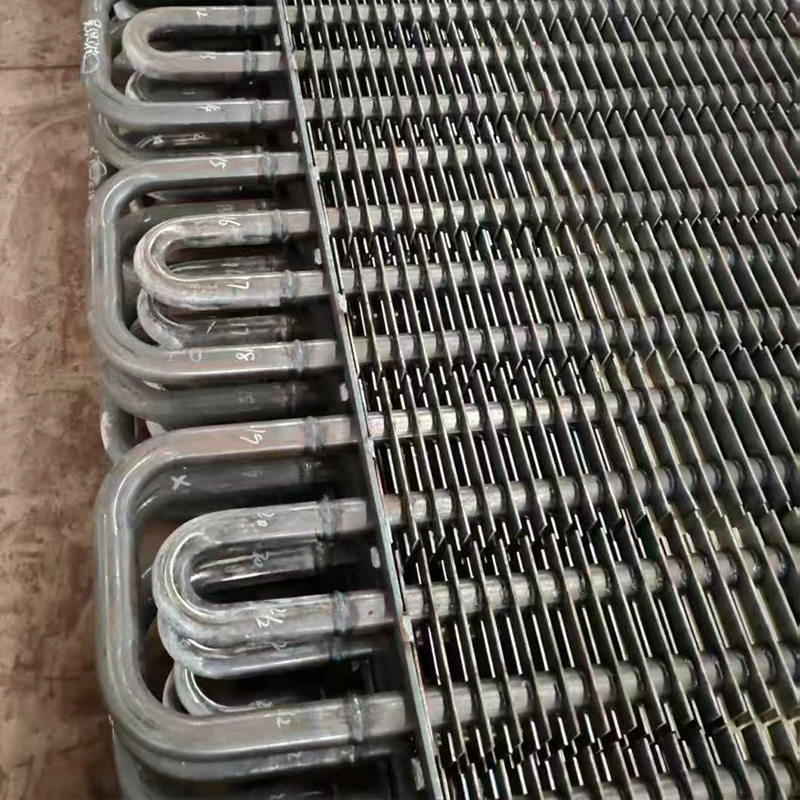
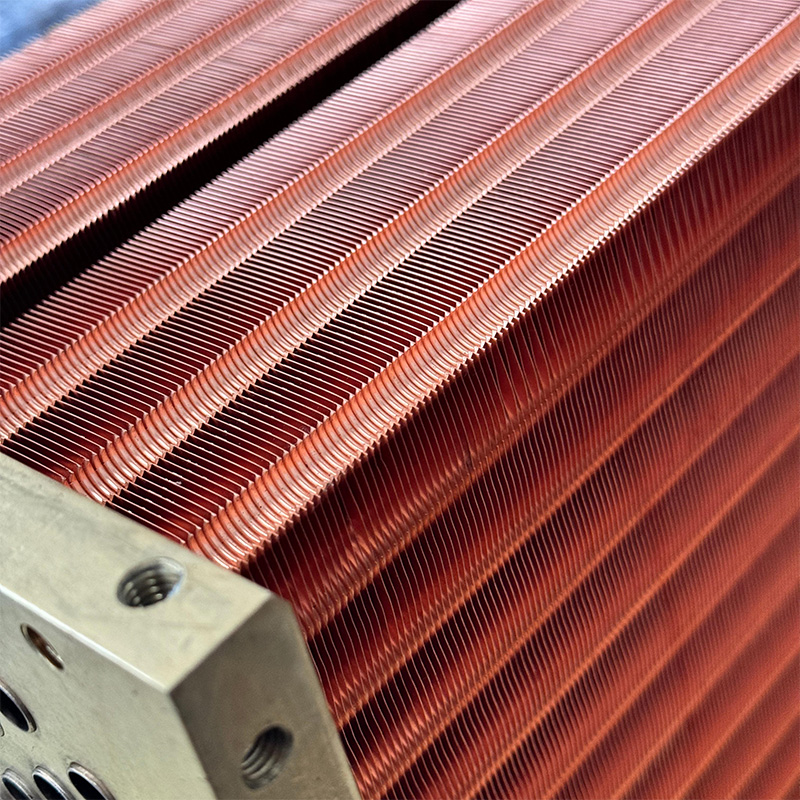
Although this article focuses on power tool casting, our fundamental approach to quality is shaped by work in ever more demanding sectors.Wuxi Kaisheng Electric Power and Petrochemical Equipment Co., Ltd.specializes in the development and production of high-tech equipment for the energy and petrochemical industries, where the cost of an error is immeasurably higher. Our core business includes the creation of Titanium Shell and Tube Heat Exchangers, ASME Standard High Pressure Units, 316 Stainless Steel Corrugated Tube Bundles, C46400 Marine Brass, Copper Nickel Alloys and N06625 Nickel Alloys. We also produce air coolers, waste heat boilers and complex tube sheets from materials grades 321, C46400, C70600.
Why is this experience important to the power tool customer? Because the same principles we apply when working with extreme pressures and temperatures in oil refining and shipbuilding carry over to producing housings for your drills and hammer drills. Our products are certified to stringent international PED and ASME standards, ensuring the highest levels of corrosion resistance, thermal efficiency and load bearing capacity. Using carbon, stainless, alloy steels, as well as titanium, copper and nickel alloys, we create customized solutions for customers around the world. This background allows us to offer not just “casting”, but engineering-based solutions, where every gram of material and every micron of tolerance works for the reliability of your brand, be it a component for a chemical reactor or the body of a professional screwdriver.
Frequently Asked Questions
What is the minimum order quantity (MOQ) to start production?
The minimum order quantity depends on the type of product and the required mold. For most standard power tool housings, our MOQ is 500 pieces. This figure is due to the economic feasibility of setting up an injection molding line and conducting initial quality control. If your project requires unique, complex tooling, we can discuss individual conditions, possibly breaking the first batch into stages. However, it is important to remember that the unit cost for small runs will be higher due to the depreciation of the cost of the mold.
What guarantees do you provide for geometric dimensions?
We guarantee tolerances according to customer drawings, typically within IT12-IT13 for critical surfaces. All castings undergo random inspection on coordinate measuring machines (CMMs). If a systematic size deviation is detected in a batch, we will bear the costs of correcting the defects or replacing products. In addition, we provide a full measurement report (FAI - First Article Inspection) before shipping the first industrial batch.
Can you produce casting according to our drawings and 3D models?
Yes, this is our main specialization. You provide drawings in PDF format and a 3D model in STEP or IGES format. Our process engineers conduct a Design for Manufacturing (DFM) analysis to identify potential problems (such as potential pitting areas or demolding difficulties) and suggest design optimizations before the mold is manufactured. This avoids costly rework in the future.
How quickly can a mold be made?
The mold production time varies from 25 to 45 days depending on the complexity of the design, the number of cavities and the need to use hot runner systems. We use our own CNC machining and electrical discharge machining workshops, which allows us to control every stage of mold production and meet deadlines. After the mold is manufactured, a test casting is carried out and samples are agreed upon with the customer before being launched into series.
Do you work with materials other than aluminum?
The main specialization is the casting of aluminum alloys (ADC12, A380), as they are most in demand in the production of power tools due to their combination of lightness and strength. However, drawing on our experience with a wide range of petrochemical metals (titanium, nickel, specialty alloys), we also have the casting capabilities of zinc alloys (for high precision small parts) and magnesium alloys (for premium ultra-light housings). The possibility of working with other alloys is discussed individually depending on the technical requirements of the project.
Conclusion and next steps
The quality of a power tool begins with the quality of its components. Investing in reliable precision casting is an investment in long-term customer loyalty and reduced warranty costs. The market does not forgive compromises in reliability, and choosing the right casting supplier can be your main competitive advantage in 2026 and beyond. Combining advanced casting technology with expertise in creating critical industrial equipment, we are ready to become your strategic partner.
We are ready to offer you a full range of services: from design analysis and mold development to mass production and logistics. Наши мощности позволяют масштабировать производство под ваши нужды, сохраняя при этом высочайшие стандарты качества, проверенные в самых суровых условиях эксплуатации. Не рискуйте репутацией своего бренда, доверяя производство непроверенным подрядчикам.
Если у вас есть проект, требующий реализации, или вы хотите получить коммерческое предложение на существующую деталь, свяжитесь с нами сегодня. Наши инженеры готовы провести бесплатный аудит вашей текущей документации и предложить оптимальное техническое решение.
Contact us todayдля обсуждения вашего проекта и получения расчета стоимости.