
Waste heat boilers for GPU: review of models and prices
2026-07-05
- Waste heat boilers for GPU: why the price is not equal to the cost of ownership
- Technical parameters that determine the reliability of the system
- Review of popular models and design solutions
- Analysis of prices and hidden costs during procurement
- Comparison of domestic and imported solutions
- Frequently Asked Questions
- Implementation stages and common mistakes
- Conclusion and next steps
Waste heat boilers for GPU: why the price is not equal to the cost of ownership
Choosing a waste heat boiler for a gas piston unit (GPU) is not just a purchase of equipment, but a calculation of economic efficiency for 15–20 years in advance. In our practice, we have seen projects where saving 5% on purchases resulted in the loss of millions of rubles due to downtime and low efficiency. The key parameter here is not the starting price, but the system’s ability to stabilize exhaust gas pressure and remove heat as efficiently as possible under variable engine loads. If you are looking for a reliable solution that will pay for itself in 2-3 years, you need to understand the real technical differences between the models, and not just look at the numbers in the quote.
The market is saturated with offers from dozens of manufacturers, but not all of them take into account the specifics of GPU operation in Russian climatic conditions. We analyzed more than 40 implementation projects and identified critical errors in the selection of equipment that lead to emergency stops of generation. In this review, we'll break down specific models, their technical limitations, and actual pricing structures, based on usage data rather than marketing brochures.
Technical parameters that determine the reliability of the system
The first thing an experienced chief power engineer looks at is the hydraulic resistance of the gas path. For modern GPUs with a power from 1 MW to 20 MW, the permissible back pressure is often limited to 5–7 kPa. Exceeding this threshold even by 1–2 kPa leads to a drop in engine power and an increase in specific fuel consumption. Many cheap models sacrifice aerodynamics for the sake of compact heat transfer surfaces, which is a fatal mistake.
The second critical parameter is the heat exchanger material. When working on biogas or landfill gas, where the hydrogen sulfide content can reach 500–1000 ppm, ordinary carbon steel will corrode in 6–8 months. We strongly recommend the use of AISI 316L stainless steels or special alloys with protective coatings for such environments. Although this increases the initial cost by 20-25%, the service life of the product increases from 3 to 15 years.
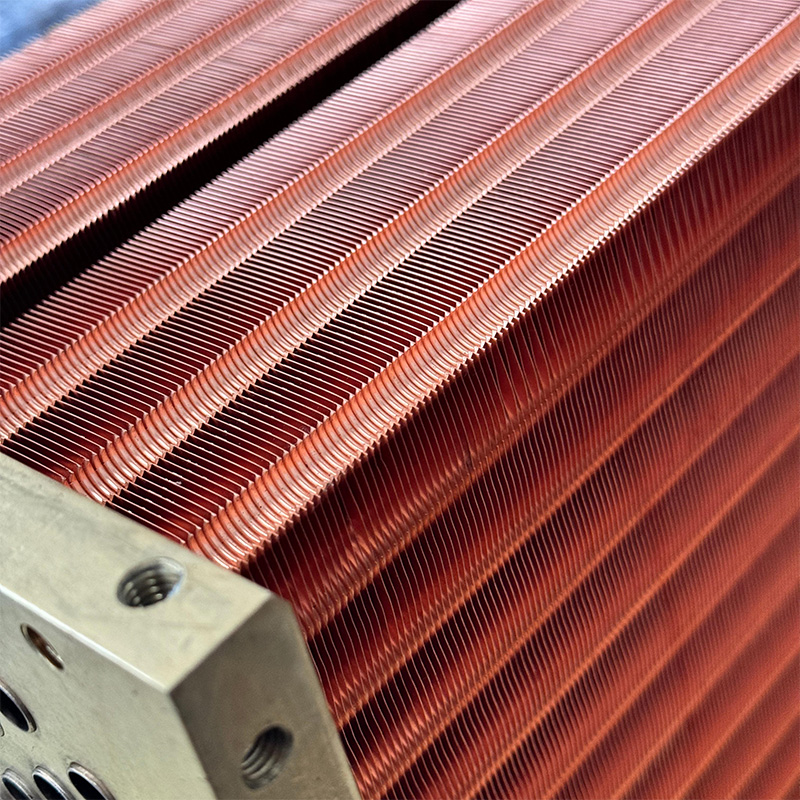
It is the choice of the right materials that becomes the decisive factor in durability. For example, a companyWuxi Kaisheng Electric Power and Petrochemical Equipment Co., Ltd.specializes in creating durable heat transfer solutions using not only standard stainless steels, but also titanium alloys, C46400 marine brass, copper-nickel compositions and N06625 type nickel alloys. This approach, supported by certification to strict international standards ASME and PED, makes it possible to create waste heat boilers that can withstand aggressive environments and high pressures for decades, which is especially important for the oil refining and chemical industries, as well as for energy-saving projects of any complexity.
The temperature regime also dictates the choice of design. The dew point for natural gas combustion products is around 55–60°C. If the temperature of the heat exchanger wall drops below this value, intensive formation of condensate with dissolved acids begins. Modern waste heat boilers for gas turbine units must have a bypass system or preheating of the feed water to prevent operation in a corrosive mode during startup and reaching the nominal value.
Do not forget to check the documentation’s compliance with the requirements of GOST R 53683-2009 “Stationary steam boilers” or international standards ASME Section VIII. The absence of an EAC certificate of conformity (TR CU 032/2013) makes it impossible to legally operate the equipment on the territory of the Russian Federation and the countries of the Customs Union. This is not a formality, but a guarantee that the strength calculations are carried out correctly.
Recommendation:Request a hydraulic resistance calculation sheet for your specific GPU operating mode from the supplier before signing the contract.
Review of popular models and design solutions
There are three main types of structures on the Russian market, each of which has its own advantages and disadvantages depending on the task. Understanding these differences will help you avoid overpaying for unnecessary functionality or, conversely, losing energy.
Fire-tube boilers
This is the most common option for low and medium power GPUs (up to 5 MW). Gases pass inside pipes flushed with water. The main advantage is low sensitivity to contamination and ease of mechanical cleaning. However, they have a significant drawback: a large amount of water in the volume of the apparatus creates high thermal inertia. With sudden load drops on the GPU, this can lead to water boiling and water hammer.
Typical models in this class have an efficiency in the range of 82–86%. They are ideal for heating or hot water systems where the heat consumption schedule is relatively stable. The price of such solutions is usually 30% lower than their water-pipe counterparts, which makes them attractive for budget projects. But if your goal is to produce high pressure steam for process needs, this option may not be suitable due to pressure limitations (usually up to 15 bar).
Water-tube boilers
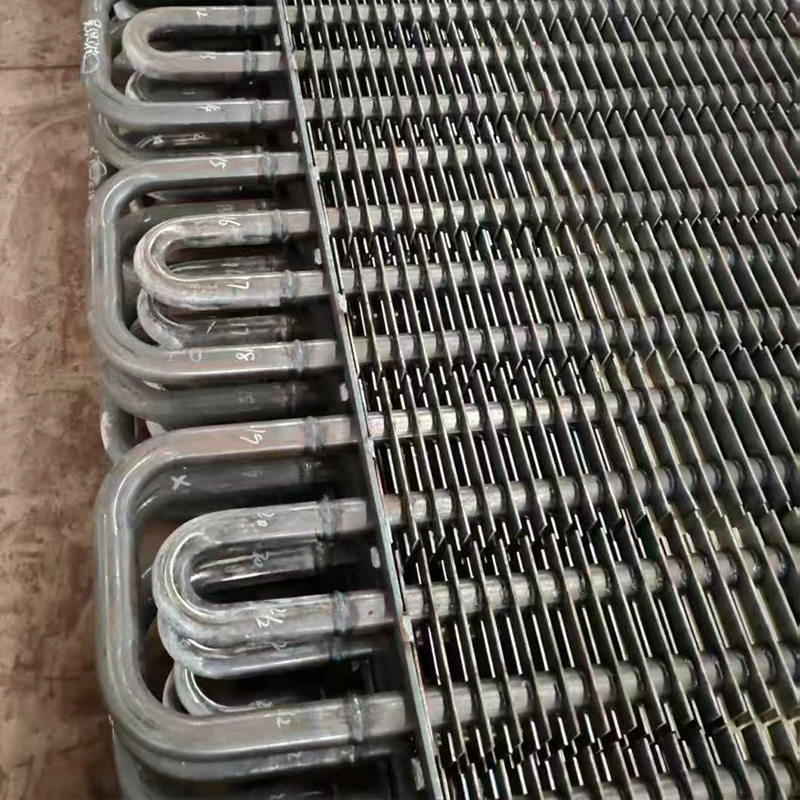
Here, water moves inside the pipes, and hot gases wash them outside. This scheme makes it possible to achieve an efficiency of up to 90–92% and operate at pressures of up to 40 bar and higher. Water-tube waste heat boilers for high-power gas turbine units (from 10 MW) are the de facto standard in the industrial energy sector. They have a low water capacity, which ensures quick start-up and high maneuverability.
However, the design is more complex and expensive to manufacture. Sensitivity to the quality of feed water is extremely high: deep chemical preparation (softening, deaeration) is required, otherwise scale will quickly damage the pipes. In our practice, there was a case when a client saved on a water treatment system, and after 9 months of operation the entire bundle of pipes had to be replaced due to local overheating and fistulas.
Combined schemes with economizer
To maximize efficiency, modern designs often include an additional circuit called an economizer. It is installed after the main drum and uses the residual heat of the flue gases (at a temperature of 150–200°C) to heat the feed water. This makes it possible to reduce the flue gas temperature to 110–120°C and increase the overall efficiency of the installation to 94–95%.
An important nuance: installing an economizer requires careful monitoring of the dew point. If the temperature of the heating return line is too low, acid condensation will begin in the economizer, destroying it first. Manufacturers solve this problem in different ways: some install bypass lines, others use special anti-corrosion coatings made of glass or Teflon. When choosing such a model, be sure to check the minimum permissible return water temperature.
Recommendation:For GPUs with a power of more than 5 MW, choose a water-tube scheme with an economizer, but only if qualified personnel are available to control the chemical regime.
Analysis of prices and hidden costs during procurement
When you request a quote for HRSGs, the total amount on the specification sheet is often misleading. The turnkey price may differ from the base cost of the equipment by 2–2.5 times. Let's look at what the actual costs are so that you can adequately compare offers from different suppliers.
The base cost of the boiler itself is approximately 40–50% of the total project budget. This includes the housing, heat transfer surfaces, safety fittings and first-level automation. The price range here depends on the brand and country of origin. Chinese analogues can be 25–30% cheaper than European ones, but the difference is often offset by the cost of delivery, customs duties and the risk of non-compliance with the declared characteristics.
Transportation and rigging is an expense that many people neglect during the planning stage. Waste heat boilers for powerful gas turbine units are large-sized loads weighing from 10 to 50 tons. Delivery of oversized goods across Russia requires special permits, escort and sometimes the dismantling of road signs. Logistics can “eat up” another 15–20% of the budget. In addition, consider the cost of unloading and moving the equipment to the boiler room: if the building openings do not allow the boiler to be brought in assembled, modular assembly will be required on site, which will increase the cost of installation by 30–40%.
Commissioning and installation supervision is a mandatory stage that cannot be performed by unqualified electricians or plumbers. Setting up automatic safety systems, linking the operation of the boiler with the GPU control system, conducting hydraulic tests - all this requires the presence of engineers from the manufacturer or certified partners. The cost of these works is usually fixed at 10–15% of the price of the equipment, but it is absolutely impossible to save money here. Errors during setup lead to false alarms or, worse, accidents.
Spare parts and service. In the first year of operation, costs are minimal, but starting from the second year, it is necessary to budget for replacement of seals, cleaning of heat exchangers and verification of instrumentation. Having a supplier stock parts in your area reduces downtime from weeks to days. The lack of such support turns any minor breakdown into a month-long production stoppage.
| Expense item | Budget share (%) | Expert commentary |
|---|---|---|
| Equipment (boiler + automation) | 45–50% | The main competition is here, but beware of “too good to be true” prices. |
| Delivery and logistics | 15–20% | Depends on the distance of the object and the dimensions of the cargo. |
| Installation and supervision | 15–20% | Includes welding, insulation, strapping. |
| Commissioning and commissioning | 10–15% | Critical to warranty. |
| Project documentation and examination | 5–10% | Required for registration with Rostechnadzor. |
Recommendation:Request a detailed turnkey estimate from the supplier, including logistics to site and installation supervision costs, to avoid surprises during the implementation process.
Comparison of domestic and imported solutions
In the current economic realities, the question of choosing between a Russian manufacturer and a foreign brand is especially acute. Each option has its strengths, and the right choice depends on your site's specific requirements and service availability.
Russian factories have made a huge leap in product quality over the past 5 years. Leading enterprises have mastered the production of waste heat boilers that fully correspond to world analogues in terms of efficiency and reliability. The main advantage is adaptation to local conditions. Our designers better understand problems with water quality in regions, voltage drops in networks and harsh climates. In addition, delivery times for domestic equipment are 2–4 months, while imports can take 6–9 months due to logistics chains.
Service support from Russian manufacturers also benefits in terms of response speed. An engineer can arrive on site within 24–48 hours; spare parts are always available in the central warehouse. The language of the documentation and interface of the automated process control system is Russian, which eliminates translation errors and misunderstandings on the part of operating personnel. In terms of price, Russian boilers often turn out to be competitive without taking into account customs risks.
European and Asian brands are traditionally strong in the segment of high-tech solutions for complex industrial processes. If your plant requires a unique configuration, operation on exotic fuels, or integration into a complex digital plant ecosystem, imported equipment can offer more advanced control algorithms. However, the cost of owning such systems is rising due to the high cost of original spare parts and the need to attract specialized specialists for maintenance.
One of our clients was faced with a situation where a European boiler stood idle for 3 weeks waiting for a control board, which had to be transported on a special flight. At the same time, a neighboring plant with Russian equipment solved a similar problem by replacing the module in 2 days. This is a clear example of how service availability outweighs technological superiority in real-life conditions.
Recommendation:For typical tasks of cogeneration and heat recovery from gas turbine units, give priority to trusted Russian manufacturers with their own service center in your federal district.
Frequently Asked Questions
What is the service life of a waste heat boiler for a gas turbine unit?
With proper operation and timely maintenance, the service life of a modern waste heat boiler is at least 15–20 years. The key factor is the quality of feed water and compliance with temperature conditions. If you ignore chemical preparation and allow work with acidic condensate, the service life may be reduced to 5–7 years. Regular cleaning of heat transfer surfaces from soot and scale also extends the life of the equipment.
Is it necessary to register a boiler with Rostechnadzor?
Yes, most waste heat boilers operating under pressure above 0.07 MPa and having a water volume of more than 30 liters are subject to mandatory registration with Rostechnadzor. The exception is some low power models, which are classified as pressure vessels but are not boilers in the full sense. The exact status of your equipment will be determined by the project of an organization with a SRO license. Operation of unregistered equipment entails large fines and suspension of activities.
Is it possible to use a waste heat boiler in summer when there is no need for heat?
Operation of the gas turbine unit in summer without extracting heat from the waste heat boiler is possible only if there is an air cooling system for the exhaust gases (bypass with a silencer-cooler) or the possibility of discharging heat into a cooling tower. You cannot simply turn off the water circulation through the boiler - this will lead to overheating and damage to the heat exchanger. Some modern systems allow you to switch the gas flow past the boiler, but this reduces the overall efficiency of the station. The optimal solution is to use absorption refrigeration machines to convert excess heat into cold for air conditioning systems.
How often should the heat exchanger be cleaned?
The frequency of cleaning depends on the quality of the fuel and the operating mode of the gas turbine unit. When operating on main natural gas, preventive inspection and, if necessary, cleaning are carried out once a year during scheduled engine maintenance. If biogas or associated petroleum gas with a high content of impurities is used, the interval is reduced to 3–6 months. Monitoring the pressure drop along the gas path serves as the main indicator of contamination: an increase in resistance signals the need for unscheduled cleaning.
Implementation stages and common mistakes
The successful launch of a heat recovery system requires strict adherence to regulations. Violation of the sequence of actions at any stage can lead to serious problems in the future. Below is the algorithm that we use in our projects.
- Pre-project survey and data collection.At this stage, it is necessary to measure the real operating parameters of the GPU: temperature and exhaust gas flow rate at different loads, exhaust composition, available space for equipment placement.Common mistake:use of engine nameplate data instead of measurements on an operating installation. Real parameters often differ from the factory ones by 10–15%, which leads to incorrect calculation of the heating surface.
- Development of technical specifications and design.Engineers prepare a piping diagram, select pumping equipment, calculate hydraulics and select materials. The project must undergo an industrial safety assessment.Important:provide convenient hatches and platforms for servicing boiler tubes. Lack of access for cleaning will make maintenance a nightmare.
- Manufacturing and factory testing.Production of body and internal elements, welding, non-destructive testing of seams. Hydraulic tests with pressure exceeding the working pressure by 1.25–1.5 times are required. It is advisable for the customer to attend the final tests or request a video report.
- Delivery and installation on site.Installation of the foundation, installation of the boiler, connection of pipelines, electrical installation and installation of instrumentation.Common mistake:poor-quality thermal insulation of external surfaces. Heat loss through a bare body can reach 3–5%, which reduces the efficiency of the entire system.
- Commissioning and comprehensive testing.Setting up automation, checking all protections, bringing to nominal operating mode in conjunction with the GPU. Signing the commissioning certificate. Only after this the equipment is considered accepted.
Recommendation:Не начинайте монтаж до полной готовности фундамента и наличия всех необходимых коммуникаций (вода, электричество, канализация для продувок), чтобы избежать простоев монтажной бригады.
Conclusion and next steps
Инвестиции в котлы-утилизаторы для ГПУ — это стратегическое решение, повышающее энергоэффективность предприятия и снижающее себестоимость тепловой энергии. Правильный выбор модели, учет всех скрытых затрат и грамотное обслуживание гарантируют быструю окупаемость и стабильную работу на протяжении десятилетий. Не гонитесь за самой низкой ценой в таблице — считайте стоимость владения и надежность партнера.
Если вы готовы обсудить детали вашего проекта, получить предварительный расчет эффективности или уточнить технические нюансы под вашу конкретную ГПУ, наша команда инженеров готова провести бесплатный аудит вашей ситуации. Мы сотрудничаем с ведущими производителями, такими как ООО «Уси Кайшэн», чтобы предлагать клиентам индивидуальные решения высочайшего качества, адаптированные под самые жесткие условия эксплуатации. Мы поможем подобрать оптимальное решение, которое будет работать надежно и выгодно именно в ваших условиях.
Contact us todayдля получения персонального технико-коммерческого предложения и консультации ведущего специалиста по когенерации.