
Stainless steel shell-and-tube heat exchangers: prices from the manufacturer
2026-07-03
- Stainless steel shell-and-tube heat exchangers: prices from the manufacturer and real cost of ownership
- Price formation factors: from steel grade to design complexity
- Production capabilities and specialization of Wuxi Kaisheng LLC
- Technical parameters determining performance and price
- Production cycle and quality control: why timing matters
- Logistics, warranty and after-sales service
- Frequently Asked Questions
- Заключение: инвестиция в надежность технологического процесса
Stainless steel shell-and-tube heat exchangers: prices from the manufacturer and real cost of ownership
Direct purchase from the manufacturer reduces the price byshell-and-tube heat exchangers, stainless steelby 15–25% compared to offers from resellers, but only if the technical parameters are correctly selected. In our practice of working with industrial facilities in Russia and the CIS, we have observed cases where savings at the purchase stage turned into a threefold overrun of the budget due to corrosion of the pipe bundle or the inability of the device to withstand operating pressure. This article was written by process engineers with 15 years of experience in the production of heat exchange equipment. We will not use marketing clichés, but will analyze the real pricing structure, the impact of steel grade on durability and hidden risks that catalogs are silent about.
The market is saturated with offers where the word “stainless” is used as a universal shield against any problems. However, AISI 304 steel behaves completely differently in chloride environments than AISI 316L or titanium alloys. If you are looking for a reliable solution for chemical processing, food processing or energy systems, you need to understand the difference between data sheets and real-world operation. Below we will take a closer look at how the final estimate is generated, which certificates (GOST, EAC, ASME) are really important for customs clearance and safe operation, and why a 4-week turnaround time is often better than “in stock.”
Price formation factors: from steel grade to design complexity
The cost of a heat exchanger is never a fixed figure in the price list when it comes to an individual engineering solution. The price consists of the cost of raw materials (metal intensity), labor costs for welding and quality control, as well as logistics costs. The main cost driver is the choice of material. Stainless steel AISI 304 (analogue 08Х18Н10) remains the most popular option for food production and heating systems with treated water. It provides good corrosion resistance at moderate temperatures up to 200°C. However, if your process fluid contains even traces of chlorides or acids, using this grade would be a mistake. In one of our projects, the client insisted on using AISI 304 for brine cooling, which led to through corrosion of the pipes after 8 months of operation. Replacing the beam and simple line cost the company 4 times more than the initial material savings.
For aggressive environments, we recommend switching to AISI 316L steel (03Х17Н14М2) or duplex steels. The difference in the price of raw materials between 304 and 316 can reach 30–40%, but this is insurance against emergency stops. In addition to the material, the price is affected by the type of connection between the pipes and the grille. Flaring is a cheaper method suitable for clean, vibration-free environments. Welding pipes with grids (strength weld) significantly increases the cost of the process due to the need for X-ray inspection of each joint, but this is the only correct solution for high pressure and toxic environments. It is also worth considering the presence of thermal expansion compensators. The lens compensation device adds about 15% to the cost of the device, but prevents destruction of the housing during sudden changes in coolant temperatures.
Certification is also included in the final price. Equipment supplied to the market of the Customs Union must have a declaration TR CU 032/2013 “On the safety of equipment operating under excess pressure.” Obtaining this document requires strength calculations, hydraulic pressure tests and production audits. Some dumping suppliers offer equipment without a full package of documents, which creates legal risks for the buyer during inspections by Rostekhnadzor. Our prices include a full package of accompanying documentation, quality certificates for metal and certificates of conformity. When requesting a quote, always check to see if the price includes ocean shipping packaging and cargo insurance, as these costs may unexpectedly increase by 10%.
Comparative analysis of materials and their impact on the budget
| Comparison parameter | AISI 304 (08Х18Н10) | AISI 316L (03Х17Н14М2) | Titan VT1-0 |
|---|---|---|---|
| Main Application | Food industry, heating, clean water | Chemistry, pharmaceuticals, sea water, weak acids | Aggressive oxidizing agents, chlorine, high salt concentrations |
| Chloride resistance | Low (risk of pitting corrosion) | Medium (up to 2000 ppm at moderate temperatures) | Absolute |
| Relative metal value | Basic (1.0x) | +35% to base | +300% to base |
| Welding difficulty | Standard (TIG/MIG) | Requires argon welding area protection | High, requires a special chamber or purging |
| Recommended service life | 7–10 years (in neutral environments) | 15–20 years | 25+ years |
The choice of material should be based not on the current price of the metal, but on the projected service life of the equipment under specific conditions. We conduct a free audit of the technical problem before calculating the cost in order to eliminate the risk of overpaying for redundant characteristics or, conversely, purchasing illiquid goods. Contact our technical department to analyze your operating environment before approving the specification.
Production capabilities and specialization of Wuxi Kaisheng LLC
A deep understanding of the impact of materials on equipment reliability is embedded in the DNA of our company.Wuxi Kaisheng Electric Power and Petrochemical Equipment Co., Ltd.specializes in the design and production of complex heat transfer equipment for the most demanding industries. Our expertise extends beyond standard stainless steel solutions to high-tech titanium, nickel alloys (such as N06625) and copper-nickel composites that are critical to the oil refining, chemical and seawater desalination industries.
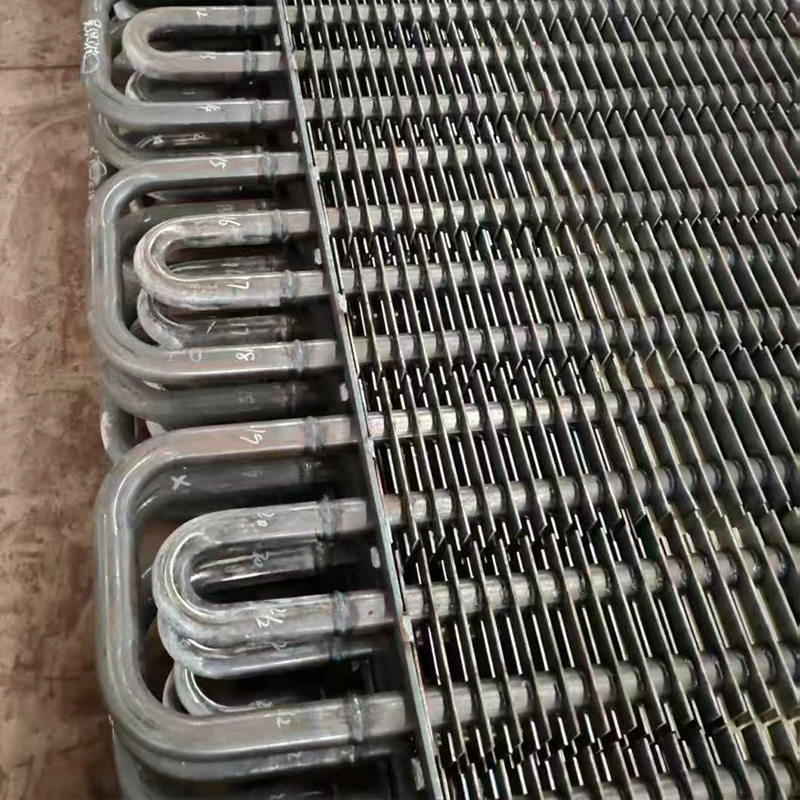
Unlike universal factories, we have unique expertise in creating devices that operate in extreme conditions. Our products include titanium shell-and-tube heat exchangers, high-pressure units certified to ASME and PED standards, and units with 316 steel corrugated tube bundles for improved heat transfer efficiency. We manufacture our own key components - tube sheets from 321 steel, C46400 brass and C70600 alloys - allowing us to tightly control quality at every stage, from metal melting to final assembly. Using carbon steels, alloy steels and specialty alloys, our equipment exhibits exceptional resistance to high pressure, temperature and corrosion, ensuring stable operation in power generation and shipbuilding facilities around the world.
Technical parameters determining performance and price
When requesting a quote forshell-and-tube heat exchangers, stainless steelMost customers only focus on heat exchange surface area (m²). This is a big mistake. Area is just one of many parameters that affect hydraulics and efficiency. The key factor is the flow pattern. Single-pass devices are easier to manufacture and cheaper, but have a low flow rate, which leads to rapid contamination and a decrease in heat transfer coefficient. Multi-pass schemes (2, 4, 6 passes through the pipe space) increase the speed of the coolant, intensify heat transfer and ensure self-cleaning of pipes from deposits. However, each increase in the number of strokes complicates the design of the distribution chambers and increases the manufacturing cost by 10–15%.
The diameter of the pipes and their pitch are also critically important. Small-diameter pipes (10–16 mm) allow compact placement of a large heat exchange area in a small casing volume, which reduces metal consumption and price. But such pipes are extremely sensitive to contamination and require ideal filtration of the coolant. For viscous media or liquids with mechanical impurities, we use pipes with a diameter of 20–25 mm. Although this increases the size of the device, it guarantees stable operation without frequent flushing. In our practice, there was a case when a client chose a compact device with 12 mm pipes for cooling syrup. After two weeks of operation, the device was completely clogged, and its disassembly took more time than installation. Switching to 20 mm pipes solved the problem, despite an 18% increase in the initial price.
Operating pressure and temperature dictate the requirements for the thickness of the housing walls and tube sheets. Standard devices are designed for pressures up to 1.6 MPa (16 bar). If your process requires pressure of 2.5 MPa or higher, the thickness of the metal increases non-linearly, which significantly affects weight and price. In addition, high pressure requires the use of more expensive non-destructive testing methods (ultrasonic testing, radiography) of all welds. Temperature conditions affect the choice of seals. A standard paronite gasket works up to 250°C, but food processing or high temperatures require a graphite-filled spiral wound gasket or fluoroplastic seals, which cost 3 to 5 times more. Clarifying these details at the design stage allows you to avoid situations where the finished device cannot be operated in the declared mode.
Data checklist for accurate cost calculation
- Thermal load:Required power in kW or Gcal/h.
- Characteristics of the heating medium:Type of substance, inlet and outlet temperature, flow rate (m³/h), operating pressure.
- Characteristics of the heated medium:Type of substance, inlet and outlet temperatures, flow rate, viscosity, presence of impurities.
- Allowable pressure loss:Maximum pressure drop across each circuit (often limited by pumping equipment).
- Material requirements:Contact parts (pipes, grilles) and non-contact parts (casing, covers).
- Installation conditions:Limitations on dimensions, spatial orientation (horizontal/vertical), type of connections (GOST/DIN/ANSI flanges).
Providing complete data allows our engineers to perform a thermal calculation within 24 hours and propose the optimal model, rather than simply billing for a standard product. Send the questionnaire to our manager to receive a reasonable technical and commercial proposal.
Production cycle and quality control: why timing matters
The production time of a stainless heat exchanger directly affects its reliability. Rapid production “in 3 days” usually means using off-the-shelf components of questionable quality or skipping inspection steps. Our standard production cycle is 15-25 business days for standard models and up to 45 days for unique designs. This time is necessary not only for mechanical processing, but also for carrying out mandatory tests. Each device undergoes hydraulic testing with a pressure exceeding the working pressure by 1.25–1.5 times. We use water with corrosion inhibitors or kerosene to test the tightness of pipe flares and welds. Skipping this step in order to speed up shipment is a direct path to leaks at the customer’s site.
Quality control begins with the incoming inspection of the metal. We require steel suppliers to provide 3.1 certificates to EN 10204, which indicate the chemical composition of each heat and the results of mechanical tests. In our laboratory, a spectral analysis of the incoming metal is carried out to confirm the grade. The use of uncertified metal is a common problem in the market, when analogues with a reduced molybdenum content are sold under the guise of AISI 316, which sharply reduces corrosion resistance. One of our clients encountered the fact that a heat exchanger purchased from a third-party supplier began to corrode after a month. The examination showed that the molybdenum content in the metal was two times lower than the norm. Such mistakes are costly, so we tightly control the supply chain of raw materials.
The assembly process involves precision installation of tube bundles. The quality of pipe flaring is checked by a selective method using a pneumatic test or visual inspection of the internal diameter of the pipe (if possible). Welded seams are subjected to 100% visual measurement inspection (VII), and critical seams are subjected to ultrasonic testing or radiography. All data is entered into the product quality certificate. Before shipment, the device is cleaned of oils and metal shavings, and the stainless steel is passivated to restore the protective oxide layer. Only after this is a protective coating applied to the outer surfaces (if required) and packaging is carried out. We use wooden lathing with moisture-proof film to prevent damage during transportation by rail or sea.
Logistics, warranty and after-sales service
The price from the manufacturer includes not only the cost of the equipment itself, but also the organization of its delivery to the site. For large heat exchangers, logistics can be a significant part of the budget. We work with proven transport companies with experience in transporting oversized cargo and pressurized equipment. When exporting to the CIS countries, we undertake the preparation of the export declaration and preparation of documents for customs clearance, including the HS code. The presence of an EAC certificate (Eurasian Compliance) is mandatory for the legal operation of equipment in Russia, Belarus, Kazakhstan and other countries of the union. Failure to comply with this marking may result in fines and a ban on operation by regulatory authorities.
Warranties are a marker of the manufacturer's confidence in its product. We provide a 12-24 month warranty depending on operating conditions and type of environment. The warranty covers defects in materials and workmanship discovered during this period. It is important to understand that the warranty does not cover damage caused by violation of operating rules (excessive pressure, temperature, use of incompatible media) or lack of regular maintenance. In our practice, there have been cases when clients tried to replace a heat exchanger under warranty that had failed due to water hammer in the system. To avoid controversial situations, we instruct customer personnel during commissioning or provide detailed video manuals for installation and operation.
After-sales service includes the supply of spare parts: sealing gaskets, fasteners, individual pipes for bundle repair. The design of our heat exchangers allows for inspection and replacement of the tube bundle without replacing the entire apparatus, which significantly reduces repair costs in the long term. We store drawings of all manufactured products in an archive, which allows us to quickly replace any part even 5–10 years after purchase. A long-term partnership with the manufacturer gives you confidence that your equipment will not turn into irreparable scrap at the first serious breakdown.
Frequently Asked Questions
What is the minimum order quantity and are there any stock items?
We work with both single orders and large series. The minimum batch is 1 piece, since each heat exchanger is assembled for a specific task. Stock items are only available for the most popular low power models with AISI 304 pipes and standard pressures up to 10 bar. The shipment time from the warehouse is 2–3 days. For individual projects, the production time is from 15 working days. An individual approach allows you to avoid overpaying for unnecessary features and ensure maximum energy efficiency of the system.
Can you manufacture heat exchanger according to customer's drawings?
Yes, we carry out production according to the customer's design documentation (CD). In this case, our engineers examine the drawings for manufacturability and compliance with GOST and PB standards. If errors are found in the project or components that cannot be manufactured with high quality, we offer optimized solutions. The cost of work according to customer drawings may be lower, since the stage of thermal calculation and design is eliminated, but it requires a thorough check of the compatibility of components.
What types of connections do you use and can they be changed?
Стандартно мы используем фланцевые соединения по ГОСТ 12815-80, что обеспечивает универсальность монтажа в российских условиях. По запросу возможно изготовление фланцев по стандартам DIN (Германия), ANSI (США) или JIS (Япония). Также доступна приварка патрубков «под трубу» для стационарных установок, где не планируется демонтаж. Выбор типа соединения влияет на удобство обслуживания: фланцы позволяют быстро снять крышку для чистки, тогда как приварные соединения более герметичны и дешевы, но усложняют ремонт.
Как происходит оплата и какие условия доставки?
Стандартные условия оплаты для новых клиентов: 50% предоплата для запуска в производство и 50% перед отгрузкой после предоставления фото/видео отчетов о готовности и испытаний. Для постоянных партнеров возможны индивидуальные условия отсрочки платежа. Доставка осуществляется до терминала транспортной компании в городе-производителе бесплатно. Дальнейшая перевозка оплачивается покупателем по тарифам ТК, либо мы организуем доставку «до двери» по предварительному расчету.
Заключение: инвестиция в надежность технологического процесса
Purchaseкожухотрубного теплообменника из нержавеющей стали— это не просто приобретение металлического изделия, а инвестиция в стабильность вашего производственного цикла. Попытка сэкономить на материале труб или толщине стенки корпуса часто приводит к авариям, стоимость ликвидации которых многократно превышает разницу в цене между бюджетным и качественным аппаратом. Работая напрямую с заводом-производителем, таким как ООО «Уси Кайшэн», вы получаете прозрачное ценообразование, доступ к передовым материалам (титан, спецсплавы) и полный контроль над качеством на каждом этапе.
Мы готовы предложить вам не просто «железо», а комплексное инжене рное решение, которое прослужит десятилетия. Наши специалисты помогут подобрать оптимальную конфигурацию, рассчитать реальную экономию от внедрения эффективного теплообмена и оформить всю необходимую разрешительную документацию (ASME, PED, ГОСТ). Не рискуйте безопасностью и прибылью своего бизнеса ради сиюминутной выгоды. Доверьте теплообменное оборудование профессионалам с подтвержденной репутацией в нефтегазовой и энергетической отраслях.
Contact us today, чтобы получить бесплатный предварительный расчет и консультацию инженера. Отправьте ваши технические требования через форму обратной связи или позвоните нам. Мы также приглашаем вас ознакомиться с нашим полным каталогом промышленного оборудования:промышленное оборудование от производителя.