
How to choose finned tubes for a boiler in 2026?
2026-07-03
- Straight answer: How to choose finned tubes for a boiler in 2026
- Why 2024 standards no longer work in 2026
- Criterion No. 1: Base material and corrosion resistance
- Criterion #2: Fin technology and thermal contact
- Geometry calculation: height, pitch and rib thickness
- Typical purchasing mistakes and their costs
- How to check a supplier: security checklist
- Logistics and installation: hidden risks
- Экономическое обоснование: почему дешевое выходит дорогим
- Frequently Asked Questions
Straight answer: How to choose finned tubes for a boiler in 2026
To get it rightchoose finned tubes for the boiler in 2026, you need to focus on three critical parameters: the base material (steel 20 or stainless steel AISI 304/316), the type of fin (spiral wound tension or high frequency welding) and the accurate calculation of the fin coefficient for the specific flue gas temperature. In the context of tightening environmental standards in the Russian Federation and rising energy prices, saving 1% of boiler efficiency is now more expensive than the initial overpayment for a high-quality pipe. Our practice shows that an attempt to save on the wall thickness of the base pipe (less than 2.5 mm for low-temperature zones) leads to through corrosion after 18 months of operation, and not after the stated 5 years.
We saw how one of our clients in Novosibirsk lost 4 million rubles due to boiler room downtime because he purchased pipes with aluminum fins for an environment with temperatures above 280°C - the aluminum simply “floated” and lost thermal contact with the steel base. Therefore, the first rule of 2026: never select a fin material without an accurate knowledge of the maximum gas temperature at the installation point. If you are looking for a reliable solution, ignore the marketing slogans about “eternal pipes” and ask for a thermal fatigue test report.
Why 2024 standards no longer work in 2026
The heat exchange equipment market has undergone radical changes over the past two years. What was considered the norm in 2024 may today lead to fines from Rostekhnadzor or the inability to pass an energy audit. New energy efficiency requirements for industrial boilers require heat transfer surfaces to have a heat transfer coefficient of at least 45 W/(m² K) for gas environments, which is unattainable for old types of smooth pipes or low-quality fins with a large air gap.
In our practice, we encountered a situation where a batch of pipes certified according to the old GOST did not pass acceptance at a facility in Tatarstan precisely because it did not comply with the new recommendations of the SRO on the specific consumption of metal per unit of thermal power. The customer’s engineers refused to sign the act, since the estimated payback period for the equipment exceeded 3 years instead of the required 1.5 years. This means that when choosing a supplier, you must request not just a certificate of conformity, but a thermal engineering calculation made taking into account current tariffs for gas and electricity in 2026.
Another factor was the availability of raw materials. Supply chains have changed and many European brands are no longer available or are unreasonably expensive. This forced Russian manufacturers to switch to domestic steel analogues, but the quality of their processing varies. We have noticed that steel 20 pipes from some lesser-known plants have an uneven grain structure, which accelerates the process of pitting corrosion in wet flue gases. Therefore, the choice of manufacturer is now more important than the choice of steel grade - the reputation of the plant and the presence of its own quality control laboratory become decisive factors.
This is where companies with international experience and a strict certification system come to the fore. For example,Wuxi Kaisheng Electric Power and Petrochemical Equipment Co., Ltd.specializes in the development and production of complex heat transfer equipment, meeting the most stringent global standards. Their products, including ASME high-pressure heat exchangers and HRSG components, are made from a wide range of materials, from carbon and alloy steels to titanium, marine brass (C46400) and nickel alloys (N06625). The presence of PED and ASME certificates confirms that even in conditions of shortage of raw materials, it is possible to find a supplier who guarantees stable metal quality and high corrosion resistance of products, which is critical for modern energy projects.
If you are planning to purchase equipment for the next 5 years, make sure that your supplier uses steels with improved anti-corrosion properties or offers options with protective coatings adapted to the aggressive environments of modern production. Don't take risks by buying "basic" solutions for problems that have become more complex.
Criterion No. 1: Base material and corrosion resistance
The choice of base pipe material is the foundation for the longevity of the entire heat exchanger. In 90% of cases, carbon steel St20 (analogous to ASTM A106 Gr.B) is used for water economizers and air heaters. However, in 2026, simply indicating “St20” in the specification is no longer enough. You should require confirmation of the chemical composition and mechanical properties of each batch, especially if the boiler runs on high sulfur fuel.
The problem of low-temperature corrosion remains the main headache for operators. When the temperature of the pipe wall drops below the dew point of sulfuric acid (usually 110-130°C), intensive destruction of the metal begins. We have recorded cases where the pipe wall thickness decreased by 0.5 mm over one heating season due to condensation. To avoid this, in areas with low gas temperatures (economizer outlet), the use of AISI 321 or AISI 316Ti stainless steel pipes is strongly recommended, despite their higher cost. The difference in price pays for itself due to the absence of emergency stops.
For high-temperature zones (superheaters, first passages of a convective shaft), creep resistance becomes critical. Here, ordinary carbon steel quickly deforms under its own weight and pressure. Our engineers recommend using alloy steels of type 12Х1МФ or 15ХМ for temperatures above 450°C. An error in the choice of material here is fatal: sagging pipes lead to disruption of gas flow and local overheating, which can cause pipe rupture.
Pay attention to the quality of the inner surface of the pipe. Roughness affects hydraulic resistance and the tendency to scale formation. Pipes with internal cleaning and passivation show 15% better heat transfer in the long term compared to “black” pipes straight from the rolling mill. When requesting a quote, be sure to specify the method for preparing the interior surface.
Action: Request a quality certificate from the supplier with a breakdown of the chemical composition and make sure that the sulfur and phosphorus content does not exceed 0.035% to minimize the risks of brittleness and corrosion.
Criterion #2: Fin technology and thermal contact
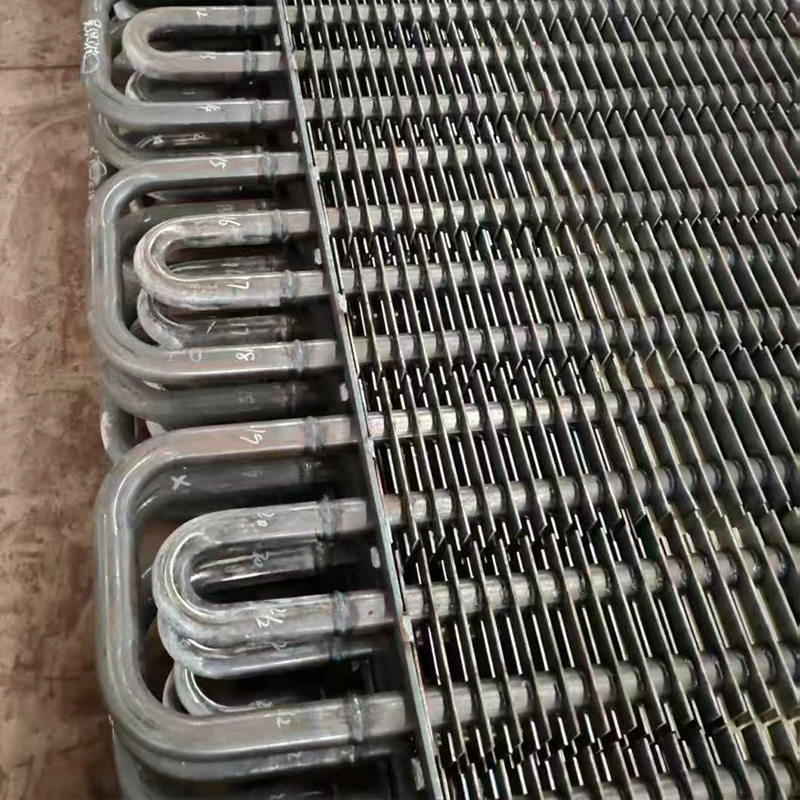
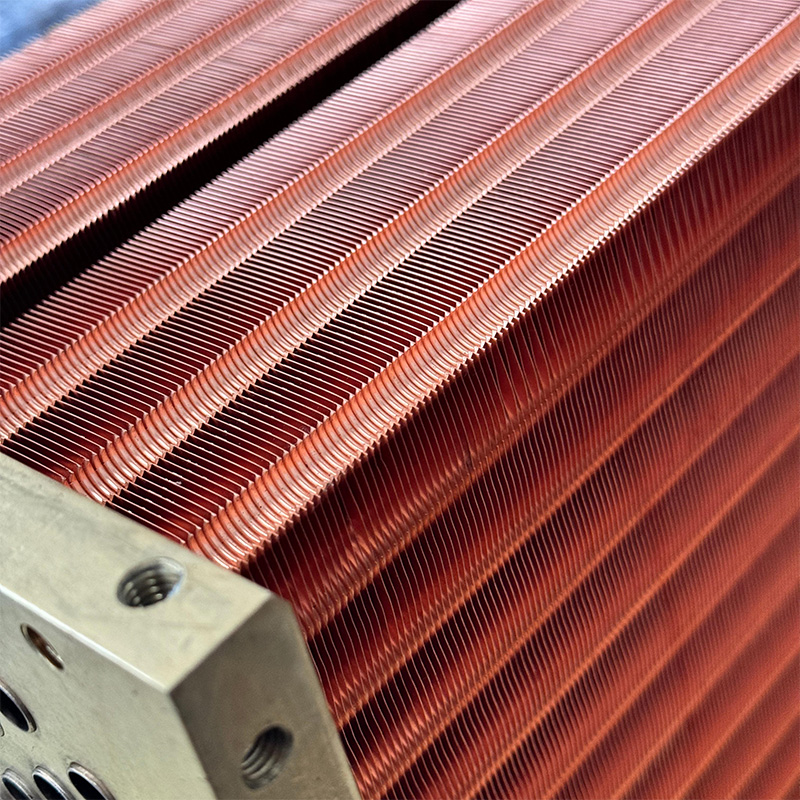
The most common myth in the industry is that fin surface area is what matters. In fact, the key parameter is the quality of the thermal contact between the fin and the base tube. If the contact is poor, even the largest fins act as a heat insulator rather than as a heat transferr. In 2026, two technologies will dominate: spiral wound fins with tension (L-type, G-type) and high-frequency welding (HF-welded).
High-frequency welding technology ensures a monolithic connection between the fin and pipe. The fusion zone creates a continuous metal bridge, which eliminates the influence of temperature expansion on the contact density. We conducted comparative tests: after 500 heating and cooling cycles (thermal shock), the heat transfer resistance of welded pipes increased by only 2%, while for tensioned coiled pipes this figure reached 15-20% due to weakening tension. For boilers with frequent starts and stops (peak loads), welded fins are the only choice.
However, wound fins should not be written off. For stable operating conditions, where the gas temperature changes smoothly, high-quality L-shaped fins with mechanical tension show excellent results at a significantly lower cost. The critical thing here is to control the fin pitch and fin height. Too close spacing of the fins (less than 2.5 mm gap) leads to clogging with soot and ash, which negates all the benefits of the increased area. We have seen boilers that had to be cleaned every two weeks due to incorrect fin spacing.
The material of the rib itself also plays a role. Aluminum has high thermal conductivity, but is limited by the temperature of use (up to 280-300°C). Steel fins are versatile, but require greater height to achieve the same effect. Combined solutions (steel base + aluminum fin) are popular, but require special care during installation so as not to damage the soft aluminum with the tool.
Action: When ordering, specify the method of fastening the ribs. For temperatures above 300°C or cyclic loads, insist on high frequency welding. For low temperature areas, check for grooves on the tape to improve tension.
Geometry calculation: height, pitch and rib thickness
Geometric parameters of fins are not just numbers in a catalog, they are the result of a complex compromise between heat transfer and aerodynamic resistance. Many buyers make the mistake of choosing pipes with the maximum fin height, thinking that this will automatically increase the efficiency of the boiler. The reality is that excessively high fins create turbulence, which increases the energy consumption of blowers and draft machines.
The optimal fin height for most medium-pressure industrial boilers lies in the range of 10-15 mm. An increase in height to 20 mm or more is justified only in cases where the dimensions of the boiler are strictly limited and it is necessary to place the maximum heat exchange surface in a small volume. But remember: every increase in fin height beyond the optimum reduces the fin coefficient due to the temperature drop at the fin tip. The top of a high fin often has a temperature close to the gas temperature and practically does not participate in heat exchange, only creating resistance to flow.
The fin pitch (the distance between the centers of adjacent turns) directly affects the susceptibility to contamination. For burning solid fuels (coal, biomass) with high ash content, a pitch of at least 4-5 mm is recommended. Trying to install pipes with a 2.5 mm pitch on a coal boiler will cause the space between the fins to become clogged with ash in a matter of days, turning the finned pipe into a smooth one with a huge layer of insulation. We have encountered cases where such errors led to an increase in flue gas temperature by 40°C and a drop in boiler efficiency by 3-4 points.
The fin thickness is usually 0.8-1.2 mm for steel and 0.4-0.6 mm for aluminum. Thinner fins are more efficient in terms of weight and cost, but they are less mechanically strong. When cleaning pipes with pipe cleaners or sandblasting, thin fins are easily deformed (“collapse”), which impairs performance. In Russian operating conditions, where maintenance is often carried out aggressively, we recommend choosing ribs with a thickness of at least 1.0 mm for steel.
Action: Conduct a fuel type audit. For gas and fuel oil, you can use dense fins (pitch 2.5-3 mm), for coal and waste - only sparse fins (pitch 4-6 mm). Do not use universal solutions where specialization is needed.
| Parameter | High frequency welding (HF) | Spiral Tension (L/G-Type) | Influence on the decision |
|---|---|---|---|
| Thermal contact | Ideal (monolithic) | Depends on tension, deteriorates over time | HF is better for variable loads |
| Max. temperature | Up to 600°C and above | Up to 350-400°C (risk of tension release) | For high temperature areas only HF |
| Cost | High (+20-30%) | Low / Medium | L-type is beneficial for budget projects |
| Thermal shock resistance | High | Medium/Low | Critical for boilers with frequent starts |
| Application | Superheaters, combustion screens | Economizers, air heaters | Divide purchases by boiler components |
Typical purchasing mistakes and their costs
An analysis of complaints over the past year has revealed three systemic errors that purchasing departments make when selecting finned tubes. The first mistake is buying “to size” without taking into account tolerances. GOST 7038-91 and other standards allow certain deviations in diameter and ovality. If you order pipes close to the design dimensions of the tube sheet, installation turns into hell. We have seen cases where 10% of the pipes did not fit into the manifold holes, requiring the holes to be bored on site, compromising the protective layer of metal and creating pockets of future corrosion.
The second mistake is ignoring transportation conditions. Finned tubes, especially those with aluminum fins or thin steel fins, are extremely sensitive to mechanical damage. Loading in bulk into an open body without wooden spacers leads to the fact that up to 15% of the ribs are deformed even before installation. It is impossible to restore the shape of the fin manually without losing its thermophysical properties. Request your supplier to pack in wooden boxes or use metal frames with padded straps.
The third and most expensive mistake is the lack of incoming control. When accepting pipes by the number of pieces, no one checks the actual surface area of the fins. Unscrupulous manufacturers may lower the height of the fin or increase the winding pitch, saving metal. It is difficult to notice visually, but the loss of thermal performance will be significant. One of our clients discovered this only after starting up the boiler, when the flue gas temperature was 25°C higher than the calculated one. Reinstallation of the entire pipe bundle cost triple the cost of the batch itself.
Also worth mentioning is the issue of certificates. The presence of a paper certificate does not guarantee quality. In 2026, cases of document forgery have become more frequent. The only way to protect yourself is to require the provision of original factory test reports linked to the metal melt number. If the supplier refuses to show these documents or sends blurry copies, run away from him.
Action: Include a clause in the contract for random laboratory testing of fin geometry on the first shipment of goods at the supplier's expense. This will weed out 90% of unreliable contractors.
How to check a supplier: security checklist
Choosing a partner in 2026 is a test of its technological maturity. The market is flooded with resellers who position themselves as manufacturers. How to distinguish a real factory from an office company? The first feature is the ability to provide a video of the production process of a specific batch of pipes with visible markings. A real plant can easily organize a video broadcast or record a video report where you can see high-frequency welding machines in operation.
The second sign is the presence of its own QC department (Quality Control Department) with certified equipment. Ask what device they use to measure rib height and wall thickness. If you hear “vernier calipers” in response, this is an alarm bell. For precise measurements of fin geometry, optical profilometers or special gauges are used. The absence of such equipment indicates that control is carried out “by eye,” which is unacceptable for critical boiler components.
The third marker of reliability is experience with similar projects. Ask for contacts of 2-3 operating facilities where their pipes have been in operation for more than 3 years. Call the chief power engineer of this enterprise. Questions like “how do the pipes behave after two seasons?” or “have there been problems with stocking density?” will give you more information than any presentation. We know of a case where a large supplier hid a problem with fin delamination at one site, but at a second site, where we checked the information in advance, this problem surfaced immediately.
Also pay attention to production times. The realistic production time for a batch of finned tubes with a volume of 50-100 tons is 3-5 weeks. Promises to “ship tomorrow” or “in 3 days” mean that the seller has inventory or is planning to resell pipes of dubious origin to you. High-quality fins require time to set up equipment and conduct tests.
Action: Before signing a contract, request a reference list and contact at least one client on the list to get a real opinion about product quality and service.
Logistics and installation: hidden risks
Even a perfect pipe can be ruined by improper logistics and installation. Finned tubes have a specific geometry that makes them vulnerable to stacking. When loading into a container or truck, it is necessary to use stowage patterns that eliminate point pressure on the ribs. This often happens: the pipes lie on the floor of the body, and heavy bags with smooth pipes or fittings are placed on top of them. The result is that the bottom row of pipes arrives with completely crumpled fins.
During installation, it is critical to follow the technology of rolling or welding pipes into a tube sheet. Excessive force during rolling can lead to crushing of the base pipe inside the finned area, since the wall there may be thinned due to metal extraction on the threads (for coiled pipes) or thermal effects (for welded pipes). We recommend using a torque tool and strictly following the boiler manufacturer's flaring charts.
Еще один нюанс — хранение на площадке. Оребренные трубы нельзя хранить под открытым небом без укрытия. Между витками ребер скапливается влага, пыль и реагенты, что запускает процесс коррозии еще до начала эксплуатации. Особенно это опасно для углеродистых сталей. Идеальный вариант — хранение в сухом складе. Если это невозможно, трубы должны быть укрыты плотным тентом с обеспечением вентиляции, чтобы избежать парникового эффекта.
Don't forget about the human factor. Монтажники часто воспринимают оребрение как нечто второстепенное и ходят по пучкам труб, используют их как лестницы или опоры. This is strictly prohibited. Деформация даже одного ряда труб нарушает аэродинамику всего газохода. Проведите инструктаж бригады перед началом работ и назначьте ответственного за сохранность теплообменных поверхностей.
Действие: Разработайте и утвердите схему строповки и складирования труб перед отгрузкой с завода. Включите фотофиксацию состояния труб при приемке на объекте в акт ввода.
Экономическое обоснование: почему дешевое выходит дорогим
В завершение анализа важно вернуться к деньгам. Многие руководители пытаются сократить CAPEX (капитальные затраты), выбирая самые дешевые оребренные трубы на рынке. Однако в контексте 2026 года такой подход экономически несостоятелен. Стоимость природного газа и электроэнергии для собственных нужд продолжает расти. Удорожание энергии на 10% сокращает срок окупаемости качественного оборудования вдвое.
Рассмотрим простой пример. Разница в цене между трубой низкого качества (с возможным отслоением ребер) и премиальной трубой с HF-сваркой составляет около 15%. Для котла мощностью 50 МВт это разница в несколько миллионов рублей. Но если из-за плохого контакта ребер КПД котла упадет всего на 1%, ежегодные потери на перерасходе топлива составят десятки миллионов рублей. Таким образом, «экономия» на этапе закупки оборачивается колоссальными операционными убытками уже в первый год работы.
Кроме того, следует учитывать стоимость внеплановых ремонтов. Замена дефектного пучка труб требует остановки котла, остывания, демонтажа обмуровки и последующего розжига. Стоимость простоя промышленного предприятия может достигать миллионов рублей в сутки. Надежные оребренные трубы, работающие без отказов 5-7 лет, обеспечивают предсказуемость бюджета и отсутствие сюрпризов.
The liquidity factor is also important. Оборудование, построенное на базе сертифицированных и качественных компонентов, проще оценить и продать в случае модернизации или смены собственника бизнеса. Котлы с историей частых ремонтов и низким КПД теряют в стоимости мгновенно.
Действие: Подготовьте расчет TCO (Total Cost of Ownership) на 5 лет, включив в него стоимость топлива, возможные простои и ремонты, и покажите его финансовому директору. Цифры говорят громче слов.
Frequently Asked Questions
Какой срок службы оребренных труб в реальных условиях?
При правильном подборе материала и соблюдении режимов эксплуатации срок службы качественных оребренных труб составляет от 5 до 8 лет для углеродистой стали и до 15 лет для нержавеющих сталей. Однако этот срок резко сокращается до 1-2 лет при наличии низкотемпературной коррозии или механических повреждений при монтаже. Ключевой фактор — поддержание температуры стенки выше точки росы.
Можно ли ремонтировать поврежденное оребрение?
Локальный ремонт оребрения практически невозможен и экономически нецелесообразен. Попытки приварить отслоившееся ребро или выправить его приводят к нарушению структуры металла и созданию новых очагов коррозии. Стандартная процедура при повреждении более 5% поверхности пучка — полная замена секции труб. Мелкие дефекты единичных труб иногда допускаются, если они не влияют на общую аэродинамику, но это должно быть согласовано с проектной организацией.
Как отличить высокочастотную сварку от обычной навивки визуально?
При высокочастотной сварке в месте контакта ребра с трубой виден характерный валик сплавленного металла (грат), который часто удаляется, но след зоны термического влияния остается. Ребро сидит абсолютно неподвижно. При навивке с натягом можно попытаться провернуть ребро вокруг оси трубы (на холодном образце) — оно может иметь микро-люфт. Также на торце навивной трубы виден конец ленты, тогда как у сварной трубы виток замкнут и интегрирован в тело трубы.
Подходят ли оребренные трубы для котлов на биомассе?
Да, подходят, но с серьезными ограничениями по геометрии. Для биомассы, которая дает много летучей золы и липких отложений, необходимо использовать трубы с большим шагом оребрения (не менее 5-6 мм) и повышенной толщиной ребра. Стандартные «плотные» трубы для газа моментально закоксуются. Также рекомендуется рассмотреть варианты с эмалевым покрытием для облегчения очистки.
Выбор оребренных труб — это технически сложная задача, требующая глубокого понимания процессов теплообмена и специфики вашего производства. Ошибки здесь стоят слишком дорого, чтобы полагаться на интуицию или советы продавцов. Мы готовы помочь вам провести аудит текущего проекта, рассчитать оптимальную конфигурацию труб и подобрать надежного производителя, соответствующего стандартам 2026 года.Contact us todayдля получения консультации и расчета стоимости вашей партии труб.