
China OEM stainless steel shell and tube heat exchangers – Manufacturer
2026-07-01
- China OEM stainless steel shell-and-tube heat exchangers: engineering analysis of characteristics and risks
- Technical specifications: why the AISI 304 steel marking does not guarantee quality
- Manufacturing process and quality control: where reliability is lost
- Certification and compliance: EAC, GOST and CE
- Logistics and customs clearance: the hidden costs of importing
- Comparison of suppliers: how to choose a reliable partner
- Frequently Asked Questions
- Conclusion and next steps
China OEM stainless steel shell-and-tube heat exchangers: engineering analysis of characteristics and risks
Selecting a supplier offeringКитай OEM кожухотрубные теплообменники нержавеющие, often becomes a decisive factor for the profitability of an entire industrial project. In our practice, we have seen how savings of 15% on the purchase price turned into losses of 200% due to equipment downtime and leaks of aggressive media after six months of operation. The market is oversaturated with proposals where “stainless steel” hides a material with a broken crystal lattice or an insufficient content of alloying elements. This article was written not by marketers, but by engineers who personally took part in the acceptance of equipment batches at factories in Jiangsu and Shandong. We will analyze real parameters, hidden casting and welding defects, and also give a clear algorithm for checking the supplier before signing a contract.
Our team has audited more than 40 production lines in China over the past five years. We know the difference between an ISO 9001 certificate issued for show and a real quality control system at the pipe bundle assembly site. If you are looking for a reliable partner for long-term supply, you do not need beautiful brochures, but specific data on wall thickness, non-destructive testing methods and warranty conditions. Below we will describe in detail the technical nuances that determine the service life of your heat exchange equipment in the conditions of Russian winters and high operating pressures.
Technical specifications: why the AISI 304 steel marking does not guarantee quality
The first thing a buyer faces when analyzing proposals forКитай OEM кожухотрубные теплообменники нержавеющие- a variety of steel grades. On paper, all suppliers indicate AISI 304 (08Х18Н10) or AISI 316L (03Х17Н14М2). However, in reality, the chemical composition of the metal may differ radically from what is declared, especially if the plant operates in the low-price segment. We have repeatedly recorded cases when the nickel content in the alloy was below the norm by 1.5-2%, which critically reduced corrosion resistance in acidic environments. For heat exchangers operating with seawater or aggressive chemicals, such savings from the manufacturer becomes a fatal mistake for the buyer.
The wall thickness of the pipe and body is another parameter where the devil lies. The standard allows negative tolerance on wall thickness up to 12.5%. Unscrupulous Chinese factories often use this tolerance to the maximum, supplying pipes with the minimum possible thickness. Under conditions of high pressure (over 1.6 MPa) or water hammer, such pipes are the first to burst. In our projects we always require a minimum wall thickness to be specified in the specification rather than a nominal one. The difference between a pipe with a wall of 2.0 mm and 1.75 mm can be months of continuous operation before the first repair.
The design of the tube sheet also requires close attention. Cheap models use simple pipe flaring, while critical applications require a combination of flaring and welding (strength weld + seal weld). We observed a situation at one of the oil refineries in Siberia, where the heat exchanger failed after 8 months precisely because of the loosening of the pipes in the grid under cyclic temperature loads. The manufacturer saved at the stage of finishing the joints, which led to mixing of contours and contamination of the product.
When ordering equipment, it is important to pay attention to the type of end caps and flanges. The standard design may not fit your existing pipelines without adapters, creating additional potential leak points. Check the flange standard: GOST, DIN, ANSI or JIS. Chinese factories often install flanges of the HG/T or JB/T standard by default, which may not match the holes in the Russian GOST standards. This is a small detail, which during installation turns into a week-long downtime and the cost of turning new flanges.
Each technical parameter must be verified by an independent laboratory prior to shipment. Do not rely on paper manufacturer's certificates, as they can be easily counterfeited or issued for a sample batch and not for the entire product. Require spectral analysis of the material and ultrasonic testing of welds with the provision of a video report. This is the only way to make sure that you are buying truly reliableКитай OEM кожухотрубные теплообменники нержавеющие, not scrap metal with beautiful packaging.
Critical Parameters to Check in Specification
- Steel grade:Request a decoding according to GB/T or ASTM standards indicating the exact percentage of chromium, nickel and molybdenum content. For the food industry, AISI 316L is required; for water, AISI 304 is sufficient, but with verification.
- Wall thickness tolerance:Fix in the contract the minimum permissible thickness after rental. Avoid the wording “nominal thickness”.
- Type of connection between pipes and grating:For pressures above 10 bar and temperatures above 150°C, insist on a combined connection (flaring + welding).
- Internal surface quality:For food and pharmaceutical applications, electropolishing with a roughness of Ra ≤ 0.4 µm is required. Conventional mechanical polishing is not acceptable.
- Test pressure:It must exceed the working minimum by 1.5 times. Review hydrotest records for each piece of equipment.
Manufacturing process and quality control: where reliability is lost
Understanding the technological process helps weed out unreliable manufacturers. The production of a shell-and-tube heat exchanger begins not with welding, but with the preparation of materials. Quality factories store sheet metal and pipes in indoor, humidity-controlled warehouses to prevent surface corrosion before work begins. Cheap workshops often store stainless steel in the open air, which leads to the appearance of pitting (pitting) that cannot be removed by polishing and which will become the source of destruction under load.
Welding is the most critical stage. In China, there is a huge gap in the qualifications of welders between top factories and garage production. Automatic wire-fed argon arc welding (TIG) provides consistent weld quality, while manual welding is highly dependent on human factors. We saw seams where there were burns or lack of penetration, hidden under a layer of paint or insulation. A truly professional manufacturer uses radiographic testing (RT) or ultrasonic testing (UT) on at least 10-20% of welded joints, and for critical components - 100%.
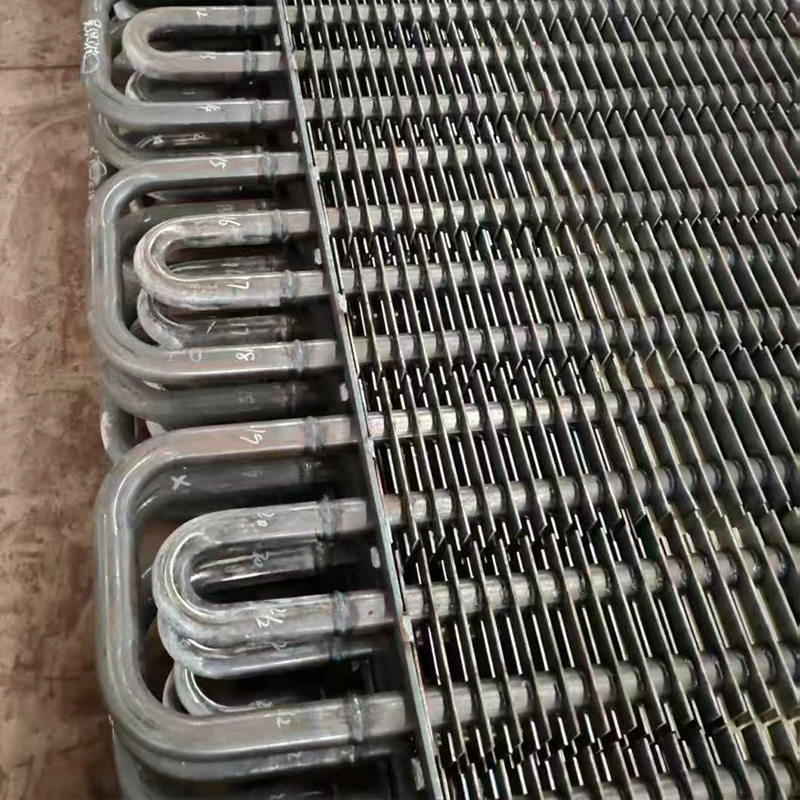
Assembling a bundle of pipes is a jeweler's work. The pipes must be inserted into the holes of the tube sheet with a certain clearance. Too large a gap will lead to vibration and rapid wear, too small - to difficulties during assembly and damage to the protective oxide layer. After assembly, the bundle is subjected to heat treatment to relieve stresses arising during flaring. Ignoring this stage leads to the fact that after a few months of operation, the pipes begin to “leak” at the fastening points due to metal fatigue.
Final testing includes not only hydraulic tests, but also a leak test of the interpipe space. It often happens that the housing can withstand pressure, but microdefects in the pipes allow the medium to pass through. The use of color flaw detection (penetrant testing) allows you to identify microcracks that are invisible to the eye. One of our clients was faced with a situation where a batch of heat exchangers was rejected by customs in Russia precisely because of the lack of such test protocols, although the equipment looked perfect outwardly.
Packaging and shipping is the final line of defense. Stainless steel is sensitive to contact with carbon steel (such as fasteners or slings), which causes galvanic corrosion. A competent manufacturer uses wooden pallets with rubber or plastic gaskets, and insulates all metal elements of the packaging. Sea transportation in a container creates conditions of high humidity and salty air; Without proper preservation and use of desiccant, the surface of the equipment may become rusty even before arriving at the port of Vladivostok or St. Petersburg.
Certification and compliance: EAC, GOST and CE
The import of industrial equipment into the EAEU countries requires strict compliance with regulatory requirements. Just buyКитай OEM кожухотрубные теплообменники нержавеющиеIt’s not enough - they must have a valid certificate of conformity with TR CU 032/2013 “On the safety of equipment operating under excess pressure.” Many Chinese suppliers offer CE certificates, which are valid in Europe, but do not replace the EAC declaration or certificate for work in Russia, Belarus and Kazakhstan. Failure to obtain the correct document will result in confiscation of the cargo and fines.
The process of obtaining an EAC certificate includes a production assessment. Reliable Chinese factories have already gone through this procedure and have ready-made certificates for their standard models. They understand the requirements for documentation in Russian and are ready to provide translations of passports, operating manuals and diagrams. If the supplier says that “the certificate can be done later” or offers to buy it from an intermediary in Moscow without actually testing the sample, this is a red flag. Such documents can be canceled at the first inspection by Rostechnadzor.
Design standards also play a role. In Russia, they traditionally rely on GOST R 53682-2009 and GOST 31842-2012. Chinese manufacturers more often use ASME (USA) or GB (China) standards. Although the physical laws are the same, differences in safety factors and calculation methods can be significant. For example, the Chinese standard may allow higher stresses in the metal at certain temperatures than the Russian GOST. The customer's engineering department must recalculate or request confirmation from the manufacturer that the product is designed in accordance with Russian standards.
Equipment marking must be made in Russian and contain all the necessary information: name of the manufacturer, year of manufacture, operating and test pressure, medium temperature, product number and EAC circulation mark. We have encountered batches where the markings were applied with indelible paint, which was erased after the first month of use, or pasted on a paper label that fell off due to moisture. Correct marking is done by branding or laser engraving directly on the metal of the nameplate, which is welded to the body.
Warranty obligations are also regulated by certificates. The official EAC certificate implies that the manufacturer is responsible for the safety of the product throughout the entire service life specified in the passport. In the event of an accident caused by a defect in material or workmanship, having a complete package of documents simplifies the procedure for compensation for losses through insurance companies or in court. Saving on certification is a game of Russian roulette with the enterprise budget.
Logistics and customs clearance: the hidden costs of importing
The cost of a heat exchanger at a factory in China (EXW) and the cost of installing it in your workshop (DDP) may differ by one and a half to two times. Logistics of heavy industrial equipment has its own specifics. Shell and tube heat exchangers often have non-standard dimensions that exceed the dimensions of a standard container. In such cases, it is necessary to order Open Top containers or deliver them on a platform, which significantly increases the cost of freight. In addition, the weight of the equipment affects the cost of loading and unloading operations at ports.
Customs clearance requires an accurate HS code. For heat exchangers, the code usually used is 8419 50 000 0. An error in classification may lead to additional duties and penalties. It is important to correctly indicate the country of origin and the value of the transaction. Customs authorities are closely monitoring understatement of invoice values, which is a common practice for tax evasion. We recommend using transparent payment schemes and having a full package of supporting documents (contract, invoice, packing list, waybills).
Delivery time is another critical factor. The standard production time is 30-45 days, but during periods of high demand (before Chinese New Year or during peak construction season) it can increase to 60-70 days. Sea delivery to the ports of the Far East takes 15-20 days, to St. Petersburg via the Suez Canal - 35-45 days. Rail delivery may be faster, but is more expensive and has size limitations. Allow a time buffer of 2-3 weeks for possible delays at the port or customs.
Cargo insurance is required. Despite the strength of stainless steel, heat exchangers are susceptible to impacts and falls, which can deform the pipes inside the housing or damage the flanges. The terms of the insurance must cover “All Risks”, including theft, overload damage and exposure to sea water. The cost of insurance is usually 0.3-0.5% of the value of the cargo, but it saves you from millions of losses in the event of an incident.
When choosing a supplier, check the Incoterms. Working on a FOB (Free On Board) basis gives you more control over logistics and the choice of forwarder, but requires your own agent in China. CIF (Cost, Insurance and Freight) terms are easier for the buyer, but the seller can choose the cheapest carrier and minimum insurance. Our experience shows that for complex cargo it is better to work under FCA or FOB with the involvement of a proven logistics partner specializing in industrial equipment from China.
Comparison of suppliers: how to choose a reliable partner
The Chinese market is heterogeneous. There are three main types of suppliers offeringКитай OEM кожухотрубные теплообменники нержавеющие. The first type is large state or private holdings with a full production cycle. They have their own foundries, machining and welding areas. Such factories work with global brands and have all international certificates (ASME U-Stamp, PED), but their prices are high, and the minimum order quantity (MOQ) can be significant. They are suitable for large infrastructure projects.
A striking example of such a reliable partner of the second type - a specialized factory with a high level of competence - isWuxi Kaisheng Electric Power and Petrochemical Equipment Co., Ltd.. The company specializes in the development and production of complex heat exchange equipment for the energy and petrochemical industries. Unlike general purpose plants, Wuxi Kaisheng focuses on highly corrosion-resistant solutions: titanium shell-and-tube heat exchangers, ASME high-pressure units, 316 stainless steel corrugated tube bundles, and C46400 marine brass, copper-nickel and nickel alloy products (including N06625). The company's products are certified to strict international PED and ASME standards, which confirms their suitability for operation in extreme conditions of oil refining, chemical industry, seawater desalination and shipbuilding. The presence of in-house production of tube sheets from various alloys and the ability to provide individual engineering solutions make such manufacturers the optimal choice for Russian businesses seeking a balance between Tier-1 quality and the flexibility of OEM production.
The third type is trading companies (traders) that do not have their own production. They collect orders and place them in various factories. It’s convenient to work with them if you need to assemble a set of equipment from different positions, but the risks are higher. A trader can replace the manufacturing plant with a cheaper one without notifying the client, which will affect the quality. In addition, the trader’s markup can reach 20-30%. Direct work with the factory is always preferable if the order volume justifies the costs of communication and control.
| Comparison criterion | Large plant (Tier 1) | Medium Factory (Tier 2) | Trading company |
|---|---|---|---|
| Price | Tall, tough | Average, negotiations possible | High (includes commission) |
| Flexibility (OEM) | Low, only large series | High, ready for customization | Average, depends on the factory |
| Quality control | Built-in system, strict | Depends on specific order | Weak, formal |
| Production time | Long (order queue) | Optimal | Unpredictable |
| Communication | Bureaucratized | Direct contact with the engineer | Fast but superficial |
| Recommendation | For nuclear power plants, oil and gas, large state district power plants | For the food industry, chemistry, housing and communal services | Only for small single purchases |
When choosing a partner, request a reference list. Ask for contacts of clients in Russia or the CIS who have already purchased equipment from them. A call to an existing client will provide more information than a day of correspondence with a manager. Узнайте, были ли проблемы с поставкой, как быстро реагировала служба поддержки, соответствует ли реальное оборудование заявленным характеристикам. В нашей практике один звонок такому клиенту спасал компанию от сотрудничества с фабрикой, которая формально выглядела идеально, но реально срывала все сроки.
Frequently Asked Questions
Какой минимальный объем заказа (MOQ) для OEM теплообменников?
Для большинства специализированных фабрик минимальный заказ составляет 1 единицу оборудования, если это стандартная модель из наличия. Однако для полностью кастомизированного проекта (OEM) с изменением конструкции, длины труб или типа фланцев, экономически целесообразный минимум обычно начинается от 5-10 штук. Заказ единичного нестандартного изделия возможен, но стоимость разработки конструкторской документации и переналадки линии будет включена в цену, сделав её непропорционально высокой. Мы рекомендуем объединять потребности нескольких объектов или планировать закупку с запасом на будущие ремонты, чтобы выйти на оптимальную цену за единицу.
Как долго длится гарантия на китайские теплообменники?
Standard warranty The period offered by reliable Chinese manufacturers is 12 months from the date of commissioning or 18 months from the date of shipment (whichever comes first). Некоторые заводы готовы продлить гарантию до 24 месяцев за дополнительную плату или при условии заключения сервисного контракта. Важно понимать, что гарантия покрывает только дефекты материалов и изготовления. Повреждения, вызванные неправильной эксплуатацией, нарушением условий монтажа, использованием некачественного теплоносителя или превышением рабочих параметров, гарантийными случаями не являются. Всегда фиксируйте условия гарантии в контракте с четким описанием процедуры подачи претензии.
Можно ли заказать теплообменник по чертежам заказчика?
Да, абсолютное большинство заводов работают в формате OEM и готовы производить оборудование строго по вашим чертежам и техническому заданию. Более того, это предпочтительный вариант, так как позволяет учесть все особенности вашего технологического процесса. Вам потребуется предоставить подробный datasheet с тепловым расчетом, чертежи общих видов, спецификацию материалов и требования к сертификации. Plant engineers will review the drawings to determine the manufacturability of production in their conditions and can offer optimization of the design to reduce cost without loss of characteristics. Этот этап согласования критически важен и может занять от 3 до 7 дней.
Как осуществляется оплата и какие риски существуют?
Наиболее распространенная и безопасная схема оплаты — аккредитив (Letter of Credit) или перевод T/T с разделением платежа: 30% предоплаты для запуска производства и 70% после предоставления копий отгрузочных документов и акта приемки (или инспекции SGS/BV). Никогда не оплачивайте 100% стоимости до отгрузки, если вы не работаете с поставщиком много лет. Использование аккредитива защищает ваши деньги: банк перечислит средства продавцу только после того, как он предоставит документы, подтверждающие отгрузку товара в соответствии с условиями контракта. Это стандартная международная практика, которую принимают все серьезные китайские экспортеры.
Conclusion and next steps
Покупка промышленного оборудования в Китае — это мощный инструмент для снижения капитальных затрат и модернизации производства, но только при условии грамотного подхода.Китай OEM кожухотрубные теплообменники нержавеющиемогут служить десятилетиями, обеспечивая высокую энергоэффективность вашего предприятия, если они произведены с соблюдением технологий и из качественных материалов. Главный риск заключается не в стране происхождения, а в отсутствии должного контроля на этапах выбора поставщика, производства и приемки.
Не позволяйте низкой цене стать единственным критерием выбора. Потери от простоя оборудования, замены бракованных узлов и экологических штрафов многократно перекроют первоначальную экономию. Инвестируйте время в аудит завода, требуйте реальных тестов и прозрачной документации. Сотрудничайте только с теми партнерами, которые открыты к диалогу, понимают ваши требования к качеству и готовы нести ответственность за свой продукт.
Если вы планируете закупку теплообменного оборудования и хотите избежать типичных ошибок импорта, свяжитесь с нашими экспертами. Мы поможем провести технический аудит поставщика, организовать независимую инспекцию качества на заводе в Китае и обеспечить правильное таможенное оформление груза в России. Наш опыт позволяет сократить время выхода на рынок и гарантировать получение оборудования, которое будет работать, а не стоять в ремонте.
Contact us todayдля получения бесплатной консультации по подбору оборудования и расчету стоимости доставки. We also recommend that you check out ourкаталогом сертифицированных решенийдля различных отраслей промышленности.