
How to save money on purchasing ball valves in bulk? Expert advice
2026-07-14
- Why savings on ball valves start not with price, but with life cycle analysis
- Technical optimization: how the correct choice of parameters reduces order costs
- Supplier selection strategies: China, Türkiye or local production?
- Certification and risks: why a cheap crane without documents is dangerous for business
- Logistics and inventory management: hidden savings reserves
- Negotiations and contract: how to get the best terms from a supplier
- Frequently asked questions (FAQ)
- Заключение: формула умной экономии
Why savings on ball valves start not with price, but with life cycle analysis
The answer to the question “How to save money on purchasing ball valves in bulk?” sounds paradoxical: stop looking for the lowest price per unit. In our practice of working with industrial customers from Russia and the CIS, we have repeatedly observed a situation where an attempt to save 15% on the starting price led to an increase in operating costs by 300% during the first year. The real savings from bulk purchasing come from the total cost of ownership (TCO), which includes installation costs, risk of production downtime, maintenance costs, and product lifespan before first replacement.
When you request a quote from ten suppliers, you often get significantly different numbers. The price range for visually identical ball valves can reach 40-50%. This is not because one supplier is greedy and the other is dumping. The difference lies in the thickness of the housing wall, the steel grade, the quality of the sealing materials (PTFE vs. reinforced Teflon or graphite) and the availability of actual certification. A cheap faucet often means a thin-walled body made from melted down scrap, which will simply burst during a water hammer in a water supply system or oil pipeline.
We conducted a failure analysis at one of the oil refineries in the Volga region. The client purchased a batch of 500 DN50 ball valves at the minimum market price. After 8 months of operation, 12% of the valves leaked through the stuffing box, and another 5% developed microcracks in the body due to cyclic loads. A simple line cost the company millions of rubles, and replacing a batch was more expensive than if they had immediately purchased mid-price equipment with a quality guarantee. Savings on purchases turned into losses.
Therefore, the wholesale purchasing strategy should be built on three pillars: technical specifications that correspond to real operating conditions; selection of a supplier with a transparent production chain; and competent logistics planning. In this article, we will analyze specific steps that can reduce the project budget by 20-30% without loss of reliability, using the tools available to professional buyers in 2026.
Technical optimization: how the correct choice of parameters reduces order costs
The most effective way to save money is not to bargain with the manager about a 2% discount, but to review the terms of reference. Often engineers include redundant characteristics “just in case,” which automatically transfers the product to a more expensive category. For example, the use of AISI 316 stainless steel taps where WCB carbon steel with high-quality anti-corrosion coating is sufficient increases the purchase cost by 3-4 times. If the environment is not aggressive and the temperature does not exceed standard limits, such a safety margin is a direct burn of the budget.
Let's consider the impact of the tightness class on the price. The ISO 5208 standard defines leak classes A to G. For most heating, plumbing and general industrial piping systems, leak class B or C is sufficient. However, specifications often unreasonably require class A (bubble tightness), which is achieved using expensive soft seals or complex valve designs. Switching from class A to class B for a system with a diameter of DN100-DN300 can reduce the cost of a batch by 15-20%, as the requirements for processing the seat and ball material change.
Pressure is also a critical factor in pricing. Cranes PN16 and PN25/40 have a significant difference in metal consumption. The high-pressure valve body is thicker, the flanges are more massive, and the stem has a larger diameter. If your system operating pressure is 10 bar, there is no point in buying PN40 valves. Moreover, installing overpressure valves places unnecessary stress on pipeline flange connections, requiring more expensive bolts and gaskets. We recommend that actual peak operating pressures be audited before specification is generated.
The type of connection plays an important role in the final estimate. Flanged valves are easy to install and dismantle, but they are heavier and require counter flanges on the pipe, which doubles the amount of fasteners. For stationary systems where dismantling is rarely planned, the use of welded ball valves (for welding) may be more profitable. They are lighter, cheaper to manufacture (no cast flanges) and provide absolute tightness of the connection. However, here you need to take into account the cost of welding work on site. If installation is carried out in hard-to-reach places or frequent replacement of fittings is required, a flange connection will remain preferable, despite the higher initial cost.
Seal material is another point for optimization. Standard PTFE (Teflon) works up to +180°C. If your environment has temperatures up to +120°C, there is no need to pay extra for reinforced PTFE compositions with carbon fiber or graphite, which are designed to withstand higher temperatures and pressures. On the other hand, for aggressive environments, saving on seat material is unacceptable. An error in the choice of seal material leads to rapid wear and the need to shut down the system for repairs, which many times offsets any initial savings.
Recommendation:Before sending a request to suppliers, audit each item of the specification. Ask the question: “Do we really need this safety margin?” Reducing requirements where it is safe to do so has immediate savings.
Supplier selection strategies: China, Türkiye or local production?
The geography of your supplies determines your price structure. In the current economic realities of 2026, traditional supply chains have been transformed. Previously, the choice was between expensive European brands and cheap Chinese mass market. Today the picture is more complex and more interesting for a buyer looking for a balance between price and quality.
Chinese manufacturers remain leaders in volume and flexibility. However, the Chinese market has become stratified. There are factories that work exclusively for the domestic market or export to Africa with low quality control, and there are API 6D level factories that supply products to the world's oil giants. The secret to saving money is to find a second-tier plant that has modern equipment (CNC machines, test benches), but does not pay huge budgets for brand promotion. Such factories are often located in the provinces of Zhejiang (Wenzhou, Ningbo) and Jiangsu. By working directly with them, bypassing resellers in Shanghai or Guangzhou, you can get a price 25-30% lower than the market price while maintaining decent quality.
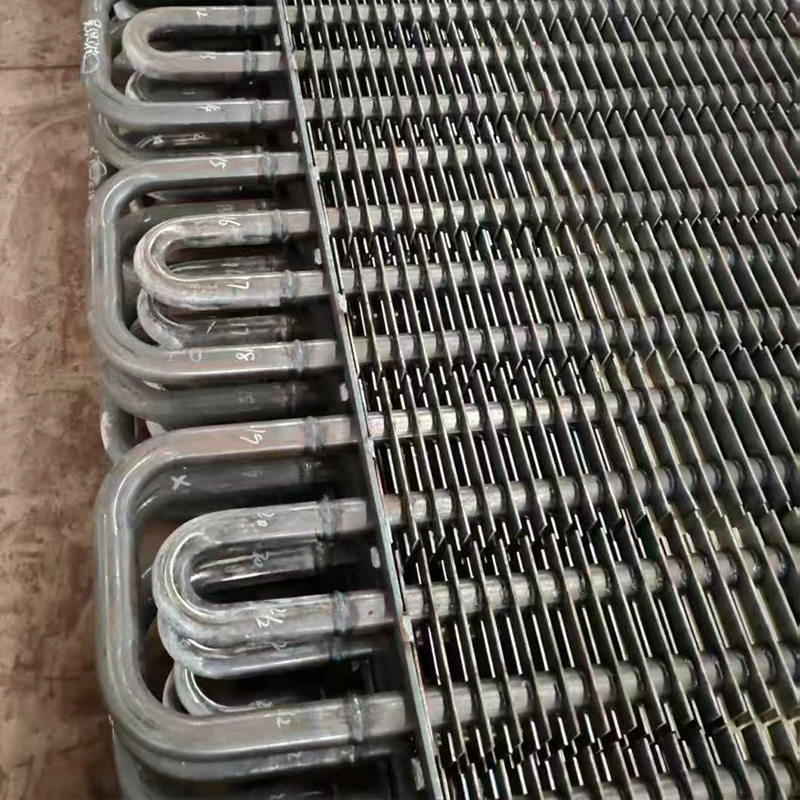
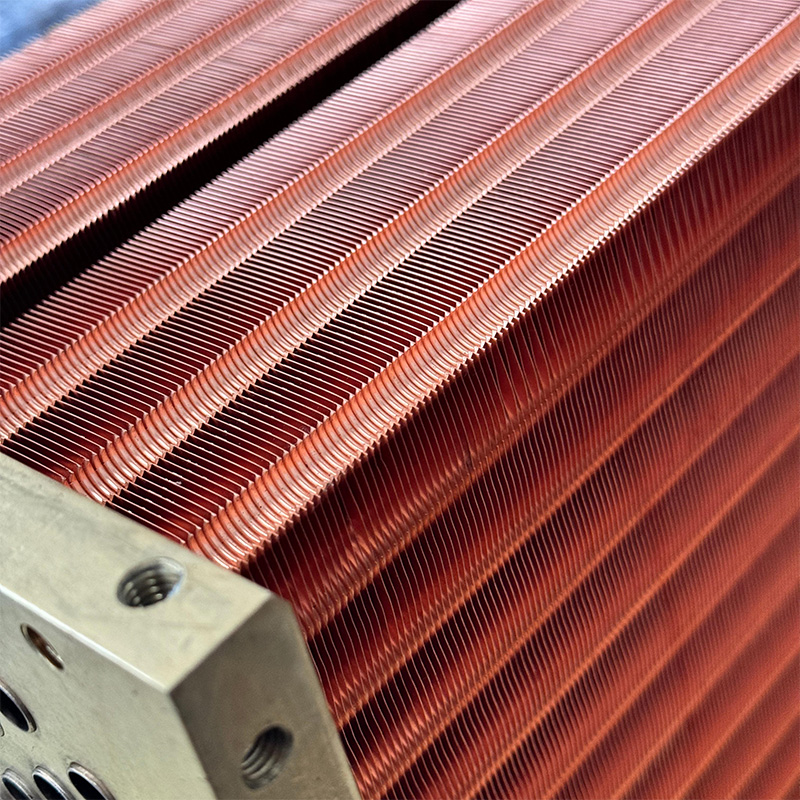
However, it is important to understand that not all Chinese enterprises are limited only to shut-off valves. Many large industrial holdings, such asWuxi Kaisheng Electric Power and Petrochemical Equipment Co., Ltd., represent an example of an integrated approach to the production of equipment for complex industries. Specializing in the development and production of heat transfer, power generation and petrochemical equipment, the company demonstrates the highest quality standards required for critical processes. Their portfolio includes titanium shell-and-tube heat exchangers, ASME high-pressure solutions, corrugated tube bundles in 316 stainless steel, C46400 marine brass and N06625 nickel alloys. PED and ASME certifications and experience with corrosive environments in the petroleum refining, chemical and marine industries confirm their ability to provide consistent, customized solutions. Cooperation with such manufacturers, who have their own metallurgical base and quality control at all stages (from carbon steel to exotic alloys), often turns out to be more reliable than working with narrow-profile factories, as it guarantees a deep understanding of the customer’s technological requirements.
Turkish manufacturers have occupied a niche between China and Europe. Their advantage is logistics and mentality. Delivery time from Turkey to Russia or CIS countries is 7-14 days, while from China by sea - 45-60 days (including port delays). For urgent projects, the rate of turnover of funds is more important than a small difference in the price of a unit of goods. In addition, Turkish cranes are often better adapted to post-Soviet GOST standards and operating conditions than their purely Chinese counterparts. If your project requires fast delivery and the availability of EAEU certificates, Turkey may be more profitable than China, taking into account the costs of storage and frozen funds.
Local production (Russia, Belarus, Kazakhstan) benefits from service and warranty support. The price of a finished product may be 10-20% higher than an imported analogue, but you get the opportunity to quickly replace defective products, there is no customs risks and currency fluctuations. In conditions of unstable exchange rates, fixing prices in national currency from a local manufacturer is a form of budget insurance. In addition, many local factories now use Chinese components (balls, rods), assembling them locally. This allows you to control build quality while maintaining a competitive price.
An important factor is the type of enterprise. Trading companies (traders) add their margin from 15% to 40%. Manufacturers operate at lower profit margins but require large order quantities (MOQs). For wholesale purchases, it is strategically correct to go to the factory. However, factories have their limitations: they may be reluctant to accept small orders or orders with complex customization. This is where order consolidation helps. Consolidating the needs of multiple sites or departments into one large batch provides leverage over price and priority in production schedules.
Action:Create a matrix of suppliers, including not only the EXW price, but also the estimated cost of delivery, customs clearance and storage until installation. Compare total costs for different geographic options.
Certification and risks: why a cheap crane without documents is dangerous for business
In pursuit of low prices, buyers often ignore the issue of documentation, considering it bureaucracy. This is a fatal mistake. The absence of the correct certificate of conformity (TR TS 010/2011 in the EAEU, PED in Europe, API in the USA) makes legal operation of the equipment impossible. When inspected by supervisory authorities (Rostekhnadzor and analogues), the company faces a huge fine and an order to stop production until the entire batch of fittings is replaced. The cost of such a forced replacement is always many times higher than the savings when purchasing a “gray” product.
There is a practice of certificate forgery in the market. Unscrupulous suppliers may provide a copy of a document that was issued to another party or is even photoshopped. How to check authenticity? First, request an original or a notarized copy. Secondly, check the certificate number in the register of the certification body. Third, pay attention to the area of distribution. The certificate can be issued for taps DN15-DN50, and you are buying DN100. In this case, the document does not apply to your party.
Particular attention should be paid to product labeling. According to GOST and international standards, the valve body must be cast or clearly marked: manufacturer's trademark, nominal diameter (DN), nominal pressure (PN), grade of body material, direction of flow (if applicable) and batch number/date of manufacture. The absence of marking or its careless execution (for example, a sticker instead of casting) is the first sign of counterfeit or garage-made products. We have seen cases where silumin taps were sold under the guise of bronze taps, but they fell apart the first time the flanges were tightened.
Another hidden risk is the material used. A supplier may claim AISI 304 stainless steel, but in fact supply steel with a low nickel content, which will begin to corrode after six months. The only method of protection is incoming quality control with spectral analysis of the metal. This costs money and time, but for large wholesale quantities this is a mandatory procedure. Include in the contract a clause stating the buyer’s right to an independent examination at the seller’s expense if a discrepancy is identified.
Warranty obligations also depend on the availability of documents. The official manufacturer provides a 12-24 month warranty and is obliged to eliminate defects. The "no name" seller will disappear after receiving payment. When purchasing in bulk, the presence of a service center in your region or an agreement on a quick exchange of defects is a selection criterion no less important than the price.
Tip:Never sign a contract without attaching a technical passport and a sample certificate. Write down in the contract penalties for the supply of uncertified products in the amount of 200% of the cost of the shipment.
Logistics and inventory management: hidden savings reserves
The price of goods at the supplier's warehouse is only half the story. For importers, logistics can account for up to 30-40% of the final cost. Optimizing the supply chain can provide savings comparable to bargaining for the price of the crane itself. In 2026, logistics routes have changed and old arrangements may not be effective.
The choice of Incoterms delivery basis is critical. Purchasing on EXW terms (ex-factory) gives maximum control over the process, but requires the buyer to have his own forwarder and foreign trade experience. FOB (port of shipment) terms shift the risks and costs of shipping to the port to the seller, which is often more beneficial for small shipments. However, when purchasing in bulk containers, it is more profitable to work on CIF or DAP terms (delivery to destination), fixing the full cost of delivery in advance. This protects against surges in freight rates, which have been extremely volatile in recent years.
Freight consolidation is a powerful tool. Ball valves are a heavy and compact product. Filling a container to capacity reduces the unit cost of delivery per unit of product. Plan purchases to minimize consolidated loads (LCL), which carry disproportionately high rates. If you need a small number of cranes urgently, consider re-ordering the main batch or looking for leftovers in distributor warehouses, even if the unit price is slightly higher - delivery will eat up all the benefit from a separate small batch.
Inventory management also affects savings. Storing a large volume of fittings “in reserve” freezes money and requires costs for storage space, security and accounting. The implementation of the Just-in-Time (just in time) system is possible only with a reliable supplier with a short delivery lead. If your supplier is located in China and takes 2 months to transport the goods, you inevitably need safety stock. If the supplier is local or from Turkey with delivery within 2 weeks, the stock can be reduced significantly, freeing up working capital.
Customs clearance is another cost item. Correct selection of the HS code can significantly change the duty rate. Ball valves can be classified differently depending on material, diameter and purpose. An error in classification may result in additional payments and fines. Involving an experienced customs broker at the procurement planning stage will help to legally optimize the tax burden.
Practical step:Request your logistics partner to calculate delivery costs for different scenarios (sea+rail, road, air) and compare the final landed cost. Sometimes a more expensive product with fast delivery turns out to be more profitable than a cheaper one that has been lying in the port for a month.
| Comparison criterion | Budget segment (China/Local) | Middle segment (Türkiye/China/Premium) | Premium segment (Europe/USA) |
|---|---|---|---|
| Unit price | Low ($10 – $50 for DN50) | Medium ($60 – $120 for DN50) | High ($150 – $300+ for DN50) |
| Service life (estimated) | 3-5 years (under gentle conditions) | 7-10 years | 15-20 years or more |
| Housing material | Cast Iron/Steel WCB (standard) | Steel WCB / LF2 / SS304 (chemical composition control) | Special alloys, forged steel, strict control |
| Tightness | Class B/C (possible micro-leakages over time) | Class A/B (stable) | Class A (guaranteed bubble) |
| Certification | Basic (often formal) | Full package (ISO, EAC, PED) | Advanced (API 6D, Fire Safe, NACE) |
| Recommended Application | Temporary systems, low pressure, water | Industry, heating, petroleum products | Critical processes, high pressures, nuclear power plants |
Negotiations and contract: how to get the best terms from a supplier
Even after choosing the ideal supplier and optimizing the specification, negotiations determine the final price. Suppliers include some “play” in the price for bargaining. Your task is to use this backlash wisely. Don't start a conversation with the question "What is your price?" Start by demonstrating your expertise and the scope of potential collaboration.
Use the volume-for-price method. Clearly indicate that this purchase is not a one-time promotion, but part of an annual program. Offer to conclude a framework agreement with phased shipment. For the plant, this is a guarantee of capacity utilization, and they are ready to give a 5-10% discount for stability. The phrase “We plan to purchase 1000 units per quarter, let's discuss the price for this volume” works better than “Make a discount.”
Discuss payment terms. 100% prepayment carries risks for the buyer. 100% postpayment is not possible for new clients. The golden mean is 30% advance, 70% against copies of shipping documents or letter of credit. The ability to offer a secure payment scheme can be an argument for reducing prices, since the supplier sees you as a reliable partner, and not a potential bankrupt.
Don't forget about intangible bonuses. If the supplier cannot reduce the price due to tight margins, demand additional services: free delivery to the terminal, extended warranty, spare repair kits as a gift, installation supervision or staff training. Эти услуги имеют реальную денежную ценность, но для поставщика их себестоимость ниже, чем прямой дисконт.
Всегда запрашивайте альтернативные варианты. Спросите: «Есть ли у вас модель с такими же характеристиками, но в другом исполнении, которая стоит дешевле?». Менеджеры по продажам часто имеют в портфеле продукты, о которых клиент не знает, но которые идеально подходят под задачу и бюджет.
Тактика:Ведите переговоры в письменном виде, фиксируя все договоренности. Используйте конкуренцию: мягко упомяните, что рассматриваете предложения от других заводов, но предпочитаете работать с ними из-за репутации. Это стимулирует поставщика сделать лучшее предложение.
Frequently asked questions (FAQ)
Какой минимальный объем заказа (MOQ) считается оптом для шаровых кранов?
Понятие «опт» варьируется в зависимости от типа производителя. Для крупных заводов минимальная партия обычно начинается от 50-100 штук одного типоразмера или от общей суммы заказа в $5,000-$10,000. Для дистрибьюторов оптом может считаться партия от 10 штук. Однако реальная выгода от оптовой цены открывается при заказе полноценной транспортной единицы (паллеты или контейнера), так как это минимизирует логистические издержки на единицу товара. Мы рекомендуем ориентироваться на объем, кратный упаковочным местам завода, чтобы избежать доплаты за неполную загрузку.
Можно ли сэкономить, купив краны без сертификатов для внутренних нужд?
Absolutely not. Даже если кран устанавливается на внутреннем трубопроводе, не подлежащем регистрации в Ростехнадзоре, отсутствие сертификата соответствия ТР ТС 010/2011 нарушает закон о техническом регулировании. В случае аварии, пожара или проверки трудовой инспекцией, использование несертифицированного оборудования повлечет за собой административную ответственность и аннулирование страховки предприятия. Экономия в 10-15% на цене крана не стоит риска штрафов в сотни тысяч рублей и остановки производства. Всегда требуйте действующий сертификат.
Что выгоднее: купить дорогие краны сразу или дешевые и менять их чаще?
В 95% случаев выгоднее купить качественные краны сразу. Расчет прост: стоимость замены крана включает не только цену нового изделия, но и стоимость работ по демонтажу/монтажу, сварке, изоляции, а главное — стоимость простоя технологической линии. Час простоя современного производства может стоить дороже, чем весь парк арматуры. Cheap taps that require replacement every 2 years create ongoing operating costs and risks. And нвестиция в надежное оборудование окупается за счет отсутствия внеплановых ремонтов в течение 5-10 лет.
Как проверить качество шарового крана перед оплатой большой партии?
Нельзя полагаться только на фото или описание. Алгоритм действий таков: 1) Запросите образец (sample) для тестов перед основным заказом. 2) Conduct a visual inspection of the quality of casting, painting and markings. 3) Проверьте легкость хода рукоятки или редуктора. 4) При возможности, закажите спектральный анализ металла корпуса и шара в независимой лаборатории. 5) Для крупных контрактов наймите инспекционную компанию (например, SGS или Bureau Veritas) для проверки готовности партии на заводе перед отгрузкой. The cost of inspection (about $300-500) is negligible compared to the risk of getting a defect worth millions.
Заключение: формула умной экономии
Экономия на закупке шаровых кранов оптом — это не искусство торга, а инженерно-логистическая задача. Она решается комплексно: через уточнение технических требований до разумного минимума, выбор надежного производителя с оптимальным соотношением цены и качества, грамотное планирование логистики и жесткий контроль документации. Попытка срезать углы на качестве или документах всегда приводит к потере денег в будущем.
Ваша цель — не самая низкая цена в прайс-листе, а минимальная стоимость владения системой в течение всего срока ее службы. Используя стратегии, описанные в этой статье, вы сможете снизить бюджет закупок на 20-30%, сохранив при этом надежность и безопасность вашего предприятия. Помните, что лучший поставщик — это партнер, который помогает вам оптимизировать процессы, а не просто продает железо.
Если вы планируете крупную закупку шаровых кранов и хотите получить экспертную оценку вашей спецификации или коммерческое предложение от проверенных производителей с оптимальными условиями поставки,contact us today. Наши специалисты помогут провести аудит заявки и подобрать решение, которое сэкономит ваши деньги без компромиссов в качестве.