
How to choose casting using burnt wax models of brass products?
2026-07-28
- How to choose wax casting for brass products: a direct answer for an engineer
- Technological limitations and physics of the LBM process for brass
- Supplier selection criteria: from certificates to real capacity
- Comparative analysis: LVM versus sand casting and stamping
- Step-by-step algorithm for launching a project and quality control
- Economic aspects and hidden costs
- Frequently Asked Questions
- Conclusion and next steps
How to choose wax casting for brass products: a direct answer for an engineer
The choice of burnt wax casting (WMC) technology for brass parts requires the assessment of three critical parameters: dimensional tolerance (IT8-IT9 standard), surface roughness (Ra 1.6–3.2 μm) and economic feasibility for a print run of 50 to 5000 pieces. If your task is to obtain complex reinforcement, fittings or decorative elements without subsequent mechanical processing of joints, the LVM method is the only solution compared to sand casting or hot stamping. In our practice, we observed how an attempt to save on the quality of pattern equipment led to defects in 15% of batches due to wax deformation, which ultimately increased the cost of the project by 40%. This article will give you a specific algorithm for selecting a supplier and technology, based on real production data, and not on marketing promises.
Technological limitations and physics of the LBM process for brass
Brass (alloys of copper and zinc) has a specific shrinkage and tendency to segregate, which makes its casting a more capricious process than working with steel or aluminum. When choosing the LBM method, you must understand that the pouring temperature ranges from 900–1050°C, and any deviation in the preparation of the mold leads to gas holes or underfilling. We often encounter requests where customers want to achieve tolerance levels of machining on large parts weighing over 2 kg using a standard ceramic shell. This is technically impossible without vacuum casting. Evacuation of the mold before pouring allows air to be removed from the pores of the ceramic, ensuring the filling of thin-walled sections up to 1.5 mm thick. Without this option, you will get defects on complex nodes.
The key success factor is the composition of the binder in the ceramic suspension. Brass, which is less fluid than aluminum but more oxidizable, requires a premium ethyl silicate binder. Cheap water-based analogues, which some suppliers offer to reduce prices, lead to sulfur and other impurities penetrating into the metal, making the part brittle under mechanical stress. One of our shipbuilding clients was faced with a situation where a batch of brass valves failed during hydraulic testing precisely because of the use of a substandard binder. The losses included not only the cost of the metal, but also the cost of a simple assembly line for two weeks. Therefore, when choosing a technology, always request a certificate for the chemical composition of the binder and a test report for gas content.
The wax burning process also has its own nuances. Brass requires rapid filling of the mold, so the mold must be heated to 800–900°C immediately before pouring. If the supplier uses old kilns with uneven heating, thermal cracks will occur in the ceramics. We recommend visually inspecting the production site: the presence of modern induction furnaces and robotic manipulators for dipping models is a marker that the plant controls the process and does not hope for luck. Statistics show that automation of the application of shell layers reduces the defect rate from 8% to 1.5%.
Another important aspect is the possibility of heat treatment after casting. Brass products produced by the LVM method often require tempering to relieve internal stresses. Not every foundry has its own heat treatment equipment, and outsourcing parts increases the risk of warping. Please clarify this point at the audit stage: the presence of your own annealing furnace in the plant’s technological chain is a sign of production maturity. Ignoring this step may result in the part “driving” when drilling holes, and the entire package of parts will become unusable.
Thus, choosing a LVM for brass is not just a purchase of a service, but a choice of a specific technological regulation. You must ensure that the supplier uses vacuum casting for critical parts, a high-quality ethyl silicate binder and strict control of the mold warm-up temperature. Neglecting any of these points turns savings at the start into losses at the finish.
Supplier selection criteria: from certificates to real capacity
When looking for a partner for casting brass products, the first filter should not be the price per kilogram, but the availability of specialized certifications. To work in the international market, especially in Europe and the CIS, ISO 9001:2015 is a mandatory minimum. However, this is not enough for foundry production. Look for the availability of specialized standards, such as GOST 15150 (for climate control, if you work with Russia) or European standards EN 1706 for aluminum and copper alloys. Having an EAC (Eurasian Conformity) certificate is critical for customs clearance of products in the EAEU countries. We have seen cases where cargo was delayed at the border for a month due to the lack of correct HS codes in the accompanying casting documents, although the goods were physically perfect.
The second criterion is transparency in the issue of minimum quantity (MOQ). LVM technology is inherently (by its nature) expensive at the stage of creating model equipment. The cost of developing a wax mold can range from $500 to $3000 depending on the complexity. An honest supplier will immediately tell you: “To make the equipment pay for itself, we need to order at least 100–200 pieces.” If a company promises to make 10 pieces at a mass production price, know that they will either build the cost of tooling into the unit price (which will make the part gold), or they will use cheap silicone molds that will produce geometry with 0.5mm deviations instead of the required 0.1mm. In our practice, there was a case when a customer accepted a batch of 50 prototypes made in soft molds, and then, when switching to hard metal equipment for the series, discovered that the dimensions did not match. I had to redo the design documentation for the new casting.
The third check point is the range of offered alloys. Brass is the general name for a group of alloys. You may be offered LS59-1 (analogous to CW614N), L63 or more complex multi-component alloys with the addition of lead for improved machinability or tin for corrosion resistance. A competent factory will ask you about the operating environment of the part. If it is seawater, regular brass will quickly undergo dezincification. You will be offered aluminum brass or a special alloy. If the supplier says, “We have brass, we can fill any brass,” that’s a red flag. Ask them for a spectral analysis of the latest heat. Factories with their own spectrometry can guarantee the chemical composition with an accuracy of 0.01%, which is confirmed by the passport for each batch.
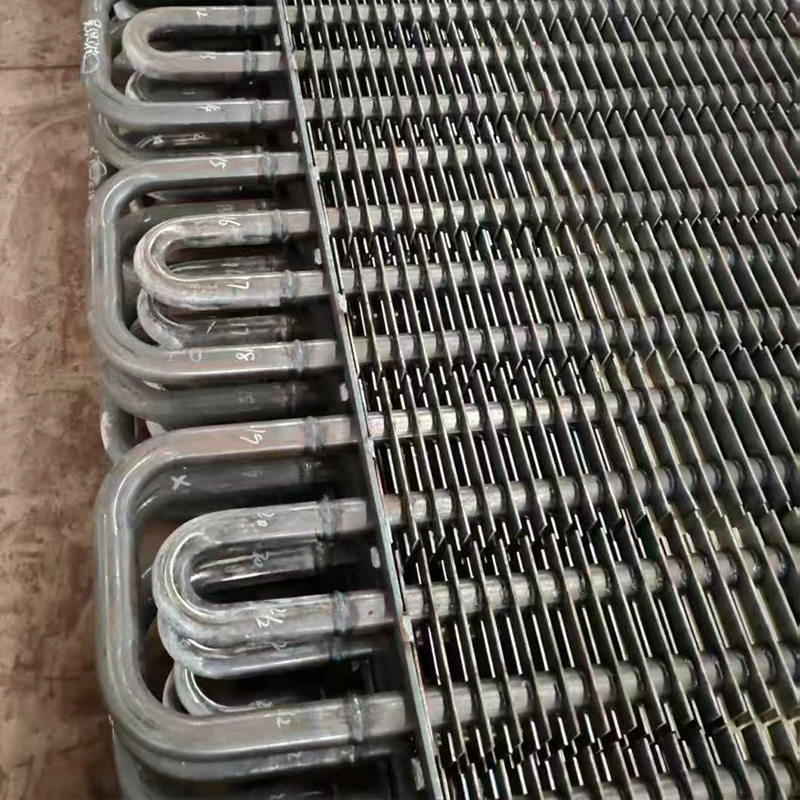
Particular attention should be paid to the supplier’s experience in working with specialized alloys for extreme conditions. For example, a companyWuxi Kaisheng LLC, which specializes in the manufacture of heat transfer and petrochemical equipment, demonstrates a high level of competence in working with marine brasses (such as C46400) and copper-nickel alloys (C70600). Their products, including tube bundles and grids, are certified to stringent international ASME and PED standards, confirming the company's ability to control chemical composition and mechanical properties even in harsh environments such as seawater or high pressures in oil refining. When choosing a partner, look for similar precedents for successful implementation of projects in your industry: having experience in the production of components for ship systems or chemical reactors is the best guarantee that your casting will not fail under stress.
Logistics and packaging are often a stumbling block. Brass casting is heavy and sensitive to impact. Proper packaging should include individual wrapping (VCI paper for corrosion protection) and rigid wood pallet lathing. We strongly recommend requesting a photo report of the packaging prior to shipment. Damage to threaded connections during transportation is a common problem that can only be eliminated by proper fixation. Also check the Incoterms. EXW work may look cheaper, but the hidden costs of shipping from the depths of China or a remote region of Russia can eat up the entire margin. The best option for the first order is FOB or FCA, where the supplier's responsibility ends at the port of departure.
Finally, evaluate engineering support. Is the supplier capable of conducting a DFM (Design Manufacturability Analysis) analysis? A good partner will suggest changing the mating radii or wall thickness at the 3D model stage to avoid shrinkage cavities. This saves money for both parties. If the manager simply accepts the file and names the price without comment, you risk receiving a part that cannot be used. Request a sample DFM report for a similar product in their portfolio.
Comparative analysis: LVM versus sand casting and stamping
To make an informed decision, it is necessary to clearly understand the place of LVM technology in the spectrum of shaping methods. Below is a detailed comparison chart based on our production data for medium-complexity brass products.
| Comparison parameter | Casting by burnout models (LVM) | Sand casting | Hot stamping |
|---|---|---|---|
| Dimensional accuracy (class) | IT8 – IT9 (High) | IT14 – IT16 (Low) | IT7 – IT8 (Very High) |
| Surface roughness (Ra) | 1.6 – 3.2 µm (Clean) | 12.5 – 25 µm (Coarse) | 0.8 – 1.6 µm (Ideal) |
| Minimum wall thickness | 1.0 – 1.5 mm | 3.0 – 4.0 mm | 2.0 – 2.5 mm |
| Cost of equipment | Medium ($800 – $2500) | Low ($200 – $500) | Very high ($5000 – $15000+) |
| Economical circulation | 50 – 5000 pcs. | 1 – 100 pcs. (large size) | 10,000+ pcs. |
| Geometry complexity | Any, including internal cavities | Limited, requires rods | Simple, axisymmetric |
| Machining | Minimum (seats only) | Complete treatment of all surfaces | None or minimal |
The table shows that LVM occupies the niche of the “golden mean”. Sand casting is inferior in terms of surface quality: a brass part made from sand will require significant milling and grinding costs to remove allowance and mold marks. Often the cost of machining exceeds the cost of casting itself. The LVM produces a surface close to the finished product, which reduces machining time by 60–70%. Stamping, of course, has better mechanical properties (metal fibers are not interrupted), but it is economically justified only for large quantities due to the high cost of molds. For series up to 5000 pieces, amortization of the die will make the price of the part prohibitive.
Let's look at a specific example: the production of a brass pump body. When sand casting, the machining allowance is 3–4 mm on each side. This means an overconsumption of metal by 30% and 40 minutes of work on a CNC machine. With LVM, the allowance is 0.5–1 mm, the overconsumption of metal is 5%, and the processing time is 5 minutes only for O-rings. The difference in the cost of the finished part can reach 25% in favor of LVM for a series of 200 pieces or more. However, if you need one prototype tomorrow, sand casting from a wooden model is faster and cheaper since it doesn't require making a metal wax mold.
It is also important to note that the LVM is limited in size. The maximum weight of one casting is usually limited to 20–30 kg due to the complexity of making a large ceramic mold and the risk of its destruction under the weight of the metal. For massive brass plates or frames weighing 100 kg, the LBM method is not applicable - there is no alternative to sand casting. Also, if the part has a very simple shape (for example, a washer or bushing), the LPM will be redundant, and it is more profitable to use centrifugal casting or broaching.
The choice between these methods should be based on a calculation of the total cost of ownership (TCO), and not just the price per kilogram of raw materials. Consider metal costs, energy, machining labor, scrap rates, and tool life. In most cases, for complex plumbing fixtures, fittings and motor components, LVM is the most rational choice.
Step-by-step algorithm for launching a project and quality control
To minimize risk and achieve predictable results, follow this proven foundry workflow. Deviation from stages often leads to missed deadlines.
- Preparation of technical documentation and DFM analysis.
Start by providing a complete package of 3D models (STEP, IGES) and 2D drawings with tolerances to ISO 2768-mK or equivalent. At this point, it is critical to conduct a joint DFM analysis. Plant engineers must check wall angles, transition radii, and gating system placement.Common mistake:customers insist on maintaining a design that does not include slopes, which makes removing the wax model impossible without destruction. Accept the technologist’s recommendation to change the design by 2-3 degrees - this will save the entire batch. The result of the stage should be a signed report on manufacturability.
- Manufacturing and approval of an experimental mold.
Once the drawings are approved, the factory produces an aluminum or steel mold for casting wax. Production time is 15–25 days. When ready, you should be sent the first samples of wax models and, preferably, a video of the pressing process. Check the dimensions of the waxes on a coordinate measuring machine (CMM). Remember: the wax defect will inevitably transfer to ceramics and metal.Attention:Do not agree to start a metal casting without physically confirming the dimensions of the wax model. This is the point of no return, where correcting a mistake costs the most.
- Casting of control samples (First Article Inspection).
The plant produces the first batch of metal castings (usually 5–10 pieces) through a full cycle, including heat treatment. These samples undergo a full control cycle: visual inspection for cracks, geometry check, spectral analysis of the chemical composition and, if necessary, X-ray inspection of internal cavities. You receive an FAI (First Article Inspection) report. Only after your written approval of this report does mass production begin. Ignoring this step in the pursuit of speed is a direct path to getting a defect.
- Serial production and selective control.
During the series, control is carried out selectively (AQL 2.5 or stricter, by agreement). Every 10th or 20th part is checked for key dimensions. The chemical composition is controlled once per shift or once per heat. Require heat markings to be applied to each casting or packaging tag for traceability. If changes in technology occur during the production process (change of charge supplier, furnace repair), the plant is obliged to notify you and re-validate the process.
- Final acceptance and packaging.
Before shipment, a final inspection of the finished product is carried out. The absence of ceramic residues in blind holes, the quality of the thread (passability of the gauges) and the absence of corrosion are checked. The packaging must comply with the conditions of long-term sea transportation. Be sure to request a photo report of the loaded container. Documentary support should include: commercial invoice, packing list, certificate of origin, quality certificate with laboratory test results and material safety data sheet.
Economic aspects and hidden costs
The price of brass casting is determined not only by the cost of the metal (which fluctuates on the LME), but also by the energy intensity of the process. Melting brass requires more energy than aluminum, and maintaining a mold temperature of 900°C requires constant gas or electricity costs. When calculating your budget, factor in the volatility of copper prices. Many contracts fix the price of the metal on the date of shipment rather than on the date of order. This is fair, but requires an understanding of the current market conditions.
Post-processing is often a hidden cost. Even perfect LVM casting requires removing the sprues and grinding the cut points. If the part design involves a complex gating system, manual stripping may take up to 15 minutes per part. Automated cutting is only possible with large print runs and special scissor stamps. Check to see if cleaning is included in the base price or charged separately. In our practice, there have been cases when the bill for “additional work” exceeded the cost of the casting itself.
Also consider the cost of marriage. Foundry production is a probabilistic process. The normal level of internal defects (waste, porosity defects) is included in the price and is 3–5%. However, if your design causes a 15% defect rate, the supplier will recalculate the price or refuse the order. Optimizing the design for casting is the most effective way to reduce the price without sacrificing quality. Sometimes shifting the mold connector by 2 mm allows you to remove an expensive rod and reduce the cost of the part by 20%.
Logistics costs for heavy brass products are significant. Ocean shipping is counted by volume or weight, and brass quickly reaches the weight limit. Load consolidation (LCL) for small shipments may not be profitable due to high terminal fees. Plan orders to fill the container as tightly as possible, using the space inside hollow parts to pack small components.
Frequently Asked Questions
Какова максимальная точность, которую можно получить при литье латуни по ЛВМ?
Стандартная точность для латунного литья по выплавляемым моделям составляет IT8–IT9, что соответствует допуску примерно ±0.1 мм на 100 мм длины. При использовании специального оборудования и вакуумного литья можно достичь IT7, но это значительно удорожает процесс. Для большинства промышленных задач (фитинги, клапаны) точности IT8 вполне достаточно, чтобы избежать механической обработки посадочных мест.
Можно ли делать литье без минимальной партии (MOQ)?
Технически можно отлить даже одну деталь, используя быстротвердеющие смеси и силиконовые формы вместо металлических пресс-форм. Однако стоимость такой единичной отливки будет в 10–20 раз выше серийной из-за ручной трудоемкости. Экономически оправданный минимум для ЛВМ с металлической оснастью обычно начинается от 50–100 штук, чтобы амортизировать стоимость разработки пресс-формы.
Какие дефекты наиболее характерны для латунного литья и как их избежать?
Наиболее частые дефекты — газовая пористость, недолив и горячие трещины. Газовая пористость возникает из-за плохой дегазации металла или влажной керамики; решается вакуумированием и прокалкой форм. Недолив случается при низкой температуре заливки или тонких стенках; лечится увеличением температуры и давления. Горячие трещины связаны с конструкцией детали (острые углы); предотвращаются увеличением радиусов сопряжения на этапе проектирования.
Сколько времени занимает весь цикл от чертежа до готовой партии?
Полный цикл обычно занимает 6–8 недель. Из этого срока 2–3 недели уходит на разработку и изготовление пресс-формы для воска, 1 неделя на получение и согласование восковых образцов, 1–2 недели на подготовку керамических форм и пробную плавку, и 2–3 недели на серийное литье, термообработку и механическую обработку. Срочные заказы возможны за дополнительную плату, но сокращение сроков ниже 4 недель рискованно для качества.
Conclusion and next steps
Выбор литья по выжигаемым восковым моделям для латунных изделий — это стратегическое решение, которое балансирует между качеством поверхности, геометрической точностью и стоимостью тиража. Эта технология незаменима для сложных деталей, где механическая обработка затруднена или слишком дорога. Ключ к успеху лежит не в поиске самой низкой цены за килограмм, а в выборе партнера с прозрачным технологическим процессом, собственным контролем качества и готовностью к инженерному диалогу. Помните, что экономия на этапе проектирования оснастки или входного контроля сырья всегда приводит к кратному росту затрат на этапе эксплуатации или рекламаций.
Если вы готовы перейти от теории к практике и обсудить параметры вашего конкретного проекта, мы приглашаем вас к предметному разговору. Наши инженеры готовы провести бесплатный предварительный анализ вашей 3D-модели и рассчитать оптимальную схему литья с учетом всех нюансов работы с латунью.Contact us today, чтобы получить детальный расчет стоимости и сроков изготовления опытной партии.
Для получения дополнительной информации о наших возможностях в области цветного литья, посетите разделпроизводство изделий из цветных металлов, где представлены примеры реализованных проектов и технические спецификации.